Sunrise Start On The Crossing: Reaching The Emerald Lakes Early
The Emerald Lakes sit two thirds of the way along a 20.2 kilometre alpine track, and almost everyone who reaches them before the crowds does it by starting in the dark. This guide covers the timing logic, the parking rule that forces the issue, and the shuttles and guided departures that run before dawn.
Short answer
DOC allows 7 to 8 hours for the Crossing from November to April, and road-end parking is capped at 4 hours from Labour weekend to 30 April, so an early start is close to mandatory in the main season. A round-trip shuttle from National Park Village runs from NZ$75 per person, and the Adrift Tongariro premium guided hike, from NZ$450, includes the pre-dawn transport.
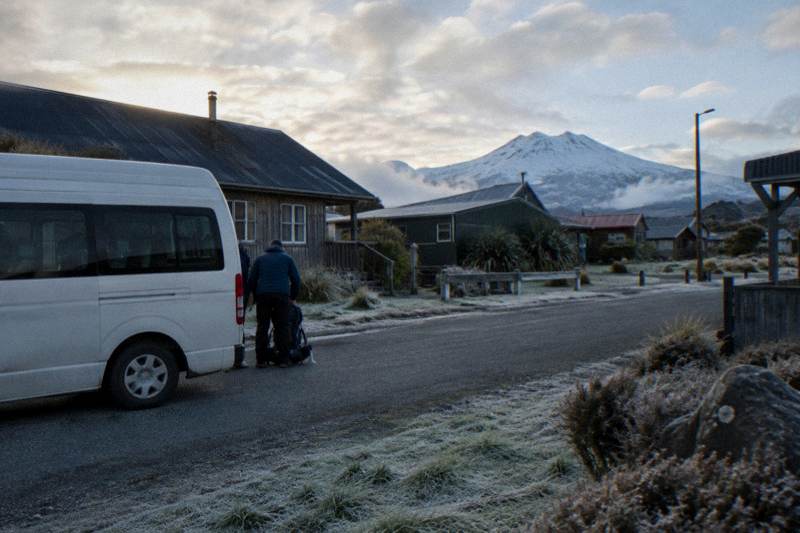
Almost nobody starts the Tongariro Alpine Crossing at a leisurely mid-morning hour. The track is 20.2 kilometres one way with 1196 metres of elevation change, DOC rates the fitness requirement High, and from Labour weekend in late October through to 30 April the road-end car parks carry a 4 hour maximum stay, which makes parking at the trailhead and walking practically impossible. The result is a culture of pre-dawn departures: shuttle buses and guided groups rolling out of National Park Village, Ketetahi, Taupo and Turangi in the dark, so walkers are already climbing the Mangatepopo valley when the sun touches Red Crater.
That early start is not just about beating a parking rule. It is about where you want to be when the weather window opens, how much of the day you want left in reserve, and whether you reach the Emerald Lakes, the vivid blue-green pools DOC names Nga Rotopounamu, before the middle of the day brings the crowds and, often, the cloud. The Tongariro Crossing Shuttles round trip from National Park Village is the most reviewed tour here, rated 4.7 across 890 reviews, and its whole design, an early departure from the Park n Ride at 59 Findlay Street, exists to serve this pattern. Dempsey Buses, Ruapehu Scenic Shuttles and Tongariro Expeditions run the same logic from their own departure points, and Adrift Tongariro's guided hikes build the early start into a led day.
This page sits in the season group alongside the best month to hike to the Emerald Lakes; the timing question there is about the calendar, while here it is about the hour of the day.
| Fact | Figure | Source |
|---|---|---|
| Track length | 20.2 km one way | DOC |
| Elevation change | +/- 1196 m | DOC |
| Highest point | Red Crater, 1886 m | DOC |
| Walking time, November to April | 7 to 8 hours | DOC |
| Walking time, May to October | 9 hours | DOC |
| Fitness rating | High | DOC |
| Summer road-end parking | 4 hour maximum, Labour weekend to 30 April | DOC |
| Track status in May to October | Expert route, alpine skills essential | DOC |
Why An Early Start Is Standard Advice On The Crossing
An early start is standard advice because the Crossing runs 20.2 kilometres and takes 7 to 8 hours in the November to April season, its alpine section sits in the middle rather than at the beginning, and weather on an exposed volcano tends to be best before afternoon. Begin late and you reach Red Crater and the Emerald Lakes, roughly two thirds along, in the busiest and often cloudiest part of the day.
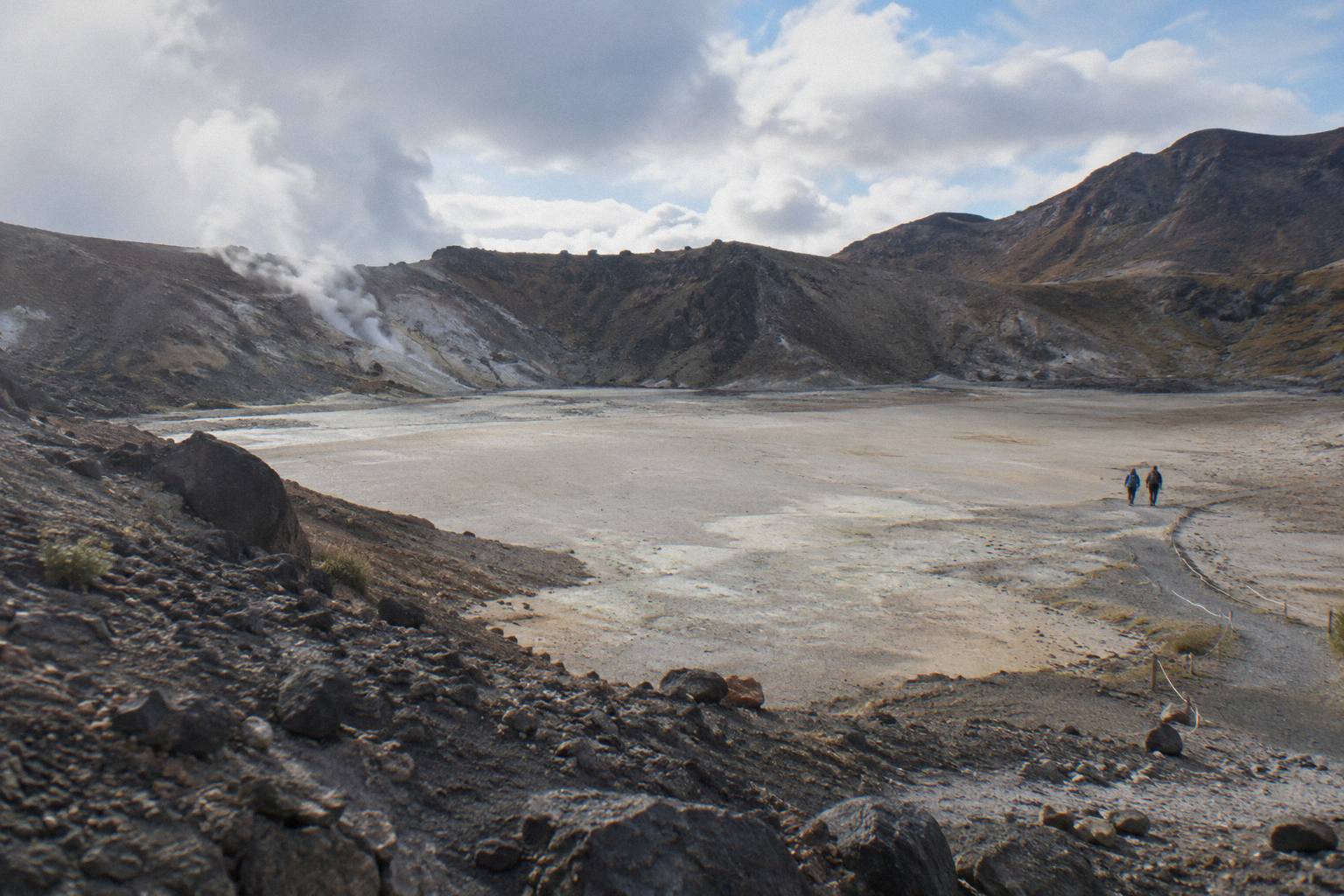
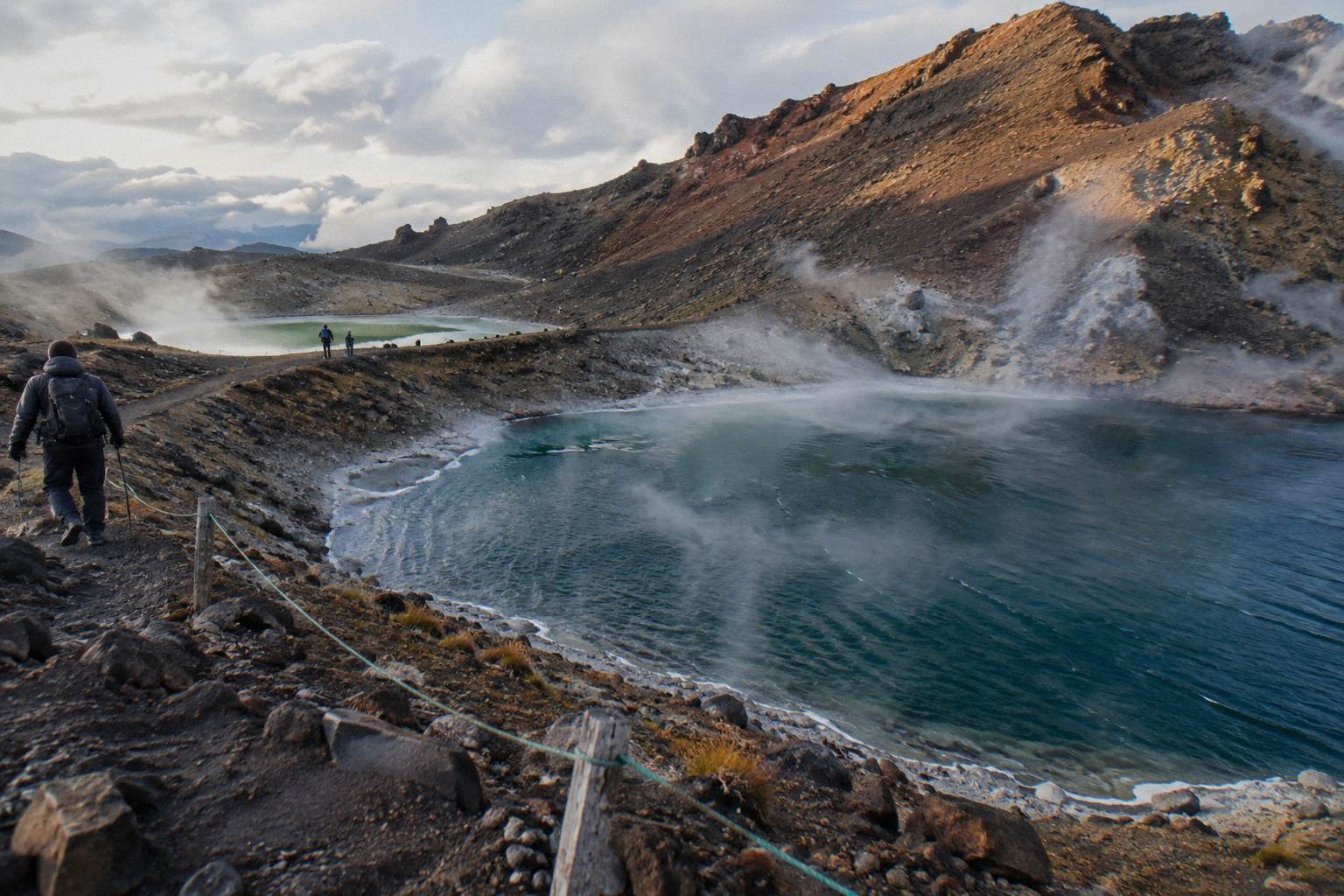
The geometry of the track matters as much as the distance. The first hours from Mangatepopo are gentle, following the valley up past old lava flows, and the famous climb, the Devil's Staircase, arrives after that warm-up. Red Crater at 1886 metres is the high point, and DOC describes the route beyond it as a steep scree descent to the vivid Emerald Lakes. That descent, on loose rock with a drop beside it, is the section where you most want good light, dry rock and a clear head, which argues for arriving there in the middle of your day rather than at the end of it.
Then there is the cloud. Convection builds over the central North Island mountains through the middle of the day, especially in the warmer months, and what was a clear morning at Mangatepopo can become a whiteout on the South Crater by early afternoon. The Crossing weather above the Emerald Lakes page covers the forecasting tools in detail, but the short version is that a dawn start gives you the alpine section during the statistically more reliable part of the day. NIWA publishes a dedicated Tongariro National Park advisory, and DOC's own page carries the daily assessment that decides whether operators run at all.
Finally there is simply the crowd flow. Because nearly everyone arrives by shuttle, and shuttles run early, the track develops a pulse: a wave of walkers through the morning, thinning after midday. Starting at the front of that wave means quieter track, emptier viewpoints and a shorter queue for the toilet at Mangatepopo. Starting at the back means overtaking people for seven hours. None of the shuttle operators publish a fixed timetable here, because departure times shift with the season and the daylight, but every one of them is built around getting walkers onto the track early.
How DOC Time Bands And Daylight Shape Your Departure
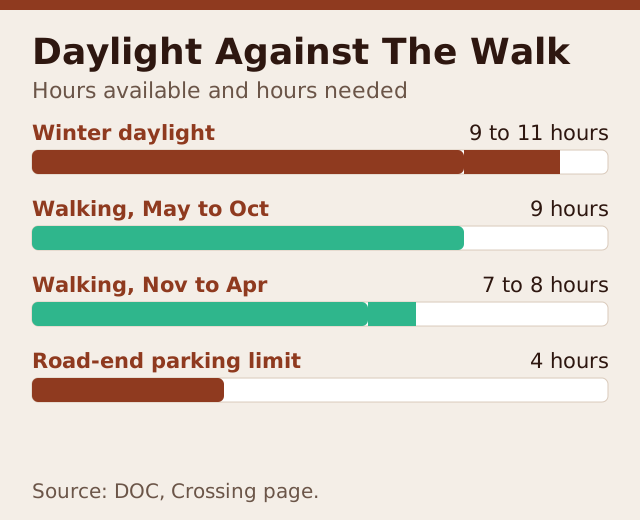
DOC allows 7 to 8 walking hours from November to April and 9 hours from May to October, and those figures count only time on the track. Working back from a mid-to-late afternoon finish at Ketetahi Road, a summer walker who wants daylight on the Devil's Staircase and Red Crater should be walking by mid morning, while in winter the 9 hour band plus short daylight makes the start time non-negotiable.
Winter daylight on the Crossing runs to only 9 to 11 hours, per DOC, and the same months reclassify the track from an intermediate tramping track to an Expert route on which DOC says alpine skills are essential and it is best to go with a guide. Add snow, ice, avalanche risk and sub-zero temperatures, and the 9 hour DOC time band becomes a full daylight budget with nothing to spare. This is the season where the three Adrift Tongariro guided tours make the most sense: the premium guided hike is booked as an 8 to 9 hour day including transfers, departs from 53 Carroll Street in National Park Village, and carries crampons and ice axes for winter conditions if required, with a clothing and footwear allowance. Bring your own lunch; it is not included.
The summer logic is different but just as firm. The alpine section, from the top of the Devil's Staircase past Red Crater, the Emerald Lakes, Central Crater and the Blue Lake, to the Ketetahi descent, is the slowest and most exposed part of the track. Walkers who reach it early walk it in the calm, and walkers who reach it at the back of the field walk it in the churn. The walk time to the Emerald Lakes page breaks the route into stages; the headline is that the lakes sit after the two hardest climbs, so an early start buys margin exactly where the day can go slow.
The practical question then becomes how you get to Mangatepopo at that hour, and the answer for almost everyone is a booked seat. That choice splits into three shapes: a round-trip shuttle from where you are staying, a one-way park-and-ride from the Ketetahi side, or a guided day with transport built in.
The Parking Rule That Forces The Shuttle Decision
From Labour weekend in late October to 30 April, DOC enforces a 4 hour maximum stay at the Crossing road ends, and Mangatepopo has no summer parking for Crossing walkers at all, so driving yourself to the start is not a legal option in the main season. The only drive-yourself format that works is parking at Ketetahi, riding the shuttle to Mangatepopo in the dark, then walking the Crossing back to your own car.
That park-and-ride pattern is why six of the shuttle products on this site depart from the Ketetahi side rather than the track start. The Ruapehu Scenic Shuttles Ketetahi park-and-ride, rated 4.8 across 670 reviews, is the best reviewed of them and runs from NZ$68 per person with free cancellation up to 24 hours before. The Owhango Adventures Ketetahi park-and-ride, rated 4.8 across 333 reviews, runs the same format from the same car park, and the Tongariro Expeditions, Tongariro Crossing Car Park, National Park Shuttles, Backyard Tours and Active Outdoor Adventures one-way shuttles complete the set. None of these is a return: you ride one way to Mangatepopo and your own car is waiting when you finish.
For walkers staying in National Park Village, the round-trip format is simpler. The Tongariro Crossing Shuttles round trip from National Park Village, rated 4.7 across 890 reviews, departs from the Park n Ride at 59 Findlay Street, runs from NZ$75 per person, and carries free cancellation up to 24 hours before. Dempsey Buses runs a return bus from the same village, rated 4.8 across 72 reviews from NZ$90 per person, picking up at the Park Hotel Ruapehu, the Tongariro Crossing Lodge and the Park n Ride. Both are shuttles, not guided walks: you get transport and the walk is your own.
From further afield, Tongariro Expeditions runs a Crossing shuttle from Taupo or Turangi, rated 4.7 across 431 reviews, from NZ$75 per person, and Backyard Tours runs a mountain shuttle from Turangi accommodation pickups from NZ$120 per person. Dempsey Buses also runs a return shuttle from Ohakune. The common thread is an early departure; the specific time depends on the operator and the season, and the booking page for each product shows the details for your date.
The Ruapehu Scenic Shuttles park-and-ride deserves a mention for anyone who wants to control their own finish time, since with your car at Ketetahi you are never waiting on a bus after a long day.
What The Morning Actually Looks Like
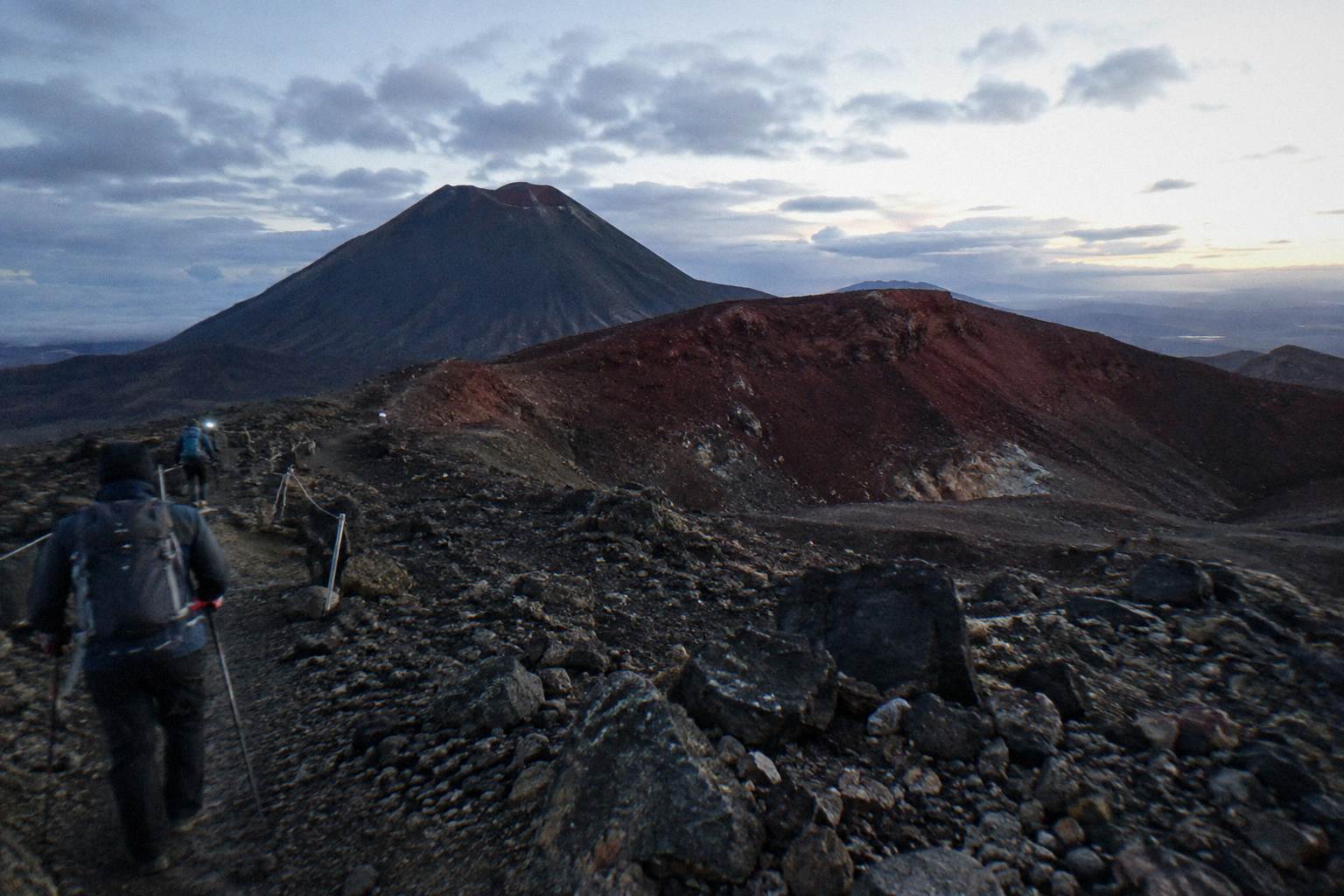
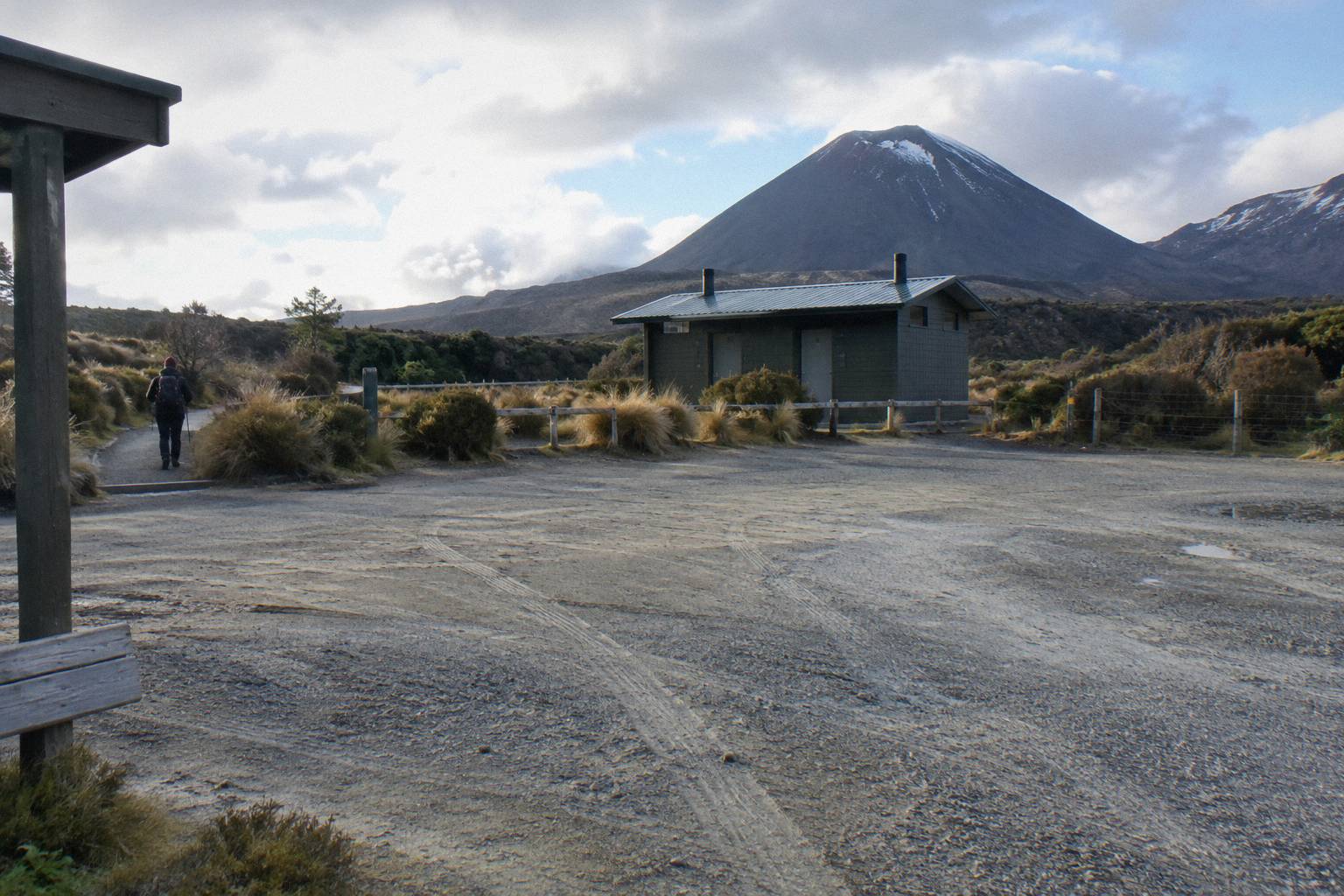
Expect to wake in the dark, ride a shuttle to Mangatepopo at roughly 1120 metres, and set off in the day's coldest hour under headlamps or the first grey light. The valley warms you over the opening kilometres, the Devil's Staircase follows, and by the time you top out near Red Crater the sun is already on the ridge, leaving the Emerald Lakes and the scree descent ahead of the crowds.
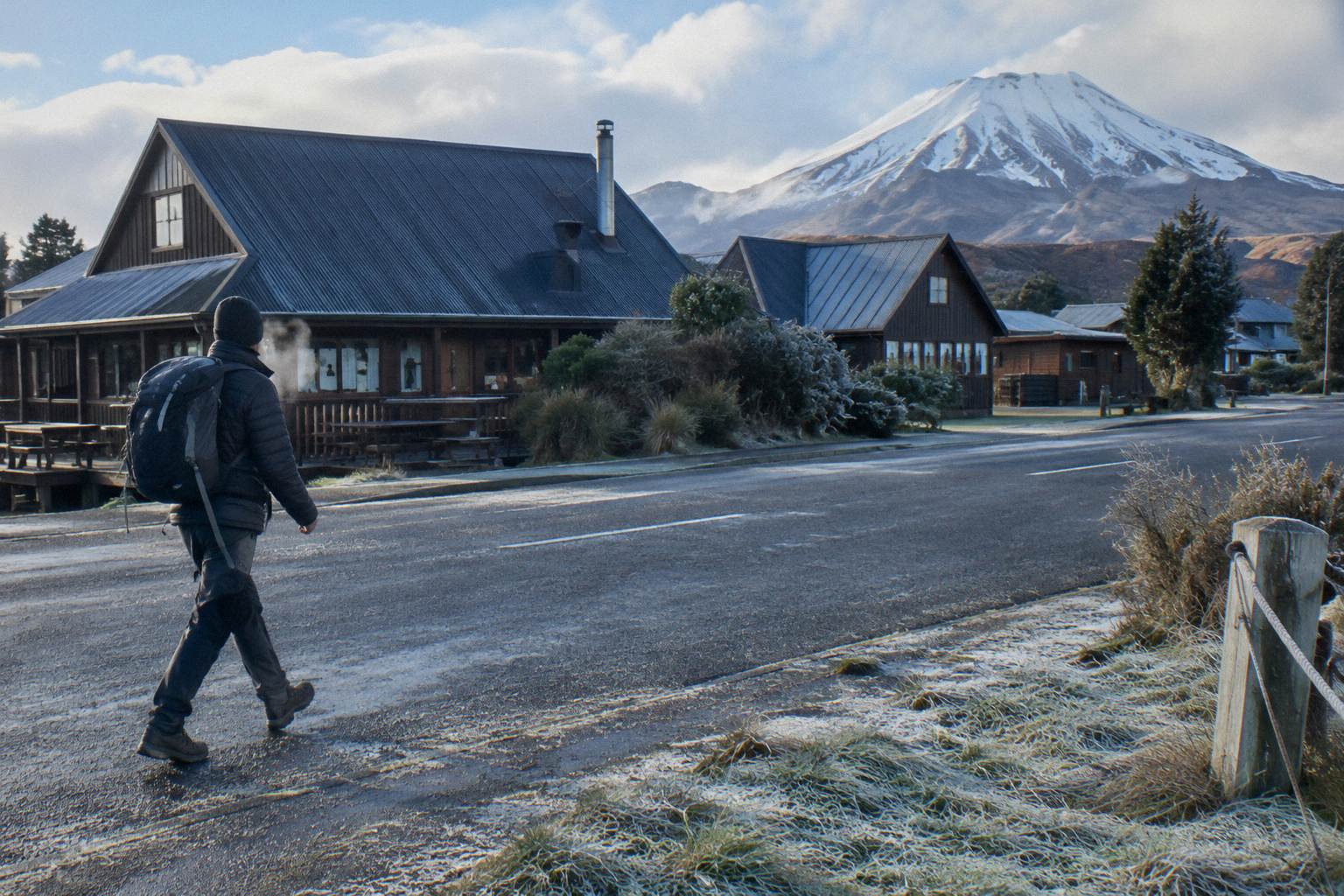
Clothing is where early starters most often get it wrong. The pre-dawn wait at a car park and the first valley kilometres can be freezing even in summer, and an hour later you are stripping layers on the Staircase. Layers you can shed and repack are the answer; the what to wear hiking to the Emerald Lakes guide covers the full kit. Food matters too, because with an early start the walk eats through your breakfast hours, and on the guided days lunch is not included, so pack it regardless of format.
The other thing the early start buys is photographic light. Low sun on Red Crater's oxidised walls, and the Emerald Lakes lit from the side rather than flat overhead, is what the photographing the Emerald Lakes guide is built around. The lakes themselves are tapu to Ngati Hikairo ki Tongariro: DOC relays the kaumatua's request that visitors respect the maunga by not touching or entering any of the waterways, including the alpine lakes. Look, photograph from the track, and keep the water untouched. The swimming in the Emerald Lakes page explains the cultural background.
Guided Or Self-Guided For A Before-Dawn Departure
For a before-dawn start, guided is the easier choice: Adrift Tongariro's three tours all depart from 53 Carroll Street in National Park Village and include the early transport that self-guided walkers have to arrange separately. The premium guided hike runs from NZ$450 per person, is rated 4.6 across 242 reviews, and carries crampons and ice axes for winter conditions if required.
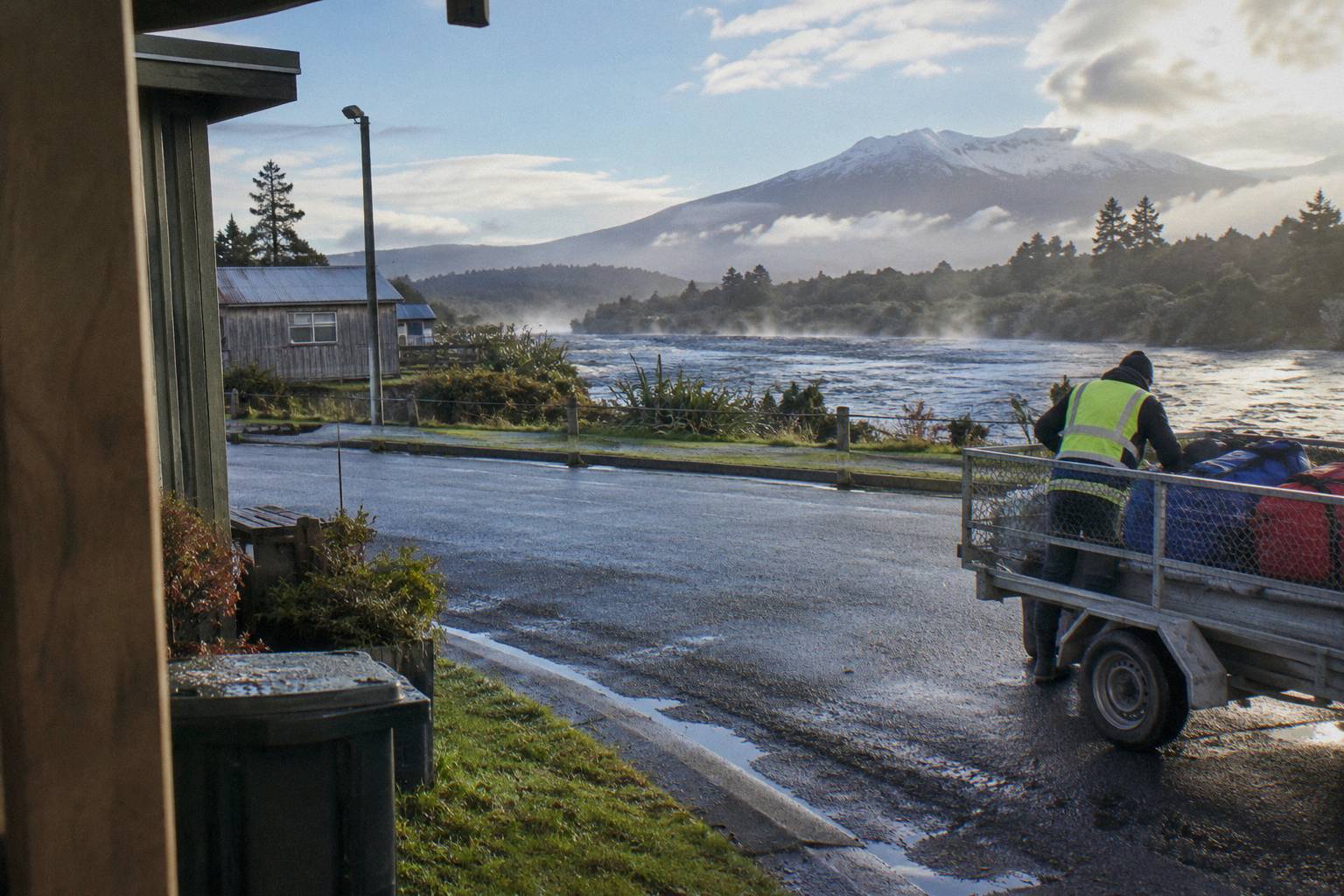
The guided format changes the character of the early start. On a shuttle, the pre-dawn hour is logistics: a pick-up, a ride, a drop-off, and then you are on your own for a 20 kilometre alpine day with whatever the weather does. On a guided day, the same early hour becomes a briefing, a gear check and a plan, with a guide making the go or no-go call on the day and a group pace set for the whole walk. Whether that difference is worth the price gap between NZ$75 and NZ$450 is exactly the question the is a guide worth it guide works through.
In winter, the guided format stops being a preference. DOC's own wording is that alpine skills are essential from May to October and it is best to go with a guide, and shuttle buses generally do not run in that window at all. The Adrift premium guided day is booked as 8 to 9 hours including transfers, with pickups from Taupo, Turangi and Whakapapa available at a surcharge on private bookings, and the booking page shows the age limits. Bring your own lunch.
| Format | Example product | Departure point | Rating | Price | Guided |
|---|---|---|---|---|---|
| Round-trip shuttle | Tongariro Crossing Shuttles round trip | National Park Village, 59 Findlay Street | 4.7 across 890 reviews | from NZ$75 | No |
| Round-trip bus | Dempsey Buses return bus | National Park Village | 4.8 across 72 reviews | from NZ$90 | No |
| One-way park-and-ride | Ruapehu Scenic Shuttles Ketetahi park-and-ride | Ketetahi car park | 4.8 across 670 reviews | from NZ$68 | No |
| Taupo or Turangi shuttle | Tongariro Expeditions Crossing shuttle | Taupo, Turangi or Ketetahi, option-dependent | 4.7 across 431 reviews | from NZ$75 | No |
| Guided group day | Adrift Tongariro premium guided hike | National Park Village, 53 Carroll Street | 4.6 across 242 reviews | from NZ$450 | Yes |
| Guided private day | Adrift Tongariro private guided Crossing | National Park Village, 53 Carroll Street | 4.5 across 30 reviews | Check the booking page | Yes |
A note on cancellation, because early plans are weather plans. The shuttles above carry free cancellation up to 24 hours before, and the Adrift premium guided hike up to 14 days before; the Adrift private guided Crossing is non-refundable. Guided operators and shuttles run only when DOC's advisory and the forecast allow, so every early start is a conditions-allowing start, and the booking page shows the cancellation terms for each product.
For walkers coming from Taupo or Turangi without a car, the Tongariro Expeditions Crossing shuttle, rated 4.7 across 431 reviews and from NZ$75 per person, is the longest-running early option in that part of the roster.
Booking, The DOC System, And What You Actually Pay
The walk itself is free, but DOC recommends registering through its free booking system, and taking a shuttle or guided tour requires the booking anyway. Direct costs on this site run from NZ$68 per person for the Ruapehu Scenic Shuttles park-and-ride to NZ$450 for the Adrift Tongariro premium guided hike, and DOC notes that about NZ$40 of a shuttle fee goes to conservation. There is no entrance fee for the track or the Emerald Lakes themselves.
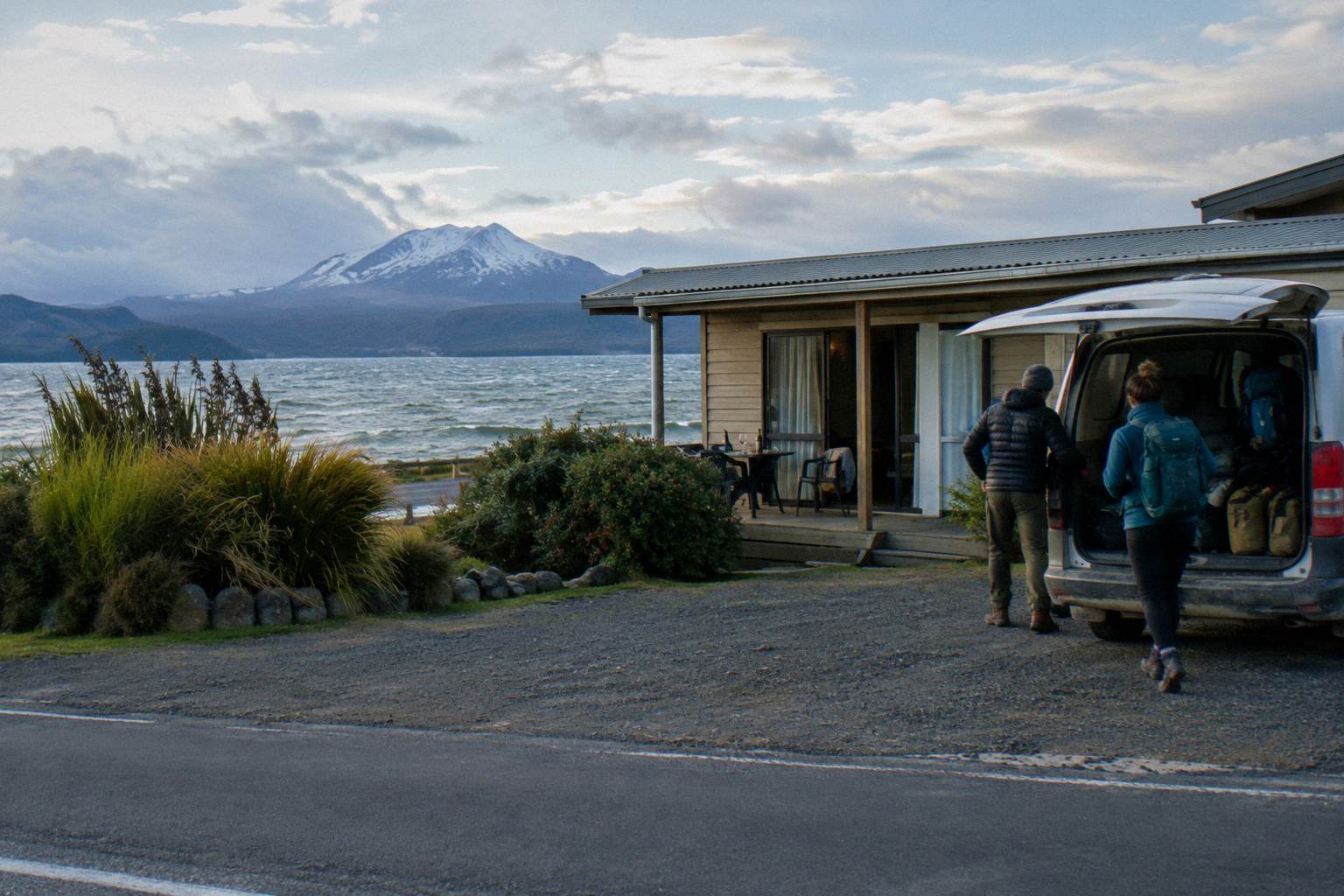
The DOC booking system exists to spread people across the day and the season, and it pairs with the parking restrictions rather than replacing them. You can read the detail on the DOC booking system page, but the practical sequence for a shuttle day is: book the shuttle, register with DOC, and let the operator's early schedule set your alarm. The do you have to pay to hike to the Emerald Lakes post covers the free-versus-paid split in plain terms.
Auckland-based walkers face a longer route into this. The Kiwi Road Tours private transfer from Auckland is a two-day private transfer product, not a guided hike, with the walk self-guided and the Crossing shuttle excluded; it has 4 reviews so far. The ExperienceKart private three-day tour from Auckland bundles Huka Falls and Lake Taupo around one self-guided Crossing leg. Neither is a guided Crossing, and neither suits a sunrise-start decision on its own; they suit travellers building the Crossing into a longer North Island itinerary.
| Cost item | Typical figure | Notes |
|---|---|---|
| Track access | Free | No entrance fee for the Crossing or the lakes |
| DOC booking system | Free | Recommended, and needed for shuttle or guided days |
| Shuttle, cheapest shown here | from NZ$68 per person | Ruapehu Scenic Shuttles Ketetahi park-and-ride, one-way |
| Round-trip shuttle | from NZ$75 per person | Tongariro Crossing Shuttles from National Park Village |
| Guided day | from NZ$450 per person | Adrift Tongariro premium guided hike |
Mistakes That Trip Up Early Starters
Four recurring mistakes: assuming you can drive and park in summer, trusting a forecast checked days earlier, starting late and meeting the alpine section in afternoon cloud, and treating the lakes as a swim stop. With parking capped at 4 hours against a 7 to 8 hour walk, and DOC relaying Ngati Hikairo ki Tongariro's request that no one touch or enter the waterways, each error is avoidable with a booked seat and a morning-of check.
The drive-and-park mistake is the most common and the most expensive. DOC is explicit that there is no parking for Crossing walkers at Mangatepopo car park in summer, and the 4 hour rule at the road ends catches everyone else. If you must drive, the one-way park-and-ride format from Ketetahi is the legal shape: your car sits at the finish, the shuttle takes you to the start in the dark, and the walk ends where you parked.
The forecast mistake is quieter. Volcanic alert levels and mountain weather both shift day to day, and GeoNet and the NIWA Tongariro advisory exist precisely because the general town forecast is not good enough at 1886 metres. Check the DOC Crossing page's daily assessment on the morning itself; operators make their go or no-go call on that basis, and a shuttle booked with 24 hour free cancellation gives you an exit if the day turns. DOC's own Crossing page carries the current alerts, and its volcanic risk page explains what the alert levels mean for walkers.
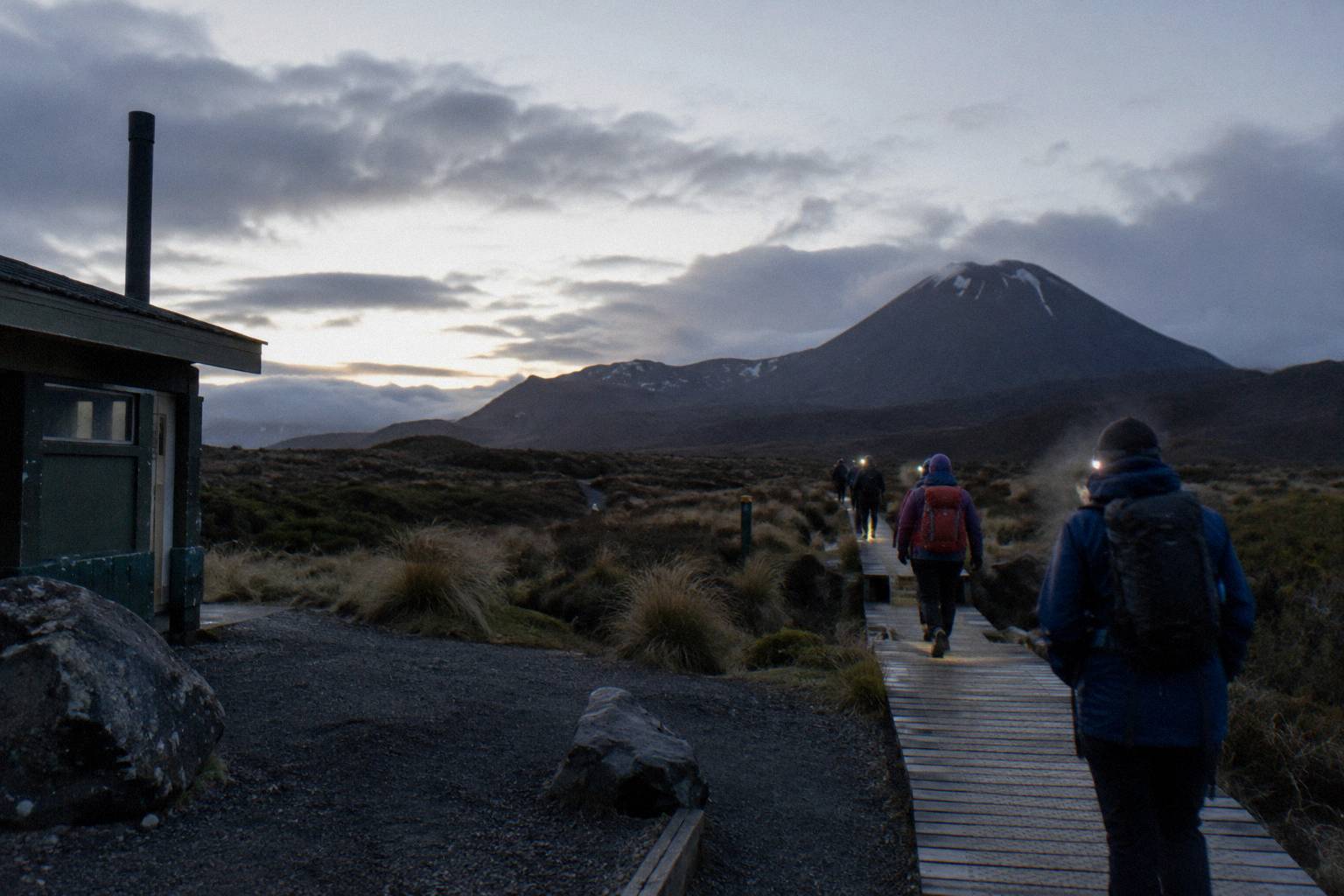
The late-start mistake compounds. Every hour of delay pushes Red Crater and the Emerald Lakes deeper into the afternoon window when cloud builds and the track is busiest, and a 7 to 8 hour walk that starts late finishes in the dark. If the day has gone wrong before it begins, DOC suggests Taranaki Falls and Tama Lakes as alternative walks when conditions on the Crossing are poor, and the other hikes in Tongariro National Park guide lists the standing options.
The lake mistake is cultural rather than logistical. The Emerald Lakes are mineral pools on sacred ground; the mountains are tapu to Ngati Hikairo ki Tongariro of Ngati Tuwharetoa, in a park that DOC notes is a dual World Heritage area and New Zealand's oldest national park, established 1894. Touching or entering the water is the one thing asked of visitors, and the request is easy to honour from the track above the lakes.
Choosing The Right Early Departure For Your Trip
Pick your departure by where you start the morning: National Park Village stays closest with round-trip shuttles from 59 Findlay Street, drivers get flexibility through the Ketetahi one-way park-and-rides from NZ$68, travelers from Taupo, Turangi or Ohakune are collected by regional shuttles, and guided or winter walkers can book Adrift Tongariro tours from 53 Carroll Street. Each option is built to get you on the track early.
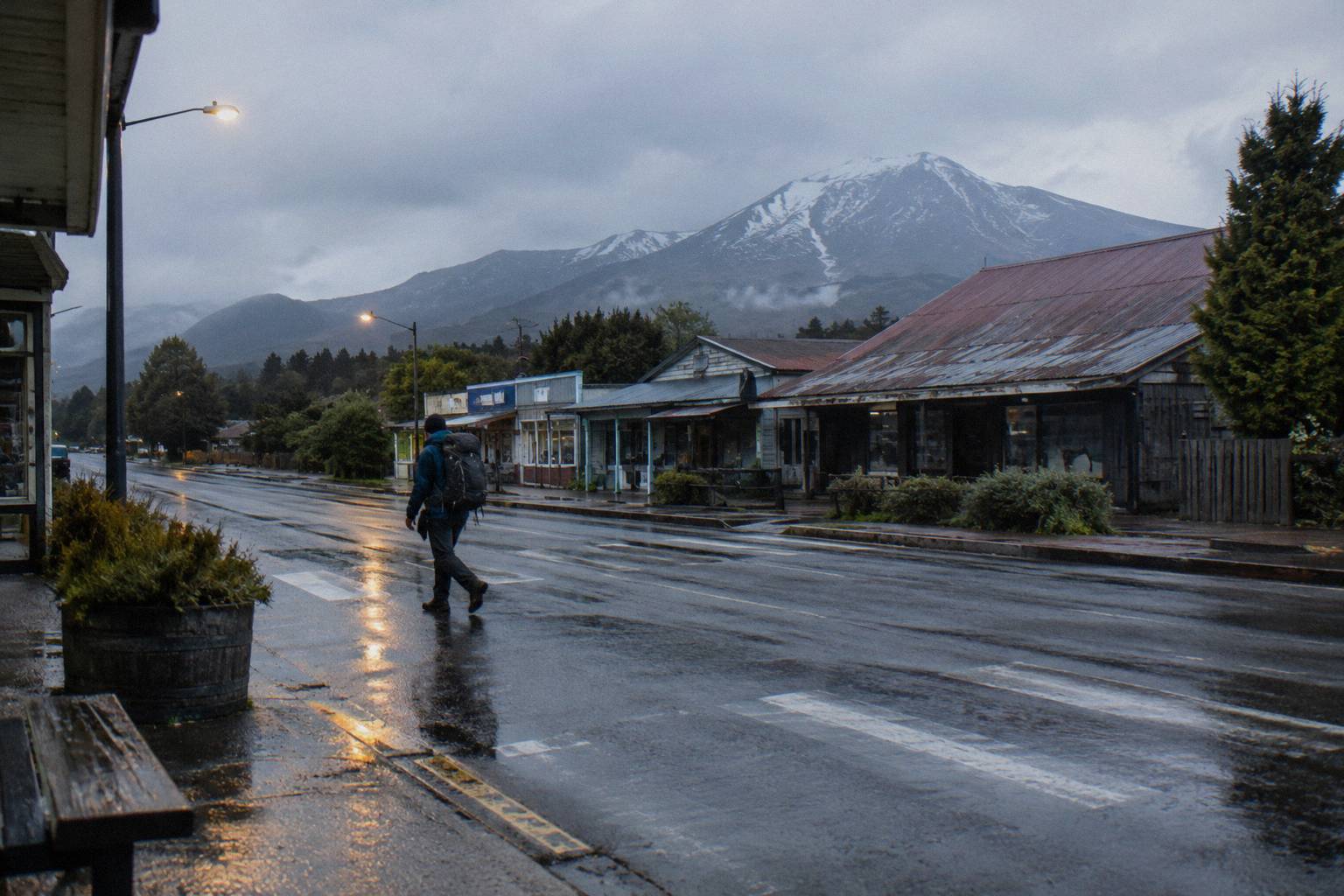
The Ohakune option rounds out the regional coverage: the Dempsey Buses return shuttle from Ohakune, rated 4.8 across 20 reviews, from NZ$110 per person, with free cancellation up to 24 hours before. The format matches the village product.
For a private guided version of the same early start, the Adrift Tongariro private guided Crossing, rated 4.5 across 30 reviews and booked as a 7 to 9 hour day, runs your own led group from National Park Village. It is non-refundable, so it suits walkers whose dates are locked.
Whichever shape you choose, the sunrise start is the one part of the day that every format shares. Shuttles and guides alike run early because DOC's time bands, the parking rule and the mountain's own weather rhythm all point the same way, and the walkers who embrace the alarm are the ones standing above the Emerald Lakes while the crowds are still riding up the valley. Tongariro Emerald Lakes Hike exists to make that morning easier to plan.
Common Questions About A Sunrise Start On The Crossing
Do I Have To Start The Tongariro Crossing Early?
In the main season, effectively yes. DOC allows 7 to 8 hours for the walk from November to April, parking at the road ends is capped at 4 hours from Labour weekend to 30 April, and the shuttle system that most walkers rely on is built around early departures. A late start pushes Red Crater and the Emerald Lakes into the cloudiest, busiest part of the day.
Can I Drive Myself For An Early Start?
Not to Mangatepopo in summer: DOC says there is no parking for Crossing walkers there, and the 4 hour maximum applies at the road ends. The workable drive-it-yourself format is a one-way park-and-ride from Ketetahi, such as the Ruapehu Scenic Shuttles option from NZ$68 per person: park at the finish, ride to the start in the dark, walk back to your car.
What Time Do The Shuttles Leave?
Departure times are set by each operator and shift with the season and the daylight, so the booking page for your date is the source. What is consistent is the pattern: shuttles run early, before first light in the peak months, to put walkers on the track at the front of the day.
Is An Early Start Safe In Winter?
Winter, May to October, reclassifies the Crossing as an Expert route with snow, ice, avalanche risk and sub-zero temperatures, and DOC says alpine skills are essential and it is best to go with a guide. Shuttle buses generally do not operate in that window, while the Adrift Tongariro guided tours include transport and carry crampons and ice axes for winter conditions if required.
How Long Does It Take To Reach The Emerald Lakes?
The full Crossing is 20.2 km one way and DOC allows 7 to 8 hours end to end in summer; the Emerald Lakes sit roughly two thirds along, after the Devil's Staircase and the climb to Red Crater at 1886 m, followed by a steep scree descent to the lakes. An early start usually puts you there by the middle of your walking day.
Can I Cancel If The Morning Forecast Turns Bad?
Many products can: the shuttles named here carry free cancellation up to 24 hours before, and the Adrift Tongariro premium guided hike up to 14 days before, while the Adrift private guided Crossing is non-refundable. Operators run only when DOC's advisory and the forecast allow, so check the DOC Crossing page on the morning itself.