Is A Guided Tongariro Crossing Worth It For The Emerald Lakes Section?
A guided walk costs more than a shuttle seat, and for many walkers the difference buys exactly the thing the Emerald Lakes section demands: someone watching the weather, the track and the group through the highest, most exposed part of the day.
Short answer
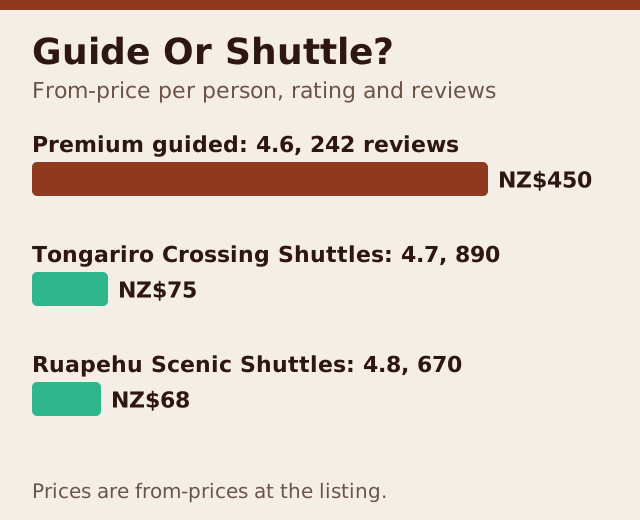
A guide is worth it if you are walking between May and October, unsure about alpine terrain, or want crampons, an ice axe and interpretation included. In summer, fit walkers manage fine on a shuttle from NZ$68, while the Adrift Tongariro premium guided hike runs from NZ$450 per person.
A guided walk costs more than a shuttle seat, and for many walkers the difference buys exactly the thing the Emerald Lakes section demands: someone watching the weather, the track and the group through the highest, most exposed part of the day.
For everything on walking the track itself, start with the Tongariro Emerald Lakes Hike home page, then come back here for the guide-versus-shuttle decision.
| Quick fact | Figure |
|---|---|
| Track length | 20.2 km one way (DOC) |
| Elevation change | +/- 1196 m (DOC) |
| High point | Red Crater, 1886 m (DOC) |
| Walking time Nov to Apr | 7 to 8 hours (DOC) |
| Walking time May to Oct | 9 hours (DOC) |
| Fitness grading | High (DOC) |
| Summer track class | Intermediate tramping track |
| Winter track class | Expert route, alpine skills essential |
| Guided tours | 3, all run by Adrift Tongariro |
| Cheapest shuttle seat | From NZ$68 per person |
What A Guide Actually Adds At The Emerald Lakes Section
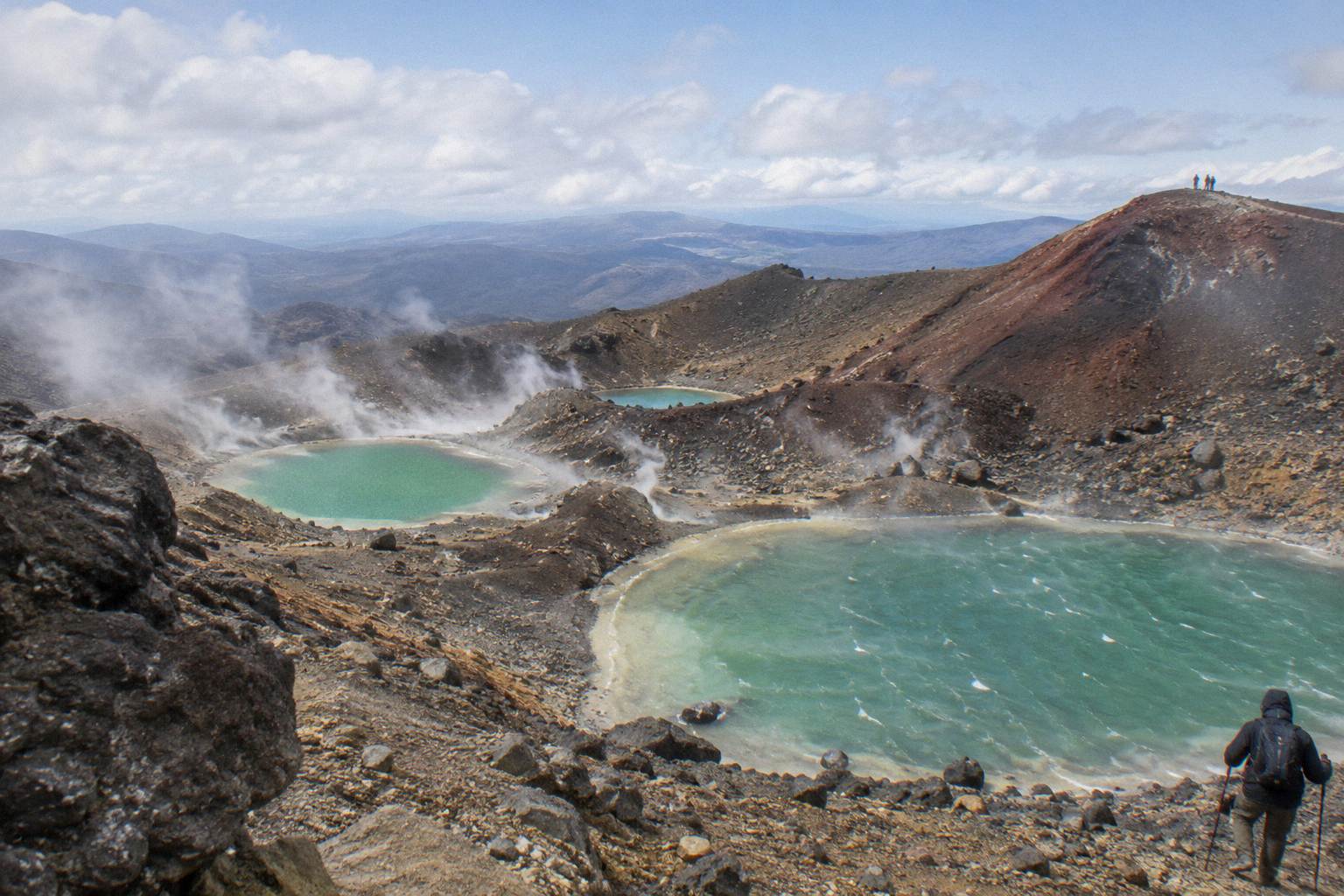
The Emerald Lakes section is the most demanding hour of the Crossing: a steep climb to Red Crater at 1886 m, then a steep scree descent DOC describes as the way down to the vivid Nga Rotopounamu, the Emerald Lakes. A guide adds three things here that a shuttle cannot: judgment on the day, alpine gear in winter, and an explanation of the landscape as you stand in it.
The track itself is the same whether you walk it alone or behind a guide. What differs is who is reading the conditions. Guided operators and shuttles run only when the DOC weather advisory and the forecast allow, and that assessment happens each morning, so a guided booking is partly a bet that someone else is making the go or no-go call with more information than you have. On a bluebird summer morning that call is easy and a guide is mostly company and commentary. On a morning with wind forecast at the crater rim, the call is the whole product.
Interpretation matters more than people expect. The lakes are old eruption craters filled with water coloured by dissolved minerals, sitting in a landscape that DOC lists as a dual World Heritage area for both its natural and its cultural values, sacred to Ngati Hikairo ki Tongariro of Ngati Tuwharetoa. A guide carries that story. The DOC track page carries the facts, but nobody reads a web page standing at the lip of Red Crater wondering why the ground is three colours.
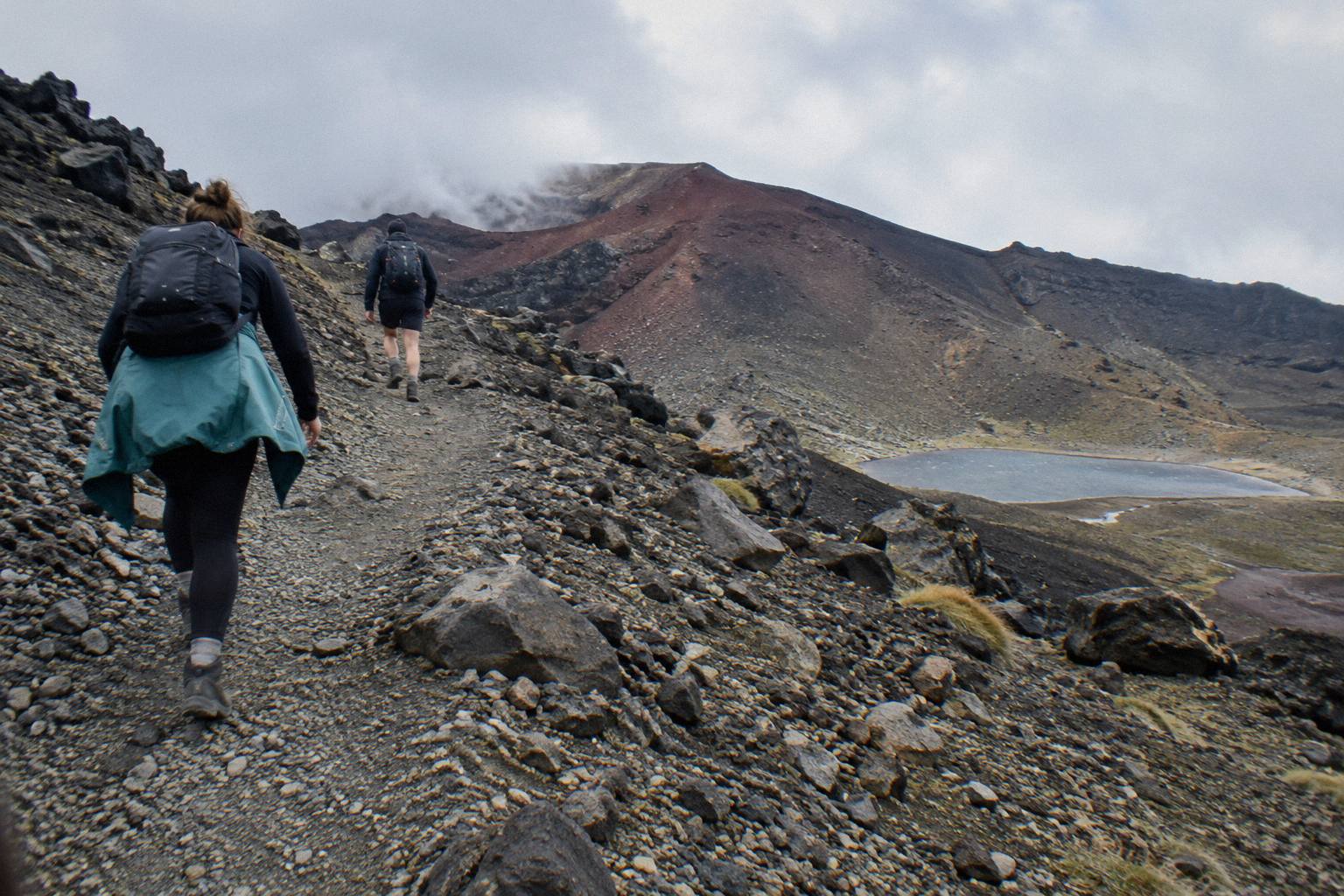
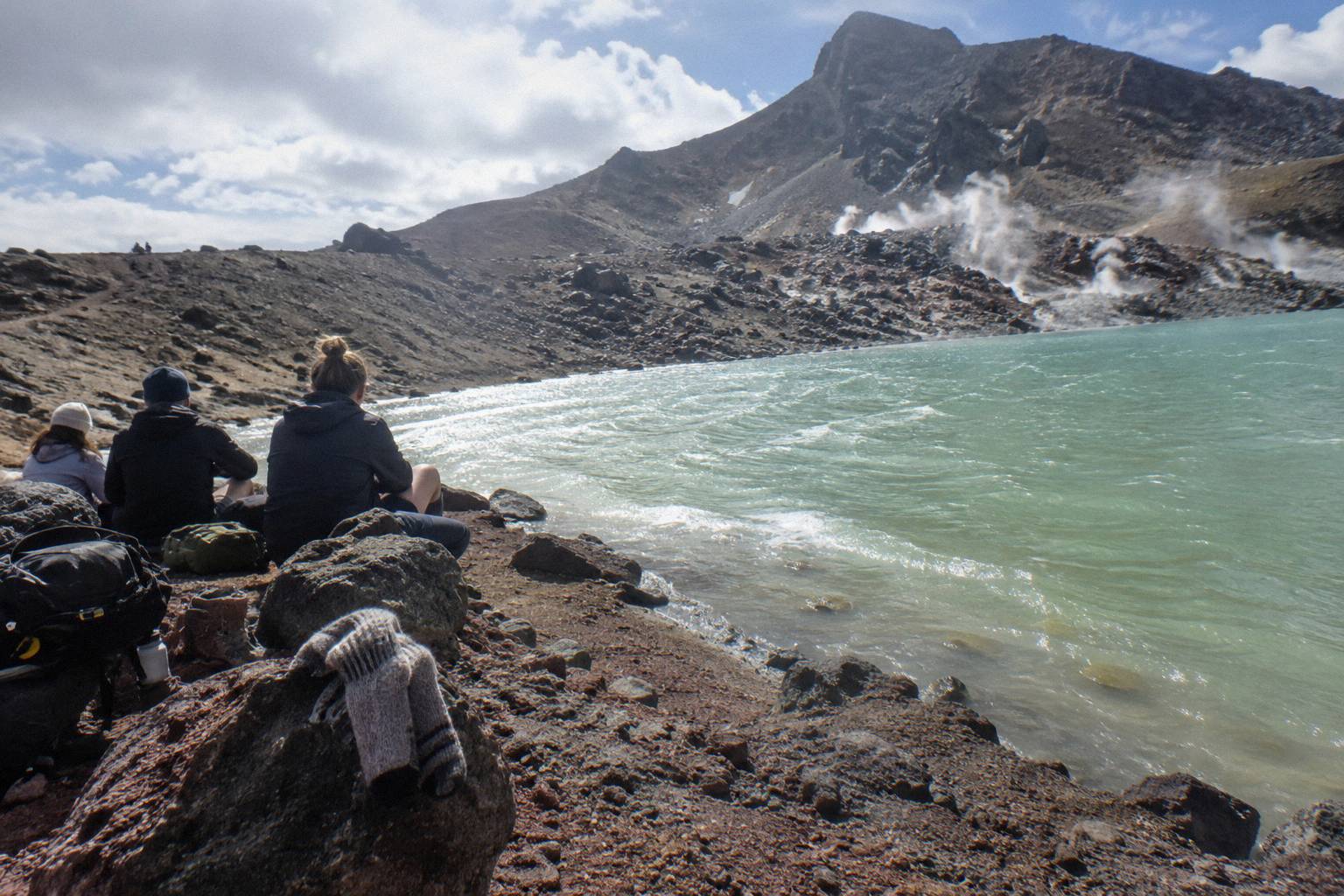
There is also a rule that catches walkers out. Kaumatua Te Ngaehe Wanikau asks visitors to respect the maunga tapu by not touching or entering any of the waterways, including the alpine lakes. That means no swimming and no dipping hands in the Emerald Lakes, on any tour, guided or not. A guide will say this on the day. A self-guided walker who skipped the briefing may only learn it from a sign, or not at all. The full story is in the guide to why the lakes are off limits for swimming.
Guided Tongariro Crossing Options And What They Cost
Adrift Tongariro runs the three guided tours: the premium guided hike from NZ$450 per person, the full-day guided group walk, and a private guided Crossing, all departing National Park Village at 53 Carroll Street. Ratings run 4.6 across 242 reviews on the premium hike, 4.7 across 278 on the group walk and 4.5 across 30 on the private. Shuttles are not guided: they move you to the start and back.
The price gap is the first thing most walkers notice, and it needs honest framing. The premium guided hike is a full-day product, 8 to 9 hours door to door, with crampons and ice axes supplied for winter conditions if required, plus a clothing and footwear allowance. Lunch is not included, so bring your own. Cancellation is free up to 14 days before. The group walk carries the same rating shape with a larger review pool, at 278 reviews, and is non-refundable, so the booking page shows the cancellation terms and they deserve a read before you commit. The private option, also non-refundable, buys a smaller group and a flexible 7 to 9 hour day.
Against that, the shuttle end of the market starts at the Ruapehu Scenic Shuttles Ketetahi park-and-ride, from NZ$68 per person, rated 4.8 across 670 reviews with free cancellation up to 24 hours before. It is a one-way product: you park at Ketetahi, ride to Mangatepopo, and walk the Crossing back to your own car. Nobody guides you, feeds you or checks your jacket. That is the real comparison, a NZ$68 seat versus a NZ$450 day, and the question is what the difference buys on your specific date and fitness level.
If a guide sounds right, the booking walkthrough for guided hikes to the lakes steps through the details, and the deeper question of whether a guide is worth it on this track is covered from the independent walker's side too.
Guided Walk Versus Shuttle: Which Fits Your Day?
Pick a guide for winter, for a first alpine walk, for a tight schedule with no second chance, or when you want gear and interpretation included. Pick a shuttle when you are walking November to April, you are comfortable with 20.2 km and +/- 1196 m of elevation change, and you would rather spend NZ$68 to NZ$90 than NZ$450. Neither product can promise the weather.
The honest middle position is that most summer walkers do not need a guide. DOC grades the summer track as an intermediate tramping track with a High fitness requirement, 7 to 8 hours November to April, and tens of thousands of people complete it each season behind nothing more than a shuttle timetable. If that is you, the money is better spent on good boots and an early start. The shuttle-timetable guide covers how the shuttle day lines up for the Emerald Lakes in detail.
The case for the guide is concentrated in specific situations. Winter is the clearest one. From May to October DOC upgrades the route to Expert, with snow, ice, avalanche risk and sub-zero temperatures, and says alpine skills are essential and it is best to go with a guide. Crampons and ice axes are supplied on the Adrift guided tours for those conditions. A second situation is the once-only visitor: if this is your one day in Tongariro National Park and a failed attempt means no lakes at all, a guided operator's morning go or no-go call, plus someone who knows the escape routes, is insurance on the day itself.
| Premium guided hike | Group guided walk | Ketetahi park-and-ride | Round-trip shuttle | |
|---|---|---|---|---|
| Operator | Adrift Tongariro | Adrift Tongariro | Ruapehu Scenic Shuttles | Tongariro Crossing Shuttles |
| Format | Guided group hike | Guided group hike | One-way shuttle | Return shuttle |
| Price | From NZ$450 pp | On the booking page | From NZ$68 pp | From NZ$75 pp |
| Rating | 4.6, 242 reviews | 4.7, 278 reviews | 4.8, 670 reviews | 4.7, 890 reviews |
| Free cancellation | Yes, 14 days | No | Yes, 24 hours | Yes, 24 hours |
| Winter gear supplied | Yes, if required | Yes, if required | Check the booking page | Check the booking page |
| Guide on track | Yes | Yes | No | No |
One structural point worth knowing: shuttles generally do not operate in winter, May to late October, while guided trips include transport. That alone decides the question for off-season walkers, because a self-guided winter attempt needs independent alpine competence, DOC-listed winter essentials including an ice axe, helmet and avalanche gear, and a way to the trailhead.
What The Private Guided Crossing Buys You
The Adrift Tongariro private guided Crossing, rated 4.5 across 30 reviews, puts a guide on just your party for a 7 to 9 hour day from National Park Village. It is non-refundable, the price is on the booking page rather than advertised per person, and it suits walkers who want pace control, a photographer's schedule at Red Crater, or a family group moving together rather than at a group's average speed.
A private guide's real value is time. Group walks move at a negotiated pace, and on a 20.2 km day with a fixed pickup at the far end, a group cannot wait an hour for the light to change on the lakes. A private guide can, within the day's weather window. For photographers that is the difference between a passing glance at the descent and a planned stop, and the guide to photographing the Emerald Lakes explains why the timing matters so much on this section.
Private also changes who the guide is talking to. On a group walk the commentary is aimed at the middle of the room. On a private walk you can spend the whole climb to Red Crater on vulcanology, on the 2012 Te Maari eruption that reshaped this side of the mountain, or on nothing at all. Some walkers value the silence more than the science, and only a private format delivers that.
The trade-off is the refund policy. Both Adrift group products and the premium hike sit at the forgiving end, the premium with free cancellation up to 14 days before, while the private Crossing is non-refundable. If your travel dates could still move, that policy difference is a real cost, not a footnote.
Winter Turns The Guide Question Into A Safety Question
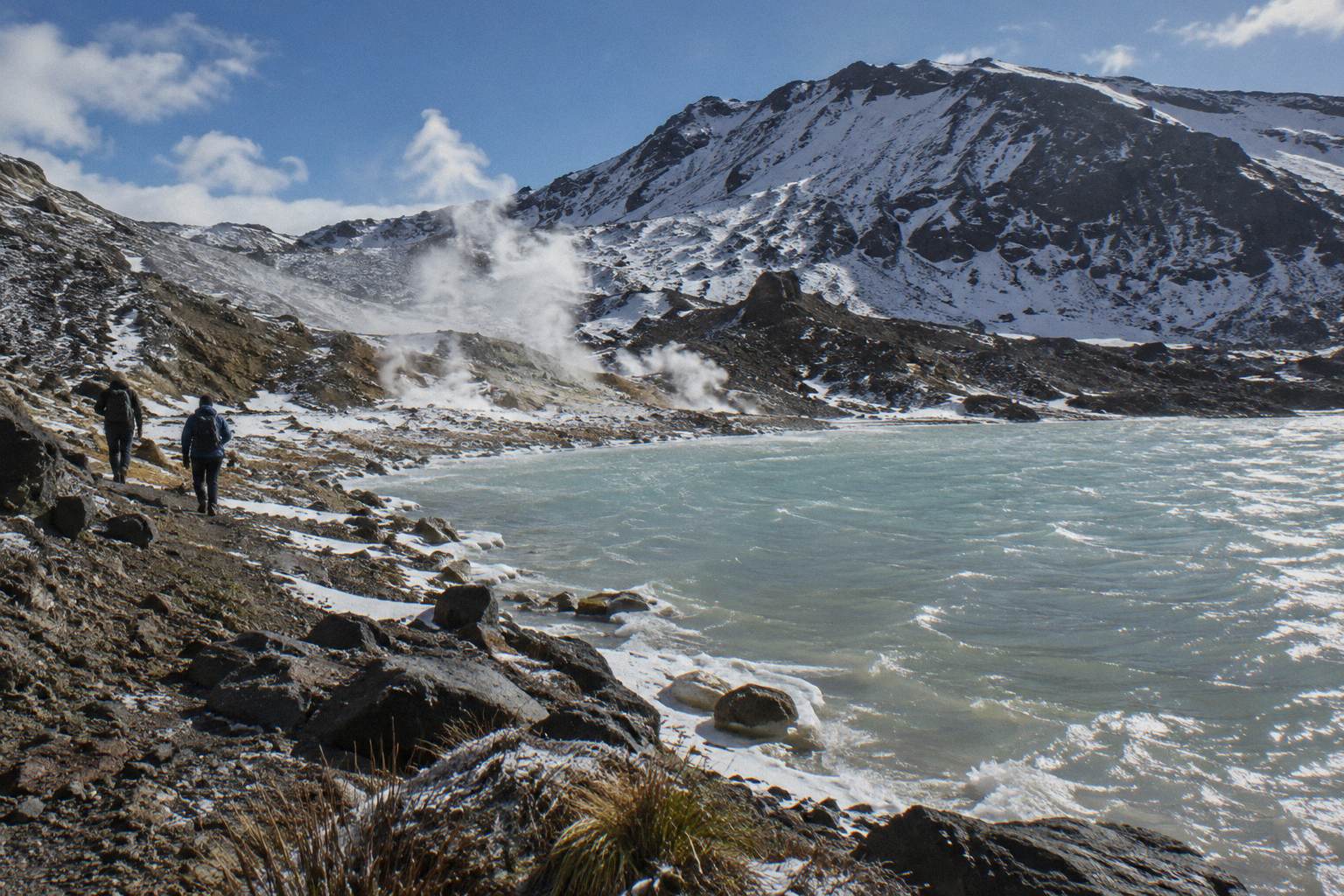
From May to October DOC classes the Crossing as an Expert route where alpine skills are essential and a guide is the recommended way to go. Snow, ice, avalanche risk and sub-zero temperatures replace the summer scoria, daylight shrinks to between 9 and 11 hours, and shuttles generally stop running for the season. In that window a guided booking is not a comfort purchase, it is the difference between a managed alpine day and an independent winter mountaineering trip.
The summer and winter tracks are nearly the same on the map and nothing alike underfoot. The scree descent from Red Crater to the Emerald Lakes, loose and forgiving in January, can be firm snow over scree in July, and that is the exact section where tired legs and late-afternoon light combine. Crampons and ice axes are supplied on the three Adrift guided tours for winter conditions if required, along with a clothing and footwear allowance, and DOC's own winter advice for independent walkers lists crampons, an ice axe, a helmet, competency with both, and avalanche equipment.
Volcanic risk adds a second layer that changes daily. The 2012 Te Maari eruptions are the living memory of why this is a monitored mountain, and alert levels shift without respect to season. The structural advice is simple: check the DOC alerts page and GeoNet before any winter day, guided or not, and treat the NIWA Red Crater forecast and the MetService mountain forecast as required reading. Volcanic risk in the park is explained on the DOC volcanic risk page, and booking through the DOC booking system, which is free and recommended, is needed for guided trips.
Shuttles From Taupo, Turangi And Ohakune If You Skip The Guide
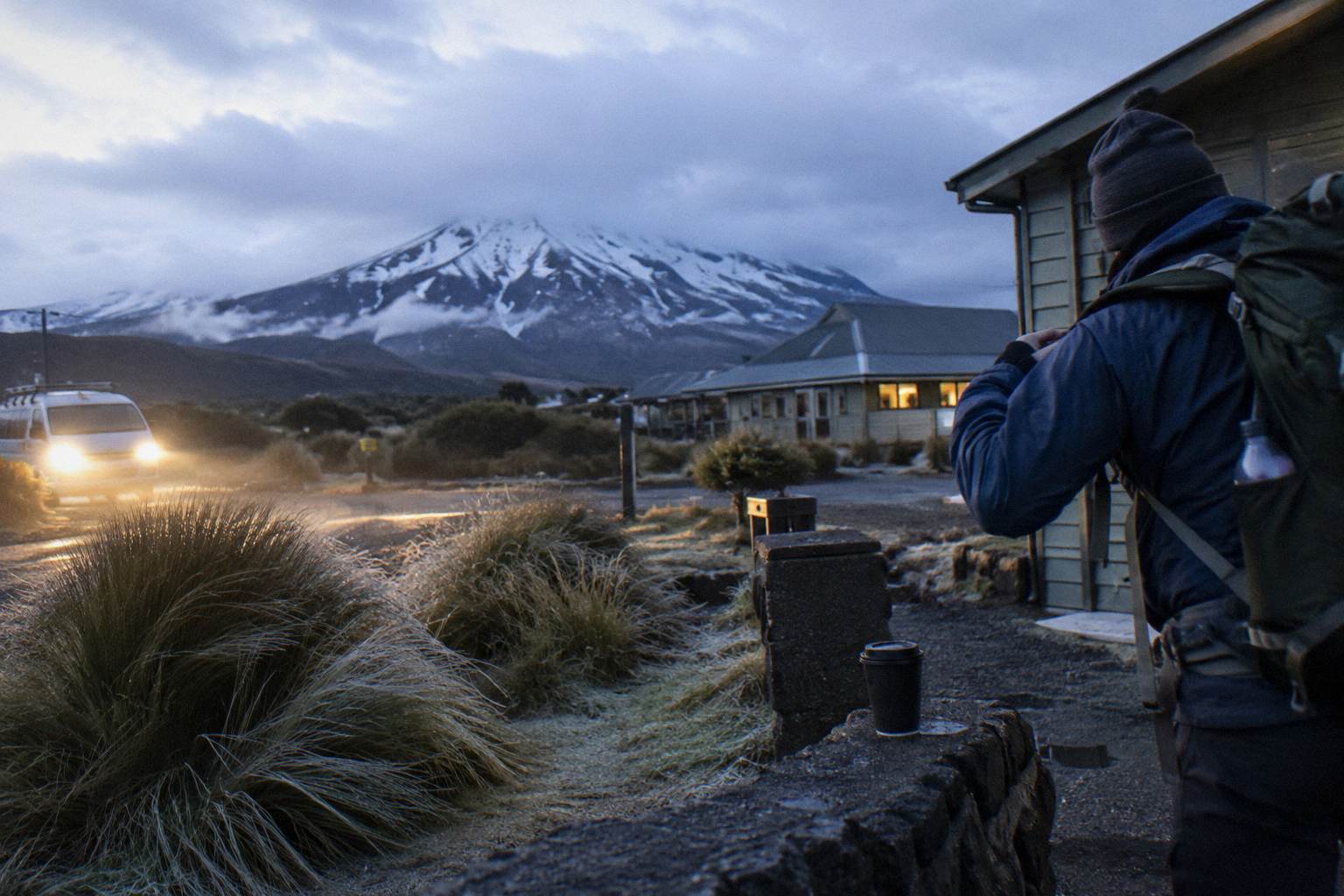
Location usually picks the product. A Taupo base pairs naturally with the Tongariro Expeditions Taupo or Turangi departures, an 8 to 10 hour day door to door. National Park Village has the deepest bench: the Tongariro Crossing Shuttles round trip from the Park n Ride at 59 Findlay Street, from NZ$75 and the most reviewed tour here at 4.7 across 890 reviews, plus the Dempsey Buses return service calling at the Park Hotel Ruapehu and the Tongariro Crossing Lodge. Ohakune has a Dempsey Buses return shuttle of its own. DOC's distances put Turangi 36.7 km from the track, Ohakune 48 km and Taupo 86.5 km, so where you sleep the night before largely decides which seat you book.
The 24 hour cancellation window on these shuttle products is worth using deliberately. Book the seat when you lock your accommodation, then watch the forecast in the final days. DOC restricts road-end parking to a 4 hour maximum from Labour weekend in late October to 30 April and suggests booking a shuttle, and there is no parking for Crossing walkers at Mangatepopo car park in summer, so driving yourself to the start is not a real plan in season. Part of each shuttle fee, about NZ$40 by DOC's account, goes to conservation.
The Ketetahi park-and-ride products are the budget entry, and one of them, the Ruapehu Scenic Shuttles option at from NZ$68, is the cheapest seat with a published per-person price among the tours named here. Remember the format: one-way only, you park at Ketetahi and ride to Mangatepopo, and there is no return leg. The Ketetahi finish after the Emerald Lakes guide covers the walk-out, and the walk time to the Emerald Lakes guide covers how the hours break down.
Common Mistakes When Deciding On A Guided Crossing
The recurring mistakes are assuming a shuttle includes a guide, booking a guided day for a settled summer weekend when a NZ$68 seat would do, skipping the guide in winter because the photos look tame, expecting lunch and gear on products that do not state them, and ignoring the different cancellation windows. Each one is avoidable with a single honest look at the season, your fitness and the product's own terms.
The first mistake is the shuttle-guides confusion, and the marketing language feeds it: a park-and-ride row says "shuttle" but a tired reader sees "tour". A shuttle sells transport. A guide sells the day on the mountain. If you want someone with you at Red Crater, only the three Adrift Tongariro products provide that, and no shuttle row does. The second mistake runs the other way: a confident summer walker paying NZ$450 for reassurance they did not need, when the forecast is settled and the track is at its most forgiving.
The third is calendar blindness. May arrives and the same walkers who dismissed a guide in January need one, or need to not go at all. Winter on this track is a different sport, and the guide to winter snow conditions at the Emerald Lakes makes the contrast concrete. The fourth is packing assumptions: crampons and ice axes are stated only on the Adrift guided tours, and lunch is not included even there, so bring your own. Print nothing onto a shuttle about gear or food, just pack as if you are fully self-supported, because you are.
| Mistake | What happens | The fix |
|---|---|---|
| Expecting a shuttle to guide you | No guide, no gear, no commentary on the track | Book an Adrift guided tour if you want a guide |
| Guided booking for a settled summer day | NZ$450 spent where NZ$68 would do | Check NIWA and MetService first, then decide |
| No guide in winter | Expert route, alpine gear and skills required | Book guided or postpone to summer |
| Assuming lunch is included | Adrift tours state lunch is excluded | Bring your own lunch either way |
| Mixing up cancellation windows | Non-refundable rows lose the fare | Read the booking page terms before paying |
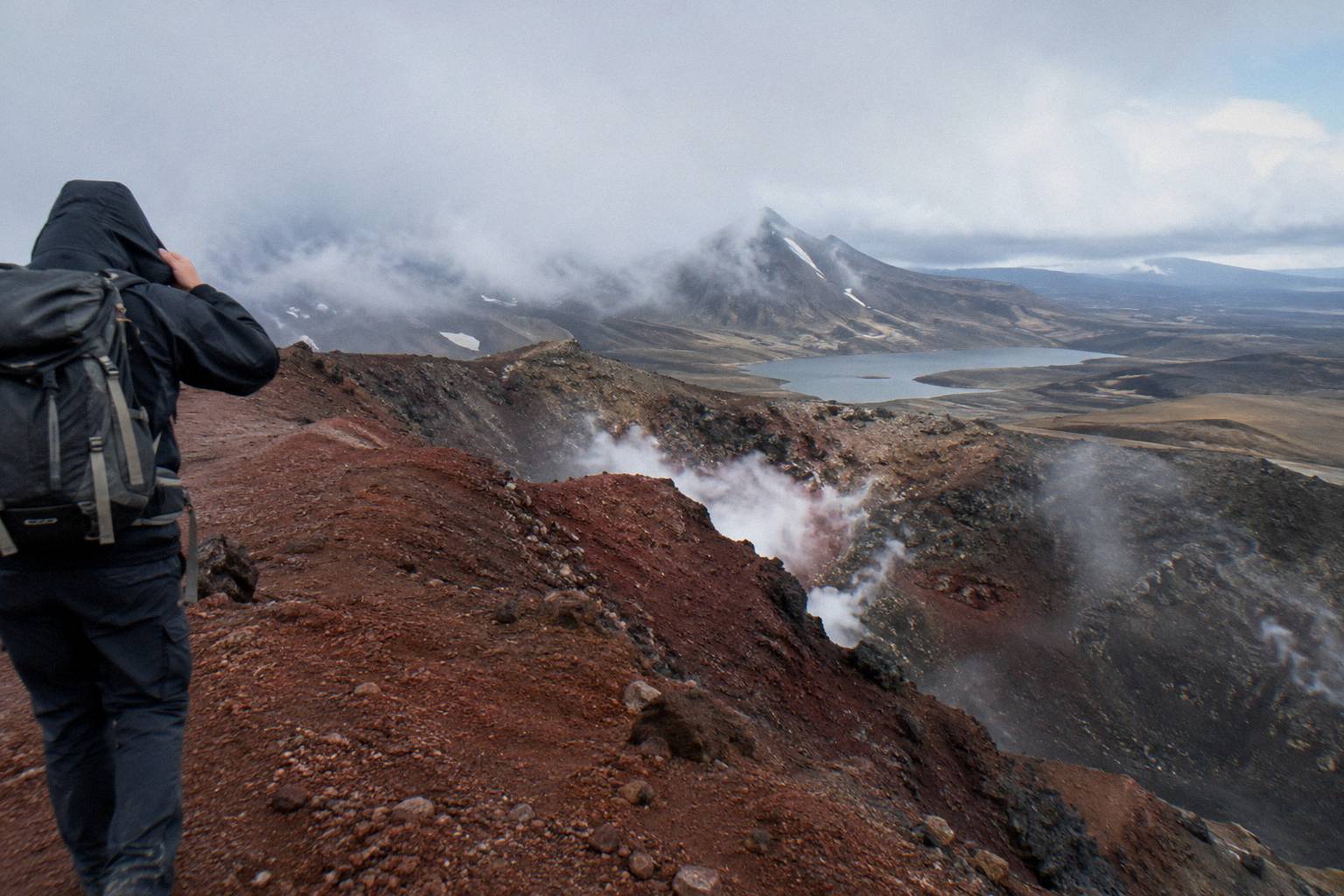
A quieter mistake is treating the Emerald Lakes as the finish line. They sit roughly two thirds of the way along the track, below Red Crater, and the descent to Ketetahi Road is long, hot on a clear day, and where most of the day's tiredness injuries happen. Whether guided or not, budget for the whole 20.2 km, not the postcard. The distance and elevation guide for the lakes has the full profile.
The Verdict By Walker Type
Book the premium guided hike, from NZ$450, if you are walking May to October, want gear and a morning conditions call included, or value free cancellation up to 14 days. Book the private guided Crossing for pace control and a photographer's day. Book a shuttle seat, from NZ$68, if you are a fit summer walker who wants the track and nothing else.
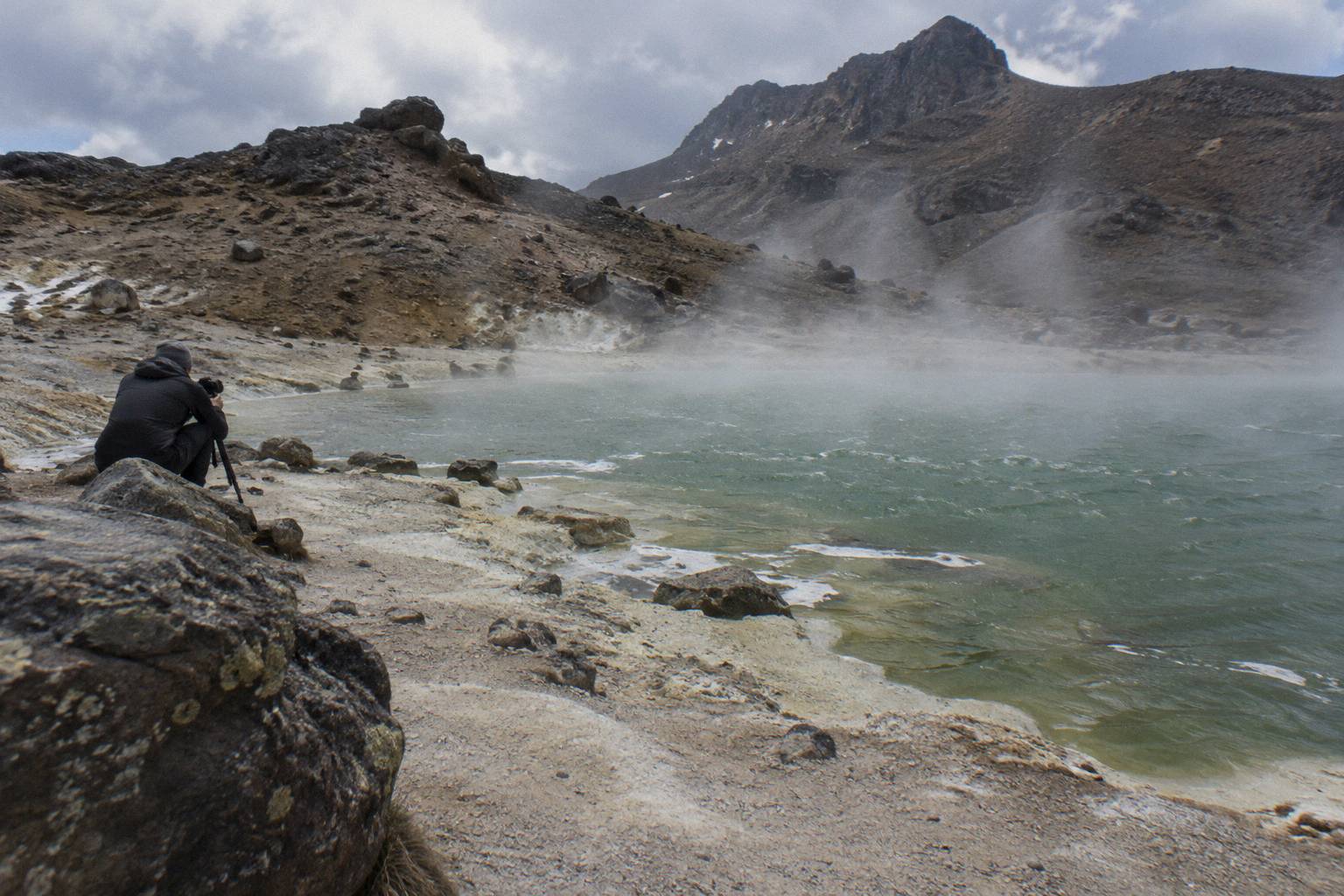
A first-time alpine hiker with a hard schedule lands on the guide side; a seasoned tramper with flexibility lands on the shuttle side. Neither answer is wrong, and the only wrong position is refusing to choose based on the calendar. The premium guided hike, 4.6 across 242 reviews, is the balanced choice for most guide-seekers: group pace, winter gear if required, a 14 day cancellation window and an 8 to 9 hour day from National Park Village, with pickups from Taupo, Turangi and Whakapapa available at a surcharge on private bookings. The group walk suits the same walker at the same standard, 4.7 across 278 reviews, with the cancellation trade-off. The private tour, 4.5 across 30 reviews, is a smaller pool but a deliberately narrower product.
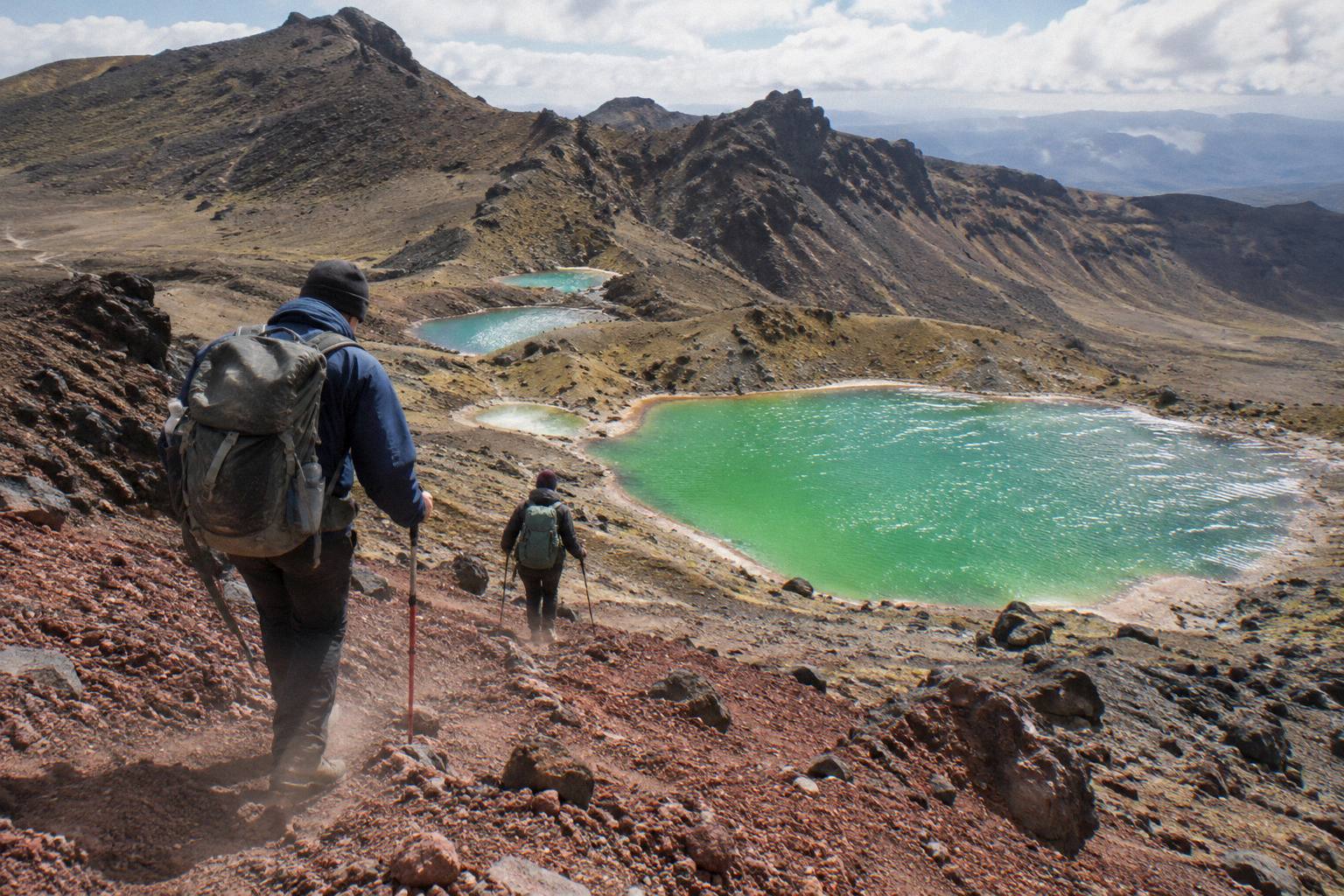
On the shuttle side, the decision is mostly geography, and the round trip from National Park Village at from NZ$75 is the most reviewed tour here, 4.7 across 890 reviews, which says something about how most visitors actually do this track. The honest summary: the guide is worth exactly what the season and your experience make it worth, no more and no less. Summer and confident, take the shuttle. Winter, nervous, once-only or photographer, take the guide, and take the one with the 14 day window if your plans are soft.
Common Questions About Guided Walks To The Emerald Lakes
Is A Guided Tongariro Crossing Worth It?
It depends on season and experience. From May to October DOC calls the route Expert and recommends a guide, and the Adrift tours supply crampons and ice axes when conditions require them. In summer a fit walker manages self-guided on a shuttle from NZ$68, while the premium guided hike runs from NZ$450 per person. The guide is worth it for winter, first alpine walks, tight schedules and anyone who wants the day interpreted rather than just completed.
Are The Shuttles Guided?
No. Every shuttle and park-and-ride product, including the Ruapehu Scenic, Tongariro Crossing Shuttles, Dempsey Buses, Tongariro Expeditions, Owhango Adventures, National Park Shuttles, Active Outdoor Adventures and Backyard Tours services, provides transport only. Only the three Adrift Tongariro tours put a guide on the track with you.
What Does The Premium Guided Hike Include?
The Adrift Tongariro premium guided hike runs from NZ$450 per person for an 8 to 9 hour day from National Park Village, rated 4.6 across 242 reviews, with crampons and ice axes supplied for winter conditions if required plus a clothing and footwear allowance. Lunch is not included, so bring your own. Cancellation is free up to 14 days before.
Do I Need A Guide In Winter?
DOC treats May to October as an Expert route with snow, ice, avalanche risk and sub-zero temperatures, and says alpine skills are essential and it is best to go with a guide. Shuttles generally do not operate in winter while guided trips include transport. An independent winter attempt needs DOC-listed winter essentials including crampons, an ice axe, a helmet and avalanche equipment, plus genuine competency with all of it.
Can A Guide Take Me Swimming In The Emerald Lakes?
No, and no operator can. Kaumatua Te Ngaehe Wanikau asks visitors to respect the maunga tapu by not touching or entering any of the waterways, including the alpine lakes. That request applies to guided and self-guided walkers alike. The lakes are for looking at, and they are worth the look on any terms.
Is A Private Guided Crossing Better Than A Group One?
Neither is better, they solve different problems. The private tour, rated 4.5 across 30 reviews, gives you pace control and a 7 to 9 hour day shaped around your party, at a price shown on the booking page and with a non-refundable policy. The group walks move at a shared pace and cost less per person. Photographers and families usually prefer private; most walkers are well served by the group format.
Keep reading: the best month to hike to the Emerald Lakes, the sunrise start strategy for the lakes, and how much it costs to do the Crossing.