Swimming In The Emerald Lakes On The Crossing: Why Tapu Means Stay Out
The Emerald Lakes are the famous sight of the Tongariro Alpine Crossing, and they are also waterways that local iwi ask visitors not to touch or enter. Here is what that request means, where it comes from, and how to plan a Crossing day around it.
Short answer
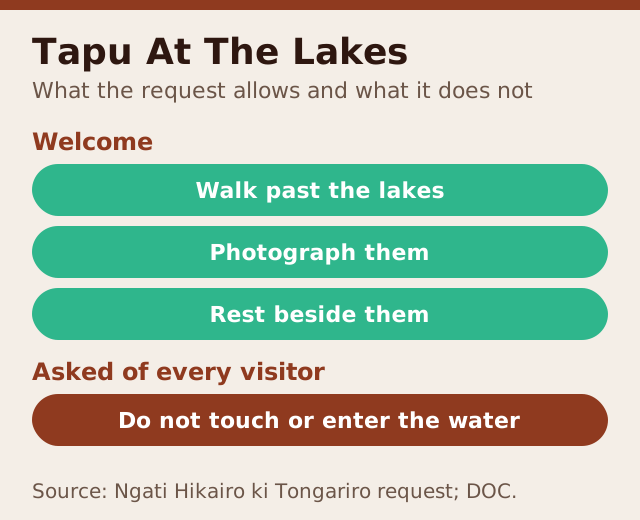
Swimming in the Emerald Lakes is not permitted in the sense that matters: the mountains are tapu, sacred to Ngati Hikairo ki Tongariro, and DOC relays the request not to touch or enter any of the waterways, including the alpine lakes. You can walk right past them, photograph them and rest beside them on the 20.2 km Crossing.
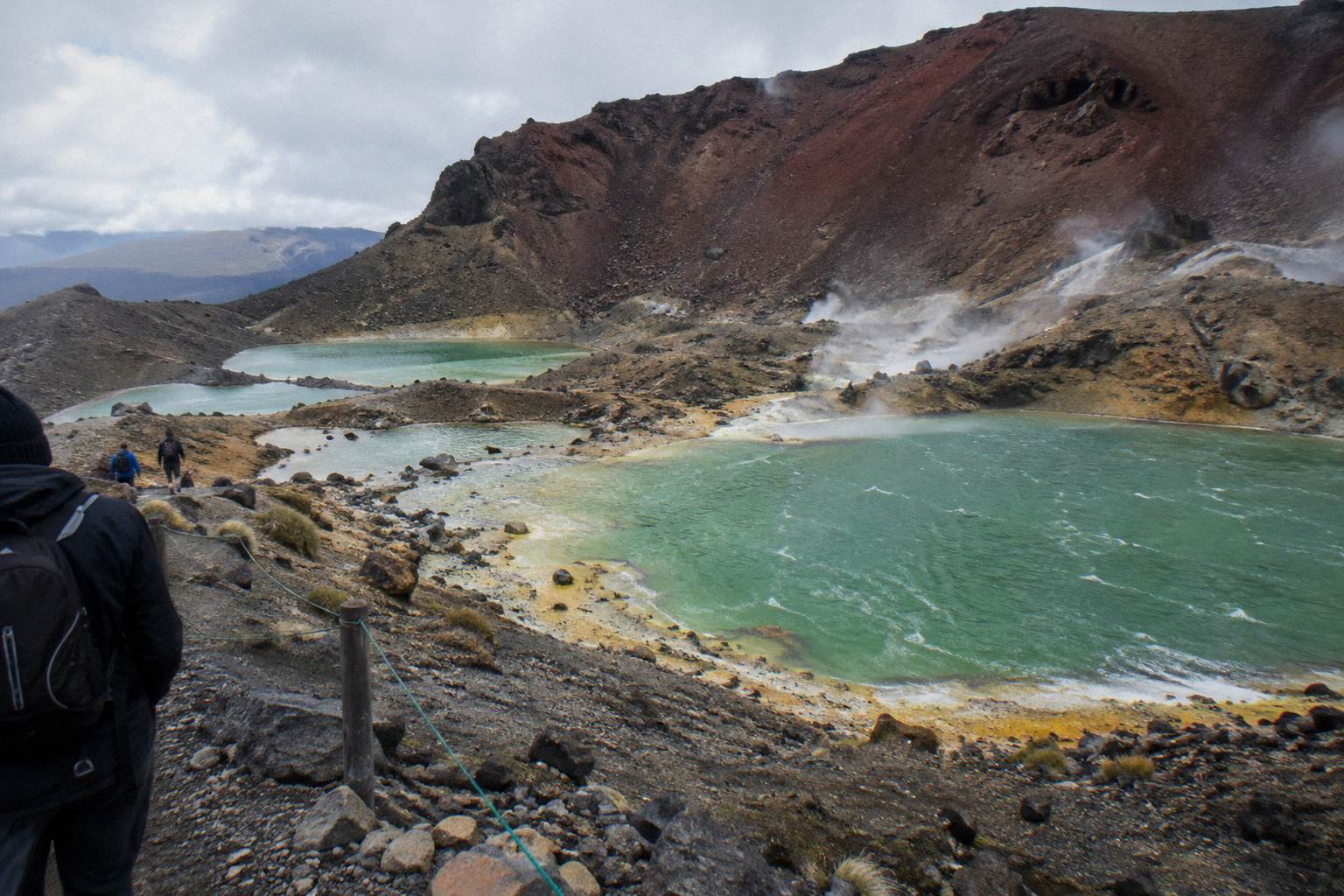
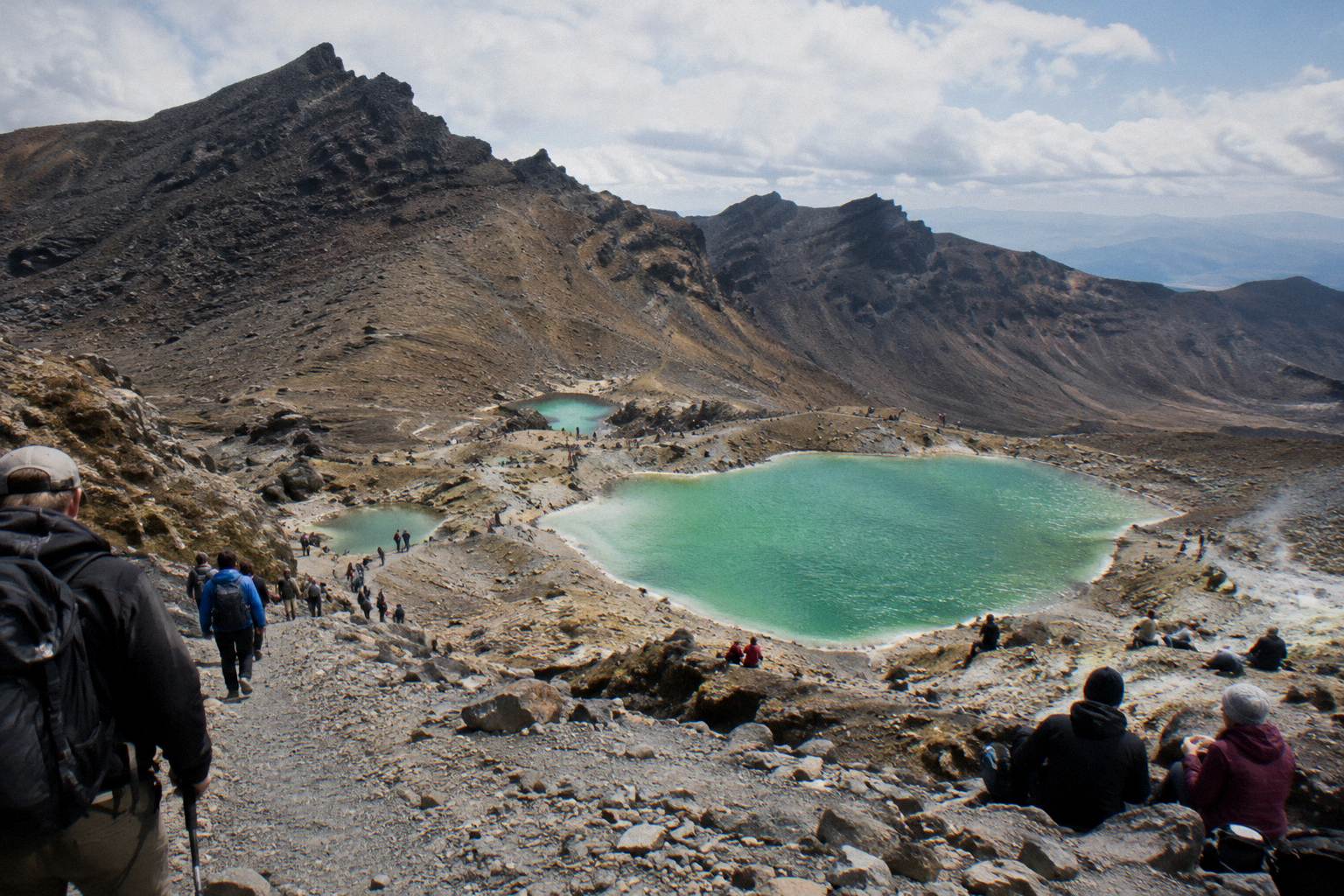
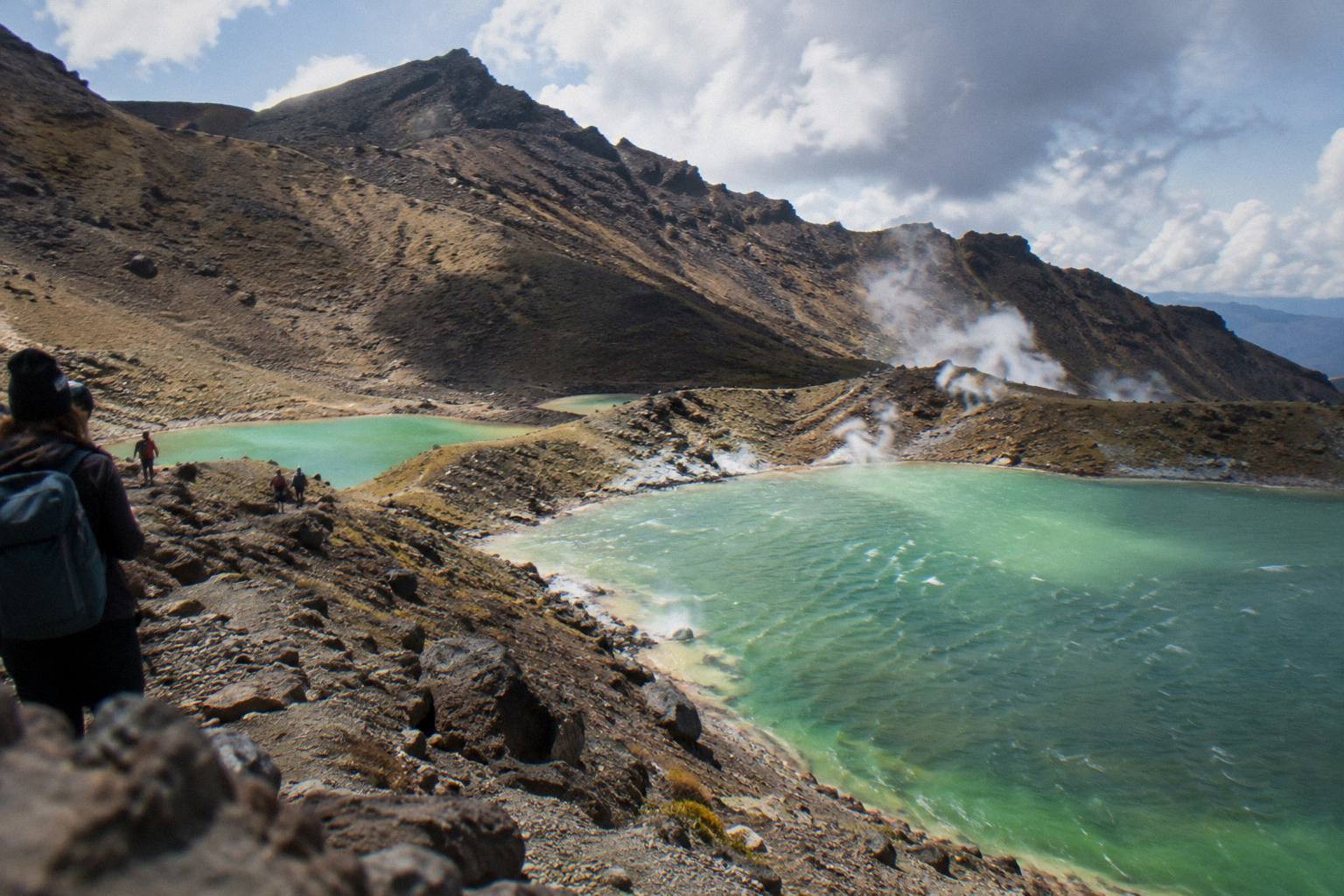
The three green pools known as Nga Rotopounamu, the Emerald Lakes, sit just below Red Crater at 1886 m on the Tongariro Alpine Crossing, and they are the photograph most walkers carry home. They are also waterways inside a sacred mountain landscape, and the Department of Conservation relays a clear request from Kaumatua Te Ngaehe Wanikau of Ngati Hikairo ki Tongariro: visitors are asked to respect the maunga tapu by not touching or entering any of the waterways, including the alpine lakes. This guide explains that request, where it comes from, and what it means for planning the day, including which guided trips and shuttles deliver you to the lakes with the context intact.
For the wider picture of the pools themselves, see the Emerald Lakes on the Tongariro Crossing overview.
Quick Facts
The Emerald Lakes sit about two-thirds of the way along a 20.2 km one-way track, and the swimming answer comes down to one request: Ngati Hikairo ki Tongariro ask visitors not to touch or enter any of the waterways, including the alpine lakes. The figures below frame the day that request sits inside, all from the Department of Conservation's official track page.
| Fact | Figure | Source |
|---|---|---|
| Track length | 20.2 km one way | DOC |
| Elevation change | +/- 1196 m | DOC |
| Highest point | Red Crater, 1886 m | DOC |
| Walking time, November to April | 7 to 8 hours | DOC |
| Walking time, May to October | 9 hours | DOC |
| Fitness requirement | High | DOC |
| Winter track class | Expert route, alpine skills essential | DOC |
| Swimming in the Emerald Lakes | Asked not to touch or enter any waterways | DOC, relaying the Kaumatua's request |
Can You Swim In The Emerald Lakes?
No, and the reason is cultural rather than a fence or a fine. The mountains of Tongariro are tapu, sacred to Ngati Hikairo ki Tongariro, and DOC relays a request from Kaumatua Te Ngaehe Wanikau that visitors respect the maunga tapu by not touching or entering any of the waterways, including the alpine lakes. The Emerald Lakes fall inside that request. Walking past, photographing and resting on the shore are normal; getting in the water is not.
DOC carries the request on its official Tongariro Alpine Crossing page, and it applies to every waterway on the mountain, not only the three green lakes. That includes the Blue Lake further along the track, the springs near Ketetahi and the streams you cross between Mangatepopo and the finish. The request is worded as a request, and this site reports it the same way: it is not written as an enforcement rule with penalties, it is an ask from the iwi whose maunga this is, relayed through the conservation department that manages the park alongside them.
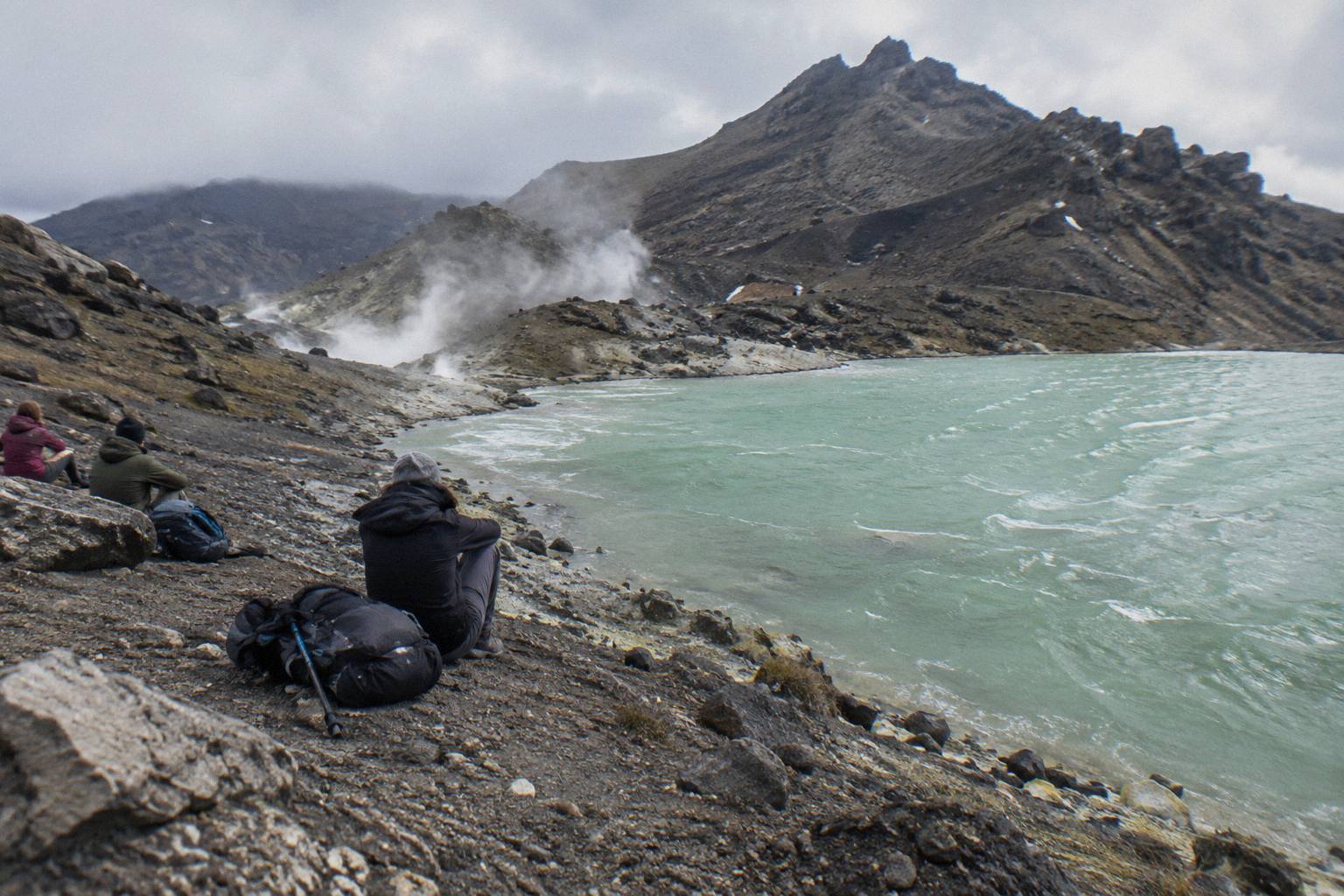
For a walker arriving at the lakes after the climb over Red Crater, the practical reading is simple. Take the photographs from the shore. Sit on the volcanic gravel and eat lunch with the pools in view, which is what most of the track traffic does through the middle of the day. Keep filters, bottles and hands out of the water. The colours are the drawcard anyway, and they read best from a few metres back where all three pools frame together against the scree. The Emerald Lakes colours explained guide covers why the water looks the way it does.
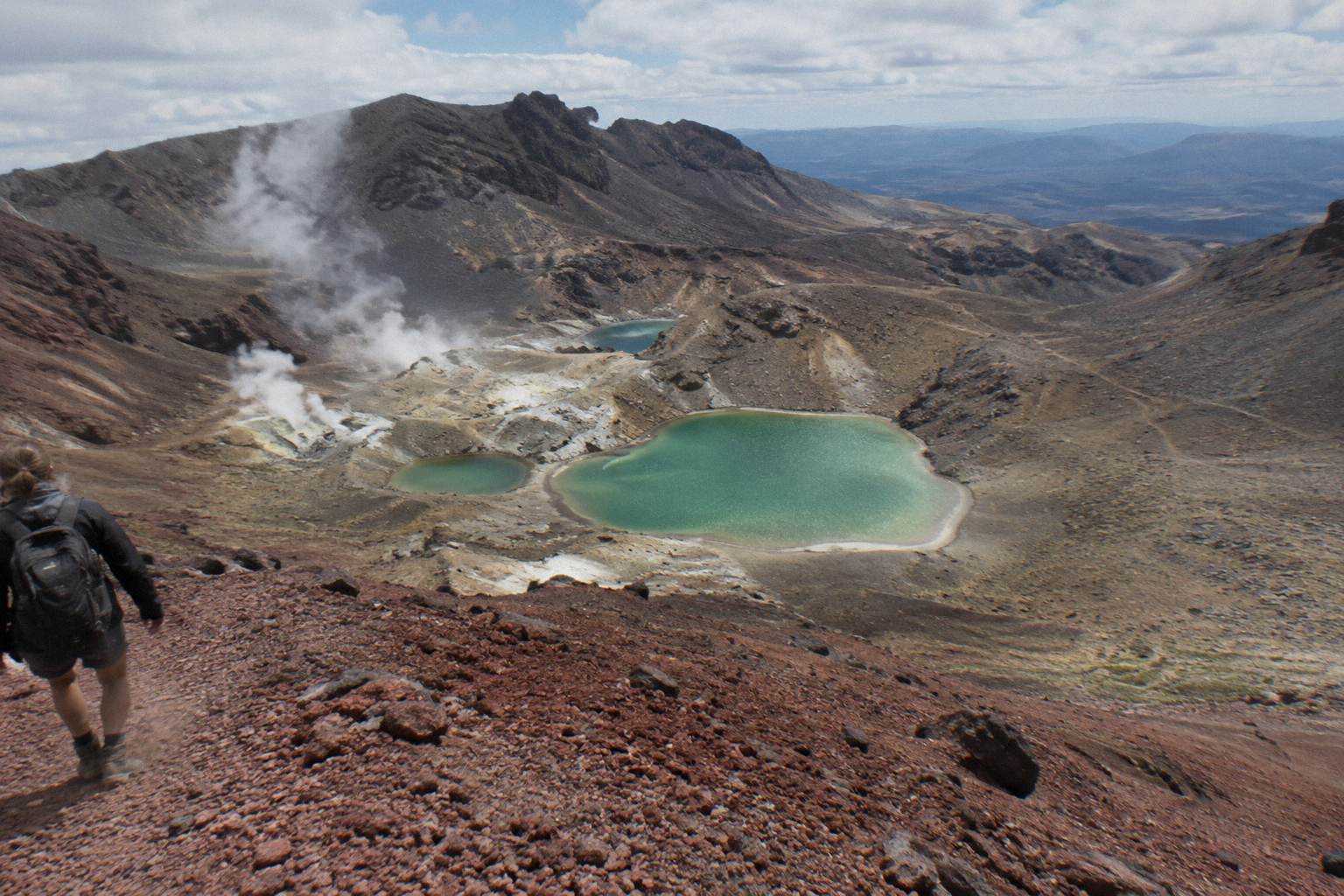
There is a second, quieter reason to stay dry that has nothing to do with tapu. These are crater lakes fed by heated mineral water in an active volcanic field, and no verified temperature or depth figures are published for them in the sources this site uses, so nothing responsible can be printed here about how cold or how deep they might be. What is verifiable is the volcanic setting itself: Tongariro is an active volcano, its alert level is reassessed daily by GeoNet, and the track crosses terrain that was erupting within living memory, with the Te Maari vents active in 2012. A swim in a crater lake on an active volcano is a poor idea on the geology alone.
What Does Tapu Actually Mean On The Crossing?
Tapu is a Maori concept of sacred restriction, and on Tongariro it means the whole mountain is set apart rather than any single spot being off limits. The summits and waterways are sacred to Ngati Hikairo ki Tongariro of Ngati Tuwharetoa, who gifted the maunga to the nation, a gift that led to New Zealand's first national park in 1894 and dual World Heritage status. Not entering the waterways is one visible part of respecting that sacredness.
The history matters because it explains why the request carries weight. When the chiefs of Ngati Tuwharetoa gifted the mountain, they did so to protect it, and the park was later returned to iwi and leased back to the Crown, an arrangement that keeps Ngati Hikairo ki Tongariro as tangata whenua of the northern mountain. The Crossing track, the shuttles, the booking system and the hundreds of thousands of boots each season all operate inside that relationship. The request not to touch or enter the waterways is the part of it a walker meets directly, on the shore of the Emerald Lakes, about seven hours into the day for most people.
It helps to know what the request does not cover. Walking the track is welcomed. The huts, the toilets and the formed route exist for exactly that. Ngauruhoe stands beside the track as scenery, the cone that popular culture calls Mount Doom, and no product in this site's tour set climbs it. The line the iwi draws is at the water: lakes, springs and streams on the maunga are not for entering, and the Emerald Lakes, sitting in open craters beside the most-photographed section of track, are where the request is most often tested by visitors who simply do not know.
A guided day puts that context in your ear at the moment you need it. The Adrift Tongariro premium guided hike walks the full Crossing as a guided group, from NZ$450 per person with free cancellation up to 14 days before, rated 4.6 across 242 reviews, and its guides carry the cultural and volcanic commentary as part of the day. Check availability if that format suits, or read the deeper comparison in whether a guide is worth it for the Emerald Lakes section.
What Happens If You Do Enter The Water?
Nothing good, and nothing worth testing. The request is cultural, but the water itself sits in an active volcanic crater field where the ground and the water chemistry behave differently from an ordinary alpine lake, and no verified temperature or depth figures exist in the official sources to plan around. Entering also disrespects a request made by the iwi of the mountain. Treat the lakes as view-only and move on.
Walkers sometimes ask whether the rule is enforced. The honest answer is that this site's verified sources print no penalty, no fine schedule and no patrol regime for entering the water, only the request itself, and inventing enforcement details would be as wrong as inventing permission. What the sources do say is structural: the Crossing is managed under a DOC booking system that is free and recommended, shuttles and guided trips require it, and the whole visitor operation runs in partnership with Ngati Hikairo ki Tongariro. Compliance is mostly cultural, which is exactly why the wording is a request.
The stronger argument for staying out is the mountain itself. DOC's own volcanic risk material for the park describes an active volcanic environment where alert levels are reassessed daily, and the track has been affected by eruptions within the last two decades. The Emerald Lakes are not a swimming hole that happens to be scenic; they are part of a hydrothermal system on a live volcano. Combine that with alpine weather that can turn a warm shoreline hour into a whiteout descent, and the case for dry clothes, a packed lunch and a scheduled departure gets very strong. The Crossing weather above the Emerald Lakes guide explains how the forecast shapes the day.
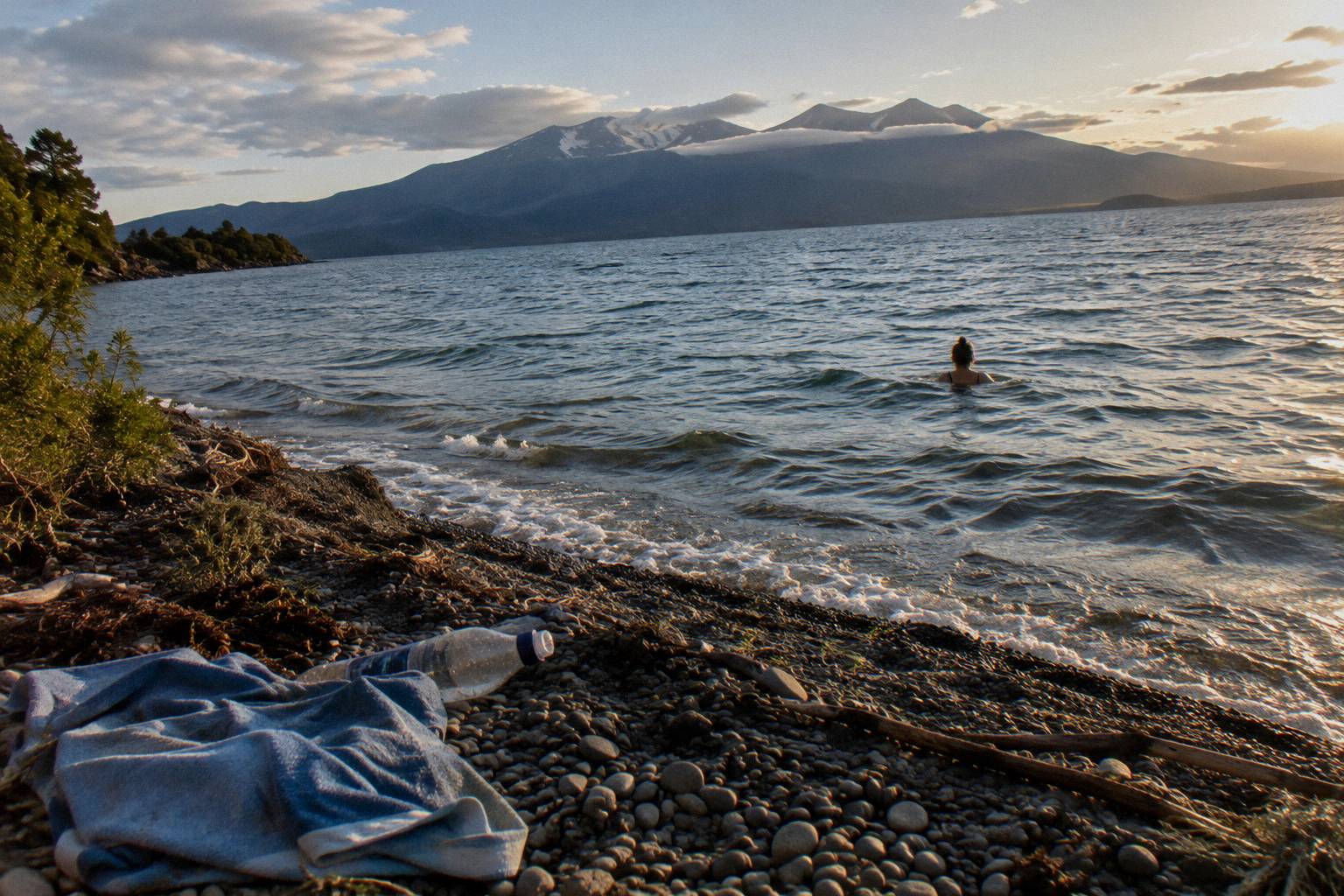
For walkers who want water on the day, the honest planning answer is to schedule it elsewhere. Taupo sits 86.5 km from the track by DOC's distance figures, and the town's lake and hot pools are built for exactly the swim the Emerald Lakes are not. The Taupo to the Emerald Lakes day plan shows how the two fit together without inventing drive times, which the verified sources do not carry.
How Do You Hike To The Lakes Respectfully?
Walk the formed track, keep food and breaks on the gravel rather than at the water's edge, take your rubbish out, and treat every waterway on the mountain as look-only, per the DOC-relayed request. Book the free DOC Crossing booking, use a shuttle or a guided operator, and go early: the 4 hour parking maximum at the road ends from Labour weekend to 30 April exists to push exactly that behaviour.
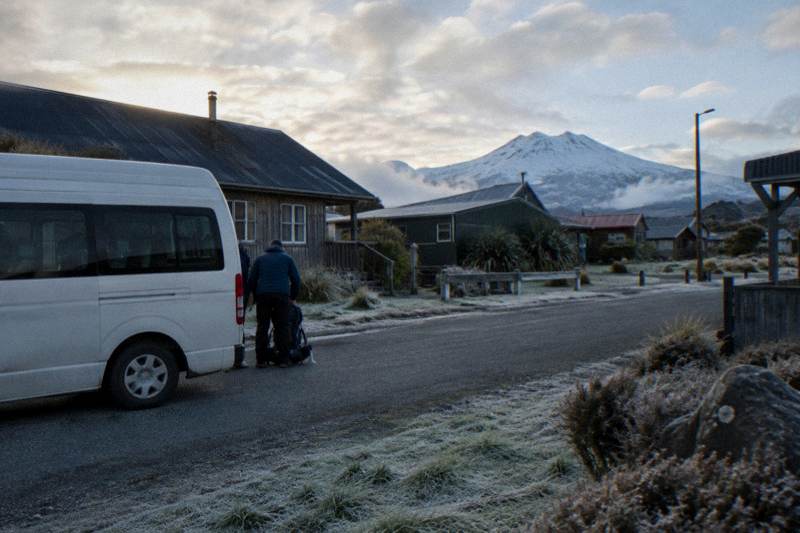
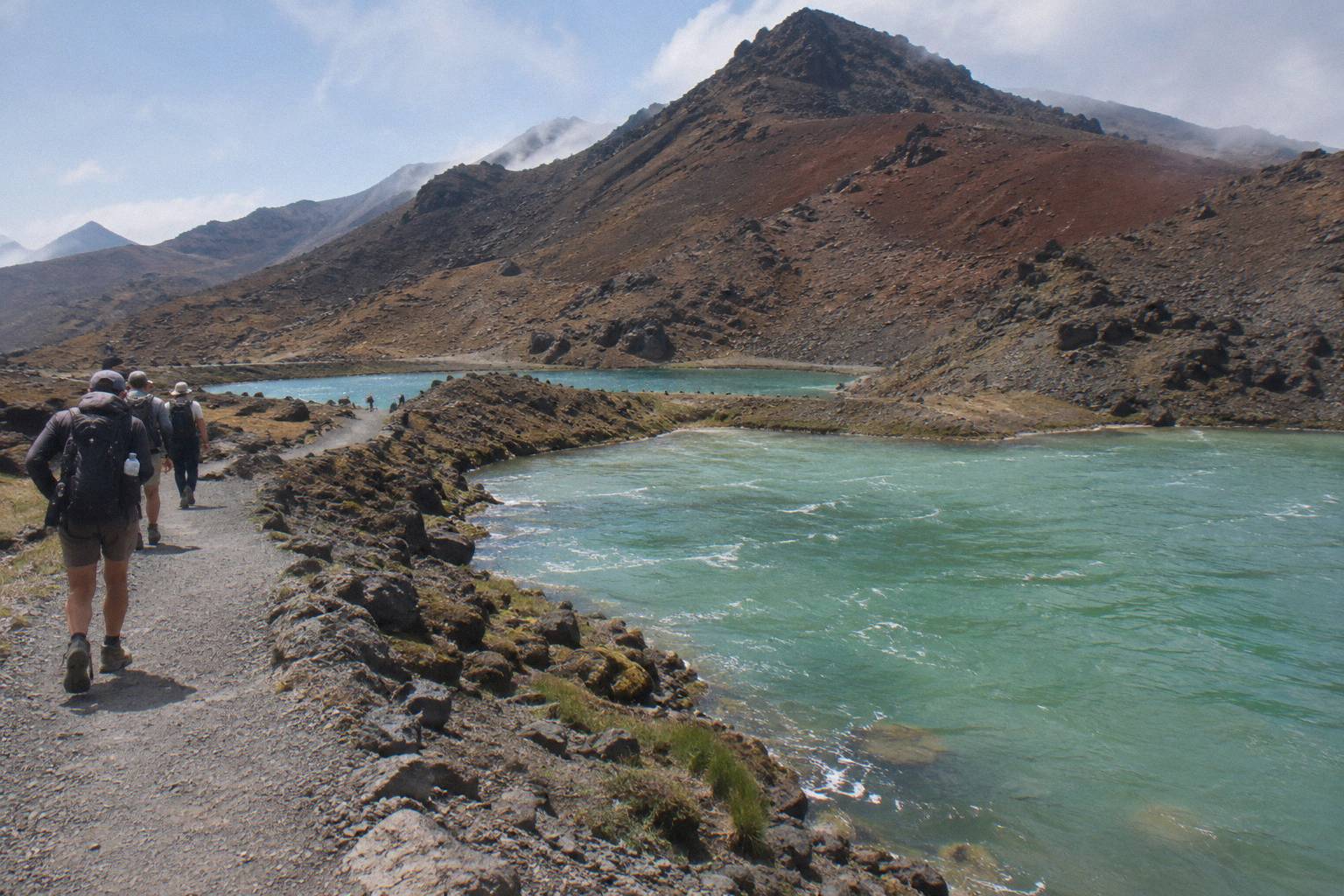
The route context helps. Most walkers start at Mangatepopo, roughly 1120 m, climb the Devil's Staircase to the South Crater, then rise to Red Crater at 1886 m, the high point. The Emerald Lakes appear directly below Red Crater on a steep scree descent that DOC's own track description calls vivid, and the lakes basin is the natural first long stop of the day. From there the track crosses Central Crater, climbs to the Blue Lake, also covered by the waterway request, and descends past the Ketetahi springs, which are tapu as well, to the Ketetahi Road finish at about 760 m.
| Section | What The Tapu Request Means Here |
|---|---|
| Mangatepopo start to South Crater | Keep to the track, pack out all rubbish, use the toilet facilities at the start |
| Devil's Staircase to Red Crater | Summits and off-track scrambling are not part of the formed experience |
| Red Crater descent to the Emerald Lakes | Rest and photograph from the shore; do not touch or enter the water |
| Central Crater to the Blue Lake | The same request covers the Blue Lake as an alpine waterway |
| Ketetahi descent | The springs are waterways on the maunga; stay on the track past them |
Practical respects stack with cultural ones. An early start spreads the crowds and gives you the lakes in better light with more time for the descent, and the sunrise start guide covers the trade-offs. Fitness matters too: DOC rates the track High for fitness, 7 to 8 hours of walking in the summer season, and the fitness for the climb to the Emerald Lakes guide sets out how to prepare so the day is comfortable rather than a survival exercise.
If you are walking independently, the shuttle choice determines where your day starts and ends, and none of the shuttles is guided. The Ruapehu Scenic Shuttles Ketetahi park-and-ride is the most reviewed of the one-way park-and-ride products, rated 4.8 across 670 reviews, from NZ$68 per person with free cancellation up to 24 hours before: you park at the Ketetahi car park, ride to Mangatepopo, and walk the Crossing back to your own car, one way, no return leg. Check availability on that product, or compare it in the shuttle timetable for the Emerald Lakes day guide.
Which Tours And Shuttles Get You To The Lakes?
Adrift Tongariro runs the three guided tours that walk the full Crossing past the Emerald Lakes; its premium guided hike runs from NZ$450 per person, free cancellation up to 14 days before, rated 4.6 across 242 reviews. Everything else here is a shuttle, transfer or multi-day product with self-guided walking, and the most reviewed is the Tongariro Crossing Shuttles round-trip, 4.7 across 890 reviews, from NZ$75 per person.
The distinction matters more than any price line. A guided trip means a guide on the track with you, interpreting the volcanic landscape and the cultural context, carrying the group's decisions on weather and turnaround. A shuttle means transport only: it gets you to the start and back from the finish, and the walk, the navigation and the judgement calls are yours. Calling a shuttle guided is the single most common mistake in this market, and it matters on a track where DOC itself says alpine skills are essential in the May to October window and recommends going with a guide then.
| Product | Type | Departure | Rating And Reviews | Price |
|---|---|---|---|---|
| Adrift Tongariro premium guided hike | Guided full Crossing | National Park Village, 53 Carroll Street | 4.6 across 242 reviews | From NZ$450 per person |
| Adrift Tongariro full-day guided Crossing | Guided full Crossing | National Park Village, 53 Carroll Street | 4.7 across 278 reviews | Check the booking page |
| Tongariro Crossing Shuttles round-trip from National Park Village | Return shuttle | National Park Village, Park n Ride, 59 Findlay Street | 4.7 across 890 reviews | From NZ$75 per person |
| Ruapehu Scenic Shuttles Ketetahi park-and-ride | One-way park-and-ride shuttle | Ketetahi car park | 4.8 across 670 reviews | From NZ$68 per person |
| Tongariro Expeditions shuttle from Taupo or Turangi | Shuttle with transfer options | Taupo, Turangi or Ketetahi, option-dependent | 4.7 across 431 reviews | From NZ$75 per person |
| Dempsey Buses return bus from National Park Village | Return shuttle | National Park Village | 4.8 across 72 reviews | From NZ$90 per person |
For walkers starting further afield, the Tongariro Expeditions Crossing shuttle from Taupo or Turangi covers the long-distance case, from NZ$75 per person with free cancellation up to 24 hours before, rated 4.7 across 431 reviews, an 8 to 10 hour booked day that includes the transfer and the walking window. Check availability for Taupo and Turangi departures, or read the Taupo day plan first.
At the premium end of the guided format, the Adrift Tongariro private guided Crossing takes the same full route with a private guide, rated 4.5 across 30 reviews, departing National Park Village; it is non-refundable, so the booking page terms deserve a close read before committing. A private guide is the format that most naturally deepens the cultural and volcanic commentary, since the conversation follows your questions rather than a group schedule. Check availability if that appeals, or start with the private guided hike to the Emerald Lakes guide.
What Trips People Up On Emerald Lakes Day?
The most common mistakes are underestimating the terrain and the weather, which can shift from sunshine to cold, wind, and poor visibility within hours. People also start too late, carry too little water or food, wear worn-out footwear, and forget that the volcanic rock, steep climbs, and exposed ridgelines demand respect even on a clear day.
The parking rule deserves its own sentence because DOC prints it plainly: from Labour weekend in late October through 30 April, a 4 hour maximum applies at the road ends, and DOC suggests booking a shuttle. In practice that means a self-drive day at the Mangatepopo end does not work in the summer season, which is why the park-and-ride products cluster at Ketetahi: you leave the car at the finish end, shuttle to the start, and walk back to it. The Mangatepopo car park start guide and the Ketetahi finish guide cover both ends in detail.
The second trap is season. From May to October DOC classes the Crossing as an Expert route, snow and ice, avalanche risk, sub-zero temperatures, with alpine skills described as essential and a guide recommended. The 9 hour walking estimate for that window is not padding. Summer walkers get the 7 to 8 hour band and an intermediate tramping track, which is still a serious day. Neither season comes with a promise: guided operators and shuttles run only when the DOC advisory and the forecast allow, conditions permitting, and the best month to hike guide breaks the year down.
| Common Mistake | What Goes Wrong | The Fix |
|---|---|---|
| Planning a swim at the lakes | Conflicts with the tapu request; volcanic crater water | Treat all waterways as look-only; swim in Taupo instead |
| Driving to Mangatepopo in summer | 4 hour parking maximum from Labour weekend to 30 April | Use a shuttle or a Ketetahi park-and-ride |
| Booking a shuttle expecting a guide | Shuttles are transport only; the walk is self-guided | Choose an Adrift Tongariro guided tour for a leader |
| Starting too late | Crowds at the lakes, pressure on the descent | Take an early start; book the first shuttle window you can |
| Ignoring the booking system | The DOC booking is free, recommended, and needed for shuttle and guided products | Book it when you book transport |
| Winter walking without alpine skills | Expert route, avalanche risk, sub-zero temperatures | Go guided in the May to October window |
The third trap is assuming water on the mountain is drinkable or usable. The tapu request aside, DOC's guidance treats the waterways as part of the volcanic system, not a supply, and no operator in the tour set here promises water handling of any kind on the shuttle products. Carry what you need for a 7 to 8 hour day. On the Adrift guided tours, lunch is not included either: bring your own lunch, and the tours supply crampons and ice axes for winter conditions if required. Details for each product sit on the booking pages, and the what to wear hiking to the Emerald Lakes guide completes the packing picture.
What Are The Alternatives If You Want Water On The Trip?
If you want water during the trip, you have several solid alternatives: bring your own refillable bottle from home, purchase bottled water before departure, pack a hydration bladder for longer stretches, or fill up at water fountains and rest stops whenever the itinerary allows. Planning ahead this way keeps you hydrated without depending on anyone else to supply drinks along the route.
The Taupo pairing is the standard plan and it works in either order. Many walkers overnight in Taupo or Turangi, shuttle to the Crossing early, finish at Ketetahi, and swim in Taupo that evening as the reward, without inventing drive times this site's sources do not carry. The Tongariro Expeditions shuttle products from Taupo and Turangi exist precisely for that pattern, and the Backyard Tours mountain shuttle from Turangi, from NZ$120 per person with free cancellation up to 24 hours before, serves Turangi accommodation pickups. Distances, not durations, are what the verified sources print: Turangi sits 36.7 km from the track area by DOC's figures, National Park Village 13.5 km, Whakapapa 10.4 km, Ohakune 48 km.
Auckland travellers face a longer equation. There is no Taupo-based guided day trip in the tour set this site covers, and the honest framing is that Auckland is a long way from the mountain, with an overnight or two-day product the sensible shape. The Kiwi Road Tours private transfer from Auckland handles the distance as a private two-day transfer with the Crossing self-guided, and the ExperienceKart private three-day tour from Auckland folds the Crossing in as one self-guided leg alongside Huka Falls and Lake Taupo. Neither is a guided Crossing tour; the walking on both is yours. Check availability on the round-trip shuttle format from National Park Village if you are basing near the mountain instead, rated 4.7 across 890 reviews from NZ$75 per person.
For visitors whose heart is set on alpine water scenery rather than swimming, the mountain still delivers. The Blue Lake, the Ketetahi springs vista and the steaming edges of the volcanic plateau are all part of the same walk, all viewable from the track, and the Blue Lake on the Tongariro Crossing guide covers the section between it and the Emerald Lakes. If the Crossing is closed or conditions turn, DOC itself points to Taranaki Falls and Tama Lakes as alternatives, and the other hikes guide expands that list.
How Do You Book A Day That Respects The Request?
Pick your format first, guided or shuttle, then book the free DOC Crossing booking, then your transport or guide, then accommodation near the start. Guided means an Adrift Tongariro tour, with the premium hike from NZ$450 per person, free cancellation up to 14 days before. Shuttle means a park-and-ride or return product, from NZ$68 per person for the Ruapehu Scenic Shuttles one-way, most with free cancellation up to 24 hours before.
The booking system step is free, recommended by DOC, and needed if you are using a shuttle or a guided operator, and it lives on the official DOC booking page. It is separate from your tour or shuttle ticket, and skipping it is a needless risk on a track where DOC manages daily load. The full how-to sits in the booking a guided hike to the Emerald Lakes guide.
Cancellation terms deserve one honest paragraph because they differ by product. The Adrift premium guided hike carries free cancellation up to 14 days before, a generous window for a NZ$450 per person commitment. Most shuttles, including the Ruapehu Scenic Shuttles, Owhango Adventures, Tongariro Expeditions, Dempsey Buses and Tongariro Crossing Shuttles products, carry free cancellation up to 24 hours before. The Adrift private guided Crossing and the ExperienceKart three-day tour are non-refundable. Where a product prints no cancellation term, the booking page shows the terms that apply, and reading them before paying is part of respecting your own plans as much as the mountain's.
Weather holds the final veto in every case. Guided operators and shuttles run only when the DOC advisory and the forecast allow, so the day you booked is always the day conditions permit, and the volcanic alert picture is reassessed continuously, with GeoNet the official source for volcanic status and NIWA's Red Crater forecast the alpine planning tool. When the mountain says not today, DOC's own alternatives, Taranaki Falls and Tama Lakes, keep the trip alive, and a respectful visitor treats that as part of the deal rather than a failure of planning. This is, after all, the maunga that was gifted to keep it exactly as it is, and the Tongariro Emerald Lakes Hike home page gathers the full planning picture in one place.
Common Questions About Swimming In The Emerald Lakes
Can You Swim In The Emerald Lakes On The Tongariro Crossing?
No. DOC relays a request from Kaumatua Te Ngaehe Wanikau of Ngati Hikairo ki Tongariro that visitors respect the maunga tapu by not touching or entering any of the waterways, including the alpine lakes. The Emerald Lakes sit inside that request. Photograph them from the shore and swim somewhere built for swimming, such as Taupo.
Is Swimming In The Emerald Lakes Illegal?
The verified sources print the measure as a request from the iwi, relayed by DOC, not as a statute with penalties. This site prints no fine, no enforcement regime and no patrol schedule, because none appear in the official material. The request is cultural, and the respectful response is to honour it rather than to test its enforceability.
Why Are The Emerald Lakes Tapu?
The mountains of Tongariro are sacred to Ngati Hikairo ki Tongariro of Ngati Tuwharetoa, who gifted the maunga to the nation, a gift that led to New Zealand's first national park in 1894. The waterways are part of the sacred mountain landscape, and the request not to touch or enter them is one visible expression of that sacredness.
Can You Touch The Water In The Blue Lake Or The Ketetahi Springs?
No. The request covers any of the waterways on the maunga, not only the Emerald Lakes. The Blue Lake, the streams along the track and the Ketetahi springs all fall under the same ask. Stay on the formed track past all of them.
Can You Drink The Water From The Lakes Or Streams On The Crossing?
Treat the waterways as part of the volcanic landscape rather than a supply. Carry what you need for a 7 to 8 hour summer day, or a 9 hour day from May to October. On the Adrift guided tours, lunch is not included either, so bring your own lunch.
Where Can You Swim Near The Tongariro Crossing Instead?
Taupo, 86.5 km from the track area by DOC's distance figure, is the natural choice, with its lake and hot pools built for visitors. Turangi, 36.7 km away by the same figures, also serves the walk. Many walkers finish the Crossing and swim in Taupo the same evening.