Why The Emerald Lakes Look Green: Minerals, Light And Timing On The Hike
The Emerald Lakes are old explosion craters filled with water coloured by dissolved minerals washed out of the volcanic rock around them, and the green you actually see shifts with the hour, the season and the sky above Red Crater.
Short answer
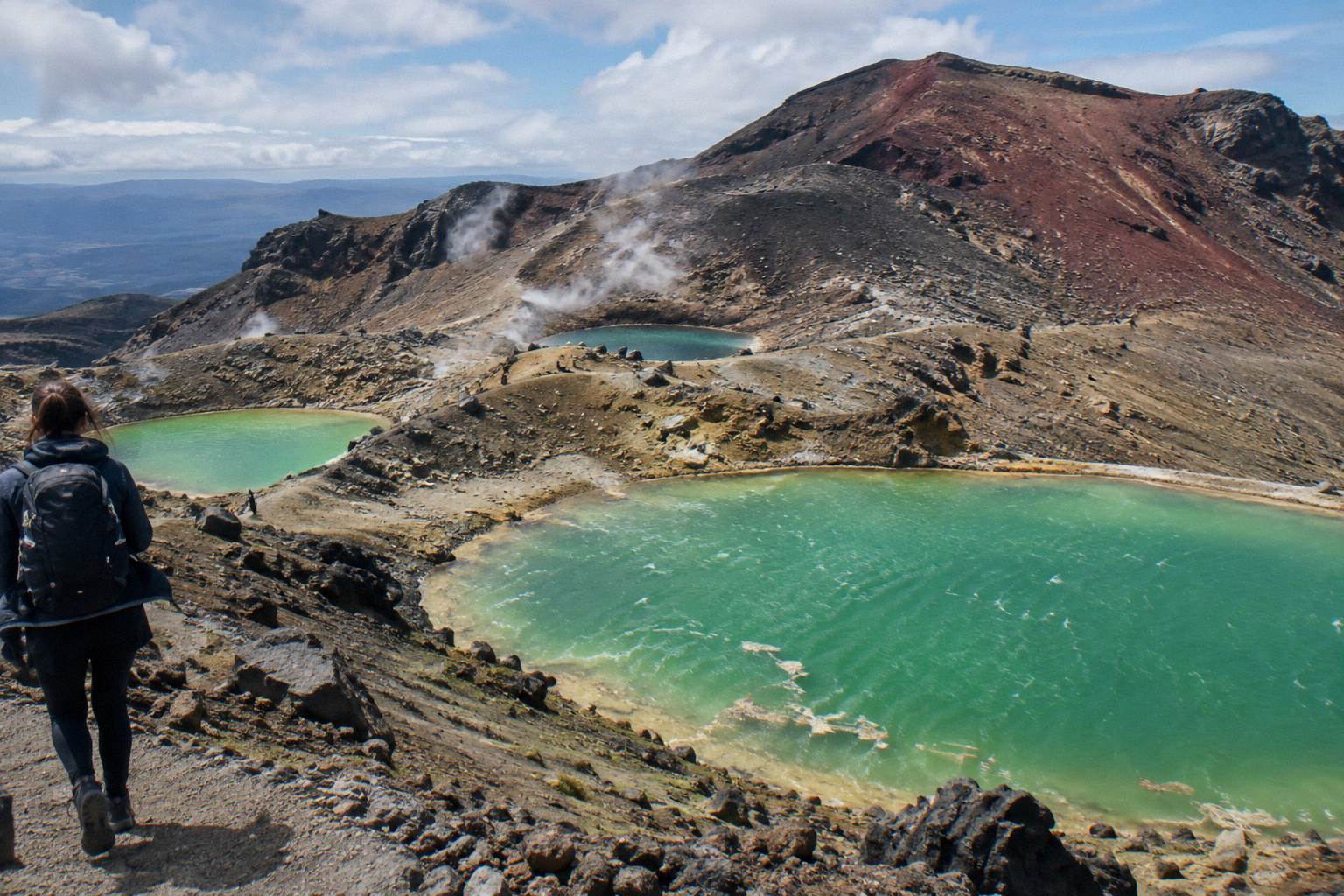
The Emerald Lakes, Nga Rotopounamu, sit just below Red Crater at 1886 m on the Tongariro Alpine Crossing, a 20.2 km one-way track with 1196 m of elevation change. Their green comes from minerals dissolved in the volcanic water. The colour looks strongest in mid-morning and summer light, and DOC asks visitors not to touch or enter the water.
This page sits inside the guide collection that starts at Tongariro Emerald Lakes Hike; for the walk itself, see the full guide to the Emerald Lakes on the Crossing.
| Quick fact | Figure |
|---|---|
| Track | Tongariro Alpine Crossing, one way |
| Distance | 20.2 km |
| Elevation change | +/- 1196 m |
| Highest point | Red Crater, 1886 m |
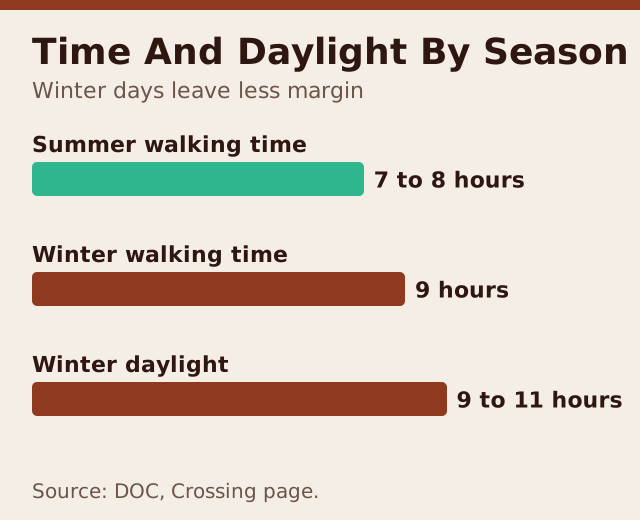
| Walking time, November to April | 7 to 8 hours |
| Walking time, May to October | 9 hours |
| Fitness rating | High |
| The lakes' name | Nga Rotopounamu, the greenstone lakes |
What Gives The Emerald Lakes Their Colour
The green comes from minerals dissolved in the water, dissolved out of the volcanic rock and loose crater debris around three shallow explosion craters blasted into Tongariro's flank. Rain and snowmelt sink through that mineral-rich ground, pick up its chemistry, and collect in the craters. The water is not deep, so the pale crater floor beneath it combines with the dissolved minerals and the light to produce the green that gives the lakes their name.
DOC's own description of the track calls them the "vivid Nga Rotopounamu-Emerald Lakes", reached by a steep scoria and scree descent from the rim of Red Crater, and that word, vivid, is doing honest work: on a clear summer morning the green reads almost artificial against the red and ochre slopes around it. The lakes are young features in volcanic terms, sitting in craters blasted out of the mountainside, and the ground around them is still warm and chemically active in places. That activity is the engine of the colour, and it is also why the lakes sit inside an active volcanic area that DOC manages carefully, with volcanic alert levels that change daily and a permanent risk page every walker should read before going up.
The name is Maori, and it is precise. Rotopounamu means greenstone lake, pounamu being the prized greenstone of the south, and the early name-givers saw the same colour every walker now photographs. The mountains themselves are sacred to Ngati Hikairo ki Tongariro of Ngati Tuwharetoa, inside New Zealand's oldest national park, created in 1894, and a dual World Heritage area. For a deeper look at the water itself and why it is off limits, read swimming in the Emerald Lakes.
One point of respect that matters here more than anywhere else on the track: kaumatua Te Ngaehe Wanikau asks visitors to respect the maunga tapu by not touching or entering any of the waterways, including the alpine lakes. The green water is for looking at, not for wading in, and no tour, guided or shuttle, changes that. Walkers who understand the request before they arrive tend to spend longer at the rim simply watching the colour, which is the better experience anyway.
Where The Colour Sits On The Track
The Emerald Lakes appear roughly two thirds of the way along the Tongariro Alpine Crossing, just below the summit of Red Crater at 1886 m, reached after South Crater and the climb up the ridge from the Devil's Staircase. You first see them from the steep scree descent, with the three green pools directly below, before the track passes their northern edge toward Blue Lake and the Ketetahi descent.
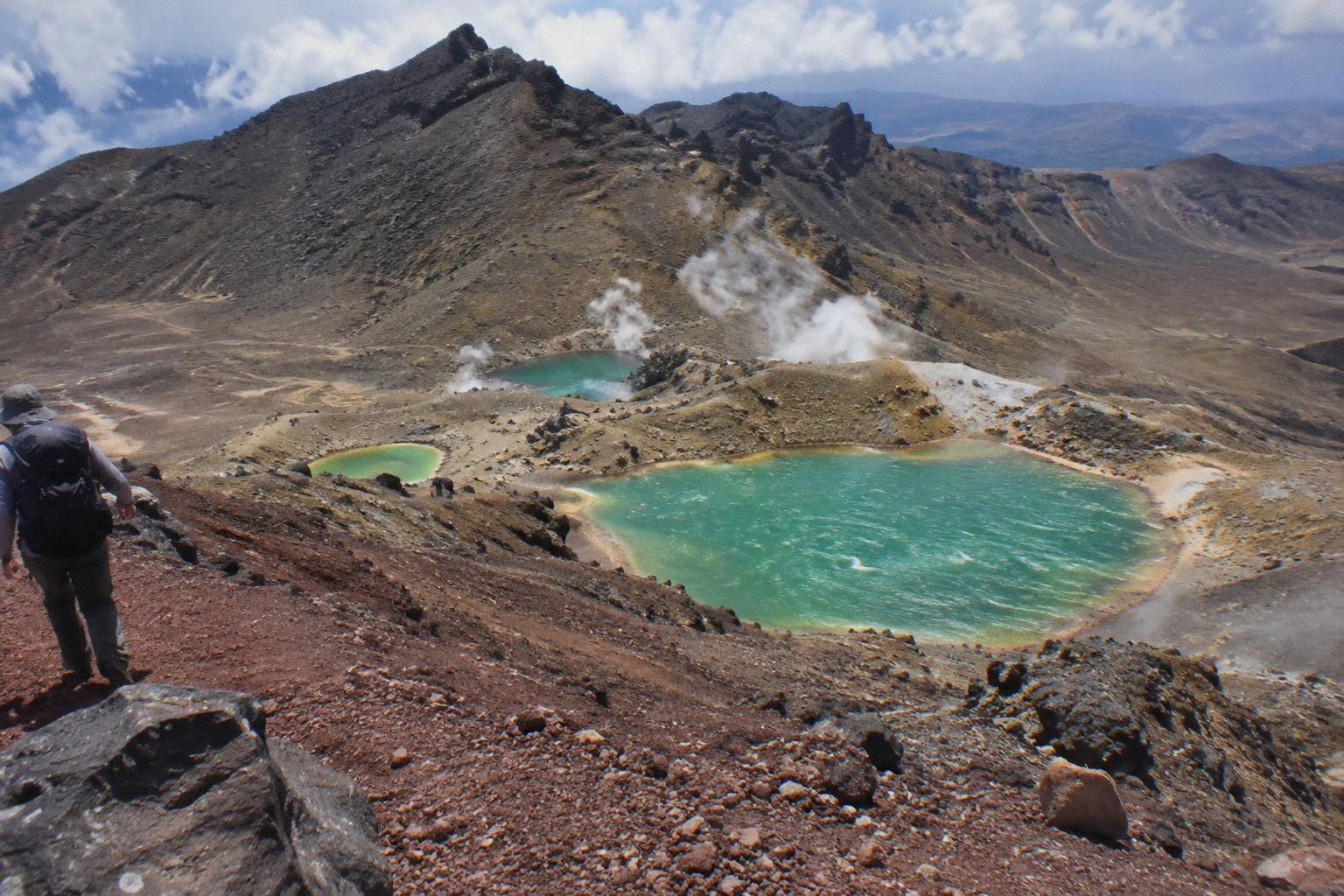
The approach is what makes the colour land so hard. For hours the palette has been dark volcanic rock, pale South Crater sediments and the blue-grey ridgelines, and then the track tips over the lip of Red Crater and the green appears all at once, framed by rust-coloured walls. DOC's track page gives the full picture of the route, the distances and the condition ratings, and it is the authoritative source on what the track involves. The position also explains the light: the lakes sit in a bowl that faces roughly north, they lose direct sun early in the afternoon when the shadow of the ridge above them drops across the water, and morning is when they glow.
Timing your arrival is therefore a start-time question, and the guide to a sunrise start on the Crossing covers the early walk in detail. In short, the arithmetic is unforgiving: 20.2 km, 1196 m of climbing and descending, and 7 to 8 hours of walking between November and April means an early start puts you above the lakes near the middle of the day, when the sun is high enough to light the water from above. A late start risks reaching Red Crater with the light already flat and the bowl in shadow, which is the single most common way walkers miss the colour they came for.
Two ways to book the day, one guided and one not: the Adrift Tongariro premium guided hike, from NZ$450 per person, rated 4.6 across 242 reviews, with free cancellation up to 14 days before, or the Tongariro Crossing Shuttles round trip from National Park Village, from NZ$75 per person, rated 4.7 across 890 reviews, with free cancellation up to 24 hours before. The premium guided hike is a guided group walk over the full Crossing, while the round trip is a shuttle only, never guided, and the walk itself is your own.
Between them sits a full spread of price points and formats, from a guided day with gear supplied to a seat on a bus.
How The Hour Changes What You See
The hour reshapes the water because the green is a moving target through the day. Flat grey light reads the lakes deep and saturated, almost bottle-green, high midday sun brightens the shallows toward milky turquoise while the centres stay dense, and once the ridge's afternoon shadow crosses the bowl the colour dims toward slate, which is why guided and shuttle days land walkers between late morning and early afternoon, when the colour is most vivid.
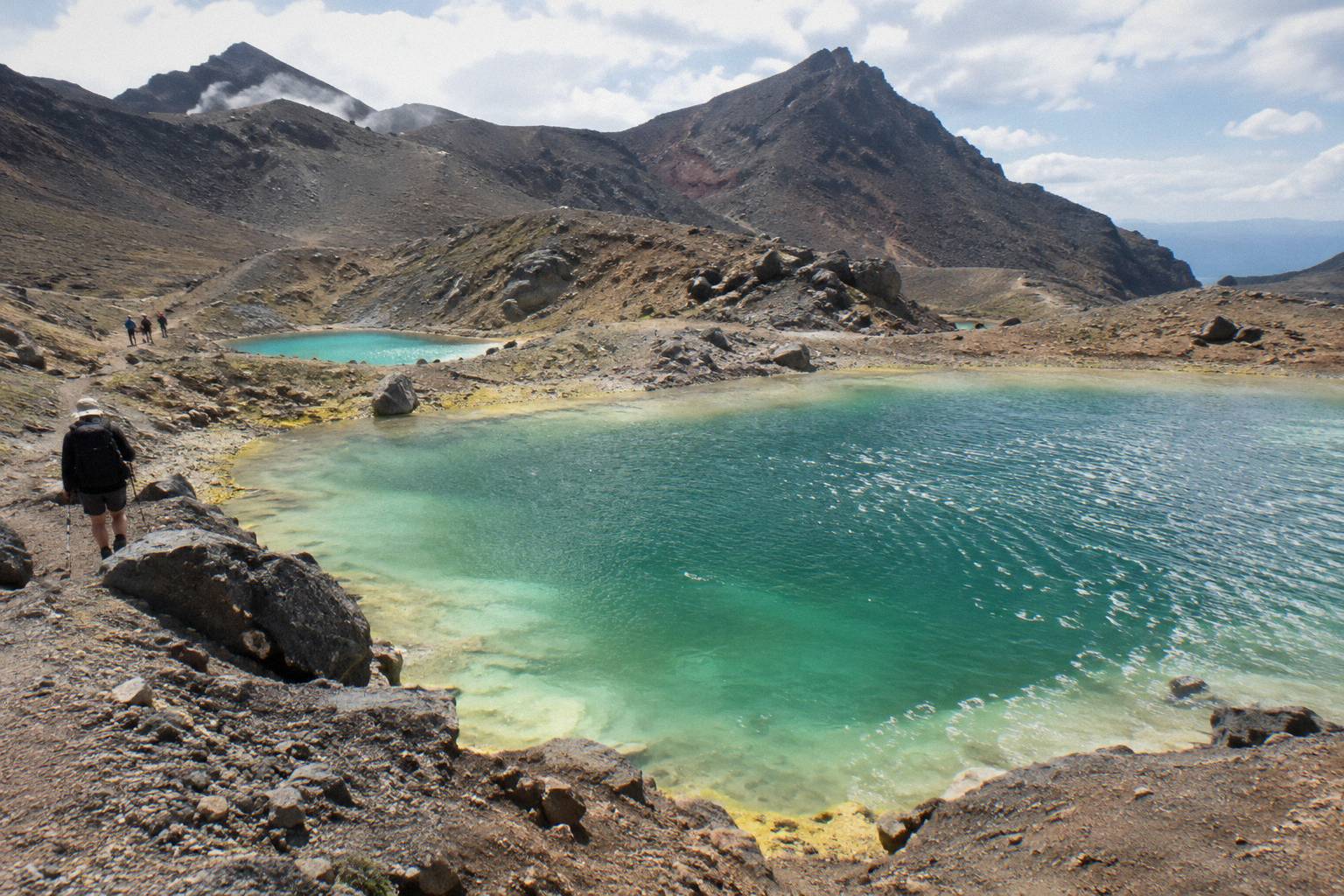
The mechanics are simple light behaviour, not mystery. The water is shallow and the pale floor of the craters reflects light back up through the water column, so the more sun enters from above, the more that reflected green reaches your eye. Cloud changes everything: a broken-cloud day can switch the lakes between three different shades in the ten minutes you stand there, and many walkers report that the moment a cloud gap opens is the moment the photographs suddenly work. Wind matters too, because a calm surface doubles the red walls of the crater in the water and a ruffled one scatters the reflection into green light alone.
Deciding whether a guided day suits you is really a question about the hour, because a guide's main practical job is choosing the day and the pace. If you are weighing it up, the guide to whether a guide is worth it for the Emerald Lakes works through the trade-offs, and you can check availability on the premium guided hike alongside the Adrift Tongariro full-day guided Crossing, rated 4.7 across 278 reviews, which is the same format at a price the booking page shows rather than a printed figure.
The Best Season For The Colour
November to April is the best season for the colour, the summer window DOC describes, when most walkers see the lakes at their greenest under the most reliable light, on an intermediate tramping track of 7 to 8 hours with long daylight. From May to October the lakes can still freeze at the edges and look extraordinary, but the route turns Expert over snow and ice and demands alpine skills or a guide.
The seasonal difference in the colour itself is real. Spring and early-summer meltwater keeps the craters full and the mineral concentration steady, while late-summer evaporation in dry years can concentrate the colour further and pull the waterline back to expose a pale mineral ring around each lake, which reads beautifully in photographs. After fresh snow the contrast is at its most dramatic: white on red above, and green in the bowl below. The trade is access, because DOC says shuttle buses generally do not operate through winter, May to late October, while guided trips include transport, so a winter colour trip is realistically a guided one, and crampons and ice axes are supplied on the Adrift Tongariro guided tours if winter conditions require them.
Practical planning in the summer season runs through two DOC systems. The first is parking: from Labour weekend in late October to 30 April a 4 hour maximum applies at the road ends and DOC suggests booking a shuttle, which is why nearly every colour-seeking walker does exactly that. The second is the DOC booking system itself, which is free and recommended, and is what a shuttle or guided booking runs on top of. The guide to the best month to hike to the Emerald Lakes breaks the season down month by month.
| Season | Track rating (DOC) | Walking time | What the colour does |
|---|---|---|---|
| November to April | Intermediate tramping track, High fitness | 7 to 8 hours | Full craters, strong green in midday sun, mineral rings in dry late summer |
| May to October | Expert route, alpine skills essential | 9 hours | Possible ice edges and snow contrast, but guided access only in practice |
Getting There Without A Car
Six of the bookable options depart from the Ketetahi car park as one-way park-and-rides: you leave the car at the bottom, ride the shuttle up to Mangatepopo, and walk the Crossing back to your own vehicle. A further group runs return shuttles from National Park Village, Ohakune, Taupo and Turangi. None of these is guided; each is transport for a self-guided walk, and all of them effectively decide the hour at which you start.
The most reviewed tour here is one of them: the Tongariro Crossing Shuttles round trip from National Park Village, rated 4.7 across 890 reviews, from NZ$75 per person, with free cancellation up to 24 hours before, departing from the Park n Ride at 59 Findlay Street. From the Ketetahi side, the Ruapehu Scenic Shuttles Ketetahi park-and-ride is rated 4.8 across 670 reviews, from NZ$68 per person, also with free cancellation up to 24 hours before; it is one-way, you park at Ketetahi and ride to the start, and the return leg is your own two feet.
Coming from the lake country to the north, the Tongariro Expeditions Crossing shuttle from Taupo or Turangi is rated 4.7 across 431 reviews, from NZ$75 per person, with free cancellation up to 24 hours before, and it turns the whole colour day into a door-to-door proposition from either town. DOC lists Turangi 36.7 km from the track and Taupo 86.5 km, so a Taupo start makes the day long, and the guide to a Taupo to the Emerald Lakes day plan is worth reading before committing to it.
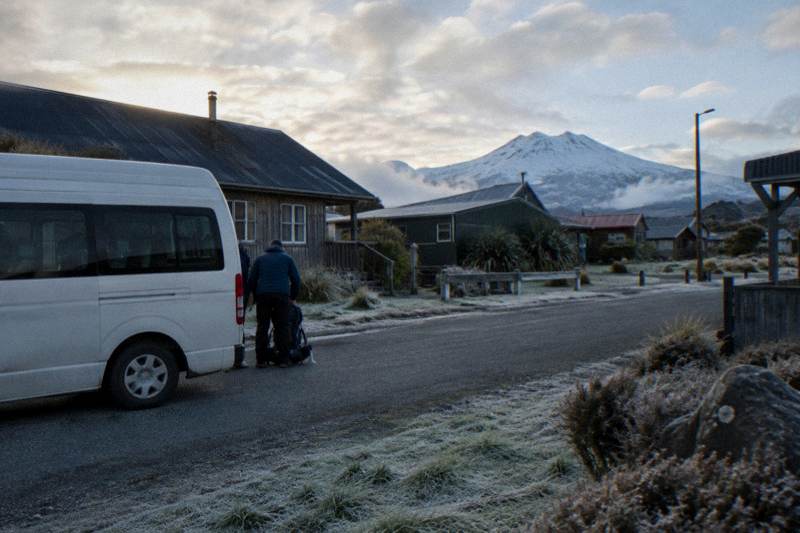
For the shuttle-averse, the arithmetic behind driving yourself is the 4 hour parking maximum at the road ends through the summer season, which makes a self-drive start essentially unworkable between Labour weekend and 30 April. That is not a soft nudge: DOC states it plainly, and the shuttle suggestion that follows it is the system working as designed. DOC also notes that part of a shuttle fee, about NZ$40, goes to conservation, so the fare is doing work beyond the ride.
Photographing The Green
The best photographs of the green come from the scree descent and the rim above the northern lake, with the sun high enough to enter the water and the surface calm. Shooting only from beside the track at lake level makes the green read flat and the craters lose their shape, so bracket a wide frame of all three lakes against Red Crater, a tight shot of the shallow turquoise ring, and one of the descent for scale.
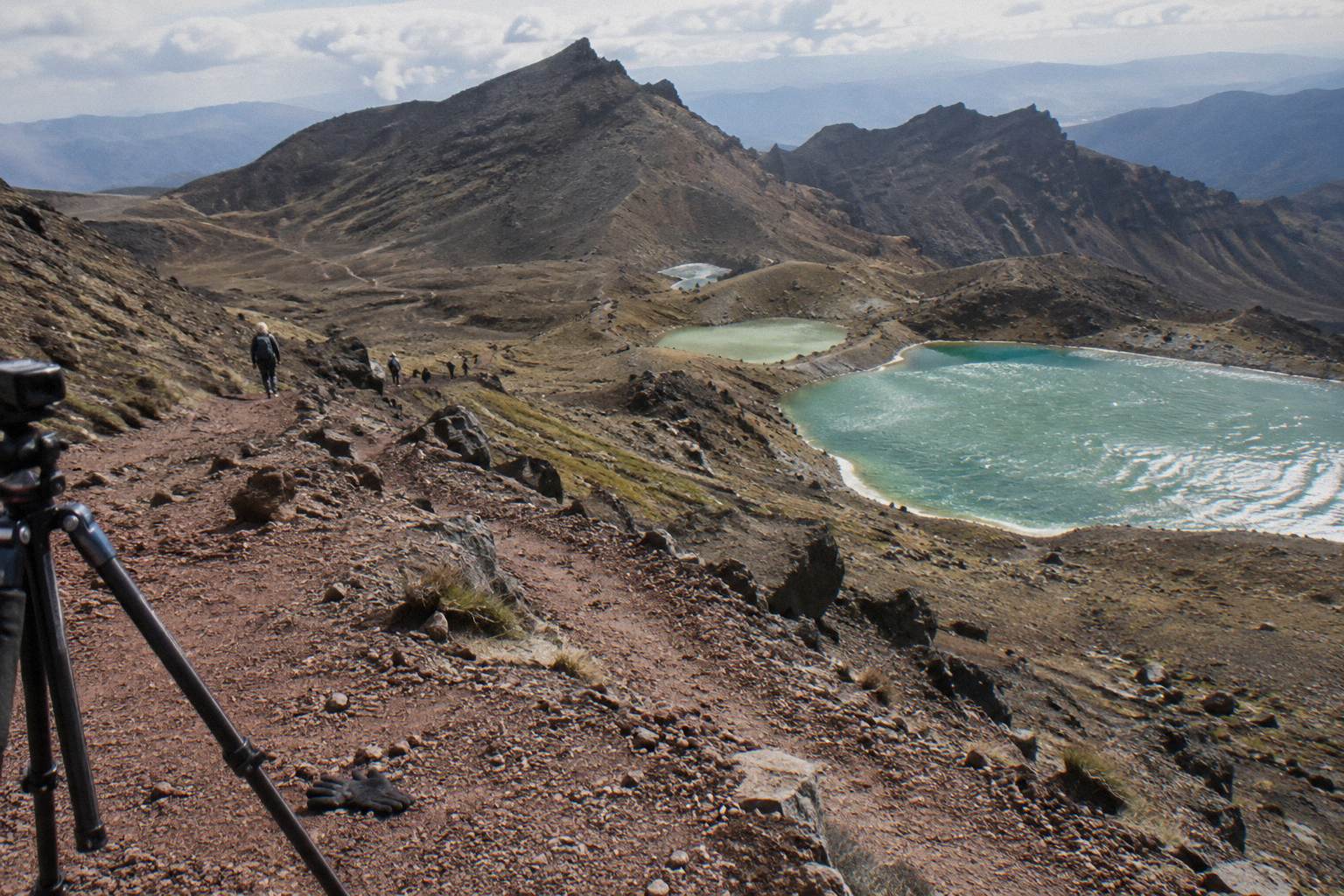
Light behaviour rewards patience more than gear. Polarising sunglasses or a polarising filter change the colour dramatically here, because they strip the sky's glare off the surface and let the water's own green through; take a pair off and on and you can watch the lakes shift shade in real time. Overcast is not the disaster it is on scenery shoots elsewhere, since the even light saturates the deep green of the centres, and a gusty wind that ruins reflections still leaves the colour itself untouched. What genuinely kills the photograph is the ridge shadow after mid-afternoon, which no camera setting recovers.
The full guide to photographing the Emerald Lakes covers frames, timing and settings in depth. Keep the cultural request in mind while you shoot: no touching or entering the water means no stepping to the waterline for a reflection shot, and the best angles are all from the track anyway, well above the shore.
Mistakes That Dim The Colour Day
The mistakes that dim the colour day are a late start that leaves Red Crater in shadow, driving to a road end where the 4 hour maximum makes the day impossible, treating a shuttle as a guided trip and arriving unprepared for an alpine track, and touching or entering the lakes despite the standing cultural request. Each is avoidable with a booked start and the right tour format, and operators run only when DOC's advisory and the forecast allow.
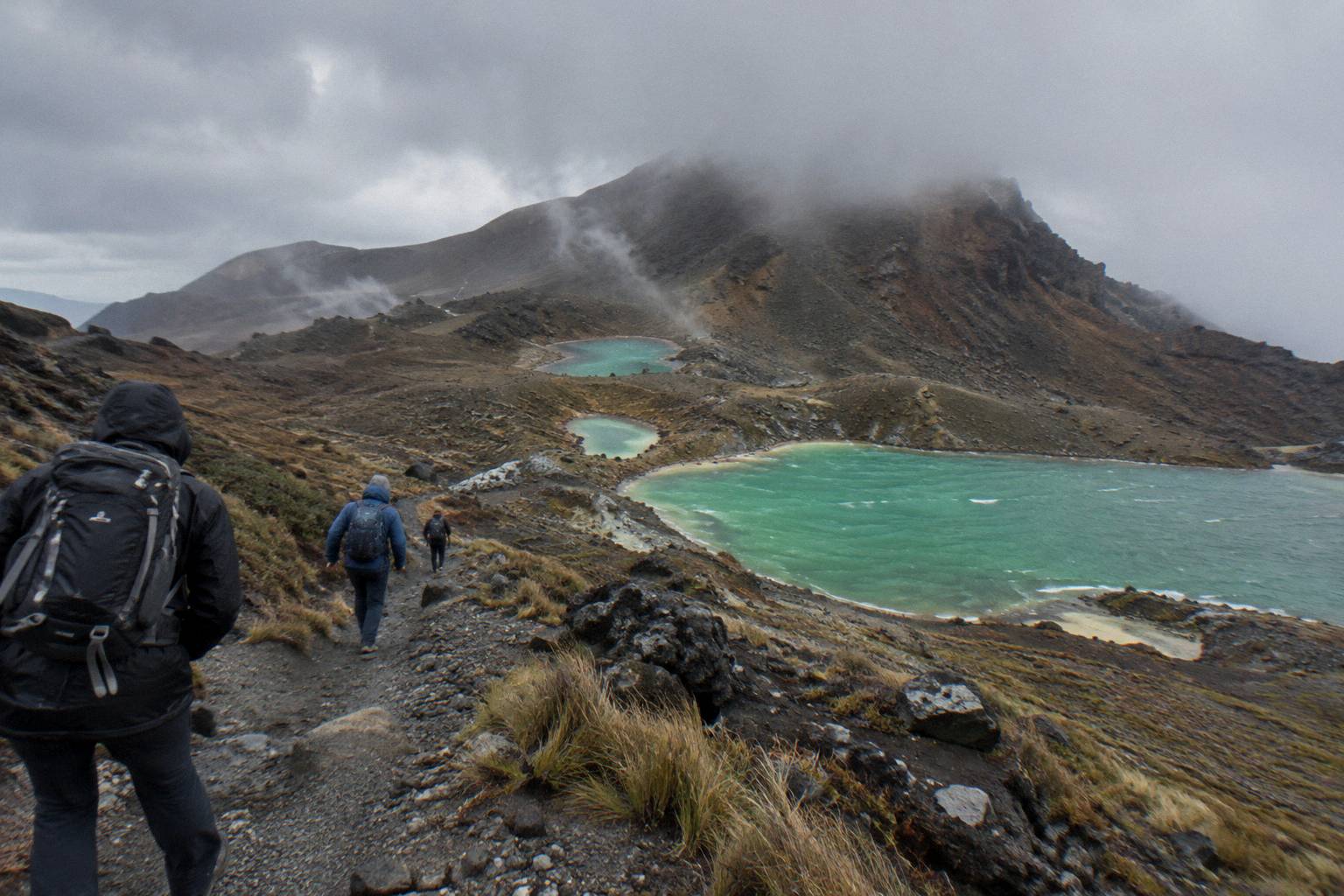
A late start deserves its own warning because it fails quietly. The track length and the 7 to 8 hour walking band are fixed, so every hour of sleep is an hour of light traded away at the lakes, and in the shoulder months the daylight band tightens toward the 9 to 11 hours DOC describes for winter. The second quiet failure is treating the booked duration of a tour as walking time: a shuttle row showing 8 hours is the total day length of the transfer and walk, not time on your feet, and the walking band belongs to DOC's figures alone. The third is gear: no shuttle supplies any, so in cold months the layers, boots and food are entirely yours to carry, while the Adrift guided tours supply crampons and ice axes if winter conditions require them and ask you to bring your own lunch.
| Mistake | What it costs | The fix |
|---|---|---|
| Starting late | Lakes reached in ridge shadow, colour flat | Book a shuttle or guided day, start early |
| Driving to a road end in season | 4 hour parking maximum, day unworkable | Use a shuttle or the DOC booking system |
| Expecting a shuttle to be guided | Alpine track walked unprepared | Book Adrift Tongariro guided, or prepare as an independent tramper |
| Touching or entering the lakes | Against the standing request of Ngati Hikairo ki Tongariro | View and photograph from the track only |
If the day is being built from National Park Village, the Dempsey Buses return bus from National Park Village is rated 4.8 across 72 reviews, from NZ$90 per person, with free cancellation up to 24 hours before, and it is a shuttle, not a guided trip, with children under 6 excluded. For walkers who want the colour explained at the crater rim rather than worked out from a map, the Adrift Tongariro private guided Crossing, rated 4.5 across 30 reviews, is the guided private format, non-refundable, at a price the booking page shows.
What The Colour Asks Of You
The colour asks you to be a witness rather than a participant: look, photograph, and leave the water untouched in a volcanically alive landscape that Ngati Hikairo ki Tongariro hold sacred. The lakes crown a dual World Heritage site inside New Zealand's oldest national park, where volcanic alert levels change daily, so arriving early, by shuttle or with a guide, rewards you with the green at its best.
Practically, that respect has three parts. Check the official conditions before you go: the DOC Tongariro Alpine Crossing page and its alerts, the volcanic risk information DOC publishes for the park, and the forecast sources DOC points to for the Red Crater area. Book through the free DOC system and a shuttle or guided tour rather than parking at a road end. And when you are standing on the scree with the green below you, keep your boots on the track and your hands out of the water. The colour has been drawing people up that mountain under the name Rotopounamu for a very long time, and it does not need to be touched to be extraordinary.
Common Questions About The Emerald Lakes Colour
Why Are The Emerald Lakes Green?
The green comes from minerals dissolved in water that has filtered through the young volcanic ground around the craters, combined with pale crater floors that reflect light back through the shallow water. DOC calls them the vivid Nga Rotopounamu-Emerald Lakes.
Does The Colour Change During The Day?
Yes. High midday sun brightens the shallows toward turquoise, flat cloud deepens the green, and once the afternoon shadow of the ridge above crosses the bowl the colour dims. Late morning to early afternoon is the most vivid window.
Can You Swim In The Emerald Lakes?
No. Ngati Hikairo ki Tongariro, through DOC, ask visitors to respect the maunga tapu by not touching or entering any of the waterways, including the alpine lakes. View and photograph them from the track.
When Is The Best Month To See The Colour?
November to April gives the summer track rating, 7 to 8 hours of walking and long daylight, with full craters and reliable light. Winter brings snow-and-green contrast but the track becomes an Expert route and shuttles generally do not run, so access is realistically guided.
Do I Need A Shuttle Or A Guide To See The Lakes?
In the summer season the 4 hour parking maximum at the road ends makes a shuttle or guided tour the practical choice. Adrift Tongariro runs the three guided tours that reach the lakes; everything else on the bookable options is transport for a self-guided walk.
How Long Does The Walk To The Lakes Take?
The full Crossing is 20.2 km one way with 1196 m of elevation change, and DOC gives 7 to 8 hours November to April and 9 hours May to October. The lakes sit about two thirds of the way along, below Red Crater at 1886 m.