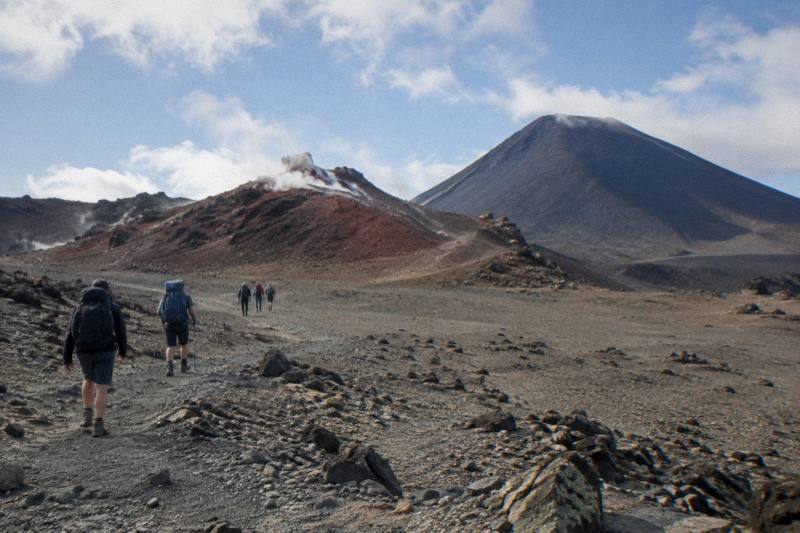
Do You Need A Guide For The Tongariro Crossing?
A plain answer to whether you need a guide for the Tongariro Alpine Crossing, with guided tour and shuttle costs, winter rules, and what each option actually covers.
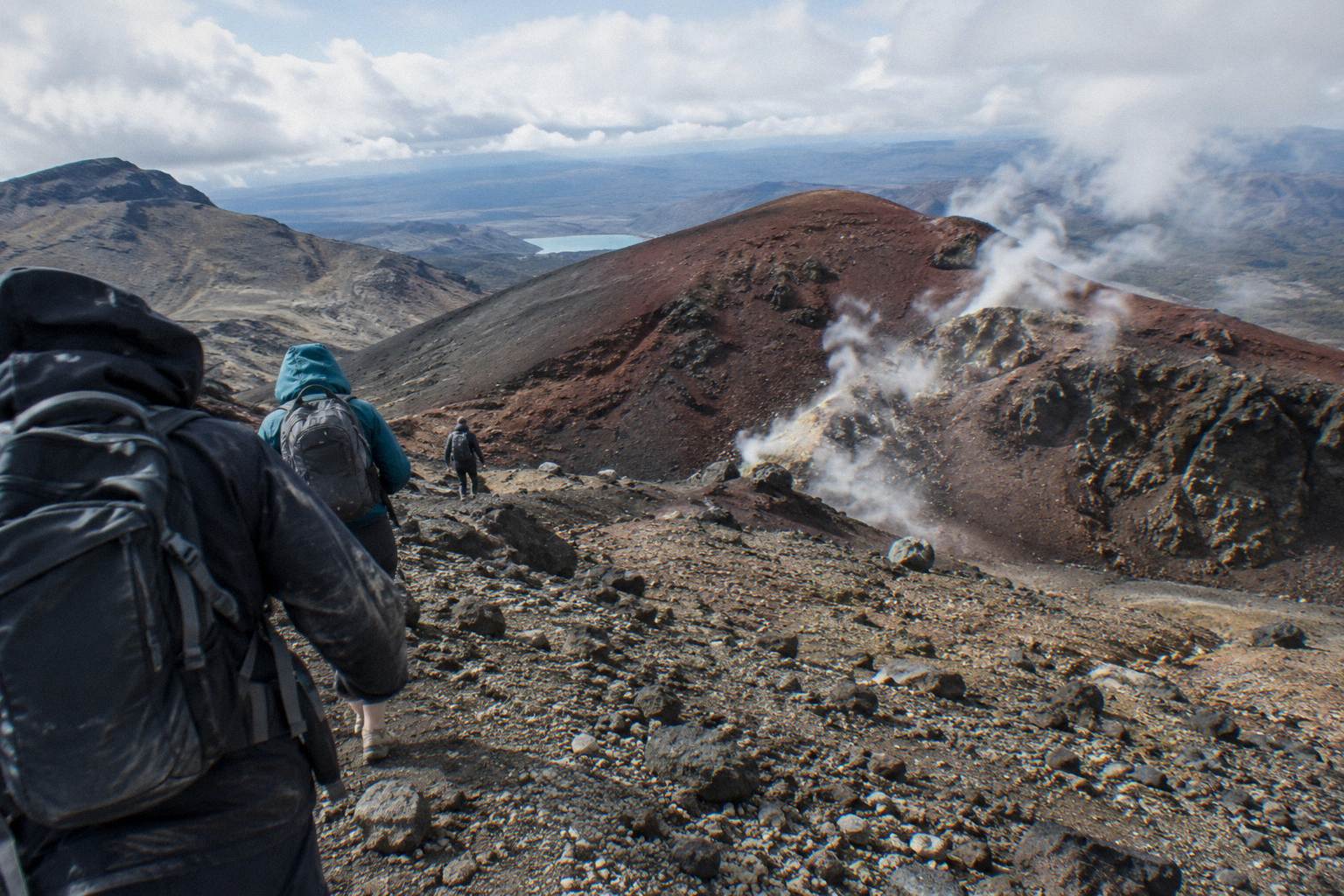
The Tongariro Alpine Crossing is 20.2 km one way with an elevation change of plus and minus 1196 m, and the Department of Conservation classes it as an intermediate tramping track in summer and an expert route from May to October. Adrift Tongariro runs the three guided tours on the mountain; everyone else in the area runs shuttles, which carry you to the start and leave the walking entirely to you. So the short answer is no in summer and probably in winter, and the longer answer depends on the season, your experience, and how much of the day you want someone else to carry.
For most summer walkers, the decision comes down to transport and confidence rather than navigation. For winter walkers, DOC's own wording is blunt: alpine skills are essential, and it is best to go with a guide.
No, you do not legally need a guide for the Tongariro Crossing in the summer season, and the large majority of walkers do it independently with a shuttle to the Mangatepopo start. From May to October DOC classes the track as an expert route in snow and ice, states that alpine skills are essential, and recommends going with a guide, and shuttle buses generally do not operate in winter while guided trips include transport.
In summer, roughly the November to April window, the track is well formed and, on a fine day, busy enough that you are rarely alone on it. DOC rates the required fitness as High, and its time band is 7 to 8 hours for those months, but no rule requires a guide. What independent walkers do need is a plan for the road ends: from Labour weekend in late October through to 30 April, parking at the road ends is restricted to a 4 hour maximum, and DOC suggests booking a shuttle, because a Crossing day takes far longer than the parking allows and DOC says there is no parking for Crossing walkers at Mangatepopo car park in summer. That is why shuttles dominate the summer picture.
The guided side is smaller. Adrift Tongariro runs three guided tours: the Adrift Tongariro full-day guided Crossing, rated 4.7 across 278 reviews, which does not carry a printed price and is non-refundable; the Adrift Tongariro premium guided hike, rated 4.6 across 242 reviews, from NZ$450 per person with free cancellation up to 14 days before; and the Adrift Tongariro private guided Crossing, rated 4.5 across 30 reviews. All three depart from 53 Carroll Street in National Park Village, and all three reach the Emerald Lakes with a guide. Bookings go through the free DOC booking system, which DOC recommends for everyone and which you need for shuttle and guided bookings.
Everything else you can book is a shuttle, and a shuttle is never guided. The Ruapehu Scenic Shuttles Ketetahi park-and-ride, rated 4.8 across 670 reviews from NZ$68 per person, the Tongariro Crossing Shuttles round-trip from National Park Village, rated 4.7 across 890 reviews from NZ$75 per person, and the Tongariro Expeditions Crossing shuttle from Taupo or Turangi, rated 4.7 across 431 reviews from NZ$75 per person, all get you to the track. None of them walks it with you.
Which side of that split you fall on usually reveals itself early. If you are comfortable walking all day on uneven ground, carrying your own layers, food and water, and turning back if the weather turns, the independent route with a shuttle is the standard summer experience, and it is how most people meet the Emerald Lakes. If any part of that list makes you hesitate, or your dates land in the winter months, the guided option stops being a luxury and becomes the difference between a hard day and a dangerous one. The rest of this article works through both sides, season by season, with the actual figures.
What A Guide Actually Changes On The Day
A guide on the Crossing changes four concrete things: you get alpine equipment supplied, decisions about weather and turning back are made by someone who reads the mountain, transport from National Park Village is included, and you walk with commentary on the volcanoes rather than a map. The walking itself is identical track either way.
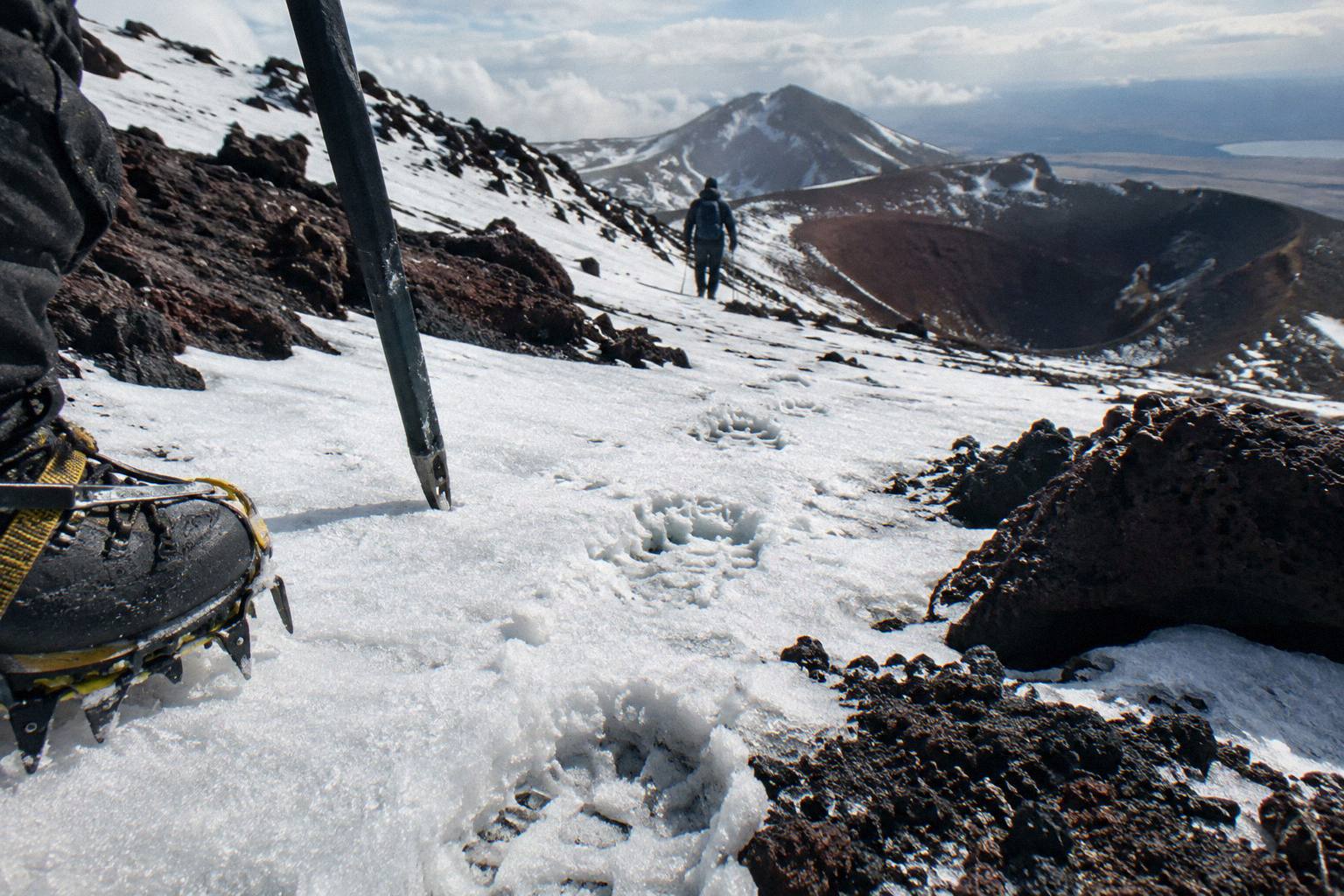
The equipment point matters more than people expect. Adrift Tongariro supplies crampons and ice axes on its guided tours for winter conditions if required, plus a clothing and footwear allowance, and those are tools an independent winter walker would have to own, carry, and know how to use. DOC's own winter essentials list for independent trips includes crampons, ice axe, helmet, avalanche gear, and competency with all of it. In summer the same gear mostly stays in the vehicle, but the guide is still carrying group safety equipment and, more usefully, judgement. Guided operators and shuttles run only when DOC's advisory and the forecast allow, and operators are bound by DOC rules not to run on hazardous-weather-warning days. Conditions allowing, the guide decides the pace, the turnaround, and whether the day happens at all.
The second difference is knowledge. The Crossing passes through a dual World Heritage area, New Zealand's oldest national park, established in 1894, and the mountains are sacred to Ngati Hikairo ki Tongariro of Ngati Tuwharetoa. A guide can explain what you are looking at: the Red Crater at 1886 m, the highest point of the track, the 2012 Te Maari eruption history, and the cultural request DOC prints on its page, that Kaumatua Te Ngaehe Wanikau asks visitors to respect the maunga tapu by not touching or entering any of the waterways, including the alpine lakes. An independent walker sees the same views. A guided walker is told what they mean. For more on that cultural rule, the guide to swimming in the Emerald Lakes and tapu covers it in full.
Third, transport. The Adrift tours depart from 53 Carroll Street, National Park Village, and include the transfers to and from the track as part of the day, with pickups from Taupo, Turangi and Whakapapa available at a surcharge on the premium guided hike. That removes the shuttle-booking puzzle entirely. Bring your own lunch: lunch is not included on Adrift tours, and that is worth knowing before you pack.
If a guided day sounds right for your dates, the question becomes which of the three Adrift tours fits, and whether a private guide is worth the step up.
The premium guided hike is the most reviewed guided tour here, at 4.6 across 242 reviews, from NZ$450 per person, with free cancellation up to 14 days before. The full-day guided Crossing covers the same ground with the same operator at the same departure point; its price is on the booking page rather than printed here, and it is non-refundable. The private guided Crossing, rated 4.5 across 30 reviews, is also non-refundable and runs 7 to 9 hours; check the booking page for age limits. Whichever you choose, the booking page shows the cancellation terms in full, and the DOC booking system sits underneath all of them.
What Going Independently Looks Like
Going independently means you book a shuttle, walk the Crossing alone or with your party, and make every decision yourself: start time, pace, layers, food, water, and turning back. It costs from NZ$68 to NZ$120 per person depending on the shuttle and its departure point, and it is the standard summer way to do the track.
The mechanics are simple. You pick a shuttle based on where you are sleeping, and the shuttle determines your day. DOC distances put Whakapapa 10.4 km from the track, National Park 13.5 km, Turangi 36.7 km, Ohakune 48 km, and Taupo 86.5 km. Six of the bookable products are one-way Ketetahi park-and-rides: you park at the Ketetahi car park, ride the shuttle to Mangatepopo, and walk the Crossing back to your own car. There is no return transport in those products, by design, because your car is waiting at the far end. The others are round trips that return you to your start point after the walk.
The Ruapehu Scenic Shuttles Ketetahi park-and-ride is the clearest example, rated 4.8 across 670 reviews, from NZ$68 per person, with free cancellation up to 24 hours before and an 8 hour booked duration. You supply everything else: boots, layers, food, water, sun protection, and the willingness to read the weather yourself. DOC's summer time band of 7 to 8 hours is the honest planning number, and the shuttles book day lengths around that window rather than the walk itself.
The independent day has a rhythm of its own. An early start matters, both for parking-free logistics and because afternoon weather on the high section between the South Crater and Red Crater is statistically the riskier window; DOC and NIWA both publish forecasts aimed at exactly that section, and the NIWA advisory covers the Red Crater area specifically. The full weather picture, including what triggers a DOC advisory and where the alerts sit, is in the guide to Tongariro Crossing weather above the Emerald Lakes. Volcanic alert levels change daily and are published by GeoNet, so the rule is structural: check the alerts before you commit, and never assume yesterday's status holds.
What independence does not include is any help once you are on the track. There is no sweep, no guide making the turnaround call, and no spare layers if yours fail. For walkers who have done full-day alpine tramps before, that is not a problem, it is the point. For walkers whose longest day is a few hours on a formed trail, it is the single biggest argument for paying for a guide, and pretending otherwise is how people get caught out above the Red Crater in wind they did not forecast.
Winter Changes The Answer Completely
From May to October the Crossing is an expert route with snow, ice, avalanche risk and sub-zero temperatures, DOC's time band stretches to 9 hours, and DOC states that alpine skills are essential and it is best to go with a guide. Shuttle buses generally do not operate in winter, while guided trips include transport, so in practice winter walking means a guided tour.
This is the part of the answer people skip. The summer question, guide or no guide, is a preference. The winter question is close to a formality, not because of any rule forcing a guide, but because the infrastructure disappears. DOC says shuttle buses generally do not operate from May to late October, which removes the independent option's transport leg, while the guided tours keep running with transport and winter equipment included. Crampons and ice axes, supplied by Adrift for winter conditions if required, go from optional extras to the tools that make the track walkable at all.
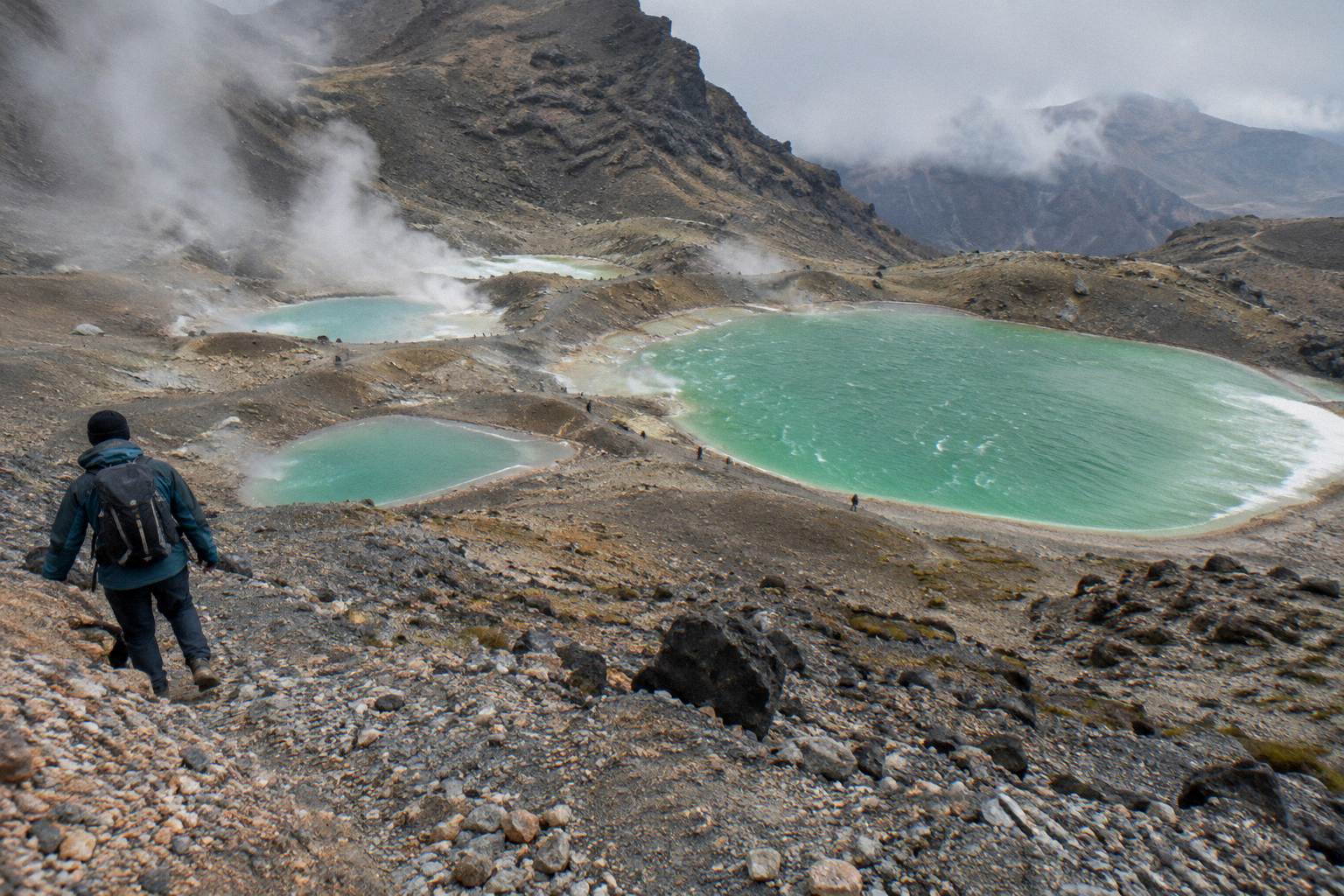
Winter daylight is short, 9 to 11 hours by DOC's own figures, against a 9 hour walking time band. That arithmetic leaves no margin for a slow start, a wrong turn, or a scree descent in the dark, and the steep scree descent to the vivid Nga Rotopounamu, the Emerald Lakes, is exactly where tired legs and ice meet. Avalanche risk is real and rated daily at avalanche.net.nz. None of this makes winter the wrong choice; winter light on the Emerald Lakes and a snow-loaded Red Crater are spectacular. It makes winter the season where the guided option is not a convenience but the sensible default. The guide to winter on the Crossing, snow at the Emerald Lakes takes the season apart in more detail.
For context on the year as a whole, the best month to hike to the Emerald Lakes shows how sharply the seasons divide, and the shuttle-season timing is tied to those same dates. If your dates are flexible and your heart is set on walking independently, choosing a summer month is itself a safety decision.
What A Shuttle Covers And What It Does Not
A shuttle covers transport to the Mangatepopo start and, on round-trip products, the ride home from Ketetahi Road. A shuttle never covers guiding, gear, food, or decisions on the mountain, and the one-way Ketetahi park-and-rides include no return leg at all. Printing the difference plainly matters because it is the most common booking confusion on the Crossing.
Here is how the bookable shuttles actually compare. All figures are from the operators' own booking details, per person where a price is shown.
| Product | Type | Departure point | Rating and reviews | Price |
|---|---|---|---|---|
| Ruapehu Scenic Shuttles Ketetahi park-and-ride | One-way park-and-ride | Ketetahi car park | 4.8 across 670 | From NZ$68 |
| Tongariro Crossing Shuttles round trip | Return shuttle | National Park Village, 59 Findlay Street | 4.7 across 890 | From NZ$75 |
| Dempsey Buses return bus | Return shuttle | National Park Village | 4.8 across 72 | From NZ$90 |
| Tongariro Expeditions shuttle from Taupo or Turangi | Shuttle with transfer options | Taupo, Turangi or Ketetahi | 4.7 across 431 | From NZ$75 |
| Backyard Tours mountain shuttle from Turangi | Mountain shuttle | Turangi, accommodation pickups | 3 reviews so far | From NZ$120 |
| Owhango Adventures Ketetahi park-and-ride | One-way park-and-ride | Ketetahi car park | 4.8 across 333 | Check the booking page |
Two details in that table deserve emphasis. The Ruapehu and Owhango park-and-rides are one-way by design: you park at Ketetahi, ride to Mangatepopo, and finish the walk at your own car. The Tongariro Crossing Shuttles round trip is the most reviewed tour here, 890 reviews at 4.7, and it is still just a bus. Free cancellation up to 24 hours before applies to the products listed in the table where shown; the booking page for each product shows its own terms.
For travellers based in Taupo, the Tongariro Expeditions shuttle from Taupo or Turangi is the practical bridge, from NZ$75 per person with free cancellation up to 24 hours before, an 8 to 10 hour booked day, and group sizes up to 24. DOC's distance of 86.5 km from Taupo to the track is the reason a dedicated shuttle exists at all; the town is close enough for the day and far enough that the drive is part of the planning. There is no Taupo-based guided day trip, so Taupo walkers choose between a shuttle for the day or driving themselves to National Park Village for a guided departure.
Auckland-based travellers have two further options, both built around the reality that Auckland is a long way from the mountain. The Kiwi Road Tours private transfer from Auckland is a two-day private transfer product, with the Crossing walk self-guided and the shuttle excluded; it has 4 reviews so far. The ExperienceKart private three-day tour from Auckland adds Huka Falls and Lake Taupo across three days, with the Crossing as one self-guided leg, is not suitable for children under 12, and carries no printed price. Neither is a guided Crossing tour, and booking either expecting a guide on the track is the exact mistake this article exists to prevent.
Costs Compared: Guided Hike Versus Shuttle
The honest cost comparison is from NZ$68 to NZ$120 per person for a shuttle against from NZ$450 per person for the most reviewed guided hike, and the gap between those fares is what buys equipment, judgement, transport and commentary. The Adrift private Crossing and the Auckland multi-day products are priced per group or per tour and do not compare with per-person fares.
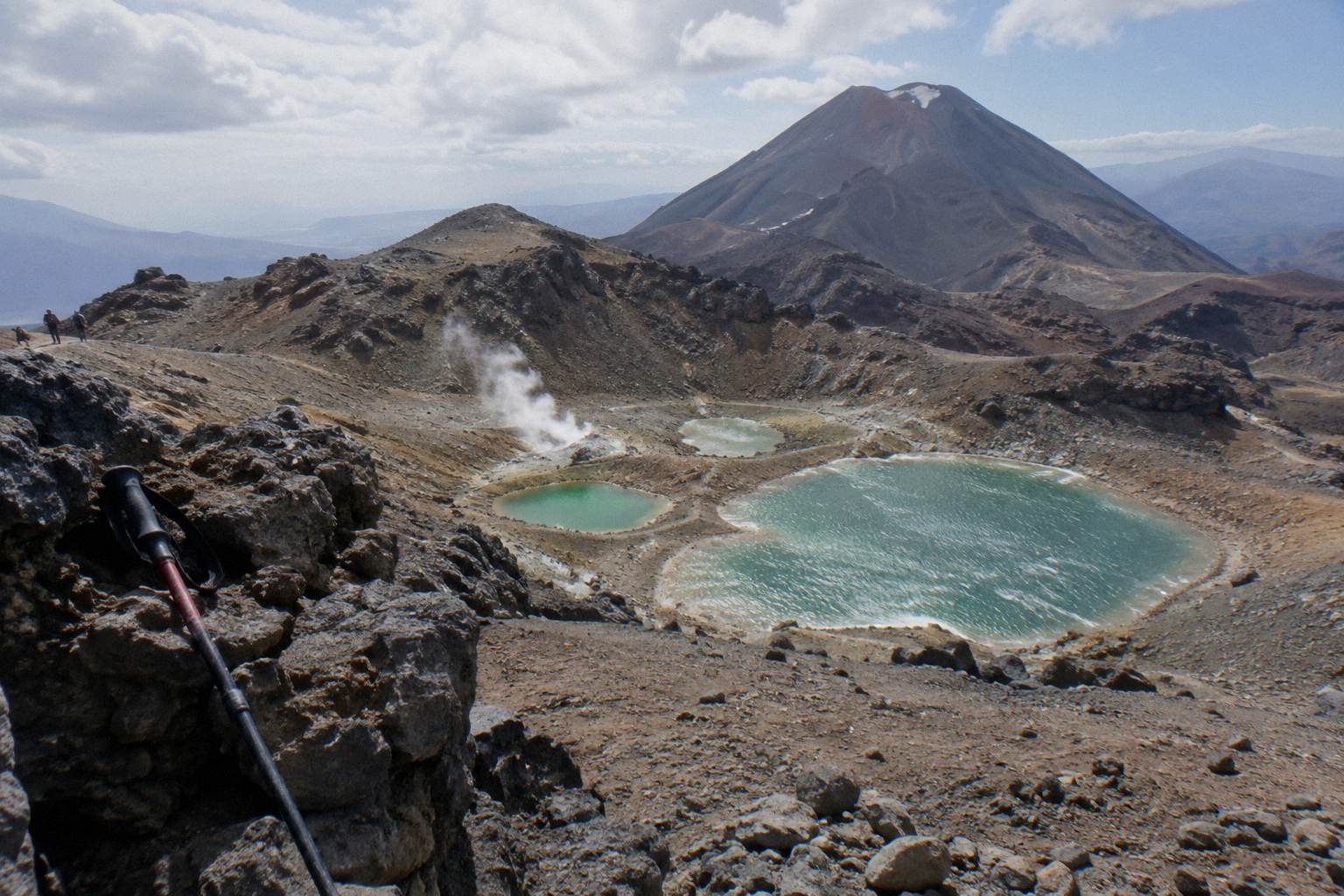
That gap is real, and it is worth staring at rather than talking around. A shuttle seat from NZ$68 gets you to the track and back; a premium guided seat at from NZ$450 gets you there with a guide, the winter equipment, and the decisions handled. Neither price is wrong; they buy different days. The shuttle money assumes you arrive prepared: right boots, right layers, food, water, and the experience to make good calls at 1,800 m of nothing but your own judgement, and for the record the Red Crater high point is 1886 m. The guided money assumes you would rather not make those calls, or that the season means you should not. For the dressing side of preparation, what to wear hiking to the Emerald Lakes is the practical checklist.
One cost people miss entirely: DOC says part of a shuttle fee, about NZ$40, goes to conservation. That is not the shuttle price, it is the conservation share inside it, and it is one of the quiet reasons the shuttle-and-track system functions. The DOC booking system itself is free, and DOC recommends it for every walker, guided or not, because it carries the daily alerts and the conditions information alongside the booking.
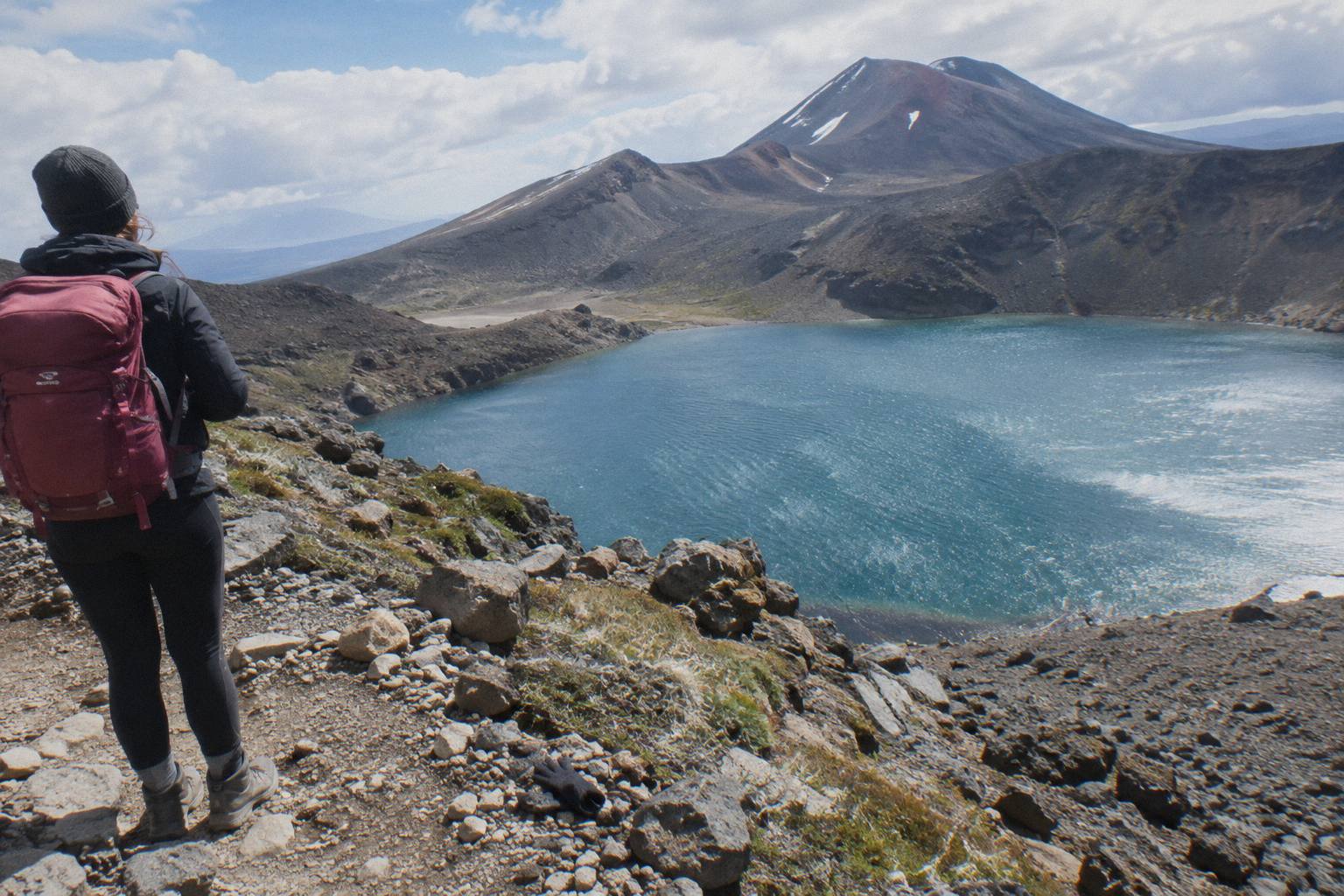
The table below puts the guided and shuttle products side by side on the things that actually differ, so the decision can be made on features rather than price alone.
| Adrift premium guided hike | Tongariro Crossing Shuttles round trip | |
|---|---|---|
| Guided on the track | Yes | No, transport only |
| Price per person | From NZ$450 | From NZ$75 |
| Rating | 4.6 across 242 reviews | 4.7 across 890 reviews |
| Departure | National Park Village, 53 Carroll Street | National Park Village, 59 Findlay Street |
| Winter equipment supplied | Crampons and ice axes if required | Nothing stated, bring your own |
| Lunch | Bring your own | Bring your own |
| Free cancellation | Up to 14 days before | Up to 24 hours before |
| Minimum age | 12 | Check the booking page |
The winter column of that comparison is where the price argument inverts. In summer, the difference between a shuttle seat and a guided seat buys convenience and knowledge. In winter, it buys the equipment, the transport that shuttles are not running, and the route-finding across snow, which is to say it buys the day happening at all. The guide to whether a guide is worth it for the Emerald Lakes section runs the same comparison focused on the lakes specifically.
Mistakes That Trip People Up
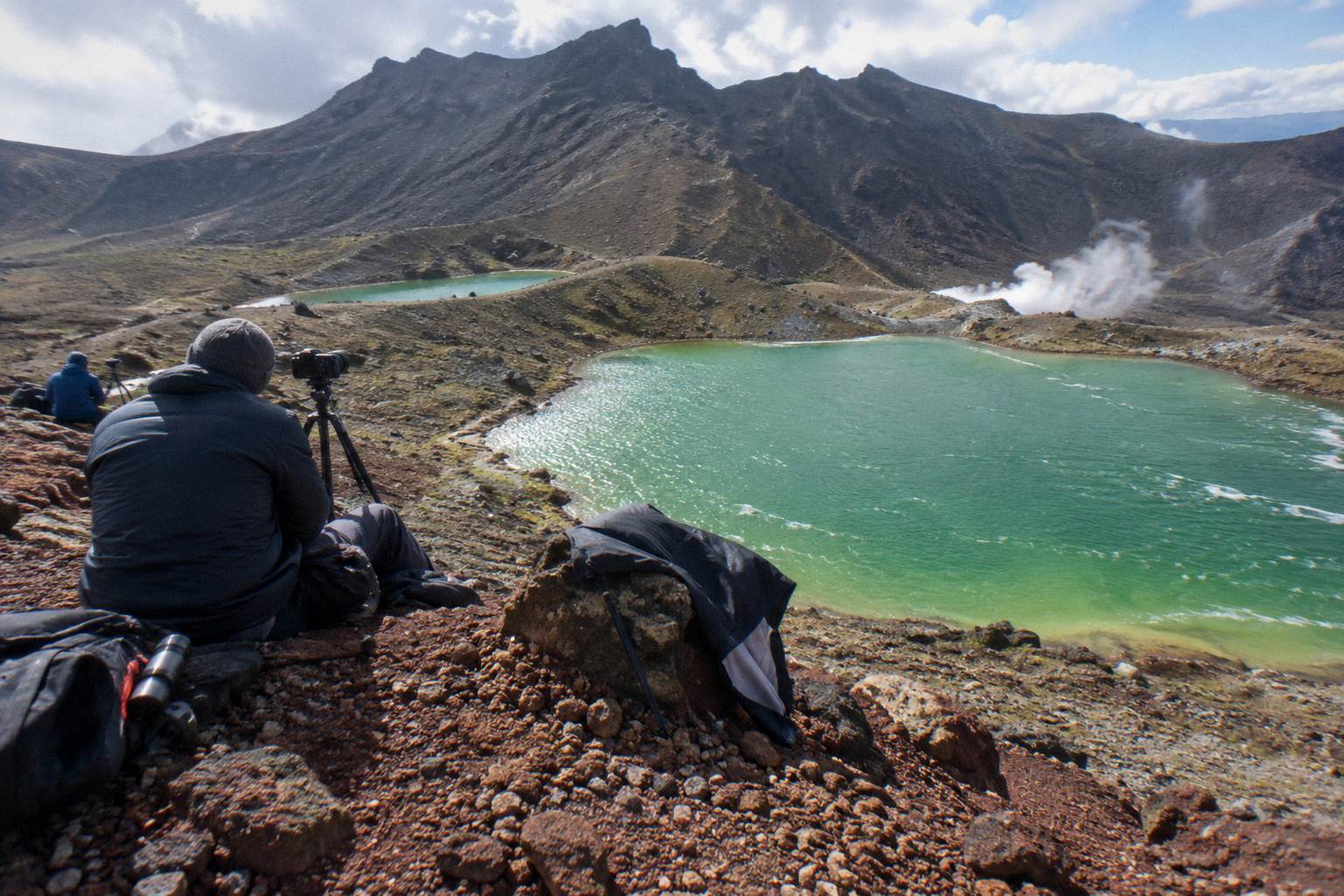
The five repeated mistakes are booking a shuttle and expecting a guide, booking a one-way park-and-ride and expecting a return, walking winter conditions on summer assumptions, skipping the DOC booking and alert check, and planning to drive and park at the road ends in summer. Each one is avoidable with a single fact checked in advance.
The first mistake is the most common: the words shuttle and tour blur together in search results, and a walker books the Ruapehu Scenic park-and-ride believing someone will accompany them. A shuttle is never guided, and the shuttle timetable for the Emerald Lakes day exists partly to keep that boundary clear. The second is its mirror image: a one-way park-and-ride includes no return transport. Your car sits at Ketetahi; that is the system working, not a service failure.
The third mistake is seasonal. Winter and summer are different tracks wearing the same name, and the equipment, the daylight, and the avalanche risk all change. The fourth is administrative: the DOC booking system is free, recommended, and needed for shuttle and guided bookings, and skipping it means skipping the alerts attached to it. Volcanic alert levels change daily, and the structural rule is to check DOC's Crossing page and GeoNet before the day, not to assume anything.
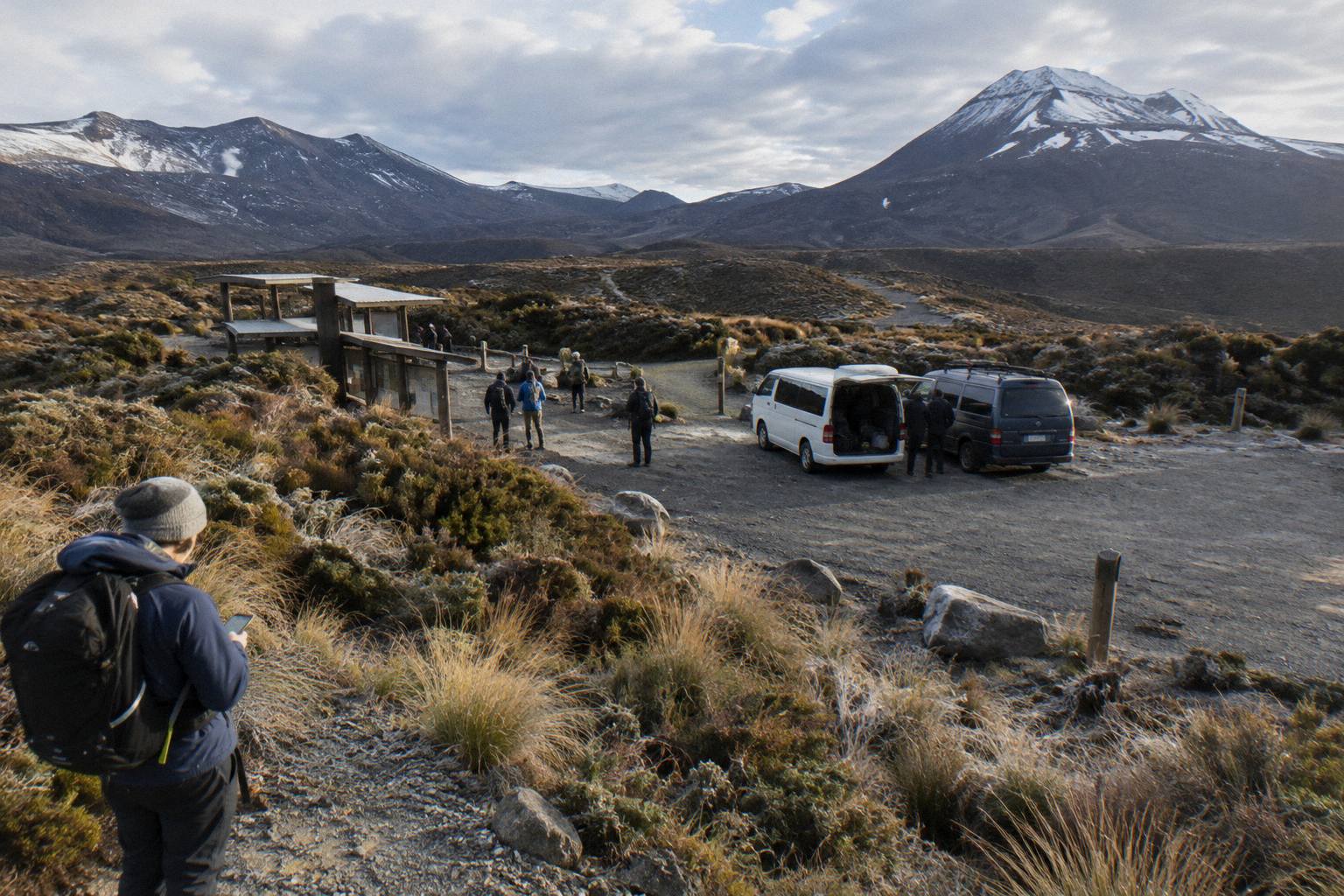
The fifth is the parking trap. Summer road-end parking is limited to 4 hours, a Crossing takes 7 to 8, and DOC says there is no Crossing parking at Mangatepopo in summer, with a private car park near Ketetahi. Arriving with a self-drive plan and no shuttle booking is how days collapse before they start. The Mangatepopo car park start guide covers the start-point logistics in full.
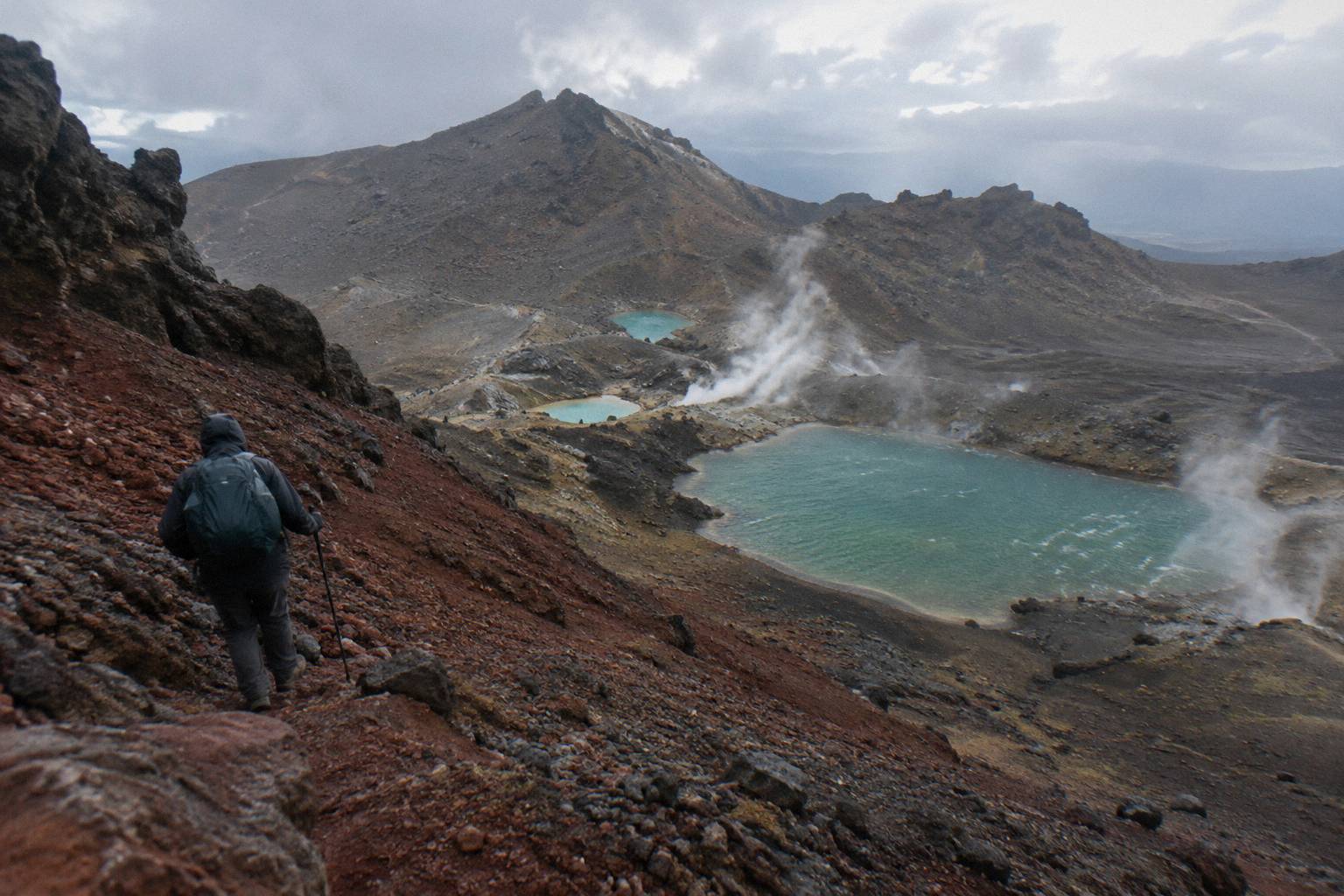
A quieter sixth is expectation management on the day itself. No operator, guided or shuttle, promises clear views or a dry day; everything runs conditions allowing. A guide who turns the group around at the South Crater because the wind above Red Crater is beyond the advisory has done the job correctly. For deeper background on how the fitness demands stack up, fitness for the climb to the Emerald Lakes is the honest breakdown, and DOC's High fitness rating is not decoration.
How To Decide In One Minute
Decide on three questions: the month, your alpine experience, and who you are responsible for. November to April with solid day-walk experience means a shuttle, from NZ$68 per person, and an independent walk. May to October, or summer with no mountain experience, or children in the party, points to a guided tour, from NZ$450 per person, or to another walk entirely.
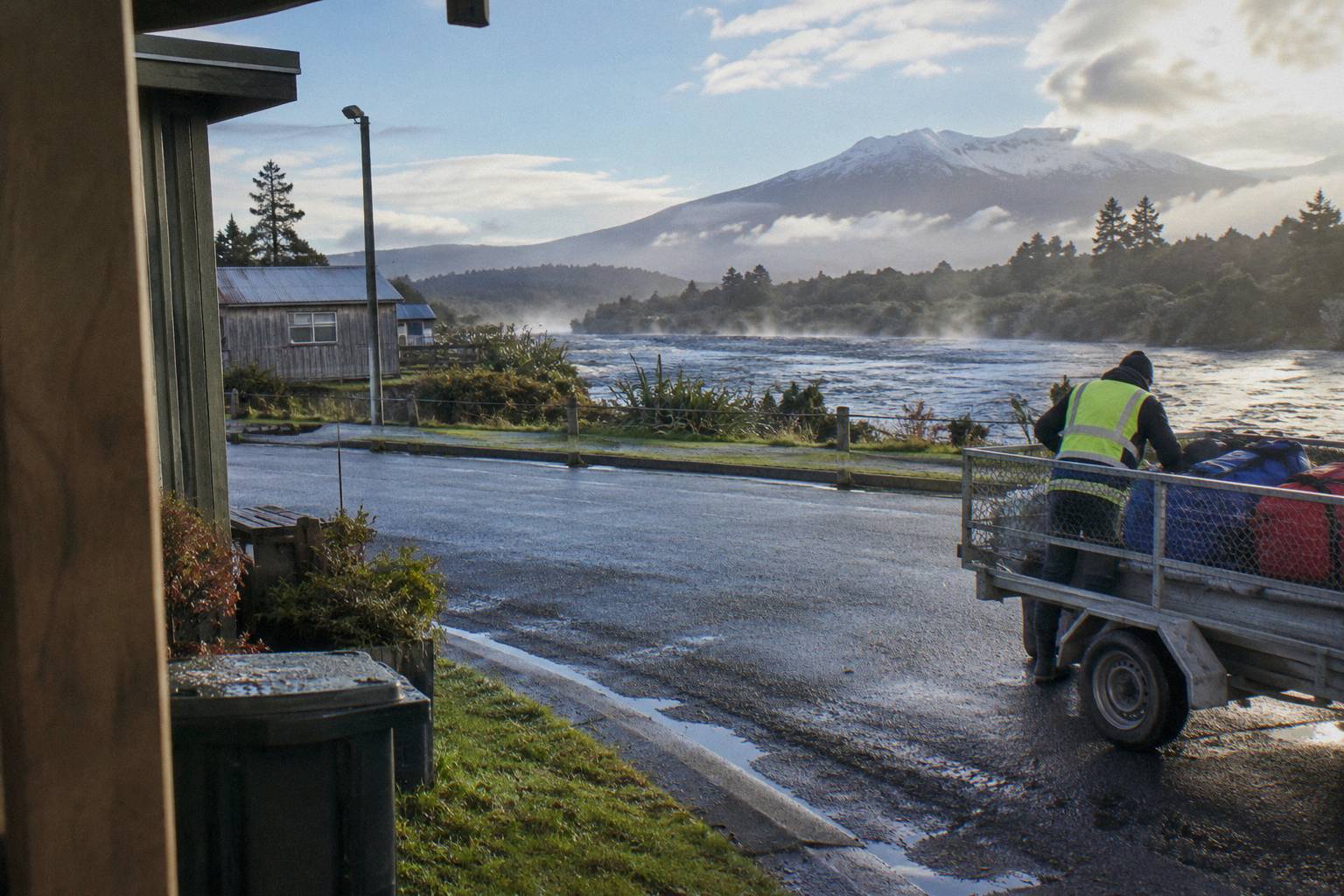
The month question settles most cases on its own. If your dates fall in the shuttle season and you have walked full days in rough country before, book the shuttle that matches where you sleep: the round trip from National Park Village, the park-and-ride at Ketetahi, or the Taupo and Turangi transfers. If your dates fall between May and October, the guided tour is the option that exists, and the equipment and transport it carries are the reasons. Children add a second axis: DOC advises the track is not recommended for children under 10, the full-day guided Crossing sets a minimum age of 12, the premium and private tours say to check the booking page, and the Dempsey buses exclude children under 6. The booking a guided hike to the Emerald Lakes guide walks through the guided reservation end to end.
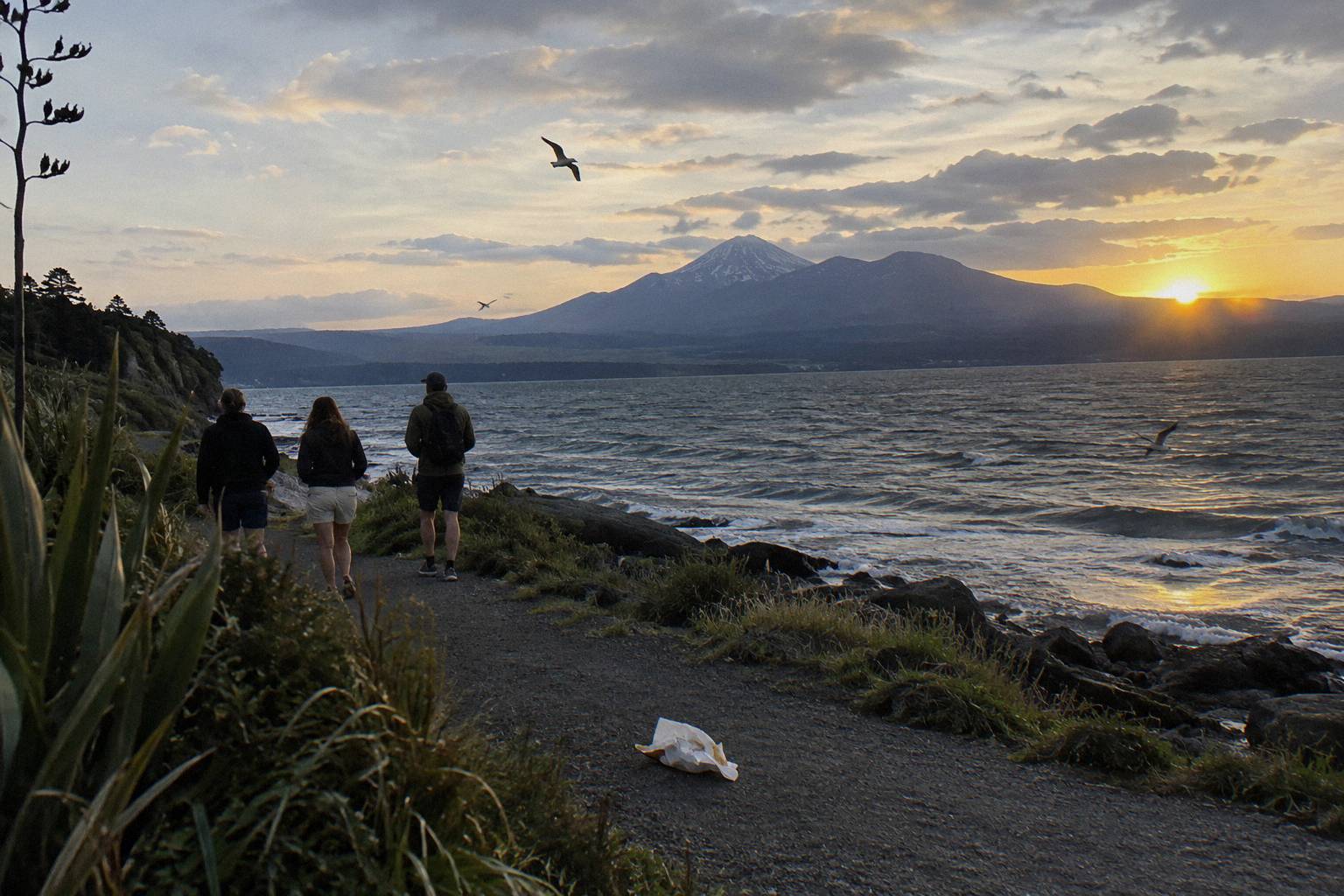
Experience is the honest tiebreaker in summer. If the Red Crater scree, the elevation change of plus and minus 1196 m, and the 7 to 8 hour band read like a big day you can handle, they are, and thousands of independent walkers handle them each season. If they read like unknowns, a guide converts those unknowns into a managed day, and the fare is the price of that conversion. For a broader look at whether the day rewards the effort at all, whether it is worth hiking to the Emerald Lakes makes that case on its own terms.
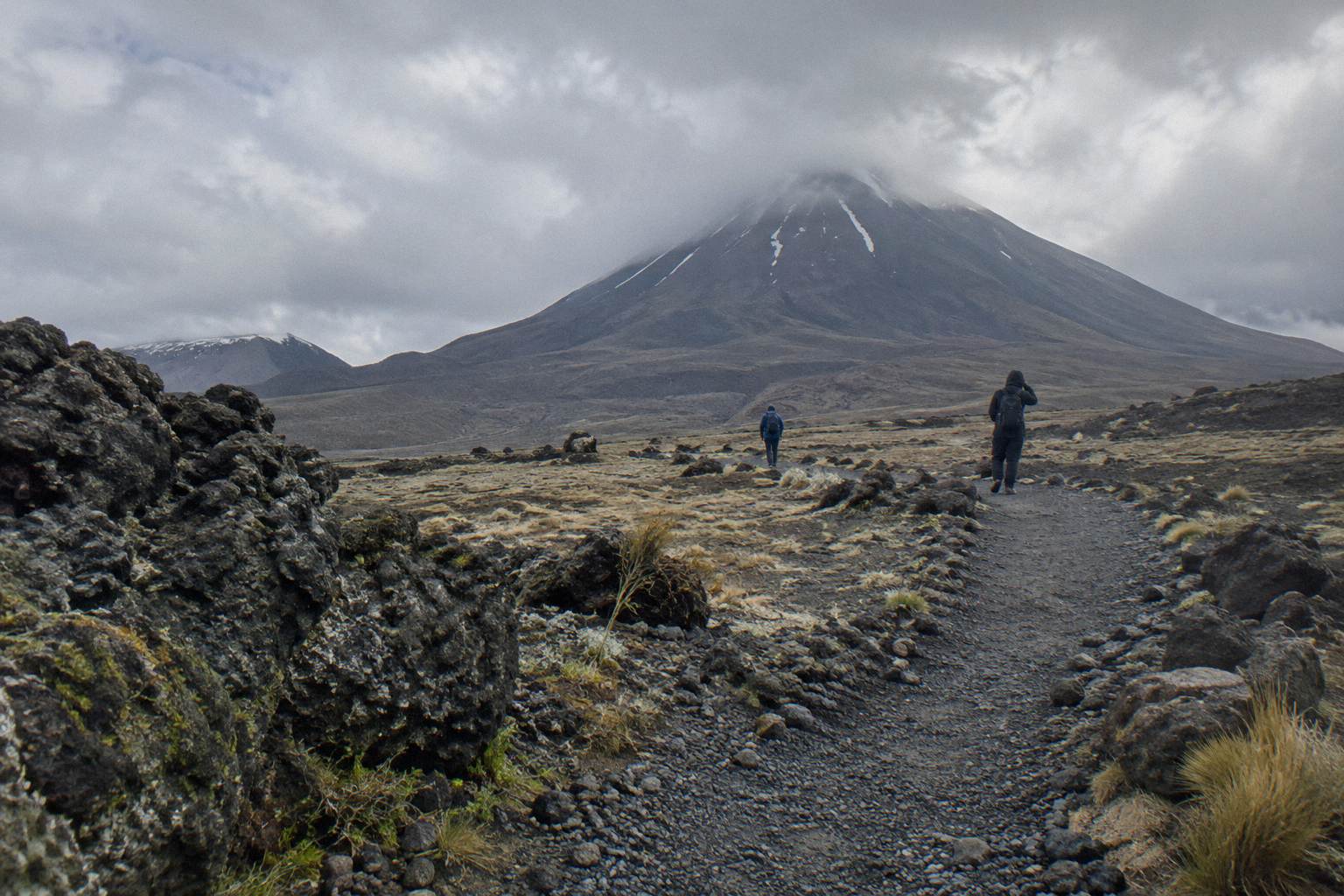
Whichever way the decision lands, two things stay constant. Book through the DOC system and read the alerts, and respect the request not to touch or enter the alpine lakes. The Emerald Lakes are the reward either way, and the mountain does not care whether you reached them with a guide or a bus ticket. What it does care about, in the practical sense of the advisory system and the season, is that the choice between the two was made with the right information. This article, and the whole Tongariro Emerald Lakes Hike guide collection, exists to make sure it is.
Common Questions About Needing A Guide For The Tongariro Crossing
Do You Need A Guide For The Tongariro Crossing?
No, a guide is not required in summer, and most walkers do the track independently with a shuttle. From May to October DOC classes the route as expert terrain, states alpine skills are essential, and recommends going with a guide, while shuttle buses generally do not operate.
Can You Do The Tongariro Crossing Without A Guide?
Yes, in the summer season. You book a shuttle to the Mangatepopo start, walk the 20.2 km track yourself in DOC's 7 to 8 hour band, and arrange your own gear, food and weather checks. Winter without a guide is not the standard path, because shuttles generally do not run and the route demands alpine skills and equipment.
What Is The Cheapest Way To Do The Crossing?
A shuttle. The Ruapehu Scenic Shuttles Ketetahi park-and-ride is from NZ$68 per person, round trips from National Park Village are from NZ$75, and the Taupo or Turangi transfers are from NZ$75. The most reviewed guided hike, the Adrift Tongariro premium guided hike, is from NZ$450 per person, with crampons and ice axes supplied for winter conditions if required.
Do The Shuttles Include A Guide?
No. A shuttle is transport only. The Ruapehu, Owhango, Tongariro Expeditions, Dempsey Buses, Tongariro Crossing Shuttles, Active Outdoor Adventures, National Park Shuttles, Backyard Tours and Tongariro Crossing Car Park products all move you between your base and the track. Adrift Tongariro runs the three guided tours, and those are the products with a guide on the track.
Is A Guide Worth It In Winter?
Yes, in the practical sense that winter is when a guide matters most. DOC classes the May to October route as expert terrain with snow, ice, avalanche risk and sub-zero temperatures, and recommends going with a guide. Adrift supplies crampons and ice axes on its guided tours for winter conditions if required, and its tours include the transport that shuttles generally do not run in winter.
Do Children Need A Guide For The Crossing?
DOC advises the track is not recommended for children under 10. The Adrift Tongariro full-day guided Crossing sets a minimum age of 12, the premium and private tours point to the booking page for age limits, the Dempsey buses exclude children under 6, and the ExperienceKart three-day tour is not suitable under 12. Age rules are per tour, so check the booking page for the specific product before booking for a family.