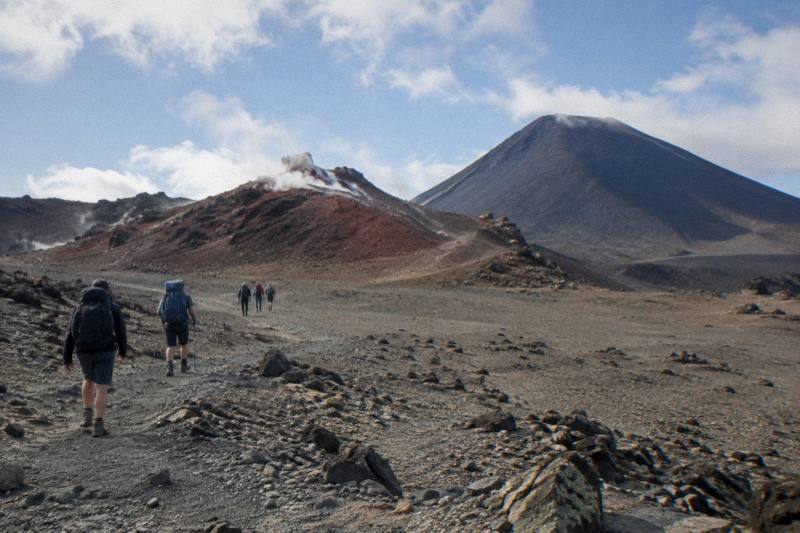
Winter On The Tongariro Crossing: Snow At The Emerald Lakes And Crampon Rules
From May to October the Tongariro Alpine Crossing stops being a summer day walk and becomes an Expert alpine route: snow on the Red Crater scree, ice on the Emerald Lakes descent, and a DOC recommendation to go with a guide.
Short answer
DOC classes the Crossing as an Expert route from May to October, with 9 hours walking, snow, ice, avalanche risk and sub-zero temperatures. Crampons, an ice axe and alpine skills are essential for independent walkers. Adrift Tongariro runs the guided winter option from NZ$450, with winter gear supplied when conditions require it.
| Quick Fact | Winter (May to Oct) | Summer (Nov to Apr) |
|---|---|---|
| Track classification | Expert route | Intermediate tramping track |
| Walking time (DOC) | 9 hours | 7 to 8 hours |
| Distance | 20.2 km one way | 20.2 km one way |
| Elevation change | +/- 1196 m | +/- 1196 m |
| High point | Red Crater, 1886 m | Red Crater, 1886 m |
| Fitness required | High, plus alpine skills | High |
| Shuttles | Generally not operating | Multiple operators daily |
| Guided trips | Running, transport included, conditions allowing | Running, transport included |
What Winter Actually Does To The Crossing
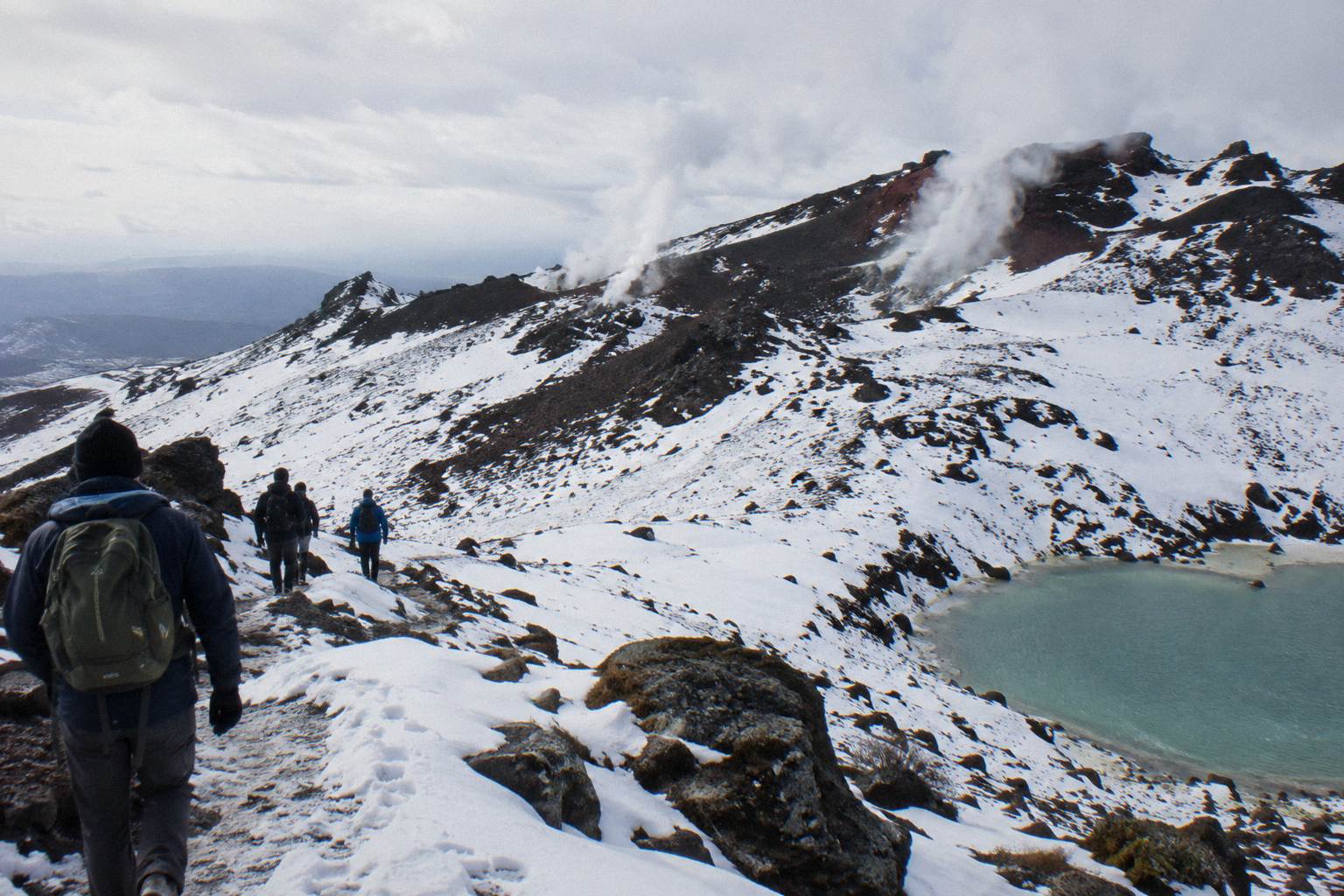
From May to October DOC grades the Tongariro Alpine Crossing an Expert route, with snow, ice, avalanche risk and sub-zero temperatures, and states plainly that alpine skills are essential and it is best to go with a guide. The distance does not change, 20.2 km one way with 1196 m of elevation change, but walking time stretches from 7 to 8 hours in the November to April window to 9 hours across winter.
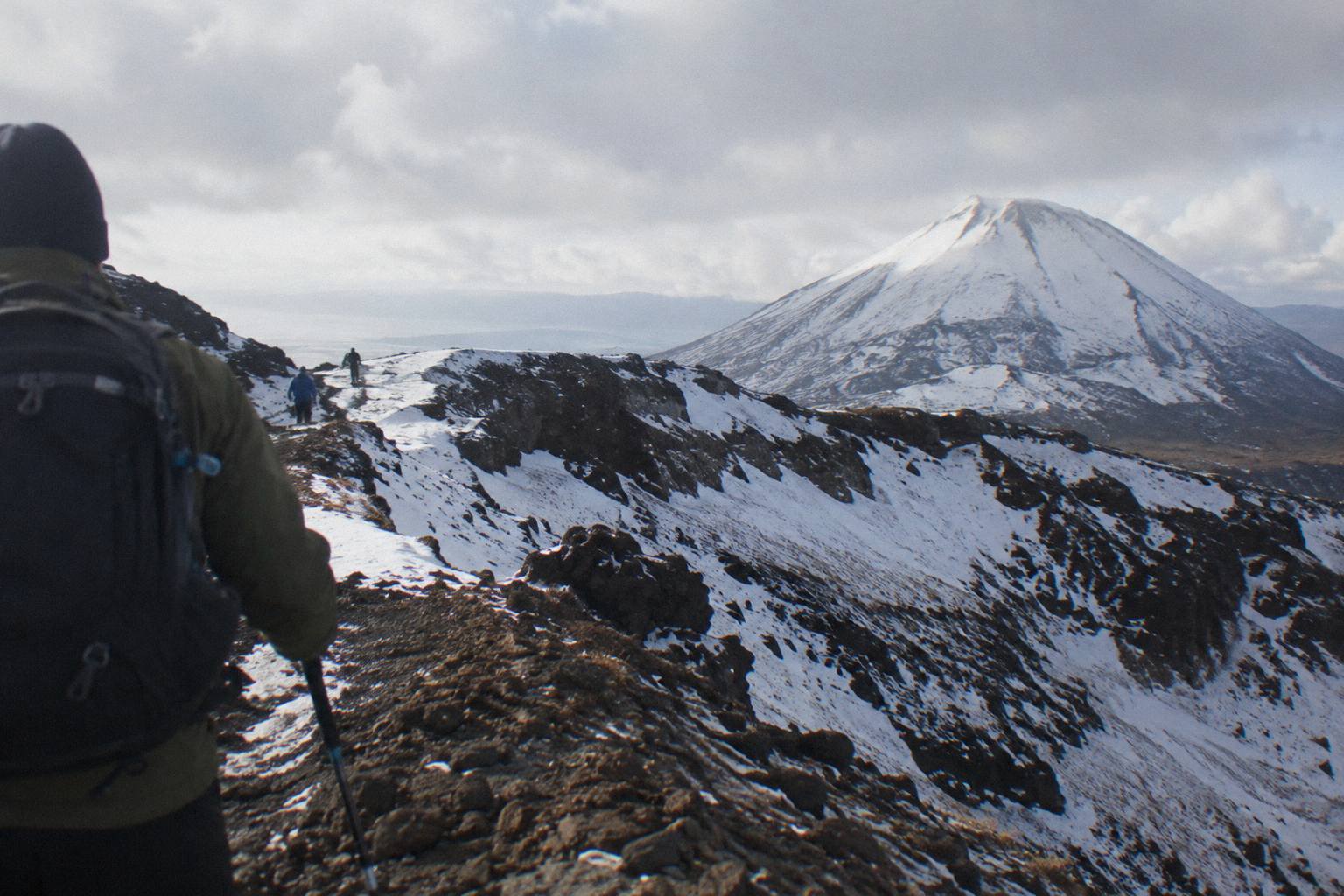
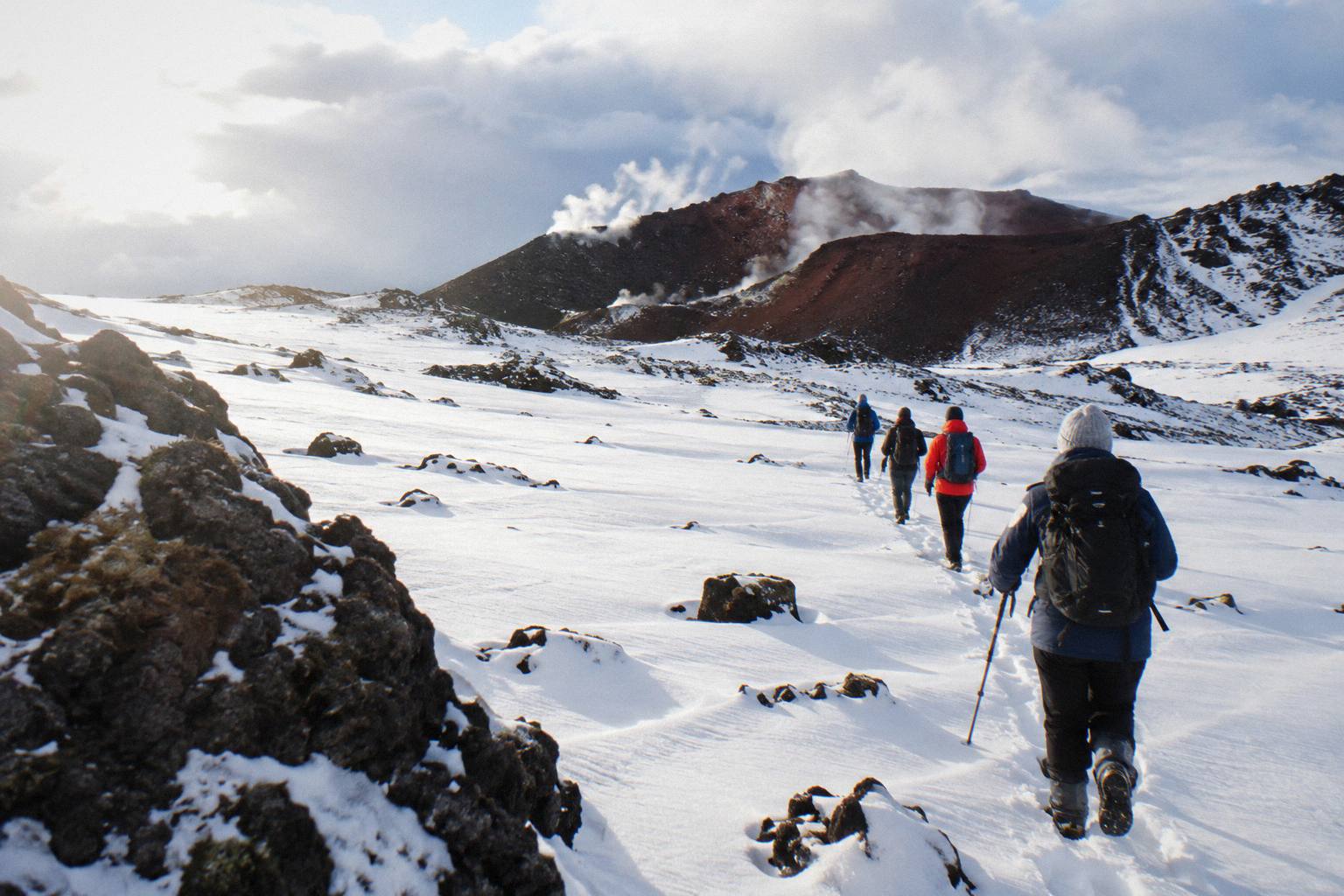
Three things drive the change. The first is snow on the ground, which can persist across the South Crater and the Red Crater climb well into spring and turn the steep scorie descents, including the one DOC describes as the steep scree descent to the vivid Nga Rotopounamu-Emerald Lakes, into a sliding surface rather than a walking surface. The second is daylight: DOC notes winter daylight of 9 to 11 hours, which removes most of the buffer a slow party would have in summer. The third is temperature: sub-zero conditions are standard at altitude, and a stopped walker cools fast.
The landscape is also quieter and harsher in a way many winter walkers specifically come for. Fresh snow outlines the ridgelines, the Emerald Lakes can carry ice at their edges, and steam from the fumaroles above Red Crater reads more sharply against cold air. That beauty is real, and it is exactly why the winter version of this walk tempts people who have already done the summer track. It is also why the rules tighten: the same scree that is a controlled slide in dry conditions is a hard, icy slope after a freeze.
Volcanic hazard does not pause for winter either. Tongariro is an active volcano, and the Te Maari eruptions of 2012 are recent reminders that the alert level can shift; volcanic alert levels are assessed daily and change daily, which is why DOC's volcanic risk page belongs in your planning rather than a memory of something you once read. If you want the deeper context on the landscape itself, this guide pairs with the Emerald Lakes on the Tongariro Crossing for the geography, and with Red Crater on the Tongariro Crossing for the high point itself.
| Track Zone | Summer Character | Winter Character |
|---|---|---|
| Mangatepopo start, 1120 m | Gravel valley walk | Often icy boardwalk and frozen ground |
| Devil's Staircase | Steep but grippy climb | Snow steps, possible wind slab |
| South Crater | Flat reprieve | Drifts, whiteout navigation |
| Red Crater ridge, up to 1886 m | Exposed scramble | Rime ice, strong wind, avalanche terrain above |
| Descent to Emerald Lakes | Steep loose scree | Hard frozen scree, crampons needed |
| Ketetahi descent | Long gradual track | Ice on shaded bends, frozen streams |
Is The Crossing Even Open In Winter?
Yes, the track itself is not closed for the season, but winter status is decided day by day, not month by month. DOC's seasonal reclassification to an Expert route runs May to October, and operators are bound by DOC rules not to run on hazardous-weather-warning days, so guided trips and the rare winter transport options run conditions allowing. There is no promise of an open track on any given winter date.
The honest way to plan a winter attempt is to treat the forecast window as the plan. What triggers a no-go is structural rather than mysterious: a hazardous weather warning from MetService, an elevated volcanic alert level, an avalanche danger rating worth reading before you leave, or a NIWA Red Crater forecast showing wind and freezing levels that put the ridge above your skill. DOC maintains a free booking system for the Crossing, it is recommended, and you need it if a shuttle or guided trip is part of your day, so the booking step and the weather check belong in the same morning routine. Volcanic alert levels are checked on GeoNet rather than remembered from a news article.
There is a cultural layer to a winter visit too, and it applies in every season. Kaumatua Te Ngaehe Wanikau asks visitors to respect the maunga tapu by not touching or entering any of the waterways including the alpine lakes. In practical winter terms that is easy to respect, since the lakes are frozen or near-frozen, but it is worth knowing the request stands regardless of how inviting a steaming pool looks on a cold day. The full background on that rule sits in the guide to swimming in the Emerald Lakes and tapu.
When conditions are genuinely poor, DOC points walkers at alternatives inside the park: Taranaki Falls and Tama Lakes are the named substitute walks, lower, sheltered for most of their length, and realistic in weather that closes the Crossing. The wider set of options is covered in other hikes in Tongariro National Park when the Crossing closes.
The three tours above are the guided Crossings that solve the winter problem in one booking, and the rest of this guide explains why that matters more from May to October than at any other time of year.
The Gear Gap: What A Winter Crossing Demands
An independent winter Crossing requires, in DOC's own wording, crampons, an ice axe, a helmet, competency in their use, and avalanche gear; that is the baseline, not a nice-to-have. The summer kit of boots, layers and water is nowhere near enough once the Red Crater descent freezes. No product on this page hires crampons, so independent walkers need to source winter gear themselves.
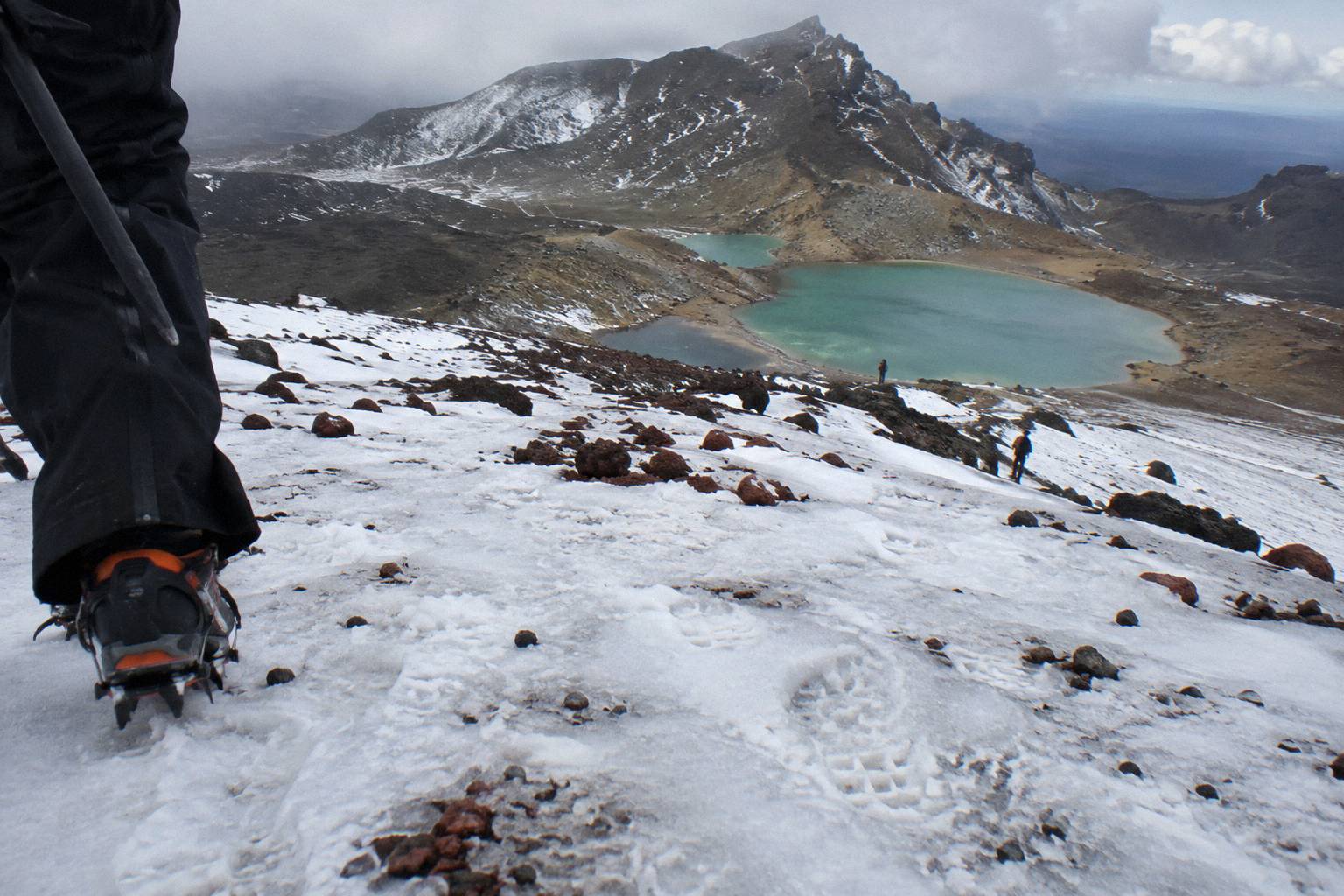
The gear question splits neatly into two columns. DOC's winter essentials list is the independent column: crampons fitted to stiff-soled boots, an ice axe you actually know how to self-arrest with, a helmet for the ice and rock that moves in a freeze-thaw cycle, avalanche transceiver, probe and shovel, and the competency to use all of it. The guided column is different: crampons and ice axes are stated as supplied on the three Adrift Tongariro guided tours for winter conditions when required, along with a clothing and footwear allowance, so a walker who books one of those trips does not need to own alpine kit to reach the lakes in June.
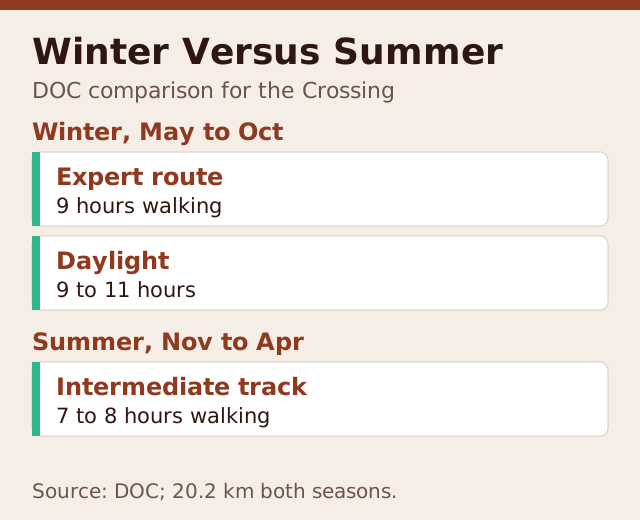
Two warnings sit beside that table. First, gear without skill is weight: DOC's phrase is that alpine skills are essential, and an ice axe carried on a pack strap has never stopped a slide. Second, food and clothing matter more in cold conditions than the kit list suggests, and on the Adrift guided tours lunch is not included, so bring your own lunch, along with more snacks and spare layers than a summer packing list would ever carry. The full seasonal clothing picture is in what to wear hiking to the Emerald Lakes, and the footwear question gets its own treatment in the boots discussion on this site.
| Item | Independent Winter Crossing | Adrift Guided Winter Crossing |
|---|---|---|
| Crampons | Essential, bring your own | Supplied for winter conditions if required |
| Ice axe | Essential, plus self-arrest skill | Supplied for winter conditions if required |
| Helmet | On DOC's winter essentials list | Carried by the guide operation |
| Avalanche gear | Required by DOC for independent trips | Managed by the guide |
| Boots and clothing | Your own, stiff-soled boots for crampons | Clothing and footwear allowance stated |
| Lunch | Bring your own | Bring your own, not included |
Do You Need A Guide For The Winter Route?
For most people, yes. DOC says alpine skills are essential from May to October and that it is best to go with a guide, which is about as direct as a government track page gets. A guide brings local avalanche judgement, a route choice made the same morning, and the winter gear listed above. For experienced alpine trampers with their own kit and a good forecast window, an independent winter Crossing remains possible, just no longer an intermediate day walk.
Adrift Tongariro runs the three guided tours, all from its base at 53 Carroll Street in National Park Village. The Adrift Tongariro full-day guided Crossing is rated 4.7 across 278 reviews and carries a booked day of 9 hours, which is the tour or transfer length rather than walking time. The price sits on the booking page, and it is non-refundable, so a winter booking is one to make once your dates are solid. The Adrift Tongariro premium guided hike runs 8 to 9 hours booked, is rated 4.6 across 242 reviews, from NZ$450 per person, with free cancellation up to 14 days before, and adds pickup options from Taupo, Turangi and Whakapapa at a surcharge on private bookings. The Adrift Tongariro private guided Crossing, rated 4.5 across 30 reviews, suits walkers who want the mountain to themselves, with a booked day of 7 to 9 hours and the same non-refundable terms.
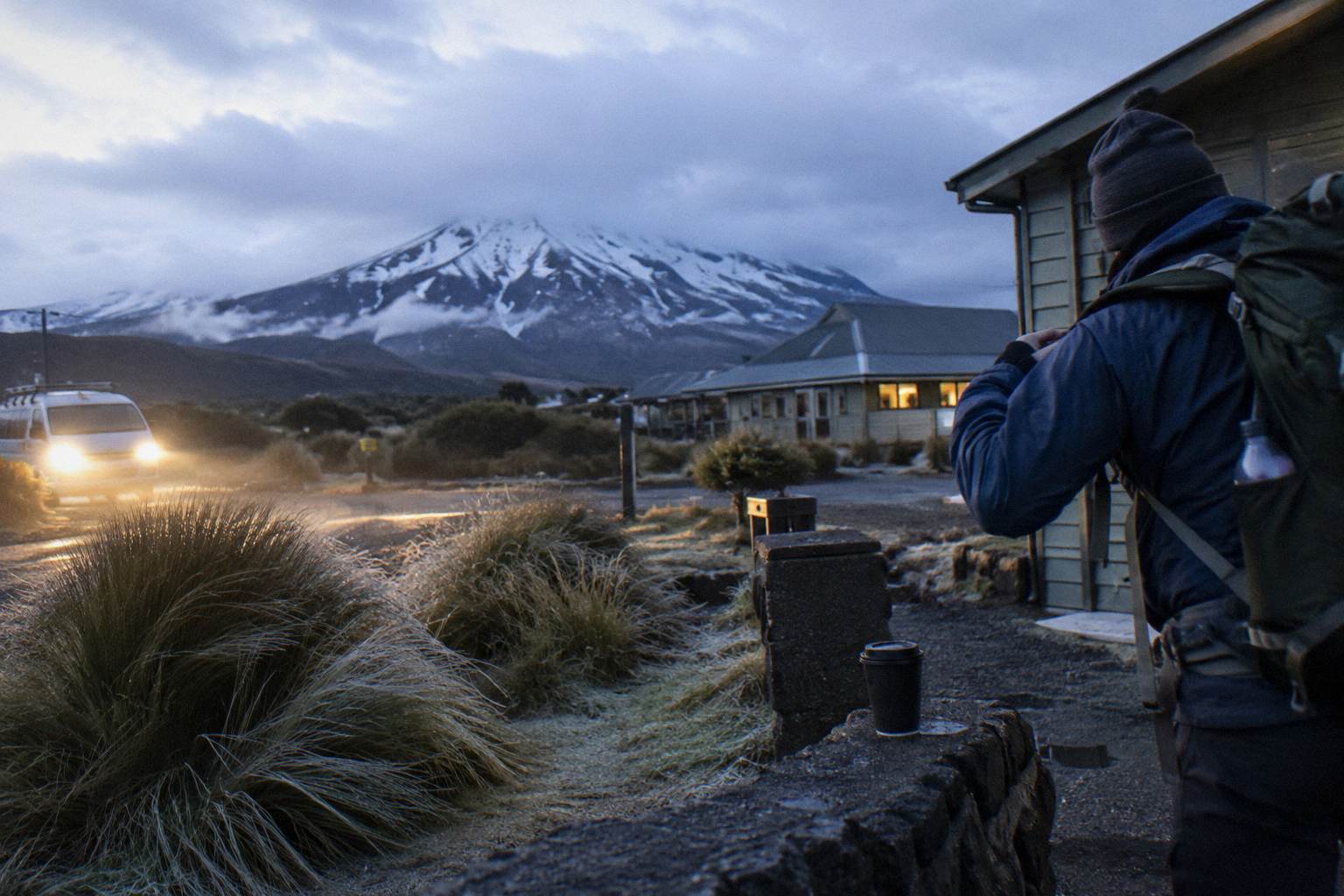
Whether a guide is worth the money has as much to do with the winter decision points as with the walking itself. A guided group makes the morning call with you standing there, carries the crampons, and knows which bends of the Ketetahi descent hold ice after a clear night. The counter-argument, a fit party with alpine experience and a settled forecast, is real but narrow: the guided tours publish their own age limits on the booking page, while DOC separately advises the track is not recommended for children under 10. If you are weighing the question honestly, the deeper comparison is in is a guide worth it for the Emerald Lakes section and booking a guided hike to the Emerald Lakes.
| Tour | Operator | Booked Day | Rating | Price | Cancellation |
|---|---|---|---|---|---|
| Full-day guided Crossing | Adrift Tongariro | 9 hours | 4.7 from 278 reviews | On the booking page | Non-refundable |
| Premium guided hike | Adrift Tongariro | 8 to 9 hours | 4.6 from 242 reviews | From NZ$450 | Free up to 14 days before |
| Private guided Crossing | Adrift Tongariro | 7 to 9 hours | 4.5 from 30 reviews | On the booking page | Non-refundable |
Getting To The Track When The Shuttles Stop
DOC says shuttle buses generally do not operate in winter, May to late October, while guided trips include transport, so a winter walker's logistics resolve into one of two shapes: a guided day with transport built in, or an independent day requiring your own vehicle and winter driving judgement. The summer shuttle network restarts around Labour weekend. This section describes the summer-season shuttles either side of winter, because no honest winter timetable exists.
That framing matters, because the shuttle products themselves are excellent value and heavily booked from late October through April. The Tongariro Crossing Shuttles round-trip from National Park Village is the most reviewed tour here, rated 4.7 across 890 reviews, from NZ$75 per person, departing the Park n Ride at 59 Findlay Street with free cancellation up to 24 hours before. It is a shuttle only, not guided, with a booked window of about 8 hours. The rest of the planning pages sit on Tongariro Emerald Lakes Hike.
The Dempsey Buses return bus from National Park Village covers the same round-trip job from the Park Hotel Ruapehu, the Tongariro Crossing Lodge and the Park n Ride, rated 4.8 across 72 reviews, from NZ$90 per person, free cancellation up to 24 hours before. Dempsey Buses excludes children under 6 on both of its services. It also runs a return shuttle from Ohakune, with free cancellation up to 24 hours before, though the roster carries no review pool and no price for that one, so check the booking page for Ohakune.
From the Ketetahi side, the one-way park-and-ride model flips the day: you park near the finish, ride to Mangatepopo, and walk the Crossing back to your own car, with no return transport included. The Ruapehu Scenic Shuttles Ketetahi park-and-ride is rated 4.8 across 670 reviews, from NZ$68 per person, free cancellation up to 24 hours before, with an 8-hour booked window.
Travellers coming from the lake towns have the Tongariro Expeditions Crossing shuttle from Taupo or Turangi, rated 4.7 across 431 reviews, from NZ$75 per person, free cancellation up to 24 hours before, with departures from Taupo, Turangi or the Ketetahi Park and Ride depending on the option booked and an 8 to 10 hour booked day. Owhango Adventures runs a second Ketetahi park-and-ride, rated 4.8 across 333 reviews with the same 24-hour free cancellation window.
Every shuttle above is exactly that, a shuttle, and not a guided walk; a driver gets you to the track, and the winter decisions described earlier in this guide remain entirely yours. In deep winter, treat the whole network as paused: guided trips include transport, and DOC's own parking advice, a 4-hour maximum at the road ends from Labour weekend to 30 April, assumes the shuttle network is running rather than frozen. Part of a shuttle fee, about NZ$40, goes to conservation, in DOC's words, a detail worth knowing when the fare looks like pure transport.
Snow At The Emerald Lakes: What You Will Actually See
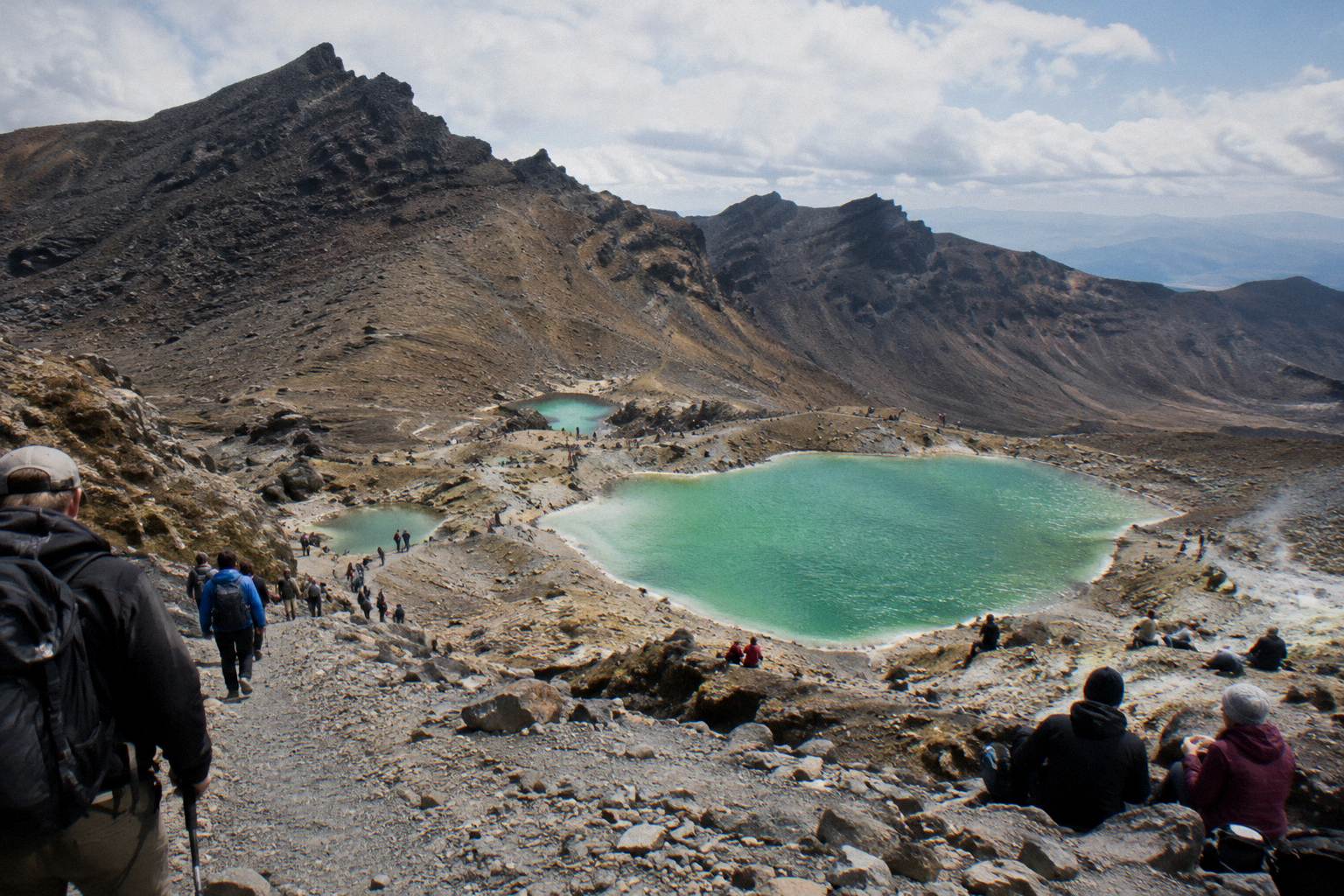
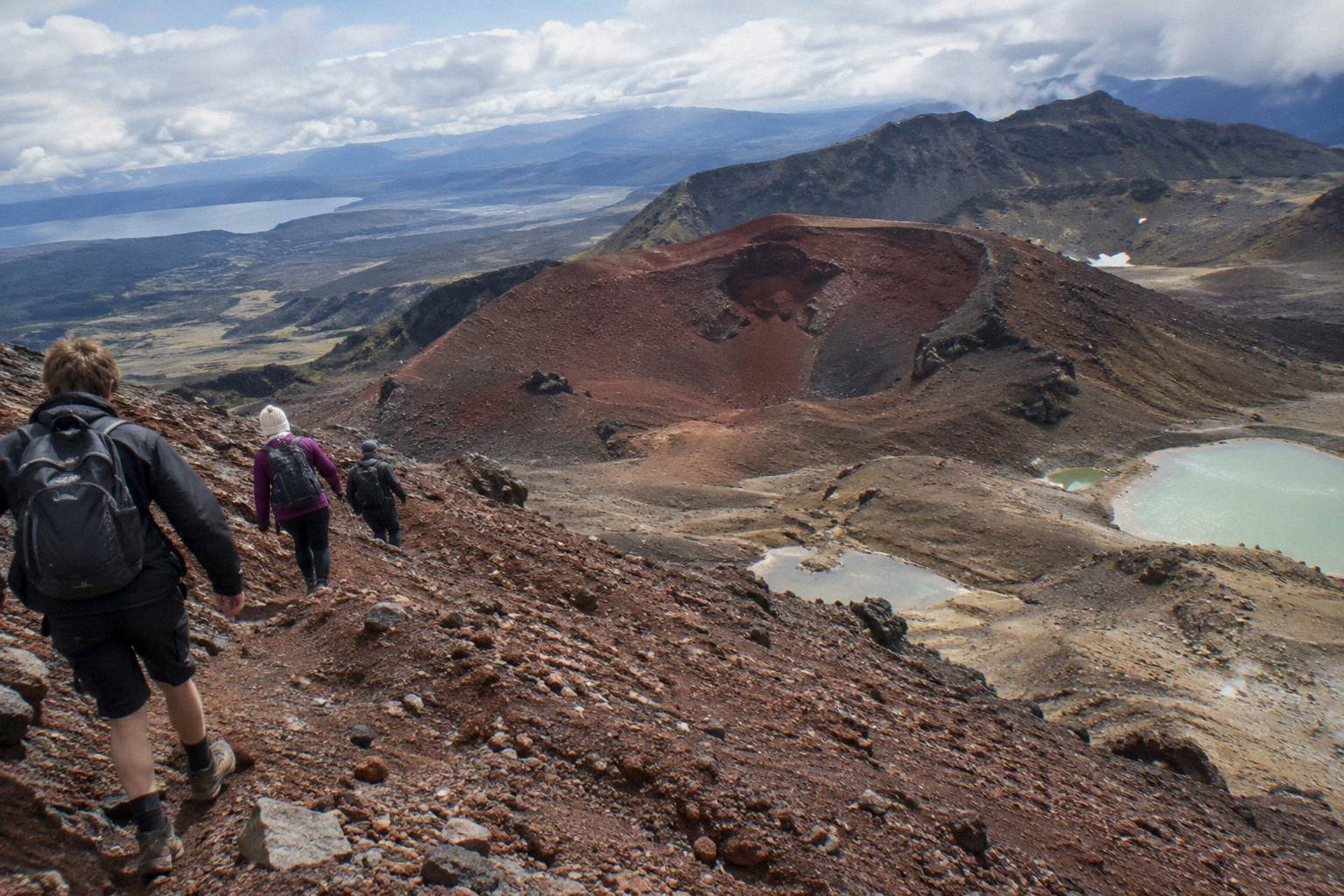
The three Emerald Lakes, Nga Rotopounamu, sit just below Red Crater on the steep scree descent DOC singles out by name, and in winter they are usually ringed with snow and often skirted with ice at the margins. They are not swimmable: Kaumatua Te Ngaehe Wanikau, through DOC, asks visitors not to touch or enter any of the waterways including the alpine lakes. The colours read darker and more saturated against snow.
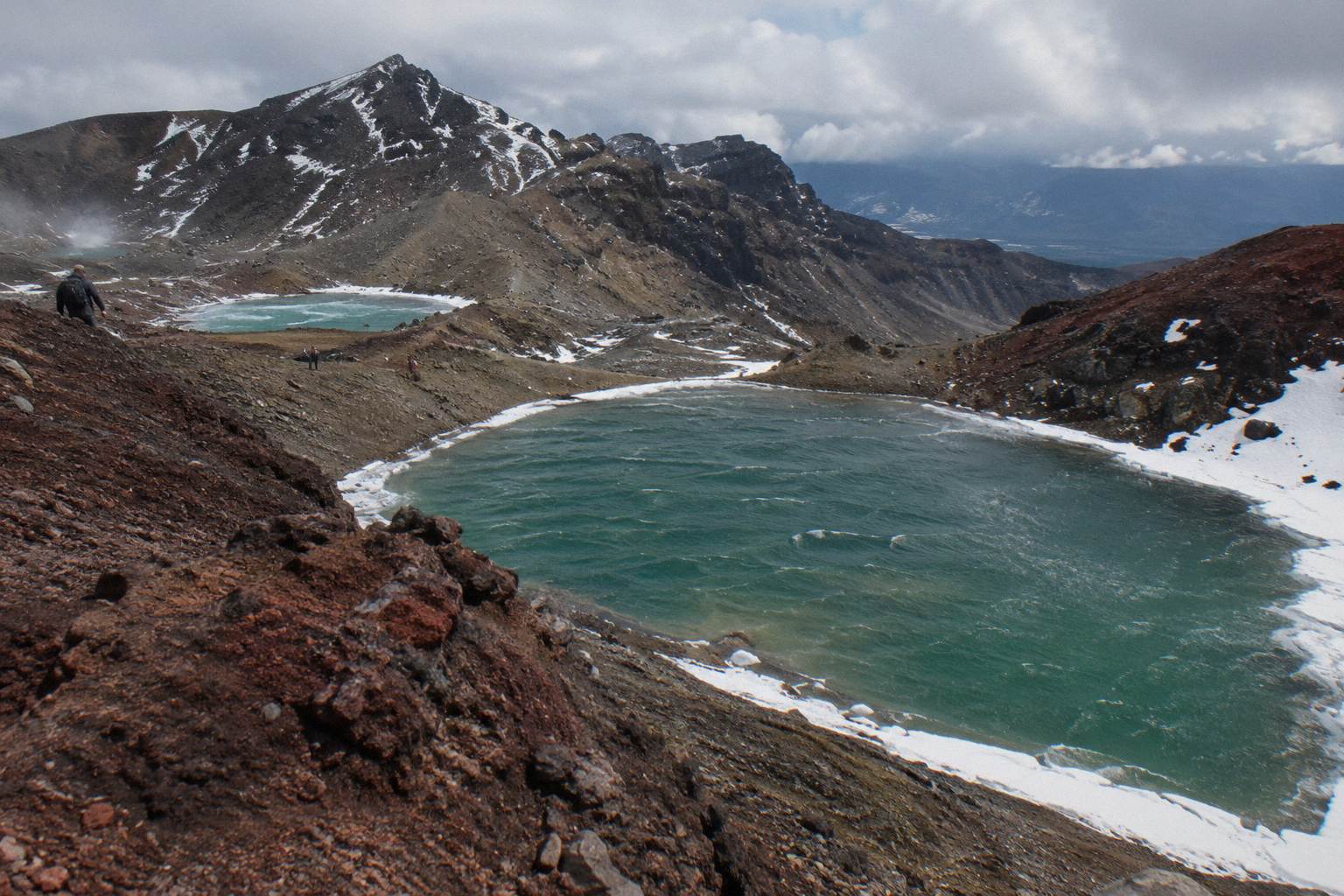
The approach is where winter changes the experience most. The descent from Red Crater's 1886 m summit ridge to the lakes is the move that demands crampons: in dry summer conditions it is loose scree you can half-slide down with care, but after a freeze the same slope is a hard plane, and the lakes' basin funnels tired legs into it at exactly the point of the day when concentration is lowest. There is no shelter at the lakes themselves, just the head of the valley and the wind that comes with it, so the classic summer long lunch here becomes a short, well-layered stop in winter.
Photographers get something genuinely different for the cold. Snow on the red and ochre slopes increases the contrast around the lakes, low winter light comes in at a flatter angle for more of the day, and on a calm morning the water can hold reflections that summer's afternoon wobble destroys. The trade is that you are working with 9 to 11 hours of daylight and a descent still to come, so the window for lingering is narrower than the summer frame suggests. Composition and timing ideas are collected in photographing the Emerald Lakes on the Crossing, and the science of the colour itself is in why the Emerald Lakes have their colours.
The section of track beyond the lakes changes character too. Central Crater between the Emerald Lakes and Blue Lake collects drifts, and the descent ridge toward Ketetahi holds ice on shaded bends late into spring, which is why DOC's 9-hour winter estimate is not padding. The full route beyond the lakes is mapped in the Tongariro Crossing map with the Emerald Lakes, and Blue Lake, also tapu and not to be entered or touched, has its own page in Blue Lake on the Tongariro Crossing.
| Stop | Summer Stop Length | Winter Stop Length | Why It Changes |
|---|---|---|---|
| Mangatepopo start | 10 to 15 minutes | Under 10 minutes | Cold start, keep moving |
| South Crater | 10 to 20 minutes | 5 to 10 minutes | Wind exposure, no shelter |
| Red Crater summit | 15 to 30 minutes | 5 to 10 minutes | Wind chill at 1886 m |
| Emerald Lakes | 30 to 45 minutes | 10 to 20 minutes | No shelter, ice underfoot |
| Blue Lake | 10 to 15 minutes | 5 minutes | Tapu, keep a respectful distance |
| Ketetahi viewpoint | 15 minutes | 5 to 10 minutes | Iced track on the descent |
Mistakes That Trip Up Winter Crossers
The recurring winter failures are predictable: treating the summer track notes as current, carrying crampons without the skill to use them, underestimating the 9-hour walking time inside 9 to 11 hours of daylight, assuming a shuttle exists in July, and planning a fixed date instead of a weather window. Each has a cheap fix, and the most expensive mistake is booking non-refundable travel around a single day.
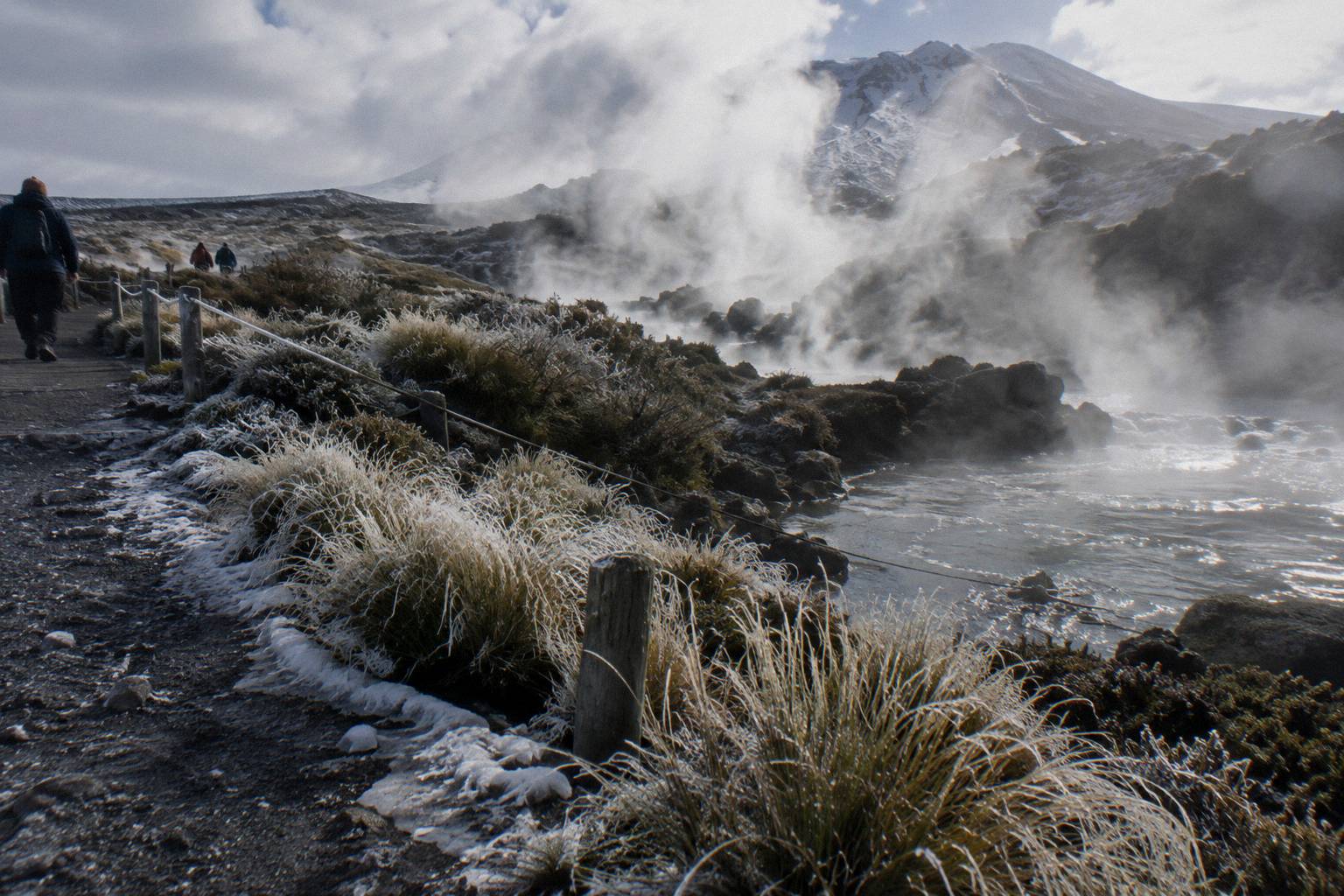
The list below is drawn from the structural facts of the winter route rather than from any single accident report, and each item maps to a decision you can make in advance.
- Reading summer advice for a winter walk. The 7 to 8 hour figure is a November to April number; winter is 9 hours, on an Expert route, with alpine skills essential. Plan on the winter numbers.
- Buying crampons instead of skills. DOC's winter essentials include competency, and the mountain does not grade on intention. A guided day with Adrift Tongariro includes the gear and the judgement in one package.
- Fixing the date instead of the window. Conditions decide, not the calendar. Build in a spare day, and check DOC's alerts, GeoNet, the NIWA Red Crater forecast and the MetService mountain forecast before committing.
- Assuming winter shuttles. DOC says shuttle buses generally do not operate from May to late October. Guided trips include transport; independent winter walkers need their own vehicle plan.
- Underpacking food and layers. Lunch is not included on the guided tours either, so bring your own lunch plus extra, and treat spare gloves and a warm layer as mandatory rather than optional.
- Touching the waterways. The request from Kaumatua Te Ngaehe Wanikau, relayed by DOC, is to respect the maunga tapu by not touching or entering any of the waterways including the alpine lakes. It applies in every season, including to frozen margins.
- Forgetting the booking system. DOC's booking system is free and recommended, and you need it if a shuttle or guided trip forms part of your day, in any season.
Choosing Between A Guided Day And Going Alone
Take the guided day unless you already own crampons and an ice axe and can arrest a slide: the premium guided hike runs from NZ$450 per person, weighed against the cost of assembling alpine kit for one walk. If you own the gear and the competence, going alone buys solitude, but you carry the full DOC winter essentials list and accept that no shuttle is coming if you finish late.
For travellers coming from further afield, two Auckland products frame the long-distance question, though neither is a guided Crossing. The Kiwi Road Tours private transfer from Auckland is a private transfer over two booked days with the walk self-guided, and the ExperienceKart private three-day tour from Auckland bundles Huka Falls and Lake Taupo with one self-guided Crossing leg. Both exist because Auckland is a long way from the mountain, and DOC's own distance figures put the track 86.5 km from Taupo, 36.7 km from Turangi, 13.5 km from National Park and 10.4 km from Whakapapa. In winter, honestly, the stronger play is to stay near the mountain, watch the window, and book the guided day with transport built in.
The final practical sequence for a winter attempt reads like this. Pick your window using the NIWA Red Crater forecast and MetService mountain forecast, book the DOC system, confirm the volcanic alert level on GeoNet, and if the answer to the skills question is anything less than a confident yes, book one of the three Adrift Tongariro guided Crossings and let the guide carry the crampons. Reserve a spare day for weather, bring your own lunch, and keep the waterways untouched. Do that, and the winter Emerald Lakes, dark water ringed with snow below a red crater, are one of the sharpest sights New Zealand walking offers.
Common Questions About Winter On The Tongariro Crossing
Is The Tongariro Alpine Crossing Open In Winter?
The track is not closed for the season, but from May to October DOC grades it an Expert route with snow, ice, avalanche risk and sub-zero temperatures, and conditions decide day by day. Operators are bound by DOC rules not to run on hazardous-weather-warning days. Check DOC's Tongariro Alpine Crossing page and alerts, plus the NIWA Red Crater forecast, before you commit.
Do You Need Crampons For The Emerald Lakes In Winter?
For an independent winter Crossing, yes: DOC lists crampons, an ice axe, a helmet, competency and avalanche gear as winter essentials, and the steep scree descent to the Emerald Lakes is the slope most affected by ice. On the three Adrift Tongariro guided tours, crampons and ice axes are supplied for winter conditions when required.
Do Shuttles Run On The Crossing In Winter?
DOC says shuttle buses generally do not operate in winter, May to late October, while guided trips include transport. The shuttle network, including the round trips from National Park Village and the Ketetahi park-and-rides, operates across the summer season, and DOC's 4-hour road-end parking restrictions apply from Labour weekend to 30 April.
How Long Does The Winter Crossing Take?
DOC allows 9 hours walking time from May to October, against 7 to 8 hours from November to April, for the same 20.2 km one-way distance and 1196 m of elevation change. With winter daylight of 9 to 11 hours, that leaves little buffer, which is part of why an early start and a defined turnaround time matter more in winter.
Can You Swim In The Emerald Lakes In Winter?
No, and not in any season. Kaumatua Te Ngaehe Wanikau asks visitors to respect the maunga tapu by not touching or entering any of the waterways including the alpine lakes, and DOC relays that request. Winter ice at the margins is covered by the same request.
Which Guided Tour Is The Winter Option?
Adrift Tongariro runs the three guided tours from 53 Carroll Street, National Park Village: the full-day guided Crossing rated 4.7 across 278 reviews, the premium guided hike from NZ$450 per person rated 4.6 across 242 reviews with free cancellation up to 14 days before, and the private guided Crossing rated 4.5 across 30 reviews. All three supply crampons and ice axes for winter conditions when required, and none includes lunch, so bring your own.