Other Hikes In Tongariro National Park When The Crossing Closes
The Tongariro Alpine Crossing closes for weather, volcanic risk and winter conditions, and DOC names Taranaki Falls and Tama Lakes as the alternative walks when it does. Here is how to build a plan B day and what to do with a Crossing booking you can no longer use.
Short answer
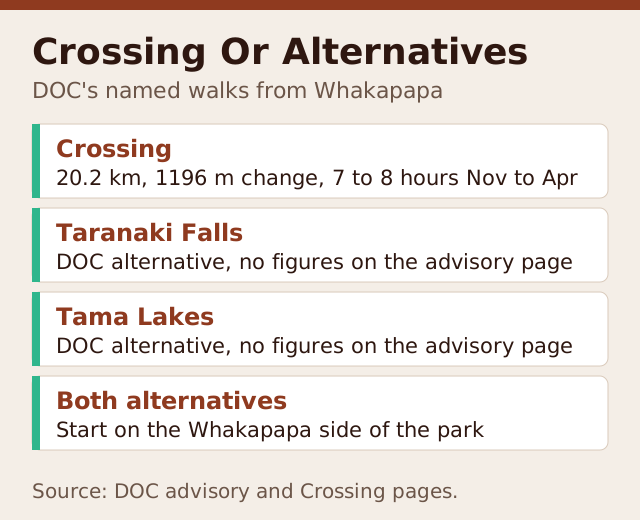
When the Crossing is closed, DOC points walkers to Taranaki Falls and Tama Lakes, both reached from the same Whakapapa side of the park. The Crossing itself is 20.2 km one way with 1196 m of elevation change and a 9 hour walking estimate in winter, and winter is an Expert route where DOC says alpine skills are essential. A closed day is a shuttle and rebooking question as much as a hiking one.
The Tongariro Alpine Crossing is 20.2 km one way with an elevation change of plus and minus 1196 m, and there are days when DOC simply advises against it. Volcanic alert levels shift daily, winter brings snow, ice and avalanche risk between May and October, and hazardous weather warnings stop both guided trips and shuttles from running. None of that means the national park is finished for the day. DOC itself names two alternative walks when conditions are poor: Taranaki Falls and Tama Lakes. This guide covers what those plan B walks offer, how a closed day changes your logistics, and what happens to a shuttle or guided booking you are already holding, with reference to what Tongariro Crossing Shuttles, Dempsey Buses, Ruapehu Scenic Shuttles, Tongariro Expeditions and Adrift Tongariro each state.
Start on the official side of things before anything else. The DOC Tongariro Alpine Crossing page and its alerts section is the single source for whether the track is advised against on a given day, and the volcanic risk page explains why the answer can change overnight. GeoNet publishes the volcanic alert level for Tongariro, which moves daily, and the NIWA Red Crater forecast and MetService mountain forecast between them give the picture above the tussock line. Checking those four sources takes ten minutes and prevents a wasted early start.
What Actually Closes, And Why
The Crossing closes for three structural reasons: volcanic activity, hazardous weather, and winter conditions, and each one affects your plan differently. Volcanic alert levels can change day to day and stop all traffic on the high section. Hazardous weather warnings stop operators from running. From May to October the route becomes an Expert track over snow and ice where DOC states alpine skills are essential.
Volcanic risk is the one people underestimate. Tongariro is an active volcano, the Te Maari vents erupted in 2012, and the alert level is assessed continuously by GeoNet. When the level rises, DOC's volcanic hazard zones above the Emerald Lakes and around Red Crater can be closed outright, and no operator is permitted to run through a hazardous-weather-warning day either. There is no negotiating that from a trailhead car park. The decision is DOC's, and the operators are bound by it.
Weather closures are more common and usually shorter. The exposed section between the Mangatepopo saddle and Red Crater, topping out at 1886 m, takes the full force of any front crossing the central North Island, and wind there is the usual culprit rather than rain. Operators describe their running decision as conditions allowing, assessed each morning against the DOC advisory and the mountain forecast. A day that looks fine at Whakapapa village can be genuinely dangerous two hours up the track, which is exactly why DOC names backup walks at lower altitude rather than suggesting people push on.
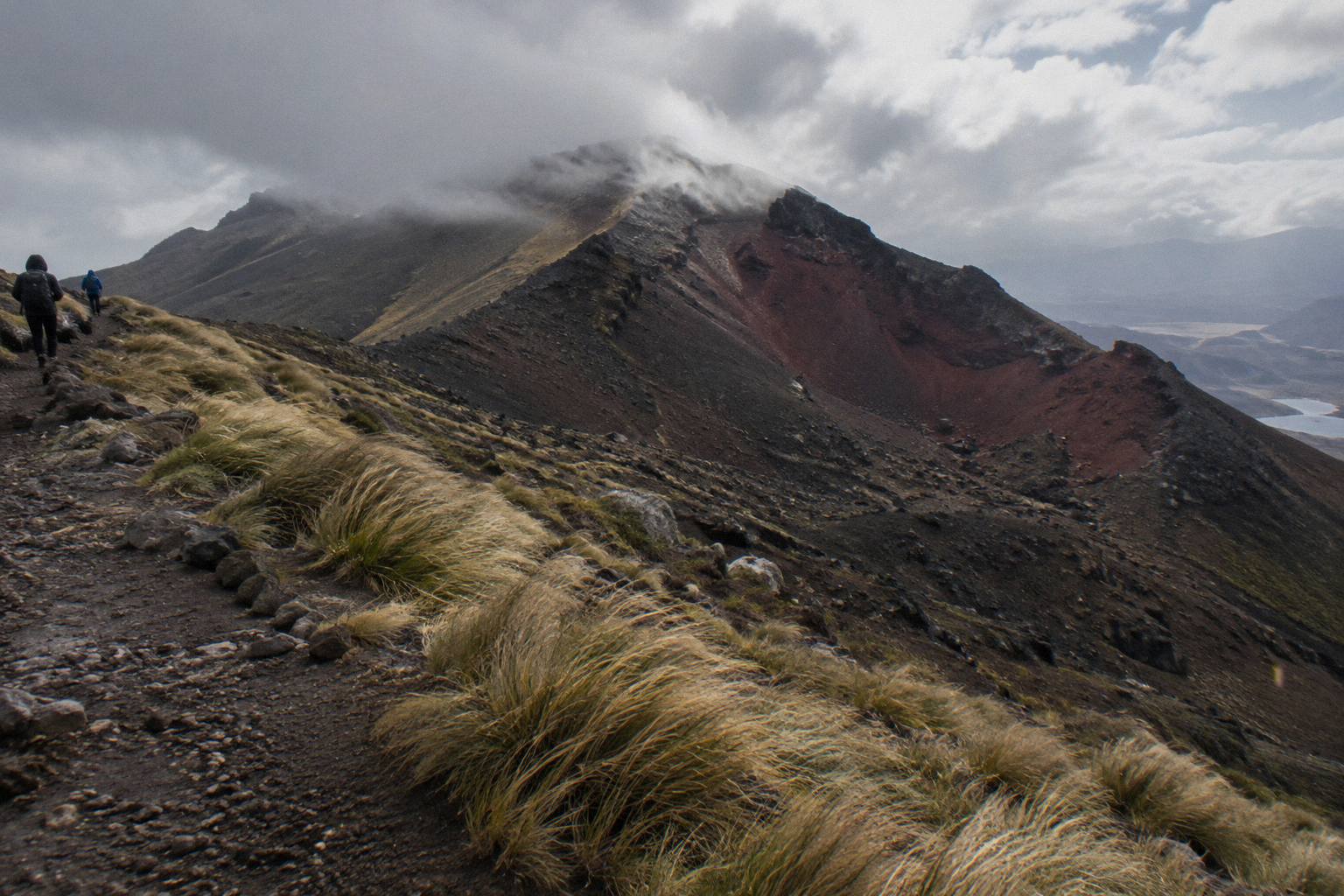
Winter is the third and longest closure type. From May to October DOC grades the Crossing as an Expert route: snow, ice, avalanche risk and sub-zero temperatures, with an estimated walking time of 9 hours against the 7 to 8 hours of the November to April season. DOC's own winter essentials list for independent trips runs to crampons, ice axe, helmet, avalanche gear and the competency to use all of it. DOC also notes that shuttle buses generally do not operate through winter while guided trips include transport, which quietly reorders your options if a winter closure catches you mid-trip.
| Closure type | Typical trigger | How long it lasts | Best response |
|---|---|---|---|
| Volcanic activity | Alert level change on GeoNet | Days to weeks | Pick a lower walk, watch GeoNet |
| Hazardous weather | Wind, rain or visibility warnings | Usually one to two days | Hold the booking, rebook the next window |
| Winter conditions | Snow and ice, May to October | The whole season | Guided trip with gear, or alternative walks |
The DOC booking system itself is free and recommended in season, and it is what connects your booking to shuttle and guided products, so a closure notice travels through the same channels. Keep the DOC alerts page bookmarked on your phone rather than relying on a social media summary, and read the tongariro crossing weather guide for how the forecast above the lakes actually behaves.
Taranaki Falls: The Walk DOC Names First
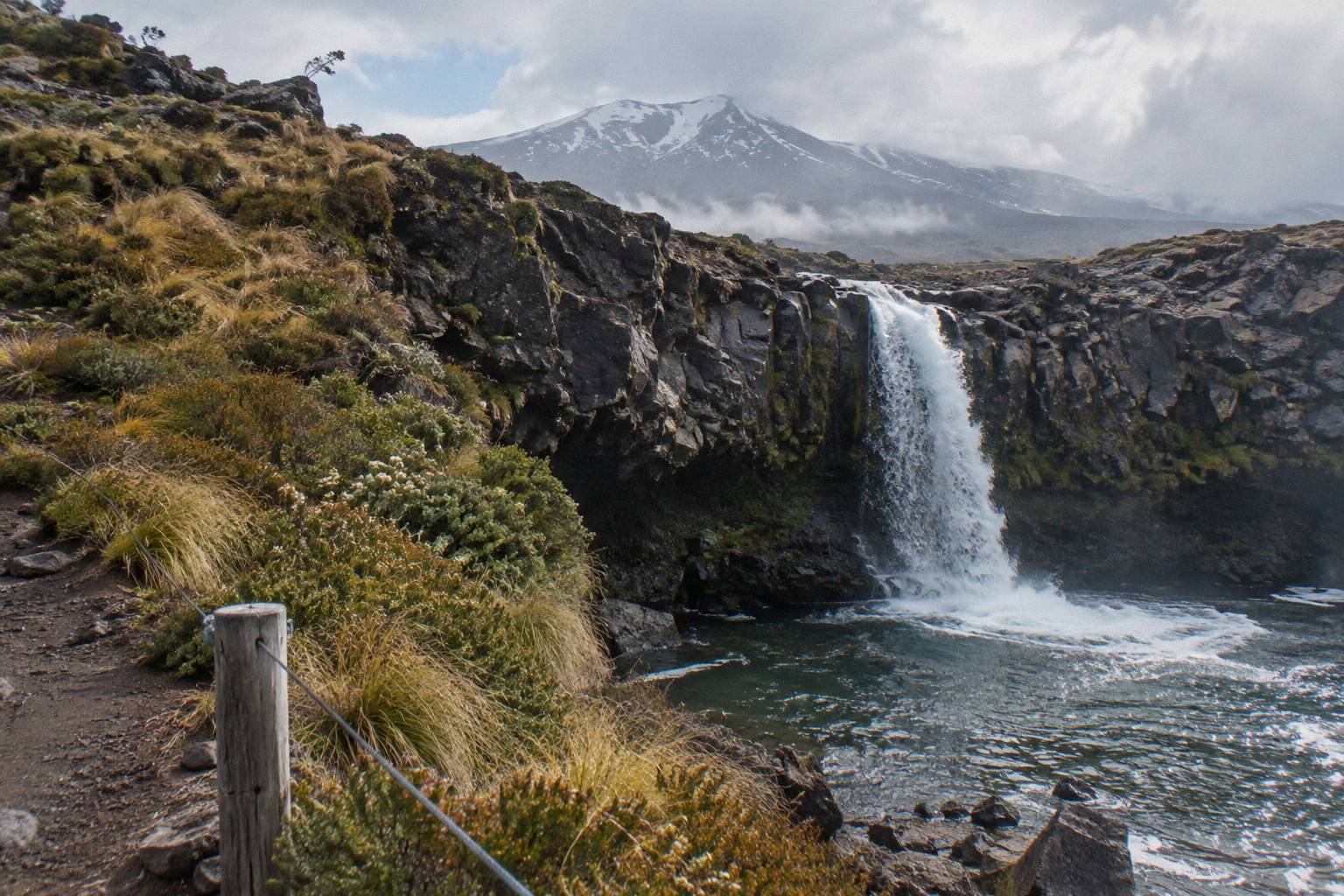
Taranaki Falls is the first alternative DOC names when Crossing conditions are poor, and it is a genuine waterfall walk on the volcanic plain rather than a consolation prize. The falls drop over the edge of an old lava flow from Ruapehu, and the track sits low enough to stay walkable on days when the 1886 m high section is out of the question. DOC publishes no distance or time figure for it on the Crossing page.
The attraction is partly the geology. The falls pour off the Tongariro lava edge in a single curtain, and the loop above them crosses open ground with direct views up towards Ruapehu and, on a clear day, the shoulder of Ngauruhoe, the mountain popularly nicknamed Mount Doom. Because the walk stays well below the alpine zone, it escapes the wind problem that closes the Crossing, though it does not escape rain: dress for the day you have. The what to wear guide covers layering that works on both walks.
Access is from the Whakapapa side of the park, which matters for logistics. Whakapapa is 10.4 km from the Crossing's Mangatepopo end by DOC's distance figures, and the village area is where most people staying for a Crossing attempt base themselves. If your Crossing day collapses and you are already positioned near Whakapapa, Taranaki Falls is the nearest sensible substitute that DOC itself endorses. Check the DOC Tongariro National Park pages for track status before you drive to any trailhead, since alternative walks can carry their own alerts.
One cultural note applies wherever you walk in this park. The mountains are sacred to Ngati Hikairo ki Tongariro of Ngati Tuwharetoa, and kaumatua Te Ngaehe Wanikau asks visitors to respect the maunga tapu by not touching or entering any of the waterways, including the alpine lakes. That request extends to streams and pools on the lower walks too, and honouring it costs nothing.
Tama Lakes: The Bigger Plan B
Tama Lakes is the second walk DOC names when the Crossing is closed, and it is the closer substitute in spirit: an alpine-tussock approach to two crater lakes under the southern flanks of Ngauruhoe. Like Taranaki Falls, DOC publishes no distance or time for it alongside the Crossing advisory, so plan it as a half day. It shares a trailhead area with Taranaki Falls on the Whakapapa side.
The upper lake is the destination most people aim for, set in a basin with raw volcanic walls, and the landscape on the way has the same Mordor look that draws people to the Crossing in the first place, all dark scoria and red-brown ridgelines. Views open towards Ngauruhoe as you climb, and the mountain appears beside the track as scenery only, DOC makes no summit access available and no tour here climbs it. If a Lord of the Rings framing is part of your trip, the Lord of the Rings on the Crossing guide explains what is scenery and what is myth.
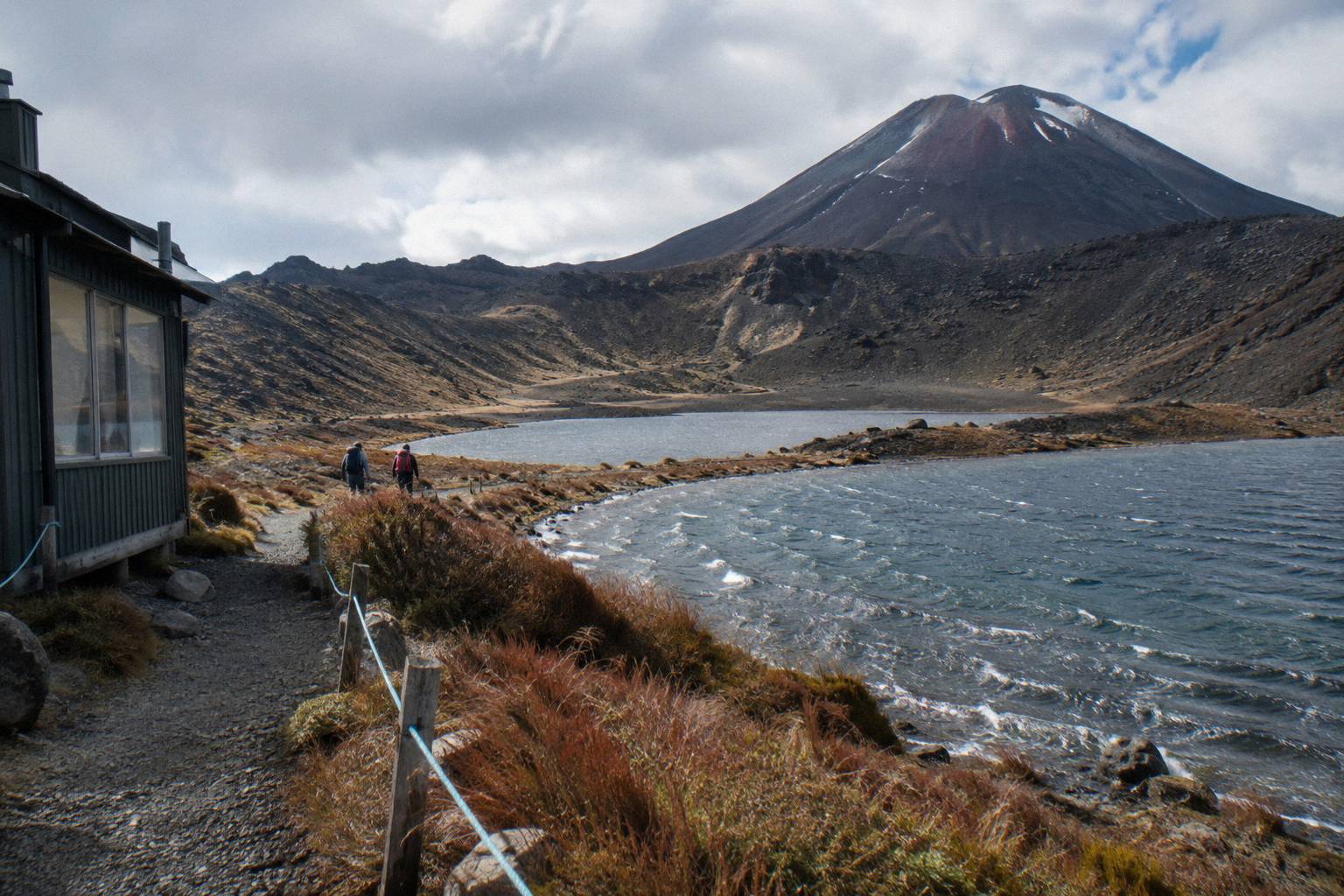
Tama Lakes still deserves weather respect. It is lower than Red Crater but it is open country, and the same wind that closes the Crossing can make the upper lake basin miserable. The NIWA forecast for the park and the MetService mountain forecast cover it fine. If even Tama Lakes looks grim, the honest answer is a shorter waterfall loop, a hot pool day in Taupo, or moving your Crossing attempt to the next weather window, and the best month guide explains how those windows cluster through the season.
What A Closed Day Means For Your Shuttle Booking
A closed Crossing turns your transport booking into the thing that needs managing, and the good news is that most shuttles here carry free cancellation up to 24 hours before. The Tongariro Crossing Shuttles round-trip from National Park Village, from NZ$75 per person and rated 4.7 across 890 reviews, is the most reviewed tour on this site, and it states free cancellation inside a 24 hour window.
Remember what a shuttle is and is not. Every shuttle product on this site is transport only, not a guided walk, and none of them can run when DOC's advisory says no. That cuts both ways: an operator will not carry you into a closed track, and equally you are not entitled to a run because the sky above the village looks clear. Decisions are made against the official advisory, assessed each morning. The fine print lives on each booking page, so read it before the morning of.
The one-way park-and-ride products behave differently from round trips, and it matters on a closure day. With the Ruapehu Scenic Shuttles Ketetahi park-and-ride, from NZ$68 per person and rated 4.8 across 670 reviews, you park at the Ketetahi end, ride to Mangatepopo and walk back to your own car, and it states free cancellation up to 24 hours before. That one-way structure, which Owhango Adventures, Tongariro Expeditions, Tongariro Crossing Car Park and the Active Outdoor Adventures shuttles also use, assumes the Crossing is walkable end to end. If it is not, cancel rather than trying to walk a partial route from the wrong end: the Ketetahi side climb to the Emerald Lakes and back is a serious outing in its own right, and the Ketetahi finish guide explains what that end of the track involves.
| Product | Type | Departure point | Cancellation stated |
|---|---|---|---|
| Tongariro Crossing Shuttles round-trip | Return shuttle | National Park Village, 59 Findlay Street | Free, up to 24 hours before |
| Dempsey Buses return bus | Return shuttle | National Park Village stops | Free, up to 24 hours before |
| Ruapehu Scenic Shuttles park-and-ride | One-way shuttle | Ketetahi car park | Free, up to 24 hours before |
| Adrift Tongariro premium guided hike | Guided Crossing | National Park Village, 53 Carroll Street | Free, up to 14 days before |
For Taupo and Turangi based walkers, the Tongariro Expeditions shuttle from Taupo or Turangi, from NZ$75 per person and rated 4.7 across 431 reviews, runs a booked day of 8 to 10 hours including transfers, with the same 24 hour free cancellation. The practical advice on any closure morning is the same across the board: contact the operator, ask about the next departure window rather than a refund first, and keep your booking alive if your trip has slack in it. Weather closures rarely outlast a flexible itinerary.
What A Closed Day Means For A Guided Booking
A guided Crossing booking is the most protected option when the track shuts, because the guide operation makes the weather call in your favour rather than leaving you at a trailhead. The Adrift Tongariro premium guided hike, from NZ$450 per person and rated 4.6 across 242 reviews, includes transport from the base at 53 Carroll Street in National Park Village, and carries free cancellation up to 14 days before.
Guides also carry what a closure season demands. Adrift Tongariro states that crampons and ice axes are supplied on its guided tours for winter conditions if required, along with a clothing and footwear allowance, which is exactly the kit DOC lists as essential for the May to October Expert route. Bring your own lunch, since meals are not included on Adrift tours. In winter, when DOC says shuttle buses generally do not operate, the guided products that bundle transport become the practical way onto the track at all, conditions allowing.
The other two Adrift tours behave differently. The full-day guided group walk, rated 4.7 across 278 reviews, and the private guided Crossing, rated 4.5 across 30 reviews, are non-refundable products where the booking page shows the terms. Age and group limits differ per tour and are worth knowing before a rebook: the booking pages show the age limits for each Adrift tour, while DOC separately advises the Crossing track is not recommended for children under 10. The is a guide worth it guide works through the guided versus independent decision in detail, including the winter case.
From Auckland, Or A Longer Trip
Travellers based in Auckland face a different closure problem, because the distance only supports an overnight or two-day product, and a closed day can strand the whole itinerary. The Kiwi Road Tours private transfer from Auckland is a transfer product, not a guided hike: the walk is self-guided, the tour runs two days, and it has only 4 reviews, too few for any rating claim.
The ExperienceKart private three-day tour pairs Huka Falls and Lake Taupo with one self-guided Crossing leg, is not suitable for children under 12, and is non-refundable. Both Auckland products exist because the Crossing sits a long way from New Zealand's biggest city, and this site prints no driving times for it. The honest framing is that an Auckland Crossing trip needs overnight slack somewhere, which is also your insurance against a closure: a two or three day product has a built-in second morning. If the forecast is hostile for the whole window, the Taupo legs of the ExperienceKart itinerary, Huka Falls and the lake, are themselves a decent plan B day, and the Taupo day plan guide covers what a lake-town alternative looks like.
Cancellation on these two products is not the shuttle pattern. The Kiwi Road Tours transfer states nothing this site can print about cancellation, so the booking page is the authority. That asymmetry is the real argument for basing yourself in National Park Village or Taupo rather than day-tripping from Auckland during a volatile weather week: the closer you sleep to the mountain, the cheaper it is to move your attempt by 24 hours.
Rebooking Logic: How To Actually Salvage The Trip
The rebooking move that works is to hold transport rather than cancel it, then aim at the next clear window, because most shuttle products here allow free cancellation up to 24 hours before, which is precisely the notice period a weather forecast gives you. Start from the NIWA park forecast, confirm against the DOC advisory, then talk to your operator about moving the booking rather than refunding.
Sequence matters. Check the DOC advisory and the GeoNet volcanic page first, because a weather closure and a volcanic closure have different shelf lives. Then check the forecast for the following two days, since wind events on the plateau typically clear inside that horizon. Only then contact the operator, and if the answer is a shut day, ask for the next available departure rather than abandoning the product. The most reviewed tour here, the Tongariro Crossing Shuttles round-trip with 890 reviews at 4.7, runs frequently enough in season that a 24 hour slip is usually absorbable.
Parking rules reinforce the shuttle-first logic. From Labour weekend in late October through 30 April, DOC applies a 4 hour maximum at the road ends and suggests booking a shuttle, and DOC says there is no parking for Crossing walkers at Mangatepopo car park in summer, with a private car park near Ketetahi. A 4 hour limit rules out walking the Crossing from your own car in season regardless of the weather, which is why the park-and-ride products exist in the first place. DOC notes that part of a shuttle fee, about NZ$40, goes to conservation.
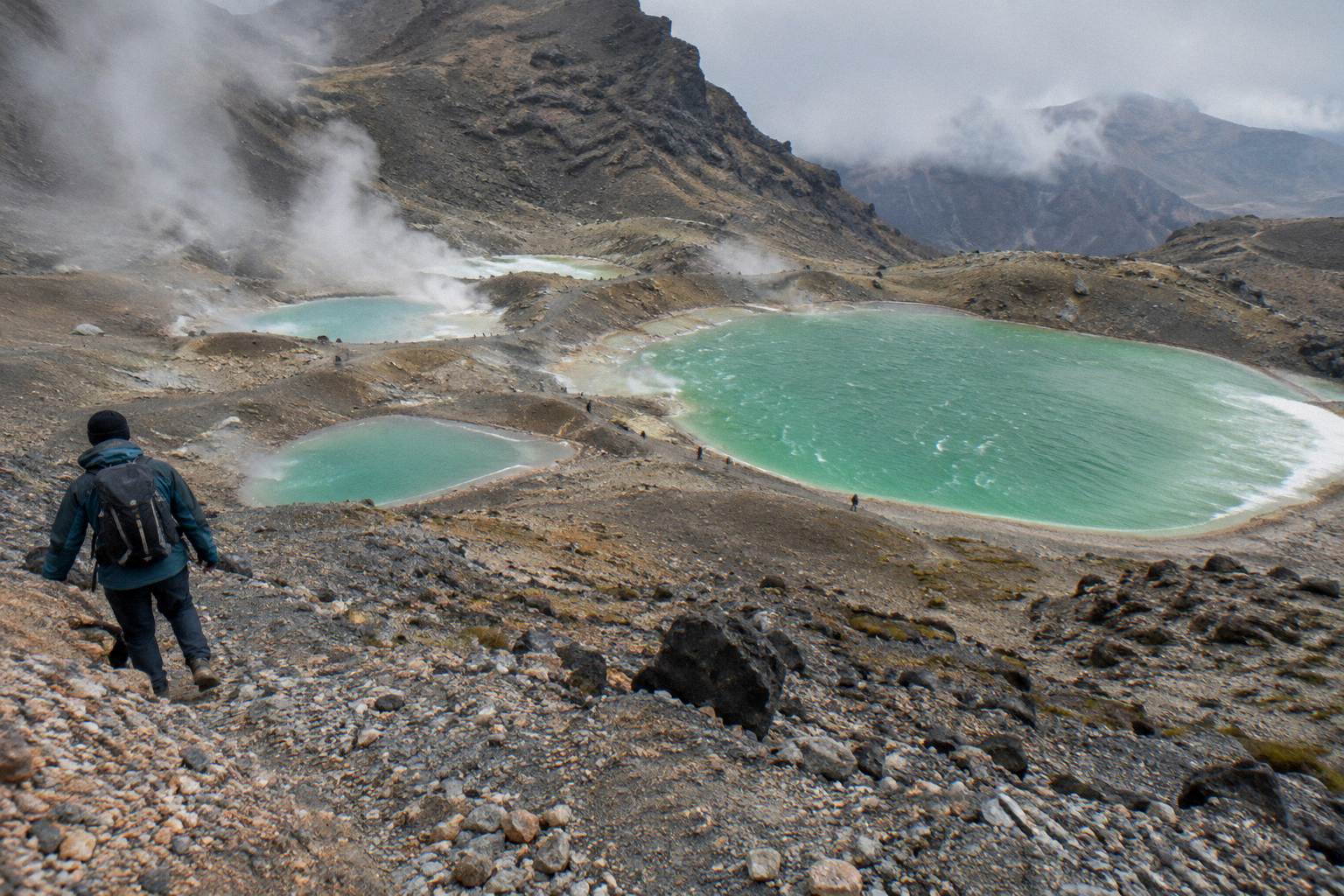
Mistakes That Turn A Closure Into A Lost Day
The mistakes that cost people a closure day are predictable: walking the track anyway from the wrong end, cancelling transport before checking the next window, sleeping too far from the mountain to shift a day, and treating the Emerald Lakes as somewhere to swim while killing time. Each one is avoidable with one decision made the evening before. Here is what trips people up.
First, the Ketetahi reverse walk. People parked at the Ketetahi end on a park-and-ride booking sometimes reason they can walk up towards the lakes and back. That climb retraces the steepest finish of the Crossing in reverse, on a day DOC has already flagged, with your own fitness as the only safety net. The Red Crater to Emerald Lakes descent guide shows how committed that terrain is even in good conditions. If DOC advises against the track, the advisory does not distinguish directions.
Second, instant refunds. Cancelling inside the free window feels decisive but forfeits your place in the queue for the next clear morning. Operators rebook constantly through volatile weeks, and a held booking with a 24 hour cancellation right is a free option on better weather.
Third, distance. A walker based in Auckland with a single-day plan has no second morning, while someone in National Park Village does. When the forecast looks marginal days ahead, the cheapest insurance is moving your bed closer to the track, not buying better gear. The where to sleep question covers the practical options.
Fourth, the lakes themselves. The request not to touch or enter any of the waterways, including the alpine lakes, is a cultural one from Ngati Hikairo ki Tongariro, printed by DOC as a request. A closure day spent at lower walks does not suspend it, and the swimming guide explains the reasoning in full.
Keeping The Whole Park In Play
A closure day is not a closure of the park, and Tongariro National Park is a dual World Heritage area, New Zealand's oldest national park since 1894, with walks well beyond the Crossing corridor. The realistic set on a bad-weather day is Taranaki Falls, Tama Lakes, and, if even those are grim, the free walks and viewpoints near the Crossing start. Check the DOC park pages for status on each before setting out.
The shuttle infrastructure keeps working for you here too. If your alternative walk starts from the Whakapapa side and your booking was for the Crossing corridor, the same operators moving Crossing walkers can usually advise on getting you where you need to be, though no shuttle product on this site sells a Tama Lakes service, so treat that as a conversation with the operator rather than a bookable product. The Dempsey Buses return shuttle from Ohakune exists for Ohakune based walkers, with free cancellation stated up to 24 hours before.
Flexibility has a price structure, and it helps to know it. The cheapest per person product on this site is the Active Outdoor Adventures one-way shuttle with a secure Ketetahi car park, next cheapest is the National Park Shuttles one-way, then the Ruapehu Scenic Shuttles and Owhango Adventures one-way products, while the dearest per-person tour is the Adrift Tongariro premium guided hike. Between those poles sits a spread of shuttle from-prices from NZ$68 to NZ$120 per person, which means rebooking a shuttle costs far less than rebooking a guided day. On a tight budget, the shuttle products are the ones to hold and the guided day is the one to book once your window is certain.
| Situation on closure day | Best move | Why it works |
|---|---|---|
| Forecast clears tomorrow | Hold the shuttle booking, rebook a day later | Free cancellation windows give a free option on better weather |
| Whole week looks hostile | Switch to Taranaki Falls or Tama Lakes | DOC names both as poor-conditions alternatives |
| Winter closure, set on the Crossing | Book a guided Adrift Tongariro tour | Guides supply crampons and ice axes and include transport |
| Based in Auckland, one-day plan | Add an overnight near the mountain | A second morning absorbs a single bad-weather day |
For the full picture of what the park holds when the famous track is off the table, read the free walks and viewpoints guide alongside DOC's own pages, and remember that Tongariro Emerald Lakes Hike exists to get you to the lakes on a day DOC says yes, not to pretend every day is that day. Operators are bound by DOC rules not to run on hazardous-weather-warning days, and the operators worth booking are the ones who tell you so plainly.
Common Questions About Other Hikes When The Crossing Closes
What Are The Best Alternatives When The Tongariro Crossing Is Closed?
DOC names Taranaki Falls and Tama Lakes as the alternative walks when conditions are poor. Both sit on the Whakapapa side of the park, below the alpine zone that causes closures. DOC publishes no distance or time figures for them on the Crossing advisory page, so plan them as a half day and check the DOC park pages for track status.
Can I Still Do Part Of The Crossing When It Is Closed?
No operator will transport you onto a track that DOC advises against, and the advisory does not distinguish between walking it in full or in part. Climbing from the Ketetahi end towards the Emerald Lakes on a closed day retraces steep, exposed terrain with no support. Choose a DOC-named alternative instead.
Will I Get My Money Back If The Crossing Closes On My Booked Day?
Most shuttle products on this site state free cancellation up to 24 hours before, including the Tongariro Crossing Shuttles round-trip, the Dempsey Buses return services and the Ruapehu Scenic Shuttles park-and-ride. The Adrift Tongariro premium guided hike states free cancellation up to 14 days before, while the other Adrift guided products are non-refundable. The booking page for each product shows the binding terms.
Do Shuttles Run In Winter?
DOC says shuttle buses generally do not operate in winter, May to late October, while guided trips include transport. The Crossing is graded an Expert route in that season, with snow, ice and avalanche risk, and DOC recommends going with a guide. The Adrift Tongariro guided tours supply crampons and ice axes for winter conditions if required.
Is Tama Lakes A Good Substitute For The Crossing?
It is the closest in atmosphere: crater lakes, raw volcanic ground and views of Ngauruhoe as scenery. It is lower and less committing than the Crossing's high section, which is exactly why DOC names it as a poor-conditions alternative. It is still open tussock country, so check the mountain forecast before committing.
Where Do I Check Whether The Crossing Is Open?
Use the DOC Tongariro Alpine Crossing page and its alerts section as the authority, GeoNet for the volcanic alert level, and the NIWA Red Crater and MetService mountain forecasts for conditions above the tussock. Volcanic alert levels change daily, so check on the morning of your walk, not just the night before.