Best Month To Hike To The Emerald Lakes
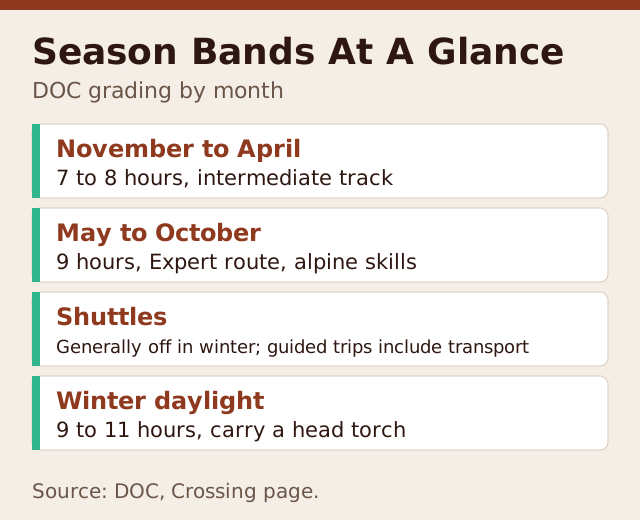
The Emerald Lakes sit at their most reachable from November to April, when DOC classes the Tongariro Alpine Crossing as an intermediate tramping track taking 7 to 8 hours. Here is how each month differs, and what changes the moment winter arrives.
Short answer
The best months to hike to the Emerald Lakes are February and March: DOC lists the track as a 7 to 8 hour summer walk from November to April, shuttle buses run through the season, and summer weather is at its most settled. From May to October the same track becomes a 9 hour expert route where DOC says alpine skills and a guide are the safe choice.
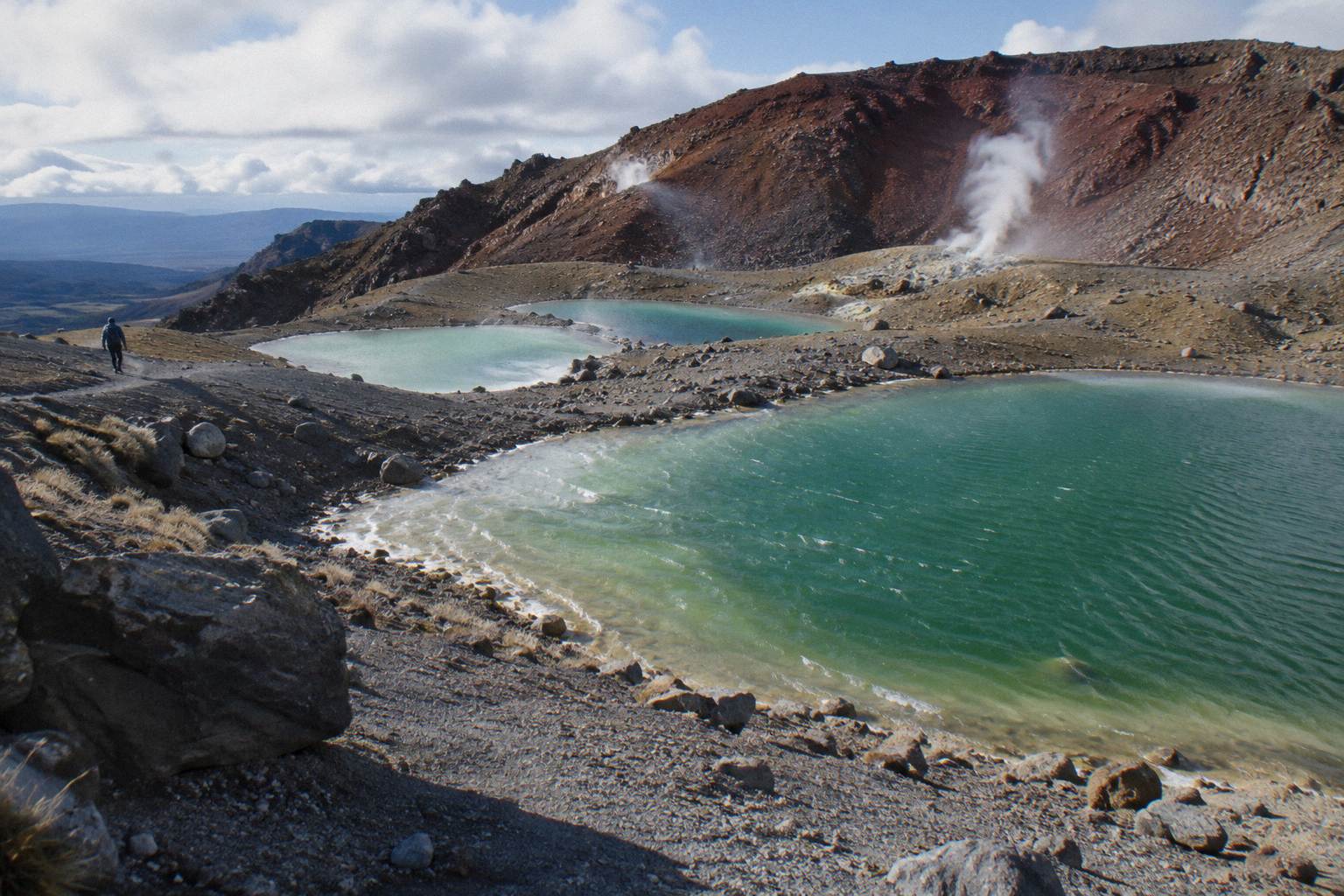
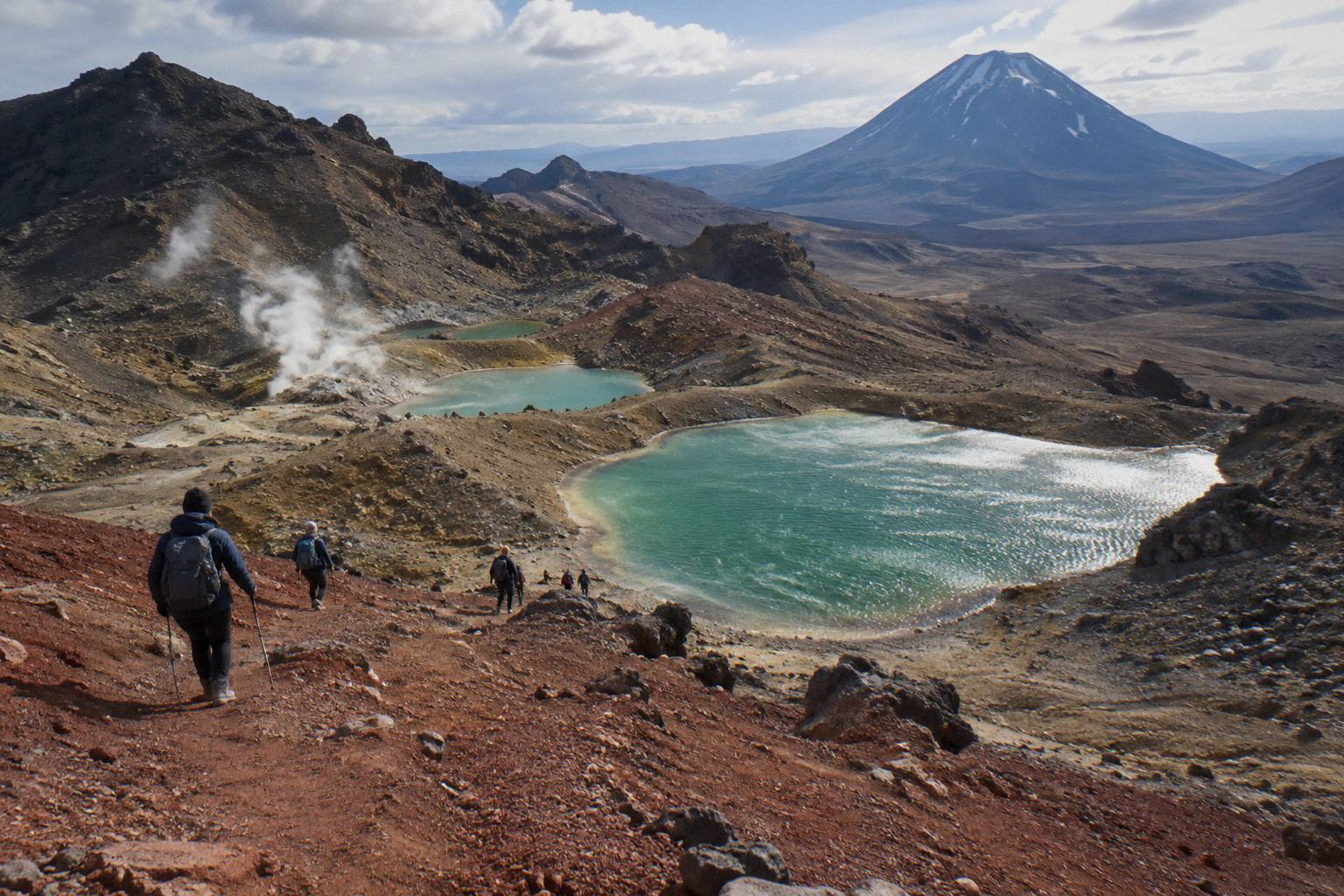
The Nga Rotopounamu, the Emerald Lakes, sit just below Red Crater at 1886 metres on the Tongariro Alpine Crossing, reached by a steep scree descent DOC describes vividly on its own track page. The track is 20.2 km one way with 1196 metres of elevation change, and the season you pick changes almost everything about the day: how long the walk takes, whether shuttle buses run, what you wear, and whether the lakes sit in green tussock or in snow. This guide works through the calendar month by month, using DOC's own season bands and the current tour facts, so you can choose a departure window with your eyes open.
For the wider picture of the whole walk, start with the guide to the Emerald Lakes on the Tongariro Crossing.
| Quick Fact | Detail |
|---|---|
| Track | Tongariro Alpine Crossing, one way |
| Distance | 20.2 km one way (DOC) |
| Elevation change | +/- 1196 m (DOC) |
| Highest point | Red Crater, 1886 m |
| Emerald Lakes | Nga Rotopounamu, below Red Crater's scree descent |
| Summer walking time | 7 to 8 hours, November to April (DOC) |
| Winter walking time | 9 hours, May to October (DOC) |
| Summer track class | Intermediate tramping track, High fitness (DOC) |
| Winter track class | Expert route; alpine skills essential, guide recommended (DOC) |
| Parking, Labour weekend to 30 April | 4 hour maximum at the road ends; DOC suggests a shuttle |
What Is The Best Time Of Year To Do The Tongariro Crossing?
The best time of year to do the Tongariro Crossing to the Emerald Lakes is late summer, from February into March, inside DOC's November to April summer season. In those months the track is a 7 to 8 hour intermediate walk, shuttle buses run daily to the Mangatepopo start, and the ground around Red Crater and the lakes is clear of snow. DOC rates the fitness requirement High in every month, so late summer shortens the risk, not the effort.
The reason February and March edge out the rest of summer is stability. December and January sit inside the busiest weeks of the New Zealand summer holidays, when the track carries its heaviest foot traffic and the parking restrictions at the road ends, a 4 hour maximum from Labour weekend in late October through to 30 April, bite hardest. February, after the school holidays end, keeps the full shuttle timetable and the longest daylight but spreads the crowd. March shortens the day slightly and cools the mornings while usually holding settled high-pressure spells.
April is the shoulder: still officially summer, still 7 to 8 hours on DOC's clock, but with cooler air, shorter days and the first chance of early snow dustings on Red Crater as the month closes. The parking restriction and the summer shuttle season run right through 30 April, then both stop. May opens the winter band, and with it a different sport entirely.
It helps to see the whole year at a glance:
| Period | DOC Season | Walking Time | Track Class | Shuttle Buses | Notes For The Lakes |
|---|---|---|---|---|---|
| November | Summer | 7 to 8 hours | Intermediate | Generally running | Snow patches can linger near Red Crater early in the month |
| December | Summer | 7 to 8 hours | Intermediate | Running | Peak holiday crowding begins |
| January | Summer | 7 to 8 hours | Intermediate | Running | Busiest month; busiest road ends |
| February | Summer | 7 to 8 hours | Intermediate | Running | Calmest mix of weather, daylight and crowd |
| March | Summer | 7 to 8 hours | Intermediate | Running | Settled spells common; cooler mornings |
| April | Summer to 30 April | 7 to 8 hours | Intermediate | Running to end of month | First light snow possible late month |
| May to October | Winter | 9 hours | Expert | Generally not operating | Snow, ice, avalanche risk; guide recommended |
Whenever you go, the practical machinery of the day matters as much as the date. DOC operates a free booking system for the Crossing in the busier months, recommended for everyone and needed if you are booking a shuttle or a guided trip. On the transport side, the Tongariro Crossing Shuttles round-trip from National Park Village is the most reviewed tour here at 4.7 across 890 reviews, from NZ$75 per person with free cancellation up to 24 hours before, and it exists precisely because summer parking at the road ends is capped at 4 hours.
How Does Each Summer Month Differ For The Emerald Lakes?
November can still hold old snow near Red Crater, December and January bring peak warmth and peak crowds, February offers the season's calmest centre, March cools gently while staying settled, and April closes the season with short days and the first dustings possible on the craters. All five months share DOC's 7 to 8 hour walking time and the intermediate tramping track class, so the differences are about conditions and crowd, not difficulty.
November opens the summer clock. The track reverts to DOC's 7 to 8 hour band and the intermediate class, but the high ground between the Mangatepopo start and Red Crater can carry lingering snowfields from the winter, especially in the first fortnight. The Emerald Lakes themselves are usually clear by mid-month, though the shaded scree above them can be icy at an early start. Shuttle operators wind back up through the month, and the Labour weekend parking restriction, 4 hours maximum at the road ends, is already in force from late October. November suits walkers who want quiet track and can accept a cooler, less predictable sky.
December and January are the full-summer months: long daylight, warm valley starts, and the heaviest traffic of the year on the track and at both road ends. The Devil's Staircase and the South Crater can feel like a queue in fine weather, and the four-hour parking cap makes a self-drive start genuinely awkward on busy days. The trade is the best swimming weather in Taupo afterwards, the greenest tussock, and the fullest shuttle timetables. If these are your months, book transport and any guided seat early.
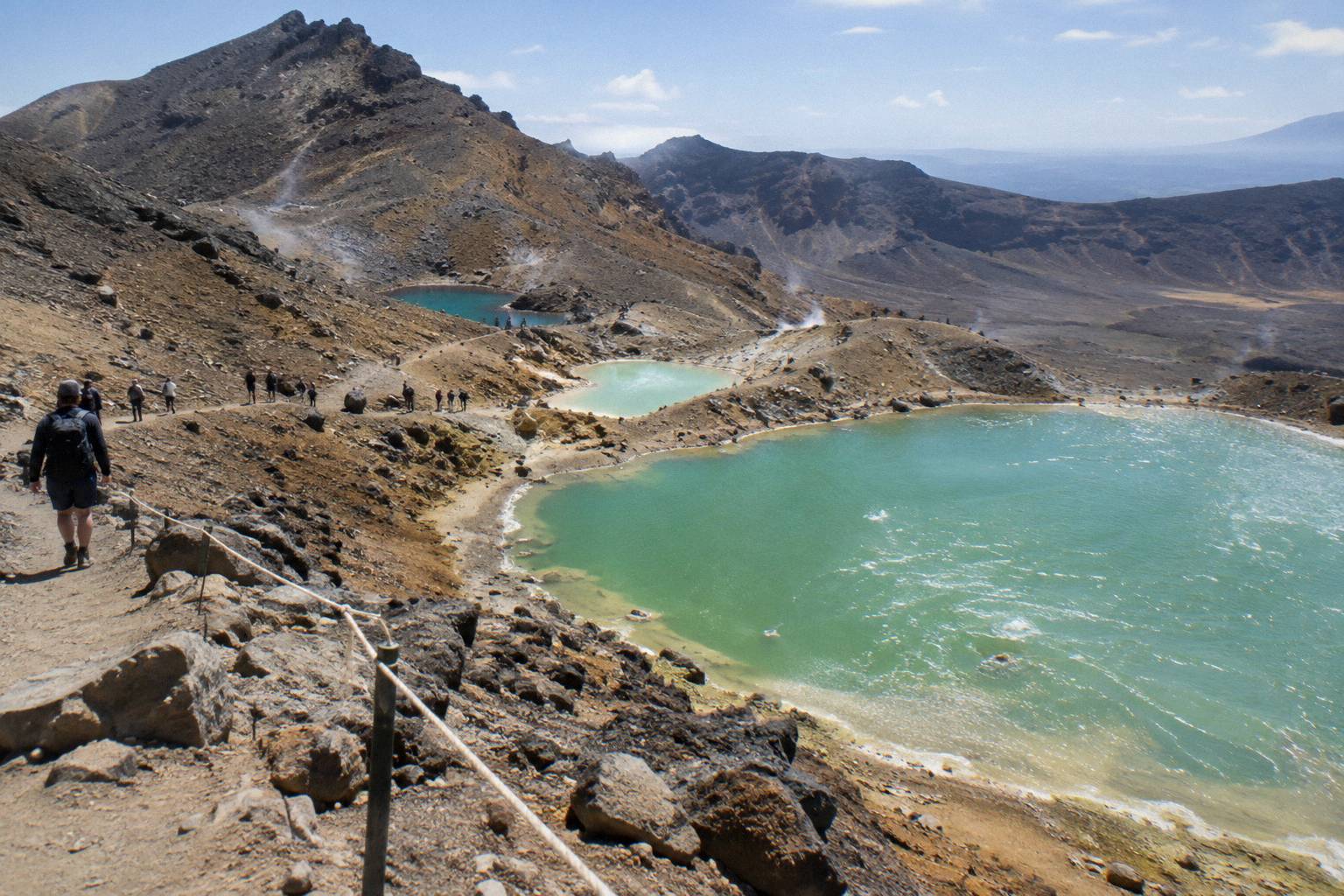
February is the month this site would circle first. The holiday rush has gone, the shuttle season is still at full strength, daylight remains long, and statistically the North Island high country enjoys its most settled spells of the year. The descent to the Emerald Lakes, DOC's vivid description of the steep scree below Red Crater, is at its most forgiving dry and soft underfoot.
March keeps most of that. Mornings are crisper, the light lower and better for photographs of the lakes' mineral colours, and the track noticeably quieter after the first week. Walking time stays 7 to 8 hours.
April is the season's long farewell. The first half often feels like March; the second half can bring the first snow to Red Crater and a thin skin of ice on the track near the top. Daylight shortens enough that an early start stops being advice and becomes arithmetic. The parking restriction and the standard shuttle season run to 30 April exactly, and then the summer machinery stops for six months. For the crowd-averse, late April weekdays can be superb; for the cautious, treat any April date as a plan with a weather check attached, conditions allowing.
| Month | Crowd Level | Typical Ground At The Lakes | Daylight And Start | Best For |
|---|---|---|---|---|
| November | Low | Possible old snow patches above | Long days, cold start | Quiet and cool conditions |
| December | High | Fully clear | Longest days | Full summer feel, family holidays |
| January | Highest | Fully clear | Long days | Social track, peak services |
| February | Moderate | Fully clear, driest scree | Long days | The strongest all-round month |
| March | Moderate | Fully clear | Shortening days | Photography, settled spells |
| April | Low to moderate | Clear, late dustings possible | Early start essential | Solitude with a weather plan |
The colours you will see at the lakes, and why they change with the light, are covered in detail in how the Emerald Lakes get their colours.
Is Winter, May To October, Ever The Best Month To Go?
For almost nobody, no. From May to October DOC reclassifies the Crossing as a 9 hour Expert route, with snow, ice, avalanche risk and sub-zero temperatures, and DOC's own wording is that alpine skills are essential and it is best to go with a guide. Shuttle buses generally do not operate in these months, while guided trips include transport. Winter is magnificent and it is a different commitment.
The change at the calendar line is real, not bureaucratic. The same 20.2 km that takes 7 to 8 hours in February takes 9 hours on DOC's winter clock, because the South Crater traverse, the Red Crater ridge and the scree descent to the Emerald Lakes can all be under snow or ice. DOC's winter essentials for independent trips read like mountaineering: crampons, ice axe, helmet, competency, avalanche gear. The lakes themselves freeze at the edges in cold snaps, and the whole high section can be white from the Devil's Staircase up.
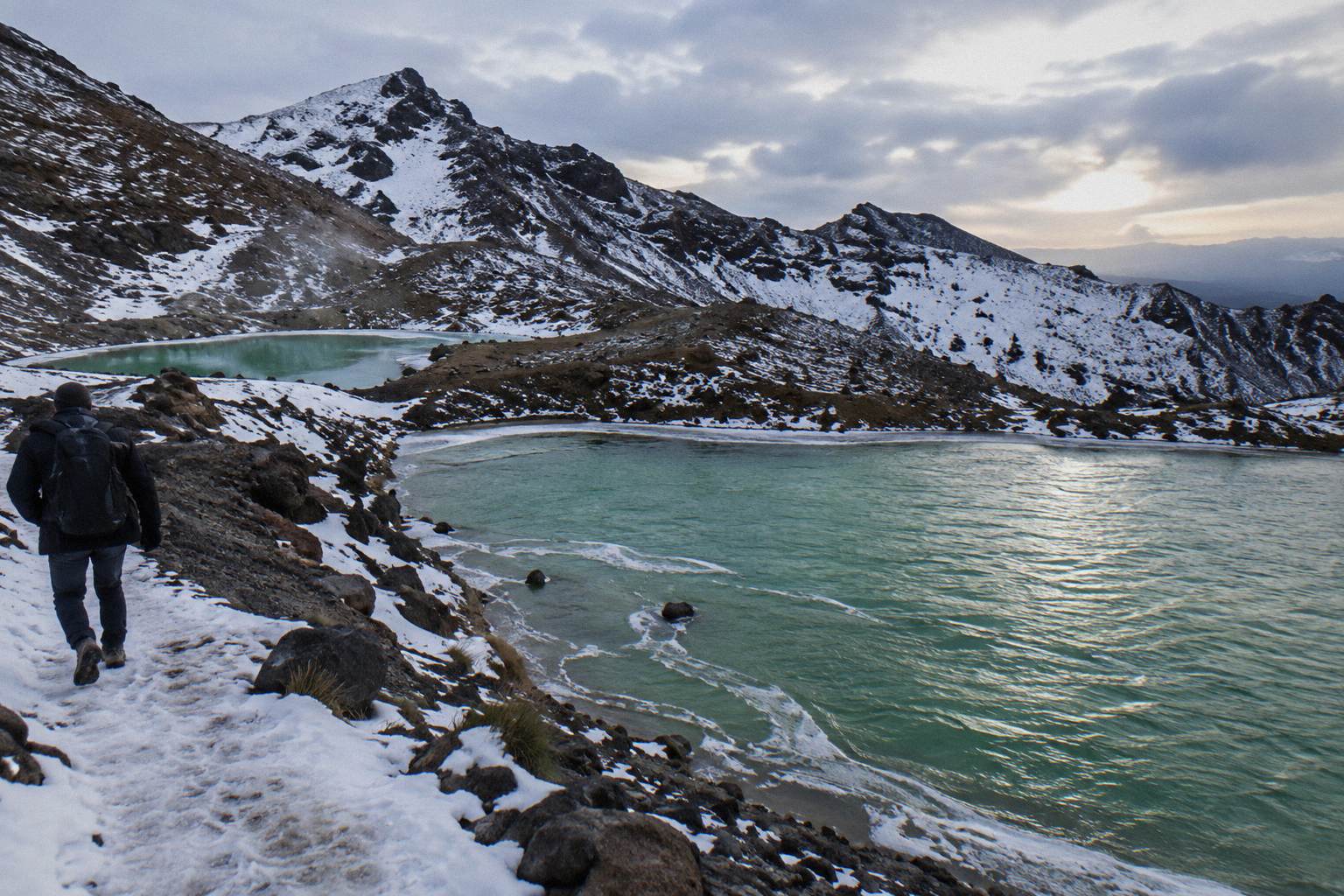
The transport picture flips too. DOC notes that shuttle buses generally do not operate from May to late October, while guided trips include transport, which is why winter walkers almost always end up on a guided product. Adrift Tongariro runs the three guided tours on this site's pages, and crampons and ice axes are stated as supplied on them for winter conditions if required, along with a clothing and footwear allowance; bring your own lunch. The Adrift Tongariro premium guided hike runs 8 to 9 hours booked duration, from NZ$450 per person, rated 4.6 across 242 reviews, with free cancellation up to 14 days before, and picks up at 53 Carroll Street in National Park Village, with Taupo, Turangi and Whakapapa pickups possible at a surcharge on private trips. Winter daylight is short, 9 to 11 hours by DOC's figure, so any winter day starts early by necessity rather than preference.
There is a genuine case for winter, and it should be made honestly. The track is close to empty, the lakes under snow are starkly beautiful, and a guide turns a serious route into a supervised one. The case against is equally honest: the walk is longer, colder, harder, and the margin for a navigational or gear error shrinks to nothing. If the words "crampon" and "ice axe" are not already in your vocabulary, book the guided version or come back in February.
The full picture, including what to wear and carry, is in winter on the Crossing with snow at the Emerald Lakes.
Whichever month you land on, the date only becomes a plan when transport is attached. For most summer walkers that means a shuttle seat rather than a parking spot.
How Do Shuttles And Parking Change With The Month?
From Labour weekend in late October to 30 April, parking at the road ends is limited to a 4 hour maximum, and DOC's suggestion is to book a shuttle; from May to late October shuttle buses generally do not operate at all, and guided trips, which include transport, become the standard way onto the track. Your month choice therefore decides your transport options more than any preference of yours does.
The 4 hour cap is the number that reshapes a summer day. The Crossing takes 7 to 8 hours in season, so a car parked at Mangatepopo or Ketetahi cannot legally wait for its driver in summer; this is by design, and it is why the shuttle network exists. DOC also states there is no parking for Crossing walkers at Mangatepopo car park in summer, and points to a private car park near Ketetahi.
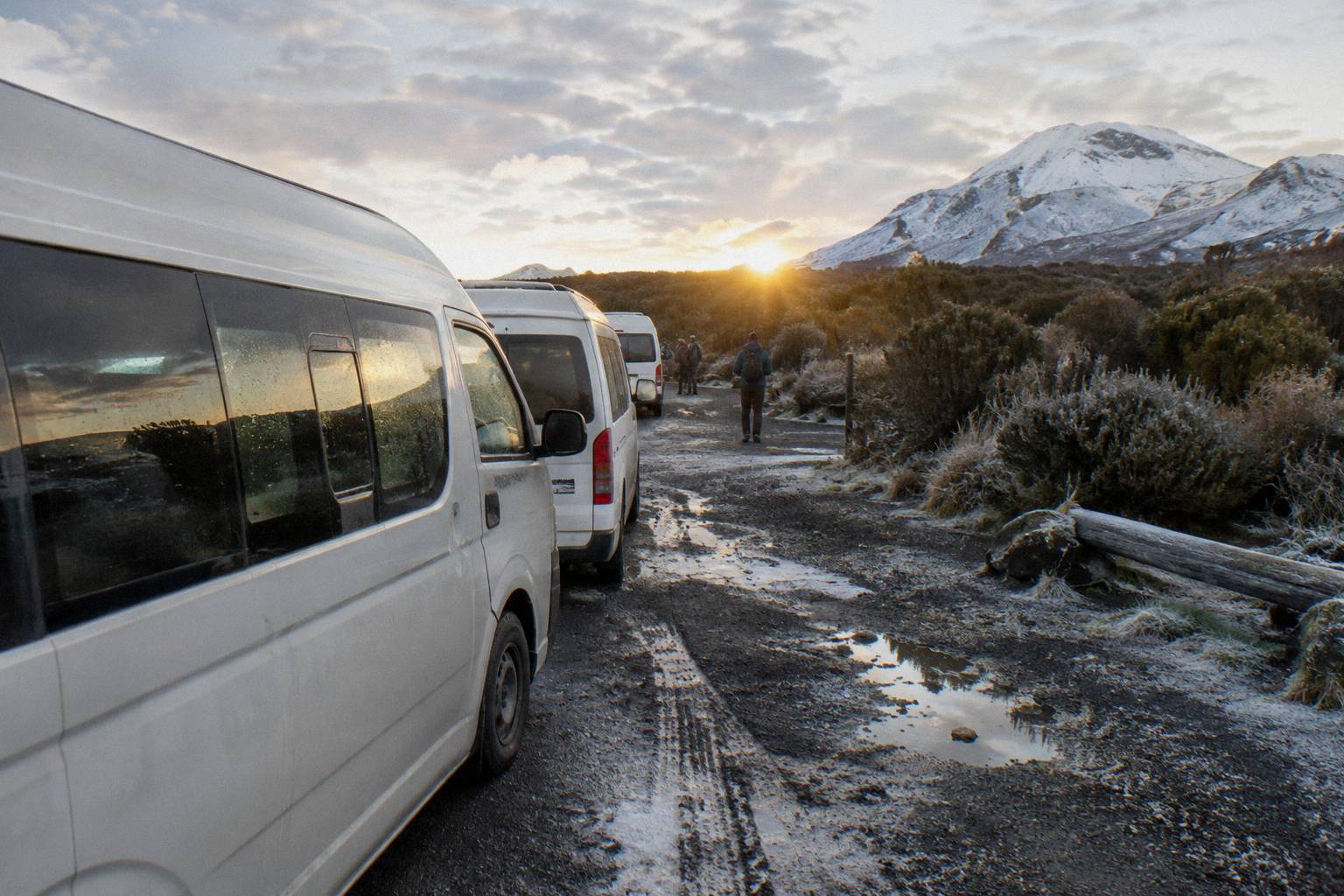
The choices group by where you sleep the night before. From National Park Village, the Tongariro Crossing Shuttles round trip, from NZ$75 per person, 4.7 across 890 reviews, free cancellation up to 24 hours before, departs the Park n Ride at 59 Findlay Street. The Dempsey Buses return bus from National Park Village runs from NZ$90 per person, rated 4.8 across 72 reviews, with the same 24 hour cancellation window, and collects from the Park Hotel Ruapehu, the Tongariro Crossing Lodge and the Park n Ride. Dempsey Buses excludes children under 6 on both of its services.
From the Ketetahi side, the park-and-ride products work in reverse: you park at the Ketetahi car park, ride the one-way shuttle to Mangatepopo, and walk the Crossing back to your own car, with no return leg included or needed. The Ruapehu Scenic Shuttles Ketetahi park-and-ride is from NZ$68 per person, 4.8 across 670 reviews, free cancellation up to 24 hours before; the Owhango Adventures Ketetahi park-and-ride, 4.8 across 333 reviews, runs the same one-way logic with a 24 hour cancellation window.
From further afield, the Tongariro Expeditions Crossing shuttle from Taupo or Turangi runs 8 to 10 hours booked duration from NZ$75 per person, rated 4.7 across 431 reviews, with free cancellation up to 24 hours before, and the Backyard Tours mountain shuttle from Turangi runs from NZ$120 per person. A note on scale: DOC gives the distances from the track as Turangi 36.7 km, Ohakune 48 km and Taupo 86.5 km, so Taupo-based walkers are signing up for a long day before the walking even starts. Auckland is a long way, and multi-day products exist for it, covered further down.
| Transport | Type | Departure Point | Price | Rating And Reviews | Free Cancellation |
|---|---|---|---|---|---|
| Tongariro Crossing Shuttles round trip | Shuttle, return | National Park Village | From NZ$75 | 4.7, 890 reviews | Yes, 24 hours |
| Dempsey Buses return bus | Shuttle, return | National Park Village | From NZ$90 | 4.8, 72 reviews | Yes, 24 hours |
| Ruapehu Scenic Shuttles park-and-ride | Shuttle, one-way | Ketetahi car park | From NZ$68 | 4.8, 670 reviews | Yes, 24 hours |
| Owhango Adventures park-and-ride | Shuttle, one-way | Ketetahi car park | Check the booking page | 4.8, 333 reviews | Yes, 24 hours |
| Tongariro Expeditions Taupo or Turangi shuttle | Shuttle, options vary | Taupo, Turangi or Ketetahi | From NZ$75 | 4.7, 431 reviews | Yes, 24 hours |
| Backyard Tours mountain shuttle | Shuttle | Turangi | From NZ$120 | 3 reviews so far | Yes, 24 hours |
None of these is a guided walk: a shuttle moves you, and the walking is your own. On pricing generally, DOC says part of a shuttle fee, about NZ$40, goes to conservation, a line worth knowing when comparing fares. Shuttles and guided operators alike run only when DOC's advisory and the forecast allow, so every booking is ultimately a conditions-allowing booking.
Should You Take A Guided Hike Or Walk Independently In Your Chosen Month?
In the summer months an independent walk with a shuttle is the normal, cheaper choice, and DOC's booking system plus a shuttle seat covers it. In the winter months DOC's advice points strongly at a guide, because the route becomes an Expert one and guided trips are the products that include transport when shuttle buses stop. The month you pick largely makes this decision for you.
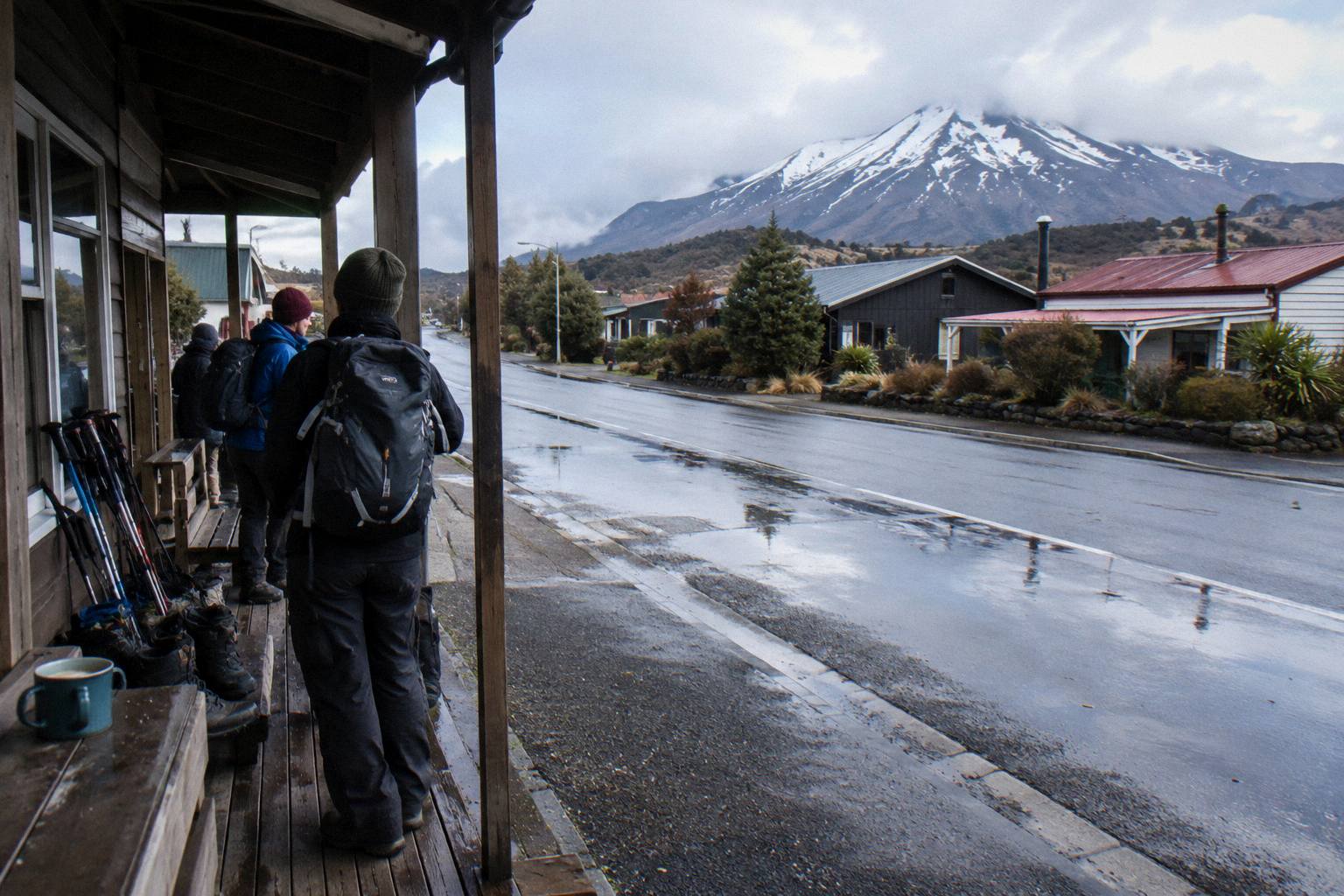
The three guided tours are all Adrift Tongariro products. The Adrift Tongariro premium guided hike, 8 to 9 hours booked duration from NZ$450 per person, 4.6 across 242 reviews, free cancellation up to 14 days before, takes a guided group over the full Crossing to the Emerald Lakes and beyond to the Ketetahi finish. The Adrift Tongariro full-day guided Crossing, 4.7 across 278 reviews, covers the same ground with its own terms on the booking page, and it is non-refundable, so read the terms before committing a date. The Adrift Tongariro private guided Crossing, 4.5 across 30 reviews, also non-refundable, gives one party its own guide for 7 to 9 hours. All three depart 53 Carroll Street, National Park Village, and all three supply crampons and ice axes for winter conditions if required.
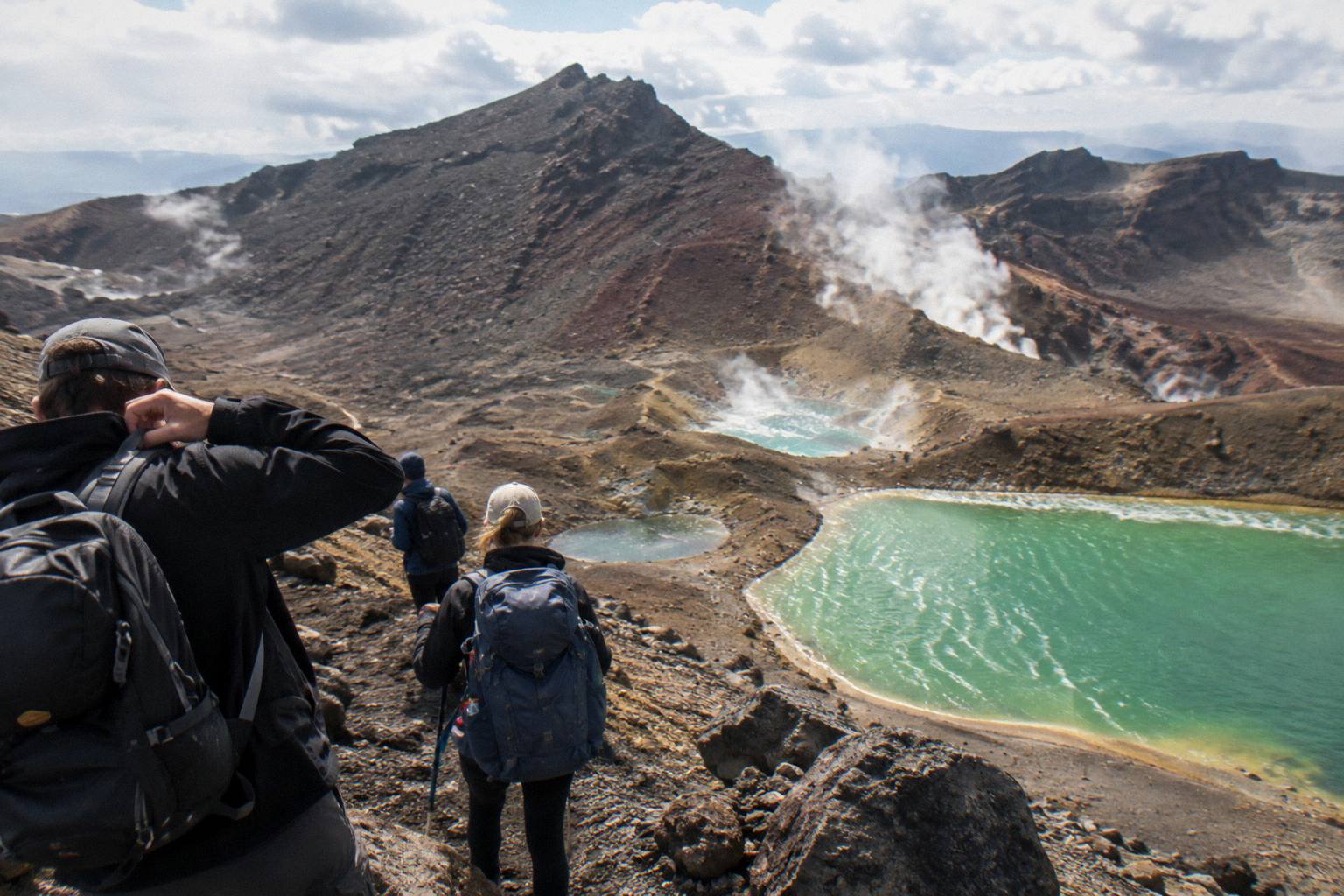
A guide earns its fee in three situations. First, winter, where DOC's wording leaves little room. Second, any month where you want the landscape explained: the cultural layer here is deep, the mountains are sacred to Ngati Hikairo ki Tongariro of Ngati Tuwharetoa, the park is a dual World Heritage area and New Zealand's oldest national park, from 1894, and the 2012 Te Maari eruption is written into the Ketetahi end of the track. Third, when you would rather not think about logistics at all. The comparison of costs and what each type includes is set out in whether a guide is worth it for the Emerald Lakes section.
The cultural request that applies in every month is DOC's: Kaumatua Te Ngaehe Wanikau asks visitors to respect the maunga tapu by not touching or entering any of the waterways, including the alpine lakes. The Emerald Lakes are for looking at, not swimming in, and the reasons are set out fully in swimming in the Emerald Lakes and tapu.
What About Weather, Alerts And The Day-Of Decision?
Weather on the Crossing is assessed each morning, not each month: volcanic alert levels change daily, and DOC, GeoNet and the NIWA Red Crater forecast are the three sources that matter. The month you pick sets the odds; the day you walk is decided by the advisory system, and operators are bound by DOC rules not to run on hazardous-weather-warning days.
Structurally, this is how it works. The track sits inside an active volcanic field, and DOC maintains a volcanic risk page explaining the framework; alert levels themselves are published by GeoNet and move day to day. The NIWA advisory for the park gives a mountain-specific outlook for the Red Crater area, and avalanche information lives at avalanche.net.nz through the colder half of the year. An early start is the standard advice in every month, because afternoon weather in the North Island high country deteriorates more often than it improves.
What you cannot do is promise yourself a view. No month guarantees the lakes in sunshine, and no responsible operator promises a dry day or a departure: every shuttle and guided product on this site runs conditions allowing. The planning move is to hold a flexible window, a day or two either side of your target date, and to book products whose cancellation terms match that flexibility: the 24 hour windows on most shuttles are generous, the Adrift guided products run to 14 days, and the private Crossing and the ExperienceKart three-day tour are non-refundable, so a fixed-date traveller should weigh that before paying.
If the day turns bad, DOC names alternative walks: Taranaki Falls and Tama Lakes. A spoiled-weather plan B is part of picking a good month, and more options are listed in other hikes in Tongariro National Park when the Crossing closes.
What Mistakes Do People Make When Picking A Month?
The five recurring mistakes are counting only flights and not the shuttle calendar, assuming the track is the same track year-round, trusting a single long-range forecast, ignoring the 4 hour parking cap, and booking a non-refundable product for a single fixed date in a shoulder month. Each one is avoidable with a calendar, DOC's two season bands and honest cancellation terms.
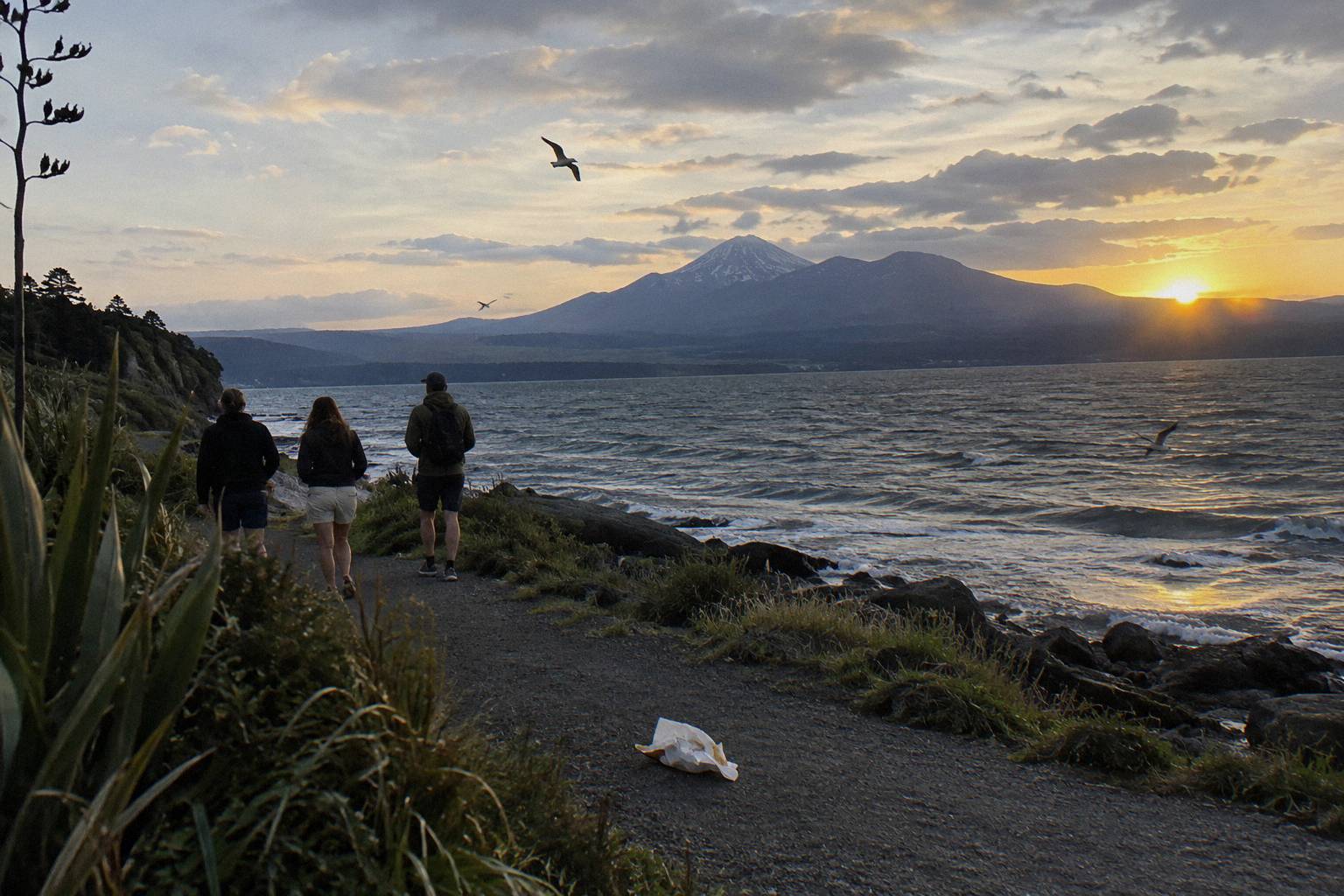
First, the transport blind spot. A walker who books February flights but checks nothing else may not realise the whole summer system, shuttle timetables, the DOC booking system, the parking restrictions, runs on the Labour weekend to 30 April clock, and that May arrivals face a track with no general shuttle service at all. Decide the month and the transport in the same sitting.
Second, treating winter as simply colder summer. DOC's shift from intermediate to Expert, and from 7 to 8 hours to 9 hours, is a change of category, not of degree. Winter solo attempts by summer-standard walkers are the classic serious error here.
Third, over-trusting a forecast made weeks out. Long-range outlooks can set a mood; they cannot set a date. The advisory system and the morning assessment decide, and the flexible-window approach beats the fixed-date one in every month.
Fourth, the parking cap. Every summer, walkers plan to drive to Mangatepopo, park, and walk, and the 4 hour maximum makes that impossible. The plan that works in summer is shuttle out, walk back, or park at Ketetahi and use a one-way park-and-ride.
Fifth, refundability mismatch. A non-refundable guided seat booked for one narrow date in April, the most weather-exposed summer month, carries more risk than the same seat inside a flexible February week. Match the product's terms to the month's volatility.
| Mistake | The Consequence | The Fix |
|---|---|---|
| Ignoring the shuttle calendar | Arriving in May to no general shuttle service | Check DOC's season bands before flights |
| Treating winter as cold summer | An Expert route attempted unprepared | Guided trip, or a summer month |
| Trusting one long-range forecast | A wasted fixed date | Hold a flexible window; check the advisory |
| Planning to park at the road end in summer | The 4 hour maximum defeats the plan | Book a shuttle or a Ketetahi park-and-ride |
| Non-refundable product, one fixed date | Weather kills the day and the money | Prefer 24 hour or 14 day cancellation windows |
Which Booking Combines Best With Each Month?
February and March pair naturally with a round-trip shuttle from wherever you are sleeping, April with a product carrying a 24 hour cancellation window, and the winter months with a guided Adrift Tongariro trip, because guided trips are the ones that include transport when shuttle buses stop. Travellers starting in Auckland should look at the multi-day products, since Auckland is a long way from the mountain and an overnight or two-day product exists for exactly that.
The Auckland options are honest about what they are. The Kiwi Road Tours private transfer from Auckland is a private transfer with the Crossing shuttle excluded and the walk self-guided, booked over 2 days, with 4 reviews so far. The ExperienceKart private three-day tour from Auckland, departing the Movenpick Hotel in the Auckland CBD, bundles Huka Falls and Lake Taupo around one self-guided Crossing leg, is not suitable under 12, is non-refundable, and has only 1 review so far, so treat it as an itinerary product rather than a rated one. Neither is a guided Crossing tour, and no Taupo-based guided day trip exists on this site's pages: Taupo walkers book a shuttle or drive to a shuttle town.
For most readers the decision collapses to two questions. Which month, and where do you sleep the night before? Answer those and the rest follows: National Park Village sleepers take the round trip from 59 Findlay Street, Ketetahi-side drivers take a one-way park-and-ride, Taupo and Turangi sleepers take the Tongariro Expeditions or Backyard Tours options, and winter walkers take a guide.
Once the month is chosen, the supporting reading falls into place naturally: how long the hike to Emerald Lake takes, the wider view of the best time of year for the Crossing overall, and what to pack in what to wear hiking to the Emerald Lakes. The calendar, not the compass, is the first big decision on this walk, and Tongariro Emerald Lakes Hike covers the rest of the route, the shuttles and the booking steps in the guides above.
Common Questions About The Best Month To Hike To The Emerald Lakes
What Is The Best Time Of Year To Do The Tongariro Crossing?
February and March, inside DOC's November to April summer season, when the track is a 7 to 8 hour intermediate walk, shuttle buses run daily, and the ground at Red Crater and the Emerald Lakes is snow-free with the crowds off their peak.
Can You Hike To The Emerald Lakes In Winter?
Yes, but only as an expert undertaking. DOC reclassifies the track as a 9 hour Expert route from May to October, with snow, ice, avalanche risk and sub-zero temperatures, and DOC's advice is that alpine skills are essential and it is best to go with a guide. Shuttle buses generally do not operate in winter; guided trips include transport.
When Do Shuttle Buses Run For The Tongariro Crossing?
Through the summer season, broadly from around Labour weekend in late October through to 30 April, matching the period when parking at the road ends is capped at 4 hours and DOC suggests booking a shuttle. Outside that window, shuttle buses generally do not operate, and guided trips, which include transport, are the standard way onto the track.
Is April Too Late To Hike To The Emerald Lakes?
April is still inside DOC's summer band at 7 to 8 hours, and the shuttle season and parking restrictions run to 30 April. Late April can bring the first snow to Red Crater and short daylight, so take an early start, check the forecast, and prefer a product with a 24 hour cancellation window.
Which Month Has The Fewest People On The Crossing?
Within summer, November and late April are the quietest months, away from the December and January holiday peak. February and March trade slightly more people for the season's most settled conditions.
Do You Have To Book Anything To Hike In The Best Months?
DOC's booking system is free and recommended for the Crossing, and it is needed if you are booking a shuttle or a guided trip. In summer the 4 hour parking maximum at the road ends makes a shuttle seat the practical standard, so transport is the booking that matters most.