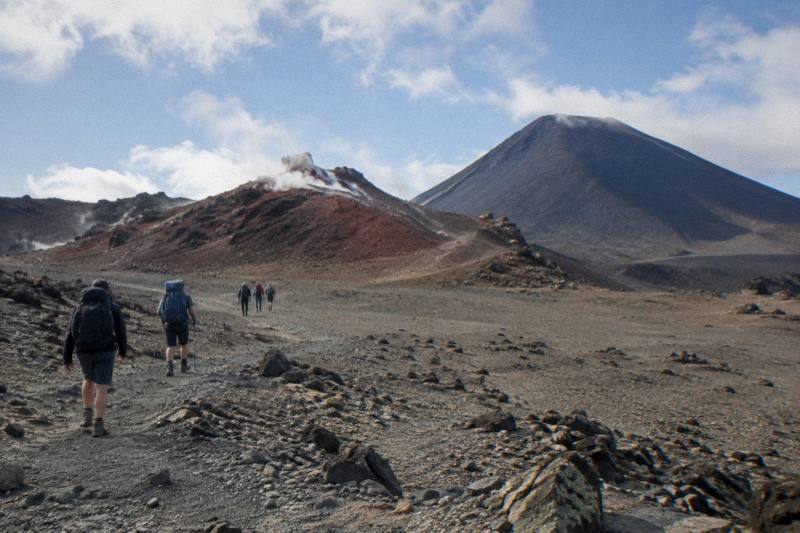
What To Wear Hiking To The Emerald Lakes
The Tongariro Alpine Crossing climbs from 1120 m at Mangatepopo to Red Crater at 1886 m, and the temperature, wind and surface underfoot can change several times in a single day. What you wear decides whether the day is a long slog or a good one.
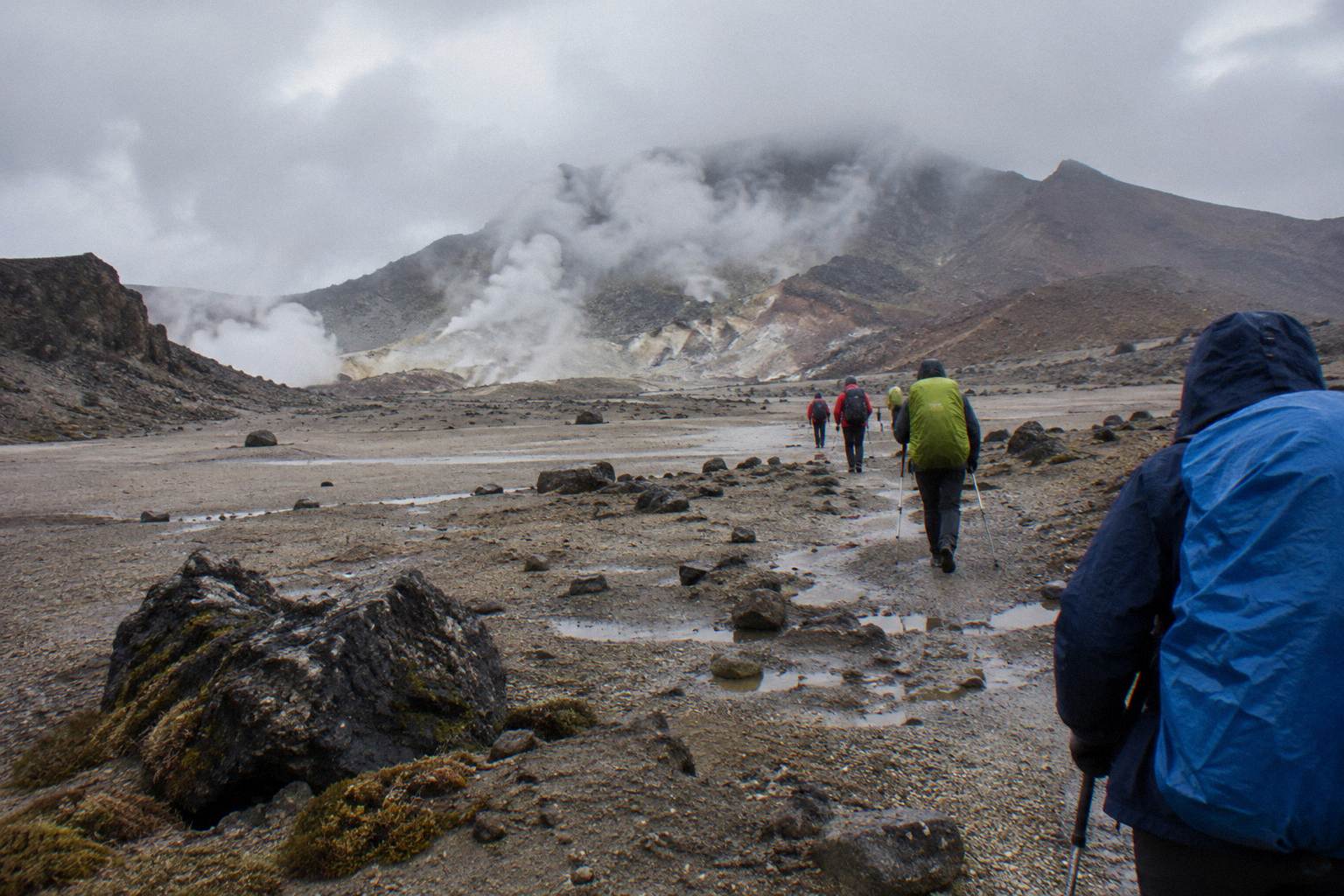
Short answer
Wear a three-layer system: a moisture-wicking base layer, an insulating mid layer, and a waterproof and windproof shell, with sturdy boots and no cotton anywhere. DOC grades the track High fitness and an Expert route from May to October, when crampons and an ice axe are essential. In summer, sun protection matters as much as warmth.
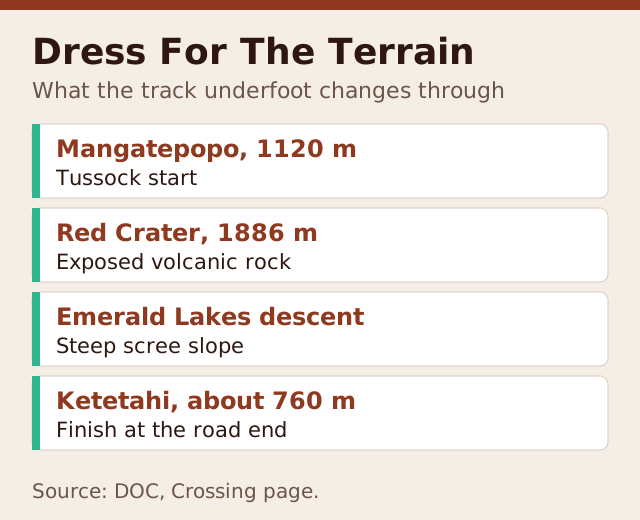
The Department of Conservation grades the Tongariro Alpine Crossing as a High-fitness tramping track of 20.2 km one way, with an elevation change of plus and minus 1196 m and a high point at Red Crater of 1886 m. Nothing about that profile is gentle, and nothing about the weather up there is stable either. The track starts in tussock at Mangatepopo, crosses exposed volcanic rock, drops a steep scree slope to the vivid Nga Rotopounamu, the Emerald Lakes, and winds down past Ketetahi to finish around 760 m at Ketetahi Road. That is four micro-climates in a single walk, which is why clothing choice matters more on this track than on almost any other day hike in New Zealand.
DOC's own guidance treats this as an alpine environment, not a valley stroll. From November to April the walk takes 7 to 8 hours; from May to October DOC calls it an Expert route where alpine skills are essential and recommends going with a guide. The three guided tours run by Adrift Tongariro all reach the lakes with a guide who reads the conditions, while the many shuttle options, from the Ruapehu Scenic Shuttles Ketetahi park-and-ride to the Dempsey Buses return bus from National Park Village, get you to the start and leave the clothing decisions entirely with you. Either way, what goes into your pack the night before is the same decision.
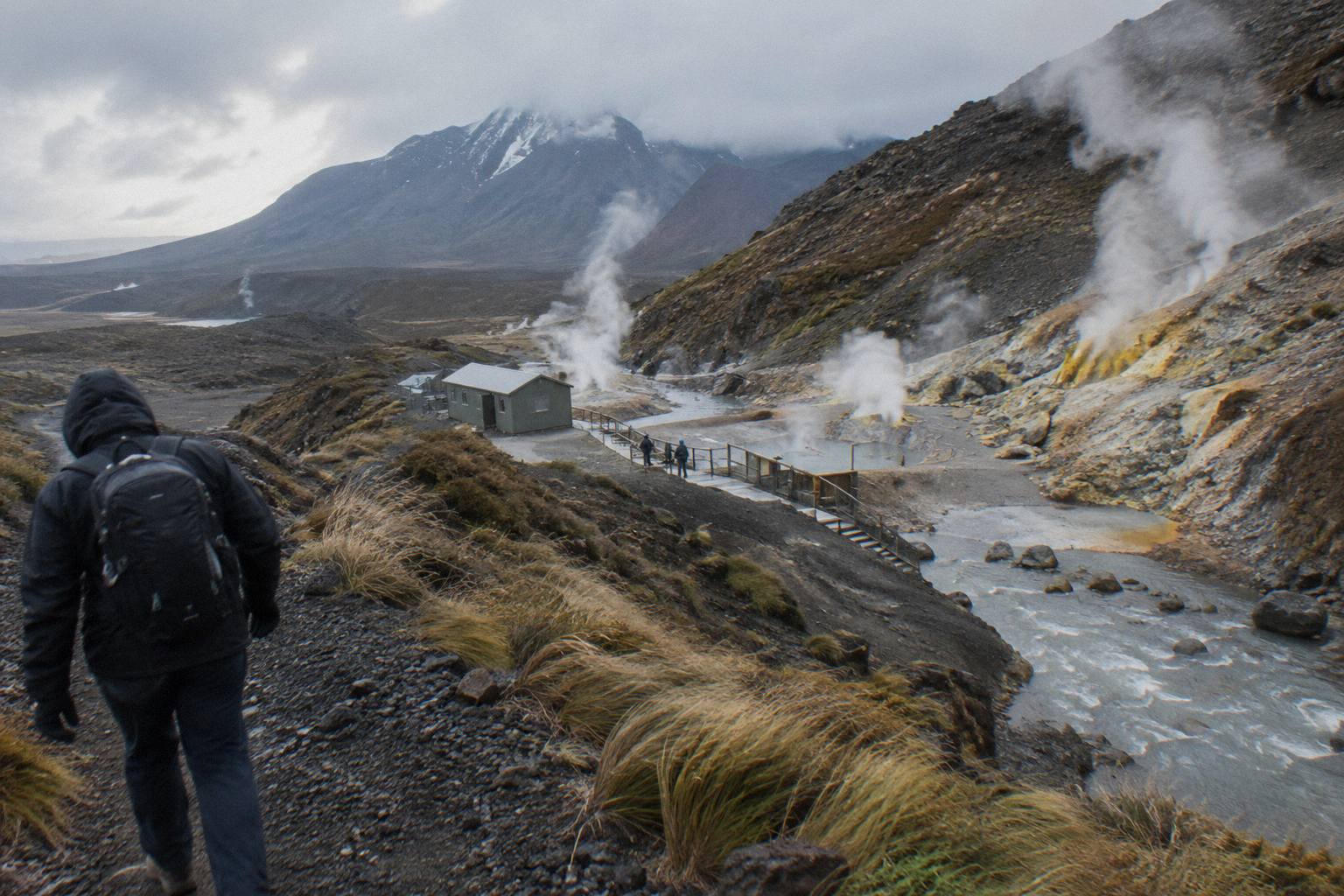
Layering works because you will be too hot on the Devil's Staircase and too cold on the Red Crater ridge, sometimes within the same hour. The climb from Mangatepopo generates heat, and walkers who set out in everything they own end up sweating through their insulation, which then stops insulating the moment they stop moving. A base layer that moves moisture away from your skin, a mid layer you can shed at the saddle and put back on before the exposed section over Red Crater, and a shell that blocks the wind are the three pieces that do the work. For a full picture of the walk itself, start with the guide to the Emerald Lakes on the Tongariro Crossing.
Quick Facts
| Fact | Figure (DOC) |
|---|---|
| Track length | 20.2 km one way |
| Elevation change | plus and minus 1196 m |
| High point | Red Crater, 1886 m |
| Walking time, November to April | 7 to 8 hours |
| Walking time, May to October | 9 hours |
| Difficulty | High fitness; Expert route May to October |
| Track start and finish | Mangatepopo start, Ketetahi Road finish |
What Should You Wear On The Tongariro Alpine Crossing?
The core answer is a three-layer clothing system plus solid boots: a synthetic or merino base layer against your skin, a fleece or insulated mid layer for the summit sections, and a waterproof and windproof shell for the ridgeline. DOC grades the track High fitness with an Expert rating from May to October, so the clothing has to work across a 20.2 km walk that can pass through heat, wind, rain and sometimes snow in one day.
Layering works because you will be too hot on the Devil's Staircase and too cold on the Red Crater ridge, sometimes within the same hour. The climb from Mangatepopo generates heat, and walkers who set out in everything they own end up sweating through their insulation, which then stops insulating the moment they stop moving. A base layer that moves moisture away from your skin, a mid layer you can shed at the saddle and put back on before the exposed section over Red Crater, and a shell that blocks the wind are the three pieces that do the work.
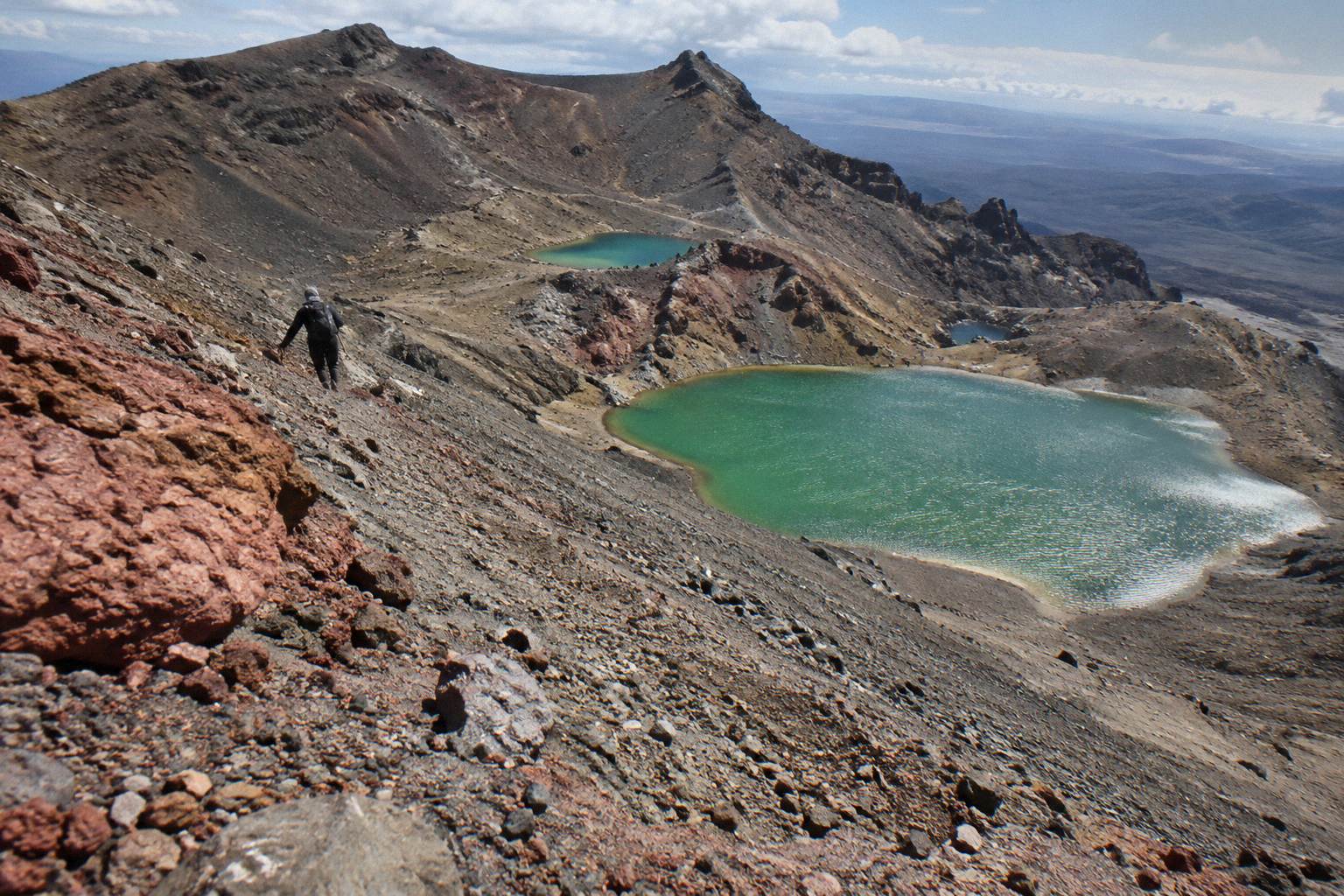
Material matters more than brand. Merino wool keeps some warmth when damp and resists odor over a long day; synthetic fabrics dry fast and cost less. Cotton does the opposite of both: it holds sweat, loses all insulating value when wet, and takes hours to dry. Denim is the worst offender on this track, and every season rangers report walkers in jeans shivering above the bushline. The same logic applies to socks, where a merino or synthetic walking sock with a snug fit prevents the blisters that turn the long Ketetahi descent into misery.
Your legs want walking trousers or leggings with some stretch, not shorts, even in summer. The volcanic rock is sharp, the wind is constant above the saddle, and sunburn on the back of the knees is a real thing at these altitudes. Convertible trousers are a reasonable compromise. A warm hat and gloves belong in the pack in every season: the Nga Rotopounamu, the Emerald Lakes, sit in a basin that funnels wind straight off Red Crater, and the stop for photos there is long enough to get cold fast. The guide to the descent from Red Crater to the Emerald Lakes covers exactly how exposed that section feels.
Why Does Mountain Weather Change So Fast Above The Emerald Lakes?
Because the lakes sit at altitude in an alpine volcanic landscape, where the weather is driven by the interaction of the maunga with whatever system is passing over the central North Island. The Crossing crosses exposed ridgelines with no shelter of any kind, so wind, rain and temperature can shift within minutes, and a calm morning at Mangatepopo says little about conditions at Red Crater at 1886 m.
The Department of Conservation is blunt about this. The track's conditions page advises that the Crossing should not be attempted in high winds or poor visibility, and operators, guided and shuttle alike, run only when the DOC advisory and the forecast allow. Volcanic alert levels also change daily, and GeoNet is the authority that tracks them. None of this is about fear, it is about clothing: the forecast at the Mangatepopo car park start for the Emerald Lakes and the forecast at the Red Crater ridge are effectively two different forecasts, and your outfit has to cover both.
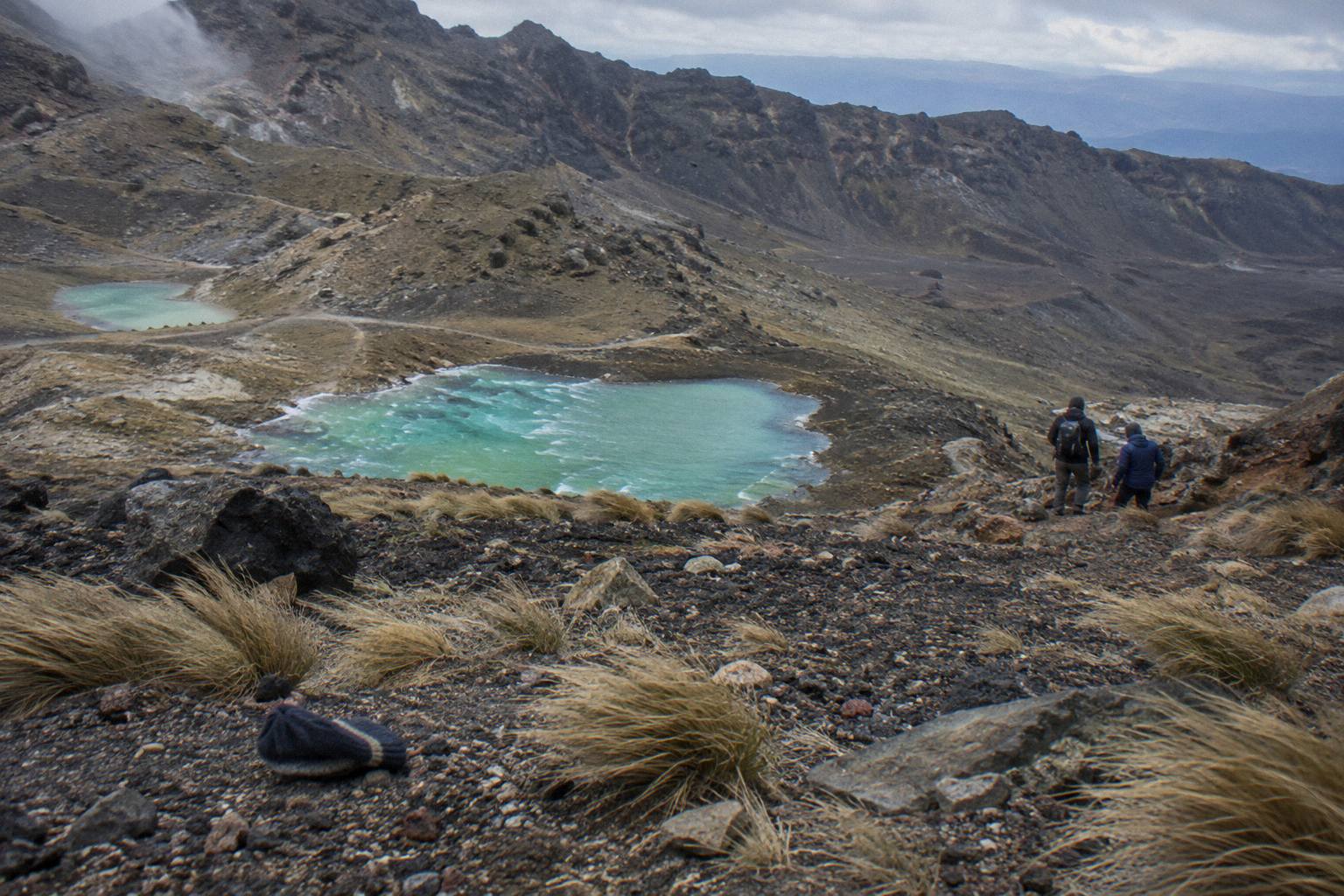
Wind is the factor that surprises people most. The section from the South Crater to the summit of Red Crater and the drop to the lakes is fully exposed in every direction, and a moderate breeze in the valley arrives up there as a consistent push that strips body heat from anyone in a cotton t-shirt. Rain arrives horizontally. In the shoulder seasons, that same moisture can fall as snow, and DOC notes that from May to October snow, ice, avalanche risk and sub-zero temperatures define the route. Even in the November to April window, a genuinely summery day can end with a cold, wet walker at the Ketetahi finish after the Emerald Lakes.
The practical response is to check the NIWA advisory for the Tongariro National Park and the DOC alerts before you finalize what goes in the pack, and to treat the shell layer as non-negotiable rather than an optional extra. Walkers weighing up whether the day justifies a guide at all can read whether a guide is worth it for the Emerald Lakes section; the three Adrift Tongariro guided tours include a guide's judgement of the forecast as part of what is booked, while shuttles leave that judgement with you.
Choosing between a guided day and a shuttle day also changes the clothing question slightly. The Adrift Tongariro premium guided hike, from NZ$450 per person with free cancellation up to 14 days before, includes crampons and ice axes for winter conditions if required, plus a clothing and footwear allowance, though lunch is not included, so bring your own. The Adrift Tongariro full-day guided Crossing, rated 4.7 across 278 reviews, is the same guided format with its price on the booking page. A plain return such as the Tongariro Crossing Shuttles round-trip from National Park Village, from NZ$75 per person and rated 4.7 across 890 reviews, is a shuttle, not a guided walk, so every layer, glove and boot is yours to supply. You can check availability for the premium guided hike, or read more about booking a guided hike to the Emerald Lakes.
What Footwear Works On The Scree And Rock?
Sturdy, broken-in boots with ankle support and a lugged sole are the right answer for almost everyone, because the track surfaces range from benched track to loose scree, smooth lava fields and a steep descent off Red Crater that runs mobile rock underfoot. Trail shoes can work for experienced, strong walkers in dry summer conditions, but the scree above the Emerald Lakes is where soft footwear and tired ankles combine into injury.
The Devil's Staircase, the climb from the Mangatepopo valley toward the South Crater, is stepped rock that rewards grip. The crossing of South Crater is fine, almost flat sand. Then comes the ridge to Red Crater and the descent to the lakes: DOC's own track description notes the steep scree descent to the vivid Emerald Lakes, and every walker who has done it knows the sensation of the slope moving downhill slightly faster than the feet. A boot that holds the ankle and a sole that bites into scree turns that section from a controlled slide into a walk. The guide to the Devil's Staircase hike to the Emerald Lakes breaks the climb down stage by stage.
Socks deserve as much attention as boots. A single pair of well-fitting merino or synthetic walking socks, worn with boots already broken in over several prior walks, is the reliable formula. Two thin socks can work for some walkers; cotton athletic socks do not. Bring blister plasters regardless, because 20.2 km of volcanic grit finds any hot spot. Gaiters are a genuine help in the scree and in shoulder-season mud, keeping grit out of the boot top, though they are optional rather than standard.
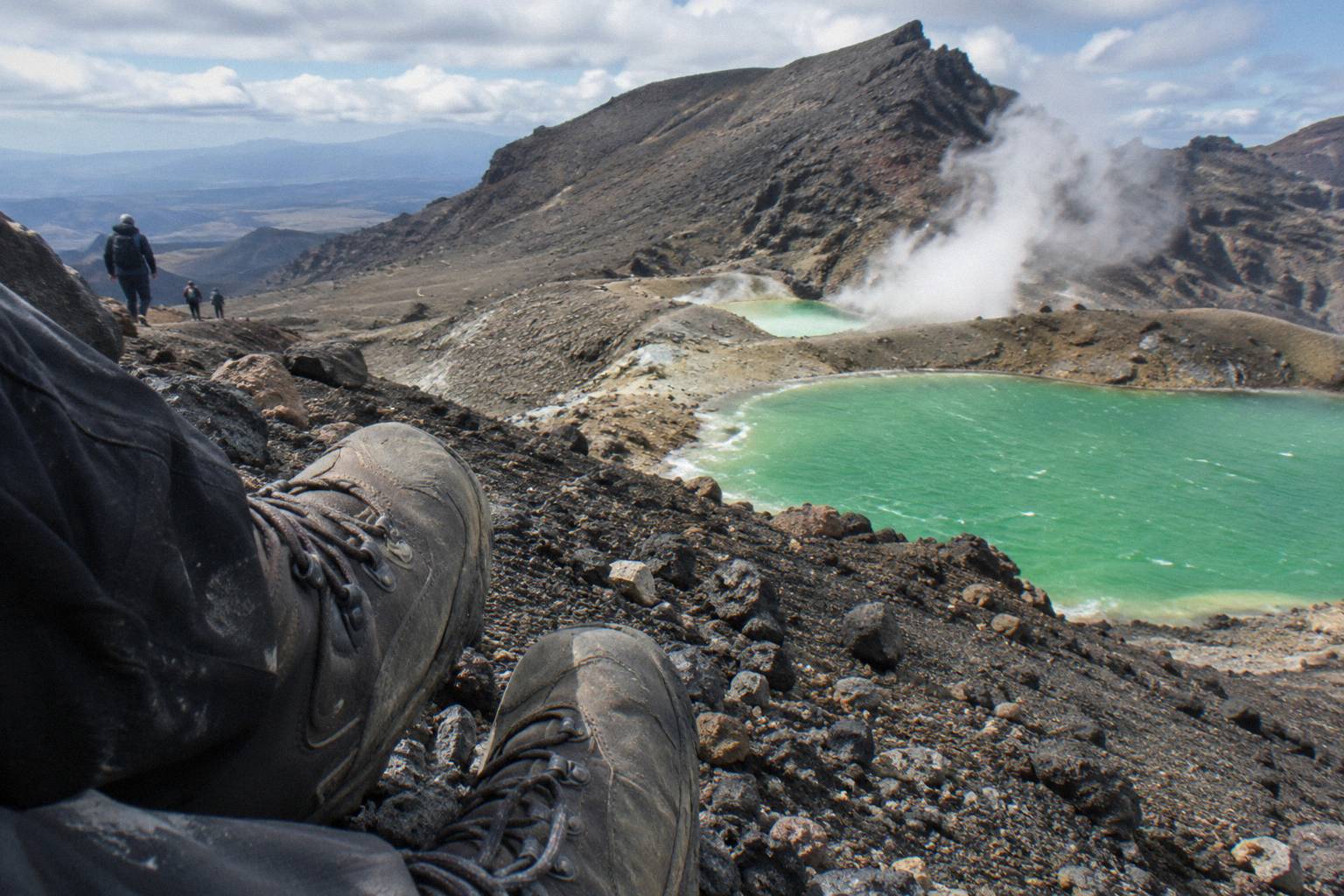
Winter changes the footwear conversation completely. From May to October DOC lists crampons and an ice axe among the essentials, along with a helmet, competency in their use and avalanche gear for independent trips, and the Nga Rotopounamu basin holds ice well into spring. The Adrift guided tours state that crampons and ice axes are supplied for winter conditions if required, which is one of the practical reasons walkers choose a guided day for a first winter Crossing. Whether that trade makes sense is covered in the piece on winter on the Crossing, snow at the Emerald Lakes.
How Does What You Wear Change Between Summer And Winter?
In the November to April summer season the priorities are sun protection, heat management on the climbs and a shell for sudden wind and rain, with a warm layer carried rather than worn. From May to October DOC reclassifies the track as an Expert route with snow, ice, avalanche risk and sub-zero temperatures, and the clothing list becomes full alpine kit: insulated layers, waterproof shell, gloves, hat, and traction gear on your feet.
Summer walkers routinely start cold and finish hot. The standard pattern is to set off from Mangatepopo in base layer plus mid layer, strip to base layer on the Devil's Staircase, then layer back up at the saddle before the exposed ridge to Red Crater. The stop at the Emerald Lakes themselves is a natural place to add everything you carry, because the basin is a wind funnel and the pause is longer than you think. The long descent to Ketetahi is hot work again, on a slope that offers little shade. The guide to summer on the Crossing, the Emerald Lakes without snow goes deeper on the warm-season pattern.
Winter is a different sport. DOC's wording is that alpine skills are essential and it is best to go with a guide, and the 9-hour walking time estimate reflects harder travel over snow and ice. Daylight in winter is short, 9 to 11 hours by DOC's figures, so clothing has to keep you functional for the whole of it, and shuttle buses generally do not operate from May to late October while guided trips include transport. For anyone weighing the two seasons against each other, the guide to the best month to hike to the Emerald Lakes lays out the trade-offs month by month.
| Item | November To April | May To October |
|---|---|---|
| Base layer | Merino or synthetic, short or long sleeve | Merino or synthetic, long sleeve |
| Mid layer | Fleece, carried until the ridge | Heavier fleece or insulated jacket |
| Shell | Waterproof and windproof jacket | Waterproof and windproof jacket and trousers |
| Head and hands | Sun hat, warm hat and light gloves carried | Warm hat, gloves, spare gloves |
| Footwear | Broken-in boots, gaiters optional | Boots plus crampons and ice axe |
| Extras | Sunscreen, sunglasses, blister kit | Helmet, avalanche gear, headlamp |
The shuttle question interacts with the season too. In summer, from Labour weekend in late October to 30 April, parking at the road ends is restricted to a 4-hour maximum and DOC suggests booking a shuttle, which is why products like the Ruapehu Scenic Shuttles Ketetahi park-and-ride, from NZ$68 per person and rated 4.8 across 670 reviews with free cancellation up to 24 hours before, carry so many walkers in the warm months. That product is a one-way park-and-ride, not a return and not guided: you park at Ketetahi, ride to Mangatepopo, and walk back to your own car. In winter the practical routes narrow toward the guided tours, which include transport.
What Sun, Wind And Rain Protection Do You Need Above The Bushline?
Above the bushline you need sunscreen, sunglasses and a brimmed hat for the sun, a windproof shell for the near-constant wind, and full waterproofs for rain that can arrive sideways at any hour. New Zealand's UV is fierce at altitude even in cool air, the volcanic rock reflects heat and glare upward, and there is no shelter anywhere between the Mangatepopo saddle and the Ketetahi bushline.
Sun protection is the item walkers most often underweight. The UV index in New Zealand runs high by global standards, and at the elevations this track reaches it climbs further, so a calm, cool, cloudless November day on the South Crater can produce serious sunburn on unprotected necks, ears and the back of hands. Sunglasses matter twice over in late spring and in snow seasons, when glare off old snowfields near Red Crater is intense. Sunscreen belongs in a pocket, not the bottom of the pack, because the day is 7 to 8 hours long and one morning application does not last it.
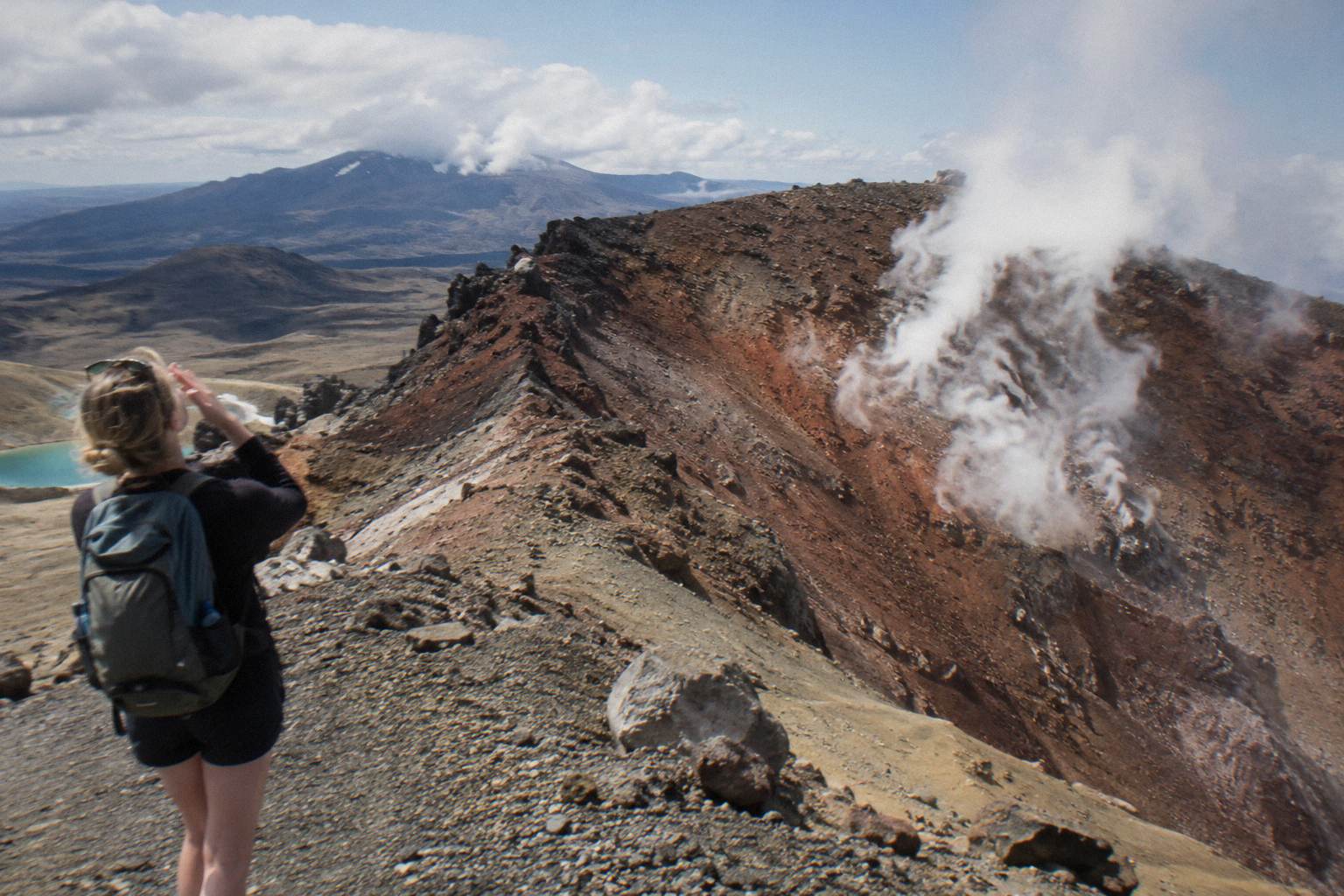
Wind protection is a shell job. A light windbreaker is better than nothing on the ridge, but the difference between a wind-resistant and a properly windproof jacket is very noticeable between Red Crater and the Emerald Lakes, where the basin funnels whatever is moving. Rain in this landscape rarely falls straight down; a hood that adjusts to fit over or under a hat, and cuffs that seal, earn their keep. Trousers rather than shorts do most of the leg work against wind-driven grit.
The volcanic setting adds one more reason to keep skin covered near the lakes: steam vents and hot ground. The Emerald Lakes themselves are craters, and the thermal activity in this landscape is real, which is part of why DOC asks visitors to respect the maunga tapu by not touching or entering any of the waterways, including the alpine lakes. Clothing that covers skin also protects against accidental contact with hot or chemically odd ground. The story of the colours of the Emerald Lakes on the hike explains where that vivid green actually comes from.
Arriving at the lakes with time and comfort to spare also depends on how you start the day, and the guide to a sunrise start on the Crossing for the Emerald Lakes covers the early-start pattern, when the coldest hour of the day comes before the warmest.
What Are The Common Clothing Mistakes On This Track?
The recurring mistakes are cotton in any form, from jeans to cotton t-shirts and socks; brand-new boots worn straight out of the box; shorts with no shell layer; skipping sun protection on cool mornings; and carrying nothing warm for the lakes basin stop. Each one shows up in the same place, the exposed section from the South Crater over Red Crater, where wind, altitude and a long pause combine to punish every shortcut taken at the car park.
Denim deserves its own warning because it is the classic. Jeans are heavy cotton, they hold the sweat of the Devil's Staircase, they lose all warmth when damp, and they do not move well on a 20.2 km walk. Every summer, walkers in jeans turn back at the saddle. The same physics applies to a cotton hoodie, which feels right early in the morning in the Mangatepopo car park and feels like a wet towel by the Emerald Lakes.
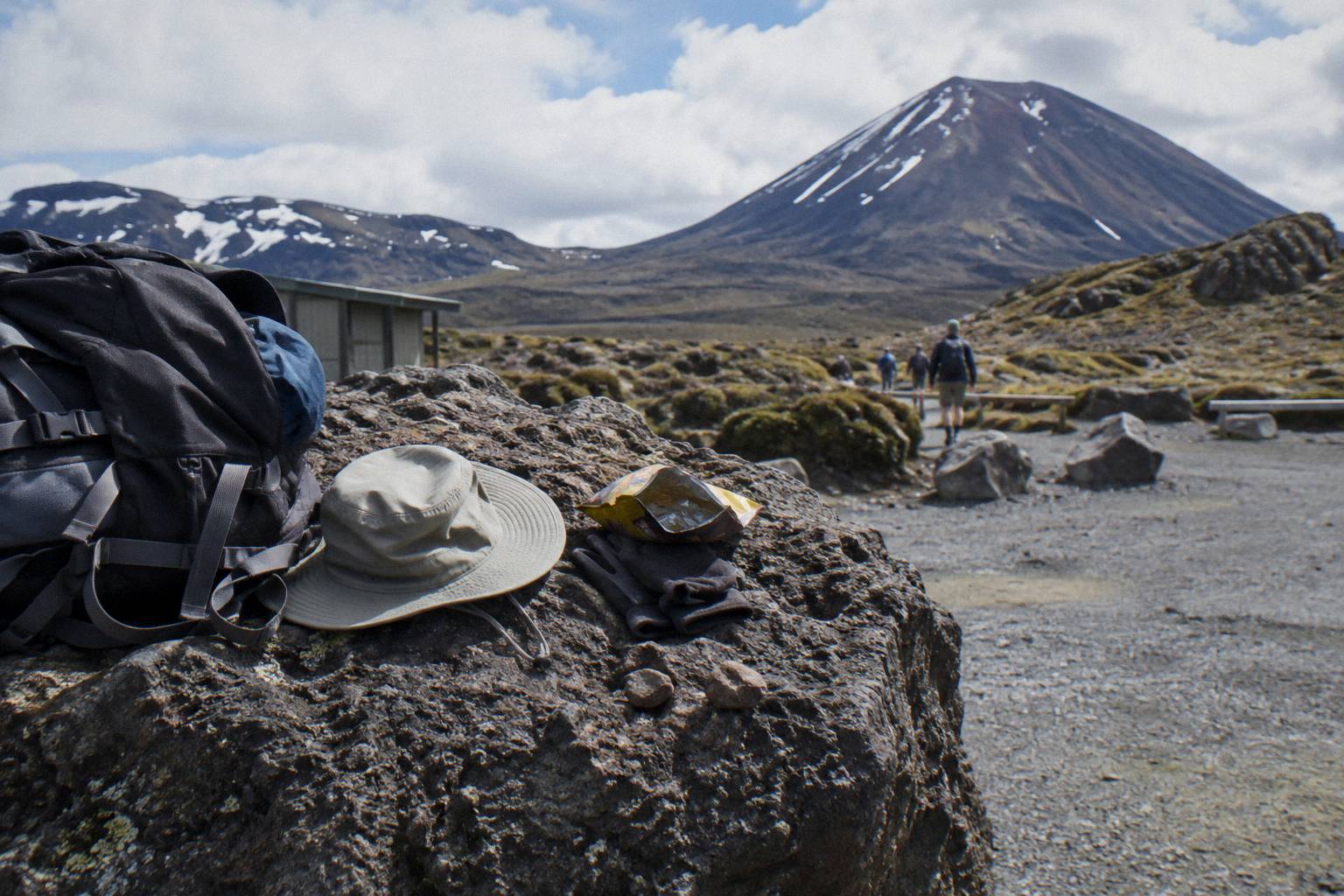
The second cluster of mistakes is about the feet. New boots on a High-fitness alpine track is a blister factory, and the long Ketetahi descent after the Emerald Lakes is where the damage gets done. Thin cotton athletic socks fold, hold grit and hold moisture. A walker whose footwear has done fewer than a few good walks before this one is taking a real risk with the second half of the day. The fitness side of that same question is covered in the guide to fitness for the climb to the Emerald Lakes.
The third cluster is about stopping. The Emerald Lakes stop is the emotional heart of the day and the coldest twenty minutes many walkers spend, because the basin funnels wind, the walking stops and the sweat cools. Walkers in a hurry leave a warm layer behind, then cut the stop short. Plan the pause into the clothing: something warm accessible at the top of the pack, not buried under the lunch and the spare water. And a note on the waterways themselves: DOC's cultural guidance asks visitors not to touch or enter any of the alpine lakes, so no one should be packing swimwear for the lakes; the full picture is in swimming in the Emerald Lakes.
| Mistake | Where It Bites | Fix |
|---|---|---|
| Jeans or cotton t-shirt | Devil's Staircase, then the ridge | Merino or synthetic base layer |
| Brand-new boots | Ketetahi descent | Break boots in over several walks |
| Shorts only | Red Crater ridge and lakes basin | Trousers plus shell over-trousers |
| No warm layer at the lakes stop | Emerald Lakes basin | Fleece at the top of the pack |
| Sunscreen left in the car | South Crater, the whole descent | Pocket-size tube, reapplied at lunch |
Do The Guided Tours Include Any Gear?
The three Adrift Tongariro guided tours state that crampons and ice axes are supplied for winter conditions if required, plus a clothing and footwear allowance. No shuttle product on this route states any gear, food or drink, which means on a shuttle day every item of kit is your own responsibility. On all Adrift tours lunch is not included, so bring your own.
That distinction is the clearest practical reason a winter walker chooses a guided day. DOC's May to October requirements, crampons, ice axe, helmet, competency and avalanche gear for independent trips, are demanding, and renting or carrying that kit yourself only makes sense if you know how to use it. Gear facts belong to specific products and are never transferable between them. The Adrift Tongariro premium guided hike covers the traction gear within the booking, from NZ$450 per person, free cancellation up to 14 days before, rated 4.6 across 242 reviews, and reaching the Emerald Lakes with a guide. The Adrift Tongariro full-day guided Crossing, rated 4.7 across 278 reviews, is the same format with its price shown on the booking page. The Adrift Tongariro private guided Crossing, rated 4.5 across 30 reviews, offers the same guided format privately, though it is non-refundable, and its price is on the booking page.
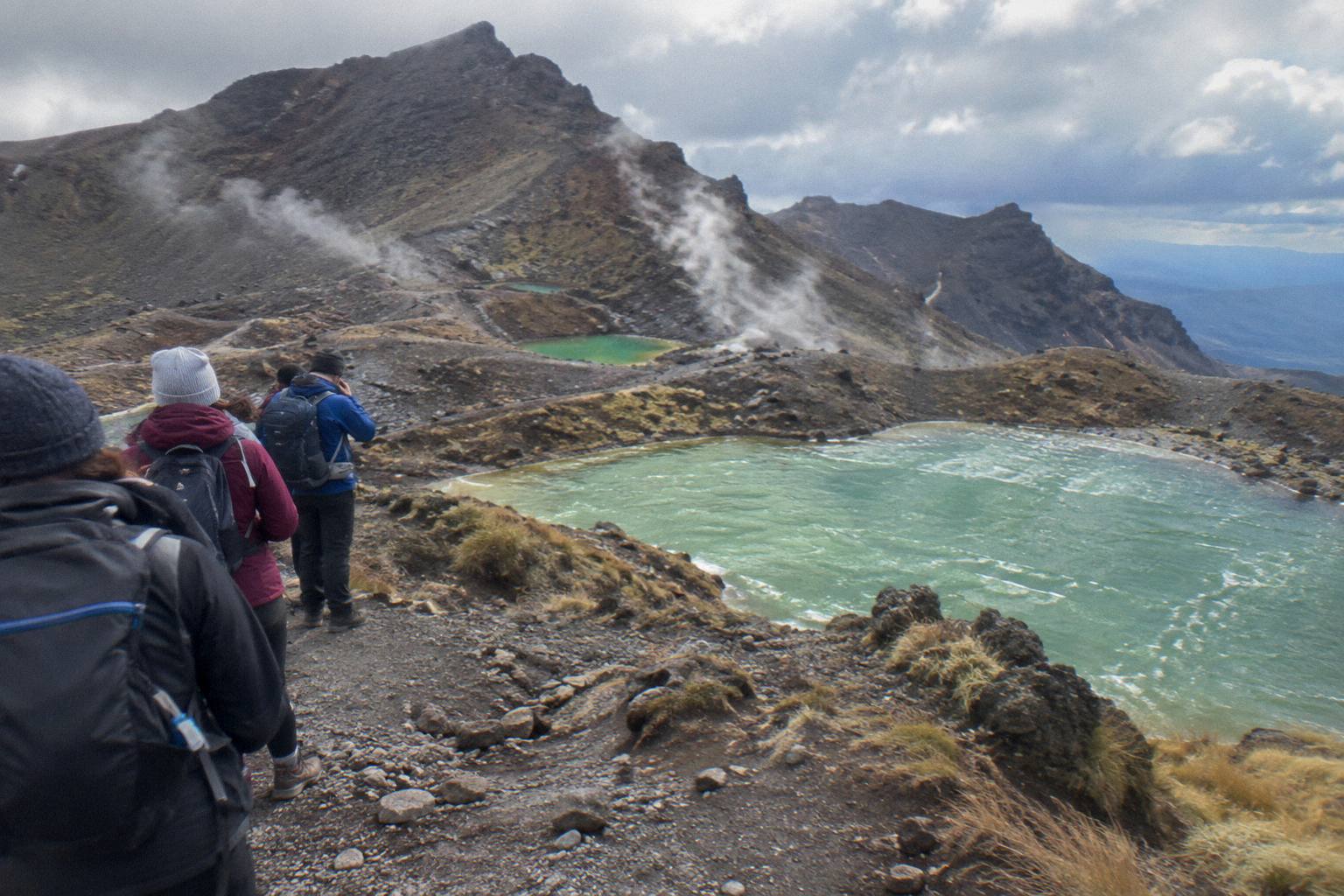
On the shuttle side, the deal is transport, full stop. The Tongariro Expeditions Crossing shuttle from Taupo or Turangi, from NZ$75 per person, rated 4.7 across 431 reviews with free cancellation up to 24 hours before, moves you between town and track; it is a shuttle with transfer options from Taupo or Turangi, not a guided walk. The Dempsey Buses return bus from National Park Village, from NZ$90 per person, rated 4.8 across 72 reviews with the same 24-hour cancellation window, is likewise a shuttle, in this case a round trip, and children under 6 are excluded. Neither supplies, states or implies any gear: what you wear and carry is entirely the contents of your own pack.
There is also a booking step that sits underneath all of this. DOC operates a free booking system for the Crossing that is recommended in the peak season and needed for shuttle and guided bookings, and it costs nothing to complete. Clothing is only half the preparation; the admin is the other half, and it is the cheaper half by far.
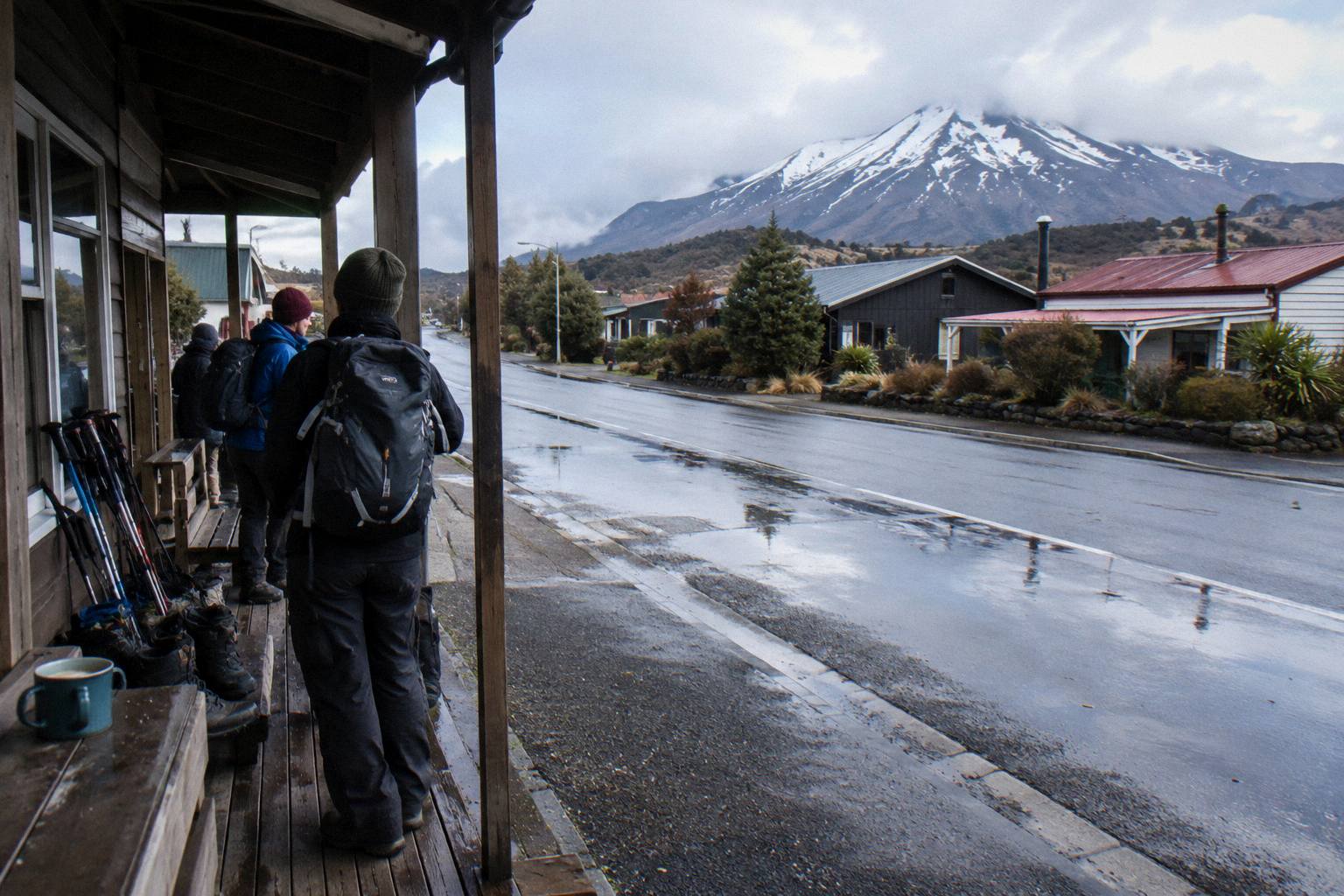
A Packing Checklist For The Emerald Lakes Day
Pack the three layers plus a spare warm layer, broken-in boots worn in, merino or synthetic socks and blister plasters, a waterproof and windproof shell, sun hat, sunscreen and sunglasses, gloves and a warm hat, plenty of water, and food and lunch, since lunch is not included on guided days. In winter add the DOC-listed alpine kit unless a guided tour is supplying it, and keep the warm layers where you can reach them fast.
The list below assumes a summer day, November to April. Trim nothing from the sun and shell lines even on a forecast that looks perfect, because the forecast at the road end is not the forecast at Red Crater. Water quantity matters on a 7 to 8 hour walk with few fill points. Winter walkers should treat the DOC winter essentials as the starting point, not a suggestion, and read the full winter guide before finalizing anything.
| Category | Items |
|---|---|
| Worn | Boots, walking trousers, base layer, mid layer, sun hat, sunglasses |
| In the pack | Shell jacket, over-trousers, warm hat, gloves, fleece spare, blister kit |
| Sun | Sunscreen pocket tube, lip balm with SPF |
| Food and drink | Lunch, snacks, at least 2 litres of water per person |
| Navigation and safety | Map or track app, headlamp, whistle, first aid basics |
| Winter additions | Crampons, ice axe, helmet, avalanche gear, spare warm layers |
Two habits make the day easier. First, repack the night before with the warm layers at the top, so the Emerald Lakes stop costs you thirty seconds rather than a full unpack on a windy crater floor. Second, check the DOC alerts, the NIWA advisory and the GeoNet volcanic page the evening before and again in the morning, because operators run only when the advisory and forecast allow, and an early start with a plan B walk such as Taranaki Falls or Tama Lakes, both named by DOC as alternatives when conditions are poor, beats a wasted drive. The basics of the day's logistics are laid out in the guide to the shuttle timetable for the Emerald Lakes day.
Whether you end up on a guided day with traction gear supplied, a one-way park-and-ride from Ketetahi, or a simple return bus from National Park Village, the clothing math is the same: three layers, no cotton, solid boots, sun protection, and something warm within reach at the lakes. For everything the walk itself involves, Tongariro Emerald Lakes Hike collects the route, the seasons and the booking options in one place.
Common Questions About What To Wear Hiking To The Emerald Lakes
Do I Need Hiking Boots For The Tongariro Alpine Crossing?
For most walkers, yes. The track covers 20.2 km of stepped rock, lava fields and a steep scree descent to the Emerald Lakes, and boots with ankle support and a lugged sole handle all of it. Strong, experienced walkers manage in trail shoes in dry summer conditions, but the scree above the lakes is where soft footwear lets ankles down.
Can I Wear Shorts On The Crossing?
Walkers do, but trousers or leggings are the better choice. The ridge from South Crater to Red Crater is exposed to wind and wind-driven grit, the volcanic rock is sharp, and sunburn on the backs of the knees is common at altitude. Convertible trousers give you both options across a 7 to 8 hour day.
What Should I Wear In Winter On The Crossing?
DOC classifies the May to October route as Expert, with snow, ice, avalanche risk and sub-zero temperatures, and lists crampons, an ice axe, a helmet, competency in their use, and avalanche gear as essentials for independent trips. The Adrift Tongariro guided tours supply crampons and ice axes for winter conditions if required, and going with a guide is DOC's own recommendation in that season.
Do I Need To Bring My Own Lunch On A Guided Tour?
Yes. Lunch is not included on the Adrift Tongariro guided tours, so bring your own along with snacks and plenty of water. On shuttle days, everything you eat, drink and wear is your own to carry, since no shuttle product states any food or drink.
Is Sun Protection Really Necessary In Cool Weather?
Very much so. New Zealand UV is strong and increases with altitude, and much of the track sits high with no shade. A cool, windy morning on the South Crater can still deliver a significant burn, and glare off late-season snow near Red Crater makes sunglasses important too.
Should I Pack Swimwear For The Emerald Lakes?
No. DOC's cultural guidance records a request from Kaumatua Te Ngaehe Wanikau that visitors respect the maunga tapu by not touching or entering any of the waterways, including the alpine lakes. The lakes are for looking at and photographing, not swimming in.
Keep Reading
The clothing decision sits inside a bigger day, and the pages below cover the pieces that surround it: the walk itself, how long it takes, and the weather system that makes the layers necessary in the first place. Read them together and the whole Emerald Lakes day, from pack to finish line, is planned end to end.
- The Emerald Lakes on the Tongariro Crossing
- Walk Time To The Emerald Lakes
- Weather Above The Emerald Lakes on the Crossing
Dress for four seasons in one day, and the Emerald Lakes will be the highlight they deserve to be.