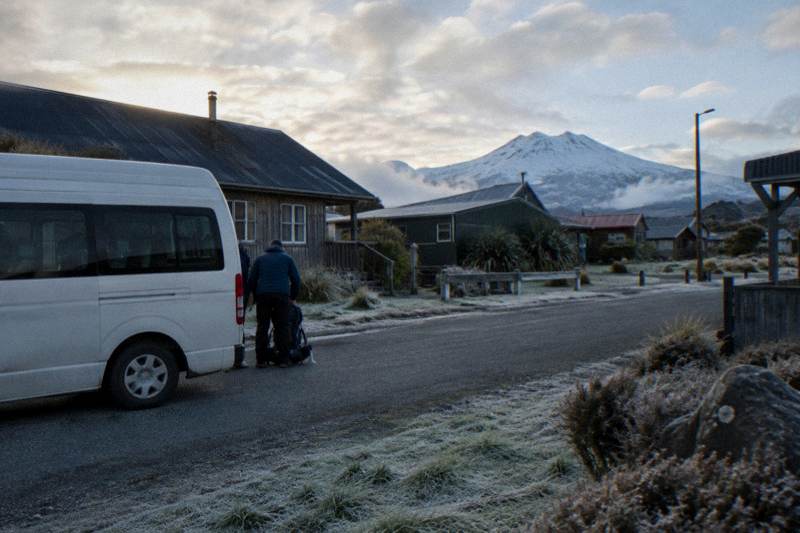
Summer Tongariro Crossing: The Emerald Lakes Without Snow
From November to April the Tongariro Alpine Crossing sheds its snow and becomes a 20.2 km day walk to the Emerald Lakes, with a 4 hour parking limit at the road ends and a choice between a guided hike and a shuttle.
Short answer
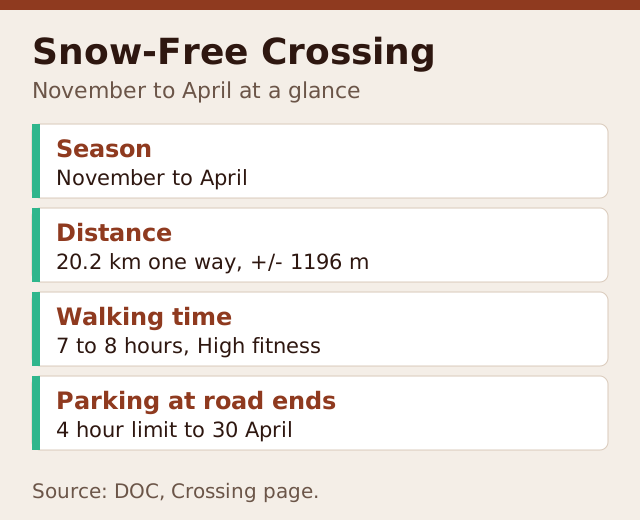
The snow-free season on the Tongariro Alpine Crossing runs November to April, when DOC grades the track 7 to 8 hours over 20.2 km with an elevation change of plus and minus 1196 m. Parking is limited to 4 hours at the road ends from Labour weekend to 30 April, so most walkers book a shuttle or a guided hike to reach the Emerald Lakes.
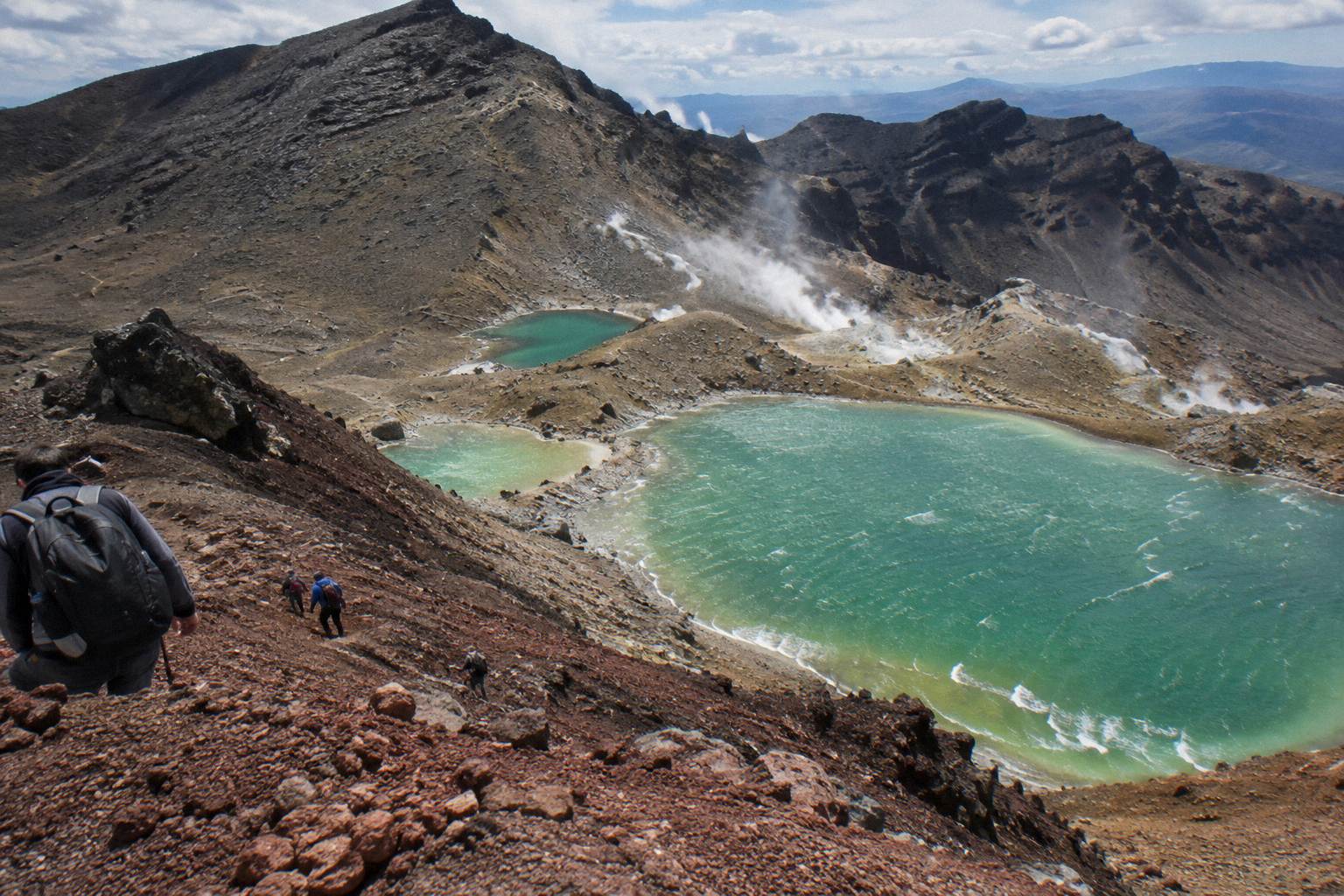
From November to April the Tongariro Alpine Crossing is a different walk to the one winter photographs show. The snow retreats, the scree above Red Crater turns to bare red and ochre rubble, and the three green pools DOC names Nga Rotopounamu, the Emerald Lakes, sit open in their craters without a rim of ice. The trade-off is a busy track, a 4 hour parking limit at both road ends, and heat on the climb. This guide covers what the snow-free season actually involves, and how the guided hikes and shuttles compare for a summer day on the maunga.
Tongariro is New Zealand's oldest national park, established in 1894, and a dual World Heritage area recognised for both its landscapes and its cultural significance to Ngati Hikairo ki Tongariro of Ngati Tuwharetoa. That status brings rules with it, and the summer season is when most of them bite: the booking system, the parking restrictions, and the request not to touch or enter the alpine lakes.
Shuttles run to a one-way or round-trip pattern from National Park Village, Ketetahi, Taupo, Turangi and Ohakune. Guided summer crossings are run by Adrift Tongariro, and the premium guided hike carries free cancellation up to 14 days before. Kaumatua Te Ngaehe Wanikau asks visitors to respect the maunga tapu by not touching or entering any of the waterways, including the alpine lakes.
This page sits in the season group alongside the winter guide. Start from the season hub at Tongariro Emerald Lakes Hike for the full picture, or read on for the summer detail.
Quick Facts: The Crossing In The Snow-Free Months
The headline numbers for a snow-free day are fixed: 20.2 km one way, an elevation change of plus and minus 1196 m, a high point of 1886 m at Red Crater, and 7 to 8 hours of walking from November to April. DOC grades the fitness requirement High even in the friendliest month, and caps parking at 4 hours at the road ends. The DOC booking system is free and recommended.
| Fact | Figure |
|---|---|
| Season length | November to April |
| Track length | 20.2 km one way |
| Elevation change | Plus and minus 1196 m |
| Highest point | Red Crater, 1886 m |
| Walking time Nov to Apr | 7 to 8 hours |
| Walking time May to Oct | 9 hours |
| Track standard in summer | Intermediate tramping track |
| Fitness | High |
| Parking at road ends | 4 hour maximum, Labour weekend to 30 April |
| DOC booking system | Free and recommended |
The numbers come from the Department of Conservation's own track page, which is the single source worth trusting for anything about distance, time or conditions on the Crossing. Volcanic alert levels and weather change daily, so the page and its alerts are the live reference; nothing printed here is a promise about the day you walk.
When Is The Crossing Actually Snow-Free?
The snow-free season runs from November to April, when DOC grades the Crossing as an intermediate tramping track needing high fitness, 7 to 8 hours for the 20.2 km, and a climb to Red Crater at 1886 m. From May to October the same track is an expert route in snow and ice, so summer is the window in which an averagely fit walker can do it without alpine skills.
Snow on the Crossing is not a clean line. It lingers in the shaded gullies of the South Crater and on the steep scorie descent off Red Crater well into December in some years, and an early autumn dump can arrive in April. DOC's own framing is the honest one: 7 to 8 hours and intermediate from November to April, 9 hours and expert, with alpine skills essential, from May to October. If a walker wants certainty of bare ground underfoot, January through March is the safest stretch of the season, with the caveat that no forecast can be promised this far out.
The shoulder months cut both ways. November can deliver crisp clear days with almost nobody on the track, or fresh snow on the highest section. April brings cooler walking temperatures and the first chance of an early winter closure. Neither month is a bad choice, but both deserve a check of the DOC alerts and the NIWA advisory before committing to a date. The rule that holds all season is that guided operators and shuttles run only when DOC's advisory and the forecast allow, and days do get turned back.
What Summer Changes On The Track Itself
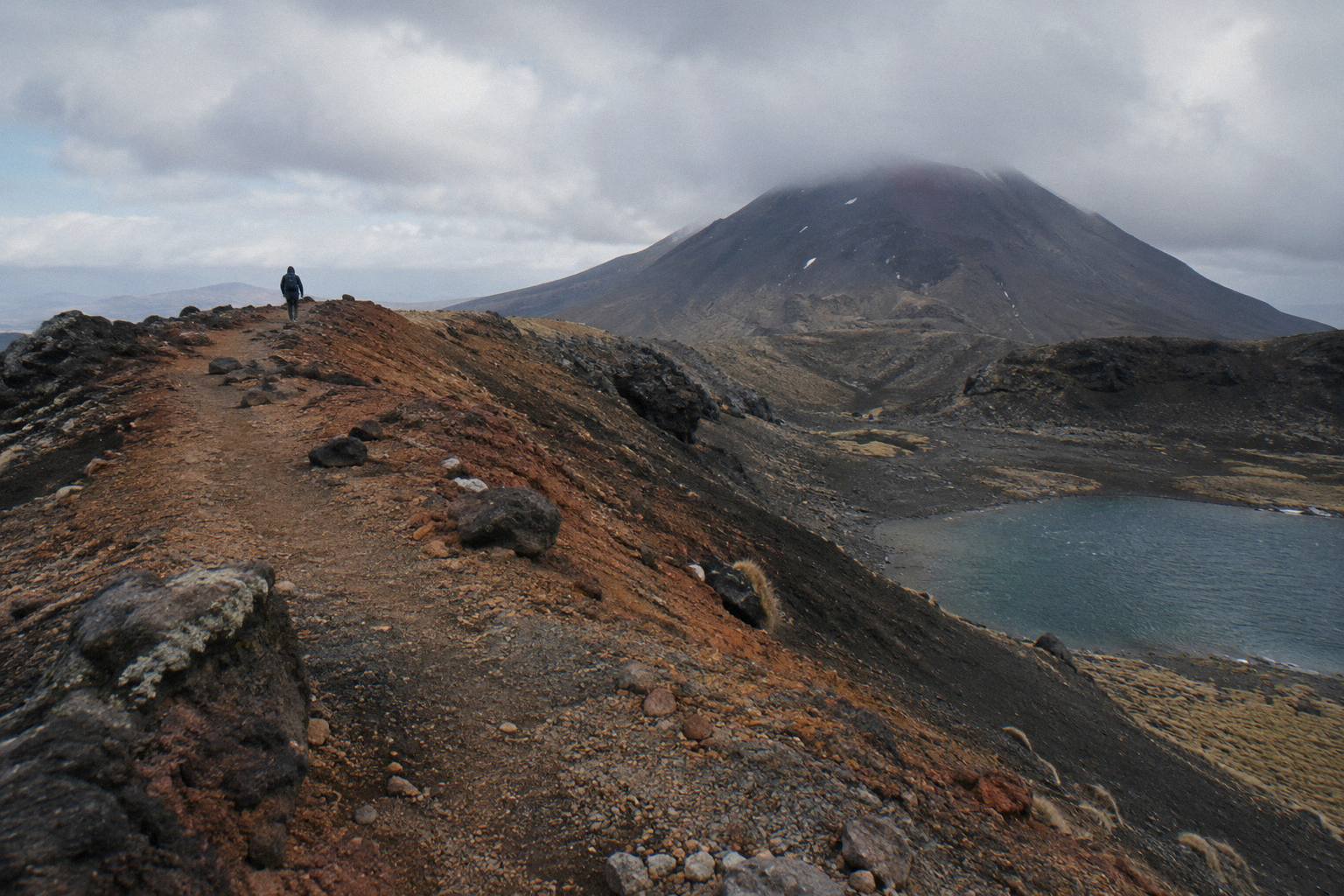
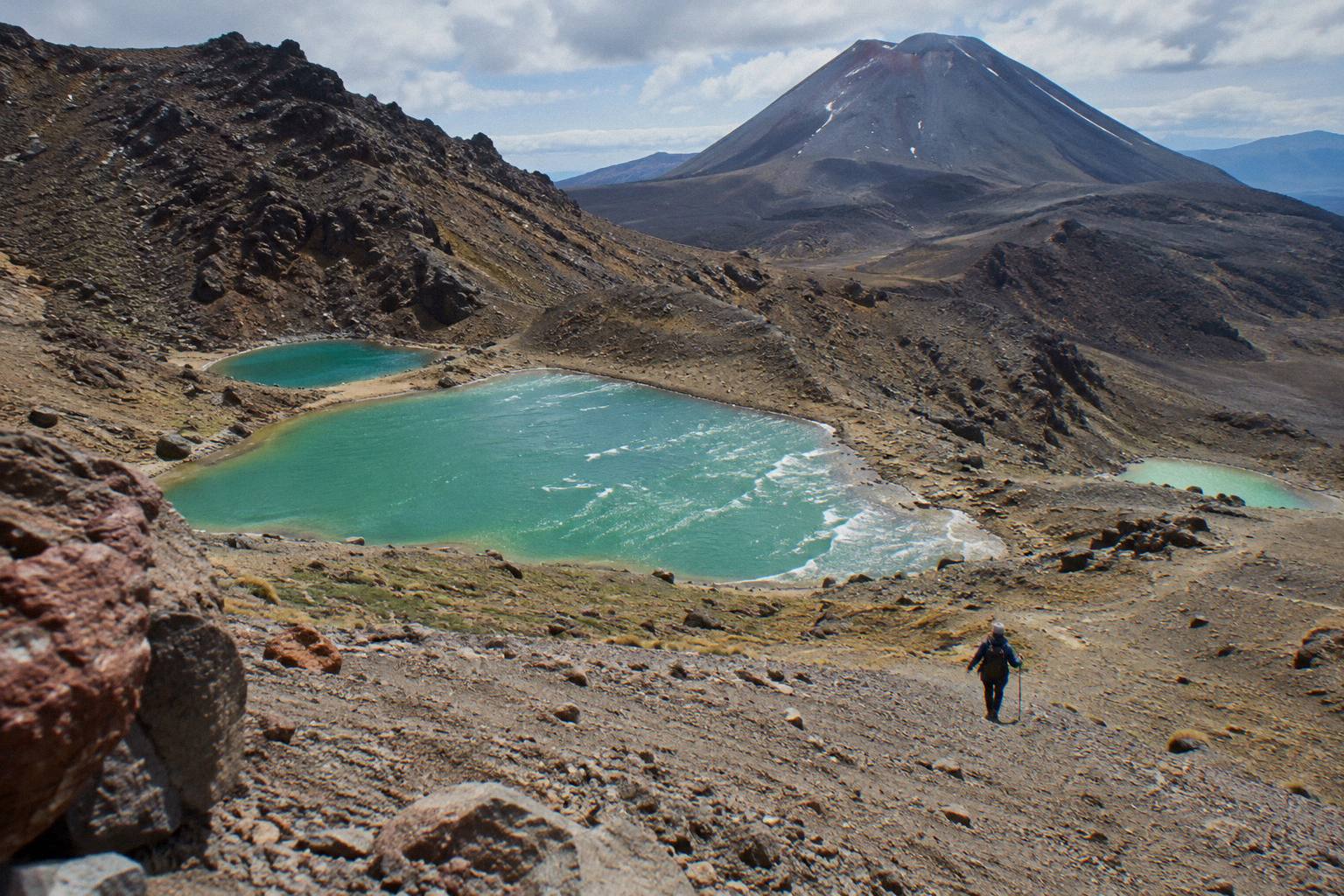
Bare ground changes the walk more than most first-time visitors expect. The Devil's Staircase becomes a slog of steps and loose gravel rather than a kicked-step climb, the Central Crater becomes a flat, exposed bowl with no shade at all, and the descent from Red Crater to the Emerald Lakes, which DOC describes as a steep scorie drop, is loose rubble that punishes tired knees. The track is dry, dusty in places, and hard on feet that came in soft shoes. The full route to the lakes is covered in its own guide, including the time you should allow for the whole climb.
Guided Hike Or Shuttle: The Core Summer Decision
Every summer walker makes one decision before anything else: a guided hike with transport, gear and a mountain-savvy guide built in, or a shuttle that moves you and leaves the walk to you. Adrift Tongariro runs the three guided tours; the premium guided hike is from NZ$450 per person with free cancellation up to 14 days before. The cheapest shuttle fare is from NZ$68 per person, one way with a park-and-ride.
The guided case rests on three things a shuttle cannot supply. First, judgment: a guide who reads the morning's weather advisory and the cloud line over Red Crater, and makes the call on whether the day goes. Second, equipment and clothing allowance: the Adrift Tongariro guided tours carry crampons and ice axes for winter conditions if required, plus a clothing and footwear allowance, which matters on a November day with snow still in the gullies. Third, the interpretation: the maunga's story, the 2012 Te Maari eruption, and why the lakes are the colour they are, told by someone who knows it. Lunch is not included, so bring your own.
The shuttle case rests on independence and price. A walker with high fitness, decent boots and a fine-weather window does not need a guide in July conditions, let alone February ones, and from NZ$68 per person the Ruapehu Scenic Shuttles Ketetahi park-and-ride gets a car and a walker to the right places at a fraction of the guided fare. The compromise, and it is a real one, is that on a marginal day nobody turns you back. DOC, GeoNet and NIWA publish the advisory, but the decision to walk is yours. The deeper comparison lives in the guide to whether a guide is worth it for the Emerald Lakes section.
Getting To The Start: Parking, Shuttles And Departure Points
The summer parking rule does most of the deciding for you: from Labour weekend to 30 April, parking at the Mangatepopo and Ketetahi road ends is limited to 4 hours, while the walk itself takes 7 to 8 hours, so a self-drive day is effectively impossible. DOC suggests booking a shuttle, and adds that there is no summer parking for Crossing walkers at Mangatepopo car park, with a private car park near Ketetahi.
The pattern matters more than the operator. Shuttles depart from National Park Village, Ketetahi, Taupo, Turangi, Ohakune and, for overnight products, Auckland, and there are two shapes of shuttle day, each suiting a different kind of walker.
| Shuttle pattern | How it works | Who it suits |
|---|---|---|
| One-way park-and-ride | Park at Ketetahi, ride to Mangatepopo, walk the Crossing back to your own car | Independent walkers with a car who want to finish at the vehicle |
| Round-trip shuttle | Ride from your village to Mangatepopo, walk down to Ketetahi, ride back | Walkers staying in National Park Village, Ohakune, Taupo or Turangi without a car |
The one-way park-and-ride is the quieter bargain of the two. The Ruapehu Scenic Shuttles Ketetahi park-and-ride is from NZ$68 per person, rated 4.8 across 670 reviews, with free cancellation up to 24 hours before. The Owhango Adventures Ketetahi park-and-ride, rated 4.8 across 333 reviews, and the Tongariro Expeditions Ketetahi park-and-ride, rated 4.3 across 106 reviews, run the same shape from the same car park, both with free cancellation up to 24 hours before. Remember the direction: you walk from Mangatepopo down to Ketetahi, where your car is waiting, and the shuttle leg is one way at the start.
The round-trip shape suits anyone based in a village. The Tongariro Crossing Shuttles round-trip from National Park Village is the most reviewed tour here, rated 4.7 across 890 reviews, from NZ$75 per person with free cancellation up to 24 hours before. The Dempsey Buses return bus from National Park Village is rated 4.8 across 72 reviews, from NZ$90 per person. From further afield, the Tongariro Expeditions Crossing shuttle from Taupo or Turangi is rated 4.7 across 431 reviews, from NZ$75 per person, and the Backyard Tours mountain shuttle from Turangi is from NZ$120 per person. All four carry free cancellation up to 24 hours before.
One constraint shapes every shuttle plan: DOC says shuttle buses generally do not operate in winter, May to late October, while guided trips include transport. In summer that is not a problem, but a walker planning a late-April trip should confirm the date sits inside the operator's season. Auckland is a different animal again, a long way south, and the overnight products that solve it, the Kiwi Road Tours private transfer and the ExperienceKart private three-day tour, both leave the Crossing as a self-guided leg rather than a guided one.
The Emerald Lakes In Summer: What You Actually See
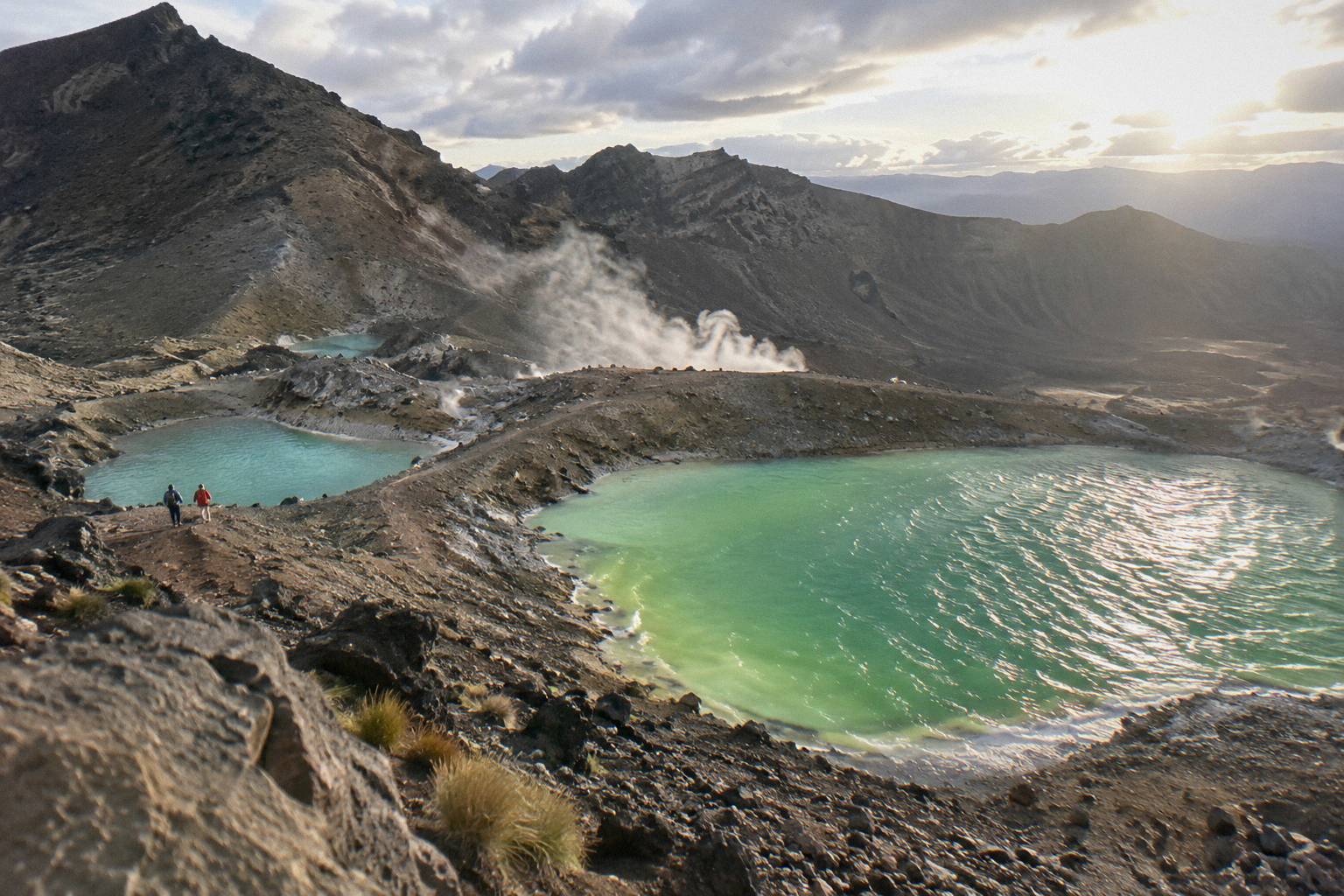
In the snow-free months the three Emerald Lakes sit in bare volcanic craters roughly two thirds of the way through the walk, reached by a steep scorie descent from Red Crater at 1886 m, the track's high point. DOC's own description calls them the vivid Nga Rotopounamu, the Emerald Lakes. Their colour holds through the season, but the surrounding experience changes month to month with snowline, crowd and light.
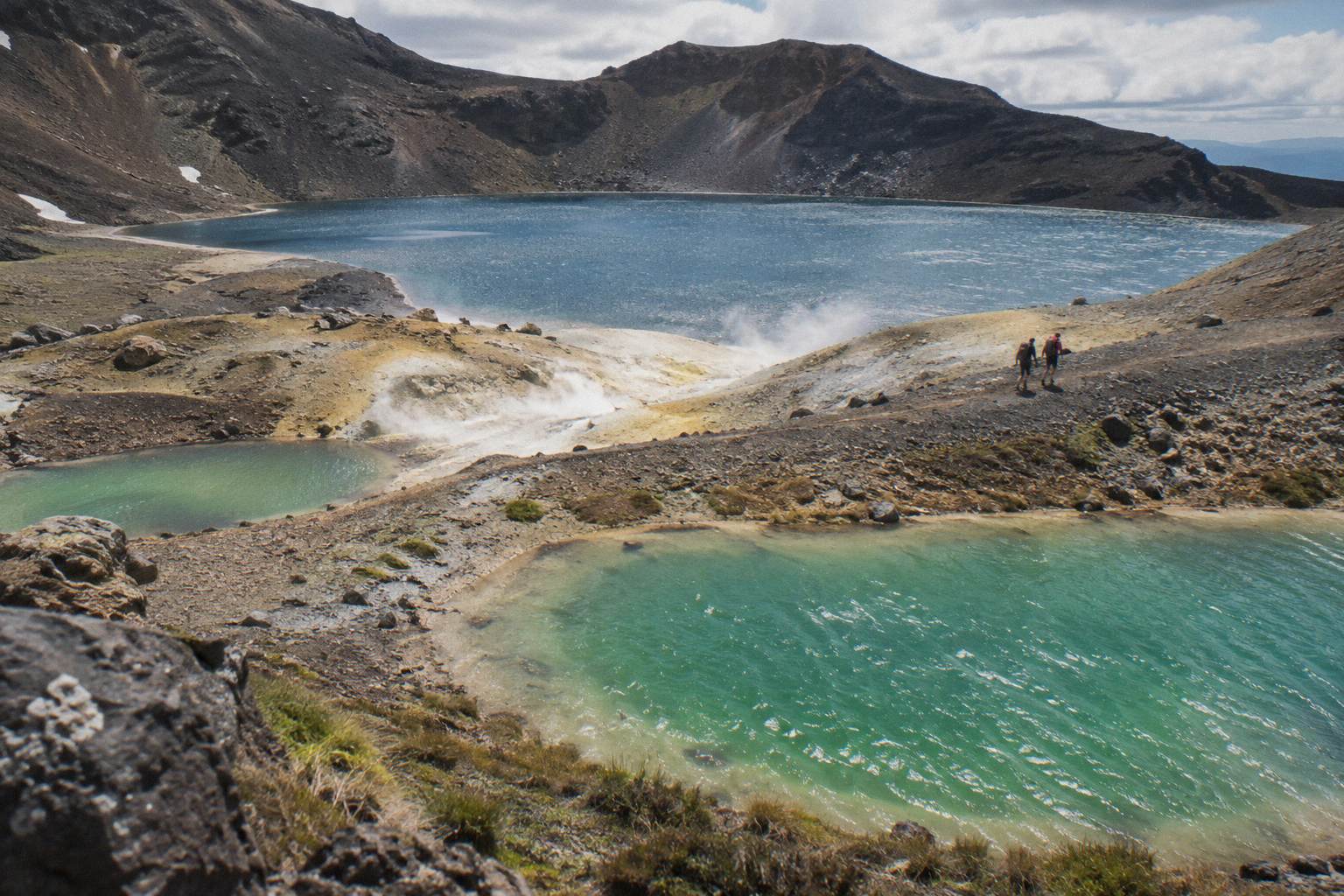
The minerals that give the lakes their green come from volcanic activity that has not finished: steam still vents from the ground above them, and the 2012 Te Maari eruption, lower on the northern slopes, is a recent reminder that this is a live volcanic field. Alert levels are published daily by GeoNet and are not printed here, because they change; the structural point is that volcanic hazard is managed through DOC's advisory system, and guided operators are bound by DOC rules not to run on hazardous-weather-warning days. The science and the colour story are unpacked in the guide to why the Emerald Lakes have their colours.
Summer also changes what the lakes ask of you. The water looks like an invitation, and on a hot February day it looks like exactly that, but the cultural request is explicit and DOC prints it: Kaumatua Te Ngaehe Wanikau asks visitors to respect the maunga tapu by not touching or entering any of the waterways, including the alpine lakes. The lakes are tapu. Photography from the track and the ridge above is the whole of the interaction, and the guide to swimming in the Emerald Lakes covers the reasoning in full.
How Long You Get To Spend There
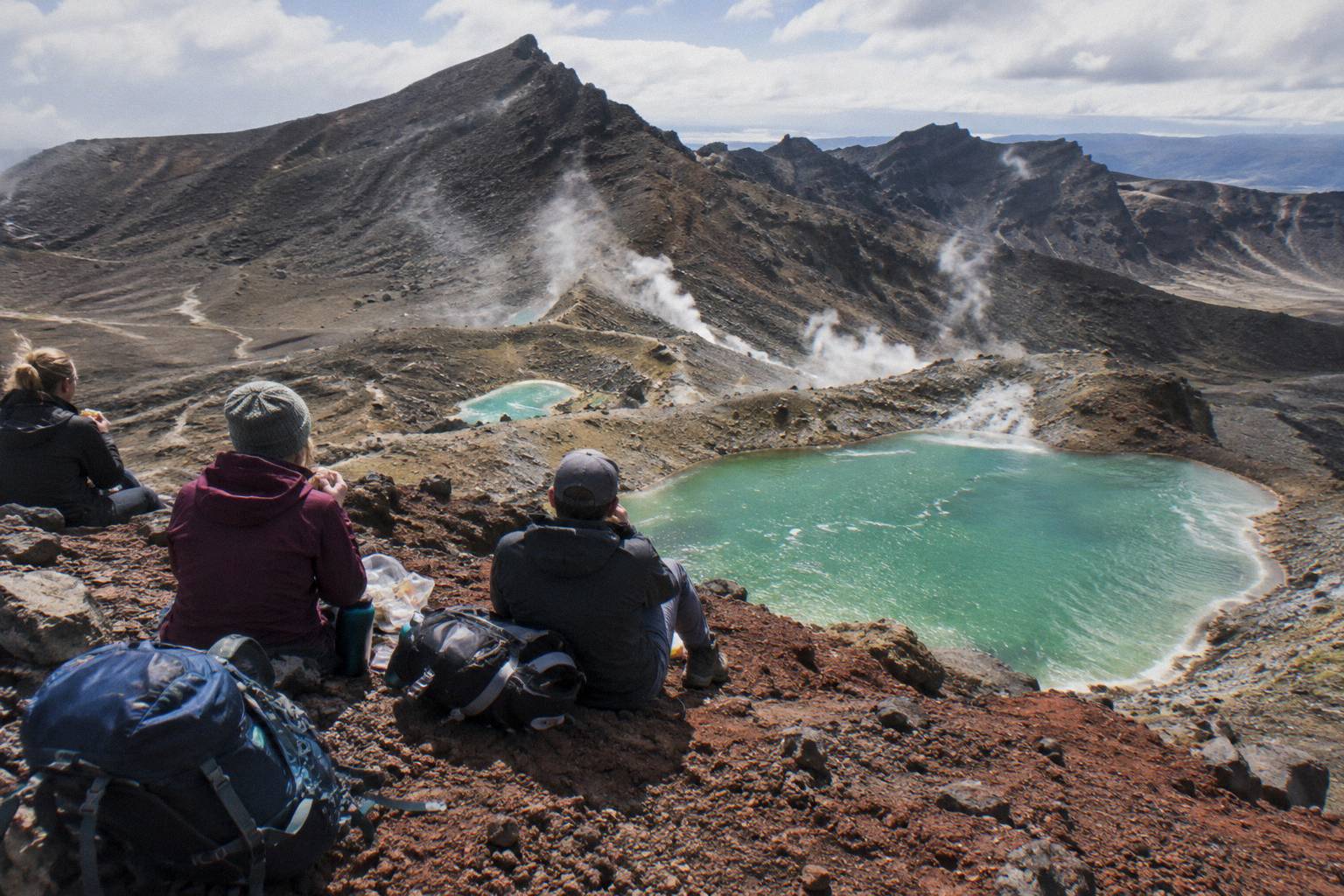
The lakes are a natural lunch spot, and most groups spend somewhere between twenty minutes and an hour on the benches above them, shaded by nothing, before dropping toward the Blue Lake and the long northern descent. There is no timed exit and no fee to stand beside them; the walk is free, the DOC booking system is free and recommended, and the money in the day goes to transport or a guide. How long to linger is a function of your knees, your water supply and the crowd behind you, and the blog post on how much time you need at the Emerald Lakes works through it.
Heat, Water And Safety On A Summer Crossing
A summer Crossing is not a soft walk. It is 20.2 km with an elevation change of plus and minus 1196 m, much of it high and exposed with no shade, no water you should take, and no shelter, and DOC grades the fitness requirement High even in the friendliest month. Heat, dehydration and sunburn are the ordinary summer hazards; the volcanic and weather hazards are managed by the advisory system, not by the season.
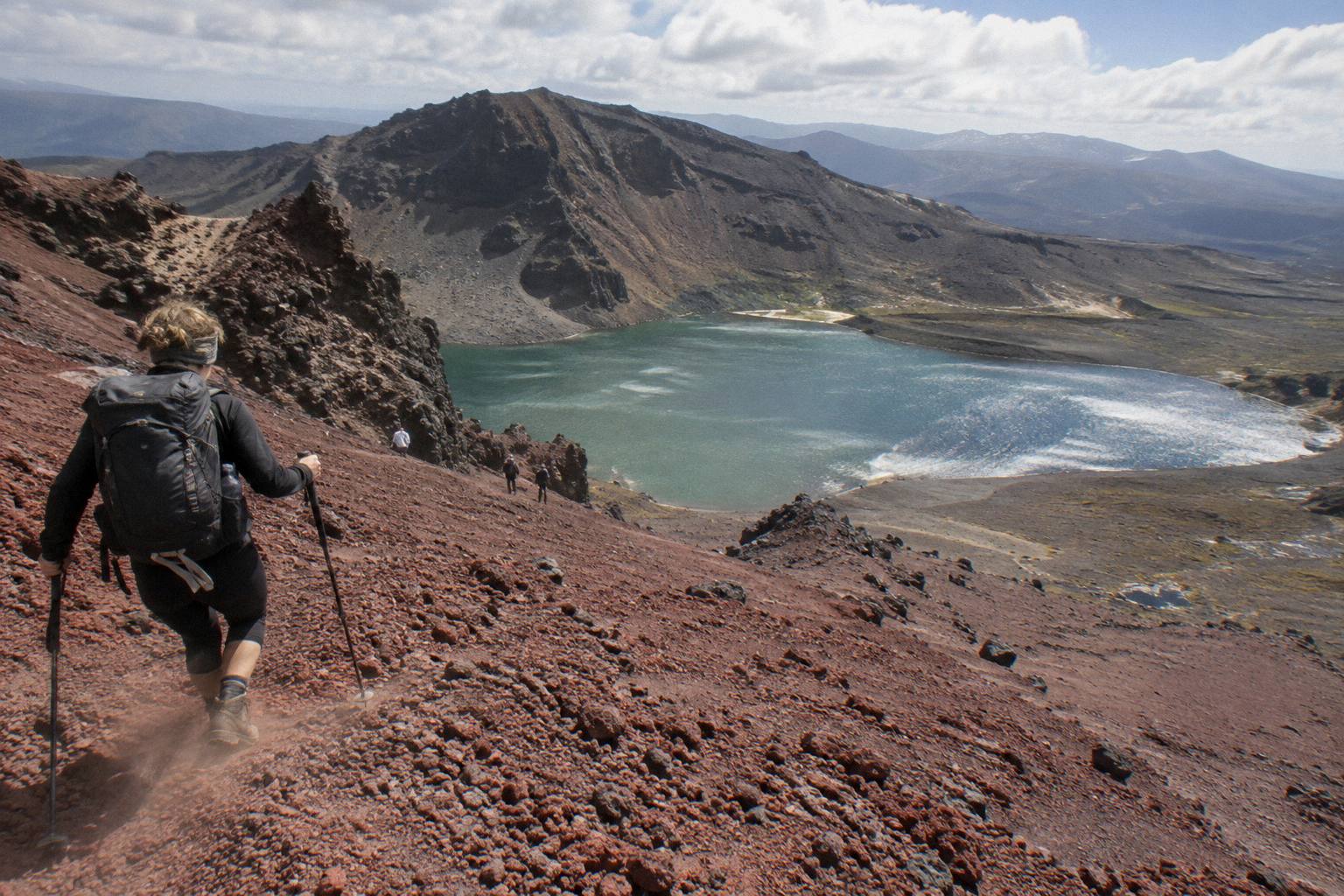
The practical list is short and unforgiving. Carry more water than feels reasonable, because the exposed section from the Devil's Staircase to the Emerald Lakes has nothing to drink and the cultural request puts the lakes and the steaming streams out of bounds anyway. Sun protection is not optional: the UV in New Zealand summer is fierce, the volcanic rock throws heat back up, and the Blue Lake section is hours of unbroken exposure. Footwear needs to be real boots, a point the post on whether you need hiking boots for the Tongariro Crossing makes in detail. The clothing guide at what to wear hiking to the Emerald Lakes covers the layers, because even a February day can end with wind chill on the Ketetahi descent.
| Summer hazard | Where it bites | The plain fix |
|---|---|---|
| Heat and dehydration | South Crater to the Emerald Lakes, no shade or water | Carry generous water, start early |
| Sunburn | The whole ridge section above the saddle | Hat, sunscreen, sleeves |
| Loose scree descent | Red Crater down to the Emerald Lakes | Slow, planted steps, poles help |
| Crowds | Devil's Staircase and the lakes in peak months | An early start, or a shoulder month |
| Weather turnaround | Any exposed section, any month | Check the NIWA advisory, know the turnaround rule |
The last row is the one that saves people. Summer weather on the Crossing can still deliver gale wind on the ridge, whiteout cloud, or a hazardous-weather warning that stops guided trips and shuttles from running at all. If the advisory is bad, DOC names alternative walks when conditions are poor: Taranaki Falls and Tama Lakes, both lower, both excellent, both covered in the guide to other hikes when the Crossing closes.
Booking, Costs And What The Money Buys
The walk itself is free and the DOC booking system is free and recommended, and you need a booking in place for shuttle and guided products, so the money in a summer day is transport or a guide. Firmed per-person fares run from NZ$68 for the Ruapehu Scenic Shuttles Ketetahi park-and-ride to NZ$450 for the Adrift Tongariro premium guided hike. Not every product prints a fare, so the booking page is the source for those.
| Product | Shape | From, per person | Rating and reviews | Cancellation |
|---|---|---|---|---|
| Adrift Tongariro premium guided hike | Guided full Crossing | NZ$450 | 4.6, 242 reviews | Free, 14 days before |
| Adrift Tongariro full-day guided Crossing | Guided full Crossing | Fare on the booking page | 4.7, 278 reviews | Non-refundable |
| Adrift Tongariro private guided Crossing | Guided private | Fare on the booking page | 4.5, 30 reviews | Non-refundable |
| Ruapehu Scenic Shuttles Ketetahi park-and-ride | One-way shuttle | NZ$68 | 4.8, 670 reviews | Free, 24 hours before |
| Tongariro Crossing Shuttles round-trip | Return shuttle | NZ$75 | 4.7, 890 reviews | Free, 24 hours before |
| Dempsey Buses return bus, National Park Village | Return shuttle | NZ$90 | 4.8, 72 reviews | Free, 24 hours before |
| Tongariro Expeditions shuttle, Taupo or Turangi | Shuttle transfers | NZ$75 | 4.7, 431 reviews | Free, 24 hours before |
| Backyard Tours mountain shuttle, Turangi | Shuttle | NZ$120 | 3 reviews so far | Free, 24 hours before |
Round-trip shuttles land between NZ$75 and NZ$120 depending on where you start, with Taupo and Turangi bases at the lower end of that band and the Backyard Tours mountain shuttle from Turangi at the top of it. The private guided option deserves a line of its own. The Adrift Tongariro private guided Crossing, rated 4.5 across 30 reviews, gives a summer walker the guide, the same departures from 53 Carroll Street in National Park Village, and a party of one's own; it is non-refundable, and the fare is on the booking page. It suits a small group that wants the guided experience without strangers, or a family weighing the age minimums, which are 12 on both Adrift guided products named here. DOC separately advises the track is not recommended for children under 10.
One quieter truth about the money. The Auckland products solve distance rather than difficulty: the Kiwi Road Tours private transfer from Auckland and the ExperienceKart private three-day tour both package travel and lodging, with the Crossing as a self-guided leg, and neither is a guided Crossing tour. Judge both on the itinerary.
Mistakes That Trip Up Summer Walkers
The recurring summer mistakes are driving to the road end expecting to park all day, underestimating 20.2 km of volcanic terrain because the photos look like a viewpoint, touching or entering the lakes against the cultural request, and starting too late into the busiest months. Each one is avoidable with a single decision made the day before, and most of them are solved by the same two moves: book transport, and start early.
| Mistake | What actually happens | The fix |
|---|---|---|
| Driving to Mangatepopo in summer | No Crossing parking, or a 4 hour limit against a 7 to 8 hour walk | Book a shuttle or guided tour |
| Swimming in or touching the lakes | Breach of the maunga tapu request DOC prints | Photograph from the track only |
| A late start in peak season | Crowds, afternoon cloud buildup, a rushed descent | Start with an early shuttle |
| No water above the saddle | Dehydration on the exposed ridge | Carry generous water from the start |
| Boots left at home | The scree descent punishes soft shoes | Proper boots, worn in |
| Ignoring the morning advisory | Walking into a warning day that guides and shuttles decline | Check DOC alerts and the NIWA advisory |
The subtler trap is calendar thinking. Snow-free does not mean safe, and summer does not mean open: the advisory system runs every day of the year, and a January northwest gale closes the ridge as surely as a July snowfall. The blog post on what time to start the Tongariro Crossing and the guide to a sunrise start for the Emerald Lakes both make the case that the early hours are the best hours on this track in any season.
Common Questions About Summer On The Crossing
When Is The Tongariro Crossing Snow-Free?
The snow-free season runs November to April. DOC grades the track 7 to 8 hours in those months at an intermediate tramping standard; from May to October it becomes a 9 hour expert route in snow and ice.
Can You Park At The Tongariro Crossing In Summer?
Only for 4 hours. From Labour weekend in late October to 30 April, parking restrictions at the road ends cap stays at 4 hours while the walk takes 7 to 8, and DOC suggests booking a shuttle. DOC also says there is no summer parking for Crossing walkers at Mangatepopo car park.
How Hot Does The Summer Crossing Get?
Summer days on the exposed ridge can be genuinely hot, with no shade or drinking water from the South Crater to the Emerald Lakes, and UV that burns fast. Carry generous water, cover up, and start early.
Do You Need A Guide For The Summer Crossing?
In summer, no, if you have high fitness, sound gear and a good-weather window. A guide adds weather judgment, a clothing and gear allowance, and interpretation, and DOC itself recommends a guide for the May to October route. The comparison guide covers the trade-off in full.
Can You Swim In The Emerald Lakes In Summer?
No. Kaumatua Te Ngaehe Wanikau asks visitors to respect the maunga tapu by not touching or entering any of the waterways, including the alpine lakes, and DOC prints that request on the track page.
What If The Weather Is Bad On A Summer Day?
Guided operators and shuttles run only when the DOC advisory and forecast allow, and days get cancelled. DOC names Taranaki Falls and Tama Lakes as alternative walks when conditions are poor.
Keep Reading
The guide to the best month to hike to the Emerald Lakes compares the whole year, the post on the best time of year for the Crossing answers the same question from the blog side, and winter on the Crossing shows the other season in full.