Ketetahi Car Park And Finish: What Comes After The Emerald Lakes On The Crossing
The walk does not end at the Emerald Lakes. Here is what the final third of the Tongariro Alpine Crossing involves, how the Ketetahi car park works, and which one-way park-and-ride shuttles solve the transport problem at the finish.
Short answer
The Emerald Lakes sit roughly two thirds of the way along the 20.2 km Crossing. After them you descend past Blue Lake and the Ketetahi hot springs to finish at Ketetahi Road. Parking at the road ends is limited to 4 hours from Labour weekend to 30 April, so most walkers book a one-way park-and-ride shuttle from the Ketetahi car park, from NZ$68 per person.
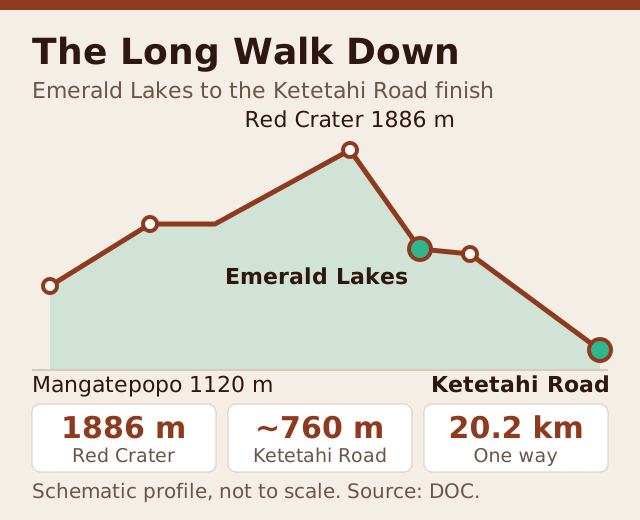
The Emerald Lakes are the photograph everyone comes for, but they are not the end of the walk. DOC measures the Tongariro Alpine Crossing at 20.2 km one way with 1196 m of elevation change, and the three lakes sit well before the two thirds mark, below Red Crater at 1886 m. Everything after them is a long, knee-heavy descent on the far side of the mountain, ending at Ketetahi Road, where parking is restricted to 4 hours from Labour weekend in late October to 30 April and DOC suggests booking a shuttle. That transport problem at the finish is what this guide solves.
The pages on how the descent from Red Crater to the lakes works and the distance and elevation to the Emerald Lakes cover the climb up to this point. This one covers the last third: the track itself, the Ketetahi car park, and the one-way park-and-ride products built around it, including the Ruapehu Scenic Shuttles Ketetahi park-and-ride, the Owhango Adventures Ketetahi park-and-ride and the Tongariro Expeditions Ketetahi park-and-ride.
| Quick Fact | Detail |
|---|---|
| Full Crossing distance | 20.2 km one way (DOC) |
| Elevation change | +/- 1196 m (DOC) |
| Highest point | Red Crater, 1886 m |
| Walking time Nov to Apr | 7 to 8 hours (DOC) |
| Walking time May to Oct | 9 hours, Expert route (DOC) |
| Finish point | Ketetahi Road, about 760 m |
| Summer parking at road ends | 4 hour maximum, Labour weekend to 30 April |
| Cultural request | Do not touch or enter any waterways, including the alpine lakes |
What Does The Track After The Emerald Lakes Look Like?
The section after the Emerald Lakes is a gentler but longer half of the walk: from the lakes the track crosses the flat Central Crater, climbs a short rise to Blue Lake, then begins the long descent of the northern slopes to Ketetahi Road at 760 m (DOC). DOC describes the descent from Red Crater to the vivid Nga Rotopounamu, the Emerald Lakes, as steep scree, and by comparison everything after the lakes feels civilized. The trade-off is length. Legs that have already climbed the Devil's Staircase and the ridge to Red Crater now have to absorb a long, steady descent on paths that can be slippery in wet weather.
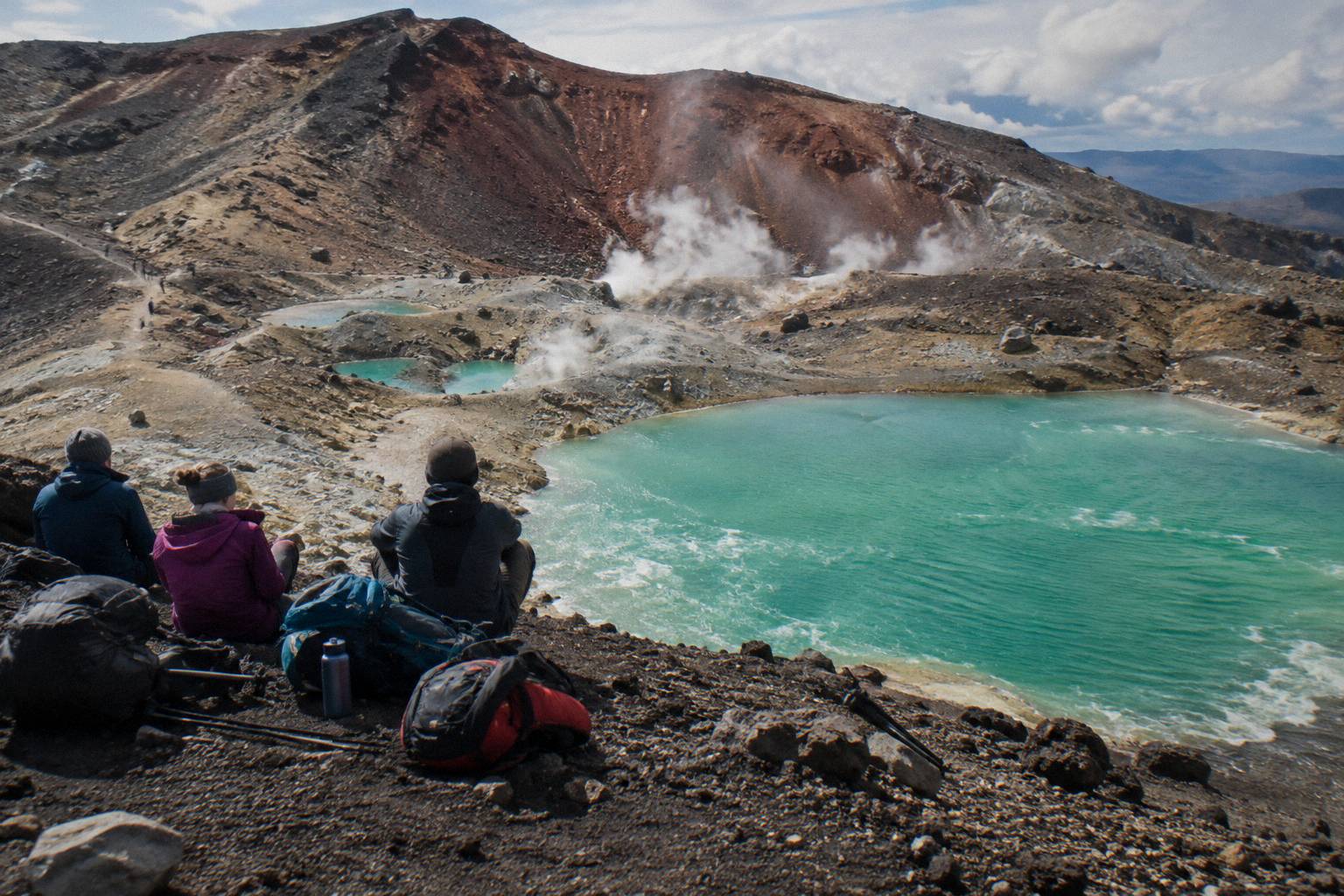
The first landmark past the lakes is the sidle track up to Blue Lake, a cold, pristine alpine lake just past Central Crater. Like the Emerald Lakes, it is tapu to Ngati Hikairo ki Tongariro of Ngati Tuwharetoa, and the request from kaumatua Te Ngaehe Wanikau, printed by DOC, asks visitors to respect the maunga tapu by not touching or entering any of the waterways, including the alpine lakes. That means no swimming and no filling bottles at Blue Lake either. The Blue Lake on the Crossing guide covers that section in detail.
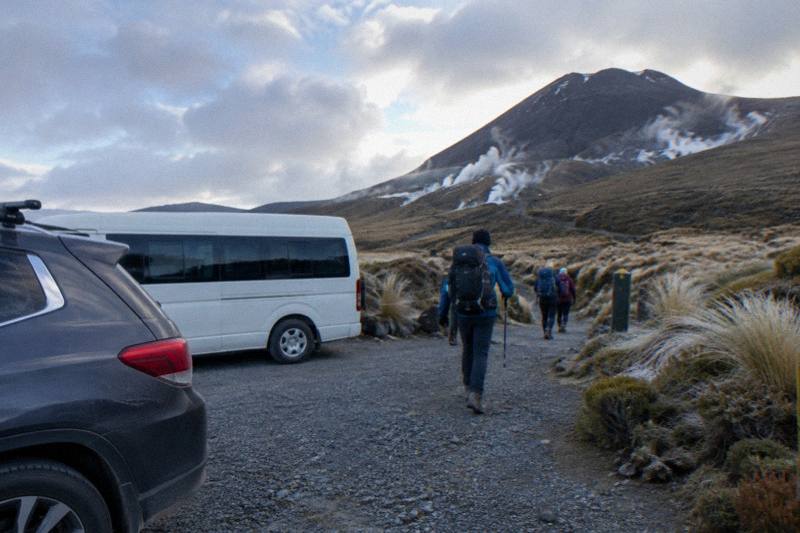
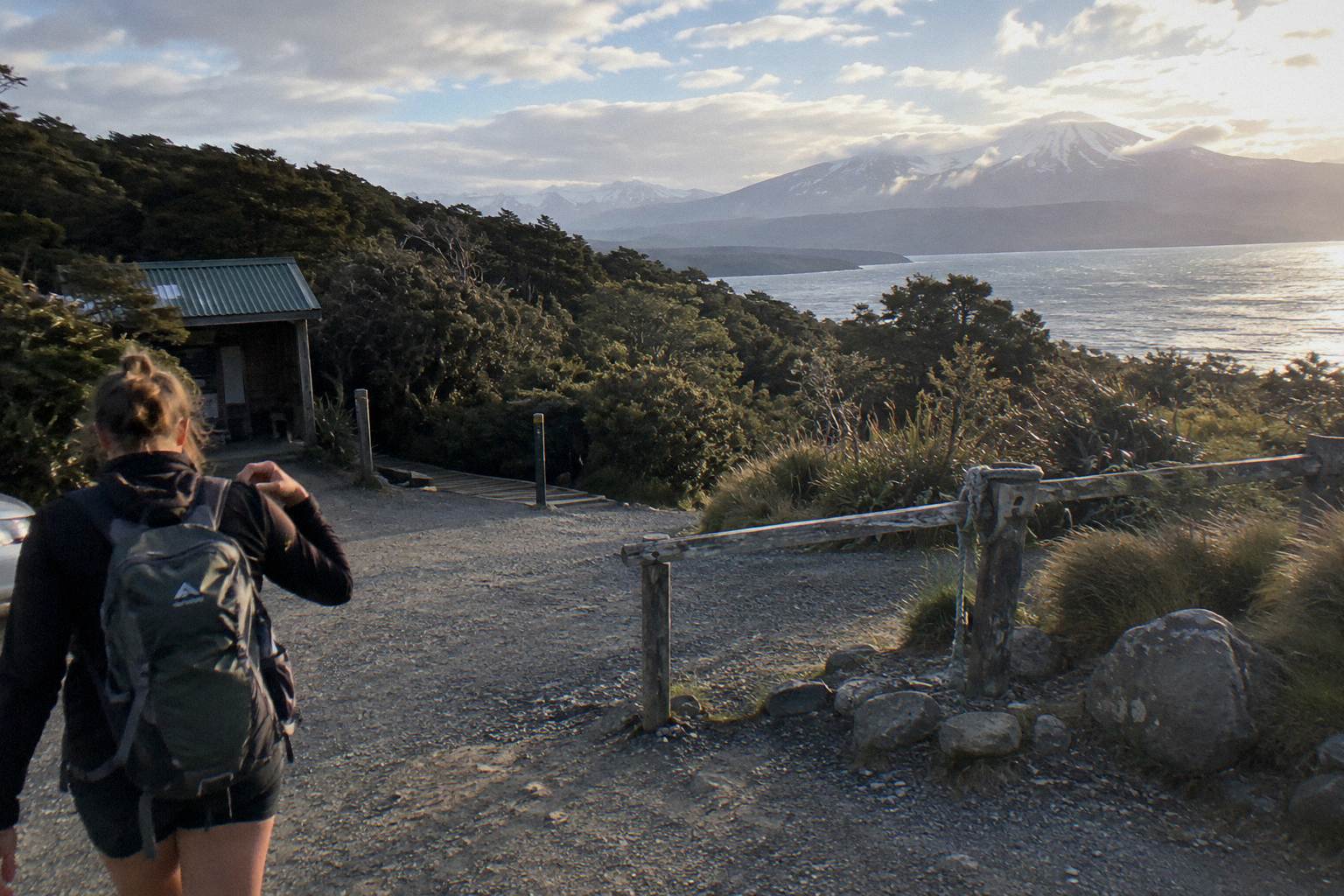
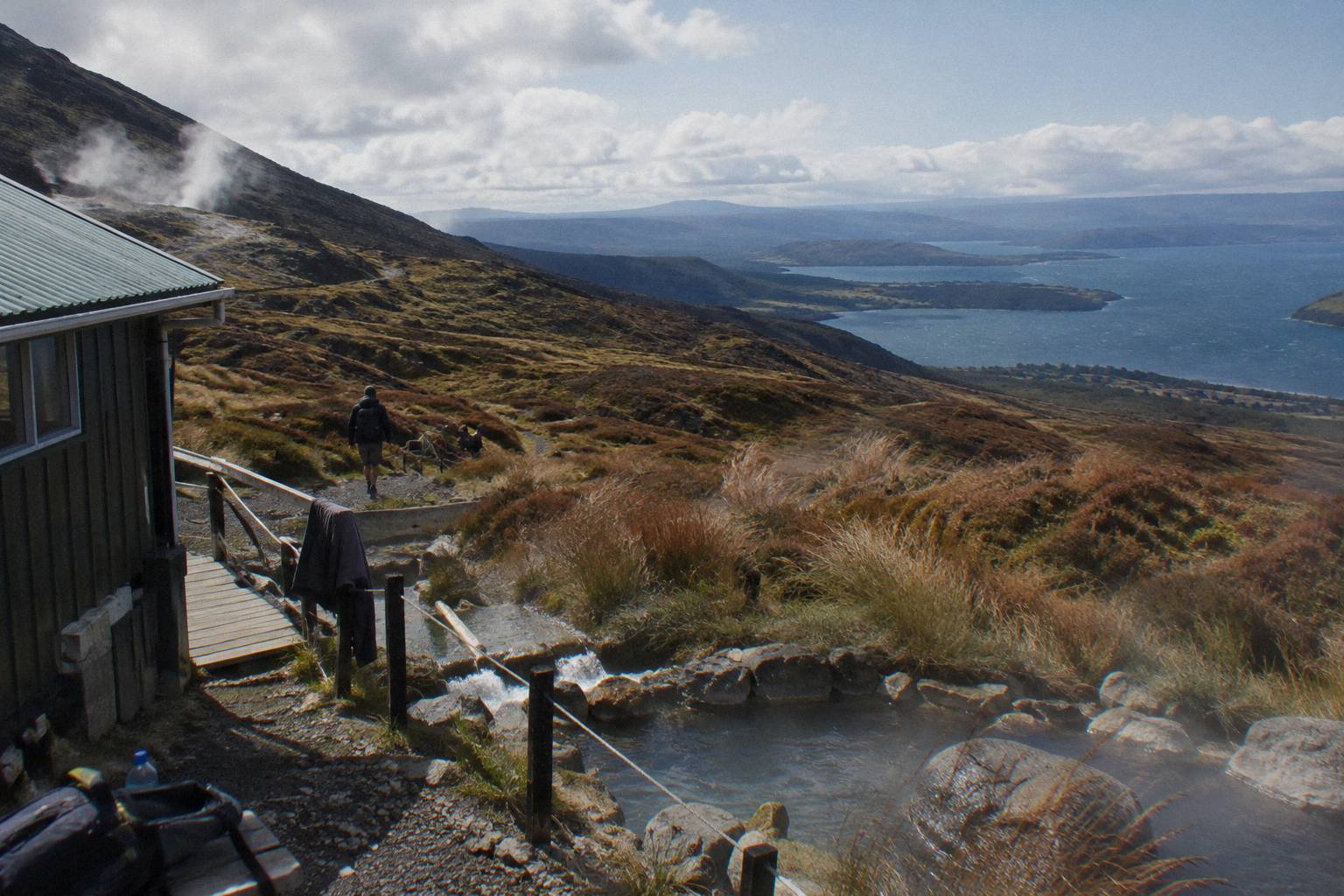
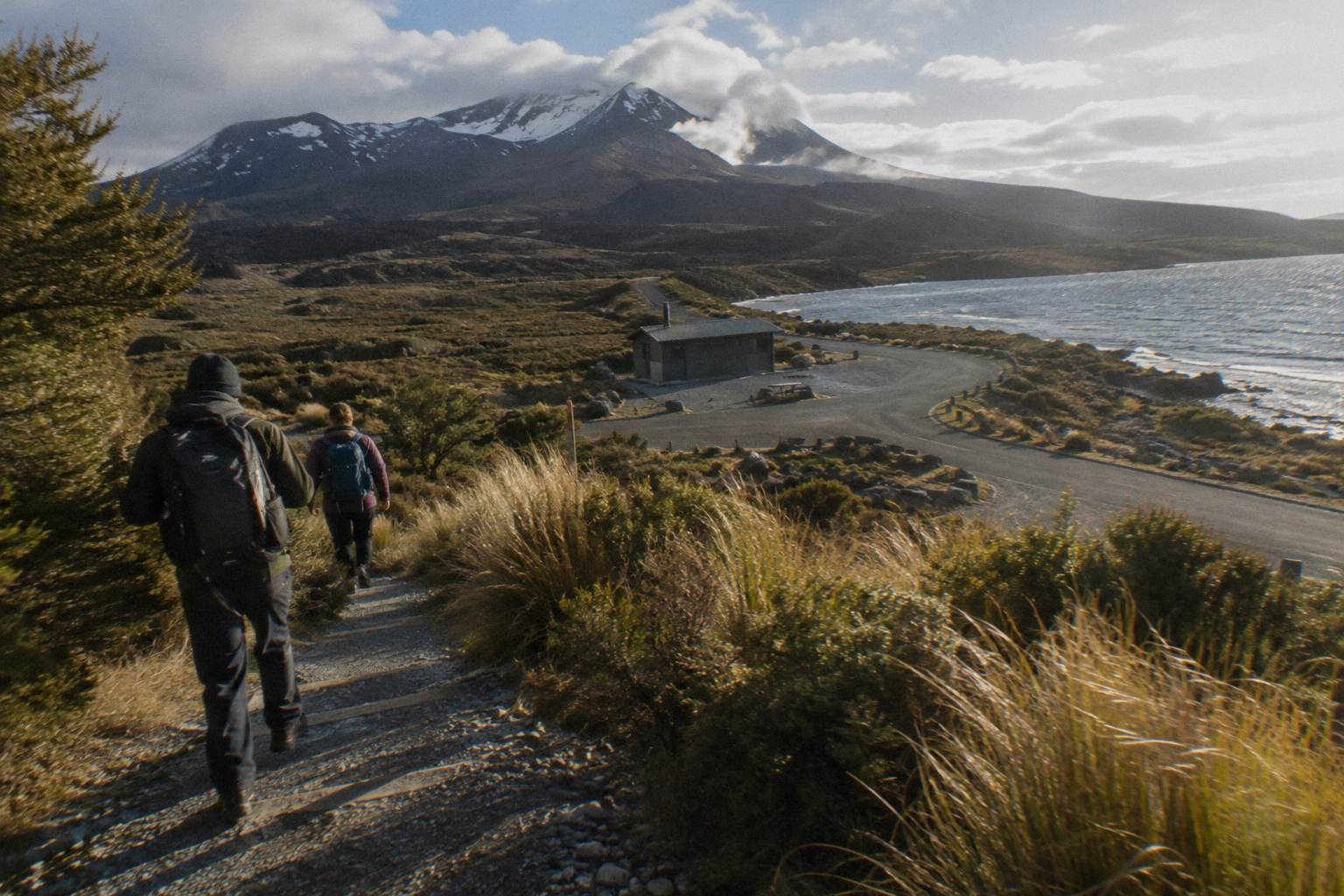
From the far side of Central Crater the track crosses the Ketetahi tipping point and begins the long descent. The views open across Lake Rotoaira and, on a clear day, much of the central North Island, conditions allowing. Volcanic hazard signage along this stretch marks the Te Maari eruption zone, a reminder that Tongariro is an active volcano; the mountain last erupted from Te Maari in 2012. DOC's volcanic risk page explains what the alert system is and where to check it. The final hour winds through forest, past the Ketetahi hot springs below the track, which are closed to the public, and out to the car park and shelter at Ketetahi Road.
How Does Transport Work When You Finish At Ketetahi?
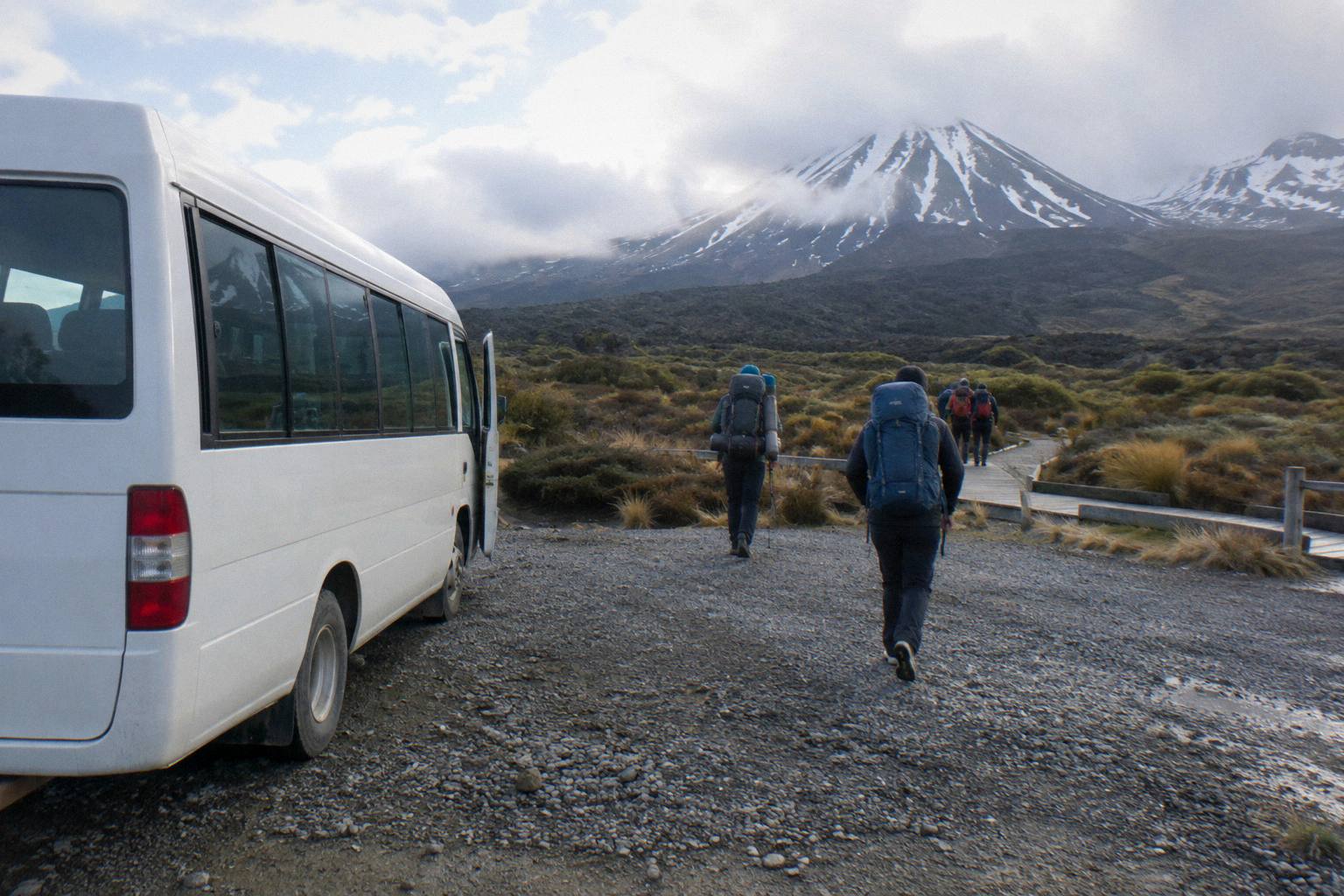
The standard summer solution is a reverse shuttle: park at the Ketetahi car park in the morning, take the one-way shuttle bus backwards to Mangatepopo, walk the Crossing in the normal direction, and finish at your own car with no waiting and no timetable anxiety. From Labour weekend in late October to 30 April, DOC restricts parking at the road ends to a 4 hour maximum, which rules out leaving a car for a full day's walk. DOC's own suggestion on the Crossing page is to book a shuttle. The reverse shuttle turns that restriction into a non-issue, because your car sits on private land near the finish rather than at a restricted road end.
Six operators sell exactly this product at the Ketetahi end. All are shuttles, none are guided: they move you, they do not walk with you. The Ruapehu Scenic Shuttles Ketetahi park-and-ride is rated 4.8 across 670 reviews and runs from NZ$68 per person, with free cancellation up to 24 hours before. The Owhango Adventures Ketetahi park-and-ride, rated 4.8 across 333 reviews, offers the same one-way format with free cancellation up to 24 hours. The Tongariro Expeditions Ketetahi park-and-ride, rated 4.3 across 106 reviews, offers the same 24 hour cancellation flexibility. Price and rating details for the others are on each booking page.
The alternative is the forward direction: start at Mangatepopo and book a return or one-way shuttle that collects you at Ketetahi Road after you finish. The Tongariro Crossing Shuttles round-trip from National Park Village is the most reviewed tour here at 4.7 across 890 reviews, from NZ$75 per person. It departs from the Park n Ride at 59 Findlay Street in National Park Village. From the Taupo side, the Tongariro Expeditions Crossing shuttle from Taupo or Turangi, rated 4.7 across 431 reviews, also runs from NZ$75 per person. Both offer free cancellation up to 24 hours before.
There is a genuine difference in how the day feels. With the reverse shuttle you finish at your own car, change shoes, eat, and drive when you like. With a return shuttle you finish at Ketetahi Road, a windy, exposed road end with a toilet and a shelter but little else, and you wait for your scheduled pickup. Neither is wrong. Independent walkers who value an early start and a self-paced finish tend to prefer the park-and-ride; travellers based in National Park Village or Taupo without a car have no choice and should book the round trip.
Is The Ketetahi Car Park The Same As The Track Finish?
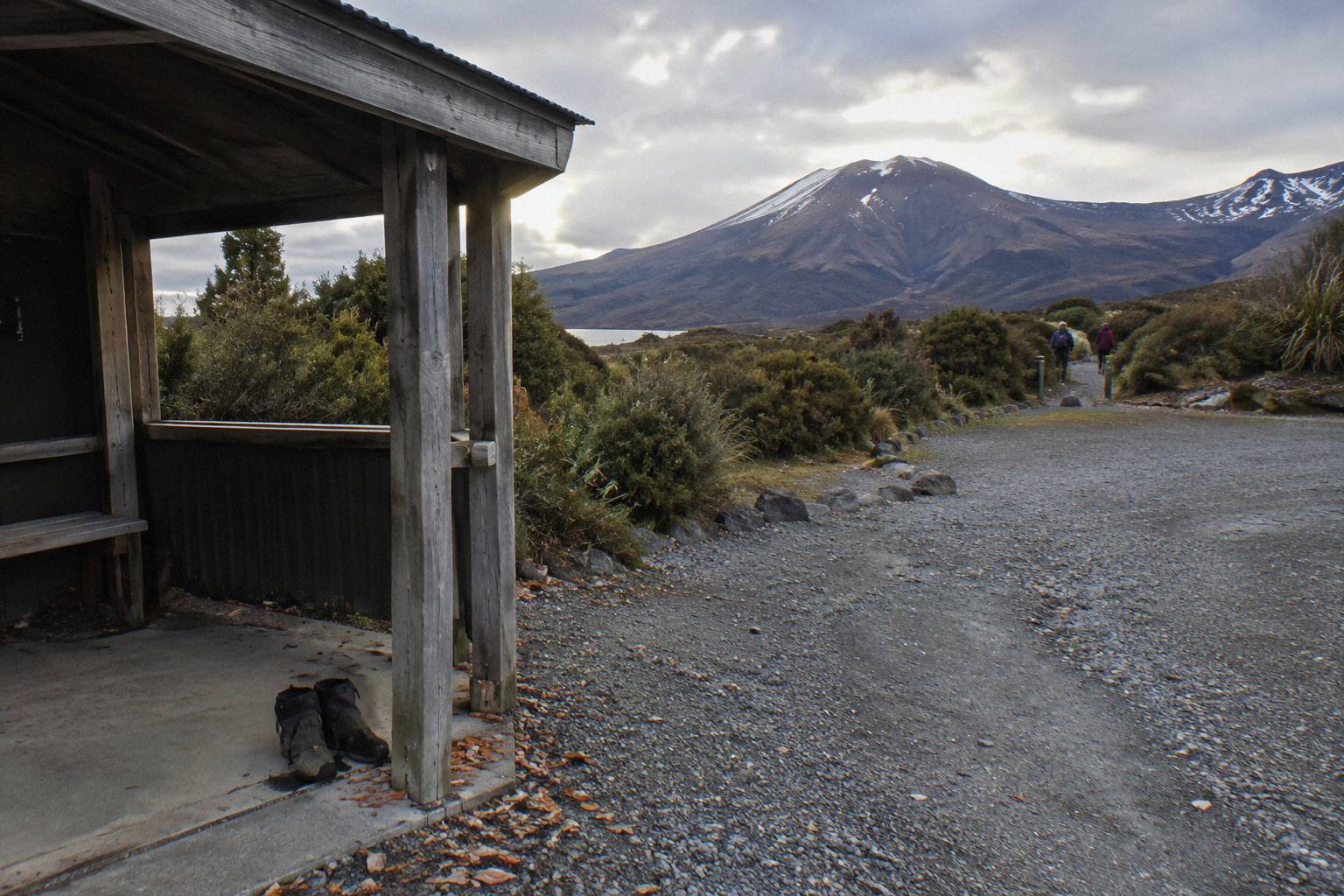
They sit together at the same road end on Ketetahi Road, but they are not the same thing: the track exits at a DOC car park and shelter, while the park-and-ride operators use private parking nearby, which is what lets your car stay there all day when the DOC road-end spaces carry the 4 hour summer limit. DOC notes there is no parking for Crossing walkers at Mangatepopo car park in summer and that a private car park operates near Ketetahi. The park-and-ride products are built on that private land. Ruapehu Scenic Shuttles, Owhango Adventures, Active Outdoor Adventures, National Park Shuttles, Backyard Tours and Tongariro Crossing Car Park all run one-way products from this end.
It is worth being precise about what these products include, because the phrase "shuttle" covers several different things. The six Ketetahi rows are one-way park-and-rides: you park, you ride to Mangatepopo, you walk back to your car. They include no return transport, because the return is your own two feet. The round-trip products from National Park Village, Ohakune, Taupo and Turangi are different: they carry you both directions and you leave no car behind. Checking which one you are booking is the single most common point of confusion in Crossing transport. The rest of the planning pages sit on Tongariro Emerald Lakes Hike.
| One-way Ketetahi park-and-ride | Operator | Rated | Free cancellation |
|---|---|---|---|
| Ruapehu Scenic Shuttles Ketetahi park-and-ride, from NZ$68 | Ruapehu Scenic Shuttles | 4.8 across 670 reviews | Yes, up to 24 hours before |
| Owhango Adventures Ketetahi park-and-ride | Owhango Adventures | 4.8 across 333 reviews | Yes, up to 24 hours before |
| Tongariro Expeditions Ketetahi park-and-ride | Tongariro Expeditions | 4.3 across 106 reviews | Yes, up to 24 hours before |
| Tongariro Crossing Car Park secure parking and shuttle | Tongariro Crossing Car Park | 1 review so far | Yes, up to 24 hours before |
| Active Outdoor Adventures one-way shuttle with secure car park | Active Outdoor Adventures | Rating on the booking page | Check the booking page |
| National Park Shuttles Ketetahi-only shuttle with private car park | National Park Shuttles | Rating on the booking page | Check the booking page |
When Do You Actually Arrive At The Finish?
Most walkers reach Ketetahi Road between five and eight hours after starting, depending on fitness and stops, so plan your pickup, your driver and your food around late afternoon rather than midday, and in winter remember daylight shrinks to between 9 and 11 hours. DOC's 7 to 8 hour band for November to April covers the whole track, and the final descent from Blue Lake to the road typically takes around two hours of it. A long lunch at the Emerald Lakes, where many groups stop to eat, pushes the finish time back accordingly. Nobody should plan a same-day long drive after a winter walk.
The early start matters here. Shuttles and guided operators assess conditions each morning, and DOC's advisory system can close or warn against the track when weather above the Emerald Lakes turns dangerous. Operators are bound by DOC rules not to run on hazardous-weather-warning days, so a booked shuttle does not run regardless of your plans on those days. The sunrise start on the Crossing guide covers the morning logic; the short version is that an early start gives you buffer at the finish end, where afternoon weather often deteriorates before it reaches the valleys.
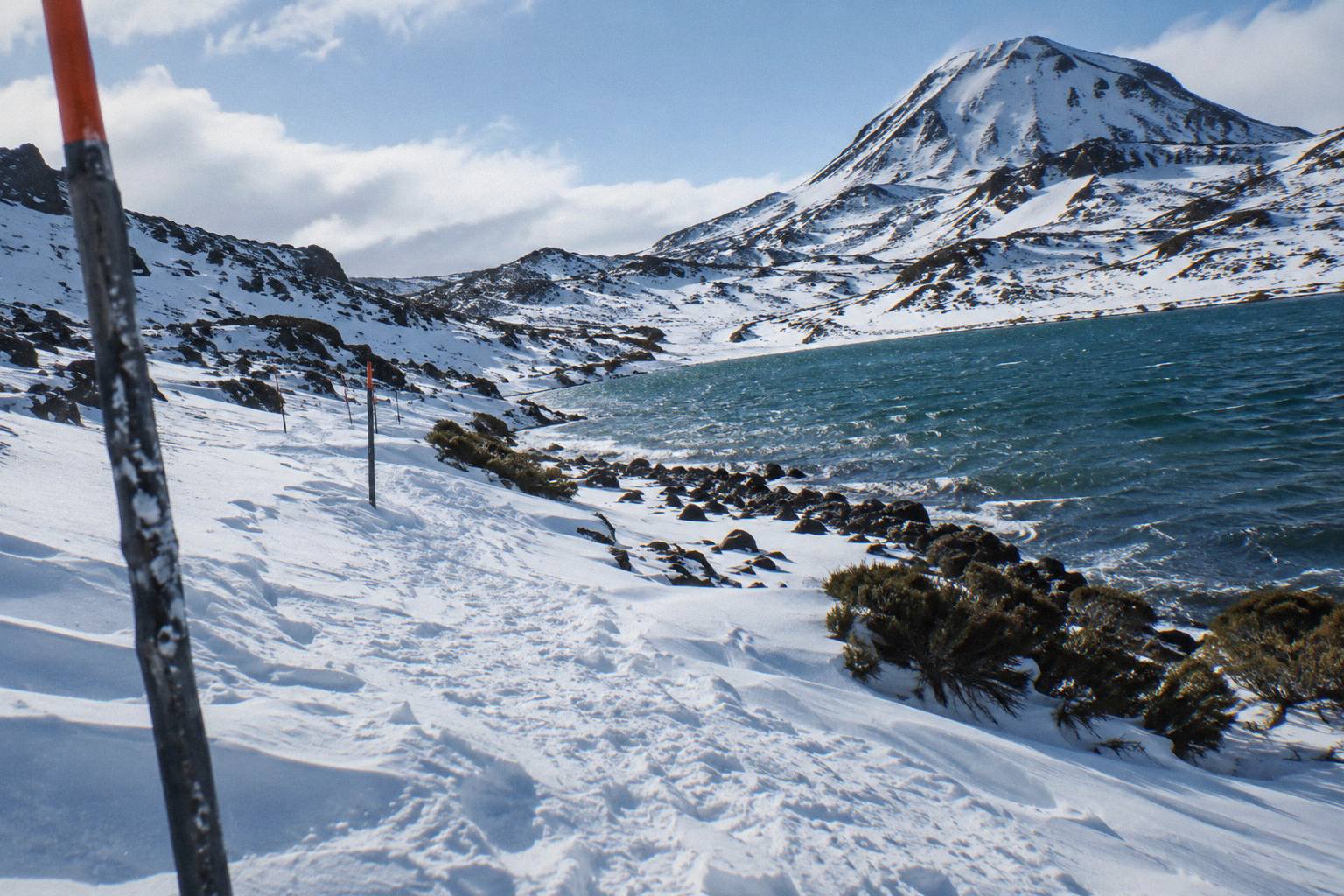
Winter changes the arithmetic completely. DOC grades the route Expert from May to October: snow, ice, avalanche risk and sub-zero temperatures, with alpine skills described as essential and a guide recommended. Crampons and ice axes are stated as supplied only on the three Adrift Tongariro guided tours, for winter conditions if required. DOC also says shuttle buses generally do not operate in winter while guided trips include transport, which is a strong argument for the guided option in the cold half of the year. The full picture is in winter on the Crossing.
Which Shuttle Should You Book From Each Base?
Match the product to where you sleep the night before: Ketetahi car park for the park-and-rides, National Park Village and Ohakune for the Dempsey and Tongariro Crossing Shuttles round trips, Taupo and Turangi for the Tongariro Expeditions and Backyard Tours services. Departure points are genuinely different places, and booking the wrong one means a long, unplanned detour on the morning of a big walk. DOC's published distances from the track are worth knowing: Whakapapa 10.4 km, National Park 13.5 km, Turangi 36.7 km, Ohakune 48 km and Taupo 86.5 km.
From National Park Village the choice is between the Tongariro Crossing Shuttles round-trip at 4.7 across 890 reviews from NZ$75, and the Dempsey Buses return bus from National Park Village, rated 4.8 across 72 reviews, from NZ$90 per person. Dempsey Buses also runs a return shuttle from Ohakune with free cancellation up to 24 hours before. From Taupo or Turangi, the Tongariro Expeditions Crossing shuttle from Taupo or Turangi covers both towns, rated 4.7 across 431 reviews from NZ$75, and the Backyard Tours mountain shuttle from Turangi runs from NZ$120 per person with the same 24 hour cancellation window.
Travellers coming from further afield have two products that fold transport into a longer trip. The Kiwi Road Tours private transfer from Auckland is a private transfer over two days with the walk self-guided, not a guided hike. The ExperienceKart private three-day tour from Auckland adds Huka Falls and Lake Taupo around one self-guided Crossing leg. Auckland is a long way away, and these multi-day products are how people from there make the walk work.
| Departure base | Product | Format | Rated | From (per person) |
|---|---|---|---|---|
| Ketetahi car park | Ruapehu Scenic Shuttles park-and-ride | One-way park-and-ride | 4.8 across 670 reviews | NZ$68 |
| National Park Village | Tongariro Crossing Shuttles round-trip | Return shuttle | 4.7 across 890 reviews | NZ$75 |
| National Park Village | Dempsey Buses return bus | Return shuttle | 4.8 across 72 reviews | NZ$90 |
| Taupo or Turangi | Tongariro Expeditions shuttle | Shuttle with transfer options | 4.7 across 431 reviews | NZ$75 |
| Turangi | Backyard Tours mountain shuttle | Shuttle from Turangi | 3 reviews so far | NZ$120 |
| National Park Village | Adrift Tongariro premium guided hike | Guided, transport included | 4.6 across 242 reviews | NZ$450 |
Is A Guided Hike Better Than A Shuttle For The Finish?
A guided hike removes the transport question entirely, because the guided tours include the base transfers, while every shuttle still leaves you managing your own walking decisions on an alpine route; the premium guided hike runs from NZ$450 per person against NZ$68 for the cheapest park-and-ride. Adrift Tongariro runs the three guided tours from its base at 53 Carroll Street in National Park Village. The premium guided hike, rated 4.6 across 242 reviews, is the most reviewed guided option and offers free cancellation up to 14 days before, with an 8 to 9 hour booked day. Crampons and ice axes are supplied for winter conditions if required, and you bring your own lunch.
For winter walks the guided case is strong. DOC itself says the May to October route demands alpine skills and that going with a guide is best in that season, and shuttles generally do not run then. For a fit summer party with decent gear, a shuttle plus independent walking is the cheaper and very workable path, and most of the 890 reviewers on the round-trip shuttle would agree with their feet. The trade-offs are laid out in whether a guide is worth it for the Emerald Lakes section.
The premium guided hike suits walkers who want interpretation, group safety and zero logistics. The Adrift Tongariro full-day guided Crossing, rated 4.7 across 278 reviews, is a second guided option, non-refundable, with price on the booking page. The Adrift Tongariro private guided Crossing, rated 4.5 across 30 reviews, takes a private group of your own, also non-refundable. Pickups from Taupo, Turangi and Whakapapa are available at a surcharge on private bookings.
What Facilities Wait At The Ketetahi Road End?
The Ketetahi Road end has a car park, a shelter and toilets, and very little else: there is no food, no shop and no phone-charging corner, so carry water, snacks and warm layers for the wait, because afternoon winds at the road end can be cold even after a hot walk down. The descent drops through forest that blocks the wind less than you might expect once you reach the clearing, and walkers waiting for scheduled pickups regularly underestimate this. The walk itself has no water points you may use: the request not to touch or enter any waterways includes the alpine lakes, and the Ketetahi hot springs are closed to the public.
Plan the last hour of food accordingly. Whatever you carried past the Emerald Lakes is all you have until you reach accommodation. Groups doing the reverse park-and-ride have the advantage again here: the car at the finish usually holds dry clothes, food and a thermos. Groups waiting for a return shuttle should keep a warm layer and something to eat in the pack rather than the boot.
What Mistakes Trip People Up At The Finish?
The recurring errors are booking a one-way park-and-ride and expecting a ride back, parking at a DOC road end all day inside the restricted season, underestimating the final descent, and touching or entering the lakes or streams against the documented cultural request. Each of these is avoidable with one piece of knowledge, and each ruins a day otherwise well planned. The park-and-ride confusion is the expensive one: it leaves people at Mangatepopo in the afternoon with a car at the wrong end and a growing taxi bill.
The second is the parking ticket scenario. From Labour weekend in late October to 30 April the 4 hour maximum at the road ends applies, and a Crossing takes 7 to 8 hours in summer conditions before you count shuttle queues. The reverse park-and-ride exists precisely to dodge this. The third mistake is physical: walkers treat the Emerald Lakes as the summit achievement and forget that a long descent remains. Trekking poles help on the steep sections below Blue Lake, and the fitness for the climb to the Emerald Lakes guide covers preparing the legs for what downhill does to them.
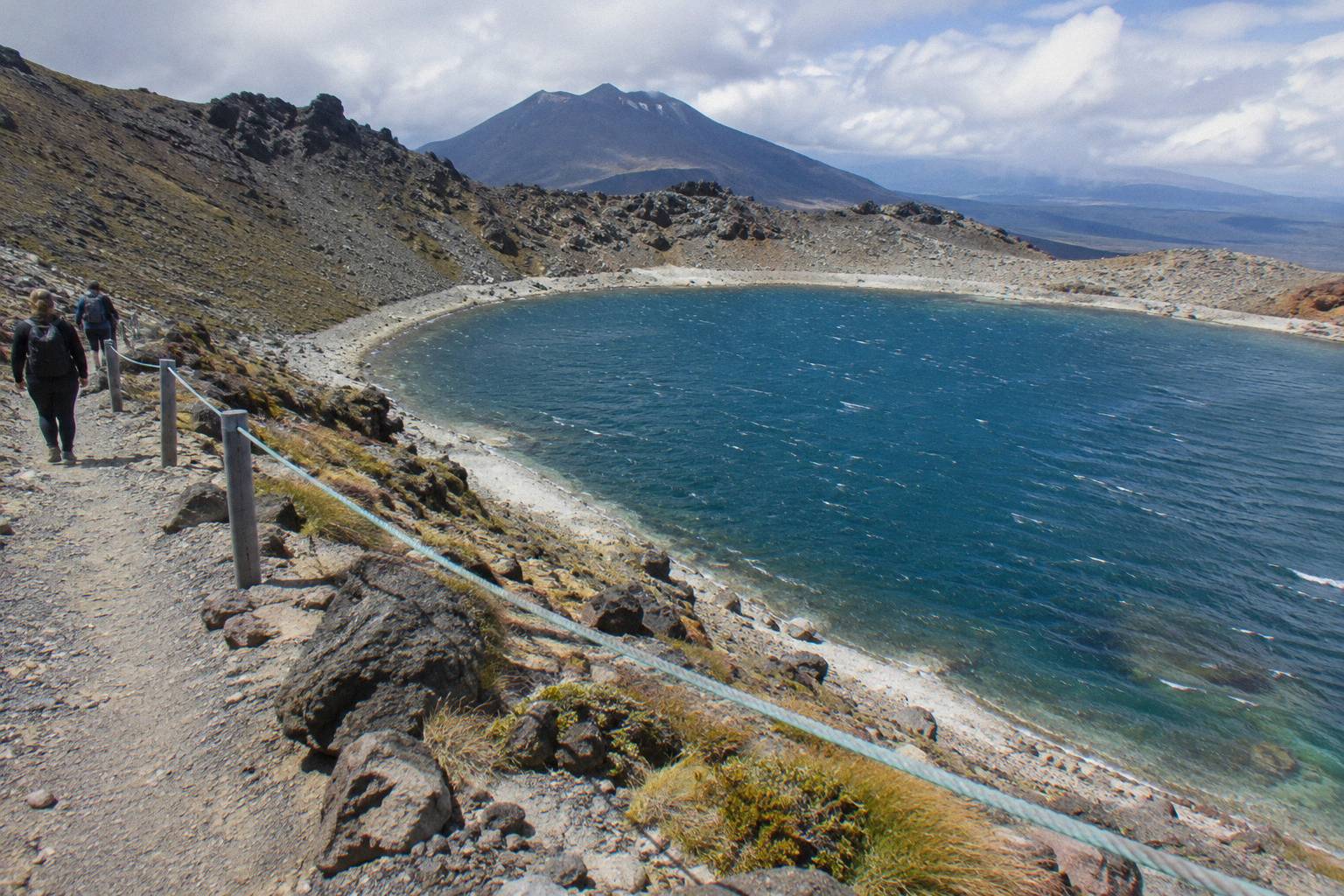
The fourth is cultural. The Emerald Lakes are tapu, and the request from kaumatua Te Ngaehe Wanikau, carried by DOC, asks visitors to respect the maunga tapu by not touching or entering any of the waterways including the alpine lakes. That request covers paddling, swimming and wetting hands for a photograph. It costs nothing to honour and it is the single clearest thing a visitor can do to respect the mountains sacred to Ngati Hikairo ki Tongariro.
| Mistake | Consequence | Simple fix |
|---|---|---|
| Expecting a return on a one-way park-and-ride | Stranded at Mangatepopo with a car at Ketetahi | Confirm the format before booking |
| All-day parking at a DOC road end, Labour weekend to 30 April | 4 hour limit exceeded | Use the reverse park-and-ride or a round trip |
| Treating the Emerald Lakes as the finish | Two more downhill hours unplanned | Budget legs and water for the full descent |
| Swimming or touching the lakes | Against the documented cultural request | Enjoy from the shoreline only |
| No warm layer or food at Ketetahi Road | A cold, hungry wait for pickup | Keep both in the pack, not the car |
Do You Need The DOC Booking System As Well As A Shuttle?
In practice, yes. The DOC booking for the Crossing is free and comes recommended, and both shuttle services and guided products expect you to have it, so the simplest approach is to complete your DOC booking at the same time as your shuttle booking rather than leaving it until after. DOC's booking system page explains what the system covers and why it exists, including managing numbers across the busiest summer weeks. It costs nothing and takes minutes. Booking transport without it leaves a small but real chance of turning up to a booked shuttle without the track booking the operator expects you to hold.
Book transport and the DOC booking together, early, for peak season dates from late December through January, when the 4 hour parking restriction and the shuttle demand both bite hardest. Free cancellation windows of 24 hours on the shuttle products mean an early booking carries little risk, and the 14 day window on the Adrift premium guided hike is still workable if plans firm up a fortnight ahead. Check the DOC alerts for the Crossing, the GeoNet volcanic page and the NIWA forecast for the park as your date approaches; conditions are assessed each morning and no operator runs on a hazardous weather warning day.
Common Questions About The Ketetahi Finish
Can You Park Overnight At The Ketetahi Car Park?
Print nothing definitive beyond what DOC states: from Labour weekend in late October to 30 April a 4 hour maximum applies at the road ends and DOC suggests booking a shuttle. The park-and-ride operators use private parking near Ketetahi, and the terms for leaving a car there are on each booking page.
Is The Walk After The Emerald Lakes Hard?
It is easier than the climb to Red Crater but still long: roughly two hours of steady descent from Blue Lake through tussock and forest to Ketetahi Road. Wet track, tired legs and a heavy pack make it harder than the gradient suggests. DOC grades the whole track High fitness in summer.
What Is The Cheapest Shuttle At The Ketetahi End?
The Ruapehu Scenic Shuttles Ketetahi park-and-ride runs from NZ$68 per person with free cancellation up to 24 hours before, rated 4.8 across 670 reviews. The Owhango Adventures and Tongariro Expeditions park-and-rides cover the same one-way format; their prices are on the booking page.
Do The Park-And-Ride Shuttles Include A Guide?
No. Every Ketetahi product is a shuttle only, one-way. Adrift Tongariro runs the three guided tours, which include base transfers and, in winter conditions where required, crampons and ice axes. Bring your own lunch on the guided tours.
What If The Weather Turns Bad On My Walking Day?
Operators are bound by DOC rules not to run on hazardous-weather-warning days, and shuttles generally do not operate in winter. Conditions are assessed each morning. DOC lists Taranaki Falls and Tama Lakes as alternative walks when the Crossing is off.
Where Exactly Does The Crossing Finish?
At the Ketetahi Road end, about 760 m above sea level, with a car park, shelter and toilets. The final hour of track descends through native forest past the Ketetahi hot springs, which are closed to the public.
The finish at Ketetahi is the least photographed and most practical part of the Crossing, and planning it well is what separates a great day from a long one.