Is The Tongariro Crossing Open To The Emerald Lakes? Closures And Track Alerts
The Tongariro Alpine Crossing sits inside an active volcanic field, so its open status changes with the weather, the season and the mountain itself. Here is how the status system works, where to check it, and what it means for the day you plan to walk to the Emerald Lakes.
Short answer
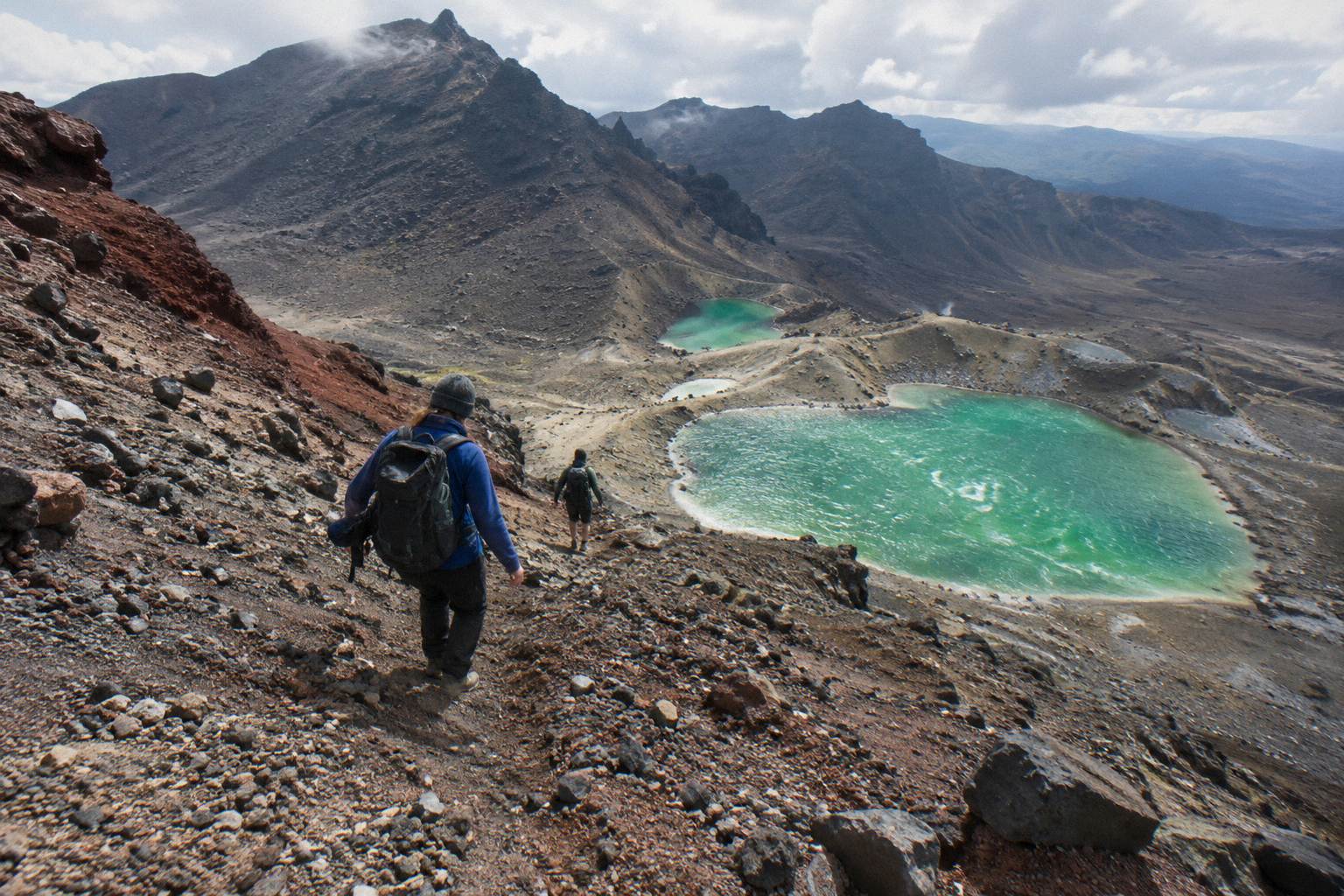
The Crossing runs 20.2 km one way over Red Crater at 1886 m. DOC rates it a 7 to 8 hour walk from November to April and a 9 hour expert route from May to October. Status is decided daily by DOC track alerts, volcanic alert levels and severe weather: check the DOC Tongariro Alpine Crossing page before you travel, and book with free cancellation.
Status questions matter most to people mid-plan, so this guide sits inside the logistics group alongside the deep route pages. For the walk itself, see the Emerald Lakes section on the Crossing.
Quick Facts: The Crossing At A Glance
The Crossing is 20.2 km one way with 1196 m of elevation change, topping out at Red Crater 1886 m. DOC grades it a high-fitness tramping track taking 7 to 8 hours from November to April, and a 9 hour expert route from May to October. Summer parking at the road ends is capped at 4 hours, and the DOC booking system is free and recommended for every walker.
| Fact | Figure | Source |
|---|---|---|
| Distance | 20.2 km one way | DOC |
| Elevation change | +/−1196 m | DOC |
| Highest point | Red Crater, 1886 m | DOC |
| Walking time, Nov to Apr | 7 to 8 hours | DOC |
| Walking time, May to Oct | 9 hours, expert route | DOC |
| Fitness rating | High | DOC |
| Winter grading | Expert route, alpine skills essential | DOC |
| Summer road-end parking | 4 hour maximum, Labour weekend to 30 April | DOC |
| Track booking | Free DOC booking system, recommended | DOC |
DOC publishes the track basics on its Tongariro Alpine Crossing track page, and that page is the first stop of any status check. The numbers above are structural: they do not change week to week. What changes is whether you should be on the track at all.
Who Decides Whether The Tongariro Crossing Is Open?
DOC, the Department of Conservation, manages the track and posts the official alerts, but "open" is a layered judgement rather than a single switch. DOC's track alerts cover maintenance and hazards. Volcanic alert levels, set by GNS Science on GeoNet, cover the state of the volcano. Weather and avalanche advisories cover the exposed alpine section. A day can pass one check and fail another, and any one of these layers can stop a walk to the Emerald Lakes.
The layers work like this. The DOC alert system flags track damage, works, or specific hazards, and those alerts appear on the track page and on the DOC alerts feed for Tongariro National Park. Volcanic alert levels for Tongariro change daily and are published by GeoNet; the level reflects the volcano's background state, and DOC uses it together with its own volcanic risk assessment when deciding what is safe to operate. Weather is the most common closer of all: the alpine section is exposed for hours high above the valley floor, and wind in particular turns the South Crater and Red Crater ridge into something no casual walker should attempt.
None of these layers is a booking platform or an operator decision, which is worth understanding before you read tour descriptions. Shuttles and guided walks run only on days when the DOC advisory and the forecast allow. Operators are bound by DOC rules not to run on hazardous-weather-warning days. When a shuttle company or a guiding company cancels, it is usually because one of these official layers moved, not because the company got nervous. The practical consequence: check the official sources yourself, then trust the operator you booked to make the morning call, conditions allowing.
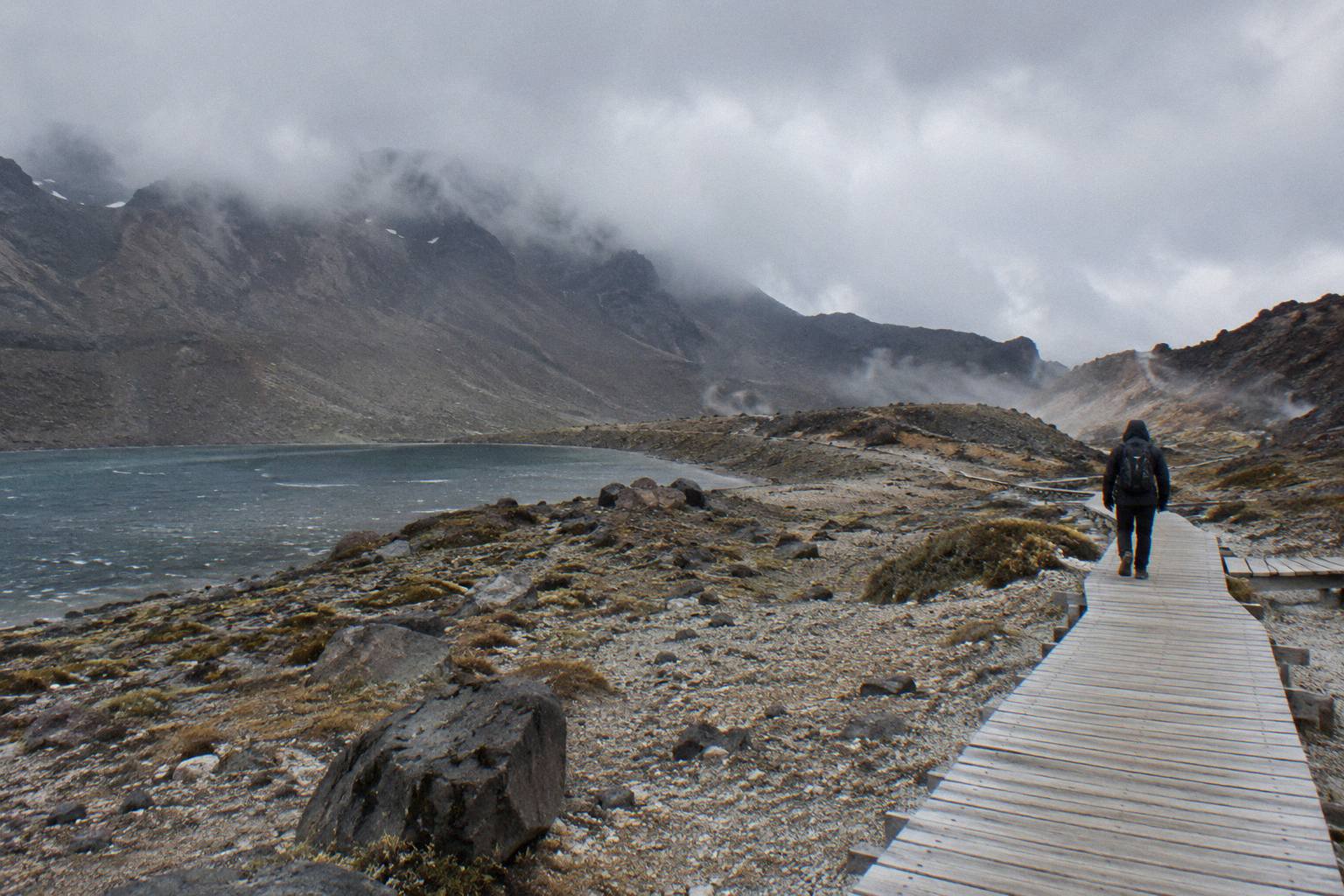
The 2012 Te Maari eruption is the reason the volcanic layer exists in its current form. That eruption, on the northern flank of the massif near the Ketetahi end of the track, reshaped how DOC and GNS Science monitor and communicate risk on the Crossing. DOC's volcanic risk page for the park explains the hazard zones and how they are managed. You can read the framework at DOC's volcanic risk in Tongariro National Park page.
What Can Close The Track To The Emerald Lakes?
Four things can close or restrict the track to the Emerald Lakes: official DOC track alerts, elevated volcanic alert levels, severe weather, and winter conditions between May and October. Track alerts tend to be local, sometimes affecting only part of the route, while volcanic and weather closures cover the whole alpine section. Winter brings no formal closure, but DOC grades it an expert route and recommends a guide, which for most walkers amounts to the same thing.
| Cause | What It Affects | Who Issues It | Typical Duration |
|---|---|---|---|
| Track alert | A section or the whole track | DOC | Days to weeks |
| Volcanic activity | Whole alpine zone | GeoNet alert levels, DOC decisions | Days to months |
| Severe weather | Whole alpine section, assessed each morning | NIWA advisory, MetService | Hours to days |
| Snow and avalanche | Alpine section, May to October | avalanche.net.nz advisory | Seasonal |
| Road-end parking rules | Mangatepopo and Ketetahi road ends, summer | DOC | Labour weekend to 30 April |
Weather is the layer walkers meet most often. NIWA runs a dedicated Tongariro National Park advisory, and the Red Crater forecast in particular tells you what the top of the walk is doing, which can be very different from the valley. Wind, not rain, is the usual deal breaker: the ridge above South Crater offers no shelter, and a strong northerly there is genuinely dangerous for anyone not used to alpine exposure. Check the NIWA advisory at weather.niwa.co.nz for Tongariro National Park, the MetService mountain forecast, and in winter the avalanche advisory at avalanche.net.nz.
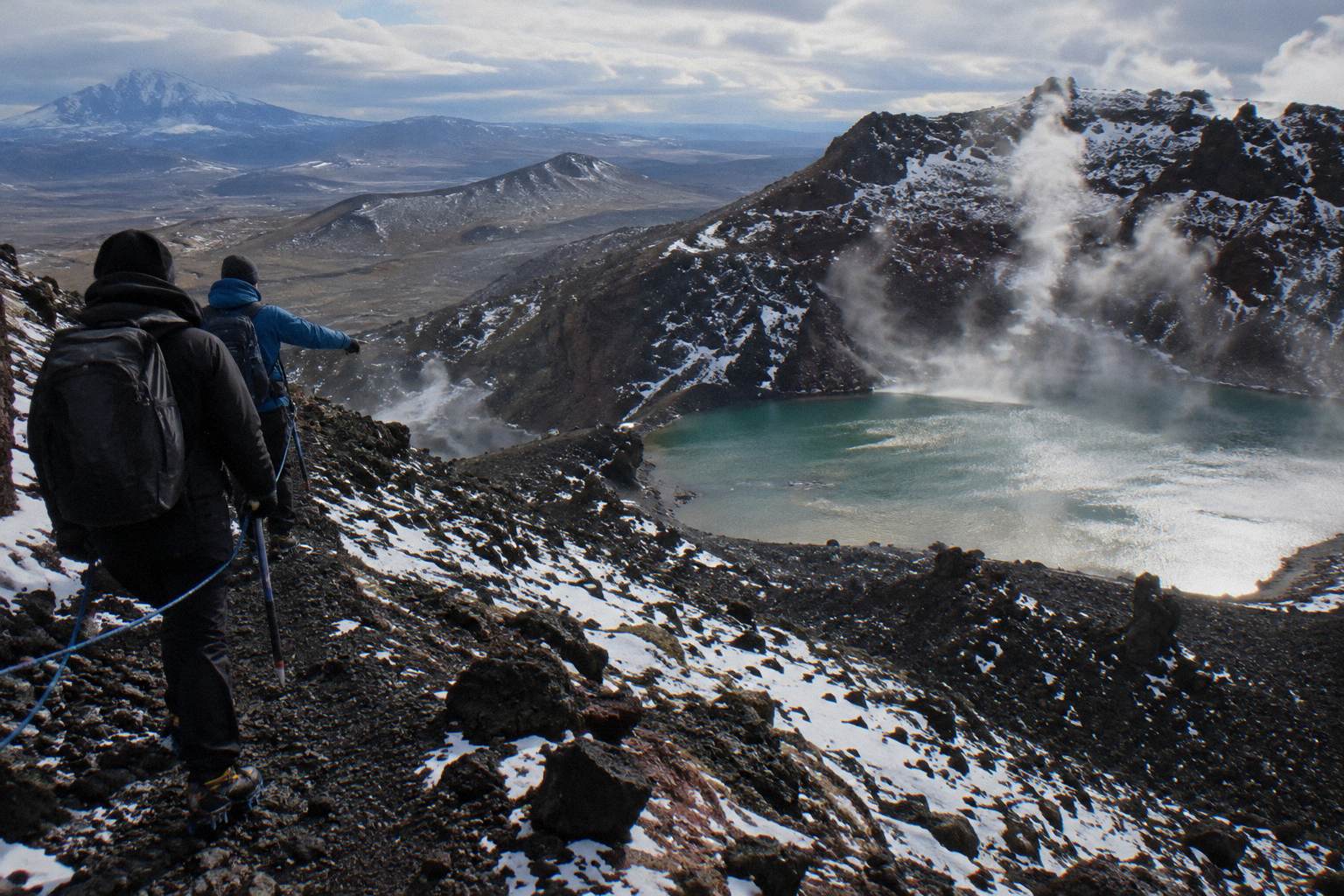
Winter deserves its own paragraph. From May to October DOC describes the route as an expert track where alpine skills are essential and going with a guide is best. Snow, ice, avalanche risk and sub-zero temperatures are normal, and winter daylight shrinks to between 9 and 11 hours. DOC's own winter essentials list for independent trips includes crampons, an ice axe, a helmet, avalanche gear and the competency to use all of it. Among the tours you can book, crampons and ice axes are stated as supplied only on the Adrift Tongariro guided tours, for winter conditions if required. The winter on the Crossing page covers the cold season in detail.
The cultural layer is not a closure but a standing request, and it belongs on any status page because it is permanent. Kaumatua Te Ngaehe Wanikau asks visitors to respect the maunga tapu by not touching or entering any of the waterways including the alpine lakes. In practice that means no swimming in the Emerald Lakes, ever, regardless of how open the track is. The mountains are sacred to Ngati Hikairo ki Tongariro of Ngati Tuwharetoa, and the request is printed on DOC's own track page.
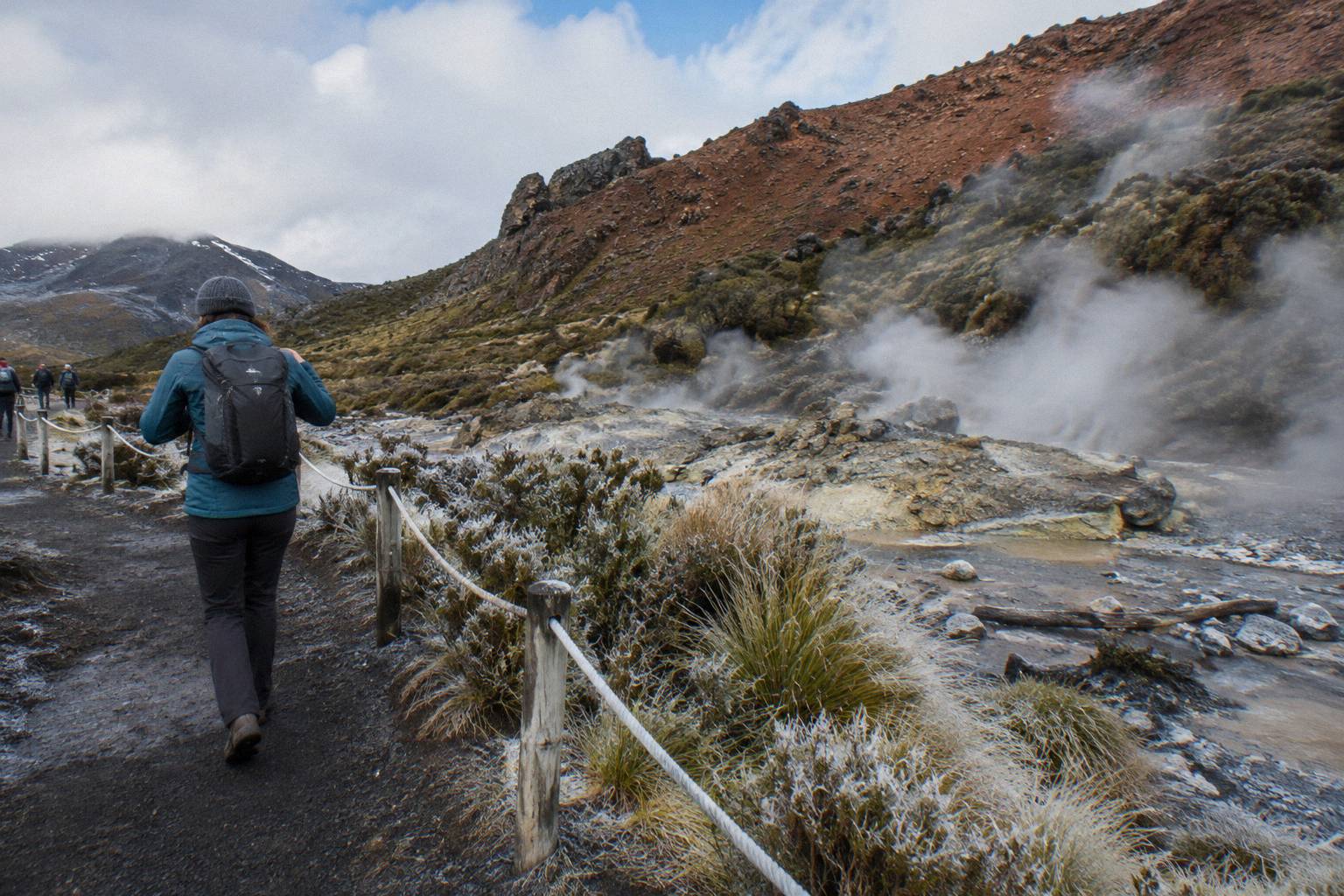
One caution about reading status news: closures elsewhere on the mountain are not always what they seem. The Northern Circuit, a multi-day loop that shares some country with the Crossing, has its own track sections and its own alerts, and a closure on that circuit does not automatically mean the Crossing is shut. Read the alert text carefully, because it names the exact track affected. When the Crossing genuinely cannot be walked, DOC points people to alternative walks such as Taranaki Falls and Tama Lakes, and there is a fuller list on the other hikes near the Crossing page.
If the status checks all pass, the next question is simply how you get to the start, and that is where the season matters as much as the volcano.
Where To Check The Status On The Morning You Walk
On the morning you walk, check four sources in order: the DOC Tongariro Alpine Crossing page for track alerts, the DOC booking system page for operational notices, the GeoNet Tongariro page for the volcanic alert level, and the NIWA or MetService forecast for the alpine section. Check the evening before as well, since volcanic alert levels change daily and weather calls are made each morning.
| Check | Where | What It Tells You | How Often It Moves |
|---|---|---|---|
| Track alerts | DOC Tongariro Alpine Crossing page | Damage, works, hazards on the track | As events occur |
| Booking notices | DOC Crossing booking system page | Operational messages for walkers | Per season, per alert |
| Volcanic alert level | GeoNet Tongariro volcano page | The volcano's background state | Daily |
| Alpine forecast | NIWA Tongariro advisory, MetService mountain forecast | Wind, rain, freezing level | Several times daily |
| Avalanche advisory | avalanche.net.nz | Danger rating, May to October | Daily in season |
The DOC booking system is free and recommended for anyone walking the Crossing, and it is the channel through which DOC communicates with booked walkers; shuttle and guided products tie into it as well. You can read how the system works on the DOC Tongariro Alpine Crossing booking system page. Booking the track does not book transport, and transport does not book the track, so treat them as two separate steps.
After the official sources, your operator's morning message is the final word. Shuttles and guided walks run only when the DOC advisory and the forecast allow, so a cancellation from the operator is the system working, not a service failure. This is also why free cancellation windows matter when you book: a 24 hour window on a shuttle gives you an exit if the forecast turns the day before. The general DOC Tongariro hub collects the park-wide alerts if you want the wider picture, including any notices about the wider park at DOC's Tongariro National Park pages.
A status check also changes what you carry. On a marginal day the gear list grows: see what to wear hiking to the Emerald Lakes for the layering logic that works in changeable alpine weather.
Seasonal Rules: When The Crossing Is Effectively Closed
DOC does not formally close the Crossing for winter, but from May to October it grades the track as an expert route taking 9 hours, where alpine skills are essential and a guide is recommended. Because shuttle buses generally do not operate from May to late October and the alpine section requires crampon and ice axe competency, the crossing is effectively closed to most visitors in that window.
Summer brings a different restriction, and it catches a lot of self-drivers. From Labour weekend in late October to 30 April, parking restrictions with a 4 hour maximum apply at the road ends, and DOC suggests booking a shuttle. DOC also says there is no parking for Crossing walkers at Mangatepopo car park in summer, and points to a private car park near Ketetahi. The 4 hour limit is far shorter than the 7 to 8 hour summer walk, so driving yourself to the start in season is not a real plan. The full index of guides sits on Tongariro Emerald Lakes Hike.
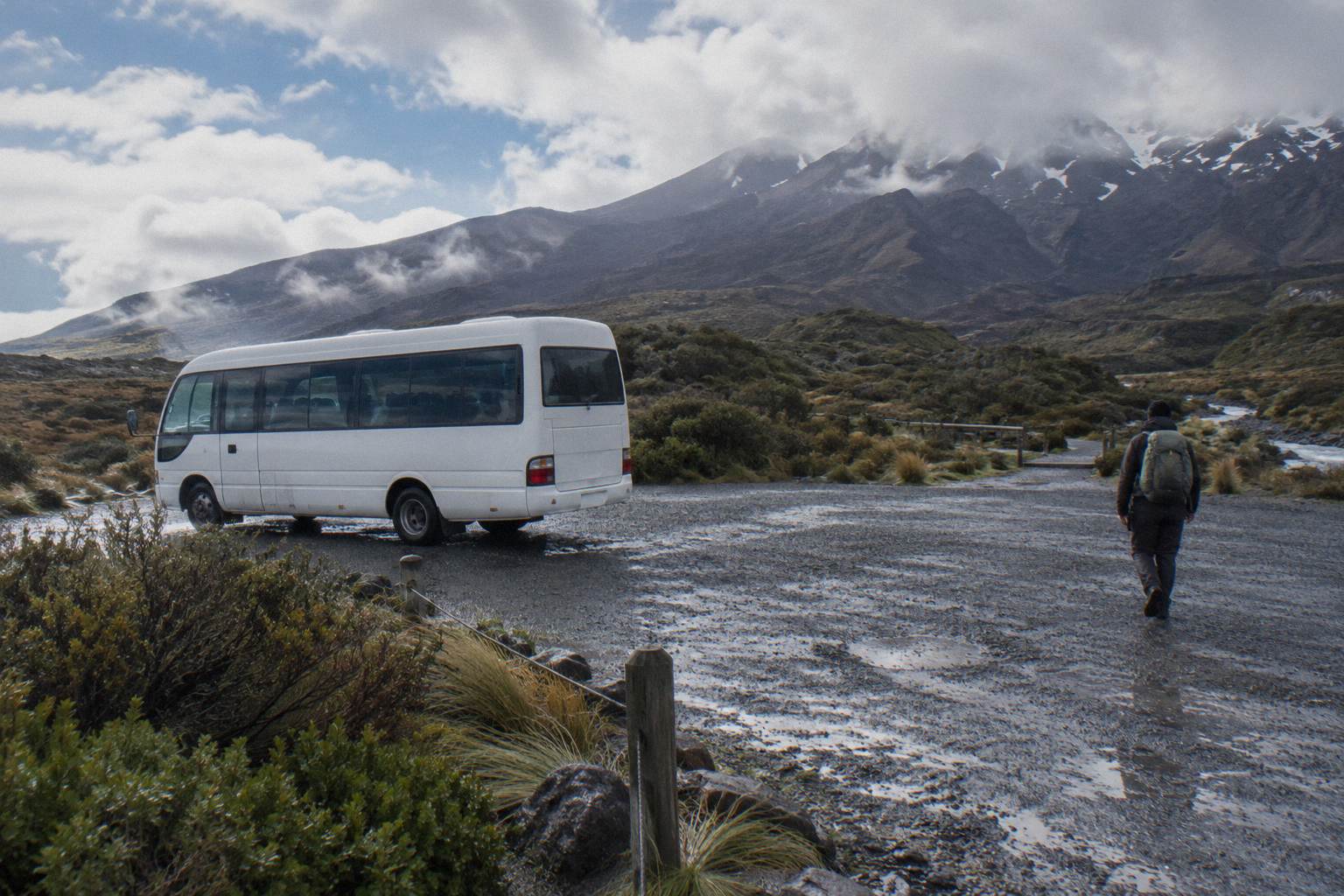
| Season | Track Status | Time | Transport Reality |
|---|---|---|---|
| November to April | Intermediate tramping track, high fitness | 7 to 8 hours | Shuttles run, 4 hr parking limit at road ends |
| May to October | Expert route, alpine skills essential | 9 hours | Shuttles generally do not operate; guided trips include transport |
This seasonal split is why the month you choose shapes the whole day. The best month to hike to the Emerald Lakes page works through the trade-offs, and the summer Crossing without snow page covers the peak-season experience. What matters here is that "is the Crossing open" has a different answer in February than in July, even on a day when no alert is posted at all.
Transport follows the season closely. In summer, the shuttle network is wide: the Tongariro Crossing Shuttles round trip from National Park Village (from NZ$75 per person, 4.7 across 890 reviews, free cancellation up to 24 hours), the Ruapehu Scenic Shuttles Ketetahi park-and-ride (from NZ$68 per person, 4.8 across 670 reviews), and the Tongariro Expeditions shuttle from Taupo or Turangi (from NZ$75 per person, 4.7 across 431 reviews) all run the standard pattern of an early start and a drop at Mangatepopo. Check availability on the one you want early in your planning, because summer dates fill.
Winter is the guiding season, and the tour lineup reflects it. The Adrift Tongariro premium guided hike (from NZ$450 per person, 4.6 across 242 reviews, free cancellation up to 14 days before) supplies crampons and ice axes for winter conditions if required, and the private version covers the same ground for one party. The is a guide worth it for the Emerald Lakes section page works through the guided versus self-guided decision in full.
What A Closure Means For Your Booking
A DOC alert or weather cancellation does not automatically refund you, because cancellation terms belong to each operator: fifteen of the seventeen tours covered here offer free cancellation, most up to 24 hours before, the Adrift guided tours up to 14 days before, while the Adrift private Crossing and ExperienceKart three-day tour stay non-refundable, so read the terms before you pay and pick a window longer than the forecast you fear.
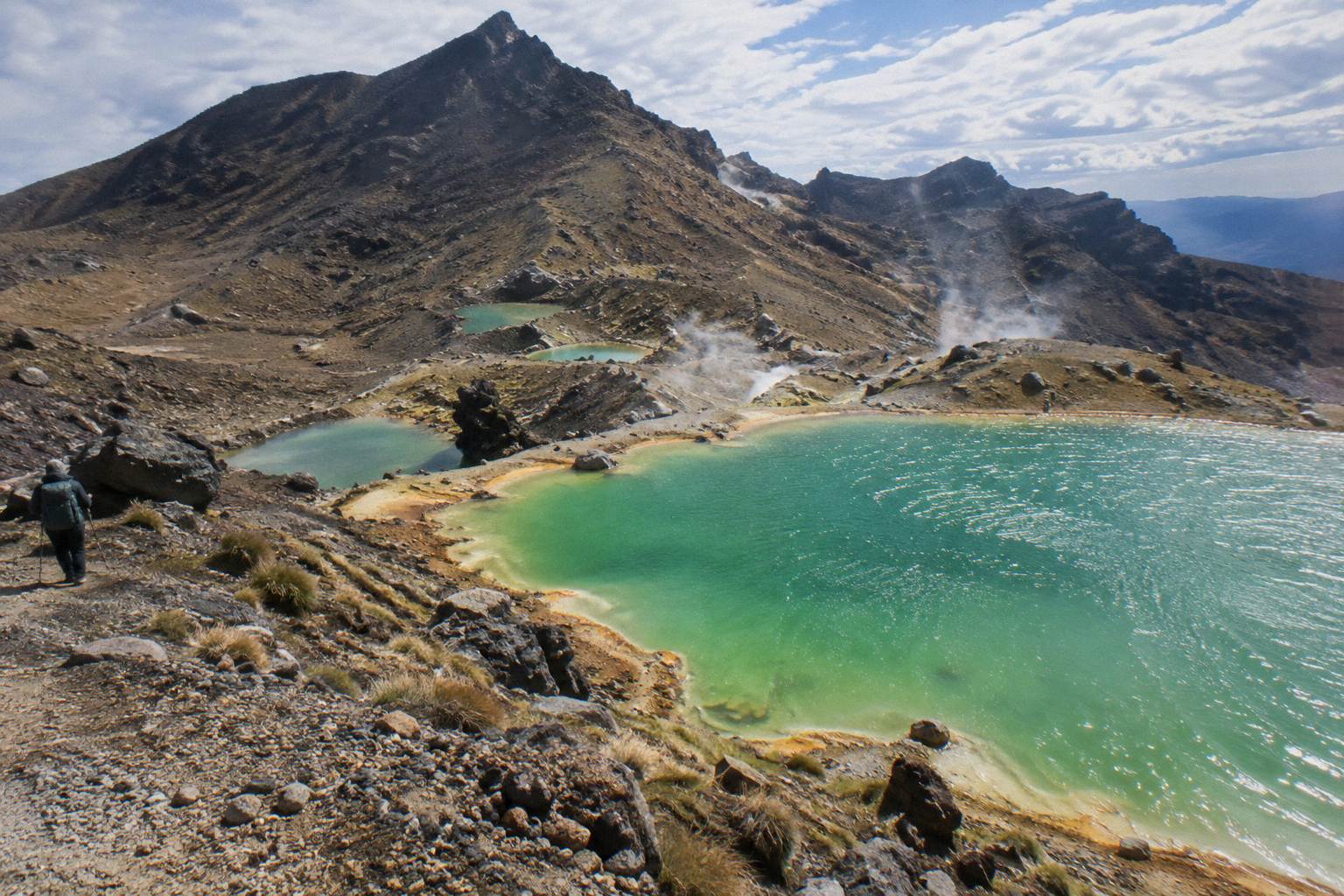
The practical arithmetic favors booking ahead with a generous window rather than waiting for a perfect forecast. Shuttle seats on peak summer days sell out, and a 24 hour free cancellation window lets you hold a seat and still walk away if the forecast collapses the evening before. Guided tours with the 14 day window give even more room, which matters if you are traveling from far away and building the whole trip around the walk. The Dempsey Buses return bus from National Park Village (from NZ$90 per person, 4.8 across 72 reviews, free cancellation up to 24 hours) is a second National Park Village option if the first is full.
Distance travelers face a harder version of the same bet. There is no Taupo-based guided day trip to the Crossing, so Taupo and Turangi walkers book shuttles and walk self-guided. The Backyard Tours mountain shuttle from Turangi (from NZ$120 per person, free cancellation up to 24 hours) covers the Turangi side. From Auckland, the crossing is a long way, and overnight or two-day products exist: the Kiwi Road Tours private transfer from Auckland is a transfer with the walk self-guided, and the ExperienceKart private three-day tour from Auckland includes Huka Falls and Lake Taupo with one self-guided Crossing leg. Neither is a guided Crossing tour, and the ExperienceKart tour is not suitable under 12.
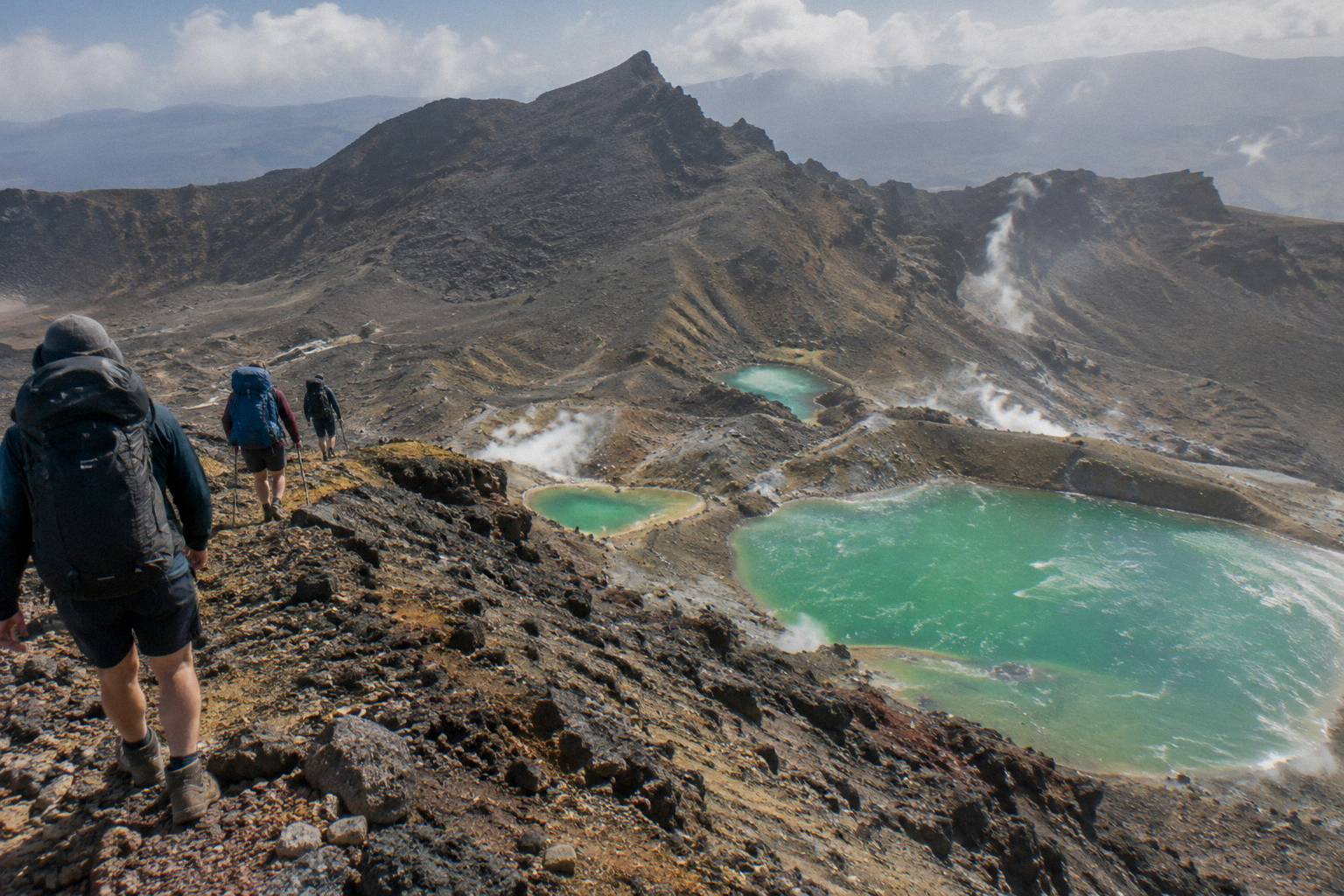
One structural point on shuttles versus guided days, because closures interact with them differently. A shuttle is transport, not a guide: only the Adrift Tongariro guided tours put a guide on the track with you. The Owhango Adventures Ketetahi park-and-ride (4.8 across 333 reviews, free cancellation up to 24 hours) and the Tongariro Expeditions Ketetahi park-and-ride (4.3 across 106 reviews) are one-way park-and-rides: you park at Ketetahi, ride to Mangatepopo, and walk the Crossing back to your own car, with no return transport. On a day when the weather turns after you have started, that geometry means your car is waiting at the far end either way, which is worth understanding before you choose.
Mistakes That Trip People Up On Status Checks
The five common failures: checking the forecast for the town instead of the alpine section, reading a Northern Circuit closure as a Crossing closure, assuming winter shuttles exist, driving to Mangatepopo in summer expecting to park all day, and booking a non-refundable product for a marginal date. Each one is avoidable with a ten minute check the night before and the morning of the walk.
The town forecast mistake is the most widespread. Taupo or National Park Village can be calm while the ridge above South Crater is being hammered, because the top of the walk sits at 1886 m, high above the Mangatepopo start at 1120 m. The Red Crater specific forecast, not the valley forecast, is the one that predicts your day. Wind is the element to respect most.
| Mistake | What Goes Wrong | The Fix |
|---|---|---|
| Valley forecast only | Wind on the ridge surprises you | Check the Red Crater forecast |
| Misread closure | You cancel a walk that was fine | Read which track the alert names |
| Winter shuttle plan | Buses generally do not run May to late October | Book a guided trip with transport |
| Summer self-drive | 4 hour parking limit, no walker parking at Mangatepopo | Book a shuttle in season |
| Rigid booking | Weather cancels, fare is kept | Prefer free cancellation windows |
The parking mistake deserves emphasis because DOC is blunt about it: in summer there is no parking for Crossing walkers at Mangatepopo car park, and the 4 hour maximum at the road ends makes even the Ketetahi side unworkable for a full walk. The Mangatepopo car park start and Ketetahi finish pages cover both ends of the track in detail, including how the park-and-ride geometry works.
Finally, plan a B-day. If DOC points walkers to Taranaki Falls or Tama Lakes on a bad day, having that in your pocket turns a cancellation into a different walk rather than a lost day. The free hikes and viewpoints near the Crossing start page lists the realistic alternates, and the Crossing map with the Emerald Lakes page helps you see how they connect.
The Status System In Numbers
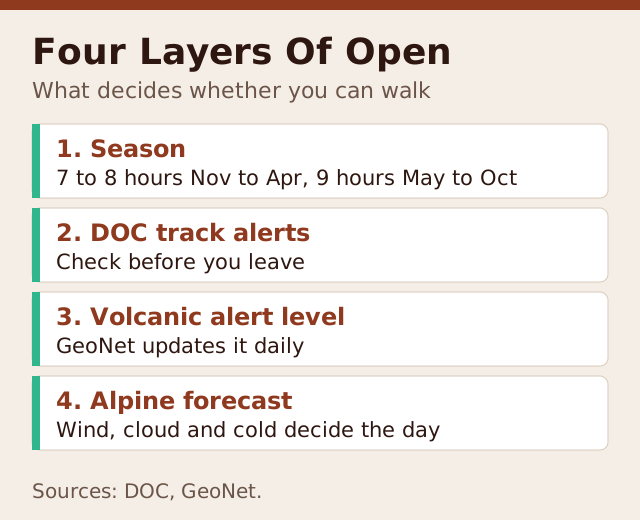
The open-or-closed decision stacks four layers: the seasonal grading at the bottom, then DOC track alerts, the daily GeoNet volcanic alert level, and the alpine weather forecast on top. Summer carries a 7 to 8 hour grading and a 4 hour parking cap; winter carries a 9 hour expert grading and a recommendation to go with a guide. Every layer must pass before the walk is genuinely on.
The figure below sums up how those layers fit together, from the season at the bottom to the daily checks on top. It is the same sequence this page has walked through, compressed into one view for the morning you actually need it.
Common Questions About The Tongariro Crossing Being Open
Is The Tongariro Crossing Open Today?
There is no standing answer, and this page deliberately prints no live status. Check the DOC Tongariro Alpine Crossing page for track alerts, the GeoNet Tongariro page for the volcanic alert level, and the NIWA or MetService forecast for the alpine section on the morning you walk.
Does The Tongariro Crossing Close In Winter?
DOC does not formally close it, but from May to October the track is graded an expert route taking 9 hours, where alpine skills are essential and a guide is recommended. DOC also says shuttle buses generally do not operate from May to late October, while guided trips include transport.
Can I Drive To The Start Instead Of Booking A Shuttle?
In summer, no. From Labour weekend in late October to 30 April a 4 hour parking maximum applies at the road ends, and DOC says there is no summer parking for Crossing walkers at Mangatepopo. A shuttle is the practical option in season.
What Happens To My Booking If The Weather Closes The Track?
Cancellation terms belong to each operator. Most shuttles on these pages state free cancellation up to 24 hours before, the Adrift guided tours up to 14 days, while the Adrift private Crossing and the ExperienceKart three-day tour are non-refundable. Read the booking page terms before you pay.
Can I Swim In The Emerald Lakes When The Track Is Open?
No. Kaumatua Te Ngaehe Wanikau asks visitors to respect the maunga tapu by not touching or entering any of the waterways including the alpine lakes. The request is permanent and applies whenever the track is open.
What Can I Hike Instead If The Crossing Is Closed?
DOC points walkers to alternatives including Taranaki Falls and Tama Lakes, both inside the national park and reachable without the alpine section. Neither crosses Red Crater, so neither reaches the Emerald Lakes.