Devil's Staircase Hike: The Climb Before The Emerald Lakes
The Devil's Staircase is the steep stepped section of the Tongariro Alpine Crossing between the Mangatepopo Valley and the South Crater, and it is the part of the walk most people worry about before they go. Here is what the climb actually involves, how long it takes, and how to set yourself up for it.
Short answer
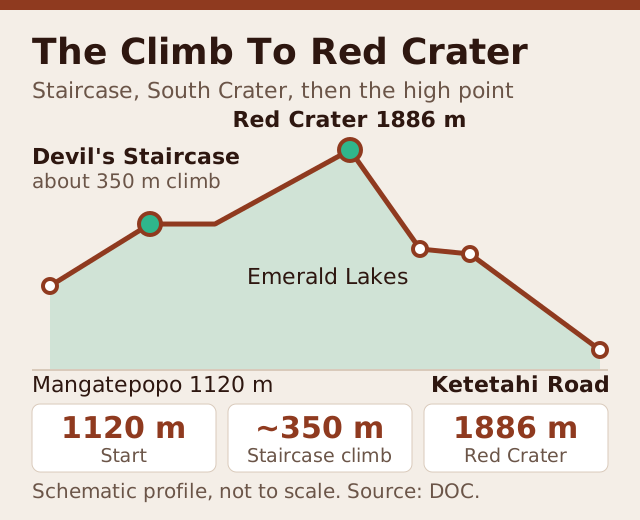
The Devil's Staircase is a steep stepped climb of around 350 metres on the Tongariro Alpine Crossing, reached after about 40 minutes of flat walking from the Mangatepopo end. DOC rates the whole track 20.2 km one way with an elevation change of plus and minus 1196 m, and suggests 7 to 8 hours of walking from November to April. Shuttles drop you at the start; the three Adrift Tongariro tours are the guided option.
This page is part of the walk-time and route family: see the walk time to the Emerald Lakes for the full-day picture, and the distance and elevation to the Emerald Lakes for the numbers behind the climb. DOC publishes the track's official detail on the Tongariro Alpine Crossing page, and the figures here come from that source and from the tour operators' own published details.
| Quick Facts: Devil's Staircase | Detail |
|---|---|
| What it is | Steep stepped climb on the Tongariro Alpine Crossing, between Mangatepopo Valley and the South Crater rim |
| Track total | 20.2 km one way, plus and minus 1196 m elevation change |
| Whole track time | 7 to 8 hours November to April, 9 hours May to October |
| Fitness rating | High, per DOC |
| Track start | Mangatepopo end, reached by shuttle or guided transport |
| Highest point on the track | Red Crater at 1886 m, well after the Staircase |
| Winter status | Expert route, alpine skills essential |
| Summer parking | 4 hour maximum at road ends from Labour weekend to 30 April, DOC suggests a shuttle |
What Is The Devil's Staircase On The Tongariro Crossing?
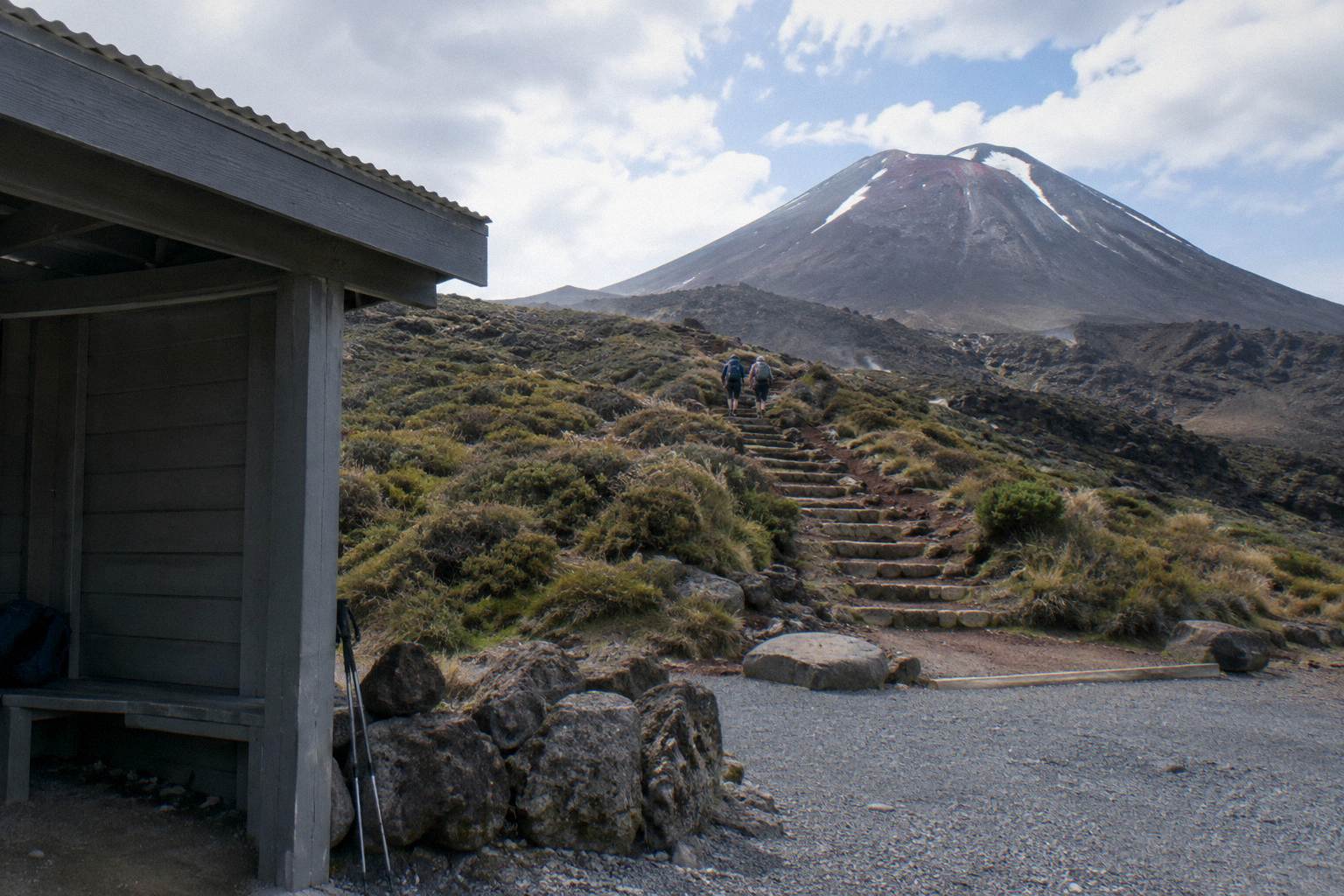
The Devil's Staircase is the steep, stepped climb on the first half of the Tongariro Alpine Crossing, lifting walkers out of the Mangatepopo Valley to the edge of the South Crater. Built from rock and timber steps punctuated by loose volcanic gravel, it forms the biggest single bite of the climb from the Mangatepopo side and the first real test of the day.
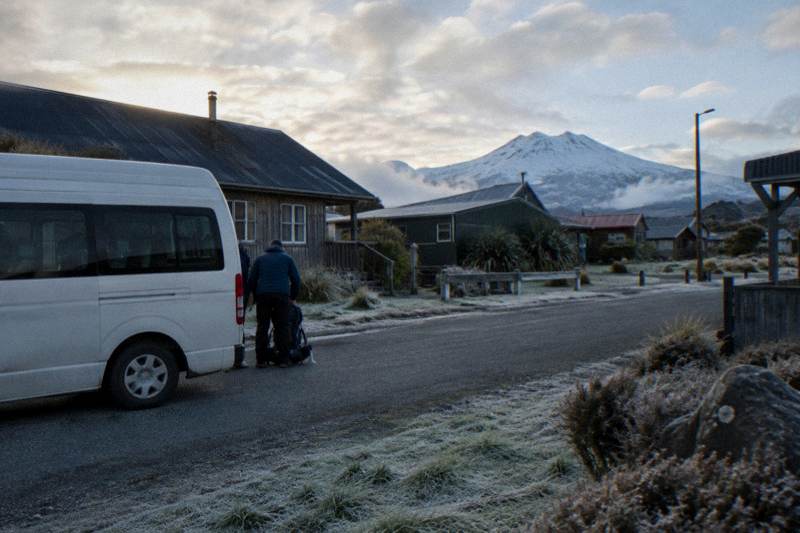
The walk from the Mangatepopo end starts gently. A broad, almost flat boardwalk and track follows the valley beside a stream, with the two volcanoes framing the view ahead: Mount Ngauruhoe, popularly nicknamed Mount Doom for its Mordor look, on the right, and Mount Tongariro's slopes on the left. Most people cover this valley stretch at an easy conversational pace. Then the track bends left and the ground begins to rise, and the steps begin.
The Staircase itself is exactly what the name promises: stairs, hundreds of them, built to hold a line up a slope that would otherwise be a scrambling mess. Some steps are deep, some are shallow, and the rhythm constantly changes, which is part of why it tires people out faster than a steady grade would. The surface ranges from solid rock steps to sections of gravel and scree where the footing slides a little underfoot. Poles help a lot here, both on the way up and, later, on the steep scree descents on the far side of the route.
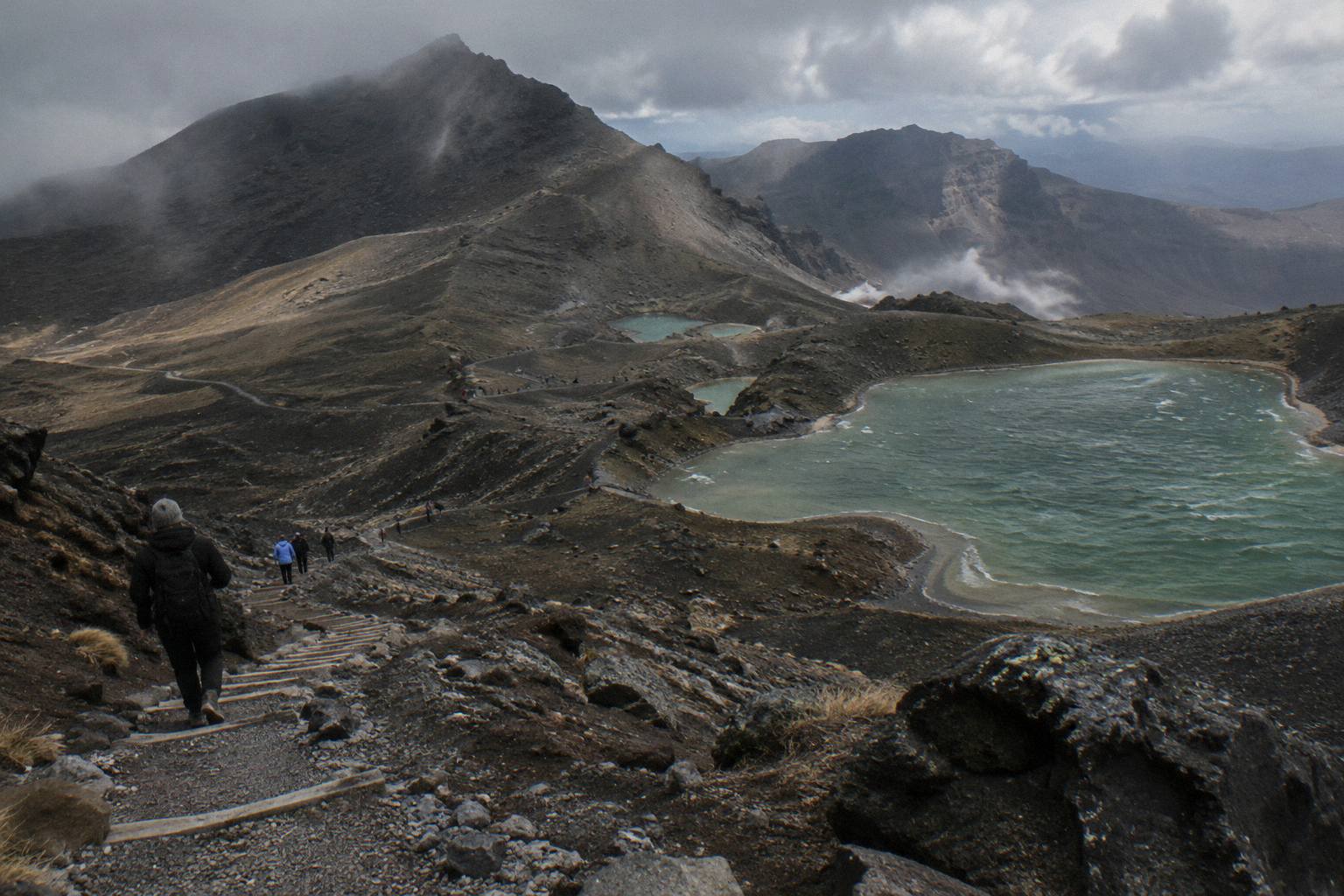
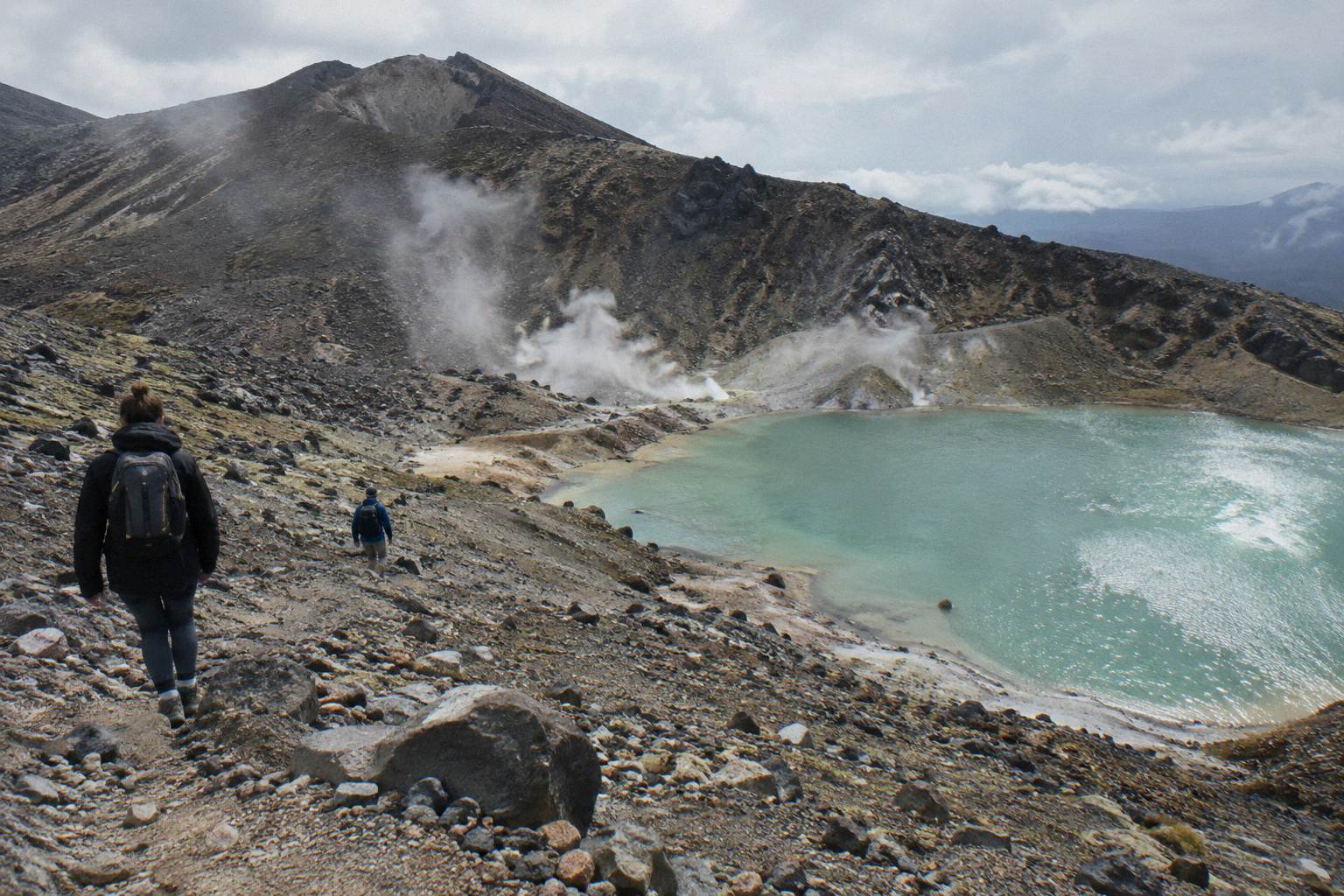
The reward at the top is the South Crater, a flat, otherworldly basin that suddenly appears after the last steps. It is a false summit in the sense that the track's highest point, Red Crater at 1886 m, still lies ahead beyond the crater floor. But the Staircase is the psychological hump of the Mangatepopo half of the walk, and once it is behind you the track changes character completely. The Emerald Lakes, the vivid Nga Rotopounamu that give this site its name, sit on the far side of Red Crater, reached by the steep scree descent DOC describes.
One cultural note that matters on this page and everywhere on the track: kaumatua Te Ngaehe Wanikau asks visitors to respect the maunga tapu by not touching or entering any of the waterways, including the alpine lakes. That request is covered in more detail in the guide to swimming in the Emerald Lakes and tapu.
How Hard Is The Devil's Staircase Climb Really?
For a reasonably fit adult the Staircase is hard work but manageable, typically 40 minutes to an hour of climbing with breaks. DOC rates the fitness requirement for the whole Crossing as High, and the Staircase is a fair part of the reason. There is no scrambling and no exposure in summer; the difficulty is cardio and footing, not technical skill. In winter, from May to October, DOC reclassifies the route as Expert and states that alpine skills are essential.
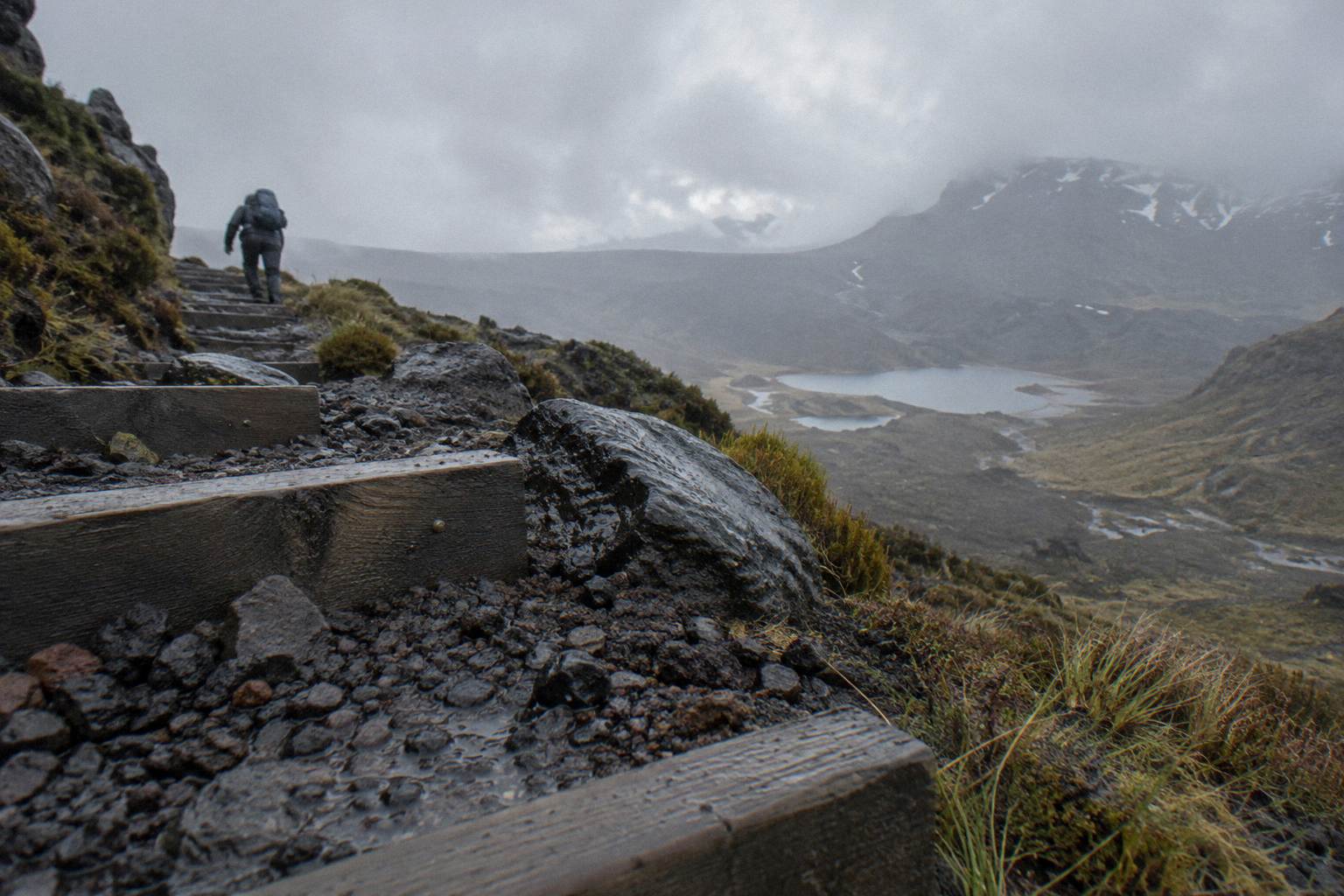
In summer conditions, the honest answer is that the Staircase filters people by pacing rather than by ability. Walkers who charge at it end up stopping every thirty steps, breathing hard. Walkers who slow to half their valley pace, take short strides, and pause at the natural level landings get up it steadily and arrive at the South Crater in better shape for the long second half. Guides use exactly this tactic, which is one reason people who are anxious about the climb often weigh a guided day.
The three Adrift Tongariro tours are the guided options. The Adrift Tongariro premium guided hike runs from NZ$450 per person, rated 4.6 across 242 reviews, with free cancellation up to 14 days before, and crampons and ice axes are supplied for winter conditions if required. The Adrift Tongariro full-day guided Crossing, rated 4.7 across 278 reviews, covers the same track, and the Adrift Tongariro private guided Crossing, rated 4.5 across 30 reviews, is the private version. On all three, the guide sets the pace up the Staircase, and you should bring your own lunch, as lunch is not included. The guide worth-it guide compares the guided and self-guided days in more depth.
For self-guided walkers, the Staircase is no reason to stay away, but it is a reason to train. Anything that builds leg strength and stamina in the weeks before, hills, stairs, long walks with a day pack, pays off directly here. The fitness guide on this site breaks the whole track's demands down section by section in fitness for the climb to the Emerald Lakes.
Age matters at the margins. DOC advises the track is not recommended for children under 10, and individual tours set their own limits: the full-day guided Adrift Tongariro Crossing sets a minimum age of 12, the premium and private tours say to check the booking page for age limits, and Dempsey Buses excludes children under 6 on its return bus services. The Staircase is where a young walker's day is most likely to come apart, so treat those minimums as meaningful rather than bureaucratic.
How Long Does The Devil's Staircase Take To Climb?
The Devil's Staircase itself takes most walkers 40 minutes to an hour in summer, and with roughly 40 minutes of easy valley walking from the Mangatepopo start first, expect to reach the South Crater rim between one and a half and two hours into the day. Slow walkers, large groups, and winter snow and ice all stretch that time considerably.
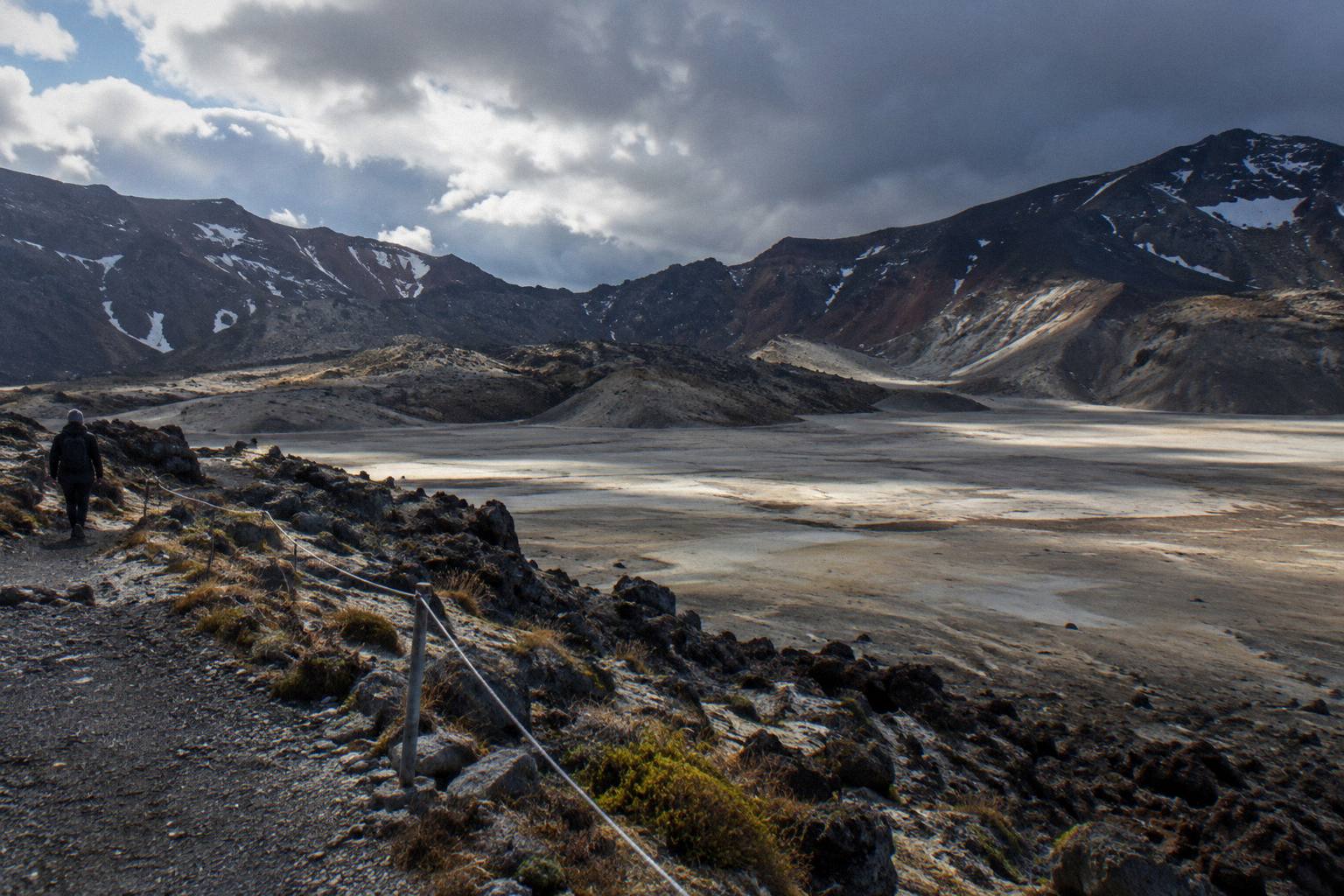
The variable that bends this number most is not fitness but crowding. On a busy summer day the Staircase can hold a queue of walkers, and passing is awkward on the narrower steps. Starting early, which almost every shuttle and guided service is built around, buys you a quieter staircase and a cooler climb. The page on the sunrise start on the Crossing covers why the early start is worth the alarm.
Getting an early start depends on how you arrive. From Labour weekend to 30 April the 4 hour parking maximum at the road ends makes driving yourself to Mangatepopo impractical for a full Crossing day, which is why nearly everyone uses a shuttle or a guided tour with transport included. DOC's own booking system page explains how the free booking fits with shuttle and guided trips.
The Tongariro Crossing Shuttles round-trip from National Park Village is the straightforward version of this: it departs from the Park n Ride at 59 Findlay Street in National Park Village, runs from NZ$75 per person, is rated 4.7 across 890 reviews, and carries free cancellation up to 24 hours before. It is a shuttle, not a guided walk, and the hike itself is your own. DOC's published distances put National Park 13.5 km from the track, so the transfer to the start is short.
| Section of the Crossing from Mangatepopo | Character | Typical Summer Effort |
|---|---|---|
| Mangatepopo Valley walk to the base | Flat boardwalk and track beside a stream | About 40 easy minutes |
| The Devil's Staircase | Steep constructed steps and gravel | 40 minutes to 1 hour of climbing |
| South Crater crossing | Flat, exposed basin | 20 to 30 minutes |
| Climb to Red Crater, 1886 m | Steep, rocky, exposed | 45 minutes to 1 hour |
| Scree descent to the Emerald Lakes | Steep loose scree, DOC notes it specifically | 15 to 25 minutes down |
Treat the times above as planning ranges for a fit summer party, not a schedule. The full Devil's Staircase to Emerald Lakes descent route covers the ground after the top, which is where the footing deserves the most respect.
What Does The Devil's Staircase Look Like Step By Step?
The Staircase begins where the valley track turns left and steepens, and it climbs a shoulder of Mount Tongariro in long stacked switchbacks until the gradient releases at the South Crater rim. The steps mix large stone risers with timber-edged sections and loose gravel between them, and the scenery shifts from green valley to bare black and rust volcanic rock as you climb. It feels bigger from the bottom than from the top.
Stage by stage: the valley floor is gentler country, boggy in places, with the boardwalk protecting both the wetland and your boots. The first rising ground after the junction is a warm-up, a few hundred metres of moderate grade before the steps proper. Then the Staircase stacks up in front of you, and the view back down the valley opens with every switchback. On a clear day you can see the track you have already walked, laid out like a map.
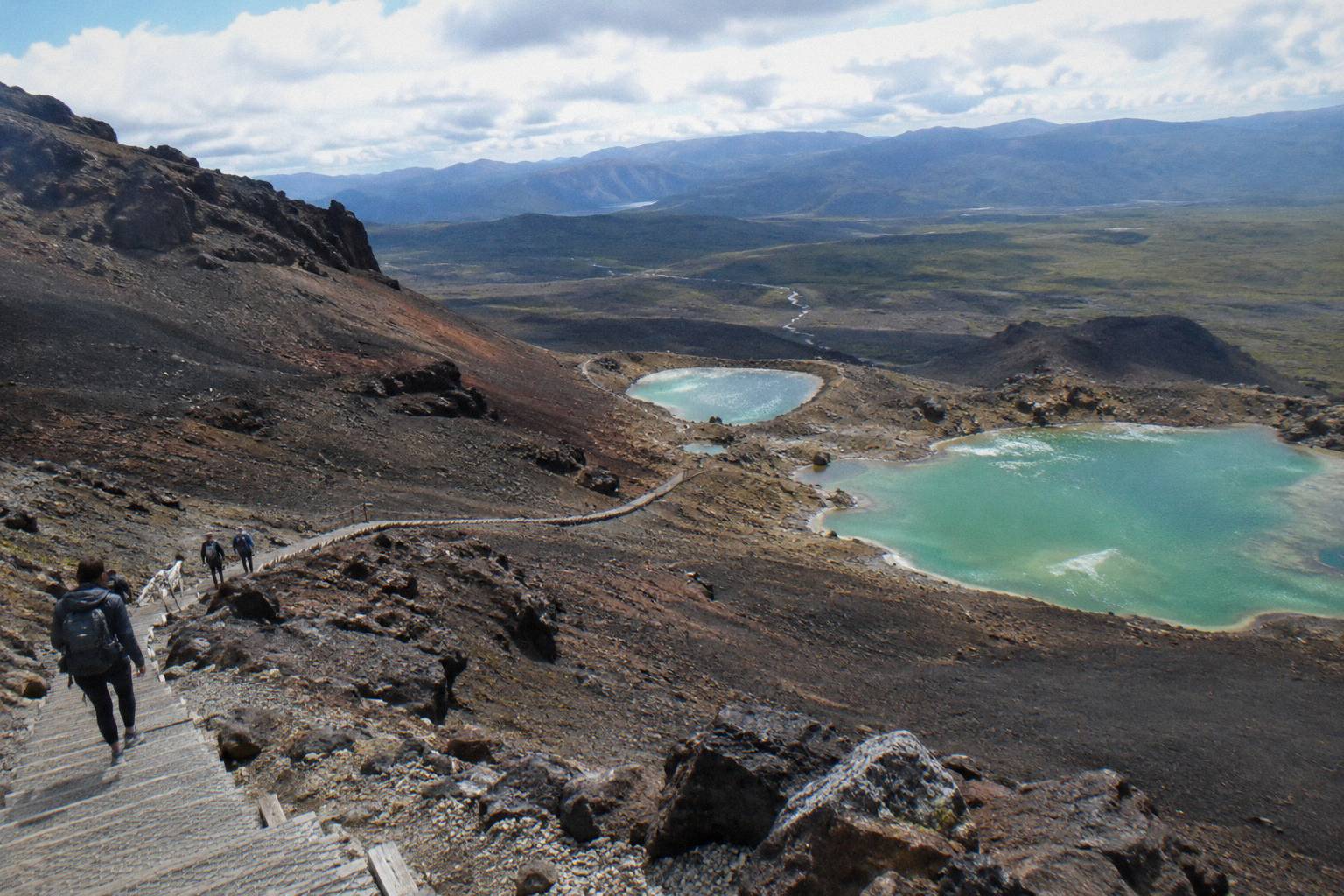
Halfway up, the vegetation disappears almost entirely. What remains is raw lava country, dark rock, rusty oxidised patches, and gravel, with steam-free fumaroles on the surrounding ridges. The photography guide on this site suggests the Staircase as a place to shoot back down the valley rather than straight up the steps, and the advice is sound: looking up is demoralising, looking back is motivating. That framing runs through photographing the Emerald Lakes on the Crossing too.
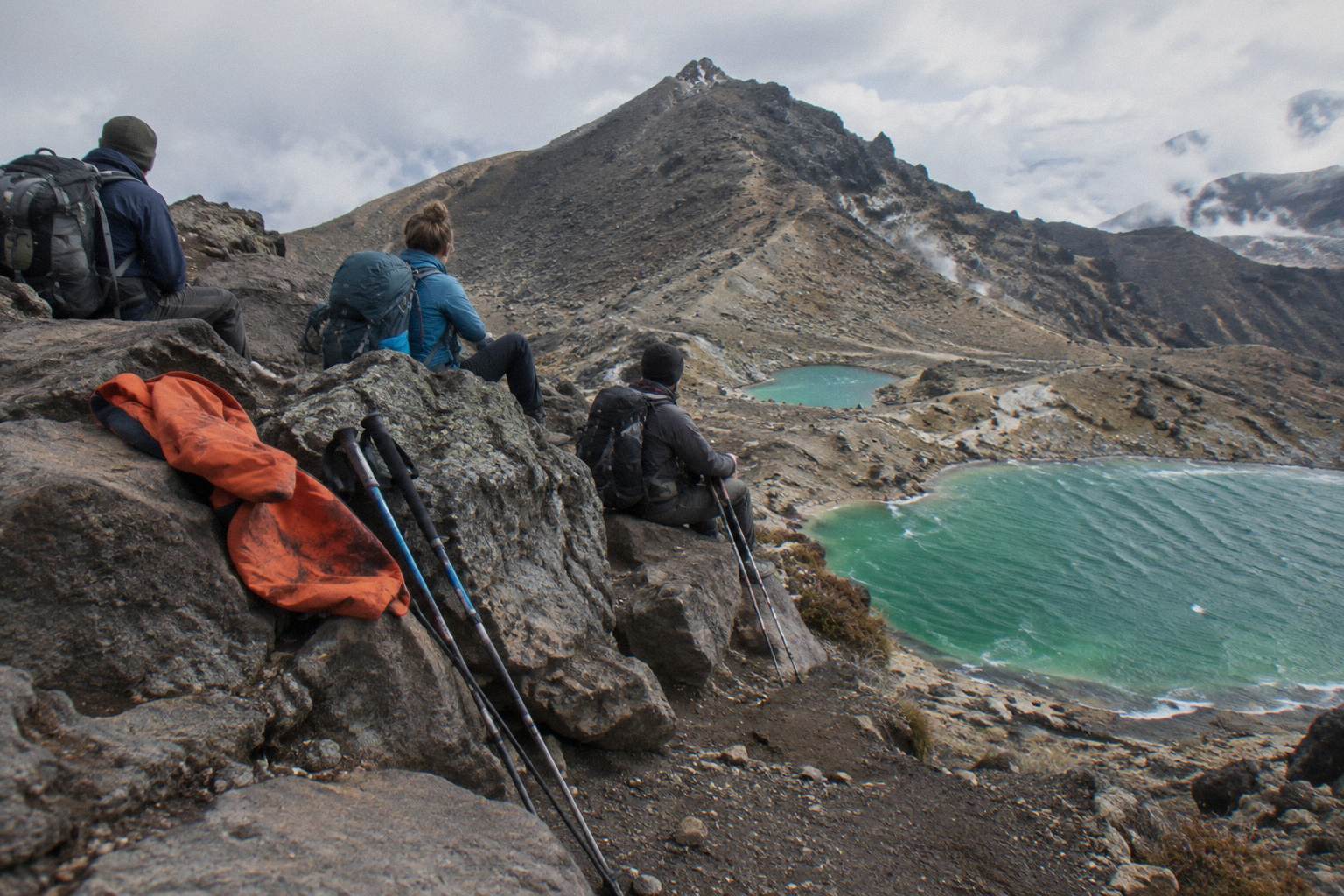
The top of the Staircase is not dramatic. The steps simply ease, the ground levels, and a short walk later the South Crater opens out. Most groups stop here for a first real rest, food and layers, because the crater floor is exposed and the next climb to Red Crater starts almost immediately. Wind is the defining feature of the crater, and the layering advice in what to wear hiking to the Emerald Lakes is written around exactly this kind of stop.
If you want the visual plan of the whole day, the Tongariro Crossing map with the Emerald Lakes places the Staircase in context, and the Devil's Staircase approach from Mangatepopo covers the start of the day in detail.
Should You Tackle The Staircase With A Guide Or A Shuttle?
A shuttle gets you to the Mangatepopo start early and leaves the Staircase to you; a guided tour does the same with a guide setting the pace, supplying winter gear if required, and interpreting the landscape. Shuttles are never guided, and guided days cost considerably more. In summer plenty of walkers are happy with a shuttle alone, while from May to October DOC says the route demands alpine skills and recommends going with a guide.
The shuttle side is varied. Six operators run the one-way Ketetahi park-and-ride format, where you park at the Ketetahi end, ride to Mangatepopo, and walk the Crossing back to your own car with no return transport involved. The Ruapehu Scenic Shuttles Ketetahi park-and-ride runs from NZ$68 per person, rated 4.8 across 670 reviews, with free cancellation up to 24 hours before. The Owhango Adventures Ketetahi park-and-ride, rated 4.8 across 333 reviews, runs the same format from the same car park, also with free cancellation up to 24 hours before. The Tongariro Expeditions Ketetahi park-and-ride, rated 4.3 across 106 reviews, is another one-way option with free cancellation up to 24 hours before.
The return formats differ. From National Park Village, besides the Tongariro Crossing Shuttles round trip above, the Dempsey Buses return bus from National Park Village runs from NZ$90 per person, rated 4.8 across 72 reviews, picking up from the Park Hotel Ruapehu, the Tongariro Crossing Lodge and the Park n Ride, with free cancellation up to 24 hours before. Dempsey Buses excludes children under 6 on both of its services.
From the Taupo and Turangi side, the Tongariro Expeditions Crossing shuttle from Taupo or Turangi runs from NZ$75 per person, rated 4.7 across 431 reviews, with free cancellation up to 24 hours before, and the Tongariro Expeditions Taupo return shuttle carries groups of up to 24. The Taupo to the Emerald Lakes day plan lays out that approach. DOC notes that shuttle buses generally do not operate through winter, May to late October, while guided trips include transport, so winter walkers are effectively looking at a guided day.
On the guided side, the Adrift Tongariro private guided Crossing is worth a separate look for anyone who wants the pace genuinely tailored, rated 4.5 across 30 reviews, departing from 53 Carroll Street in National Park Village, and non-refundable. Cancellation terms differ tour to tour, so read the booking page for whichever you choose; the premium guided hike allows free cancellation up to 14 days before, while the private Crossing is non-refundable.
| Option | What It Is | Price | Rating And Reviews | Cancellation |
|---|---|---|---|---|
| Tongariro Crossing Shuttles round trip, National Park Village | Return shuttle, self-guided walk | From NZ$75 per person | 4.7, 890 reviews | Free, up to 24 hours before |
| Ruapehu Scenic Shuttles Ketetahi park-and-ride | One-way shuttle, you park at Ketetahi | From NZ$68 per person | 4.8, 670 reviews | Free, up to 24 hours before |
| Dempsey Buses return bus, National Park Village | Return shuttle, self-guided walk | From NZ$90 per person | 4.8, 72 reviews | Free, up to 24 hours before |
| Tongariro Expeditions shuttle, Taupo or Turangi | Shuttle with transfer options | From NZ$75 per person | 4.7, 431 reviews | Free, up to 24 hours before |
| Adrift Tongariro premium guided hike | Guided group hike, gear supplied in winter if required | From NZ$450 per person | 4.6, 242 reviews | Free, up to 14 days before |
| Adrift Tongariro private guided Crossing | Guided private hike | Price on the booking page | 4.5, 30 reviews | Non-refundable |
What Trips People Up On The Devil's Staircase?
Most hikers get tripped up by the same few things: relentless rock steps that demand steady footing, uneven and loose surfaces, steep grades that punish tired legs, and slick conditions after rain. Add a heavy pack and fatigue late in the day, and even experienced trekkers stumble. The challenge is less about distance and more about concentration, since a single careless step on wet stone can turn a fun scramble into a painful fall. Three things account for most of the trouble on the Staircase: going out too fast in the first hour, wearing footwear with poor grip on gravel, and underestimating how exposed and windy the ground becomes immediately after the top. None of these are technical problems, and all of them are avoidable with an early start, proper shoes and layers. The mistakes below are the ones that repeatedly turn a good day into a survival march.
Going out too fast is the classic. The valley walk feels so easy that walkers arrive at the base of the steps at running pace and attack the first flight. Three hundred steps later the heart rate is redlined and the rest of the Staircase becomes a series of standing collapses. The fix is boring and effective: slow down before the steps start, and take the first five minutes of climbing deliberately below your comfortable pace.
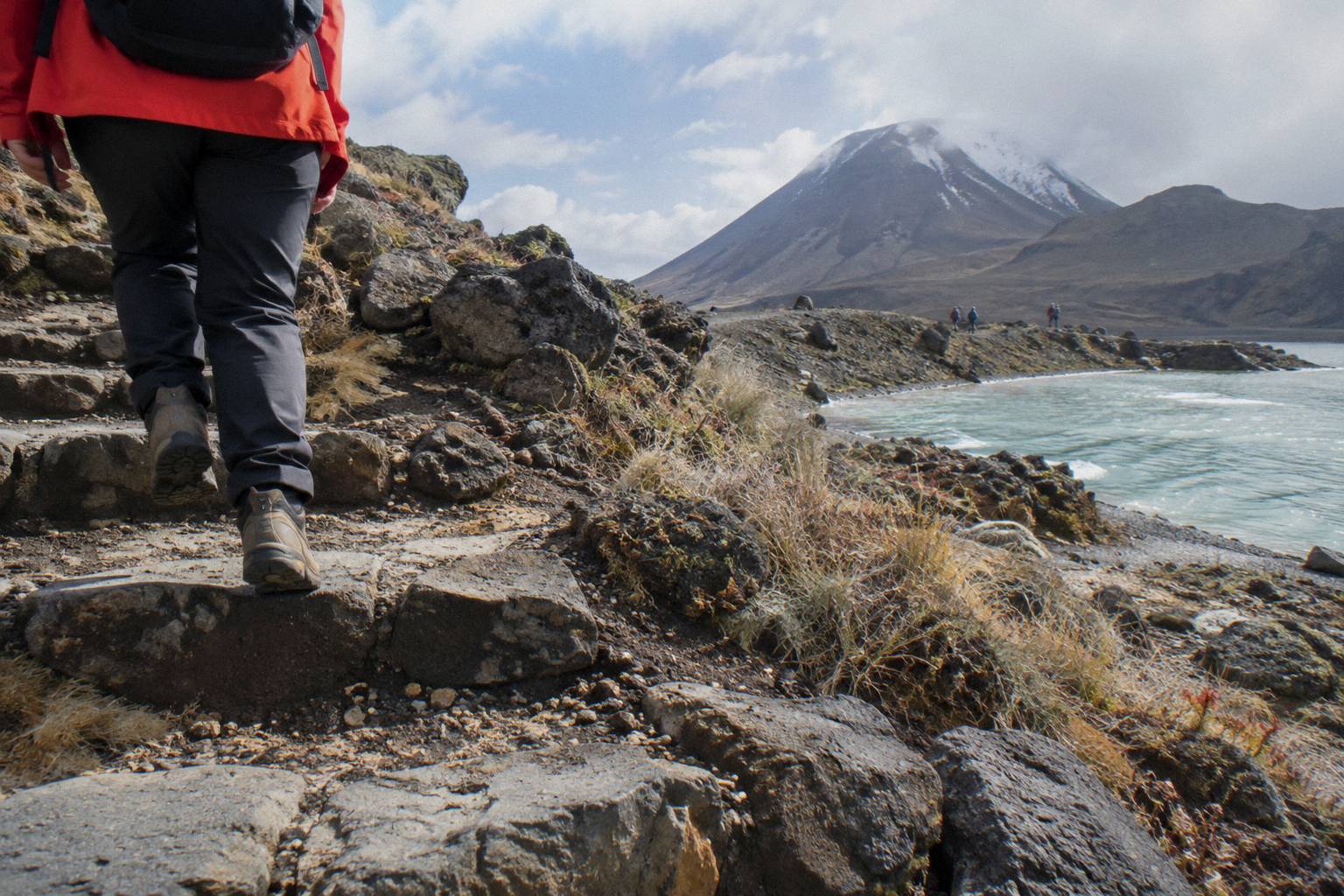
Footwear is the second. The steps hold gravel, and gravel on rock is slippery in anything less than a solid-soled shoe with grip. Boots are not strictly required in a dry summer, but they change the Staircase experience for the better, and in winter they are non-negotiable along with the crampons and ice axe DOC names as essentials for independent winter trips. The site's boots question, do I need hiking boots for the Tongariro Crossing, goes deeper on this.
The third is layers and wind. The South Crater sits high and bare, and the temperature drop between the sheltered valley and the crater rim can be startling even in summer, with wind cutting across the flats. People who sweat up the Staircase in a t-shirt and stop at the top without adding a layer get cold fast. The mountain weather pages, Tongariro Crossing weather above the Emerald Lakes and the NIWA advisory for the park, are the sources to check in the days before you go, and operators run only when DOC's advisory and the forecast allow, conditions allowing.
| Common Mistake | What Happens | The Fix |
|---|---|---|
| Racing the first flights | Redlined heart rate, long recovery stops | Start the climb below your easy pace |
| Thin-soled shoes | Slipping on gravel between steps | Boots or grippy trail shoes |
| No layer at the top | Cold, windy rest stop at the South Crater | Put a windproof on the moment you stop |
| Late start | Heat, crowds on the steps, queueing | Book transport that gets you there early |
| Driving in the summer season | 4 hour parking maximum at road ends | Use a shuttle or guided transport |
A final trap is assuming the Staircase is the hardest thing on the track. It is the steepest sustained climb from the Mangatepopo side, but the climb to Red Crater beyond the South Crater is steeper in places, and the scree descent to the Emerald Lakes is where most slips happen. Save some legs. The Blue Lake on the Tongariro Crossing section beyond, and the Ketetahi finish after the Emerald Lakes, complete the day's arc.
How Should You Prepare For The Staircase In Different Seasons?
From November to April the Staircase is a summer walk with a high fitness demand, 7 to 8 hours for the full track, best done with an early start and sun protection. From May to October DOC classifies the route as Expert, with snow, ice, avalanche risk and sub-zero temperatures, and states alpine skills are essential and it is best to go with a guide. The season you choose changes the preparation more than the route itself does.
Summer brings crowds and UV rather than ice. The Staircase's dark rock absorbs heat, and the climb in the middle of a clear day is a furnace. Water, a hat and sunscreen matter as much as fitness. The trade-off is footing: dry steps are as good as this track gets, and most people's best Crossing memories are made in this window. The best month to hike to the Emerald Lakes weighs the months against each other.
Winter is a different proposition entirely. Snow and ice turn the Staircase into a crampon exercise, and avalanche risk applies to the high ground beyond. DOC's essentials for independent winter trips list crampons, an ice axe, a helmet, competency with both, and avalanche gear. This is exactly the ground where the guided option earns its price: the Adrift Tongariro guided tours supply crampons and ice axes for winter conditions if required, and DOC itself recommends a guide for the May to October window. Volcanic alert levels also change daily, and GeoNet is the official source; the volcanic risk in Tongariro National Park page explains the hazard framework around the track.
Whenever you go, check the DOC alerts and the forecast before committing, and know the alternatives. DOC names Taranaki Falls and Tama Lakes as the recommended walks when conditions on the Crossing are poor, and other hikes in Tongariro National Park collects the options. No operator, guided or shuttle, runs when DOC's advisory and the forecast forbid it, and the Tongariro Emerald Lakes Hike site's stance is the same as DOC's: the mountain decides. In the shoulder months the track can swing between snow dustings and summer warmth within a single week, so pack for both and decide on the day.
There is also the long-range question of how you get to the district at all. Auckland is a long way from the track, and overnight and two-day products exist for that journey: the Kiwi Road Tours private transfer from Auckland is a transfer with the walk self-guided, and the ExperienceKart private three-day tour builds the Crossing in as one self-guided leg alongside Huka Falls and Lake Taupo. Neither is a guided Crossing tour, and neither suits a day trip.
Common Questions About The Devil's Staircase
How Hard Is The Devil's Staircase On The Tongariro Crossing?
It is a steep, sustained climb of around 350 metres on steps and gravel, hard enough to slow every group and simple enough that nearly everyone finishes it. DOC rates the whole track's fitness demand as High. Go slowly at the bottom, rest at the level landings, and treat it as an hour of effort rather than a race.
How Long Does The Devil's Staircase Take?
Typically 40 minutes to an hour in summer for a steady walker, after roughly 40 minutes of flat valley walking from the Mangatepopo start. Fit parties do it faster, family groups slower. The full track takes 7 to 8 hours from November to April and 9 hours from May to October, per DOC.
Do You Need A Guide For The Devil's Staircase?
In summer, no: the staircase is a non-technical walk and shuttles drop walkers at the Mangatepopo start for a self-guided day. From May to October DOC classifies the route as Expert, states alpine skills are essential, and recommends going with a guide. The three Adrift Tongariro tours are the guided options, with crampons and ice axes supplied for winter conditions if required.
Can You Park At The Devil's Staircase Start?
Not for a full Crossing day in the summer season. From Labour weekend in late October to 30 April, parking at the road ends is limited to a 4 hour maximum, and DOC suggests booking a shuttle. The Mangatepopo car park has no Crossing walker parking in summer, which is why shuttle and guided transport dominate.
Is The Devil's Staircase The Hardest Part Of The Tongariro Crossing?
It is the steepest sustained climb from the Mangatepopo side, but the climb to Red Crater beyond the South Crater is steeper in short sections, and the scree descent to the Emerald Lakes is where most slips happen. Pace yourself up the stairs and keep something in reserve for the second half.
What Shoes Do You Need For The Devil's Staircase?
Boots or trail shoes with a stiff sole and real grip. Gravel sits on the steps and it slides under thin or worn tread. In winter, crampons and an ice axe are essentials for an independent trip per DOC, and the Adrift Tongariro guided tours supply that gear for winter conditions if required.