Free Hikes And Viewpoints Near The Tongariro Crossing Start
The Tongariro Alpine Crossing itself is free to walk, and the Whakapapa side of the mountain carries two more free DOC walks, Taranaki Falls and Tama Lakes, that fit neatly around a crossing day.
Short answer
The DOC alternatives near the crossing start are the Taranaki Falls loop and the Tama Lakes track, both free, both starting from near Whakapapa, which DOC lists 10.4 km from the Mangatepopo track start. Parking at the road ends is limited to 4 hours from Labour weekend to 30 April, so the free walks pair best with a shuttle or a guided crossing day rather than self-driving the full crossing.
Tongariro National Park is New Zealand's oldest national park, gazetted in 1894, and a dual World Heritage area recognised for both its volcanic landscape and its cultural significance to Ngati Hikairo ki Tongariro of Ngati Tuwharetoa. Walking in it costs nothing at the track level. The famous paid elements, shuttles and guides, are logistics and safety, not entry fees, and the park's own DOC pages make clear the tracks themselves are open access. That makes the area around the crossing start unusually generous for a budget traveller: you can fill two or three days with free walking and spend money on a single big day, whether that is the round-trip shuttle from National Park Village run by Tongariro Crossing Shuttles, a Ketetahi park-and-ride with Ruapehu Scenic Shuttles, or the Adrift Tongariro premium guided hike.
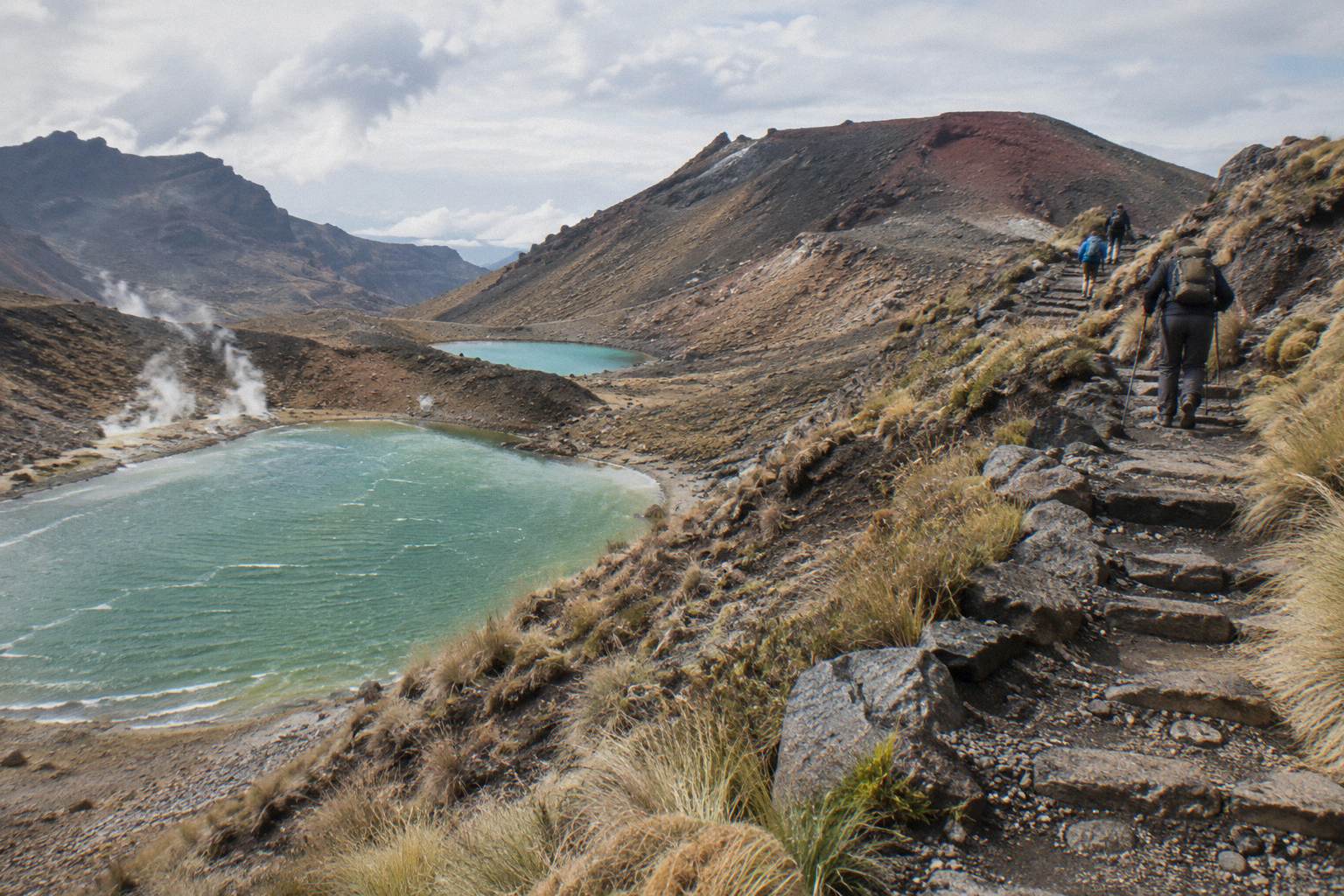
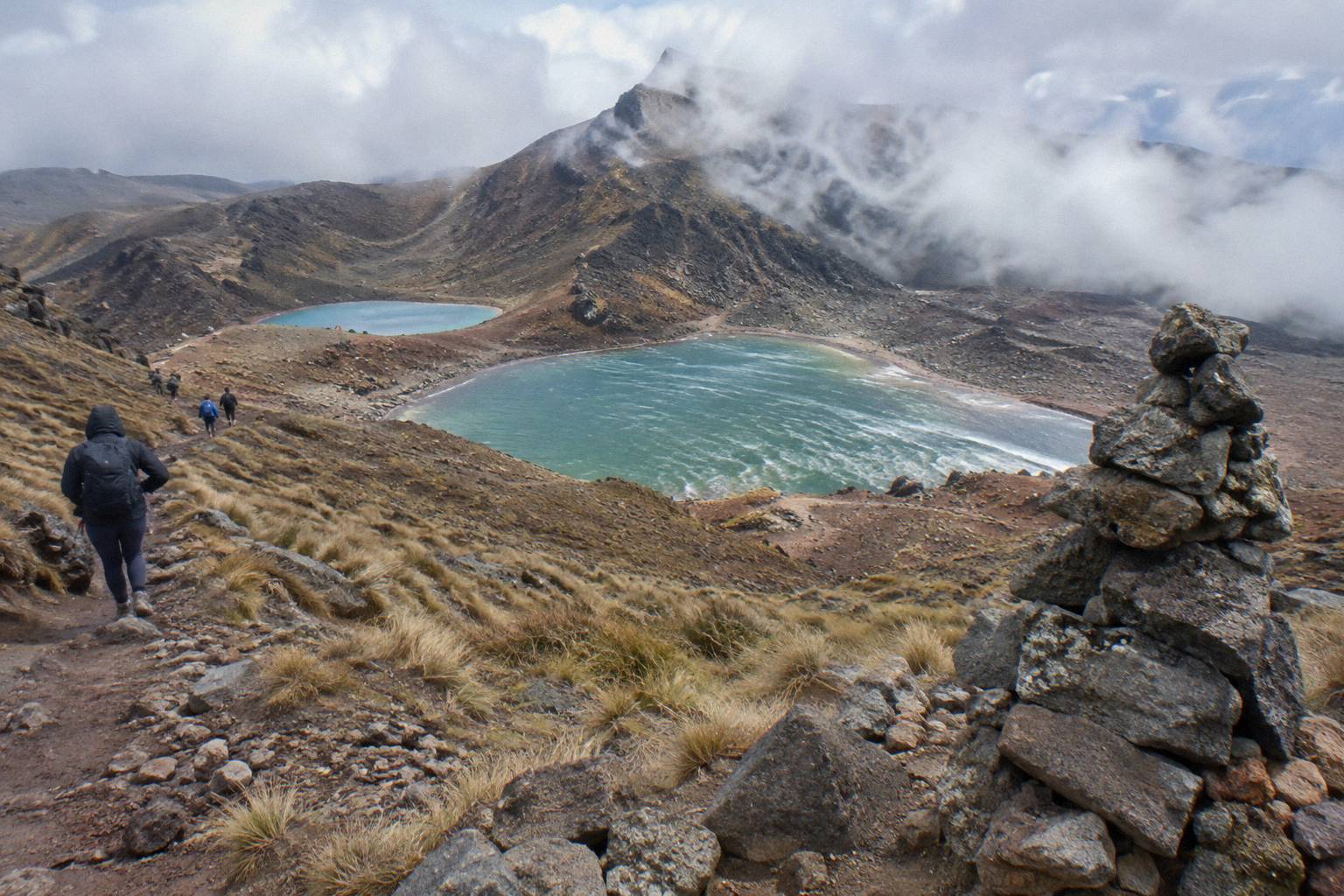
For the full crossing picture, start with the guide to the Emerald Lakes on the Tongariro Crossing.
What Free Walking Options Sit Near The Crossing Start?
The free options near the crossing start are the first stretch of the Tongariro Alpine Crossing walked out and back from Mangatepopo, the Taranaki Falls loop, and the Tama Lakes track, all listed by DOC on its Tongariro Alpine Crossing page. None of these carries a track fee, and DOC names Taranaki Falls and Tama Lakes as the go-to alternatives when crossing conditions are poor.
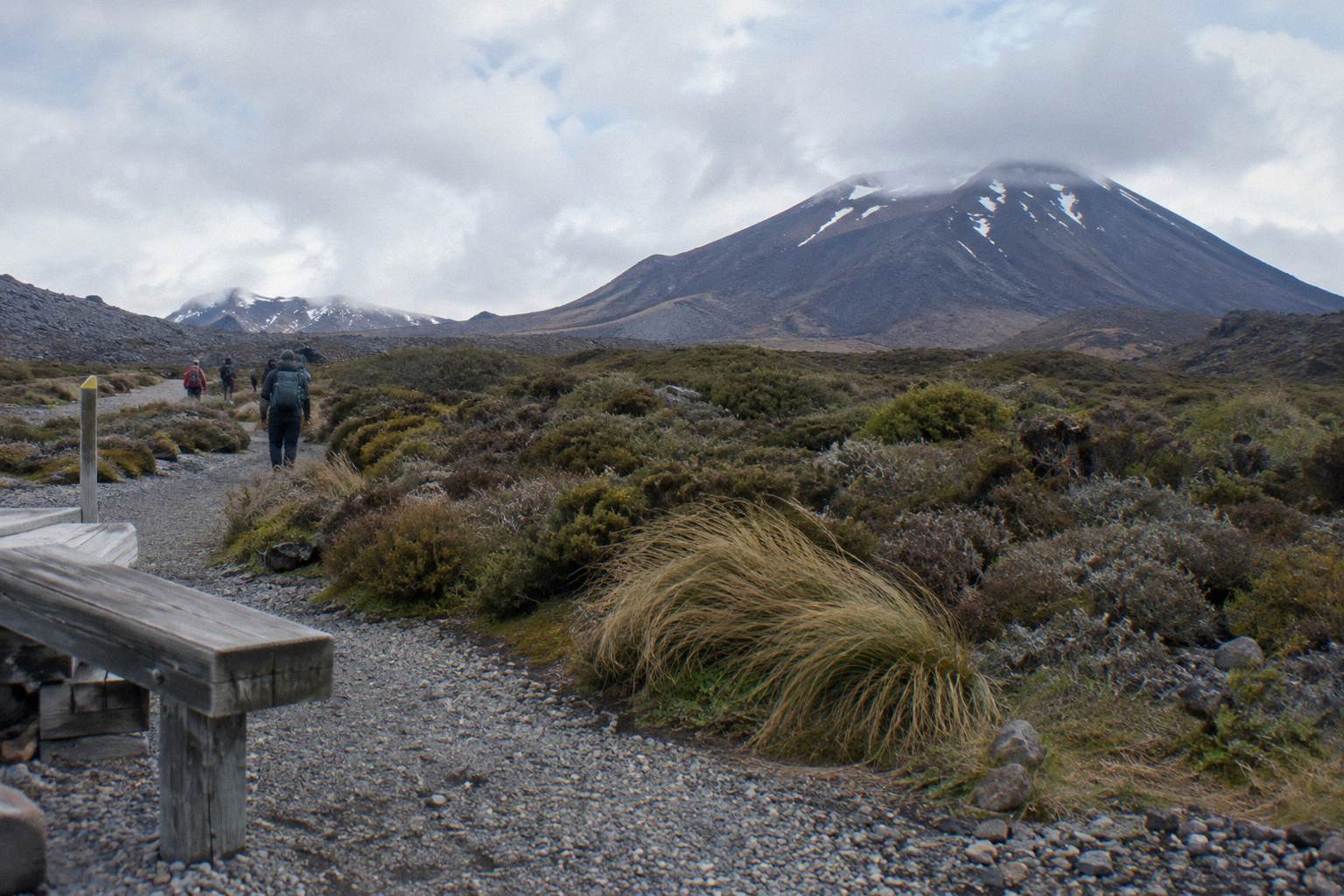
The starting point to understand is that "free" and "unguarded" are different things here. The crossing itself is 20.2 km one way with 1196 m of elevation change either way, DOC classifies it as High fitness, and the agency says it takes 7 to 8 hours from November to April and 9 hours from May to October, when it becomes an Expert route. A short out-and-back along the first part of the track from Mangatepopo gives you the volcanic valley, the stream-side boardwalks and views up toward the mountains, without committing to the full crossing. Turn around whenever it suits you, because the track simply retraces itself.
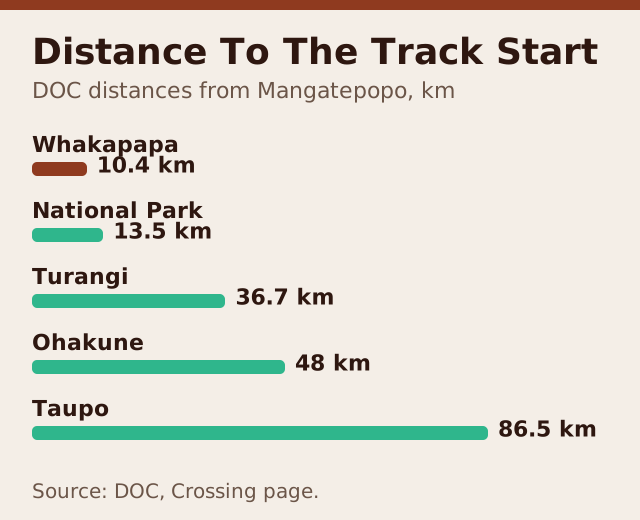
The two named alternatives sit on the Whakapapa side. DOC lists Whakapapa 10.4 km from the track start at Mangatepopo, National Park 13.5 km, Turangi 36.7 km, Ohakune 48 km and Taupo 86.5 km, so a base at National Park Village or Whakapapa puts everything in this article within a short drive. That geography matters for budget planning: the free walks and the crossing start are neighbours, and one accommodation base serves both.
| Free option | Where it starts | What DOC says about it | Cost |
|---|---|---|---|
| Tongariro Alpine Crossing, short out and back | Mangatepopo track start | 20.2 km one way in full, High fitness, 7 to 8 hr Nov to Apr | Free, booking system free and recommended |
| Taranaki Falls walk | Near Whakapapa, DOC alternative walk | Named by DOC as an alternative when crossing conditions are poor | Free |
| Tama Lakes track | Beyond Taranaki Falls, same side | Named by DOC as an alternative when crossing conditions are poor | Free |
| Crossing viewpoints from road ends | Mangatepopo and Ketetahi road ends | 4 hour maximum parking from Labour weekend to 30 April | Free within the parking limit |
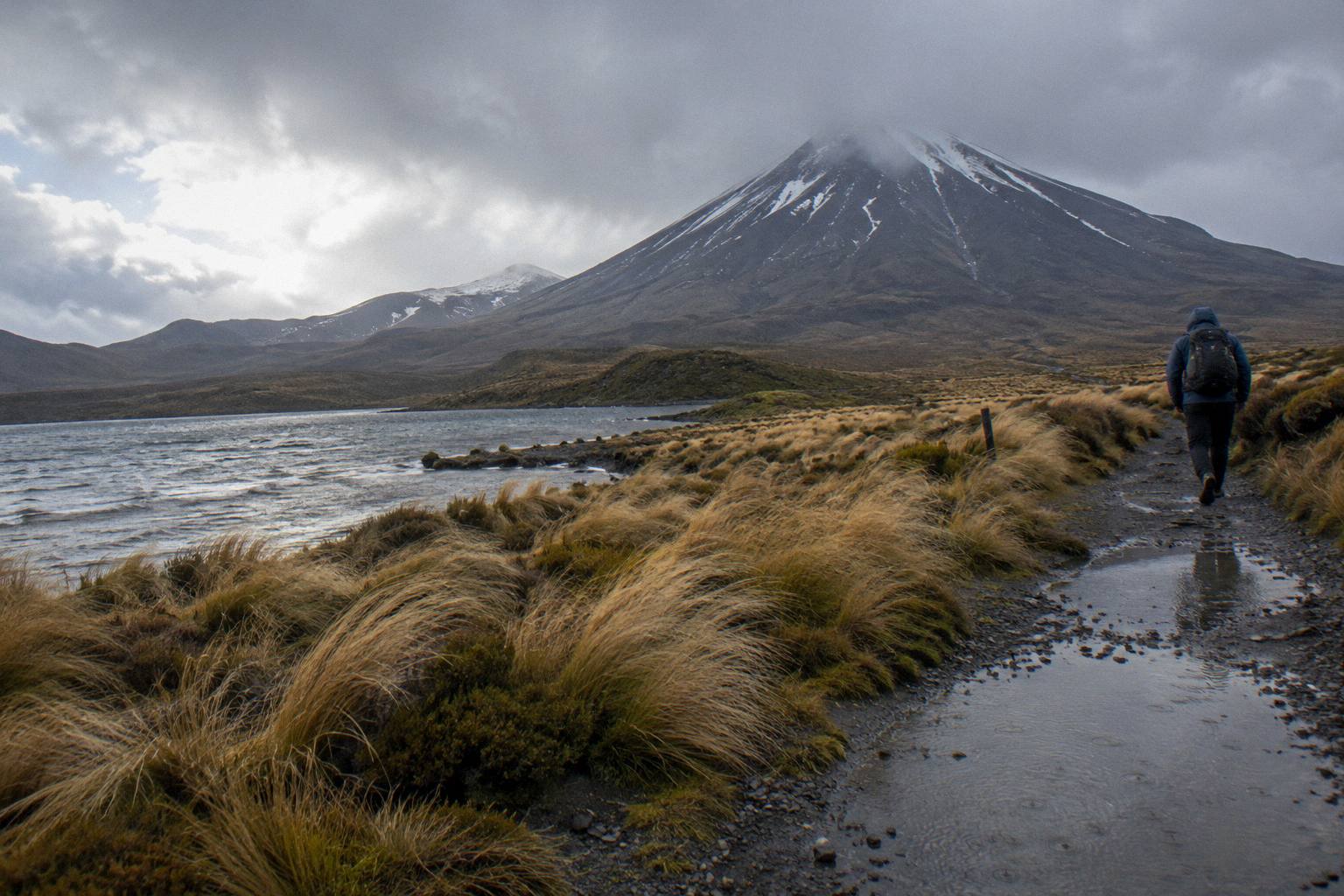
A word on what "attractions" means in this park, since the target of a search like tongariro national park attractions is usually a mix of walks and lookouts. There are no paid lookout towers, no cable cars and no entry gates on this side of the mountain. The attractions are the walks themselves, the volcanic landforms you see from them, and Mount Ngauruhoe, popularly nicknamed Mount Doom for its Mordor look, standing beside the track as scenery. For more on the free-versus-paid question, see whether you have to pay to hike to the Emerald Lakes.
Taranaki Falls: The Best Free Loop From Whakapapa
Taranaki Falls is the best free loop from Whakapapa: it costs nothing, DOC names it first among its alternatives when the crossing is not on, and it still delivers a proper waterfall, open volcanic plains, and direct views of Mount Ngauruhoe and Mount Ruapehu. Because it is a loop rather than a one-way alpine crossing, it fits a half day, a rest day, or the afternoon you arrive.
The falls themselves drop over an old lava flow from Ruapehu, and the track crosses terrain that tells the volcanic story of the park in miniature: tussock, beech forest remnants, stream crossings and long open sections where the mountains fill the view. DOC's own crossing page recommends Taranaki Falls alongside Tama Lakes precisely because they give a genuine taste of the park without the alpine exposure of the full crossing. For a budget traveller, that matters: this walk scratches the same itch as the crossing's upper sections, at zero cost and with none of the weather risk.
Photographically, the walk rewards the same instincts as the crossing. The open sections favour morning or late afternoon light across the tussock, and the falls are close enough to the start that you can position yourself for them without a long carry. If you are planning a photography day on the crossing proper, the Emerald Lakes photography guide covers the lakes themselves, but Taranaki Falls is where you warm up your camera for free the day before.
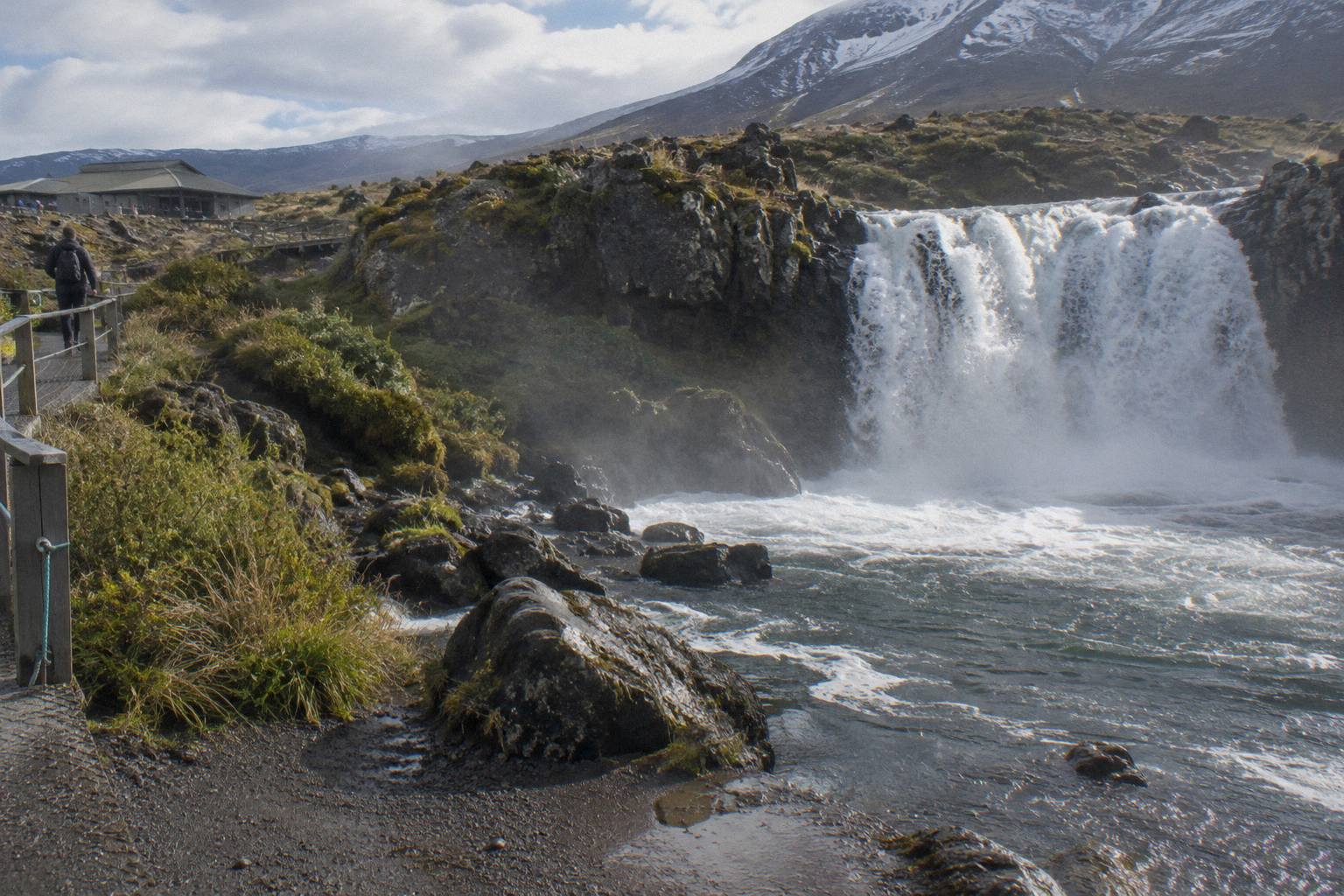
There is a cultural note that applies everywhere in this park, including on the free walks near the water. DOC passes on the request from Kaumatua Te Ngaehe Wanikau that visitors respect the maunga tapu, the sacred mountains, by not touching or entering any of the waterways, including the alpine lakes. The rule of thumb for Taranaki Falls is simple: look, photograph, enjoy, but stay out of the water itself. The guide to swimming in the Emerald Lakes and tapu covers the reasoning in full.
Pairing this walk with a paid crossing day is where the budget plan comes together. The three options most often combined with free walking days are the Tongariro Crossing Shuttles round trip from National Park Village, the Ruapehu Scenic Shuttles Ketetahi park-and-ride, and the Adrift Tongariro premium guided hike.
The round trip from Tongariro Crossing Shuttles, rated 4.7 across 890 reviews and the most reviewed tour here, runs from NZ$75 per person with free cancellation up to 24 hours before, departing National Park Village at 59 Findlay Street. The Ruapehu Scenic Shuttles park-and-ride, rated 4.8 across 670 reviews, runs from NZ$68 per person, also with free cancellation up to 24 hours, and suits a driver who wants to leave the car at Ketetahi. The Adrift Tongariro premium guided hike, rated 4.6 across 242 reviews, runs from NZ$450 per person with free cancellation up to 14 days before and includes a guide plus gear for winter conditions if required; bring your own lunch.
Tama Lakes: A Free Alpine Walk Past The Falls
The Tama Lakes track continues beyond Taranaki Falls across open volcanic country to two lakes in old eruption craters, and DOC names it, with the falls, as the alternative when the crossing conditions are poor. It is free, it feels genuinely alpine in a way few short walks do, and because it shares its start with the falls loop you can combine both into one longer day or split them across two easy mornings.
Where Taranaki Falls is a half-day loop, Tama Lakes is the walk for the day you want distance without crossing-commitment. The track leaves the same Whakapapa side, crosses the same volcanic plains, and climbs toward lakes held in craters on the slopes between Ruapehu and Ngauruhoe. DOC lists it as an alternative walk rather than a full alpine crossing, but the terrain is the same family: exposed tussock, volcanic gravel and long sightlines to both mountains. Weather moves fast across that open ground, so the same clothing rules apply as on the crossing proper, and the what to wear guide for the Emerald Lakes translates directly.
Two practical points shape a Tama Lakes day. First, it is an out-and-back, so you set your own distance and turn around when the weather or your legs say so, which is exactly the flexibility the full crossing does not give you. Second, the waterways request applies here too: the lakes are among the waterways visitors are asked not to touch or enter, so treat the shoreline as a viewpoint rather than a swimming spot.
If the crossing is closed or conditions are poor on the day you had planned it, DOC points walkers at exactly this pair of walks, and the guide to other hikes when the crossing closes builds the full picture. The closure question itself, and the structural reasons a day can be off, are covered in whether the crossing is open to the Emerald Lakes.
Pairing A Free Walk With Your Crossing Day
Pair one paid crossing day with two free walking days, putting your money toward transport rather than track fees. Book the crossing first, shuttle or guided, because the free DOC booking is needed for both, then fill your arrival afternoon and recovery day with Taranaki Falls and Tama Lakes, both free and close to the same road network.
Why book the paid day first? Because the crossing is the element that can move. Operators run only when DOC's advisory and the forecast allow, conditions allowing is the honest phrase, and if your crossing day slips, the free walks flex around it without penalty. A Taranaki Falls afternoon costs you nothing to rearrange. That is also why free cancellation windows matter when you book: the Tongariro Crossing Shuttles round trip and the Ruapehu Scenic Shuttles park-and-ride both carry free cancellation up to 24 hours before, and the Adrift Tongariro premium guided hike up to 14 days before. Two Adrift guided options, the private guided Crossing among them, are non-refundable, so the booking page's cancellation terms deserve a read before you commit. Other pages covering the same trip are gathered on Tongariro Emerald Lakes Hike.
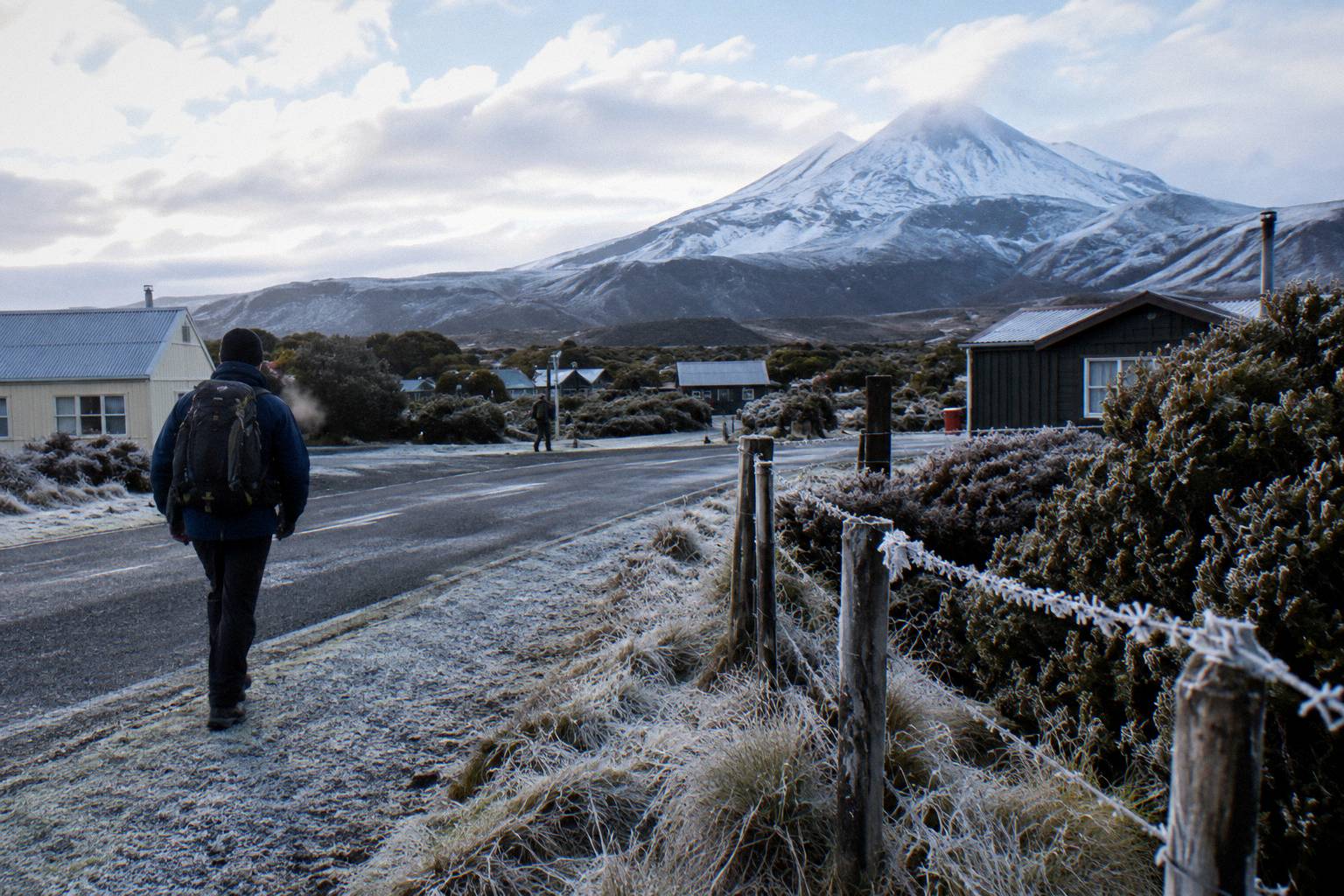
The geography supports the pairing. DOC's distances from the track start are Whakapapa 10.4 km, National Park 13.5 km, Turangi 36.7 km, Ohakune 48 km and Taupo 86.5 km. Base yourself at National Park Village and you are a short drive from both free walks and standing at the departure point of five tours, including the round-trip shuttle that most crossing walkers from the north use. The National Park Village to the Emerald Lakes plan shows how a village base works for the crossing itself.
| Day | Walk or tour | Cost basis | Notes |
|---|---|---|---|
| Arrival afternoon | Taranaki Falls loop | Free | Loop walk, waterfall and mountain views |
| Crossing day | Tongariro Crossing Shuttles round trip, National Park Village | From NZ$75 per person | Free cancellation up to 24 hours before, conditions allowing |
| Recovery day | Tama Lakes track | Free | Out and back, set your own distance |
| Alternative crossing day | Adrift Tongariro premium guided hike | From NZ$450 per person | Guided, free cancellation up to 14 days before, bring your own lunch |
For travellers coming from farther afield, the shape changes. From Taupo or Turangi, the Tongariro Expeditions Crossing shuttle from Taupo or Turangi, rated 4.7 across 431 reviews and running from NZ$75 per person with free cancellation up to 24 hours before, ties the crossing into a longer round trip. From Auckland, the honest framing is that it is a long way, and overnight or multi-day products exist for it, including the Kiwi Road Tours private transfer and the ExperienceKart private three-day tour, on both of which the crossing leg is walked self-guided.
That Taupo and Turangi option suits a pairing plan too: arrive from Taupo, walk Taranaki Falls that afternoon from a Whakapapa or village base, take the shuttle crossing the next morning, and finish with Tama Lakes before heading home. Two free days, one paid day, and the whole volcanic core of the park seen on foot.
Parking And Access At The Road Ends
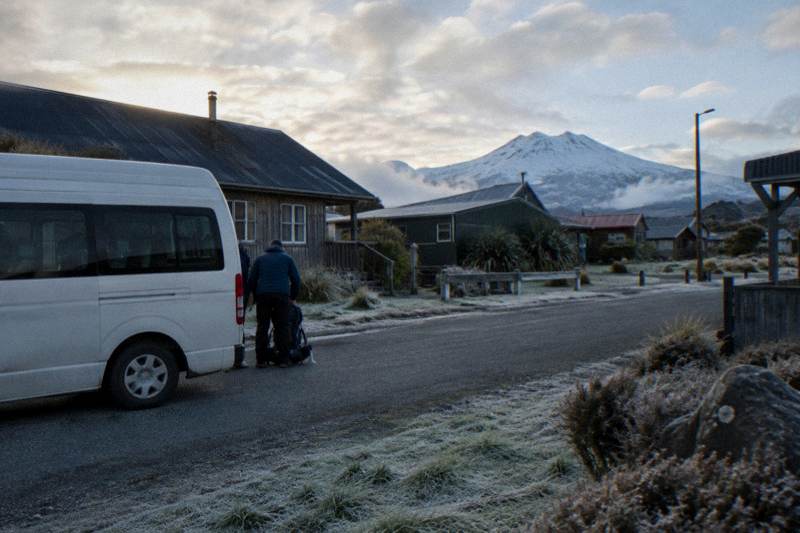
Parking at the Mangatepopo and Ketetahi road ends is restricted to 4 hours from Labour weekend in late October until 30 April, and in summer there is no parking at all for crossing walkers at Mangatepopo, though a private car park sits near Ketetahi. DOC recommends booking a shuttle, so all-day crossing walkers rely on paid transport while the free walks begin elsewhere.
This is the most misunderstood part of a budget Tongariro trip, so it deserves plain words. The 4 hour limit makes a self-driven full crossing, which DOC says takes 7 to 8 hours in the November to April window plus the walk back or a lift, impractical at the road ends in summer. Shuttles solve it. The round-trip products from National Park Village, including the Tongariro Crossing Shuttles round trip and the Dempsey Buses return bus, rated 4.8 across 72 reviews from NZ$90 per person with free cancellation up to 24 hours before, drop you at Mangatepopo and collect you at Ketetahi. The six Ketetahi park-and-ride products work the other way: you park at Ketetahi, ride to Mangatepopo, and walk the crossing back to your own car, one-way shuttle legs with no return transport included.
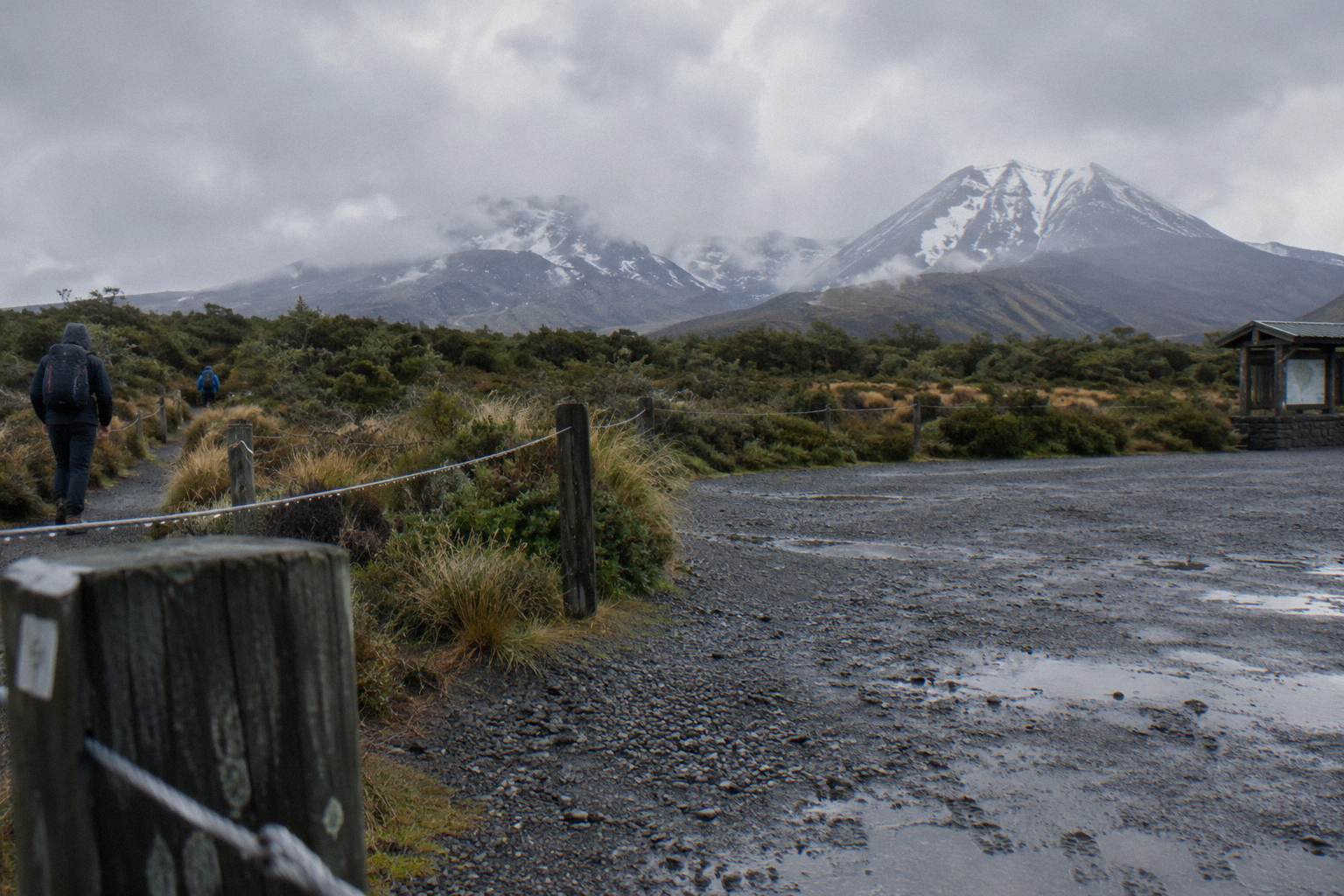
The free walks dodge all of this. Taranaki Falls and Tama Lakes start on the Whakapapa side, away from the restricted crossing road ends, so the 4 hour limit does not govern them. An out-and-back along the first stretch of the crossing from Mangatepopo does sit inside the restriction, so keep it short in the booking season, or better, do it as your warm-down after a shuttle drops you there in the morning. The Mangatepopo car park start guide covers that end of the track in detail.
One more access fact from DOC: shuttle buses generally do not operate in winter, May to late October, while guided trips include transport. In the winter months the crossing is an Expert route on which DOC says alpine skills are essential and it is best to go with a guide, so a free-walk plan plus a guided winter day is the realistic cold-season pairing. The winter snow guide for the Emerald Lakes covers that season properly.
For walkers who prefer the Ketetahi park-and-ride shape, the Tongariro Expeditions Ketetahi park-and-ride, rated 4.3 across 106 reviews with free cancellation up to 24 hours before, is one of the six one-way options on that side.
When A Paid Shuttle Or Guided Day Makes Sense
A paid shuttle or guided day makes sense when the 4 hour parking rule, the season, or the alpine terrain removes the free option, and that covers most crossing days. DOC calls the 20.2 km High-fitness walk to 1886 m at Red Crater an Expert route from May to October, volcanic and weather advisories are assessed each morning, and the crossing is the one day worth paying for transport or a guide.
The choice between shuttle and guide comes down to three questions. Do you have a car at the crossing start problem? A shuttle solves it cheaply, from NZ$68 per person on the Ruapehu Scenic Shuttles park-and-ride and from NZ$75 on the round trips. Do you want company and interpretation on an alpine route? Only the Adrift Tongariro tours are guided: the premium guided hike, from NZ$450 per person, and the private guided Crossing, non-refundable, rated 4.5 across 30 reviews, both supplying crampons and ice axes for winter conditions if required, both asking you to bring your own lunch. Are you walking in winter? DOC recommends a guide, full stop, between May and October.
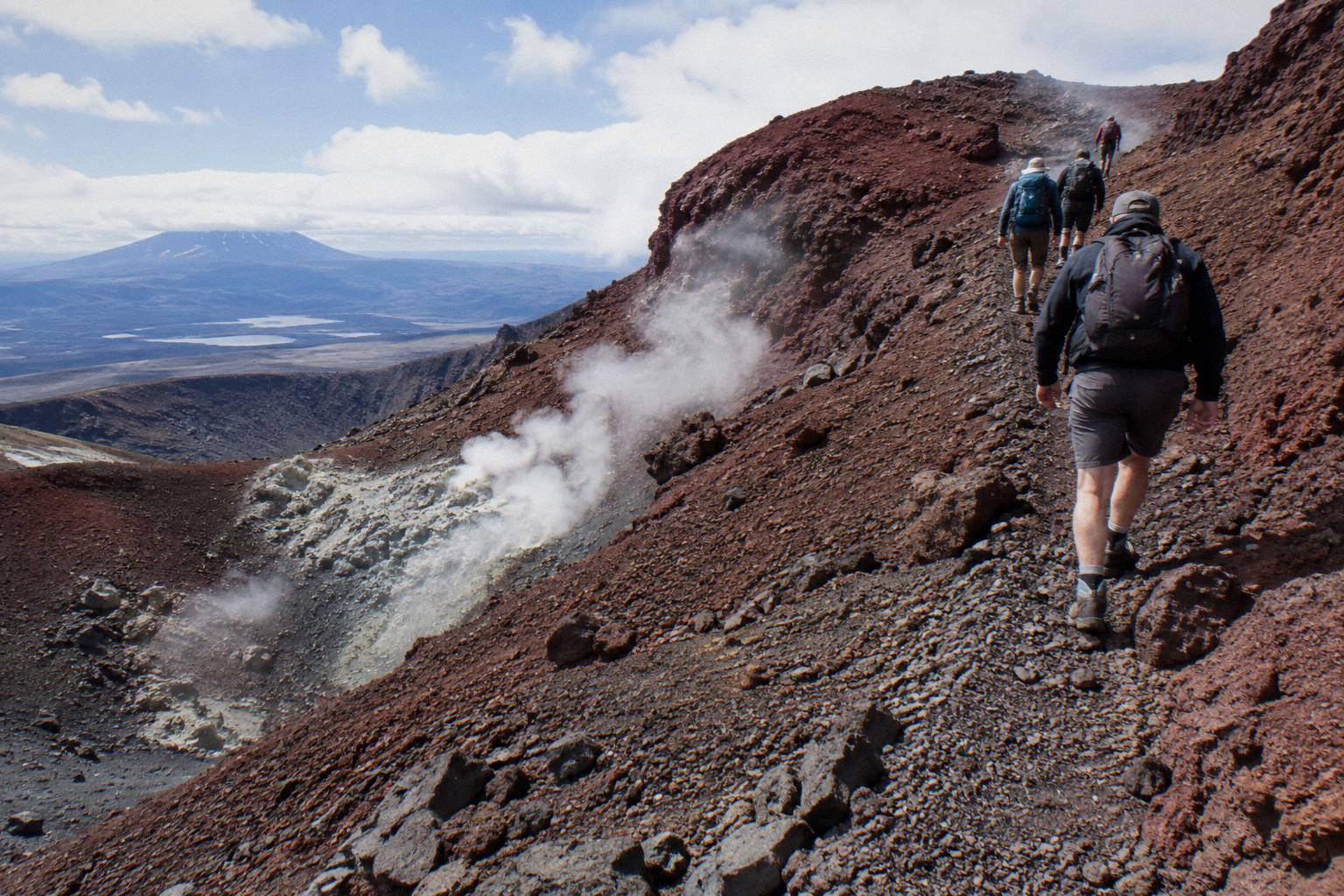
The safety case for the paid guided day is not marketing, it is structural. Volcanic alert levels change daily and GeoNet publishes them, avalanche danger exists in the winter months, and DOC runs an advisory system that operators are bound by: guided operators and shuttles run only when DOC's advisory and the forecast allow, never against a hazardous-weather-warning day. DOC's own volcanic risk page sets out the hazards, and the crossing page carries the current status and the seasonal track classification. A guide reads all of that for you on the day.
| Paid option | Format | From (per person) | Cancellation | Who it suits |
|---|---|---|---|---|
| Tongariro Crossing Shuttles round trip, National Park Village | Shuttle, return | NZ$75 | Free up to 24 hours before | Village-based self-guided walkers |
| Ruapehu Scenic Shuttles Ketetahi park-and-ride | Shuttle, one-way park-and-ride | NZ$68 | Free up to 24 hours before | Drivers parking at Ketetahi |
| Adrift Tongariro premium guided hike | Guided group crossing | NZ$450 | Free up to 14 days before | First-time and winter walkers |
| Dempsey Buses return bus, National Park Village | Shuttle, return | NZ$90 | Free up to 24 hours before | Village-based walkers wanting an alternative operator |
For the private option, Adrift Tongariro also runs a private guided Crossing from National Park Village, booked over 7 to 9 hours, for families and small groups who want a guide to themselves.
Mistakes That Trip People Up On The Free Walks
The mistakes that cost people here are parking all day at a crossing road end inside the 4 hour restriction, treating the free walks as weather-proof because they are short, touching or entering the waterways including the alpine lakes against the documented cultural request, and assuming shuttles run in winter when DOC says they generally do not between May and late October. Each of these is avoidable with a plan that respects the season and the parking rules.
The first mistake is the parking one, and it bites the confident. Arriving at Mangatepopo in the booking season with a full crossing in mind and no shuttle booking is how a day collapses: no all-day parking for crossing walkers there in summer, a 4 hour maximum at the road ends, and a finish 20.2 km away at Ketetahi Road. Book the shuttle first, then plan the free walks around it.
The second is underestimating the free walks. Tama Lakes crosses exposed volcanic country where weather changes fast, and even the Taranaki Falls loop has stream crossings and open sections. DOC's High-fitness rating for the crossing and its Expert winter classification are the honest calibration: the short walks are easier, but they are not stroll-grade in bad conditions. Check the forecast the same way you would for the crossing, and carry the layers you would take up Red Crater.
The third is the water. The request from Kaumatua Te Ngaehe Wanikau, relayed by DOC, asks visitors not to touch or enter any of the waterways including the alpine lakes, and it applies to the falls and lakes on the free walks as much as to the Emerald Lakes. It is a request made in the spirit of respect for the maunga tapu, and honouring it costs nothing. The fourth is seasonal: a winter trip planned around shuttles alone can fail, because DOC says shuttle buses generally do not operate from May to late October while guided trips include transport. In winter, the realistic budget plan is free walks plus one guided day.
A fifth, quieter mistake: skipping the DOC booking system. It is free, it is recommended, and it is needed for shuttle and guided crossing days, so a traveller who books a shuttle without touching it can be caught out. The DOC booking page explains it in a few paragraphs.
Common Questions About Free Hikes Near The Tongariro Crossing Start
Is The Tongariro Alpine Crossing Itself Free To Walk?
Yes, the track is free and DOC's booking system is free and recommended, though it is needed for shuttle and guided days. The costs come from transport: shuttles run from NZ$68 to NZ$90 per person on the products that publish fares, and guided crossings from NZ$450 per person.
What Are The Best Free Walks Near The Crossing Start?
DOC names Taranaki Falls and Tama Lakes as its alternative walks, both free and both starting on the Whakapapa side, which DOC lists 10.4 km from the Mangatepopo track start. A short out-and-back along the first stretch of the crossing from Mangatepopo is also free, subject to the road-end parking limit.
Can I Park At The Crossing Start All Day?
Not in the booking season. From Labour weekend in late October to 30 April, DOC applies a 4 hour maximum at the road ends and suggests booking a shuttle, and says there is no summer parking for crossing walkers at Mangatepopo car park. The free walks start away from those restricted road ends.
Do Shuttles Run In Winter For A Crossing Day?
DOC says shuttle buses generally do not operate from May to late October, while guided trips include transport. In the winter months DOC classifies the crossing as an Expert route and recommends going with a guide, so a winter budget plan pairs the free walks with one guided day.
Is A Guided Crossing Worth It If The Free Walks Are Already Good?
The free walks are not the crossing: the full track runs 20.2 km one way over alpine terrain to 1886 m and demands High fitness. A guide adds interpretation, alpine gear for winter conditions if required, and the judgement call on an assessed-each-morning advisory, which is why DOC recommends guides for the May to October season.
Can I Swim In The Lakes On The Free Walks?
No. DOC relays a request from Kaumatua Te Ngaehe Wanikau that visitors respect the maunga tapu by not touching or entering any of the waterways, including the alpine lakes. That request covers Tama Lakes and the falls as well as the Emerald Lakes on the crossing.
If the free-walk days have settled the budget, the paid crossing day is the one decision left, and the three below are the pairings that fit this plan best.