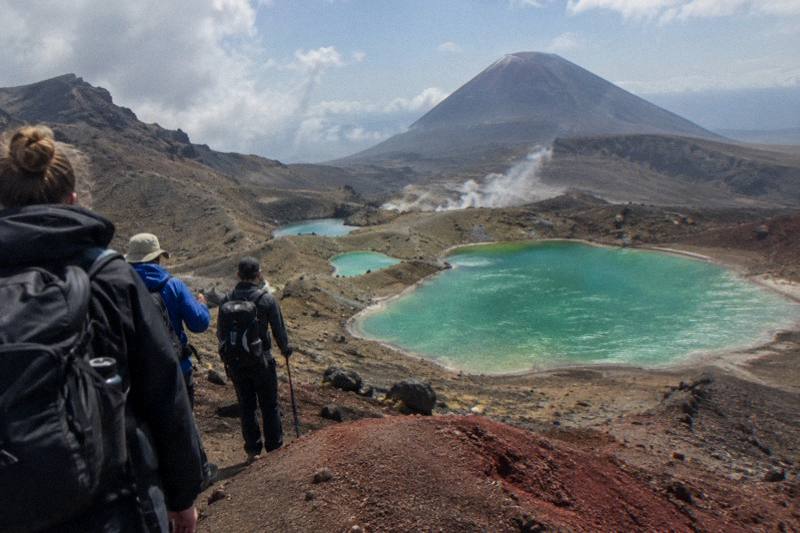
Fitness For The Tongariro Crossing: Training For The Climb To The Emerald Lakes
DOC rates the Tongariro Alpine Crossing as a High fitness track, 20.2 km one way with 1196 m of elevation change. Here is what that means in practice, how to train for it, and how to choose between a guided hike and a shuttle when fitness is your main worry.
Short answer
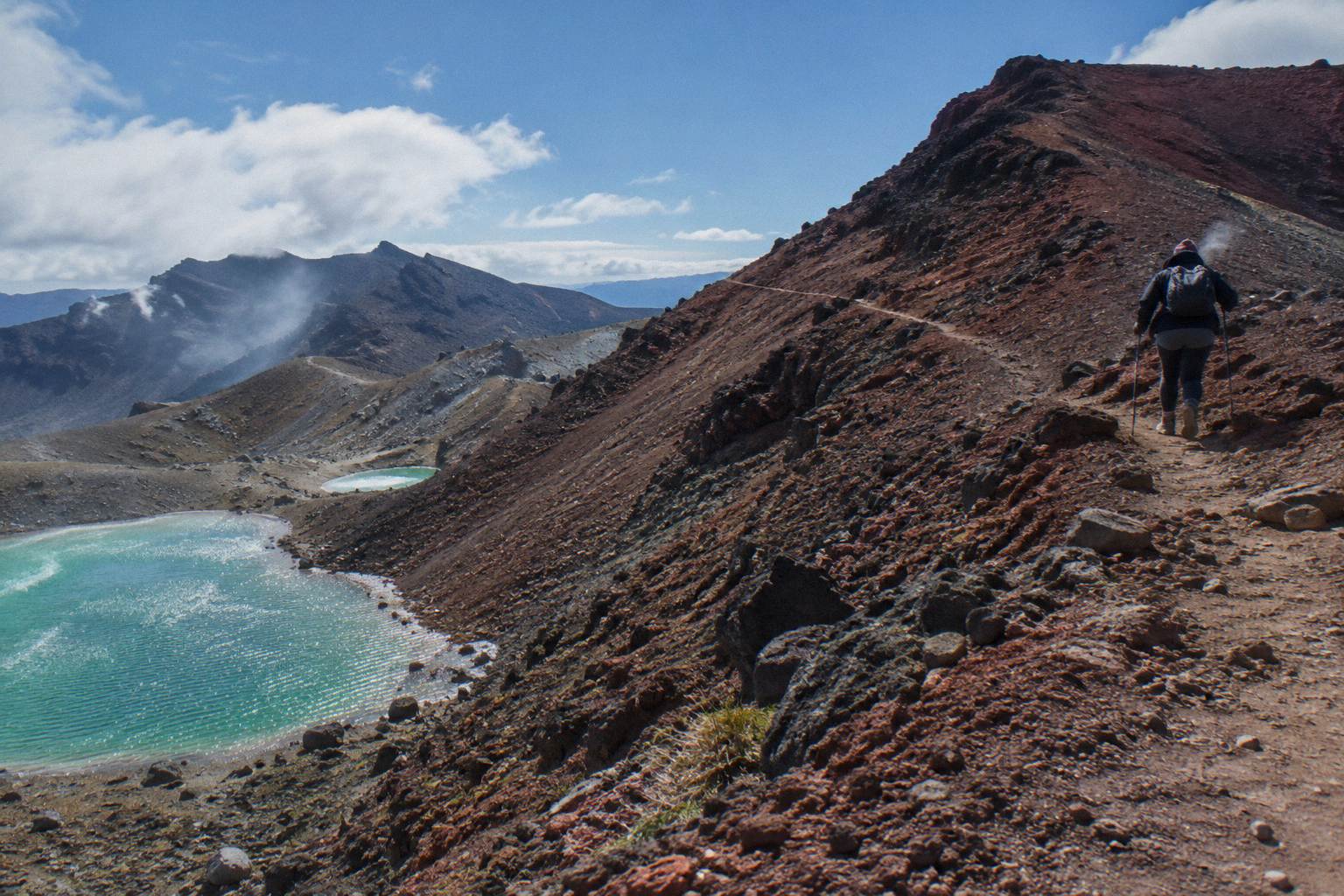
DOC rates the Tongariro Alpine Crossing as a High fitness track: 20.2 km one way, plus and minus 1196 m of elevation, 7 to 8 hours of walking from November to April and 9 hours from May to October. Most reasonably active walkers finish it. The fix for doubt is training on hills plus an early start, or booking a guided hike with Adrift Tongariro.
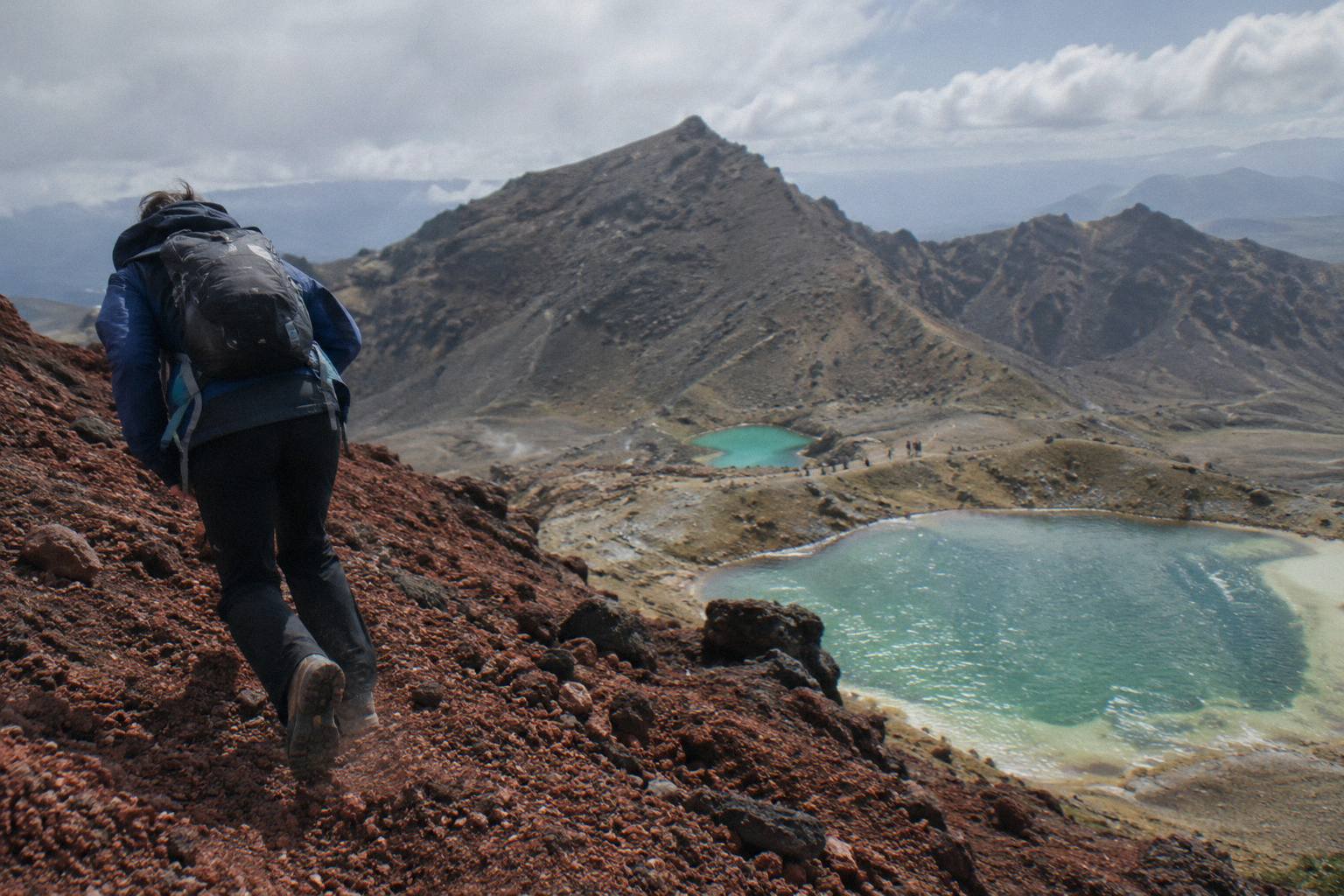
The Department of Conservation grades the Tongariro Alpine Crossing as a High fitness track, and that grade is not decoration. It is 20.2 km one way, with 1196 m of climb and the same again in descent, over volcanic terrain that holds snow from May to October. Most people who walk it are not athletes. They are office workers who put in a few months of hill walking first, and a good number of them reach the Emerald Lakes wondering what the fuss was about. The difference between those two outcomes is usually preparation, not talent, and this page lays out exactly what to prepare and how.
This page is part of the on-the-day series. For the wider picture of how the walk fits together, start with Tongariro Emerald Lakes Hike, and for the ground this page covers in terrain terms, read distance and elevation to the Emerald Lakes.
| Quick fact | Figure |
|---|---|
| Track length | 20.2 km one way (DOC) |
| Total elevation change | +/- 1196 m (DOC) |
| Highest point | Red Crater, 1886 m (DOC) |
| Walking time, November to April | 7 to 8 hours (DOC) |
| Walking time, May to October | 9 hours, expert route (DOC) |
| Fitness grade | High (DOC) |
| Summer track status | Intermediate tramping track (DOC) |
| Winter track status | Expert route, alpine skills essential (DOC) |
How Hard Is The Tongariro Alpine Crossing Really?
The Tongariro Alpine Crossing is a genuinely demanding but achievable day walk: DOC grades it High fitness because 1196 m of climbing is packed into the first half of a 20.2 km route that peaks at Red Crater's 1886 m, then turns into a long, knee-punishing descent over scree and stone steps. It is strenuous rather than technical, since nothing on the track requires scrambling skill in summer.
The numbers deserve a moment of honesty. A 20 km day walk on flat gravel is one thing. The Crossing stacks the South Crater traverse, the climb to Red Crater and the steep scree descent to the vivid Nga Rotopounamu, the Emerald Lakes, into the middle kilometres, when legs are already carrying several hours of work. The walk time to the Emerald Lakes from the Mangatepopo end falls in the middle of the day for most walkers, and everything after the lakes is a long, unrelenting descent to Ketetahi Road.
Fitness doubt is not evenly distributed across the track either. The section most walkers ask about is the Devil's Staircase, the stepped climb between Mangatepopo and South Crater, and it has a page of its own: the Devil's Staircase hike to the Emerald Lakes. In practice, the Staircase is steep but short. The section that genuinely breaks people is later: the ridge to Red Crater, exposed on both sides, with wind and altitude doing quiet work on walkers who started too fast.
It is also worth separating difficulty from danger. In summer conditions the track is an intermediate tramping route, and tens of thousands of ordinary visitors finish it each season. From May to October DOC reclassifies it as an expert route: snow, ice, avalanche risk and sub-zero temperatures, with alpine skills essential and a guide recommended. That is a different sport, and the fitness question changes with it. DOC's full track description, including the seasonal grades, is on the official Tongariro Alpine Crossing page.
What Fitness Level Do You Actually Need For The Emerald Lakes?
A useful benchmark is this: if you can walk 20 km on undulating ground within about six to seven hours, and climb stairs or a steep hill for 45 to 60 minutes without a long rest, you have the base fitness for the Crossing in summer. You do not need running fitness, gym strength or previous alpine experience between November and April. You do need endurance and knees that tolerate uneven descents.
Walkers who fall short of that benchmark still finish, but they finish slowly and uncomfortably, and slowness has consequences beyond sore legs. Shuttles run to a day schedule, parking at the road ends is limited to a 4 hour maximum from Labour weekend in late October to 30 April, and DOC recommends booking a shuttle in that window. A walker on a shuttle's schedule cannot simply take ten hours. This is the quiet arithmetic that turns a fitness question into a logistics question, and it is why the shuttle timetable for the Emerald Lakes day is worth reading alongside this page.
Age is a smaller factor than most people assume. DOC advises that the track is not recommended for children under 10, and individual tours set their own minimums: the Adrift Tongariro premium guided hike and the private guided Crossing both take walkers from 12 up, and Dempsey Buses excludes children under 6 on its return services. There is no upper age limit anywhere, and the track's population on any fine summer day includes plenty of walkers in their sixties and seventies moving steadily. Steadiness, not speed, is what the track rewards.
The honest self-test is a training walk, not a questionnaire. Pick a hill, climb it twice in a day with a 5 kg pack, and see how the knees feel on the way down the second time. That descent test matters more than the climb test: the Red Crater to Emerald Lakes descent and the long drop to Ketetahi are where underprepared legs complain, and complaint at kilometre 14 is a different experience from complaint at kilometre 20.
If you are weighing your options while reading, these three are the natural comparison set for this decision: the fully guided premium hike, the equally guided group walk at a different price basis, and the most reviewed shuttle here for walkers confident in their own legs.
Does Fitness Doubt Mean You Should Book A Guide?
A guide does not make the track physically easier, but it removes almost every judgement call that fitness doubt feeds on: pacing, weather, gear, route-finding and turnaround decisions. Adrift Tongariro runs the three guided tours available here, and its premium guided hike from NZ$450 per person walks the full Crossing in 8 to 9 hours at a group pace. For many walkers that trade is worth more than another month of training.
The distinction to hold onto is guided versus shuttle, because they solve different problems. A shuttle is transport: it moves you between a departure point and the track ends, and the walk itself is entirely yours. The most reviewed tour here is in fact a shuttle, the Tongariro Crossing Shuttles round trip from National Park Village, 4.7 across 890 reviews, from NZ$75 per person, running about 8 hours door to door with free cancellation up to 24 hours before. It is superb value for a walker whose only question is logistics.
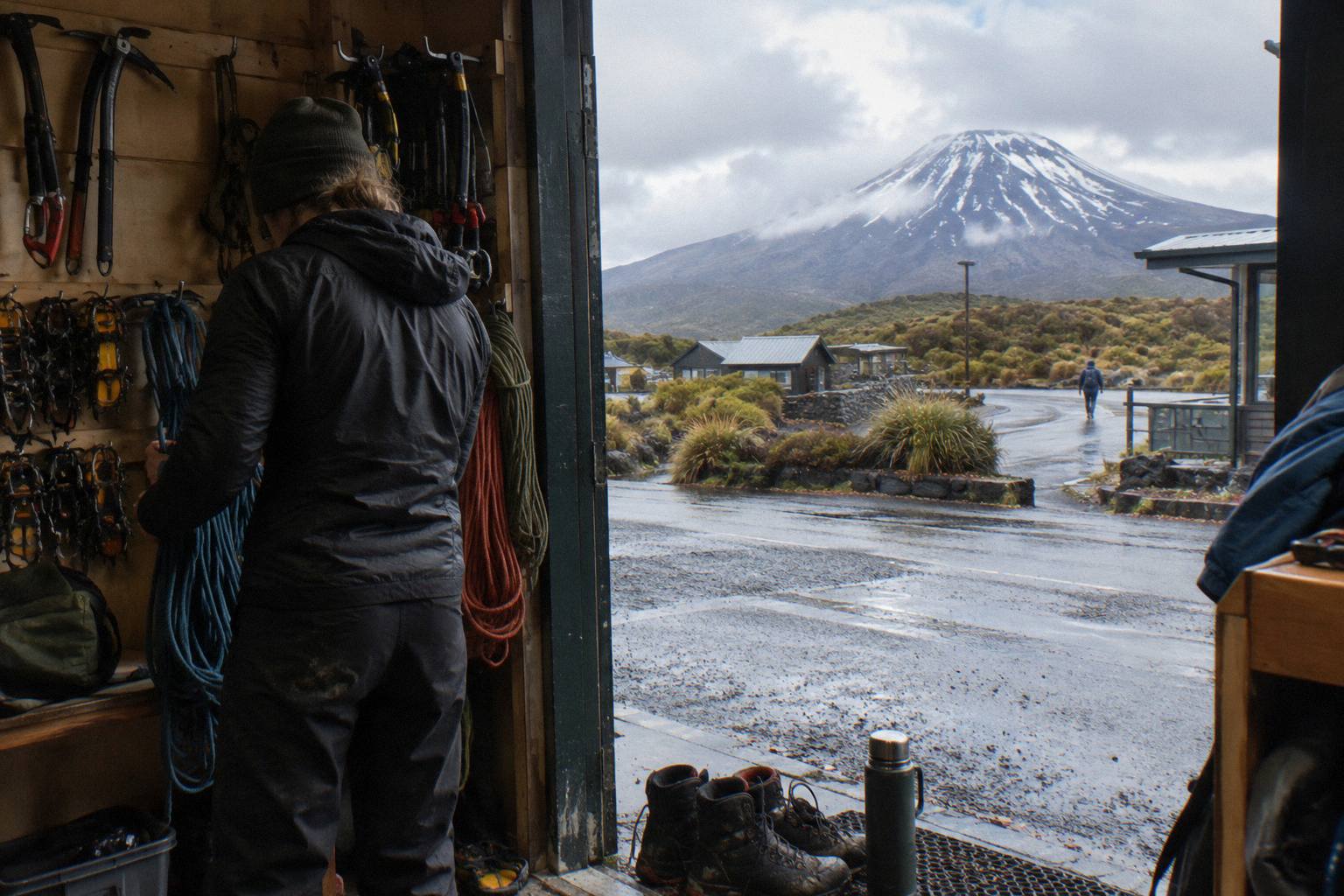
A guided walk is a different product. The Adrift Tongariro premium guided hike, rated 4.6 across 242 reviews, departs National Park Village at 53 Carroll Street, with pickups from Taupo, Turangi and Whakapapa available at a surcharge on private bookings, and reaches the Emerald Lakes with a guide who has read the forecast. Its sibling, the Adrift Tongariro full-day guided Crossing, rated 4.7 across 278 reviews, walks the same track at a different price basis shown on the booking page. Both supply winter gear if conditions require it; on neither is lunch included, so bring your own.
There is also a middle path worth naming: going private. The Adrift Tongariro private guided Crossing, rated 4.5 across 30 reviews, takes one party over 7 to 9 hours, non-refundable, and lets a slower or faster group set its own rhythm. For a pair with mismatched fitness, that is often the cleanest answer, and the private guided hike to the Emerald Lakes page covers it in depth.
How To Train For The Climb To The Emerald Lakes
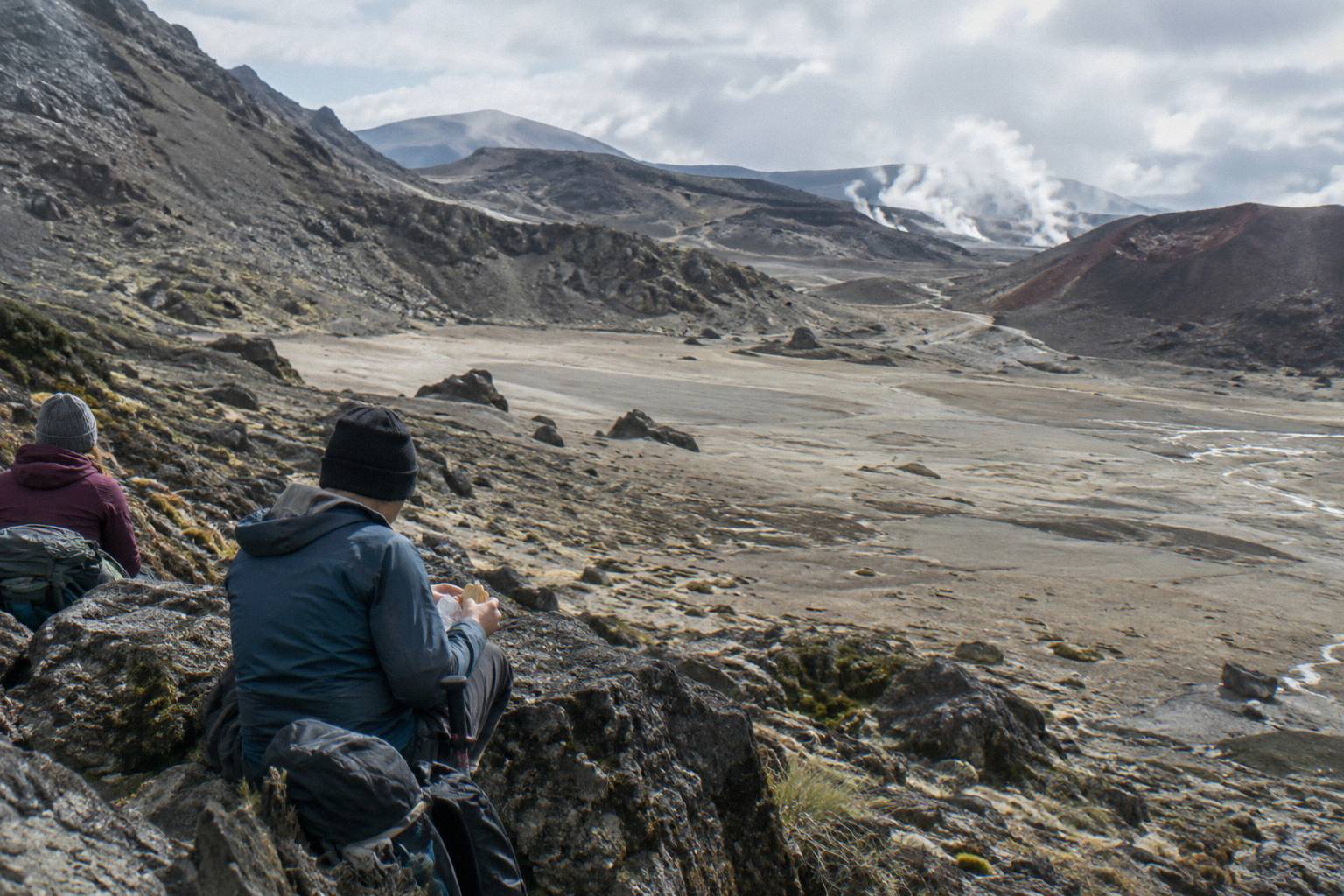
Give yourself eight to ten weeks and train two to three times a week, keeping every session hill-based rather than distance-based: one long hill walk growing from two hours to five or six, one weekly steep climb of 45 to 60 minutes on stairs or a slope, and regular descent practice on rough ground, because The Crossing gives back all 1196 m and tired knees fail downhill more often than fresh legs fail uphill.
Weekend mileage does the heavy lifting. Start with a two hour walk over the hilliest ground available and add 30 to 45 minutes each weekend until a five or six hour day feels routine. Carry the pack you will carry on the day, around 5 kg in summer with water, food and layers, because shoulders train too. If hills are not available, a stair machine or a tall set of public stairs substitutes imperfectly but genuinely.
| Week | Long session | Climb session | Descent focus |
|---|---|---|---|
| 1 to 2 | 2 hr rolling walk | 30 min stairs | Easy slopes only |
| 3 to 4 | 3 hr with one hill | 45 min stairs | Downhill finish each walk |
| 5 to 6 | 4 hr, 2 hills, 5 kg pack | 60 min slope repeats | Rough ground, poles optional |
| 7 to 8 | 5 hr on the biggest hill available | 60 min with pack | Long descent, 90 min plus |
| 9 to 10 | 6 hr hill day, full pack | Taper to 30 min | Final descent test |
Two cautions from the terrain itself. First, train the ankles as well as the lungs: the track crosses lava fields and scree, and a rolled ankle at Red Crater is the most common avoidable injury story on this route. Second, practise eating while moving. The Crossing is a 7 to 8 hour effort in summer, and walkers who take nothing but water regularly hit the wall on the Red Crater climb, and the flat Central Crater after the Emerald Lakes is the place to refuel.
What you wear on the day matters as much as the training, and footwear sits at the top of that list. The what to wear hiking to the Emerald Lakes page covers layering and boots in detail; for training purposes, use the same boots you will wear on the Crossing, broken in well before week ten.
Weather preparation deserves a line of its own, because fitness on a fine day and fitness in wind are different quantities. The high section between South Crater and Red Crater is fully exposed, conditions are assessed each morning, and operators run only when DOC's advisory and the forecast allow. Reading weather above the Emerald Lakes before you commit to a date is part of the preparation, not an optional extra.
Where The Crossing Actually Gets Hard: Section By Section
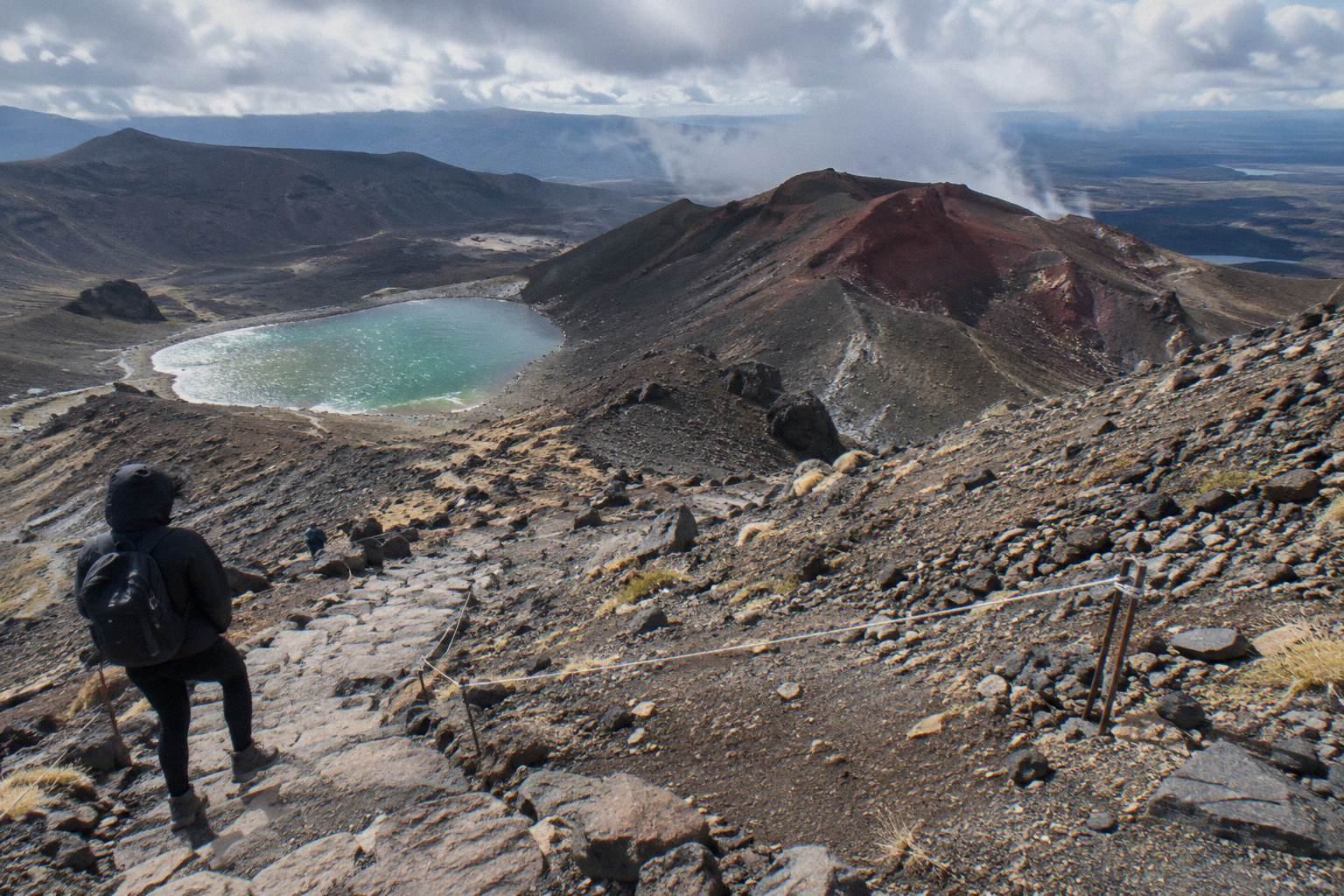
The physical peak is the ridge to Red Crater, but the hardest sustained effort depends on the walker: the Devil's Staircase is the steepest single climb, the Red Crater scree descent is the trickiest footing, and the Ketetahi descent is the longest grind on tired legs. Roughly the first 8 km are climbing, the middle 4 km over Red Crater and the Emerald Lakes are the alpine heart, and the final 8 km downhill test endurance more than strength.
| Section | Terrain character | Physical demand |
|---|---|---|
| Mangatepopo to Soda Springs | Gradual track and boardwalk | Easy to moderate, warm-up |
| Devil's Staircase to South Crater | Steep stone steps | Hardest single climb, slow and steady |
| South Crater traverse | Flat volcanic plain | Recovery, watch the wind |
| Ridge to Red Crater, 1886 m | Steep, exposed, loose underfoot | Peak effort and exposure |
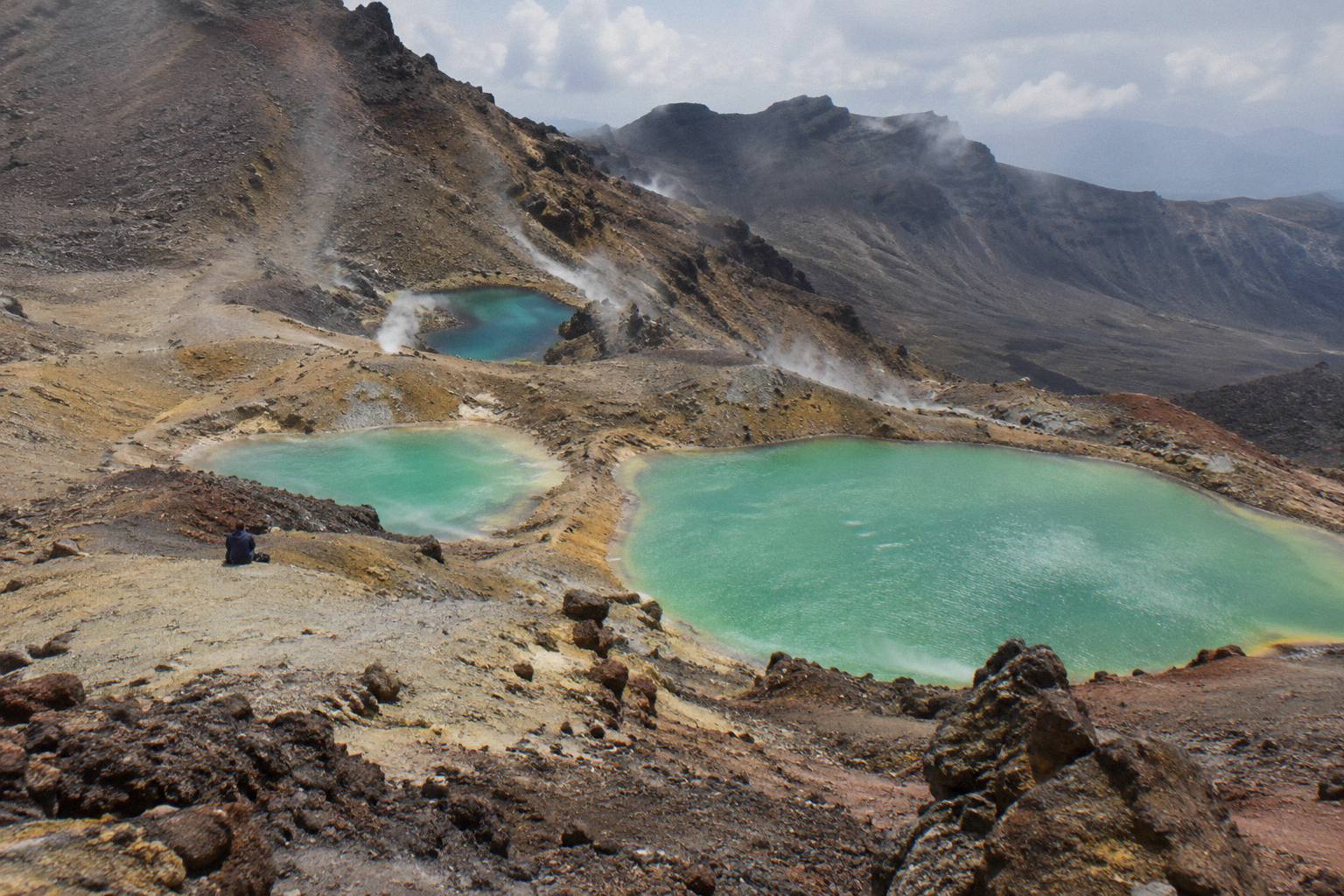
| Red Crater to Emerald Lakes | Steep scree descent | Trickiest footing on the route |
| Central Crater to Ketetahi | Long descending track | Longest grind, knee-heavy |
Time these sections against the DOC band rather than against other walkers. Seven to eight hours in summer is the honest planning figure for a moderately fit party including short stops, and nine hours is the winter figure on an expert route. The infographic below puts the day's elevation profile and effort peaks next to those bands so you can see where your slowest kilometres are likely to fall.
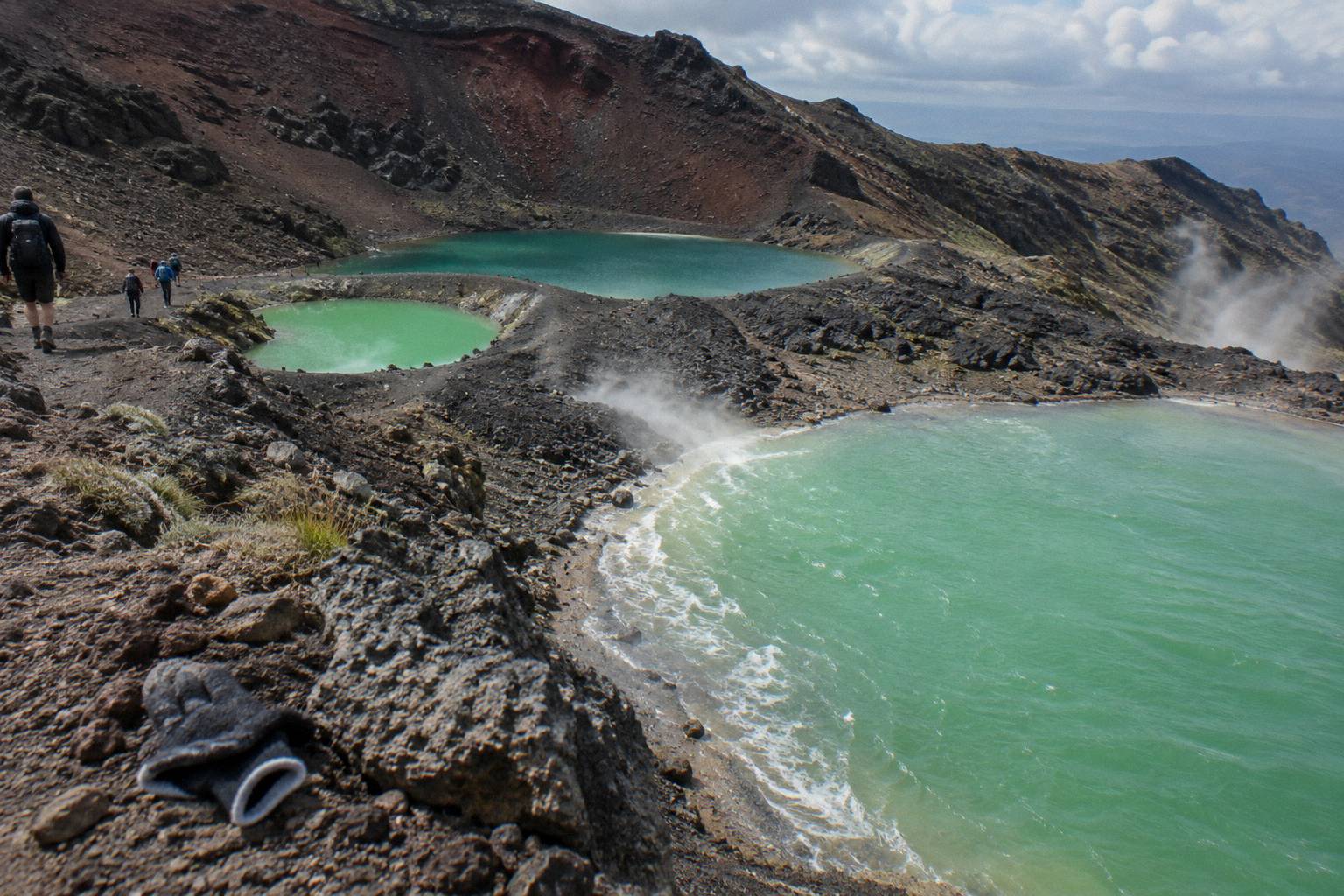
The cultural request in that last point is worth ten seconds of any walker's attention. The Emerald Lakes are not a swimming hole; they are part of a sacred mountain landscape, and swimming in the Emerald Lakes is off the menu by request, not by rule. Resting beside them, well fed and ahead of the afternoon, is the reward the track actually offers.
Getting to the start is its own small decision, and the two options below cover the two most common patterns: park at Ketetahi and ride to the start on the Ruapehu Scenic Shuttles park-and-ride, rated 4.8 across 670 reviews, from NZ$68 per person with free cancellation up to 24 hours before, or come up from Taupo or Turangi on the Tongariro Expeditions shuttle, rated 4.7 across 431 reviews, from NZ$75 per person.
That one-way pattern deserves a plain explanation, because it confuses people. On the Ruapehu Scenic Shuttles park-and-ride you park at the Ketetahi car park, ride to Mangatepopo, and walk the Crossing back to your own car. There is no return leg, and it is not guided. It suits a fit party that wants its own vehicle waiting at the finish, which after 20.2 km is a pleasant thing indeed.
Mistakes That Make The Crossing Feel Harder Than It Is
Most failed or miserable Crossing days trace back to a handful of repeat mistakes: starting too fast on the Devil's Staircase, carrying too little food and water, wearing unbroken boots, ignoring the morning weather check, and underestimating the Ketetahi descent after the scenery peaks at the Emerald Lakes. None of these is a fitness problem in the strict sense, and every one of them costs more energy than a month of missed training.
| Mistake | What it costs | The fix |
|---|---|---|
| Race pace up the Staircase | Empty legs before Red Crater | Count steps, breathe, treat it as hour one |
| Too little food | The wall in Central Crater | Eat every 60 to 90 minutes from the start |
| New boots on the day | Blisters by South Crater | Break boots in over the training block |
| Skipping the morning check | Caught out above the ridge | Check DOC's advisory and the NIWA forecast before setting out |
| Planning only for the climb | Knees gone by Ketetahi | Train descents, consider poles |
| A tight shuttle buffer | A stressed final 8 km | Pick your shuttle with the day's schedule in mind |
The weather check deserves emphasis because it is the one mistake that can end a day before it starts. Volcanic alert levels change daily, conditions are assessed each morning, and operators are bound by DOC rules not to run on hazardous-weather-warning days. The official sources are DOC's own Crossing page and alerts, GeoNet for volcanic activity, and NIWA's Red Crater forecast. Volcanic risk on this mountain is real and managed, and DOC's volcanic risk page for Tongariro National Park explains what the alert system means for visitors. The 2012 Te Maari eruption is a reminder that this landscape is live, not a museum.
Pacing is the second quiet killer. The track's geometry tempts walkers into burning matches early: the first kilometres are easy, the Staircase arrives before the sun is high, and the crowds create a false race. A walker who reaches South Crater with legs still fresh has already solved half the difficulty problem, because from there the track gives the hardest climbing and the best rewards in quick succession.
What To Do If You Are Not Sure You Are Fit Enough
If you doubt your fitness, you have four honest options in rising order of support: walk the Crossing self-guided with a shuttle after a proper training block, join a guided group that sets the pace for you, book a private guided Crossing matched to your own speed, or pick a different walk on the day if conditions or your legs say no. DOC names Taranaki Falls and Tama Lakes as alternatives when the Crossing is not on.
The training route suits most readers. Eight to ten weeks of hill work converts a doubtful walker into a capable one, and the shuttle options keep the day simple: the Tongariro Crossing Shuttles round trip from National Park Village covered above, the Dempsey Buses return bus from National Park Village, rated 4.8 across 72 reviews, from NZ$90 per person with free cancellation up to 24 hours before, or the Taupo and Turangi services. Each is transport only, and each leaves the walking to you.
The guided route suits the walker whose doubt is bigger than a training block can fix. The Adrift Tongariro premium guided hike walks the full Crossing with a guide, winter gear supplied if conditions require it, from NZ$450 per person with free cancellation up to 14 days before, which lets you book the date now and let the training answer the fitness question in parallel. For a slower pace or a small group, the private guided option below takes one party over the same ground.
One last framing helps. Difficulty on this track is not a fixed property; it is a function of season, weather, direction of travel and preparation. The best month to hike to the Emerald Lakes and the winter snow conditions on the Crossing pages show how widely the same 20.2 km varies across a year. Choose your month, train for your month, and the difficulty question largely answers itself.
Before the common questions, the same three choices one last time: guided premium, guided group walk, or the most reviewed shuttle.
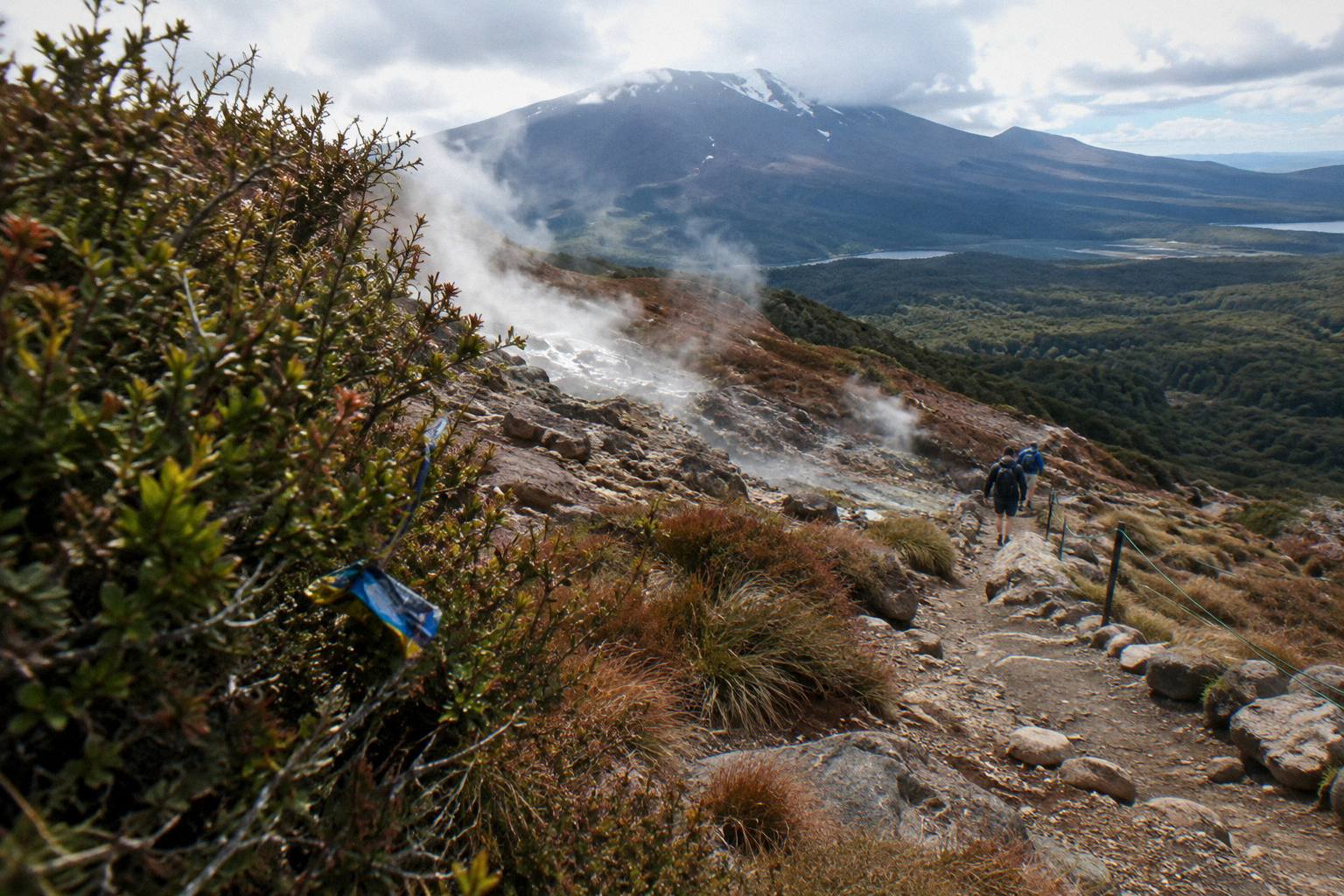
Common Questions About Fitness For The Emerald Lakes Climb
How Hard Is The Tongariro Alpine Crossing For An Average Walker?
DOC grades it High fitness: 20.2 km one way with 1196 m of climb and descent, taking 7 to 8 hours November to April. An average walker who trains on hills for eight to ten weeks finishes it comfortably; an untrained walker usually finishes it slowly and sorely.
How Fit Do You Need To Be For The Emerald Lakes Section?
The benchmark is a 20 km undulating day walk plus an hour of steady stair climbing. The Emerald Lakes sit at roughly the two-thirds mark of the route, just below Red Crater's 1886 m summit, so you need enough reserve to climb for four to five hours before you reach them.
Does A Guide Make The Crossing Easier?
A guide does not reduce the physical distance, but Adrift Tongariro's guided tours set a sustainable group pace, supply crampons and ice axes for winter conditions if required, and handle the weather decision. For fitness doubt, the pacing and turnaround judgement are often the most valuable parts.
How Long Does It Take To Train For The Tongariro Crossing?
Eight to ten weeks of two to three hill sessions per week is enough for most moderately active people. Build one long walk from two hours to five or six, add a weekly steep-climb session, and practise descending on rough ground.
Is The Descent Harder Than The Climb?
For many walkers, yes. The climb has clear effort peaks at the Devil's Staircase and the Red Crater ridge, but the long descent from the Emerald Lakes to Ketetahi Road punishes tired knees and is where most late-day struggles happen.
Can You Do The Crossing Without Training?
Some untrained walkers finish, but the day is longer, the schedule pressure greater and the injury risk higher. At minimum, complete a few five hour hill walks with a loaded pack before the day, and book a shuttle or guided trip so logistics do not add to the load.
Keep Reading Before The Day
Three further pages close the loop this guide opens: honest accounts of how hard the day feels, the decision on whether a guide earns its price, and the question of which end to start from. Each one picks up exactly where a fitness decision leaves off, and each is a short read compared with the training block ahead.
- How hard the Emerald Lakes hike really is
- Fitness, pace and whether a guide is worth it
- Where to start the walk and why
Whichever combination of training and support you choose, the reward is the same: standing above three mineral-blue lakes at 1886 m of effort, with the hard climbing behind you and a good long walk home ahead.