What Time Should You Start The Tongariro Crossing?
A planning guide to start times on the Tongariro Alpine Crossing, reasoned from DOC's walking time bands, shuttle pickup points and seasonal daylight, with the tour and shuttle options that shape your morning.
The Tongariro Alpine Crossing is 20.2 km one way with an elevation change of plus and minus 1196 m, and the Department of Conservation allows 7 to 8 hours of walking from November to April and 9 hours from May to October. Start time is not a matter of preference. It is arithmetic: the walking band, the length of daylight, and the shuttle pickup that gets you to the Mangatepopo end.
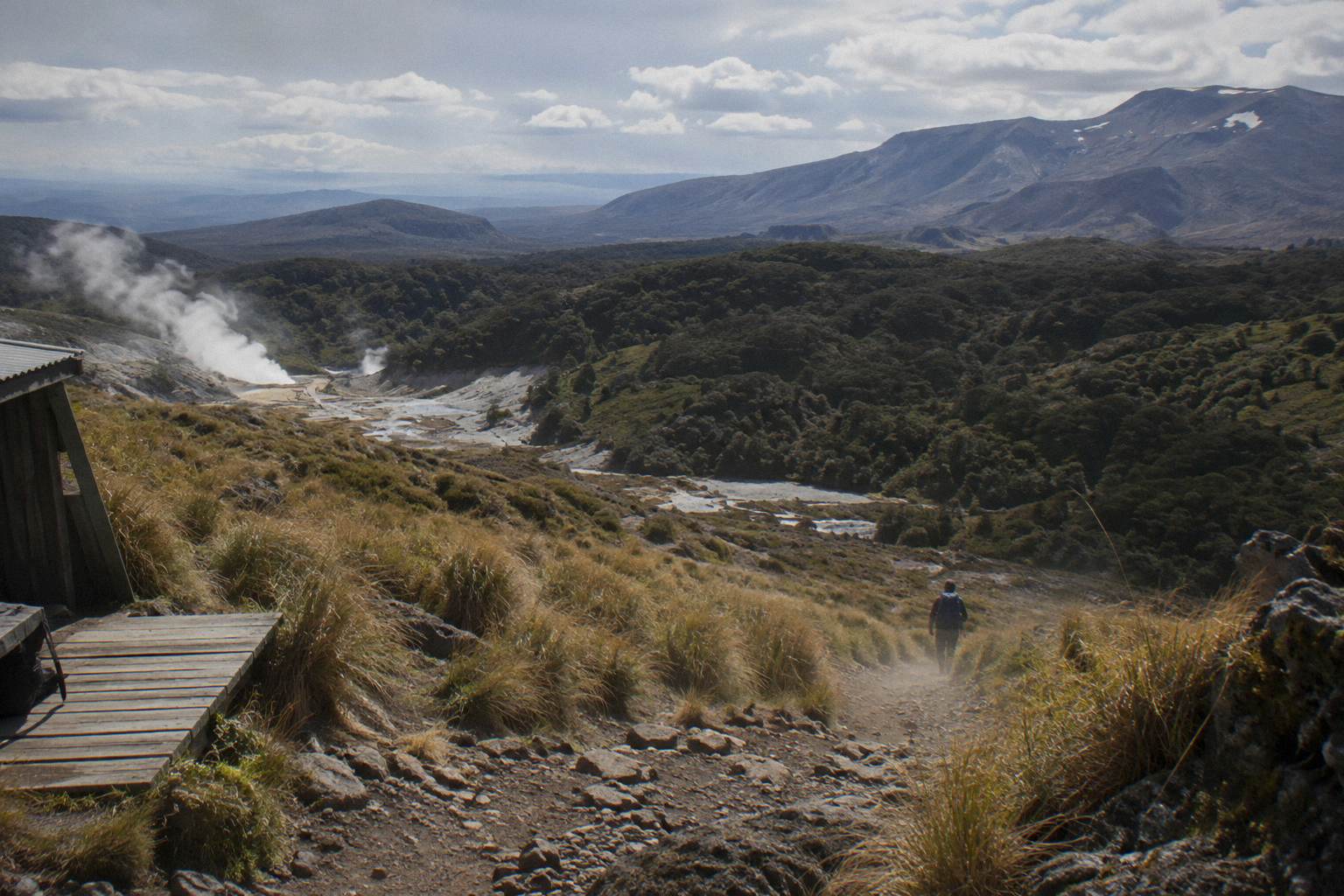
No verified source prints a recommended clock time for the start, and this page will not invent one. What can be reasoned out, from DOC's own numbers and the departure points the operators actually use, is the shape of the day: an early start, the climb to Red Crater at 1886 m reached near the middle of your walk, and the Emerald Lakes, Nga Rotopounamu, appearing just below the summit on a steep scree descent. For readers planning the whole day around the lakes, the guide to the Emerald Lakes on the Crossing fills in that section of the track.
Adrift Tongariro runs three guided tours from National Park Village, Tongariro Crossing Shuttles and Dempsey Buses run return services from the same village, Ruapehu Scenic Shuttles and Owhango Adventures run Ketetahi park-and-rides, and Tongariro Expeditions covers Taupo and Turangi. Each of those products shapes your morning differently, and several are compared below.
Start early enough that your 7 to 8 hour summer walk, or 9 hour winter walk, finishes with daylight to spare. DOC rates the fitness demand High, and the walking band includes the Devil's Staircase, the South Crater traverse and the long Ketetahi descent. In practice every shuttle and guided product in this article begins with an early start, because parking at the road ends is capped at 4 hours in the busy season.
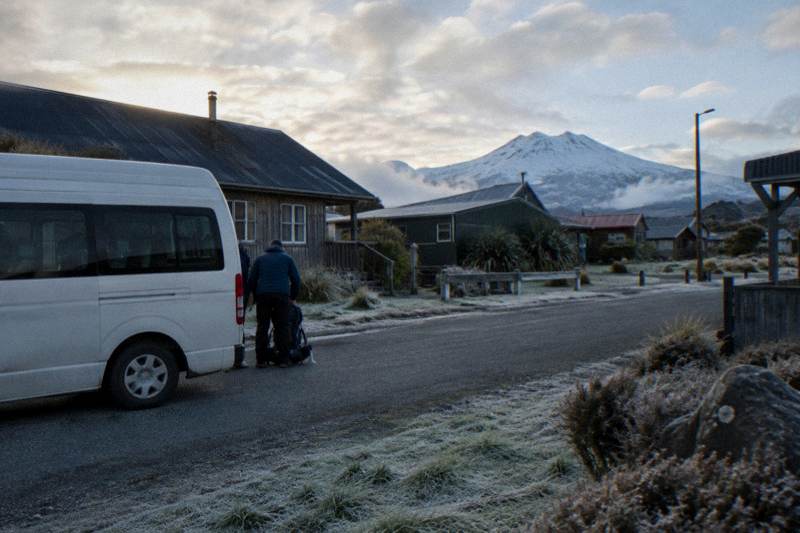
The honest answer is that your start time is set mostly by transport, not by personal choice. From Labour weekend in late October through to 30 April, DOC applies a 4 hour maximum stay at the road-end car parks and suggests walkers book a shuttle. That single rule removes the "drive in whenever and stroll up" option for most of the year people actually hike it. If a shuttle is moving you, the shuttle's schedule is your start time. If a guided day is moving you, the guide's plan is.
There is also the DOC booking system to fold in. It is free and recommended, and a booking is needed for shuttle and guided products. Checking the official DOC Tongariro Alpine Crossing page{:rel="noopener"} before you plan the day gives the current advisory status, and the DOC booking system page{:rel="noopener"} explains what the booking covers.
Three practical products dominate the early-morning decision, and the differences between them are real:
The first is the Tongariro Crossing Shuttles round trip from National Park Village, from NZ$75 per person, rated 4.7 across 890 reviews, the most reviewed tour here, with free cancellation up to 24 hours before. The second is the Dempsey Buses return bus, also from National Park Village, from NZ$90 per person, rated 4.8 across 72 reviews, excluding children under 6. The third is the Adrift Tongariro premium guided hike, from NZ$450 per person, rated 4.6 across 242 reviews, the most reviewed guided tour here, with free cancellation up to 14 days before. A guided day buys you alpine knowledge and, in winter conditions if required, crampons and ice axes; a shuttle buys you the seat and the schedule. Bring your own lunch on the guided days, as lunch is not included.
Why The 7 To 8 Hour Band Sets Your Start
DOC's walking time is 7 to 8 hours from November to April and 9 hours from May to October, and those are walking hours only, not the whole day. Add the shuttle ride, a gear check, a lunch stop and the descent, and the booked day stretches to the 8 to 10 hour blocks the operators sell. Walking faster than the band is possible, but planning around it is how people descend in the dark.
The band deserves a closer look, because it hides an uneven track. The first half, Mangatepopo to the South Crater, is where the Devil's Staircase sits, and it is the slowest climbing per kilometre on the route. The middle, up Red Crater and down the scree to the Emerald Lakes, is short in distance but slow underfoot. The second half, past Blue Lake and down the long Ketetahi tussock slopes, is where tired legs meet 8 km of steady descent. Most of the walking time is spent in the first two thirds of the distance.
| Season | DOC walking time | Track standard | What it means for the start |
|---|---|---|---|
| November to April | 7 to 8 hours | Intermediate tramping track | An early start gives buffer for the descent |
| May to October | 9 hours | Expert route, alpine skills essential | DOC says best to go with a guide |
| Any season | 20.2 km one way, plus and minus 1196 m | High fitness | The booked day is longer than the walk |
Winter deserves its own warning, straight from DOC: snow, ice, avalanche risk and sub-zero temperatures, with alpine skills essential and a guide recommended. The Adrift Tongariro premium guided hike states crampons and ice axes are supplied for winter conditions if required, along with a clothing and footwear allowance. Winter daylight runs 9 to 11 hours by DOC's own figure, and a 9 hour walk inside a 9 to 11 hour day leaves almost nothing to spare. That arithmetic, not bravado, is why winter starts are non-negotiably early.
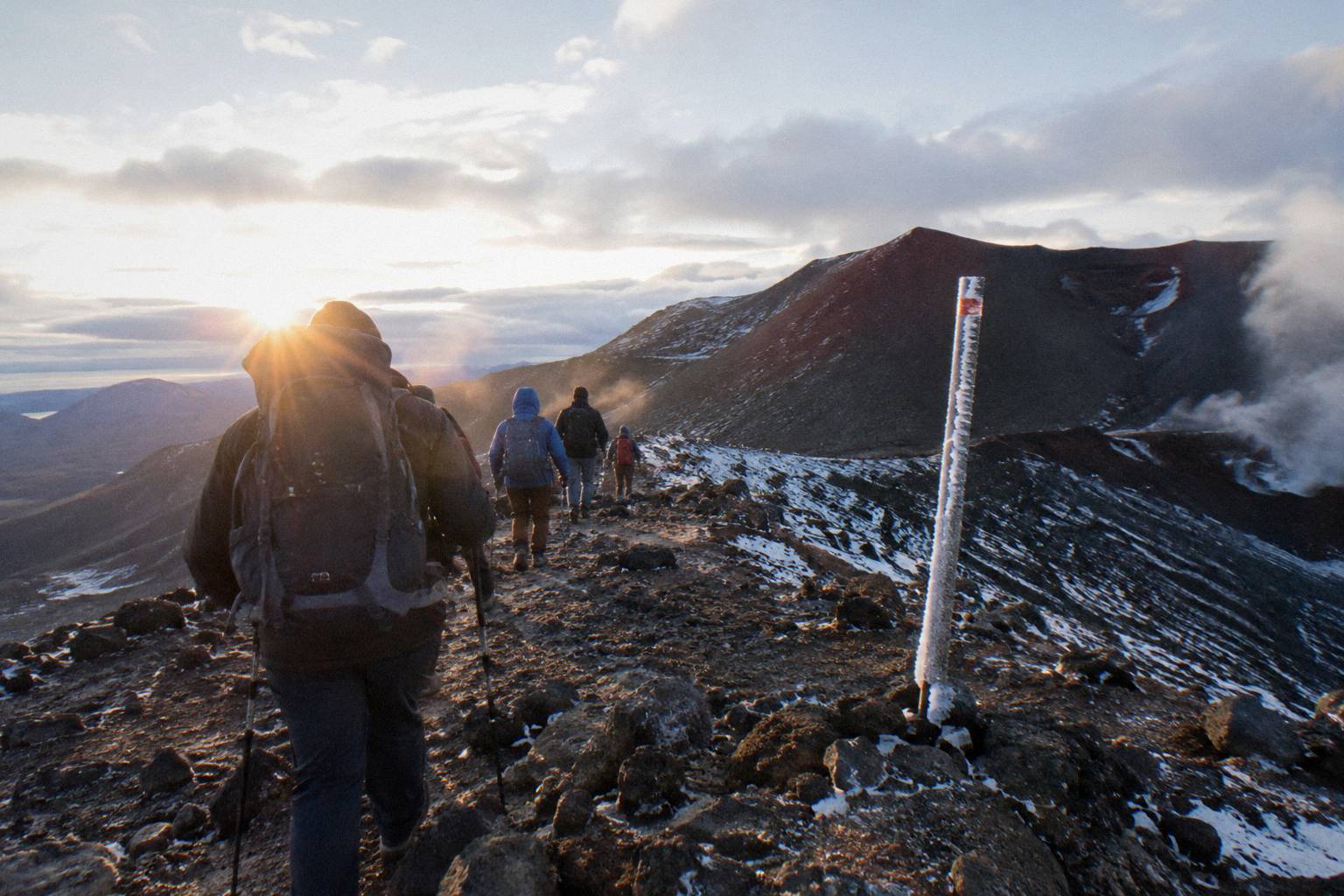
It also helps to think of the band as a planning tool rather than a promise. Some walkers cover the distance quicker, others slower, and the difference widens with weather: a strong headwind on the South Crater or a hot afternoon on the Ketetahi slopes can add an hour without anyone doing anything wrong. The walk time to the Emerald Lakes breaks the route into segments for anyone who wants to budget hour by hour. Plan on the band, and treat a faster day as a bonus rather than the assumption the day is built on.
There is a decision moment in here for most readers: whether the day runs on your own clock or someone else's. If someone else's, the question stops being "what time should I start" and becomes "which product do I book".
How Shuttle Pickups Frame The Start Of Your Day
Where you sleep the night before decides which shuttle you can catch, because the departure points are genuinely different places: National Park Village, the Ketetahi car park, Taupo, Turangi and Ohakune. A return shuttle from your village puts the operator in charge of both ends of the day. A one-way Ketetahi park-and-ride means you park at the finish, ride to the start, and walk back to your own car.
The two return services from National Park Village both run roughly 8 hour booked days. The Tongariro Crossing Shuttles round trip departs from the Park n Ride at 59 Findlay Street and runs from NZ$75 per person. The Dempsey Buses return bus picks up from the Park Hotel Ruapehu, the Tongariro Crossing Lodge and the Park n Ride, from NZ$90 per person, with children under 6 not carried. Both state free cancellation up to 24 hours before, which matters when the forecast wobbles. Neither is guided: a shuttle moves you, a guide leads you, and the difference matters in winter.
The Ketetahi park-and-ride pattern is the other big structure on the mountain. You leave your car near the Ketetahi end, ride a one-way shuttle to Mangatepopo, and finish the walk at the vehicle. The Ruapehu Scenic Shuttles Ketetahi park-and-ride runs from NZ$68 per person, rated 4.8 across 670 reviews, with an 8 hour booked duration and free cancellation up to 24 hours before. It is one-way transport, not a return, and not guided.
From Taupo or Turangi the day is longer before it begins, because the distance to the mountain is folded into the product. The Tongariro Expeditions Crossing shuttle from Taupo or Turangi runs 8 to 10 hour booked days, from NZ$75 per person, rated 4.7 across 431 reviews, with free cancellation up to 24 hours before. Taupo sits 86.5 km from the track by DOC's distance figures, Turangi 36.7 km, so these are genuinely early departures by necessity.
Ohakune, 48 km out by DOC's figures, has a return option too: the Dempsey Buses return shuttle from Ohakune, with free cancellation up to 24 hours before. It is rated 4.8 across 20 reviews, from NZ$110 per person, and the booking page shows the schedule.
| Product | Departure point | Format | Booked day | Price shown |
|---|---|---|---|---|
| Tongariro Crossing Shuttles round trip | National Park Village | Return shuttle, not guided | About 8 hours | From NZ$75 |
| Dempsey Buses return bus | National Park Village | Return shuttle, not guided | Full day | From NZ$90 |
| Ruapehu Scenic Shuttles park-and-ride | Ketetahi car park | One-way shuttle, not guided | 8 hours | From NZ$68 |
| Tongariro Expeditions Taupo or Turangi | Taupo, Turangi or Ketetahi | Shuttle with transfer options | 8 to 10 hours | From NZ$75 |
| Adrift Tongariro premium guided hike | National Park Village | Guided group hike | 8 to 9 hours | From NZ$450 |
DOC notes that part of a shuttle fee, about NZ$40, goes to conservation. Shuttles generally do not operate through winter, May to late October, while guided trips include transport, so the two product families swap dominance as the seasons turn.
A few patterns help you choose. Of the two rated products, Ruapehu Scenic Shuttles scores slightly higher, 4.8 against 4.7, and carries the larger review count, 670 against 431. Turangi is the closest of the three off-mountain towns by DOC's figures, 36.7 km against Ohakune's 48 km and Taupo's 86.5 km, so a Turangi booking trims the drive before an already early start. The Dempsey Buses return bus does not carry children under 6, which rules it out for families with younger children.
The same 24 hour free-cancellation window applies across every shuttle in the table, so you can book early and switch operators without penalty if your base or plans change. Shuttle prices run from NZ$61 to NZ$120 per person, before the guided hike jumps to NZ$450. Booked days span roughly 6 to 10 hours across the table, so plan for the longer end.
Winter Starts: Snow, Ice And A Short Day
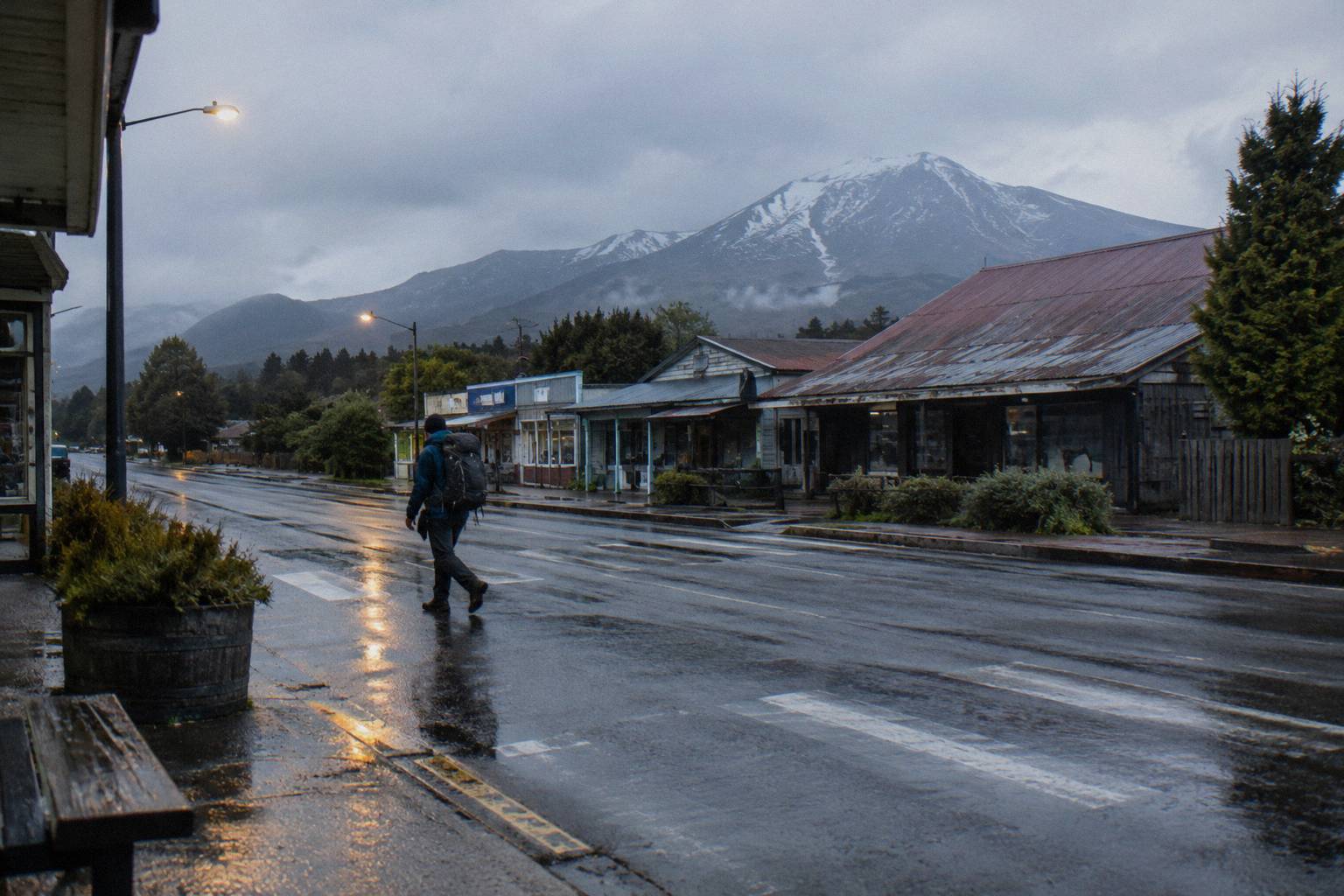
From May to October DOC classifies the route as an Expert route with a 9 hour walking time, inside a 9 to 11 hour daylight window. Alpine skills are essential and DOC's wording is that it is best to go with a guide. A winter start therefore leans on a guided product rather than a shuttle, because shuttles generally stop running in that season.
The Adrift Tongariro premium guided hike covers that gap: guided, with crampons and ice axes supplied for winter conditions if required, departing National Park Village, with pickup options from Taupo, Turangi and Whakapapa at a surcharge on private trips. Check the booking page for age limits. The Adrift Tongariro private guided Crossing is the other guided winter option; its booking page shows the cancellation terms, and it is non-refundable. The booking page is the place to check the price.
Volcanic hazard is part of the winter picture too, and not only winter. Volcanic alert levels change daily, and DOC's volcanic risk page for Tongariro National Park{:rel="noopener"} explains how the advisory system works. Operators are bound by DOC rules not to run on hazardous-weather-warning days, so the day goes ahead conditions allowing, never promised.
The Sunrise Start, And The Crowd It Creates
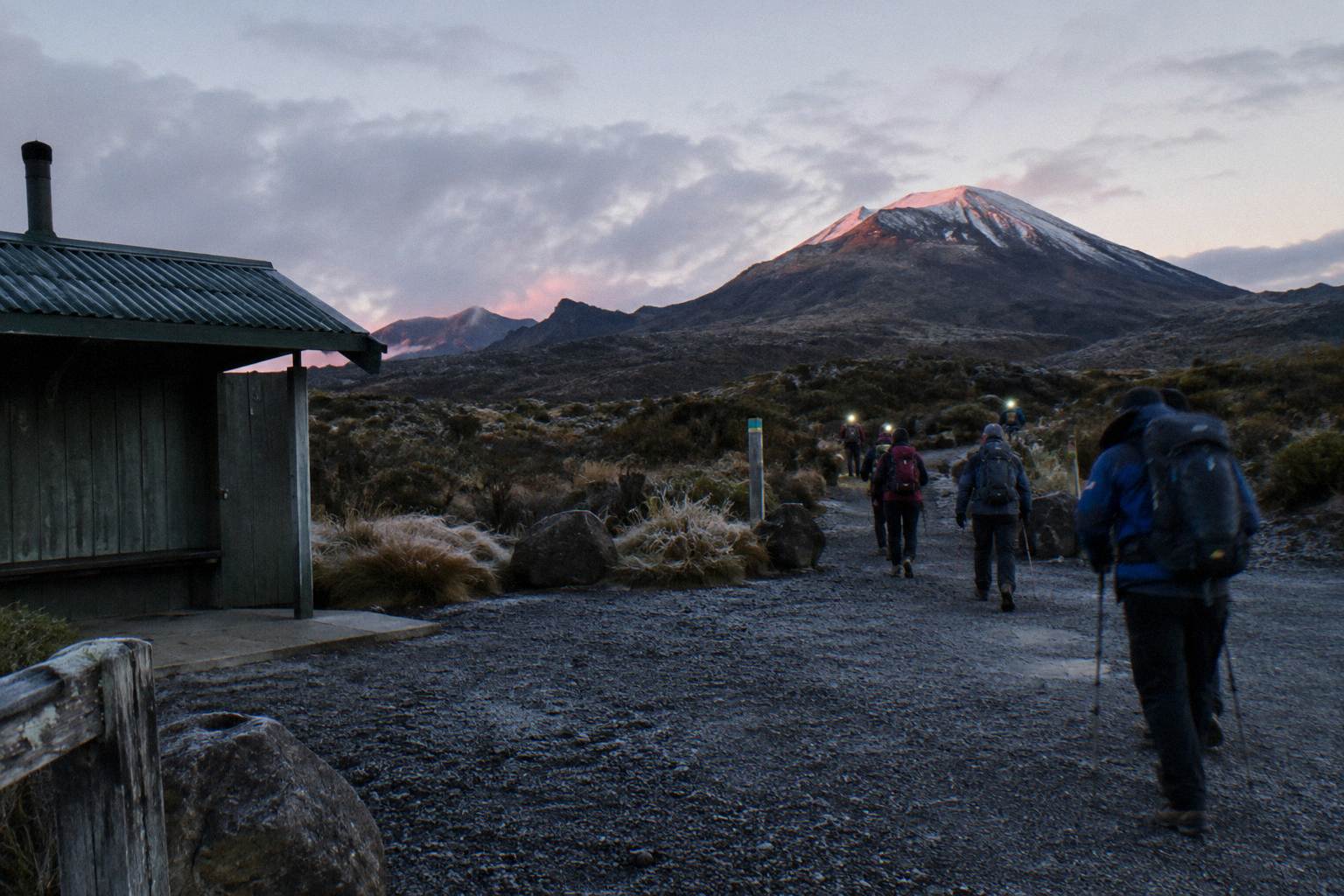
A sunrise start means being on the track while the light is still climbing, and in summer that is what the busiest shuttles deliver anyway. The trade is simple: an early start buys cooler climbing on the Staircase and a quieter Red Crater, at the cost of a colder first two hours and a busier first car park.
The sunrise start on the Crossing guide works through the same trade-off in detail. What matters here is that the crowd itself argues for the early side. The Emerald Lakes sit just past the high point, roughly two thirds of the way through the walk, so a start that feels lazy by an hour pushes your lakes arrival into the busiest and warmest part of the day, and pushes the Ketetahi descent into the late afternoon.
One cultural note belongs in every planning conversation, and the start-time question is no exception: kaumatua Te Ngaehe Wanikau asks visitors to respect the maunga tapu by not touching or entering any of the waterways, including the alpine lakes. The lakes are to be looked at, not swum in, and the swimming and tapu page covers the request in full.
What Trips People Up When They Plan The Start
The four common mistakes are treating the booked duration as walking time, ignoring the 4 hour parking cap, planning a summer-length day in winter daylight, and assuming a shuttle is a guided day. Each one quietly moves the finish later, and the last one matters most in May to October, when DOC calls the route Expert.
The booked duration on a shuttle or guided product is the whole day, transfers included, not the walking time. The 8 to 10 hour blocks on Taupo and Turangi products are the clearest example: the walk inside them is still the DOC band. Conversely, the DOC band is not the day: a 7 to 8 hour walk plus a shuttle ride plus a gear check is a longer commitment than the brochure number suggests.
The parking cap catches self-drivers every summer. Arriving at Mangatepopo by car in the restricted season means a 4 hour ceiling, which no realistic Crossing fits. The park-and-ride pattern solves it by design, and DOC also notes there is no parking for Crossing walkers at Mangatepopo car park in summer, with a private car park near Ketetahi. The distances, all from DOC: Whakapapa 10.4 km, National Park Village 13.5 km, Turangi 36.7 km, Ohakune 48 km, Taupo 86.5 km.
Winter misplans are the dangerous ones. A 9 hour walk in 9 to 11 hours of daylight leaves no margin for a slow party, a navigation pause, or an injury, and avalanche conditions are a live concern. If conditions are poor, DOC's own alternatives are Taranaki Falls and Tama Lakes, and the guide to other hikes when the Crossing closes lists them properly.
The last mistake is the wording one. A shuttle, any shuttle, is transport. Adrift Tongariro runs the three guided tours on the mountain, and Tongariro Emerald Lakes Hike keeps the guided and shuttle products clearly separated so the decision is honest. If a winter day needs a guide, book a guided day; no shuttle substitutes for one.
By this point the decision usually narrows to two or three products, and the end-of-article band below restates the three that frame the start-time question best: the most reviewed return shuttle, its village rival, and the guided day that owns the winter.
Common Questions About Start Times On The Tongariro Crossing
What Time Should You Start The Tongariro Crossing?
Start early enough that the full DOC band, 7 to 8 hours of walking November to April or 9 hours May to October, fits inside the daylight with room to spare. In practice that means an early start, and for most people the shuttle or guided product they book sets it.
Can You Start The Crossing Late In The Morning?
A late start eats the margin on the second half of the walk. The Ketetahi descent runs long, daylight is finite, and in winter it is 9 to 11 hours against a 9 hour walk. Late starts also meet the busiest hours at Red Crater and the Emerald Lakes.
Does Parking Affect When You Start?
Yes. From Labour weekend in late October to 30 April, a 4 hour maximum applies at the road ends and DOC suggests booking a shuttle. Self-driving to Mangatepopo in that window does not fit the walk, which is why park-and-ride products exist.
Do Shuttles Run In Winter?
DOC says shuttle buses generally do not operate in winter, May to late October, while guided trips include transport. For a winter Crossing that points to a guided product, with DOC calling the route Expert and alpine skills essential.
Is A Shuttle The Same As A Guided Walk?
No. A shuttle is transport only. Adrift Tongariro runs the guided tours, supplying crampons and ice axes for winter conditions if required. Lunch is not included on those days, so bring your own.
Where Do The Shuttles Leave From?
National Park Village, the Ketetahi car park, Taupo, Turangi and Ohakune are the departure points, and they are genuinely different places. Pick the one nearest where you sleep the night before; that choice, more than anything else, fixes your start.