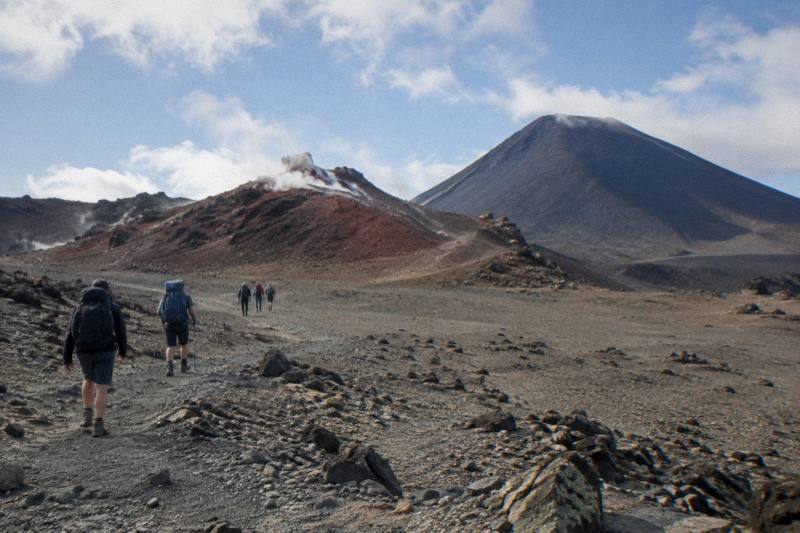
What Is The Best Time Of Year To Do The Tongariro Crossing?
The honest month-by-month answer for picking a Tongariro Crossing day to the Emerald Lakes, with DOC season rules, shuttle timing and what each season trades.
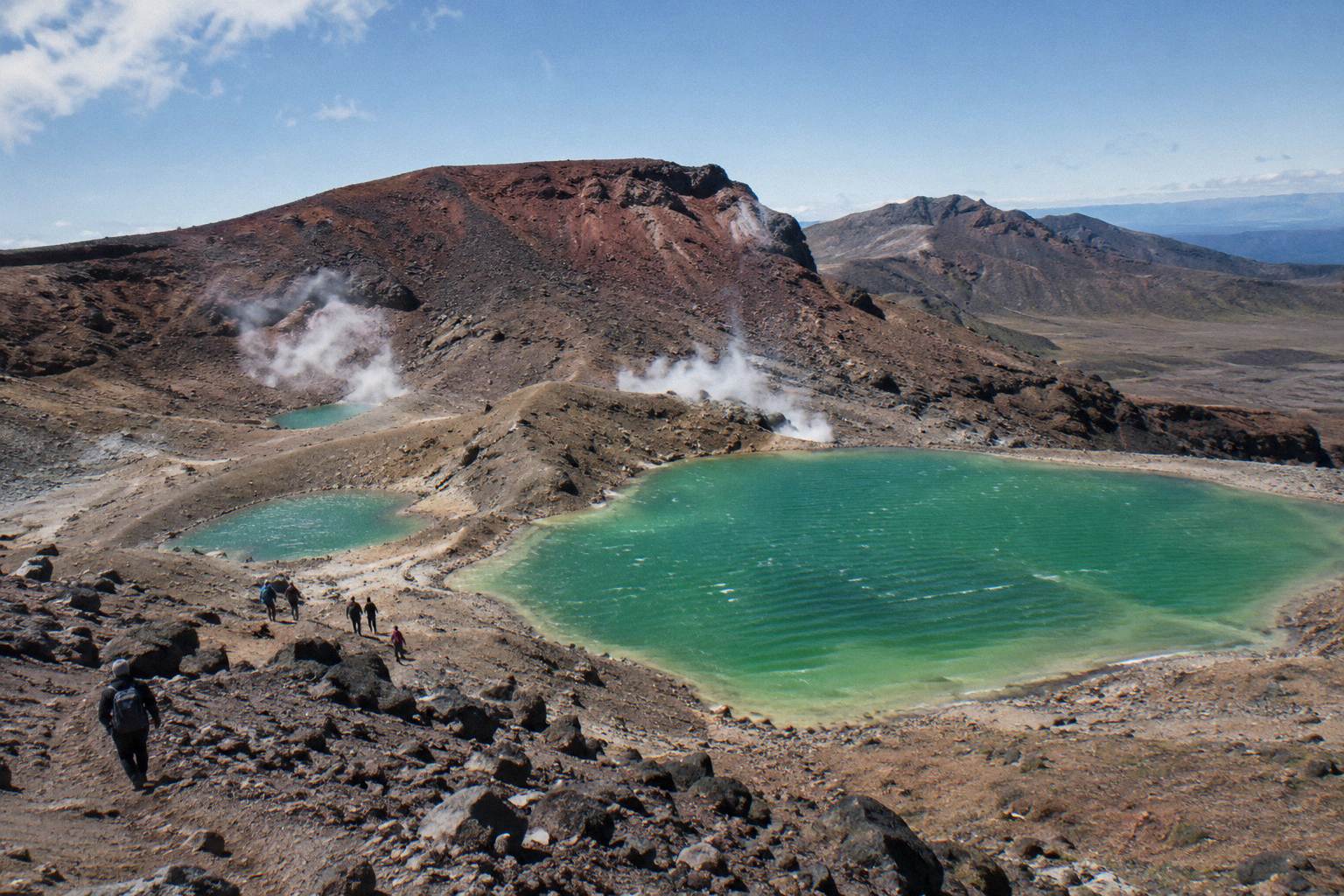
The Tongariro Alpine Crossing climbs 20.2 kilometres one way through the heart of New Zealand's oldest national park, established in 1894 and held by DOC as a dual World Heritage area, sacred to Ngati Hikairo ki Tongariro of Ngati Tuwharetoa. The walk crosses Red Crater at 1886 metres and drops past the vivid Nga Rotopounamu, the Emerald Lakes, on a steep scree descent. Which month you attempt it changes the walking time, the gear, the transport options and, in winter, whether you should be on the track alone at all.
DOC, the Department of Conservation, frames the track in two seasons. From November to April it is an intermediate tramping track needing high fitness, 7 to 8 hours of walking. From May to October the same route becomes an expert route: snow, ice, avalanche risk and sub-zero temperatures, with DOC's own advice that alpine skills are essential and it is best to go with a guide. Full track details sit on the official DOC Tongariro Alpine Crossing page.
The best time of year is the summer season from November to April, and inside that window the shoulder months of November and April often give the best balance of open track, workable weather and thinner crowds. February and March are the warmest, busiest months. May to October is a different proposition entirely: an expert winter route where DOC recommends a guide, crampons and ice axes, and where shuttle services largely stop running.
That is the short version. The longer version is that the Crossing is not one walk but two, and the season line drawn by DOC is not a formality. In summer the track is a full-day tramp across volcanic terrain with a well-formed path, heavy foot traffic and daily shuttles from every road end. In winter it is an alpine route. The distance does not change, 20.2 kilometres one way with 1196 metres of elevation change up and down, but the character of every section changes, from the Devil's Staircase to the Red Crater rim to the long descent to Ketetahi Road.
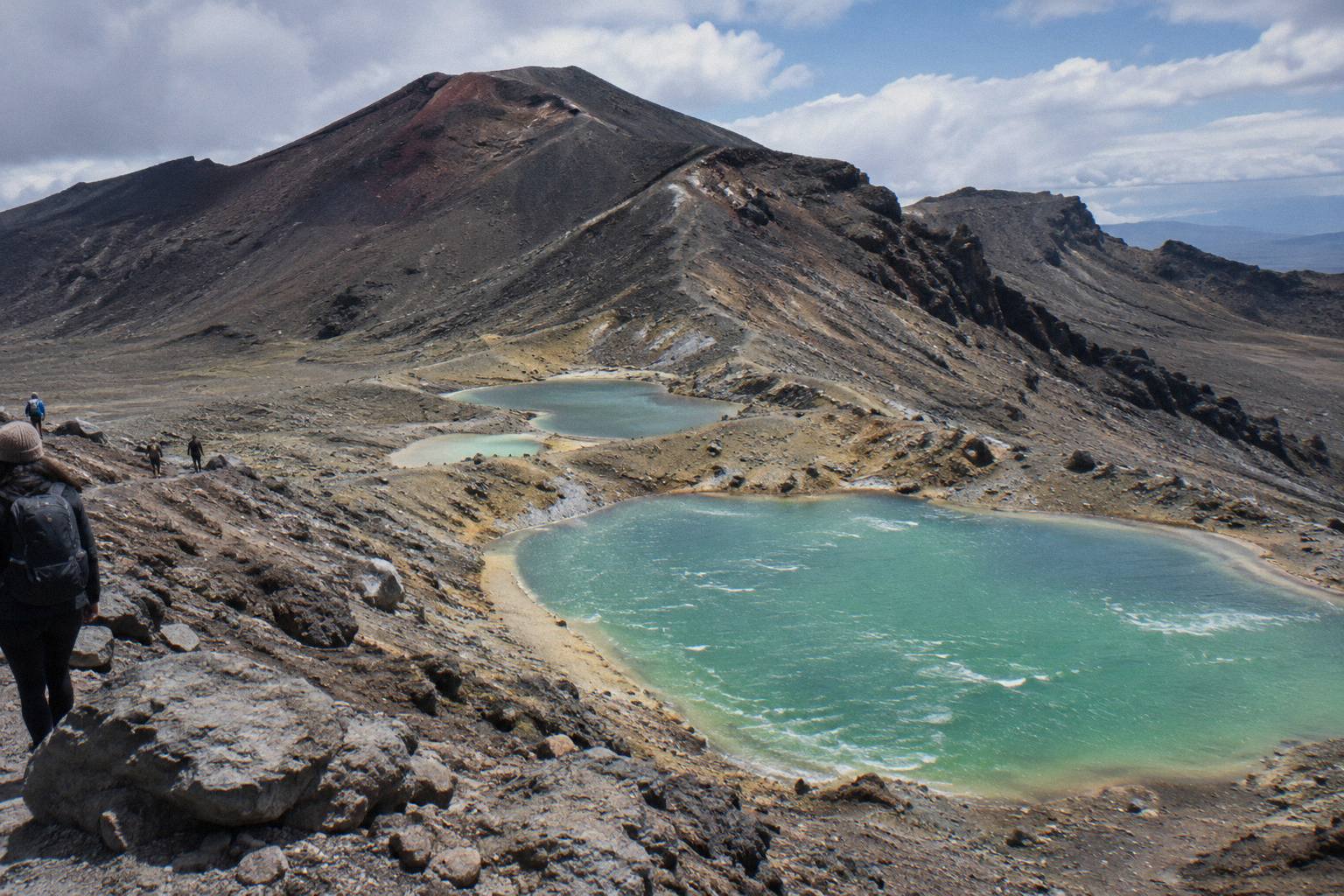
The practical planning reality is that transport follows the season. DOC notes that shuttle buses generally do not operate in winter, from May to late October, while guided trips include transport. So a summer walker has a wide choice, from the Tongariro Crossing Shuttles round trip out of National Park Village, rated 4.7 across 890 reviews and priced from NZ$75 per person, to the Ruapehu Scenic Shuttles Ketetahi park-and-ride at from NZ$68, rated 4.8 across 670 reviews, to fully guided days with Adrift Tongariro. A winter walker has essentially one sensible option: a guided trip, such as the Adrift Tongariro premium guided hike, from NZ$450 per person, rated 4.6 across 242 reviews, which supplies crampons and ice axes if conditions require them.
There is a cultural layer that applies in every month. Kaumatua Te Ngaehe Wanikau asks visitors to respect the maunga tapu, the sacred mountains, by not touching or entering any of the waterways, including the alpine lakes. The Emerald Lakes are for looking at and photographing, never for swimming or dipping a hand, whenever you come.
The Summer Season From November To April
From November to April the Crossing runs in its full form: an intermediate tramping track, high fitness required, 7 to 8 hours of walking, daily shuttles and a free DOC booking system. Days are long, the track is free of snow in a normal year, and the Emerald Lakes basin is reachable without alpine gear. This is when almost everyone should plan their visit.
Inside those six months the walking time DOC quotes is 7 to 8 hours, and that figure matters for planning because it is time on the track, not the length of the day you book. A shuttle-and-walk day runs longer once transport, check-in and the drive to your departure point are added. DOC's distances give a sense of the region's scale: Whakapapa sits 10.4 kilometres from the track area, National Park 13.5 kilometres, Turangi 36.7 kilometres, Ohakune 48 kilometres and Taupo 86.5 kilometres, all figures from DOC.
Parking is the first constraint of the season. From Labour weekend in late October through to 30 April, a 4 hour maximum applies at the road ends, and DOC's own suggestion is to book a shuttle. DOC also states there is no parking for Crossing walkers at Mangatepopo car park in summer, though a private car park operates near Ketetahi. In practice this means the shuttle decision is made for most visitors by the calendar: drive to a departure point outside the restricted road ends, ride in, walk, ride out.
The DOC booking system is free and recommended, and it is needed for shuttle and guided bookings. It exists to spread load across peak days rather than to sell access, so booking early costs nothing and secures nothing you would otherwise pay for. Details are on the DOC Crossing booking system page.
Within summer, the months are not equal. February and March bring the most reliable warmth and the heaviest traffic on the track and the shuttles. December and January add the Christmas and school-holiday surge, and the longest days of the year, which help if you start late but mean sharing the crater with the year's biggest crowds. November and April sit at the edges: cooler, quieter, occasionally touched by late or early snow, and often the best trade for walkers who value space over warmth. An early start is wise in any month, and the sunrise start approach for the Emerald Lakes page covers that decision in detail.
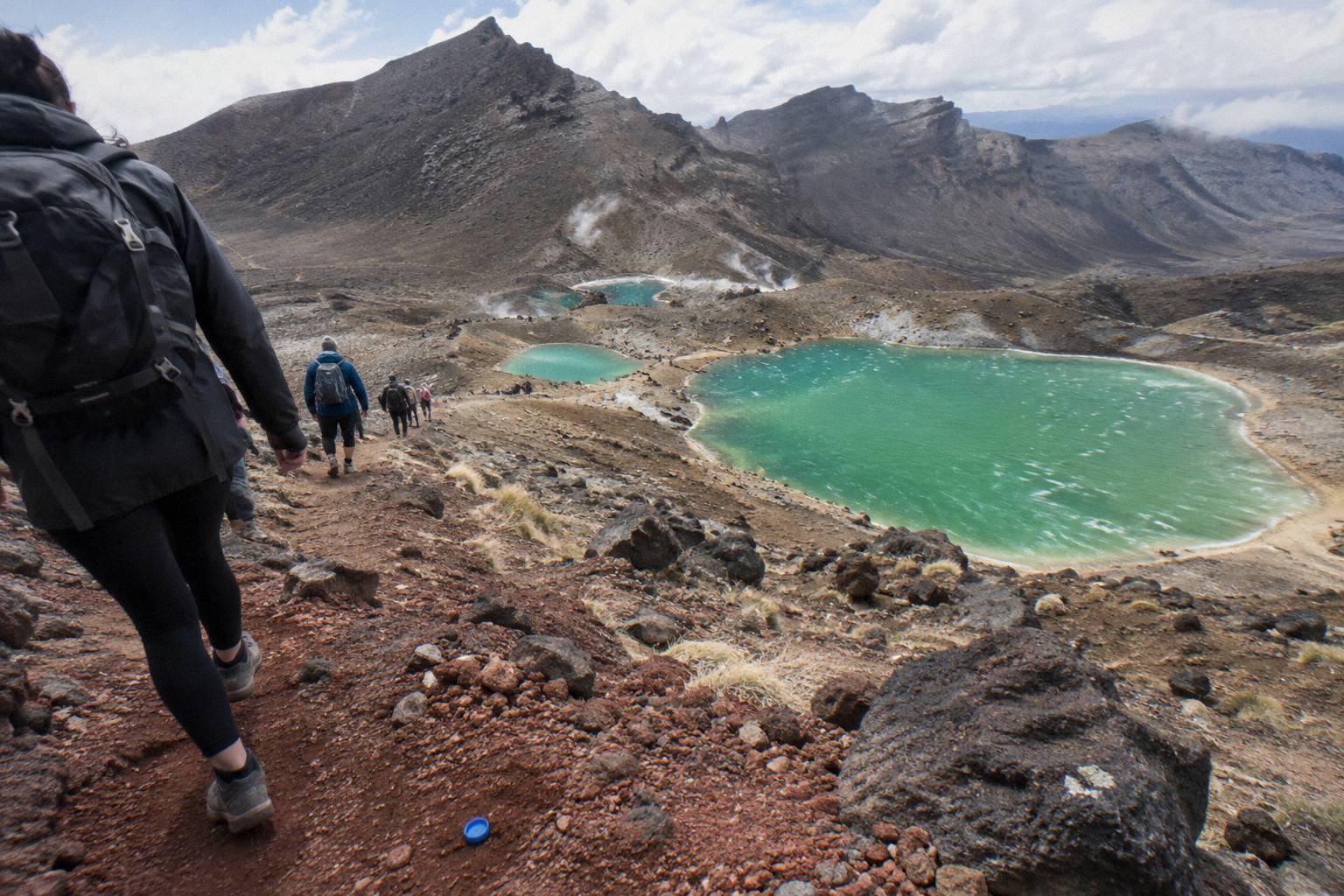
What the season guarantees, and what it does not, is worth being clear about. Summer removes the winter hazards from the track's description, but it does not promise a clear day. Weather above the Emerald Lakes can turn at any time of year, and shuttle and guided operators run only when DOC's advisory and the forecast allow, conditions allowing in every case. No operator can promise views, and no month can either.
Shoulder Months And What They Trade
November and April are the shoulder months, and they trade a few degrees of warmth for smaller crowds and a track that still runs in summer mode. November carries a small risk of lingering snow on south-facing sections, April the reverse risk of an early dusting, but in a typical year both are walkable summer months with shuttles running and 7 to 8 hour walking times.
The case for November is quiet. The shuttle season is running, the 4 hour parking restriction is in force from Labour weekend, and the summer crush has not yet arrived. The case against is that the high sections around Red Crater can hold old snow from the previous winter in shaded spots, and the weather is more variable than midsummer. It is a month for walkers who check the forecast closely and stay flexible.
April works in mirror image. The Easter holidays can bring a late-season spike, but the weeks after it are among the calmest on the track. Days are shorter than midsummer, though still workable for a 7 to 8 hour walk with an early start, and the light in autumn is famously good for photography of the lakes and the surrounding volcanic country, a subject the photographing the Emerald Lakes guide treats in depth.
A table helps to compare the months honestly:
| Month | Track condition | Walking time (DOC) | Crowd level | Notes |
|---|---|---|---|---|
| November | Summer, possible old snow patches | 7 to 8 hours | Low to moderate | Shoulder quiet, variable weather |
| December | Summer | 7 to 8 hours | High | Holiday surge begins |
| January | Summer | 7 to 8 hours | Highest | Peak season, longest days |
| February | Summer | 7 to 8 hours | Very high | Warmest, busiest month |
| March | Summer | 7 to 8 hours | High | Reliable warmth, easing crowds |
| April | Summer, possible early snow late in the month | 7 to 8 hours | Moderate to low | Calm after Easter, shorter days |
| May to October | Expert winter route | 9 hours | Very low | Snow, ice, avalanche risk, guide recommended |
The shoulder rule of thumb: if your dates are flexible and you would rather have a quiet crater than a warm one, book November or April, keep an eye on the forecast, and hold your shuttle or guide booking with free cancellation where the terms allow it. Most shuttles on this route offer free cancellation up to 24 hours before, and the Adrift guided tours up to 14 days before, though the Adrift private Crossing and one multi-day product are non-refundable, so the booking page shows the terms that matter for each.
Winter From May To October Is A Different Walk
From May to October DOC classifies the Crossing as an expert route: 9 hours of walking, snow and ice on the track, avalanche risk and sub-zero temperatures, with DOC stating alpine skills are essential and it is best to go with a guide. Winter daylight runs 9 to 11 hours, shuttles generally do not operate, and independent walkers need crampons, an ice axe, helmet, avalanche gear and the competency to use them.
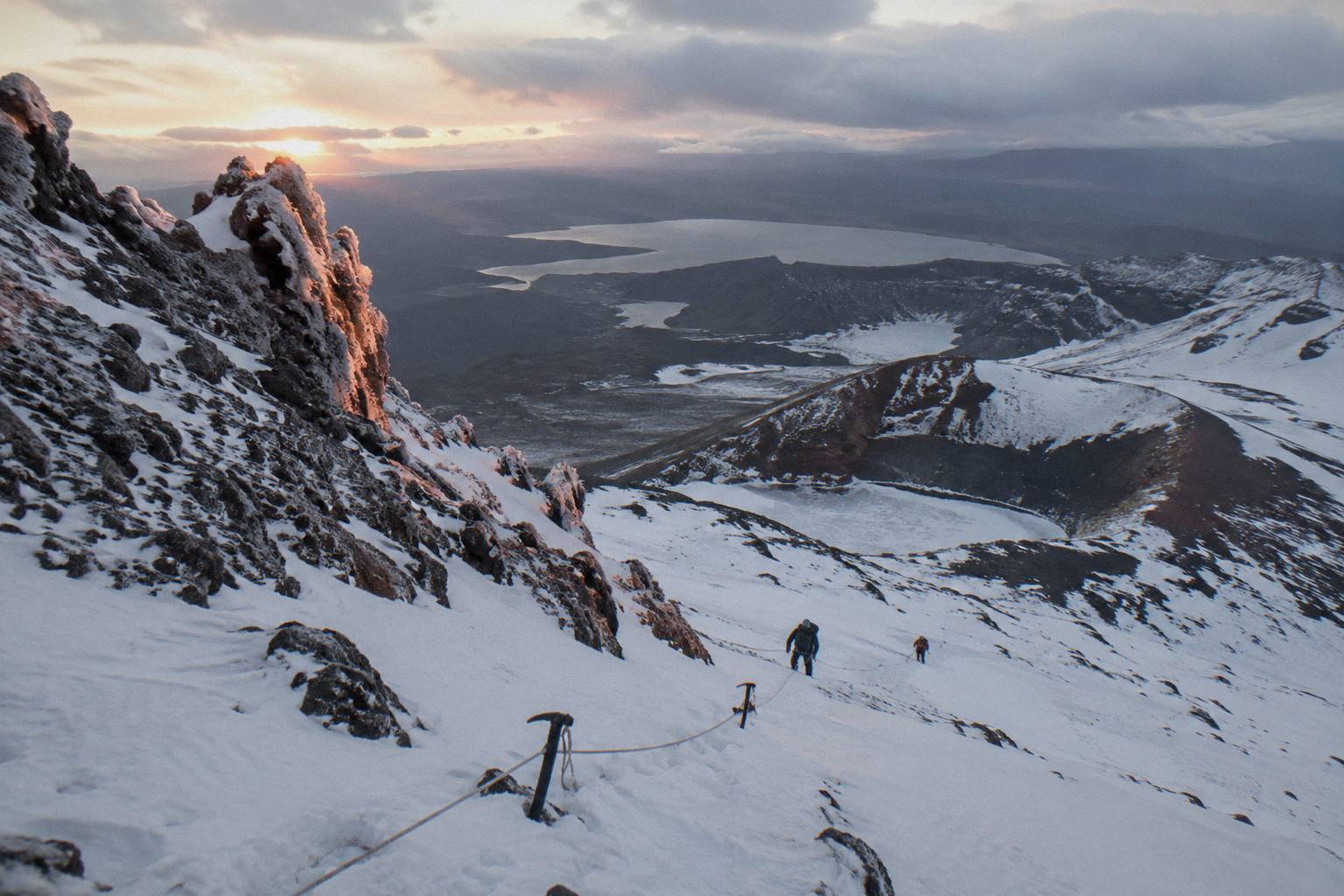
The seven-month winter is not a quieter version of summer. The Devil's Staircase becomes a snow slope, the Red Crater ridge collects ice, and the descent to the Emerald Lakes, already a steep scorie drop in summer, becomes a technical exercise in dry-tooling steps into frozen ground. DOC's winter essentials list for independent trips is blunt: crampons, ice axe, helmet, competency, avalanche gear. The winter on the Crossing guide covers the full picture.
The volcanic layer does not pause for winter either. Volcanic alert levels change daily, and the Te Maari vents near the Ketetahi end of the track erupted as recently as 2012. Structural advice: check GeoNet and DOC alerts before any attempt, in any season. Volcanic risk background is on the DOC volcanic risk page.
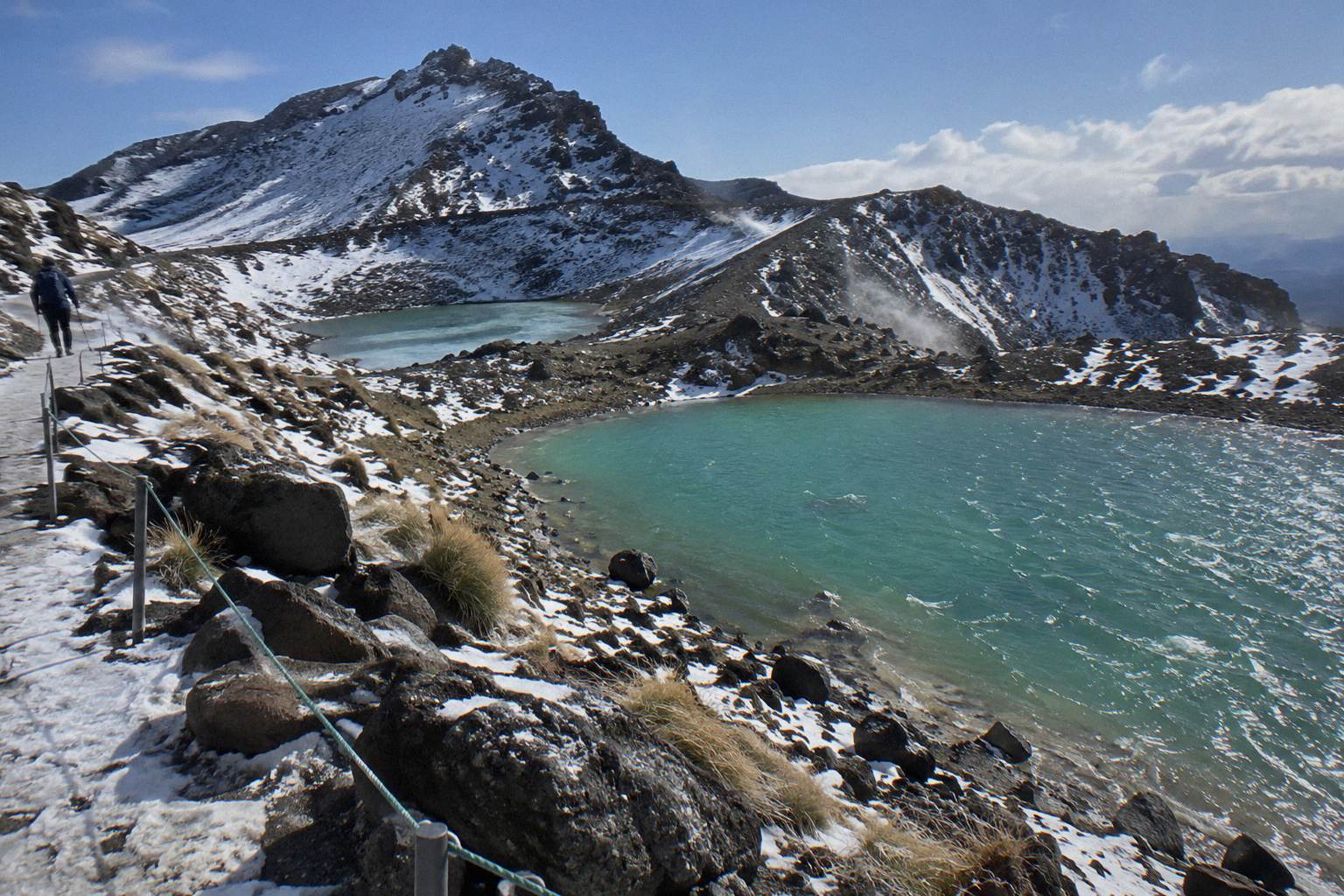
For most readers the winter answer is a guided day. Adrift Tongariro runs three guided tours, including the premium guided hike at from NZ$450 per person with pickups possible from Taupo, Turangi and Whakapapa at a surcharge on private trips, and crampons and ice axes supplied for winter conditions if required. Bring your own lunch; it is not included. If winter conditions close in completely, DOC points to Taranaki Falls and Tama Lakes as alternative walks, and the other hikes near the Crossing start guide lists what else the park offers.
How Weather Decides Your Day In Every Month
Whatever month you choose, the weather on the day decides whether the walk goes ahead. Operators run only when DOC's advisory and the forecast allow, no shuttle or guide promises a clear day, and the tools that matter are the NIWA advisory for the park, the Red Crater forecast, the MetService mountain forecast and avalanche.net.nz in winter. Picking a good month raises your odds; only picking a good day makes the walk.
The weather system around the Crossing is structural, not seasonal gossip. An advisory is triggered by hazardous conditions, and when it is in force, operators bound by DOC rules do not run. The advisory is assessed each morning, which is why a flexible booking beats a rigid one. NIWA's advisory for Tongariro National Park and the Red Crater forecast are the primary planning tools, with MetService's mountain forecast alongside them.
The Crossing weather above the Emerald Lakes page unpacks what wind at altitude does to the crater section, and the best month to hike to the Emerald Lakes guide goes deeper on the month question for readers who want the lakes-specific view. The short version for booking: choose free-cancellation terms where the listing offers them, keep a spare day in your itinerary, and treat any single-day plan as provisional.
Crowds, Parking And Shuttles By Season
Crowds peak from late December through February, parking at the road ends is limited to 4 hours from Labour weekend to 30 April, and shuttle access follows the summer season. The quietest walkable months are November and April, and the quietest months of all, May to October, are quiet partly because the track is an expert route and the shuttles are largely not running.
Transport planning starts with your departure point, and the six points in play are National Park Village, the Ketetahi car park, Taupo, Turangi, Ohakune and Auckland. A round-trip shuttle from National Park Village, such as the Tongariro Crossing Shuttles service from the Park n Ride at 59 Findlay Street, suits walkers staying on the western side of the park. A Ketetahi park-and-ride, such as the Ruapehu Scenic Shuttles one-way option from the Ketetahi car park, suits those who want their own car waiting at the finish; it is one-way only, you park at Ketetahi, ride to Mangatepopo and walk back to your vehicle.
From the Taupo and Turangi side, the Tongariro Expeditions Crossing shuttle from Taupo or Turangi runs a booked day of 8 to 10 hours, is rated 4.7 across 431 reviews and costs from NZ$75 per person, with free cancellation up to 24 hours before. Auckland is a long way away, and the honest answer for Auckland-based walkers is an overnight or two-day product rather than a same-day dash; a private transfer and a three-day private tour with a self-guided Crossing leg both exist on that route.
The National Park Village side has two return products worth knowing side by side:
| Product | Format | Departure | Price | Rating | Cancellation |
|---|---|---|---|---|---|
| Tongariro Crossing Shuttles round trip | Return shuttle, self-guided walk | National Park Village, Park n Ride, 59 Findlay Street | From NZ$75 per person | 4.7 across 890 reviews | Free, up to 24 hours before |
| Dempsey Buses return bus | Return shuttle, self-guided walk | National Park Village, several stops | From NZ$90 per person | 4.8 across 72 reviews | Free, up to 24 hours before |
| Adrift Tongariro premium guided hike | Guided group hike, full Crossing | National Park Village, 53 Carroll Street | From NZ$450 per person | 4.6 across 242 reviews | Free, up to 14 days before |
None of these is a guided walk except the Adrift product: a shuttle is transport, not a guide, and the walk from a shuttle is self-guided. The is a guide worth it for the Emerald Lakes section page works through that decision, and the do you need a guide for the Crossing post answers the same question head on.
Booking Around Your Chosen Month
Book the DOC system first, it is free and recommended, then book transport or a guide with cancellation terms that match your season risk: 24 hour free cancellation covers most shuttles, 14 days covers the Adrift guided tours, and the non-refundable products suit only a firm itinerary. In winter, book a guide and nothing else.
The booking sequence matters more than people expect. The free DOC booking, described on the booking system page linked above, records your intention and is needed for shuttle and guided bookings. Transport comes next, matched to where you are sleeping the night before, and the where to sleep before the Crossing post covers the town-by-town logic. Cost expectations sit on the how much does the Crossing cost page, including the fact that part of a shuttle fee, about NZ$40, goes to conservation as DOC describes it.
For a private, flexible day at any time of the main season, the Adrift Tongariro private guided Crossing from National Park Village runs a booked day of 7 to 9 hours, rated 4.5 across 30 reviews, though it is non-refundable, so it suits committed dates rather than weather-hedged ones. On the budget end, one-way Ketetahi park-and-ride products cluster in the thirties of dollars per person, trading a return ride for the convenience of a car at the finish. The Ketetahi finish after the Emerald Lakes guide explains what that final descent and road-end arrival actually look like.
Whatever you book, the Emerald Lakes themselves stay off limits to touch. The request from Kaumatua Te Ngaehe Wanikau, printed by DOC, asks visitors to respect the maunga tapu by not touching or entering any of the waterways including the alpine lakes. It is a request, not a fence, and it is the one rule of the basin that applies in every month, in every weather, on every kind of booking.
Mistakes That Trip People Up When Picking A Month
The common mistakes are assuming February guarantees good weather, assuming winter is just quiet summer, booking non-refundable products on a weather-hedged itinerary, driving to a road end with 4 hour parking limits, planning the day around booked duration instead of walking time, and treating a shuttle as a guided trip. Each one is avoidable with a single planning decision made early.
The first mistake is chasing the warmest month as if it were the safest. February is warm and busy, and it still produces gusting days that close the crater section. The second is the winter assumption: some readers see May to October photos of the lakes under snow and picture a peaceful off-season stroll, when DOC's classification is an expert route with alpine skills essential. The third is cancellation blindness, booking a non-refundable private day for the only date on a short trip, then losing it to an advisory.
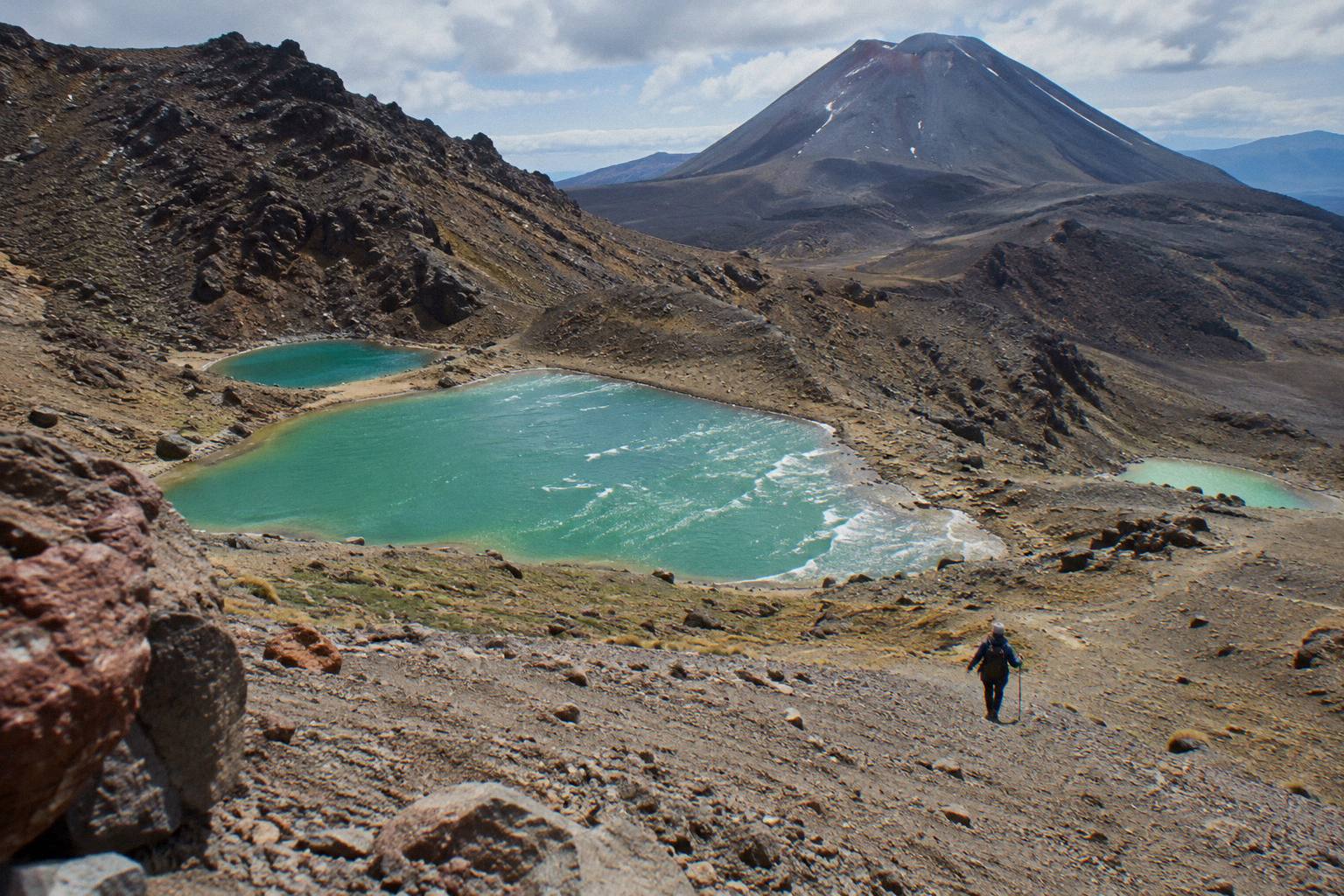
The fourth is parking. Arriving at a road end between Labour weekend and 30 April with a plan to leave the car all day collides with the 4 hour maximum, and DOC's suggestion is simply to book a shuttle. The fifth is confusing the booked day length with walking time: a 9 hour guided booking and a 7 to 8 hour walk are different figures, and the day needs room for both plus transport. The sixth is expecting a guide on a shuttle; no shuttle product includes guiding, and the walk from any shuttle start is your own navigation.
A closing note on the whole question: the best month is the one where your transport, your cancellation terms and your spare day line up, and for the great majority of walkers that is November to April, ideally November or April for quiet, February or March for warmth, and a guided winter day only for those who want the alpine version. The Tongariro Emerald Lakes Hike site exists to help you make exactly that call, with the season pages, the transport guides and the tour comparisons in one place.
Common Questions About The Best Time Of Year For The Crossing
What Is The Best Time Of Year To Do The Tongariro Crossing?
November to April, when DOC classes the track as an intermediate tramping track needing high fitness, 7 to 8 hours of walking, with shuttles running daily. Within that, November and April offer quieter tracks, February and March the warmest weather and the biggest crowds.
Can You Do The Tongariro Crossing In Winter?
Yes, but DOC classes it as an expert route from May to October, with snow, ice, avalanche risk and sub-zero temperatures, 9 hours of walking, and the advice that alpine skills are essential and it is best to go with a guide. Shuttles generally do not run in winter, while guided trips include transport.
What Is The Busiest Month On The Crossing?
January and February, combining peak holiday travel with the warmest weather. The 4 hour parking limit at the road ends from Labour weekend to 30 April pushes most visitors onto shuttles in those months, which is why transport books out first.
Do Shuttles Run All Year?
No. DOC notes shuttle buses generally do not operate from May to late October. The shuttle season aligns with the summer track season, from around Labour weekend through April, and guided trips are the transport-included option in winter.
Is The Walking Time Different By Season?
Yes. DOC quotes 7 to 8 hours from November to April and 9 hours from May to October. These are walking times only, not the full length of a booked day with a shuttle or guide.
What If The Weather Is Bad On My Chosen Day?
Shuttles and guides run only when DOC's advisory and the forecast allow, conditions allowing in every case. Check the NIWA advisory, the Red Crater forecast and DOC alerts before your day, book products with free cancellation where offered, and keep a spare day. Taranaki Falls and Tama Lakes are DOC's suggested alternatives when conditions are poor.