What Is The Best Hike In Tongariro National Park?
The Tongariro Alpine Crossing is the headline walk in Tongariro National Park, and this guide compares it with the park's other options, including Taranaki Falls and Tama Lakes, plus the shuttles and guided tours that serve it.
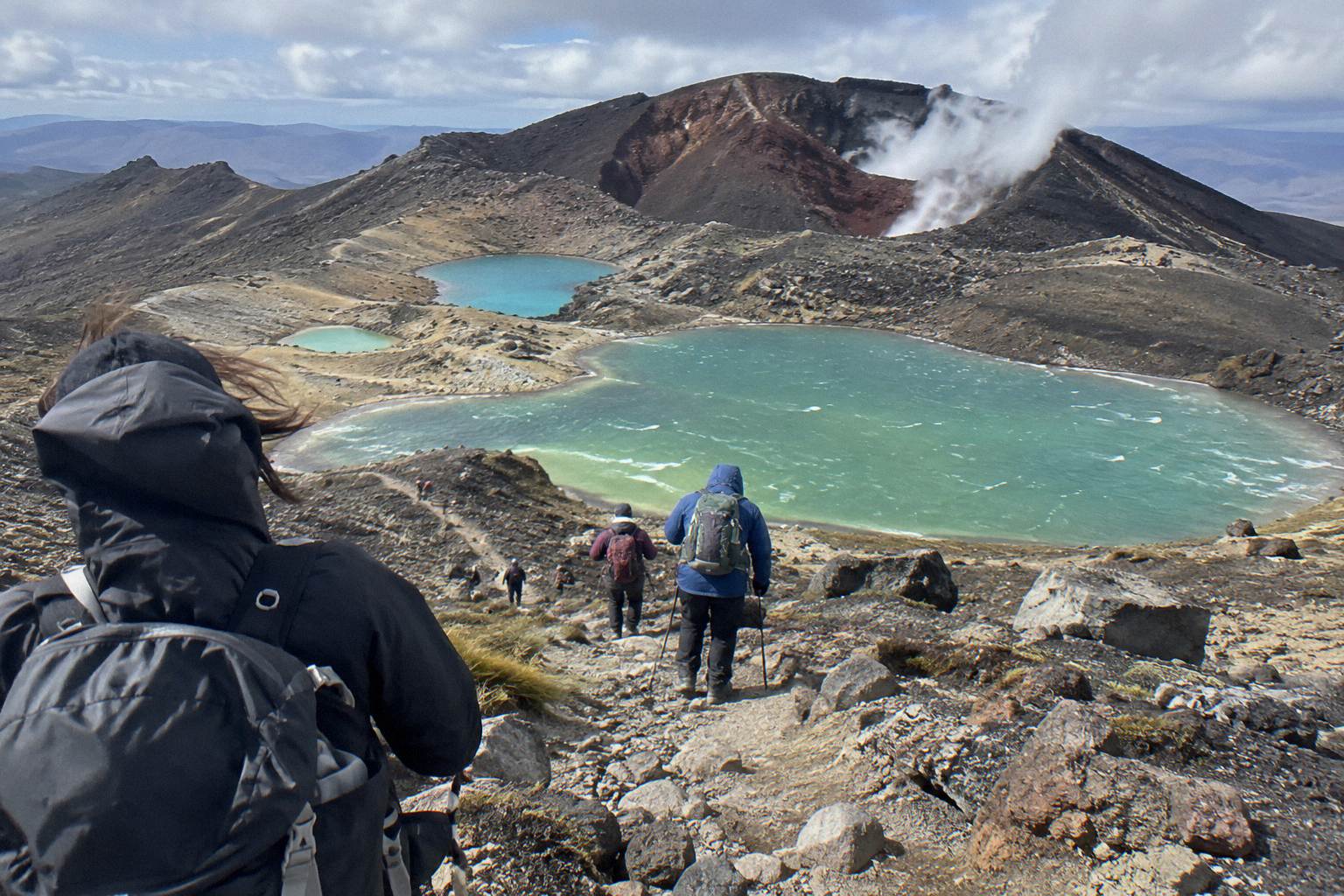
Tongariro National Park became New Zealand's first national park in 1894 and holds dual World Heritage status for both its volcanic landscape and its living Maori cultural significance. The mountains are sacred to Ngati Hikairo ki Tongariro of Ngati Tuwharetoa, and kaumatua Te Ngaehe Wanikau asks visitors to respect the maunga tapu by not touching or entering any of the waterways, including the alpine lakes. Within that landscape sits one walk that outranks everything else.
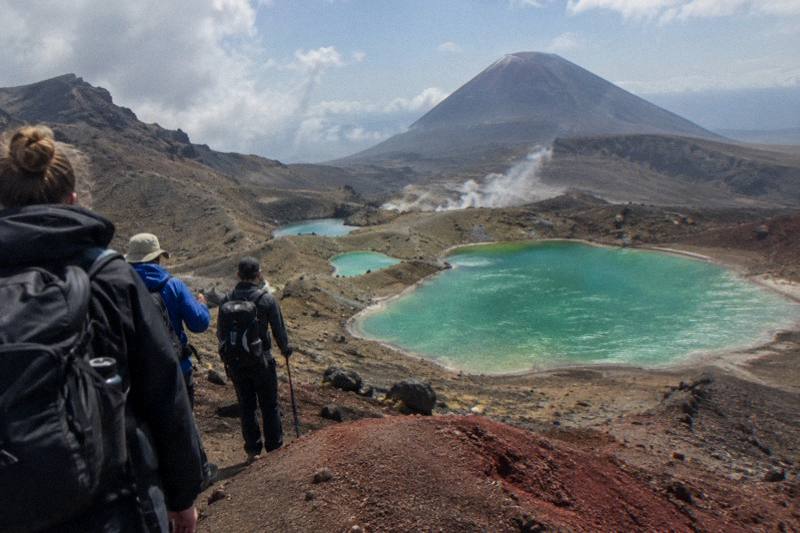
The best hike in Tongariro National Park is the Tongariro Alpine Crossing, a 20.2 km one-way alpine traverse with 1196 m of elevation change, taking 7 to 8 hours from November to April and 9 hours from May to October. DOC grades it High fitness, an intermediate tramping track in summer and an Expert route in winter. No other day walk in the park matches its concentration of active volcanic scenery.
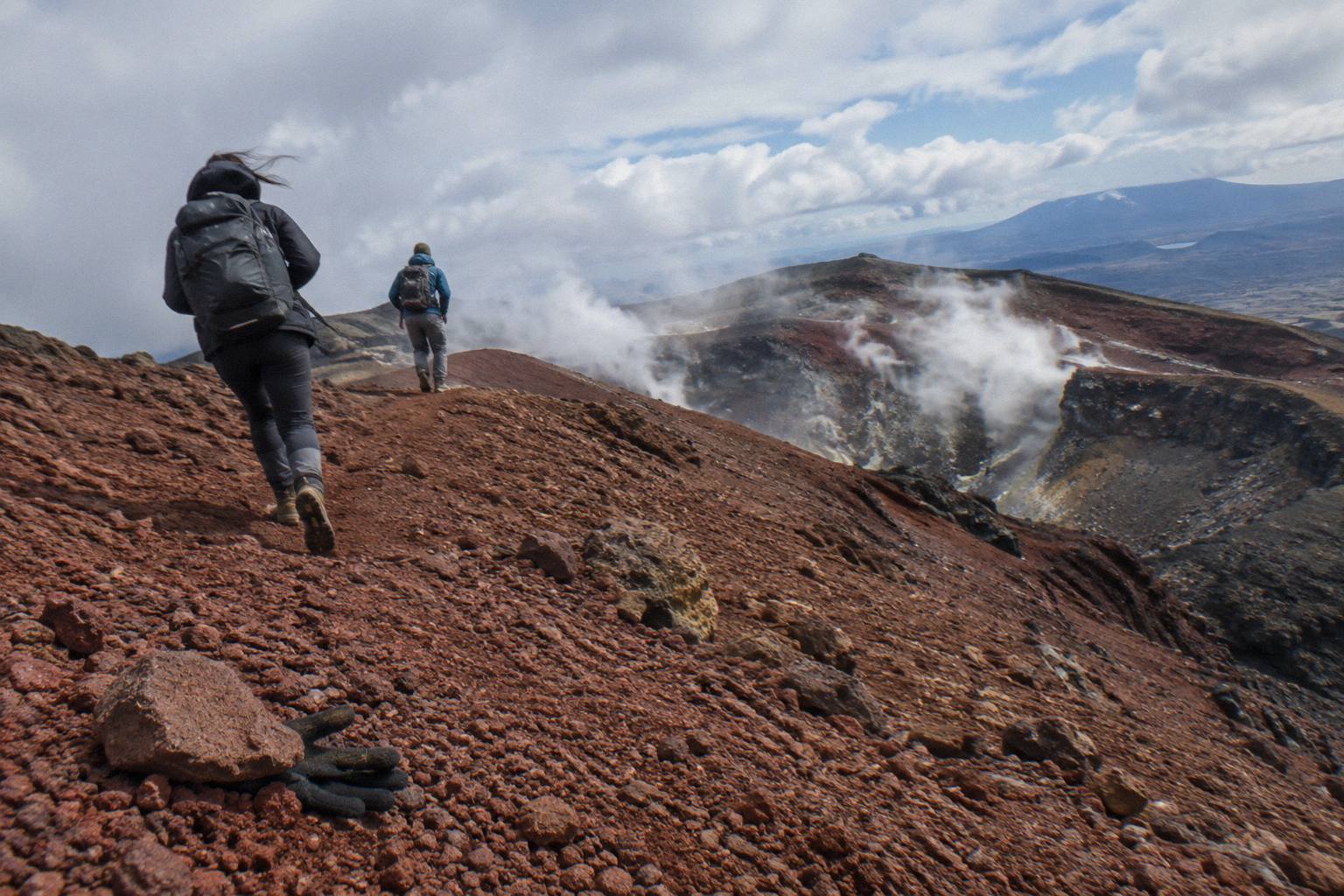
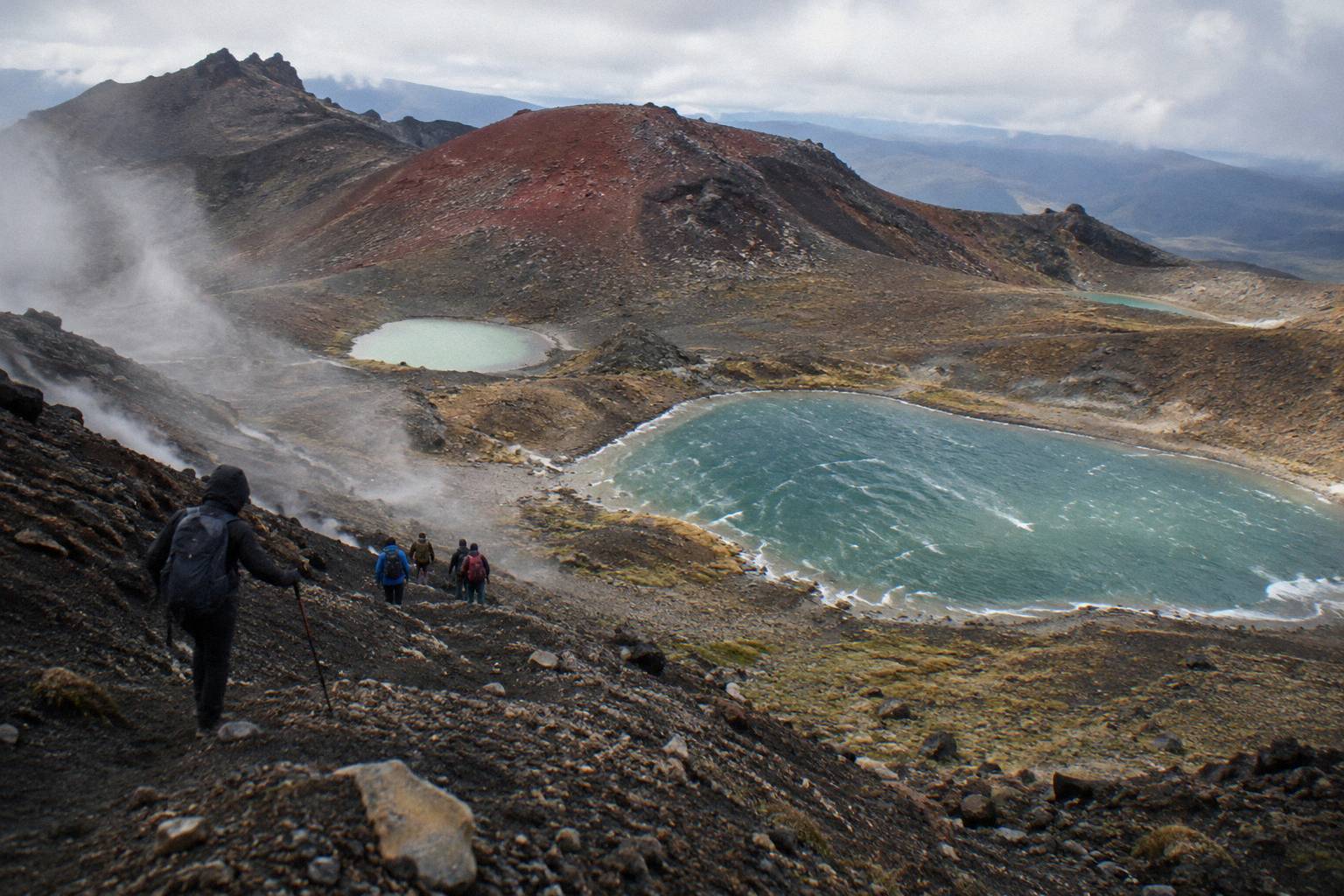
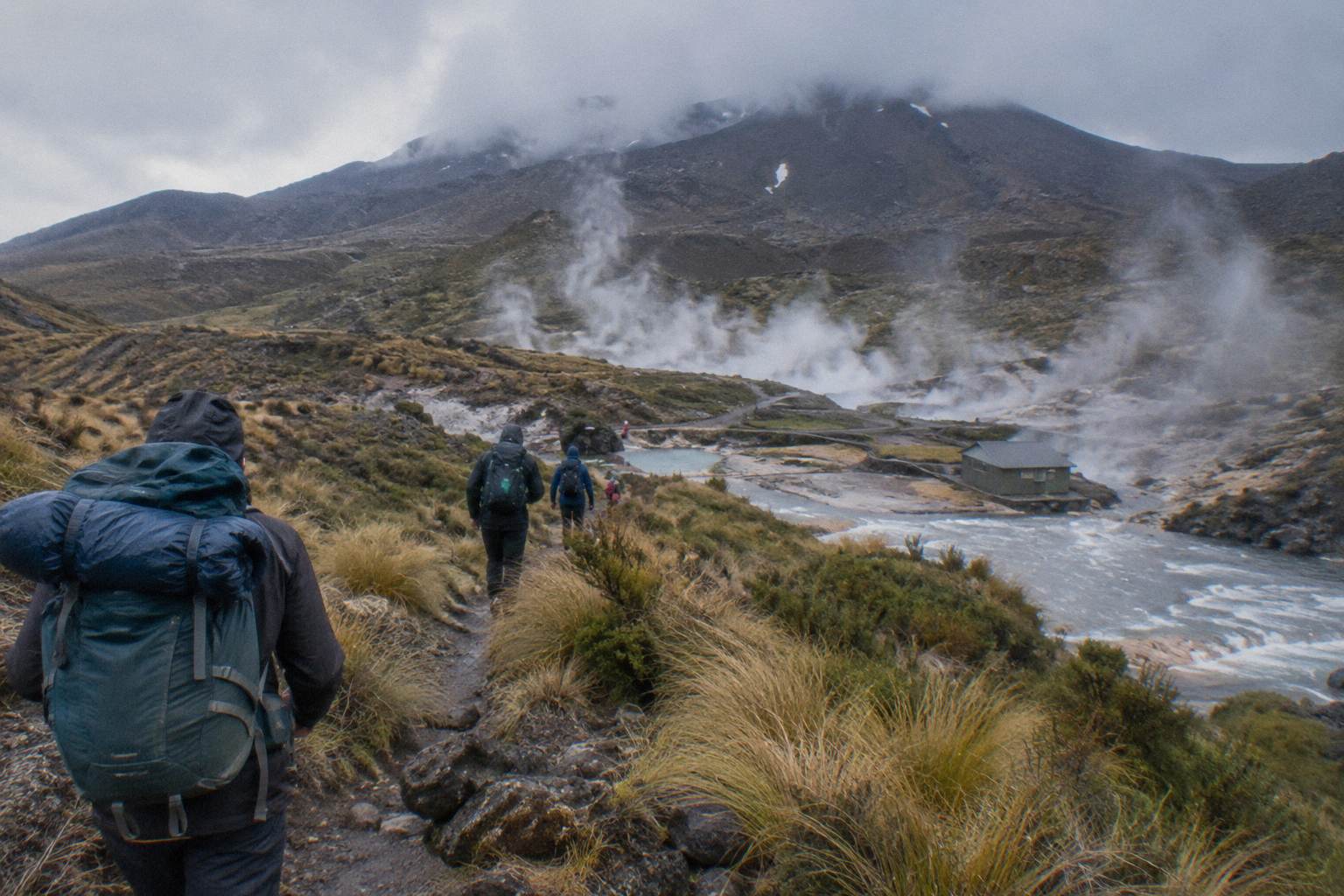
The Crossing packs steam vents, the South Crater, Red Crater at 1886 m, the vivid Nga Rotopounamu, the Emerald Lakes, Blue Lake and the Ketetahi thermal area into a single day. DOC describes the descent from Red Crater as a steep scree drop to the vivid Emerald Lakes, and that sequence, crater rim after crater rim, is what earns the walk its global reputation. It begins at Mangatepopo, around 1120 m, and finishes near Ketetahi Road at roughly 760 m, so most of the climbing is stacked into the first two thirds of the day.
It is not a casual stroll. DOC's own fitness grading is High, and from May to October the route becomes an Expert alpine traverse with snow, ice, avalanche risk and sub-zero temperatures, where DOC says alpine skills are essential and it is best to go with a guide. Even in summer the weather above the lakes can turn from sunshine to horizontal rain inside an hour, so the walk rewards preparation. The fitness demands of the climb to the Emerald Lakes are worth understanding before committing to a date.
The practical reality shapes the experience too. From Labour weekend in late October until 30 April, parking at the road ends is restricted to a four hour maximum, and DOC suggests booking a shuttle. Almost everyone walking the Crossing in the popular season arrives by shuttle or as part of a guided tour, which is why this site exists: the trips you can book, from the Tongariro Crossing Shuttles round trip out of National Park Village to Adrift Tongariro's guided hikes, all serve this one walk.
If the Crossing is the best hike, the natural follow-up question is how to get to its start. Three options cover most travellers.
How Does The Crossing Compare With Other Walks In The Park?
DOC names two alternatives when conditions rule out the Crossing: Taranaki Falls and Tama Lakes. Both sit on the same southern side of the park near Whakapapa, both stay below the alpine zone, and neither requires a shuttle in the way the Crossing does. Neither matches the Crossing's volcanic spectacle, but both are genuinely good walks that stay walkable in weather that closes the higher route.
The comparison is really between three tiers. The Crossing is the full alpine day: 20.2 km, craters, lakes, thermal areas and a hard physical test. Tama Lakes is a longer valley walk, roughly half a day for most people, climbing gently up the Tama saddle between two lakes set in old eruption basins under Mount Ruapehu's bulk. Taranaki Falls is the shortest and easiest of the three, a loop taking in an impressive waterfall tumbling over an old lava flow. DOC lists both by name on the Crossing page as the walks to do instead when the alpine route is not an option, which tells you something about their quality.
Here is how the three compare on what is verified. Figures for the Crossing come from DOC's track page; DOC publishes no comparable distance or time figures for the other two, so the table sticks to what is known rather than guessing.
| Walk | What DOC publishes | Terrain | Best for |
|---|---|---|---|
| Tongariro Alpine Crossing | 20.2 km one way, 7 to 8 hours Nov to Apr, 9 hours May to Oct, High fitness | Alpine: craters, scoria, scree, lakes, thermal vents | The full spectacle, with fitness and transport sorted |
| Taranaki Falls | Listed by DOC as a Crossing alternative | Waterfall loop below the bushline | Shorter days, families, poor-weather mornings |
| Tama Lakes | Listed by DOC as a Crossing alternative | Valley and saddle walk below the alpine zone | A half day of quiet scenery without a shuttle |
One point matters for anyone choosing between them: only the Crossing has a booking ecosystem around it. DOC's free booking system is recommended for the Crossing and is needed if you take a shuttle or a guided trip, while the two alternatives are open walks you can start from Whakapapa whenever suits. That simplicity is part of their appeal. The trade is scenery: no other track in the park puts mineral-blue and green lakes inside an active volcanic basin within a single day's walking, which is why the question of whether the hike to Emerald Lake is worth it nearly always answers itself once people see photographs.
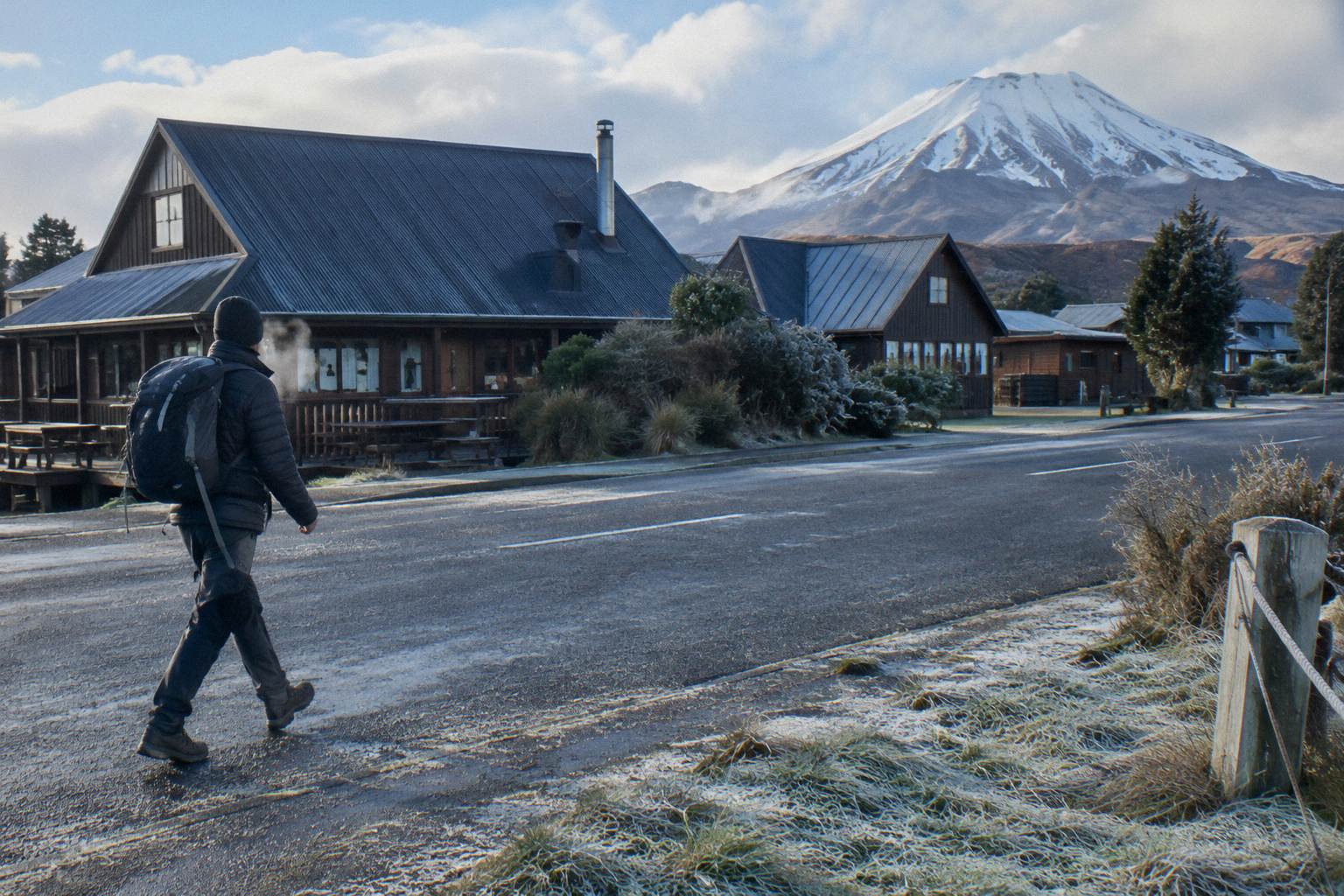
If you are staying in National Park Village, transport for the Crossing itself is straightforward. The Tongariro Crossing Shuttles round trip from National Park Village, departing the Park n Ride at 59 Findlay Street, runs from NZ$75 per person with free cancellation up to 24 hours before, rated 4.7 across 890 reviews, the most reviewed tour here.
Is The Crossing Right For You, Or Is A Quieter Walk Better?
For most visitors with a reasonable fitness base and one clear day, the Crossing is the right choice, and the quieter walks are the backup rather than the alternative. If the DOC forecast for the alpine zone is poor, if you have young children, or if you want solitude rather than scenery, Taranaki Falls or Tama Lakes will serve you better than a rushed, weather-battered Crossing.
Be honest about fitness. DOC grades the Crossing High, and the famous Emerald Lakes arrive only after the Devil's Staircase and the climb to Red Crater, which is the high point at 1886 m. People who overestimate themselves end up walking the final third slowly and painfully. The preparation advice in what to wear hiking to the Emerald Lakes applies to the whole route: layers, real footwear, and no assumption that the weather at the car park reflects the weather at Red Crater.
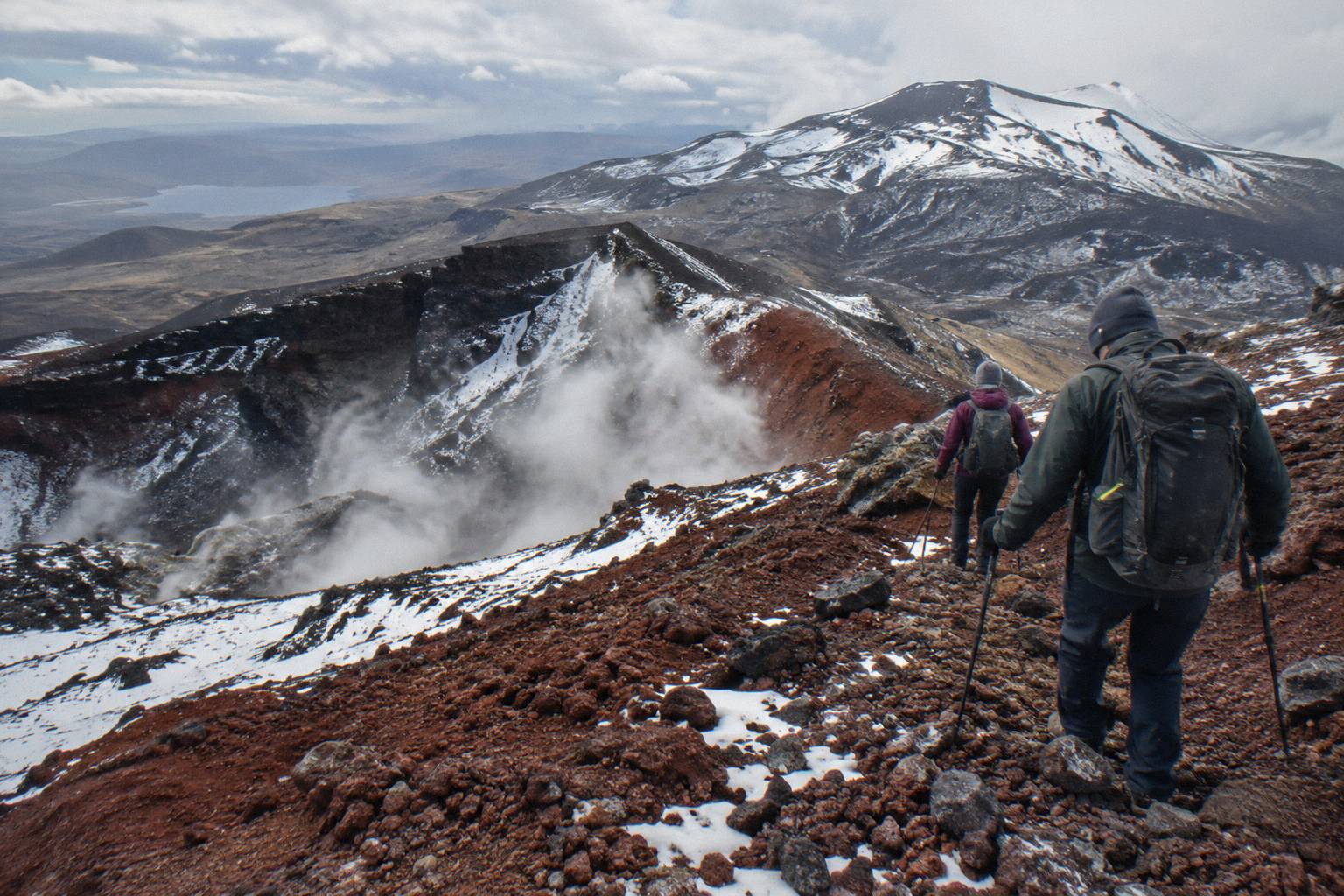
Be honest about timing, too. The popular season runs through the southern summer, and winter, May to October, changes the calculus completely. Snow, ice and avalanche risk make it an Expert route, DOC says alpine skills are essential, and the safest way to attempt it then is with a guide. Adrift Tongariro runs the three guided tours: the premium guided hike from NZ$450 per person with free cancellation up to 14 days before, rated 4.6 across 242 reviews, supplying crampons and ice axes for winter conditions if required, plus the full-day guided group walk rated 4.7 across 278 reviews and a private guided Crossing rated 4.5 across 30 reviews. Bring your own lunch on any of them. The winter conditions on the Crossing are a different sport from the summer walk.
And be honest about the crowd factor. The Crossing is famous, which means the track is busy in peak season, particularly between the Staircase and the Emerald Lakes. If your ideal day is solitude, the quieter southern walks deliver peace along with their scenery, and DOC's wider Tongariro National Park pages list them properly. Solitude is simply not what the Crossing offers in summer.
Which Direction Should You Walk The Crossing?
Walk the Crossing from Mangatepopo to Ketetahi, the direction DOC describes and the direction every shuttle and guided tour on this site is built around. It front-loads the climbing, gives you the Emerald Lakes and Blue Lake on the high middle section, and finishes with a long descent through the Ketetahi thermal area rather than forcing you to climb it.
The one-way design is also why transport matters so much. You finish roughly 20 km by road from where you started, so either someone collects you or you book a shuttle. The two main patterns are a round-trip shuttle from your accommodation base, or a one-way park-and-ride where you leave your car at the Ketetahi end, ride to Mangatepopo, and walk back to your own vehicle. The Ruapehu Scenic Shuttles Ketetahi park-and-ride works that second way: from NZ$68 per person, free cancellation up to 24 hours before, rated 4.8 across 670 reviews. It is one way only, not a return, and not guided; the walk itself is self-guided. The rest of the planning pages sit on Tongariro Emerald Lakes Hike.
Where you sleep the night before decides which pattern fits. Staying in National Park Village makes the round-trip shuttles from there the obvious pick, as the National Park Village to the Emerald Lakes plan explains. Staying in Taupo or Turangi points you at the transfer options from those towns. Taupo is 86.5 km from the track and Turangi 36.7 km by DOC's distances, so a through-service beats self-driving plus a shuttle.
The Tongariro Expeditions Crossing shuttle from Taupo or Turangi handles exactly that case: from NZ$75 per person, free cancellation up to 24 hours before, rated 4.7 across 431 reviews, with departure options from Taupo, Turangi or the Ketetahi Park and Ride depending on the option you choose. Like every shuttle it is transport only, not a guided walk.
What Trips People Up When Planning The Best Walk?
The five mistakes that catch people out: assuming the weather forecast at your accommodation matches the alpine zone, ignoring the four hour parking limit, underestimating the descent, treating a shuttle as a guided trip, and leaving the booking until the day before. Each one is avoidable with a small amount of planning, and none of them is obvious from a first look at a map.
The first is weather. Conditions on the Crossing are assessed each morning, and operators are bound by DOC rules not to run on hazardous-weather-warning days. Volcanic alert levels change daily and can be checked through GeoNet, while the NIWA advisory for the park covers the Red Crater forecast specifically. Never assume clear views; book conditions allowing. The full picture is in the guide to Crossing weather above the Emerald Lakes.
The second is parking. That four hour maximum at the road ends from Labour weekend to 30 April is not enough time to walk 20.2 km, and DOC's Crossing page says plainly to book a shuttle instead. DOC also notes there is no parking for Crossing walkers at Mangatepopo car park in summer, with a private car park near Ketetahi as the alternative. The pattern is settled in the guide to the Mangatepopo car park start.
The third is the descent. People train for the climb and forget that the drop from Red Crater to the Ketetahi finish is relentless scree and steps, hard on knees and ankles, and it comes after you have already been walking for hours. The descent from Red Crater to the Emerald Lakes is only the first stage of it. The fourth is confusing shuttles with guides: only Adrift Tongariro runs guided trips here, and everything else in the transport lineup is a shuttle that gets you to the start and back while you walk on your own. The fifth is timing: shuttles generally do not operate through winter, May to late October, while guided trips include transport, so late-season travellers should check what is actually running before locking in dates.
Do You Need A Guide For The Best Walk In Tongariro National Park?
In summer, no: independent walkers with fitness, gear and a shuttle do the Crossing safely every day, and DOC's free booking system covers the access side. In winter, May to October, effectively yes: DOC grades the route Expert, says alpine skills are essential, and recommends going with a guide. A guide also adds value in summer for geology, cultural context and confidence on a first alpine walk.
The guided choice here is Adrift Tongariro. Beyond the premium guided hike already mentioned, the Adrift Tongariro full-day guided Crossing runs 9 hours door to door from the base at 53 Carroll Street in National Park Village, rated 4.7 across 278 reviews, and the Adrift Tongariro private guided Crossing, rated 4.5 across 30 reviews, is the same walk with your own guide, with a minimum age of 12 on the full-day guided Crossing; check the booking page for age limits on the premium and private trips. Bring your own lunch on all three. The trade-offs between going guided and walking independently are laid out in whether a guide is worth it for the Emerald Lakes section.
Guided or not, the booking system side is the same for everyone. DOC recommends the free booking for the Crossing and requires it if you are taking a shuttle or guided trip, and the details live on the DOC booking system page. Part of every shuttle fee, about NZ$40, goes to conservation, which is worth knowing when you compare fares.
For a self-guided day from the Ketetahi end, the Tongariro Expeditions Ketetahi park-and-ride offers a one-way park-and-ride from the Ketetahi Park and Ride at Otukou, rated 4.3 across 106 reviews, with free cancellation up to 24 hours before. The price is on the booking page. As with every park-and-ride it is one way only: you park, ride to the start, and walk back to your car.
What Does The Best Day Actually Look Like?
A well-run Crossing day starts with an early start from wherever you slept, a shuttle ride to Mangatepopo while the light comes up, the climb through the Devil's Staircase to Red Crater, the descent past the Emerald Lakes and Blue Lake, and a long knee-testing drop to the Ketetahi finish where transport waits. Book that transport in advance, take the DOC forecast seriously, and the day tends to look after itself.
The sunrise start deserves its advocacy. Leaving early means you climb the exposed sections before the afternoon weather builds, and the light on Red Crater and the lakes in the morning is the best of the day. The reasoning behind an early start is set out in the sunrise start on the Crossing guide. Budget your time using the walk time to the Emerald Lakes figures, not the total tour day lengths, which include transfers.
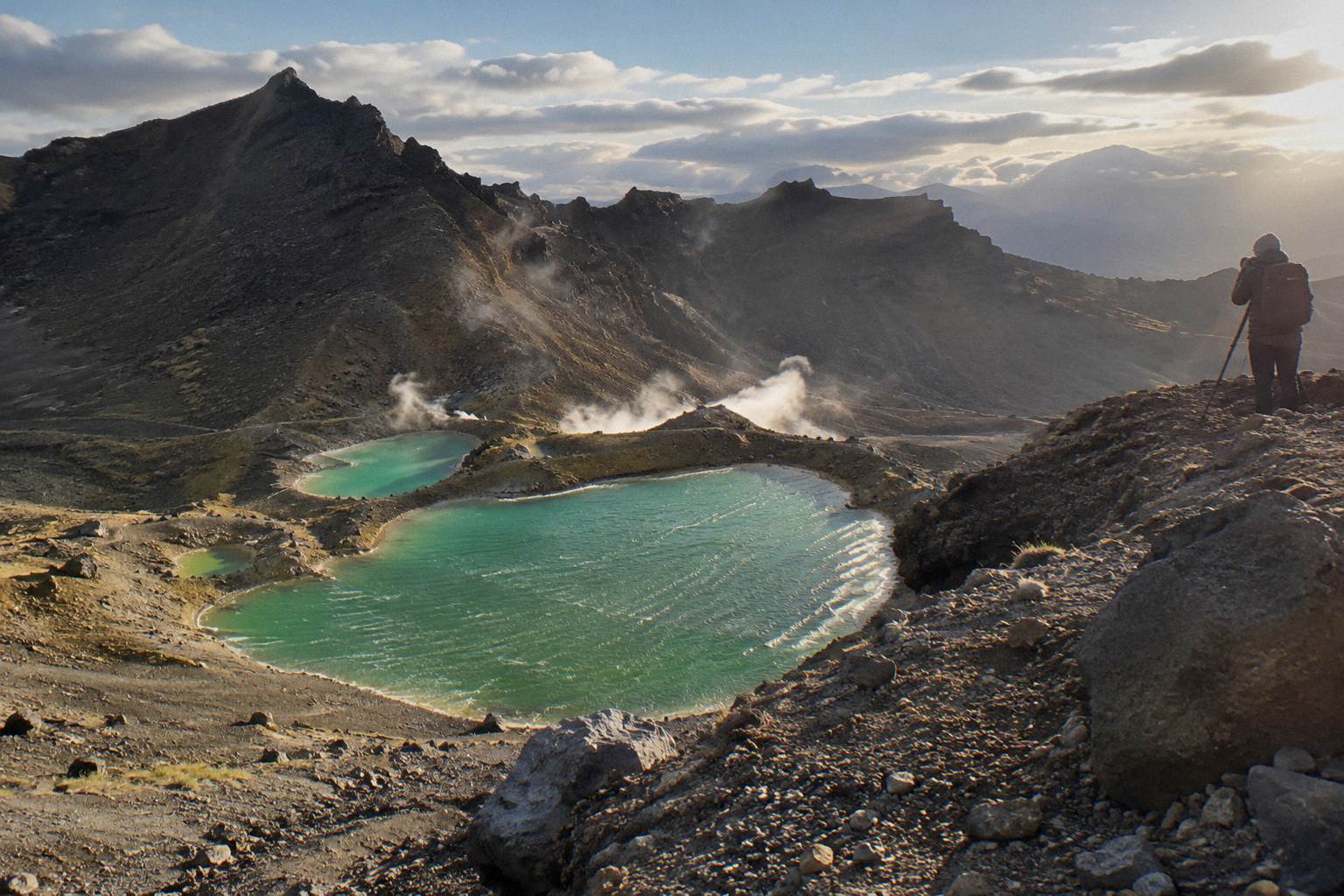
The middle of the day is the part people come for: the ridge to Red Crater, the Emerald Lakes below the scree, Central Crater, then the climb to the saddle beside Blue Lake: this is the stretch that makes the Crossing the best hike in the park, and the reason to protect it with a good start. Respect the cultural request while you are there: do not touch or enter the lakes, and treat the maunga as the sacred landscape it is. Take photographs from the track, rest on the ridge, and keep the timing moving, because the Ketetahi descent still takes hours.
The finish is longer than the map suggests. The track drops past the Ketetahi thermal area with its steam vents, then through forest to the road end. If you rode a round-trip shuttle, your bus collects you there. If you used a park-and-ride, your car is waiting. Either way, the day runs 7 to 8 hours of walking in summer, so plan food, water and layers for that reality rather than for a shorter valley walk.
Which Tour Or Shuttle Should You Book For The Walk?
Match the booking to where you sleep and how much support you want. From National Park Village, the Tongariro Crossing Shuttles round trip from NZ$75 per person is the proven pick, 4.7 across 890 reviews. From Taupo or Turangi, the Tongariro Expeditions transfers from NZ$75 per person cover the distance. For a guided day, Adrift Tongariro's premium guided hike from NZ$450 per person includes gear for alpine conditions.
The three formats do different jobs, and the honest comparison is about that, not about ranking operators against each other.
| Format | Best for | Examples with verified figures |
|---|---|---|
| Round-trip shuttle from your base | Independent walkers staying near the track | Tongariro Crossing Shuttles round trip from National Park Village, from NZ$75, 4.7 from 890 reviews; Dempsey Buses return bus from National Park Village, from NZ$90, 4.8 from 72 reviews |
| One-way Ketetahi park-and-ride | Self-drive travellers happy to park at the finish end | Ruapehu Scenic Shuttles Ketetahi park-and-ride, from NZ$68, 4.8 from 670 reviews; Owhango Adventures Ketetahi park-and-ride, 4.8 from 333 reviews |
| Guided hike | Winter walkers, first-timers, anyone wanting interpretation | Adrift Tongariro premium guided hike, from NZ$450, 4.6 from 242 reviews, free cancellation up to 14 days before |
| Transfers from further afield | Travellers based in Taupo or Turangi | Tongariro Expeditions shuttle from Taupo or Turangi, from NZ$75, 4.7 from 431 reviews; Backyard Tours mountain shuttle from Turangi, from NZ$120 |
Cancellation terms differ by product, so read the booking page for the one you choose: the round-trip shuttles and park-and-rides above carry free cancellation up to 24 hours before, the Adrift premium guided hike up to 14 days before, while the Adrift private guided Crossing is non-refundable. Free cancellation matters here more than on most bookings, because alpine weather genuinely does close this track, and flexibility costs little when you book ahead.
A note for Auckland-based travellers: the Crossing is a long way away, and multi-day products exist rather than day trips. The ExperienceKart private three-day tour from Auckland builds in a self-guided Crossing leg alongside Huka Falls and Lake Taupo, though the Crossing portion is not guided, and the tour is not suitable for children under 12. It is a different animal from the day-of shuttle decisions above, and the review pool for it is thin, so read it closely before committing.
Common Questions About The Best Hike In Tongariro National Park
What Is The Best Hike In Tongariro National Park?
The Tongariro Alpine Crossing. It runs 20.2 km one way with 1196 m of elevation change, takes 7 to 8 hours from November to April and 9 hours from May to October, and passes Red Crater at 1886 m, the Emerald Lakes and Blue Lake. DOC grades it High fitness in summer and Expert in winter, when a guide is recommended.
Are There Good Alternatives If The Crossing Is Closed?
Yes. DOC names Taranaki Falls and Tama Lakes as the alternative walks when conditions are poor or the alpine route is not suitable. Both start near Whakapapa, stay below the alpine zone, and need no shuttle booking. Neither offers the crater-and-lake spectacle of the Crossing, but both are worthwhile walks in their own right.
Is The Tongariro Crossing Suitable For Beginners?
Fit beginners in summer, yes, with preparation and a shuttle booked. DOC grades the walk High fitness, so it is a genuine physical day rather than a stroll, and the descent to Ketetahi is hard on tired legs. In winter, May to October, the route is graded Expert and DOC recommends a guide, so it is not a beginner proposition then.
Can You Drive Yourself To The Start Of The Crossing?
Not in the popular season. From Labour weekend in late October until 30 April, parking at the road ends is limited to a four hour maximum, which is far less than the walk takes, and DOC suggests booking a shuttle. There is no parking for Crossing walkers at Mangatepopo car park in summer. A one-way Ketetahi park-and-ride is the self-drive workaround.
Do You Touch Or Swim In The Emerald Lakes?
No. Kaumatua Te Ngaehe Wanikau asks visitors to respect the maunga tapu by not touching or entering any of the waterways, including the alpine lakes. The request is printed by DOC on the Crossing page, and respecting it is part of walking in a place sacred to Ngati Hikairo ki Tongariro.
What Is The Cheapest Way To Do The Crossing?
Among the verified per-person fares, the Ruapehu Scenic Shuttles Ketetahi park-and-ride is from NZ$68, and round-trip shuttles from National Park Village or Taupo start from NZ$75. Walking itself is free, and DOC's booking system costs nothing; the shuttle fare is the main outlay.
Whichever walk you choose, the park rewards an early decision. Crossing days fill up in the peak season, shuttles generally do not run through winter while guided trips include transport, and the difference between a good day and a miserable one often comes down to transport booked ahead and a forecast checked the night before. That is the whole craft of getting the best hike in Tongariro National Park right.