Is The Hike To Emerald Lake Difficult?
An honest difficulty breakdown of the Tongariro Alpine Crossing walk to the Emerald Lakes: distance, climb, terrain, season and fitness, with shuttle and guided options.
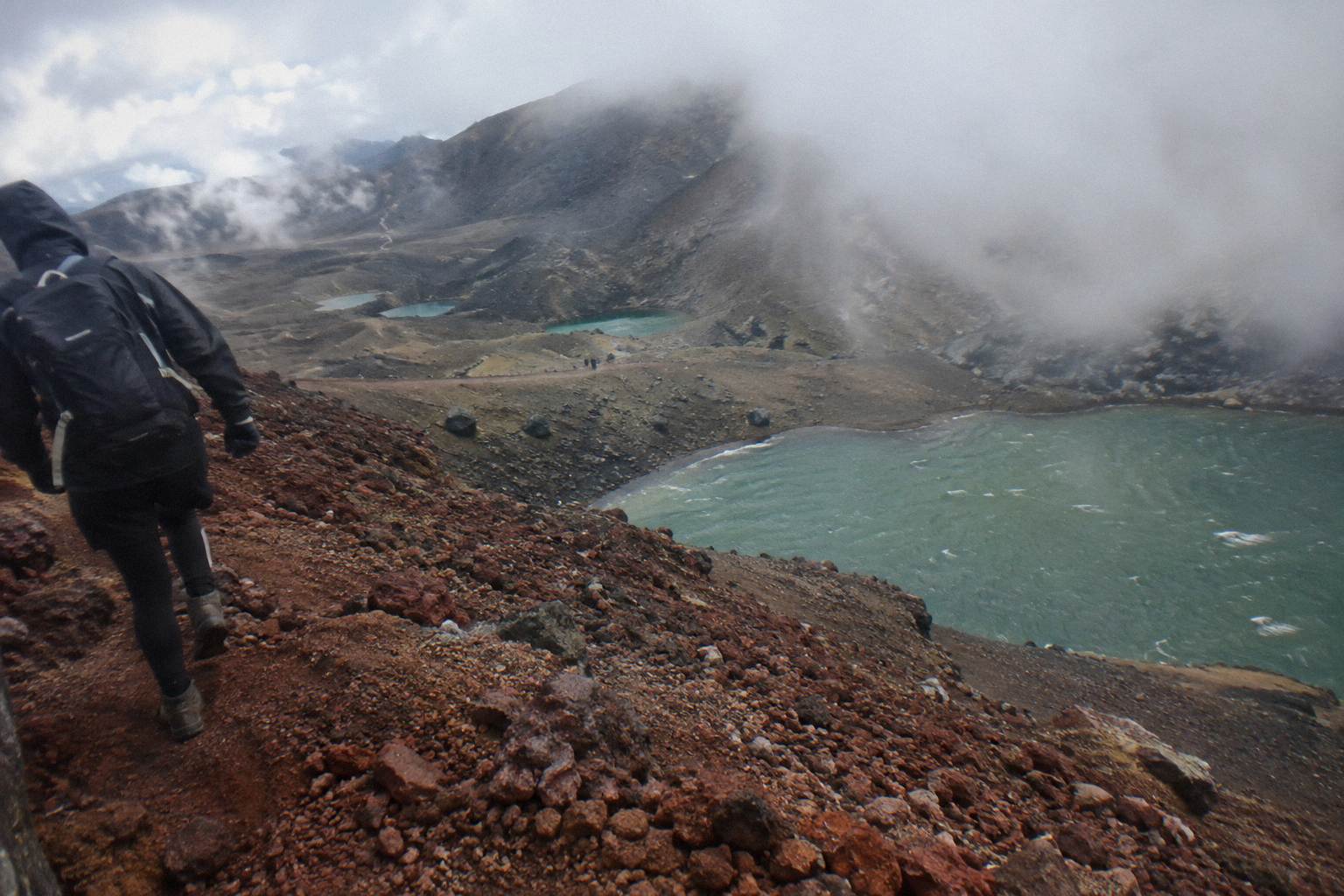
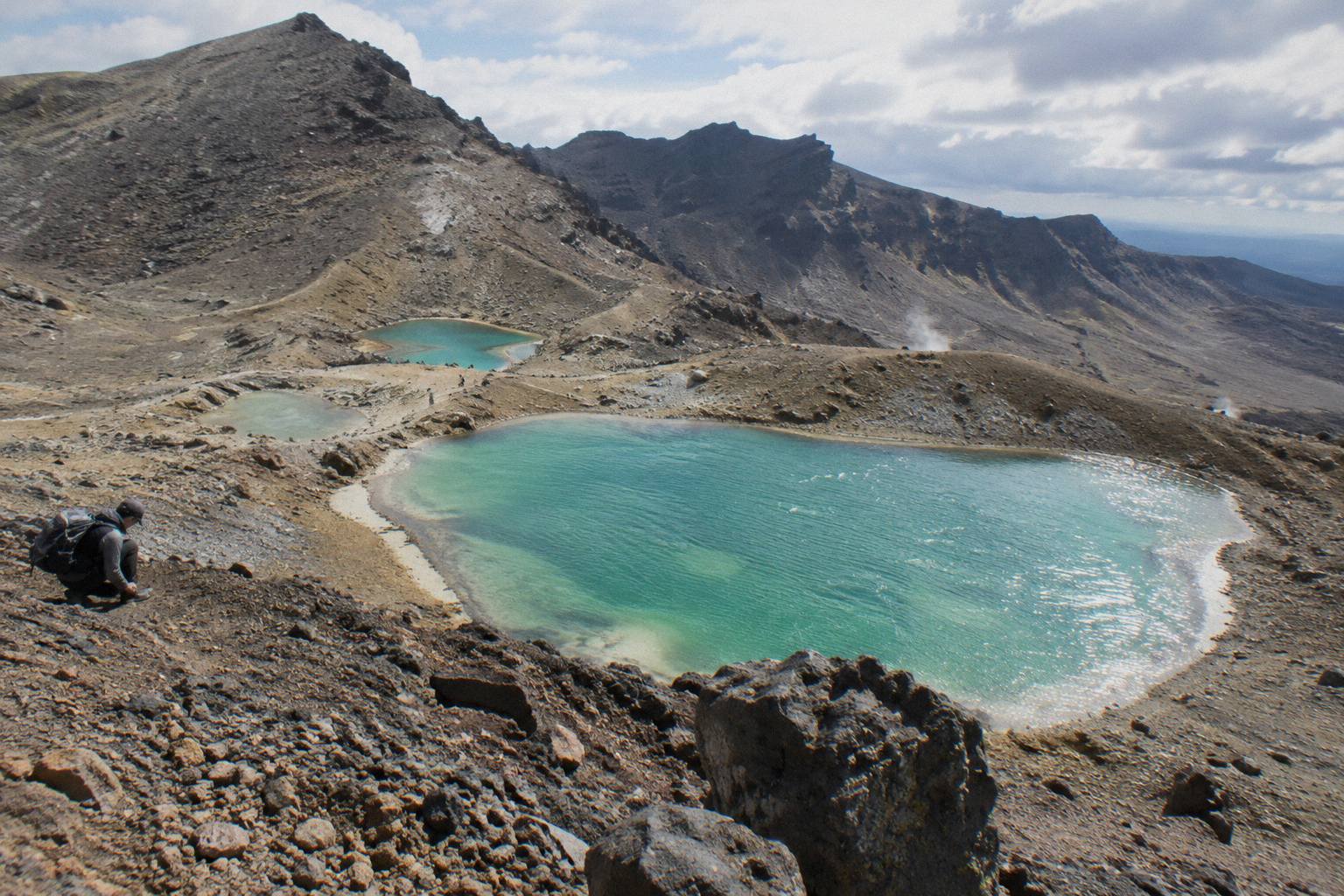
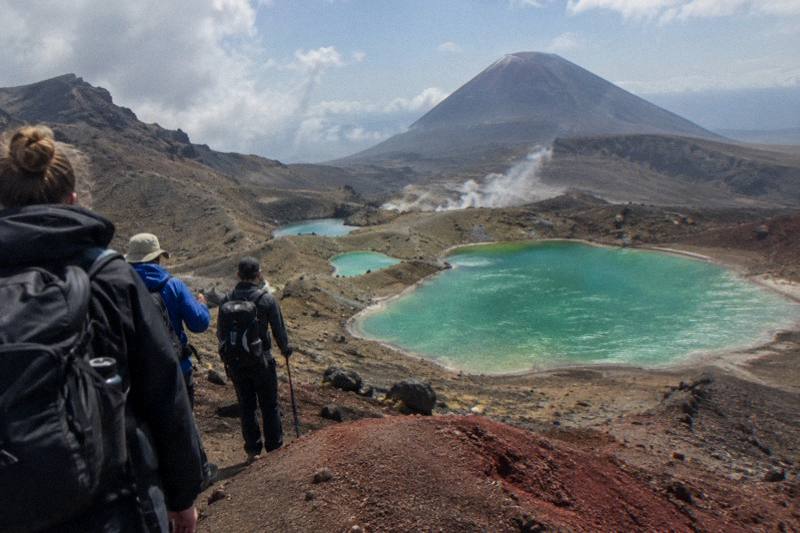
Yes, the hike to the Emerald Lakes is difficult. DOC classes the Tongariro Alpine Crossing as a high-fitness intermediate tramping track in summer and an expert route from May to October. The lakes sit at roughly the halfway mark of a 20.2 km one-way walk with 1196 m of elevation change, a high point of 1886 m at Red Crater and a steep scree descent directly above the water. Most walkers need 7 to 8 hours in the November to April season, and 9 hours in the winter months.
That is the honest headline, but difficulty on this track is not one thing. It is distance, altitude, weather exposure, terrain underfoot and season stacked on top of each other, and each of those can be managed if you understand it before you start. This article breaks the day into its real parts: what the climb asks of your legs, what fitness you actually need, how the terrain behaves, why winter changes everything, and how shuttles and guides change the shape of the day rather than the difficulty of the track itself.
Adrift Tongariro runs the three guided tours on this track, including the Adrift Tongariro premium guided hike from NZ$450 per person and the Adrift Tongariro full-day guided Crossing, both departing National Park Village. Shuttles such as the Tongariro Crossing Shuttles round trip from National Park Village, from NZ$75 per person, and the Ruapehu Scenic Shuttles Ketetahi park-and-ride, from NZ$68 per person, handle transport only. None of them makes the track flatter, and later sections sort out exactly what each one does and does not do for a walker worried about the difficulty.
Yes, the hike to Emerald Lake is genuinely hard, and DOC rates the fitness requirement as High. The lakes sit after the Crossing's longest sustained climb, including the South Crater traverse, the ascent to Red Crater at 1886 m, and a steep scree descent, on a 20.2 km one-way track with 1196 m of elevation change, though fit first-time hikers still finish it within DOC's 7 to 8 hours in summer.
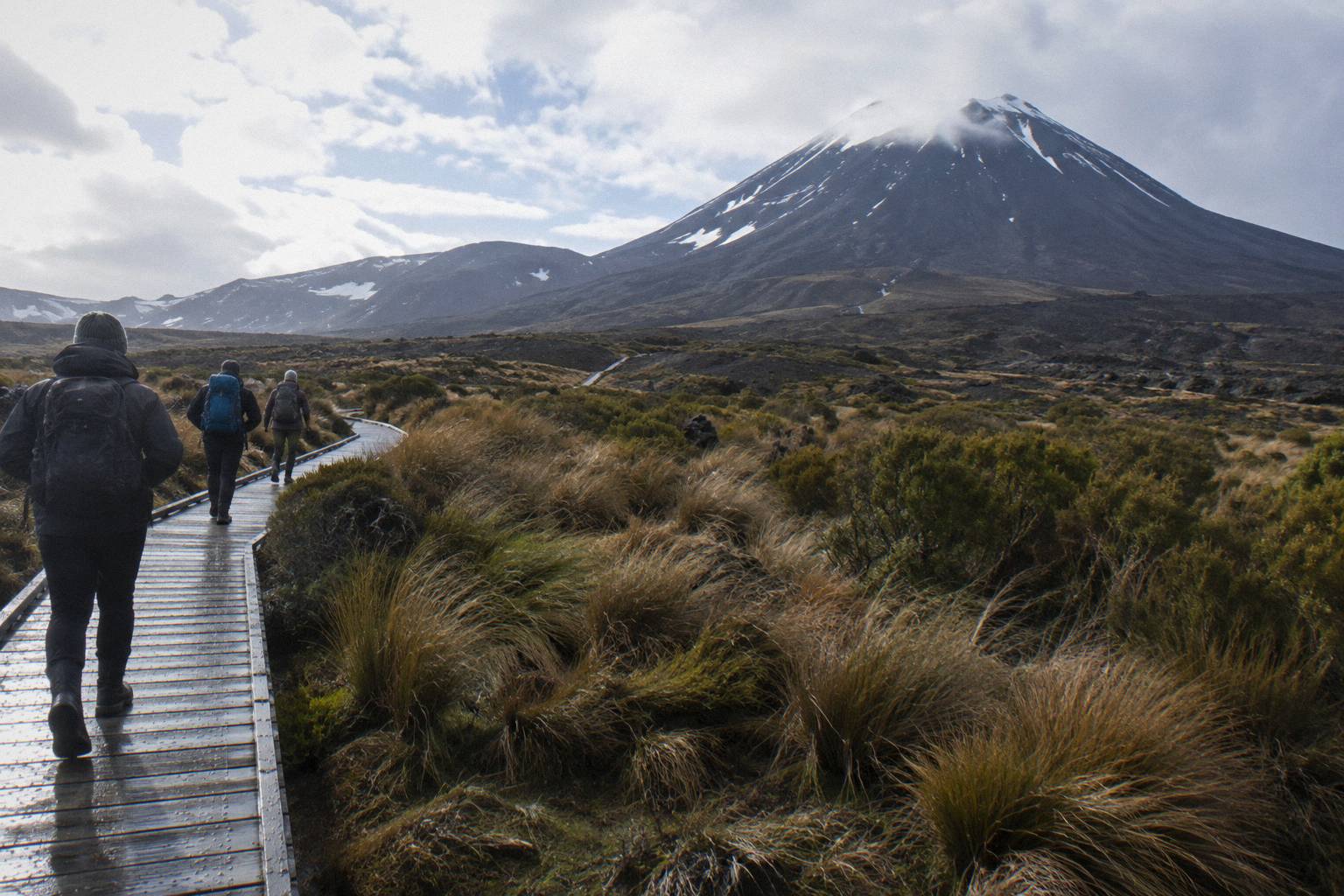
The track begins gently. From Mangatepopo, the first stretch follows a boardwalked valley floor toward the base of the climb, and many walkers finish this opening section thinking the difficulty ratings are exaggerated. That feeling lasts until the Devil's Staircase, the stepped and rocky ascent out of the valley onto the South Crater lip. This is where the day starts charging your legs for the lakes.
What follows the Staircase is deceptively gentle: the South Crater floor is flat and wide, and in calm weather it feels like a high plateau stroll. Then the track tips upward again toward Red Crater, the highest point of the day at 1886 m. The ridge here is exposed, narrow in places, and slow going on loose rock. DOC's own description of what comes next is blunt: a steep scree descent to the vivid Nga Rotopounamu, the Emerald Lakes. Going down this section is, for many walkers, harder on the knees than the climb was on the lungs.
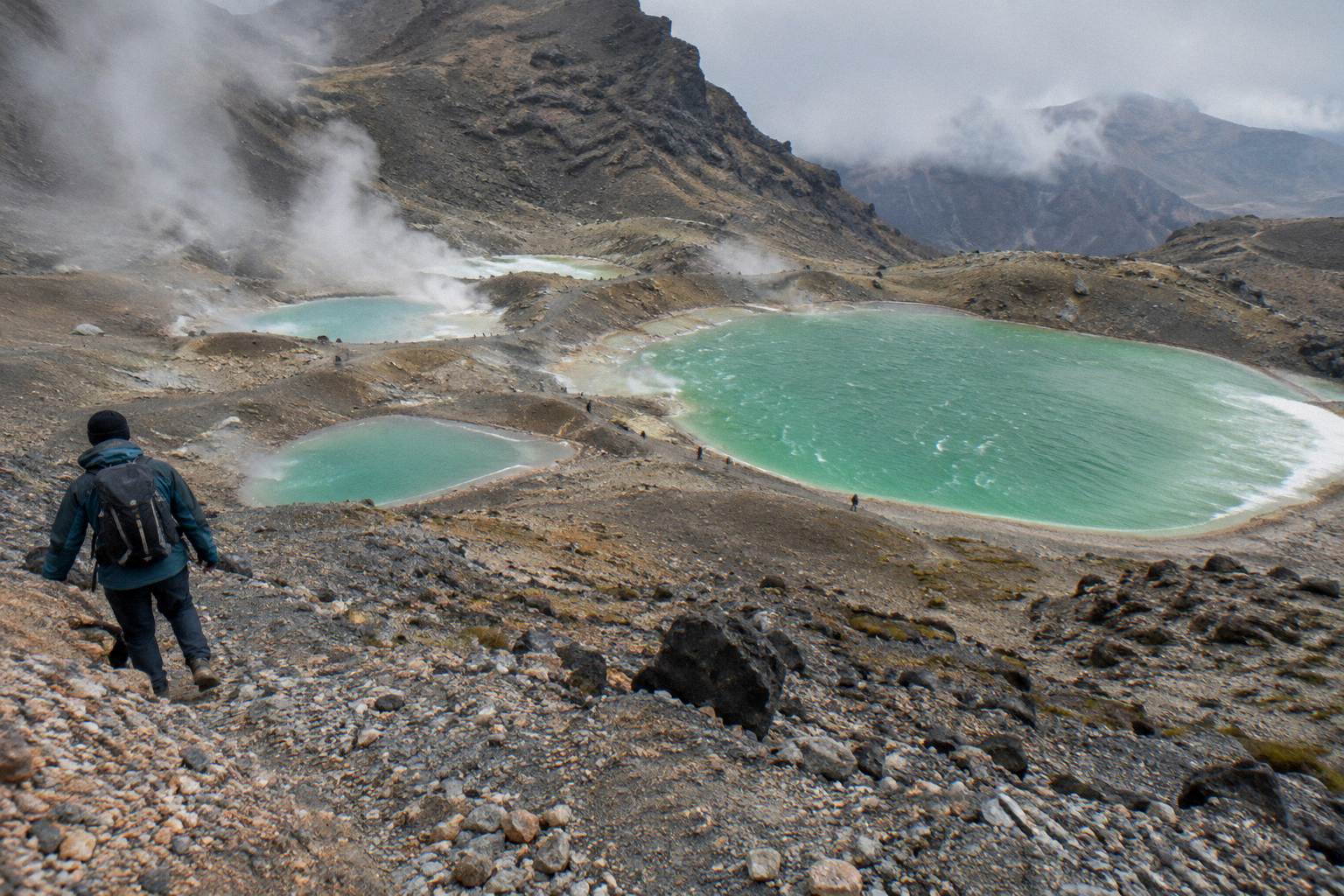
Two things decide whether the day feels merely hard or genuinely miserable, and neither is your legs. The first is weather: the section above South Crater is fully exposed to wind, and DOC and guided operators run only when the advisory and forecast allow, conditions allowing. The second is preparation: an early start, proper footwear, layers, food and water. The difficulty question is answered in detail in the sections below, including how long the walk actually takes and what the climb asks of you.
One cultural note that costs no effort but matters: DOC passes on a request from Kaumatua Te Ngaehe Wanikau that visitors respect the maunga tapu by not touching or entering any of the waterways, including the alpine lakes. The Emerald Lakes are for looking at, not swimming in, and the rules around swimming in the Emerald Lakes are covered in full elsewhere.
How Hard Is Each Section Of The Walk To The Emerald Lakes?
The walk breaks into distinct sections before the lakes, each with a different difficulty. The valley and Devil's Staircase take you from Mangatepopo to the South Crater. The crater crossing is easy walking. The Red Crater ridge is the hardest climbing of the day, exposed and loose. The scree descent to the Emerald Lakes is short but steep and punishes tired knees. Hardly any of the 20.2 km is technically difficult in summer; all of it is tiring.
The table below rates each section honestly for a summer day.
| Section | Terrain | Difficulty in summer | What it costs you |
|---|---|---|---|
| Mangatepopo valley to the Staircase | Boardwalk and firm track | Easy | Warm-up, low effort |
| Devil's Staircase | Stepped, rocky switchbacks | Moderate to hard | Legs and breath |
| South Crater traverse | Flat volcanic sand | Easy | Nothing but time |
| Red Crater ridge climb | Loose rock, exposure, 1886 m | Hard | Focus and stamina |
| Scree descent to the Emerald Lakes | Steep loose scree | Hard on knees | Confidence going down |
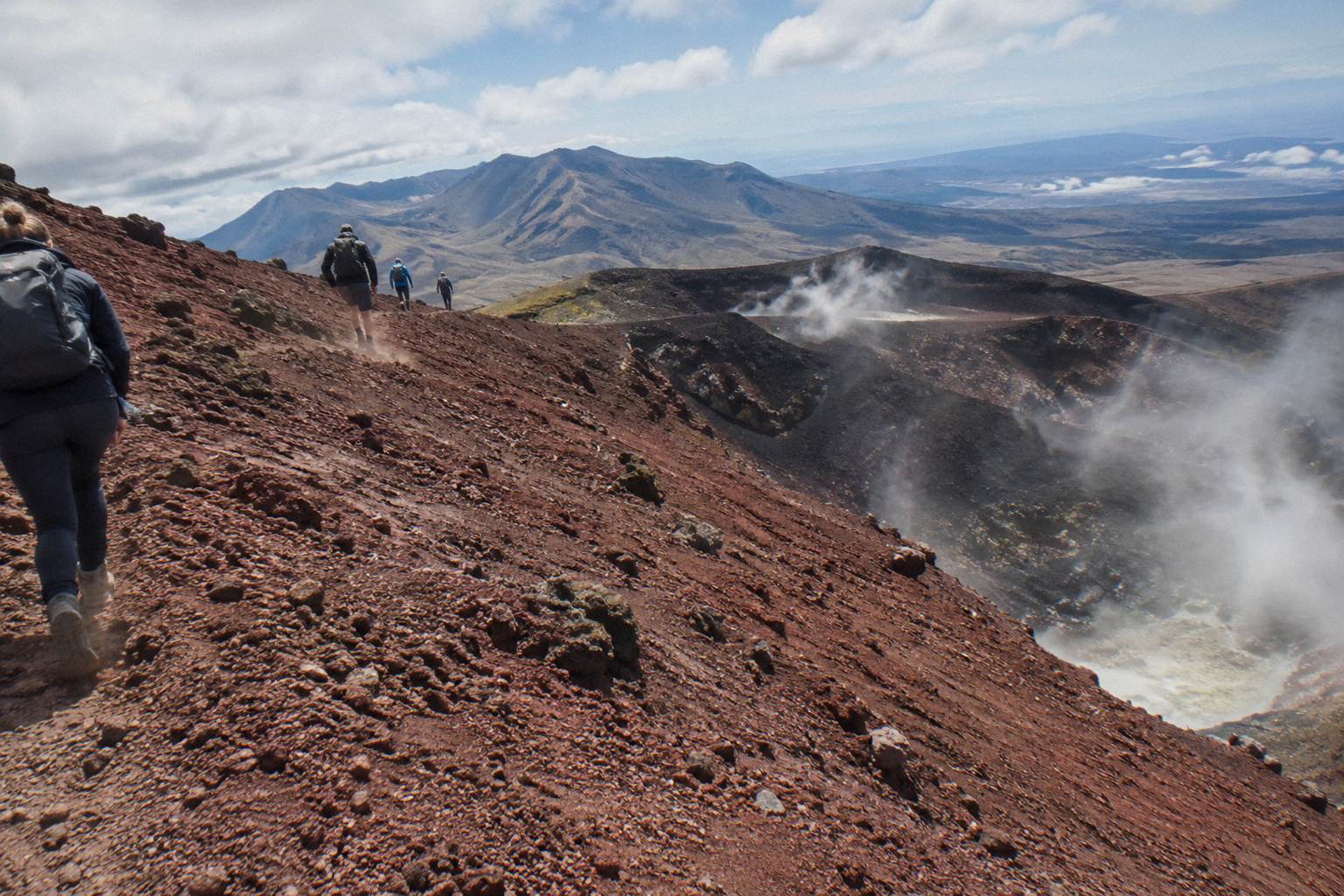
The asymmetry is worth internalising. Climbing to Red Crater is a slow, steady effort that a fit walker paces through. Descending to the Emerald Lakes is over quickly but demands attention: the scree shifts underfoot, the slope is steep, and walkers who arrive with wrecked knees from the Staircase feel it here most. Trekking poles help on this section more than anywhere else on the track, and so does slowing down, because the lakes arrive fast and there is no prize for reaching them first.
After the lakes the day is not over. The track climbs once more, gently, past the Blue Lake and across the northern slopes before the long, relentless descent toward Ketetahi Road at about 760 m. Many walkers report the final third, not the lakes section, as the hardest part of the day purely because it arrives last, on sore legs, often in afternoon heat. Planning for the finish, not the photo stop, is what fitness preparation for the climb to the Emerald Lakes is really about.
If reading that table makes you want somebody else to carry the judgment calls, the guided option exists for exactly that.
What Fitness Level Do You Actually Need For The Emerald Lakes Day?
You need genuine hill fitness rather than marathon fitness, and DOC rates the Emerald Lakes day as a High requirement. The right profile is a walker who can climb steadily for several hours, stay on their feet through a 7 to 8 hour day, and descend long slopes on tired legs. Regular 3 to 4 hour hill walks in the two months before your trip beat any gym program.
What catches people is not the maximum gradient. It is the accumulated volume: 1196 m of elevation change each way, at altitude, in changeable weather, with no exit points once you commit past South Crater. There is no road, no shortcut and no bail-out that does not involve walking out the way you came or continuing to the end. That commitment, more than any single slope, is what makes the difficulty rating honest.
Three groups should think carefully before booking. Walkers with knee or ankle problems should plan poles and a slow descent strategy, because the scree and the final descent are unforgiving. Walkers who have never done a full-day hike should build up with at least one long day walk first. And families: the operator age rules differ by tour, with the full-day guided Crossing setting a minimum age of 12 and the premium and private guided tours leaving age limits to their booking pages, while DOC's own advice is that the track is not recommended for children under 10. There is no single site-wide age, and each booking page shows its own terms.
Difficulty is also seasonal, and the difference is not subtle. DOC classifies the track as an intermediate tramping track from November to April and an Expert route from May to October, when snow, ice, avalanche risk and sub-zero temperatures arrive and, in DOC's words, alpine skills are essential and it is best to go with a guide. Winter daylight is short, 9 to 11 hours, and DOC allows 9 hours walking time. A summer-hard day becomes a genuinely technical one. The page on winter on the Crossing, snow at the Emerald Lakes covers that season in detail.
How Long Does The Walk To The Emerald Lakes Take?
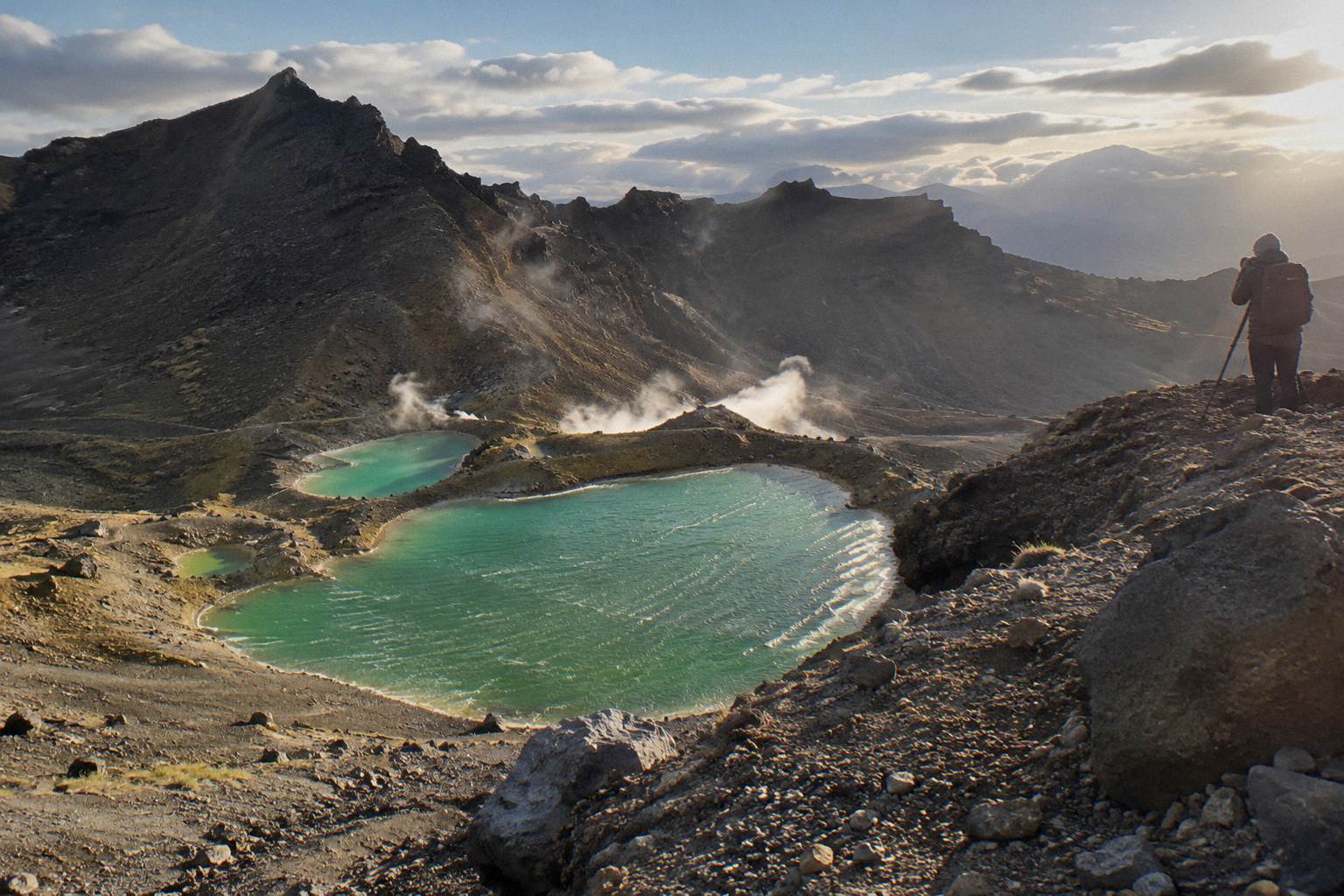
Most walkers reach the Emerald Lakes after roughly half of the full Crossing, which DOC says takes 7 to 8 hours from November to April and 9 hours from May to October, so plan on about 3.5 to 4 hours in summer, allowing for pace, photos and queues on the descent. Operator day lengths run longer because they include transfers: the Adrift Tongariro premium guided hike books 8 to 9 hours and its group sibling books 9 hours.
That distinction trips people up constantly. The DOC times are walking times. The tour durations you see when booking are total day or transfer lengths, which include getting to and from the track ends and the margins operators build in. Neither number is a promise of an easy day, and neither is a speed requirement: 7 to 8 hours is an allowance for an average fit party, not a record to beat.
| Option | Booked day length | Walking time (DOC) | Notes |
|---|---|---|---|
| Independent walk with shuttle | About 8 hours door to door | 7 to 8 hr Nov to Apr | You set the pace |
| Adrift Tongariro premium guided hike | 8 to 9 hours | 7 to 8 hr | Guided, group, gear for winter if required |
| Adrift Tongariro full-day guided Crossing | 9 hours | 7 to 8 hr | Guided group, same track |
| Winter independent (May to Oct) | Your own planning | 9 hr | Expert route, alpine skills essential |
Where the hours go matters for planning. The first half, up to and including the Emerald Lakes, is slower per kilometre because it contains both big climbs. The second half is faster on paper but arrives on tired legs. Starting early is the standard advice, and the reasoning behind an early start on the Crossing for the Emerald Lakes is covered on its own page: it buys you margin for weather, queues on the Staircase and a relaxed stop at the lakes themselves, which how much time you need at the Emerald Lakes estimates from the other direction.
Do You Need A Shuttle Or A Guide For A Difficult Day To Go Smoothly?
You do not need a guide for the difficulty itself in summer, but you do need a transport plan: parking at the road ends is limited to 4 hours from Labour weekend in late October to 30 April, and DOC suggests booking a shuttle. Shuttles are never guided; only Adrift Tongariro tours are guided, adding interpretation, pacing and winter alpine safety, and only they supply crampons and ice axes if required.
The transport decision shapes your whole day. In summer, the practical options from the National Park Village side are the Tongariro Crossing Shuttles round trip from National Park Village, from NZ$75 per person with free cancellation up to 24 hours before, and the Dempsey Buses return bus from National Park Village, from NZ$90 per person, also with free cancellation up to 24 hours before. On the Ketetahi side, the Ruapehu Scenic Shuttles Ketetahi park-and-ride runs a one-way shuttle, not a return: you park at Ketetahi, ride to Mangatepopo, and walk the Crossing back to your own car. It is rated 4.8 across 670 reviews and costs from NZ$68 per person. The Owhango Adventures Ketetahi park-and-ride works the same one-way way, rated 4.8 across 333 reviews.
Coming from Taupo or Turangi, the Tongariro Expeditions Crossing shuttle from Taupo or Turangi runs from NZ$75 per person, rated 4.7 across 431 reviews, with free cancellation up to 24 hours before. None of these shuttles is guided, none promises the track is open, and all run conditions allowing. DOC notes that part of a shuttle fee, about NZ$40, goes to conservation, which is one reason the shuttle-and-bookings system is the recommended way to do this walk. The DOC booking system itself is free and recommended, and it is needed if you are taking a shuttle or a guided day.
Guiding answers a different question than transport does. The Adrift Tongariro premium guided hike, from NZ$450 per person with free cancellation up to 14 days before, walks the full Crossing in a guided group, with hotel pickup not included and lunch not included, so bring your own. For walkers whose difficulty worry is confidence rather than legs, there is also the Adrift Tongariro private guided Crossing, a private guided day rated 4.5 across 30 reviews, non-refundable, with age limits shown on the booking page. The longer comparison of whether a guide is worth it for the Emerald Lakes section works through the trade-offs, and the question do you need a guide for the Tongariro Crossing answers it for the track as a whole.
What Trips People Up On The Emerald Lakes Day?
Five things cause most of the trouble: underestimating the descent, wearing running shoes on volcanic rock, starting too late, carrying too little water and food, and treating the weather forecast as optional. None of these is exotic. All of them turn a hard-but-fine day into a bad one, and all five are avoidable with planning rather than fitness.
The descent problem deserves its own line. Walkers train for climbs and then meet the scree above the Emerald Lakes and the long, grinding drop from Red Crater at 1886 m down to about 760 m at Ketetahi Road, on legs that have already done everything uphill. Poles, a pack that fits, and a willingness to go slowly are the whole remedy.
Footwear comes second. The track is sharp volcanic rock, sand and scree, and whether you need hiking boots for the Tongariro Crossing is a real question with a real answer: supportive footwear with grip, broken in before the day. What to wear matters more than most visitors expect, because the track moves through several microclimates in one day, and the guide to what to wear hiking to the Emerald Lakes breaks it down layer by layer.
Then there is the day itself. Weather above the Emerald Lakes can change in an hour, and the decision to go is not a personal one: operators are bound by DOC rules not to run on hazardous-weather-warning days, and independent walkers should apply the same test. Volcanic alert levels change daily, and GeoNet is the source for those, never a blog post. If the day is bad, DOC suggests alternative walks including Taranaki Falls and Tama Lakes, and the page on other hikes in Tongariro National Park when the Crossing closes lists the honest options rather than pretending the Crossing is always on.
Common Questions About The Emerald Lakes Hike
Is The Hike To Emerald Lake Difficult?
Yes. DOC rates the fitness requirement High, the track is 20.2 km one way with 1196 m of elevation change, and the lakes sit below a steep scree descent from Red Crater at 1886 m. Fit first-time hikers complete it regularly in summer, but it is a full 7 to 8 hour day and should be trained for, not improvised.
Can Beginners Do The Walk To The Emerald Lakes?
A beginner with reasonable fitness can do it in summer with preparation: build up to a 3 to 4 hour hill walk beforehand, start early, wear supportive footwear and carry food, water and layers. The guided option, such as the Adrift Tongariro premium guided hike from NZ$450 per person, removes the navigation and pacing decisions. In winter, May to October, the route is Expert only.
What Is The Hardest Part Of The Hike To The Emerald Lakes?
For most walkers it is either the Red Crater ridge, exposed and loose at the day's highest point of 1886 m, or the steep scree descent from Red Crater directly above the lakes, which is hard on tired knees. The long descent toward Ketetahi Road at the end of the day is often cited as the most exhausting part simply because it comes last.
Do Children Have The Fitness For The Emerald Lakes Day?
DOC advises the track is not recommended for children under 10. Tour age minimums are set per operator: the Adrift Tongariro premium guided hike and private guided Crossing both require walkers to be 12 or over. There is no single site-wide age rule, so check the specific booking page.
Is The Hike Harder In Winter?
Yes, substantially. From May to October DOC classes the route as Expert, with snow, ice, avalanche risk and sub-zero temperatures, 9 to 11 hours of daylight and a 9 hour walking allowance. DOC's wording is that alpine skills are essential and it is best to go with a guide, and the Adrift guided tours supply crampons and ice axes for winter conditions if required.
Does A Shuttle Or Guide Make The Hike Easier?
A shuttle makes the logistics easier, not the walk: shuttles such as the Ruapehu Scenic Shuttles Ketetahi park-and-ride from NZ$68 per person solve parking and track-end transport, but the track difficulty is unchanged. A guide adds pacing, interpretation and winter safety. Neither changes the 1196 m of elevation change, and neither can promise the weather.
The honest summary: difficult yes, discouraging no. The Tongariro Emerald Lakes Hike site exists because this walk rewards preparation more than talent, and every hard metre of it is a metre thousands of ordinary fit walkers cover each summer, an early start at one end and a well-earned seat on a shuttle at the other. Train for a long day, respect the descent, check DOC's conditions before you commit, and the difficulty becomes part of the story rather than the whole of it.