How Long Is The Hike To Emerald Lake?
The honest answer to how long the hike to Emerald Lake takes: DOC's official Crossing time bands, where the lakes sit on the route, and what the booked day looks like with a shuttle or a guide.
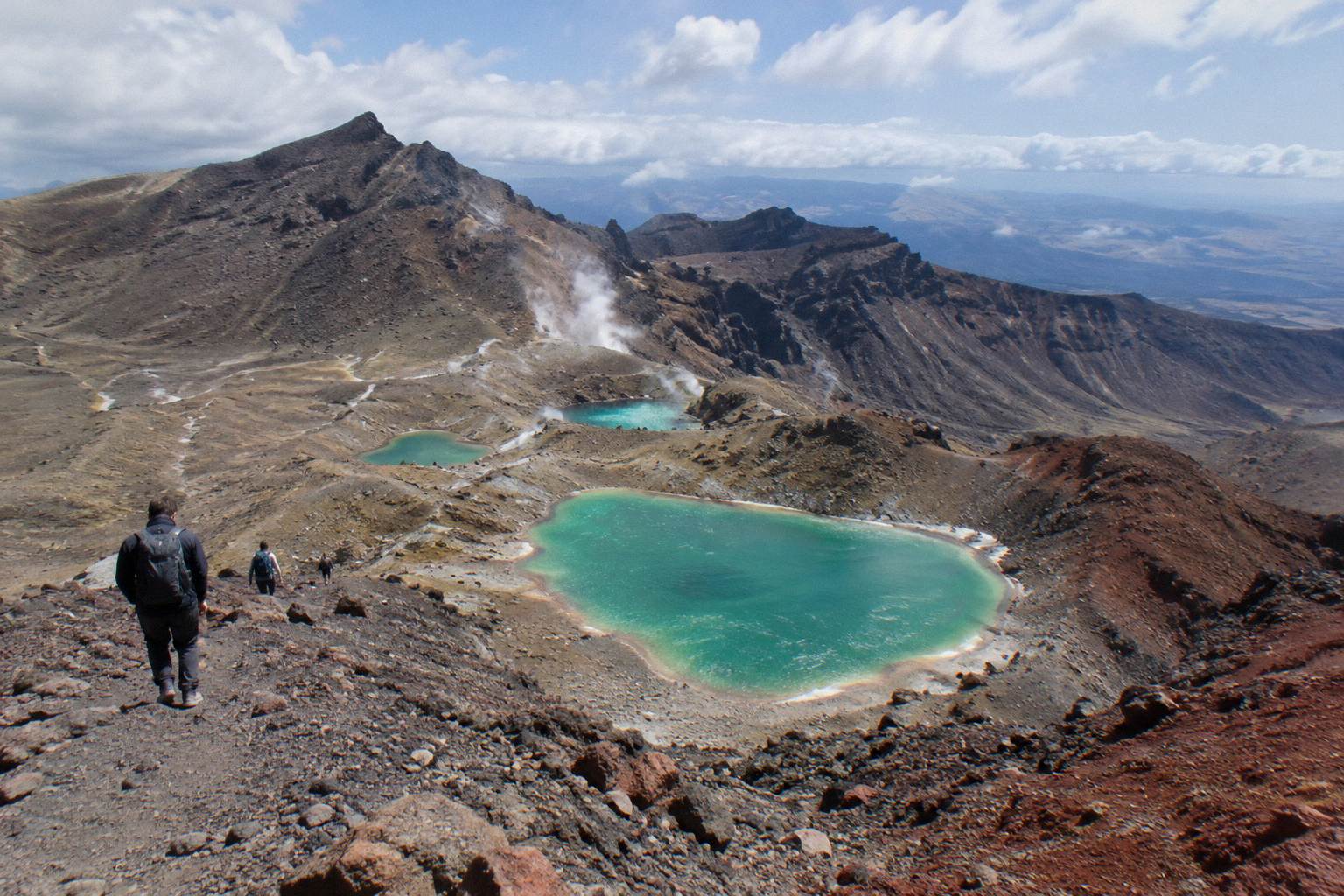
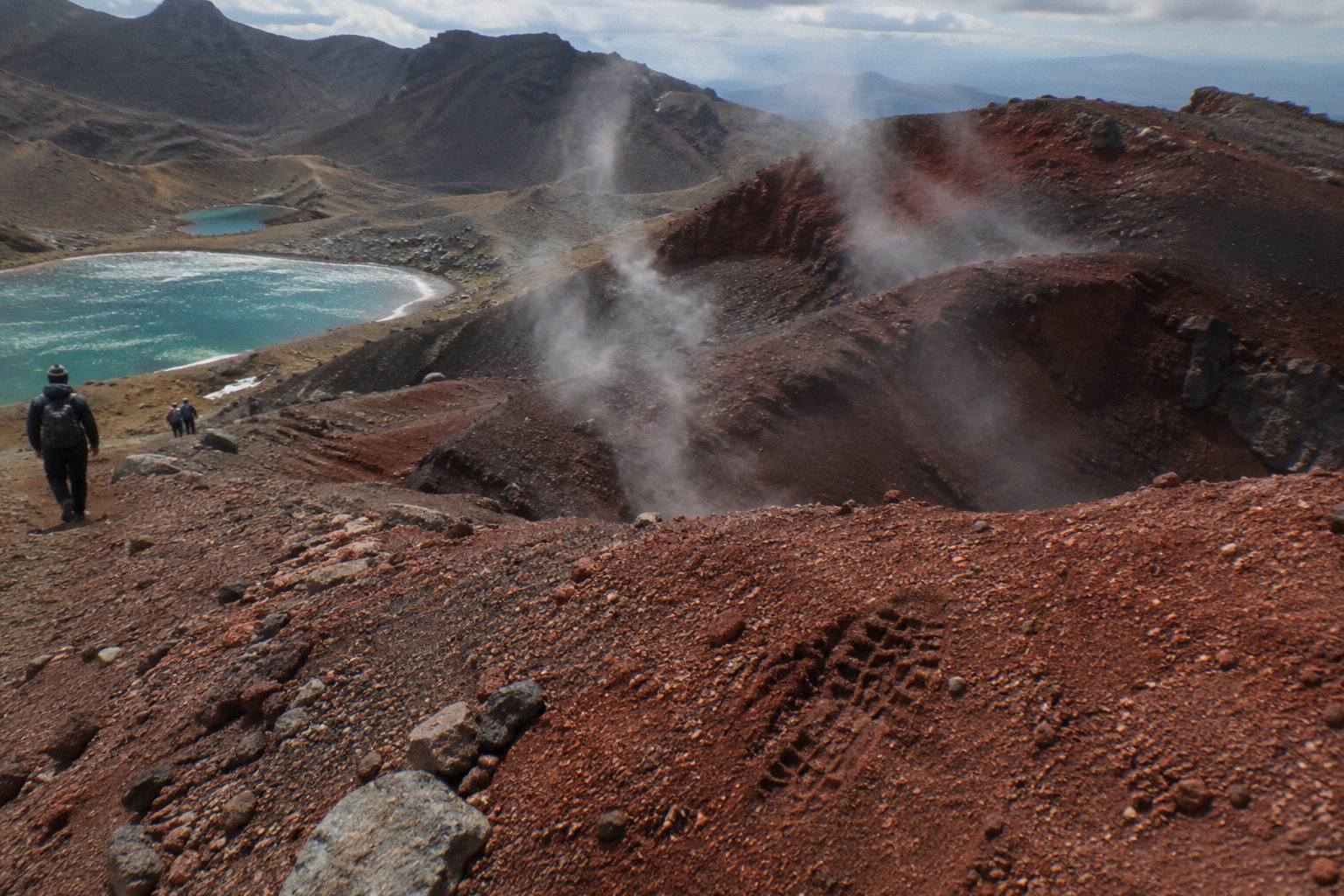
The hike to Emerald Lake is a full-Crossing day, not a short leg. DOC gives the Tongariro Alpine Crossing 7 to 8 hours of walking from November to April and 9 hours from May to October, and the Emerald Lakes sit roughly two thirds of the way along the 20.2 kilometre one-way route. No separately measured leg time to the lakes exists, so plan for the whole day.
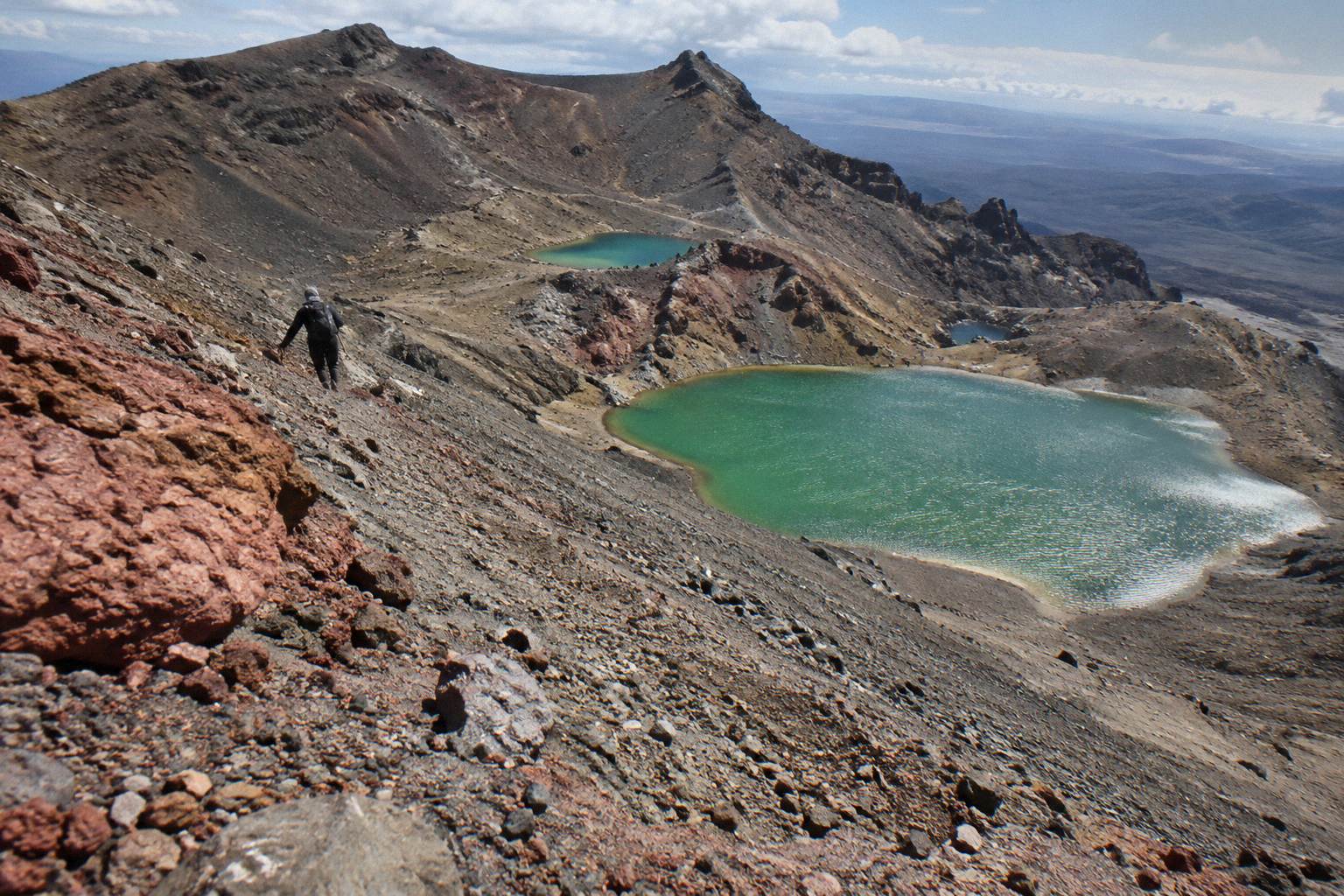
That answer surprises people who have seen a photograph of the three green pools and assumed there is a short walk down to them. There is not. The lakes, known to Ngati Hikairo ki Tongariro as Nga Rotopounamu, sit below Red Crater at 1886 metres, reached only by walking the Crossing itself from the Mangatepopo end, over the steep ground of the Devil's Staircase and across South Crater. DOC describes the descent from Red Crater to the lakes as a steep scree slope, and once you are standing above them you still have the Central Crater, the Blue Lake side trip decision and the long Ketetahi descent ahead of you.
The route runs 20.2 kilometres one way with 1196 metres of elevation change in each direction, which is why DOC classifies the fitness requirement as High. The walk is classed as an intermediate tramping track in the summer season and as an Expert route from May to October, when snow and ice cover the upper section. Those bands are walking time, not including transport to and from the road ends. The road legs are a separate question, and the answer depends on whether you drive, park and ride, or book a seat on a shuttle such as the Tongariro Crossing Shuttles round-trip from National Park Village.
Timing matters for booking reasons too. DOC applies a 4 hour maximum parking restriction at the road ends from Labour weekend in late October through to 30 April, and recommends booking a shuttle in that window. A walker driving to the track start in summer cannot simply leave a car there for the day, which pushes almost everyone into some kind of shuttle or guided arrangement, and those products have their own booked day lengths that wrap around DOC's walking bands. The sections below unpack the timing question piece by piece: where the lakes sit, how the seasons change the numbers, what slows people down, and what the booked day looks like across the tours you can actually reserve.
Where Do The Emerald Lakes Sit On The Crossing?
The Emerald Lakes sit about two thirds of the way through the one-way Crossing, immediately below the high point at Red Crater, 1886 metres. Walkers reach them after the Mangatepopo start, the Devil's Staircase, South Crater and the climb to Red Crater, and before Central Crater and the long descent to the Ketetahi Road finish. That position is why the lakes cannot be a quick visit.
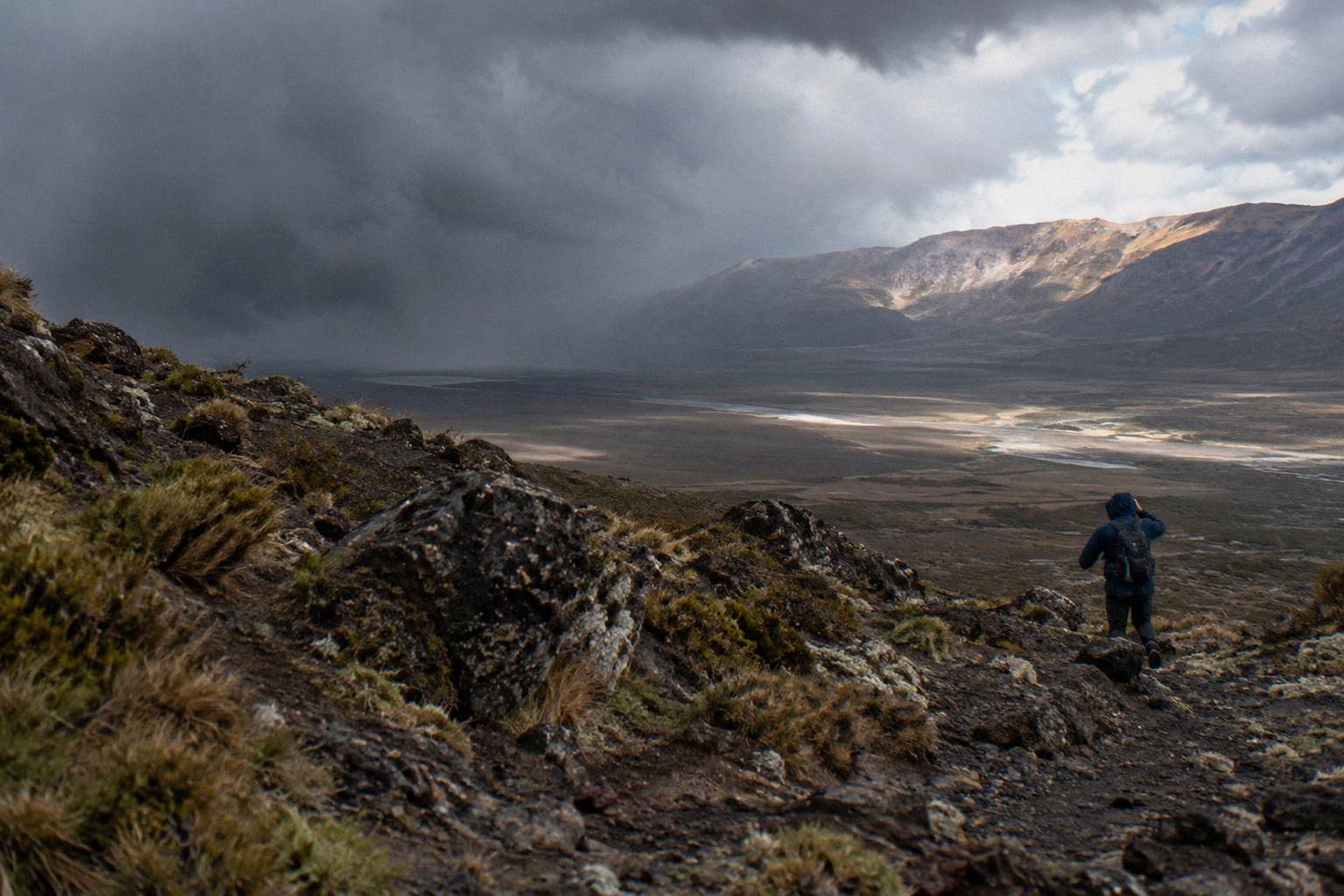
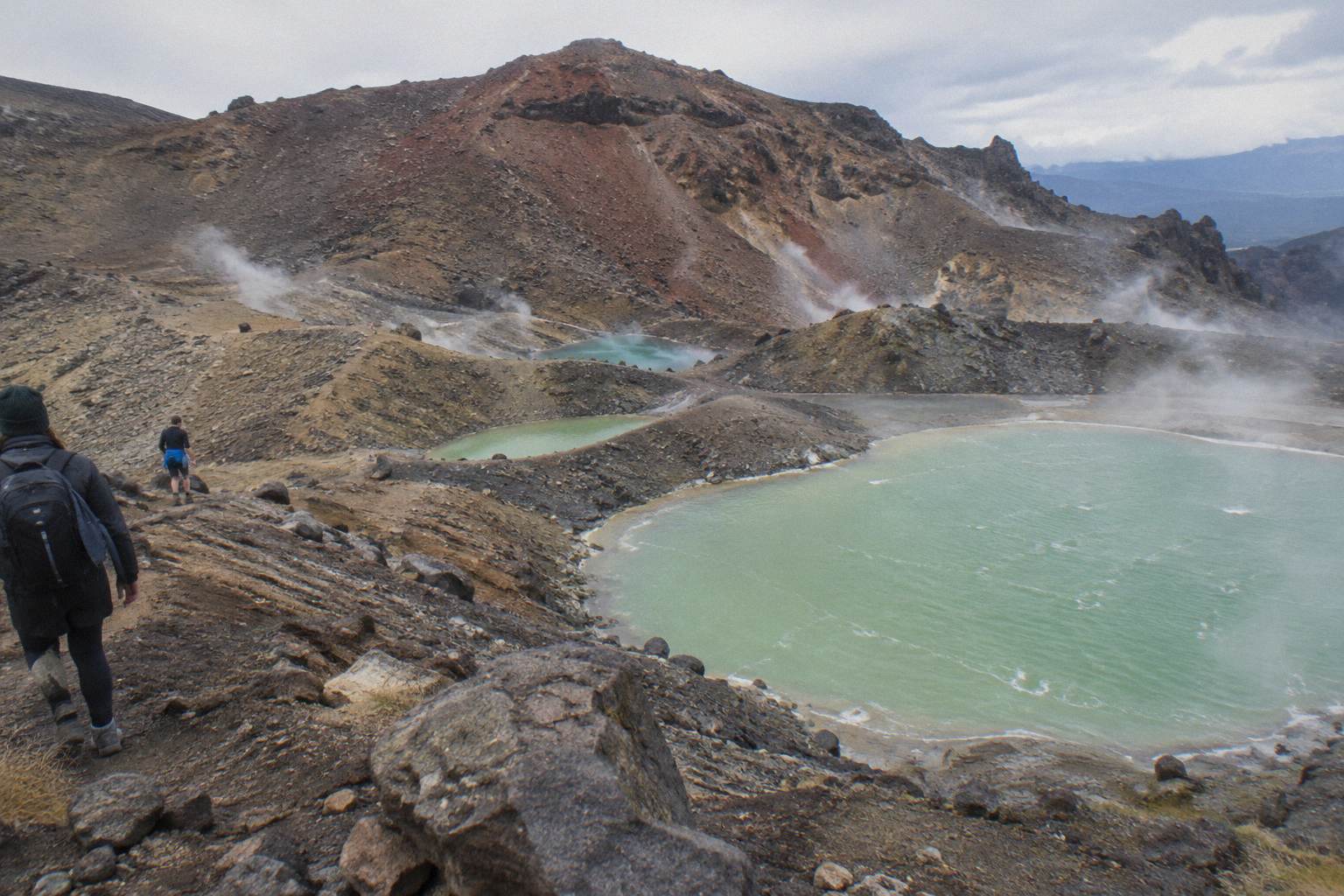
Starting from the Mangatepopo end at 1120 metres, the first stretch is the gentlest of the day, a wide valley walk toward the base of the staircase. The Devil's Staircase then gains the bulk of the route's height in a short, relentless push, and South Crater gives a short flat reprieve before the final climb up the ridge to Red Crater. DOC's own track description highlights the vivid colour of the lakes and the steep scree descent that delivers you to their shore, and the first full view of the three green pools from the lip above them is the moment most walkers remember from the whole 20.2 kilometres.
After the lakes the walk is not finished. A short climb out of Central Crater leads past the Blue Lake, and then the track turns onto the long tussock descent toward Ketetahi Road at about 760 metres, with views out toward Lake Taupo. The after-lakes portion of the walk is where tired legs meet descending track, and it is a real part of the day that first-time walkers often underestimate from photographs that stop at the Emerald Lakes shore.
Two context points help frame the position. The lakes are part of a dual World Heritage national park, the oldest in the country, established in 1894, and the mountains are sacred to Ngati Hikairo ki Tongariro of Ngati Tuwharetoa. Kaumatua Te Ngaehe Wanikau asks visitors to respect the maunga tapu by not touching or entering any of the waterways, including the alpine lakes, so the visit is a look and a photograph, not a swim or a paddle. The timing question of how much time you need at the Emerald Lakes is therefore about the pause at the shore, not any activity in the water.
Getting the day to work starts with the road legs, and the featured round-trip shuttle from National Park Village exists precisely for this timing problem. The Tongariro Crossing Shuttles round-trip is rated 4.7 across 890 reviews, runs from NZ$75 per person, and carries free cancellation up to 24 hours before, which matters when the mountain forecast is uncertain and you want the freedom to shift your day. The booking a guided hike to the Emerald Lakes guide walks through the same decision from the guided side of the fence.
How Does The Walking Time Change With The Seasons?
DOC gives two distinct bands: 7 to 8 hours from November to April and 9 hours from May to October. The winter band is longer because snow, ice, avalanche risk and sub-zero temperatures slow the upper section, and DOC classes the route as an Expert track in that window, saying alpine skills are essential and it is best to go with a guide. Winter daylight runs 9 to 11 hours, which leaves little slack.
The summer band of 7 to 8 hours is what most visitors experience, and it covers the full one-way walk in typical conditions for a fit party. It is a band rather than a single figure because the track's character changes with weather: the same scree descent to the lakes can be quick and grippy in dry conditions or slow and careful in wind and low cloud. DOC advises checking conditions before setting out, and guided operators and shuttles run only when DOC's advisory and the forecast allow, so no departure is ever promised ahead of the day itself.
From May to October the picture changes sharply. Snow and ice sit on the staircase and the Red Crater ridge, and DOC's guidance is plain about the consequences: the track becomes an Expert route, crampons and ice axes become the baseline equipment rather than optional extras, and the recommended company for the day is a guide. Adrift Tongariro runs the three guided tours on this route, and it states that crampons and ice axes are supplied for winter conditions if required on its guided products. DOC's own independent-winter advice adds avalanche gear and competency to that list.
Season also feeds the transport decision. DOC says shuttle buses generally do not operate through winter, May to late October, while guided trips include transport, which quietly tilts a winter walker toward the guided option regardless of preference. In summer the reverse applies: the 4 hour parking restriction and the sheer volume of walkers make shuttles the standard arrangement. The best month to hike to the Emerald Lakes guide separates the shoulder months in more detail.
| Season | DOC walking time | Track class | What shapes the timing |
|---|---|---|---|
| November to April | 7 to 8 hours | Intermediate tramping track | Long daylight, high walker traffic, heat on exposed sections |
| May to October | 9 hours | Expert route | Snow, ice, avalanche risk, sub-zero temperatures, 9 to 11 hours of daylight |
What Slows People Down On The Day?
Three things stretch the clock beyond DOC's bands: the Devil's Staircase, weather on the exposed ridge, and congestion at the start in peak season. None of these change the official numbers, but together they explain why two walkers on the same day can finish an hour or more apart. Fit parties in clear conditions sit inside the band; parties hit by wind, cloud or a slow staircase day run past it.
The staircase is the first big variable. It is the steepest sustained climb of the route and it comes early, when legs are fresh but lungs are still adjusting to the thinning mountain air. Walkers who set a steady pace and accept short steps do better than those who attack it, and the flat of South Crater afterwards gives a natural recovery window before the final climb to Red Crater. The fitness for the climb to the Emerald Lakes guide covers the preparation side of that equation.
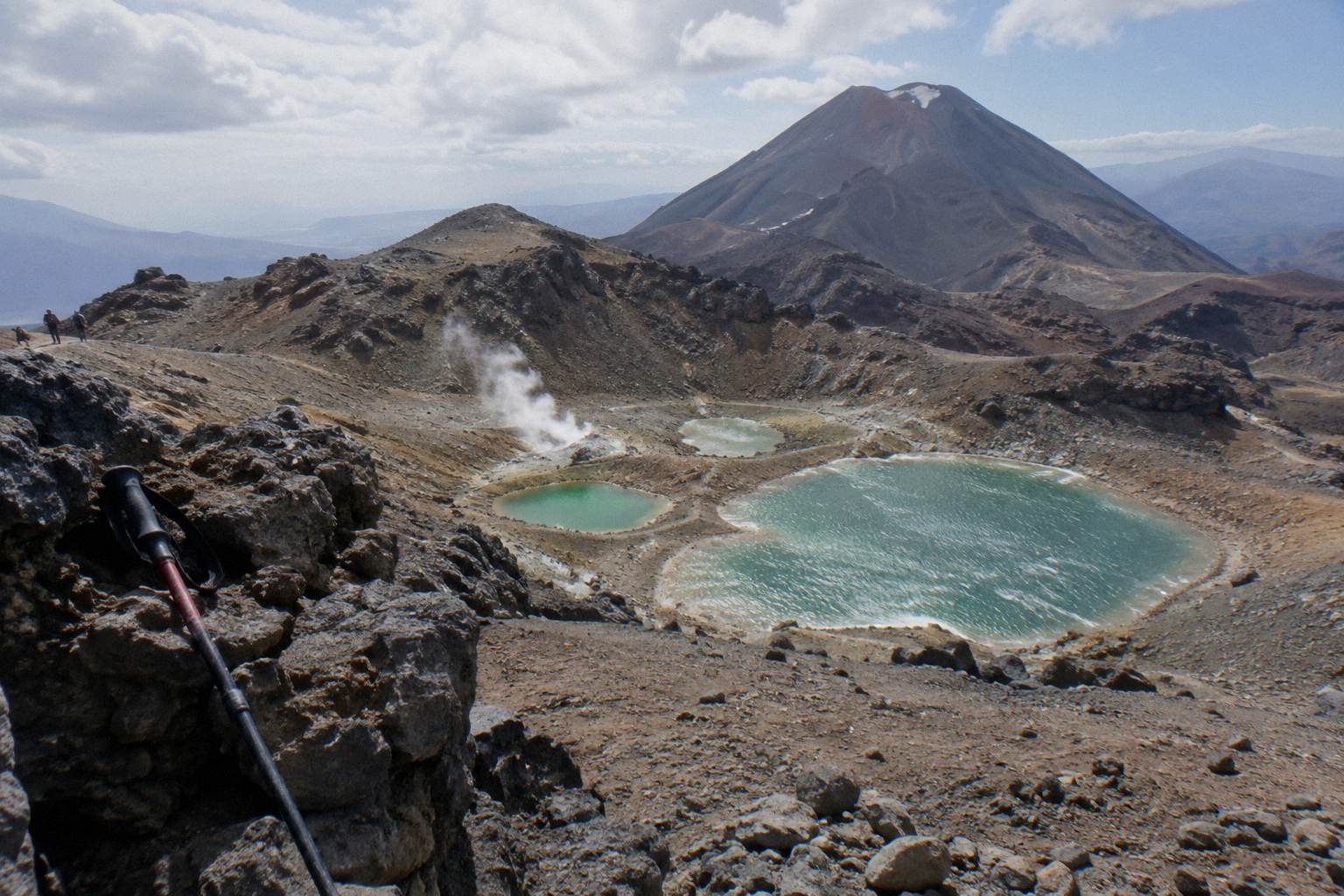
Weather is the second, and it is the reason no honest page can promise a finishing time. Wind on the exposed ridge between South Crater and Red Crater can force a slower line or a pause behind shelter, and low cloud can strip the navigational cues that make the route feel obvious in clear weather. Volcanic alert levels change daily and DOC, GeoNet and NIWA's Red Crater advisory are the places a walker checks in the days before, not a blog. When DOC issues a hazardous weather advisory, operators are bound by DOC rules not to run, which is why every tour and shuttle on this route is sold on a conditions-allowing basis.
The third factor is the crowd itself. In the height of summer the track carries a steady stream of walkers, and an early start is the widely used answer, both for cooler climbing and for a quieter shore at the lakes. The sunrise start on the Crossing for the Emerald Lakes guide makes the case in full. One planning note balances it: the day is long, and pace discipline in the first two hours is what protects the last two.
How Long Is The Booked Day With A Shuttle Or A Guide?
The booked day is longer than the walk. Shuttles and guided tours wrap transport around DOC's 7 to 8 hour band, so a round-trip product lists about 8 hours, a Taupo or Turangi shuttle day runs 8 to 10 hours, and a guided Crossing books 8 to 9 or 9 hours door to door. Those figures are total booked durations, not walking time, and the two must never be confused when comparing options.
Start with the shuttles, because most walkers book one. The Tongariro Crossing Shuttles round-trip from National Park Village lists about 8 hours for the return shuttle and self-guided hike together, rated 4.7 across 890 reviews, from NZ$75 per person with free cancellation up to 24 hours before. From Taupo or Turangi, the Tongariro Expeditions Crossing shuttle lists 8 to 10 hours for the day and is rated 4.7 across 431 reviews, from NZ$75 per person, also with 24 hour free cancellation. The Dempsey Buses return bus from National Park Village lists a hiking window on its booking page, rated 4.8 across 72 reviews, from NZ$90 per person with the same 24 hour cancellation grace.
The park-and-ride products work differently, and the difference matters for your clock. A one-way park-and-ride such as the Ruapehu Scenic Shuttles Ketetahi option, rated 4.8 across 670 reviews and priced from NZ$68 per person, has you park at the Ketetahi end, ride to Mangatepopo, and walk the Crossing back toward your own car. It lists 8 hours for the day and includes no return leg, because the walk ends at your vehicle. There is a genuine planning trade here, and the shuttle timetable for the Emerald Lakes day guide lays it out; the piece of the shuttle fee that goes to conservation, about NZ$40 by DOC's account, is part of what these fares fund.
Guided days are the longest bookings because they include gear, briefing and transport inside one product. The Adrift Tongariro premium guided hike books 8 to 9 hours, is rated 4.6 across 242 reviews, from NZ$450 per person, and carries free cancellation up to 14 days before. The Adrift Tongariro full-day guided Crossing books 9 hours and is rated 4.7 across 278 reviews. Both depart from National Park Village at 53 Carroll Street, both supply crampons and ice axes for winter conditions if required, and neither includes lunch, so bring your own. The private guided version of the day books 7 to 9 hours for a party on its own schedule.
| Product | Type | Booked day length | Rating and reviews | From price |
|---|---|---|---|---|
| Tongariro Crossing Shuttles round-trip, National Park Village | Return shuttle, self-guided walk | About 8 hours | 4.7 across 890 reviews | NZ$75 |
| Tongariro Expeditions shuttle, Taupo or Turangi | Shuttle with transfer options | 8 to 10 hours | 4.7 across 431 reviews | NZ$75 |
| Dempsey Buses return bus, National Park Village | Return shuttle | Hiking window on listing | 4.8 across 72 reviews | NZ$90 |
| Ruapehu Scenic Shuttles Ketetahi park-and-ride | One-way shuttle, self-guided walk | 8 hours | 4.8 across 670 reviews | NZ$68 |
| Adrift Tongariro premium guided hike | Guided group hike | 8 to 9 hours | 4.6 across 242 reviews | NZ$450 |
| Adrift Tongariro full-day guided Crossing | Guided group hike | 9 hours | 4.7 across 278 reviews | Check the booking page |
Two cautions on reading that table. Booked day length is the operator's total window, not walking time, and DOC's walking bands remain the figure that matches how long your feet are on the track. And the Adrift private guided Crossing is sold as non-refundable, so a party booking it is committing to the date in a way a 24 hour shuttle booking does not; the booking page shows the cancellation terms for each product.
What Trips People Up When Timing The Day?
The common timing mistakes are treating the booked duration as walking time, underestimating the after-lakes descent, and planning a summer day around a car at the track start. Each one turns a well-timed day into a rushed one, and each has a simple fix: read the product type carefully, keep gas in the legs for Ketetahi, and book transport that matches the season's parking rules.
The first mistake is the label trap. A listing that says 9 hours is not promising a 9 hour walk, it is promising a 9 hour day that includes a briefing, a ride and the walk. Walkers who plan their evening around the wrong figure end up either standing around at the finish or, worse, hurrying the descent. The fix is simple: take DOC's 7 to 8 hour summer band as the walking figure and treat everything else as scheduling around it. The how long does it take to walk the Tongariro Crossing post carries the full breakdown.
The second mistake is finishing mentally at the lakes. The shore of Nga Rotopounamu is the emotional summit of the day, but the route still has Central Crater, the Blue Lake pass and the long tussock descent to Ketetahi Road after it, and most of that is downhill on legs that have already done 1196 metres of climbing. Parties that linger too long at the lakes in the early afternoon are the ones walking the last kilometres in the evening cool. Budget the pause, then move.
The third is the parking assumption. From Labour weekend to 30 April the 4 hour maximum at the road ends makes an all-day park impossible, and DOC's advice in that window is to book a shuttle. Winter walkers face the opposite problem, with shuttles generally not running and guided trips including transport instead. And a small number of walkers arrive believing there is a Taupo-based guided day trip to the lakes; there is not, and the realistic Taupo options are the shuttle days described above.
One cultural note belongs in any timing discussion, because it shapes the pause at the lakes themselves. The request from Ngati Hikairo ki Tongariro, relayed through DOC, is that visitors not touch or enter any of the waterways including the alpine lakes. The stop at the shore is for looking and photographing, so the time you allow there is short by design, and the day's rhythm belongs to the track rather than the pools.
Planning the whole day well is what Tongariro Emerald Lakes Hike is here for: the walking bands, the transport choices and the timing decisions all interlock, and getting one of them wrong is usually what turns a great day into a long one. Start with the honest number, a full day, and build outward from there.
Common Questions About The Hike To Emerald Lake
How Long Is The Hike To Emerald Lake?
It is a full-Crossing day. DOC gives the whole 20.2 km route 7 to 8 hours of walking from November to April and 9 hours from May to October, and the Emerald Lakes sit roughly two thirds of the way along it, below Red Crater at 1886 m. There is no separately measured leg time to the lakes, so plan the day around the full band plus your transport.
Can I Walk To The Emerald Lakes And Back In Half A Day?
Not as a day visitor on the standard route. The lakes sit below Red Crater on the one-way Crossing, after the Devil's Staircase and South Crater, and turning back doubles the hardest climbing of the day. The realistic half-day options are guided products that walk a shorter section, or different tracks in the park such as Taranaki Falls if the Crossing day does not suit.
Does The Booked Tour Duration Mean Walking Time?
No. A booked duration such as 8 hours or 9 hours is the total day including transport and briefing. DOC's walking bands, 7 to 8 hours in the November to April season and 9 hours in the May to October season, are the only figures that describe time on the track.
How Much Longer Is The Winter Walk?
DOC's winter band is 9 hours against the summer 7 to 8, and the route is classed Expert from May to October with snow, ice and avalanche risk. Winter daylight is 9 to 11 hours, so the slack is thin, and DOC recommends going with a guide in that window.
Where Does The Time Go After The Emerald Lakes?
Into Central Crater, the pass by the Blue Lake, and a long descending track to the Ketetahi Road finish at about 760 m. That closing stretch is a real part of the 20.2 km one-way route, and it is where tired legs slow parties that treated the lakes as the finish line.
Do I Need To Allow Extra Time For Transport?
Yes. A round-trip shuttle day from National Park Village books about 8 hours, a Taupo or Turangi shuttle day 8 to 10 hours, and guided tours 8 to 9 or 9 hours including transport. From Labour weekend to 30 April the 4 hour parking maximum at the road ends makes a shuttle or park-and-ride the standard arrangement anyway.
Keep Reading
If you have settled the timing question, the next pages to open are the start-time decision, the transport choice and the open-status check. The timing question does not stand alone, and each of those connected pages carries the figures a planner needs next. Read the start-time post before booking anything, because the hour you set out shapes which shuttle window fits your day. Then settle the transport question with the walk-time and elevation guides, and finish with the open-status page in the week before travel, since conditions decide the day, not the calendar.
The what time to start the Tongariro Crossing question comes first, because an early start is the widely used answer to crowds and heat alike. The walk time to the Emerald Lakes guide and the distance and elevation to the Emerald Lakes breakdown carry the numbers behind the bands on this page. And whether the Crossing is open to the Emerald Lakes is the check to run last, with DOC's own alerts and advisory pages as the source of truth.