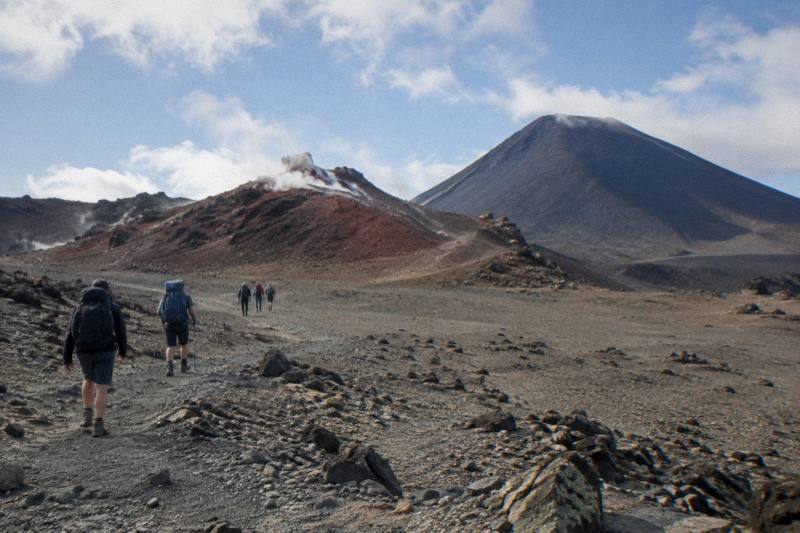
Is Tongariro Alpine Crossing Hard?
How hard the Tongariro Alpine Crossing really is: DOC distance, climbing, walking time, fitness demands, what makes the Emerald Lakes section tough, and when a guided tour earns its price.
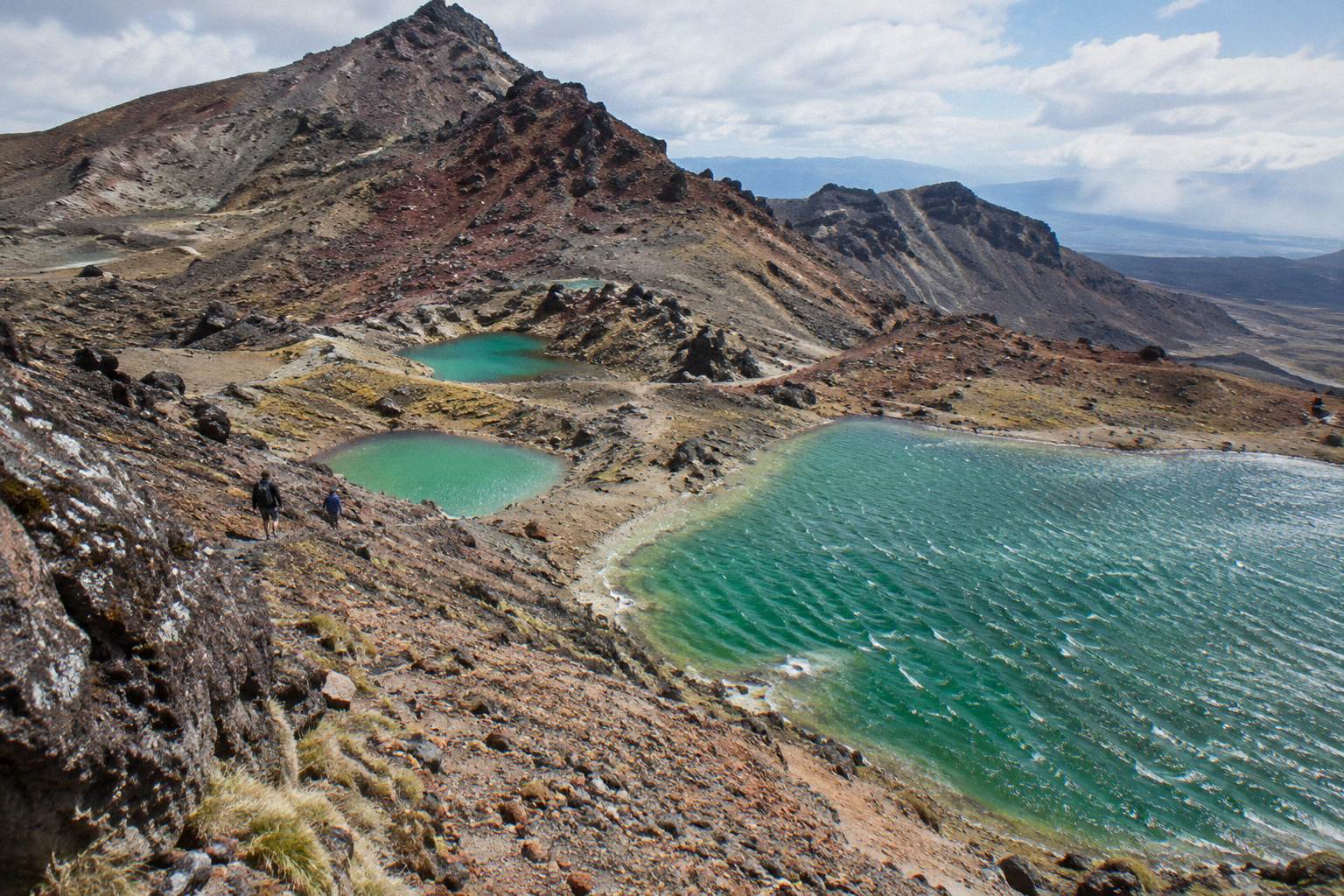
The Tongariro Alpine Crossing covers 20.2 km one way, climbs and drops a total of 1196 m, and reaches 1886 m at Red Crater, the rim above the Emerald Lakes. DOC grades the fitness requirement as High and the track as an intermediate tramping track in summer. From May to October it becomes an expert alpine route where DOC says alpine skills are essential and going with a guide is best. So the honest answer is yes, it is hard, but it is a well-understood kind of hard that thousands of ordinary walkers manage each summer season.
The difficulty is not one single wall of effort. It is three distinct challenges stacked in sequence: a long steep staircase called the Devil's Staircase, an exposed volcanic ridge over Red Crater, and then a steep scree descent that DOC describes as the way down to the vivid Nga Rotopounamu, the Emerald Lakes. Each of those has its own demands on legs, lungs and judgement, and each is easier if you know it is coming. This page breaks the day into its real difficulty blocks, using DOC's own figures, and then looks at how the guided tours and shuttles you can book change the equation.
Yes. DOC rates the fitness demand High, the track 20.2 km one way with 1196 m of elevation change, and the walking time 7 to 8 hours from November to April and 9 hours from May to October. In summer it is a hard but achievable day for a reasonably fit walker; in winter it is an expert route requiring alpine skills and equipment.
That is the official position, and it is worth taking seriously because the numbers behind it are exact. The track starts at Mangatepopo at 1120 m, rises to 1886 m at the Red Crater summit point, and finishes near 760 m at Ketetahi Road. DOC's own track page carries those figures alongside the High fitness grade, and it is the reference point every shuttle operator and guide on the mountain works to. The Crossing is not a stroll with a viewpoint at the end. It is a full mountain day with no road access once you leave Mangatepopo, no shortcut out, and weather that can close in fast even in midsummer.
What makes it manageable is that the hard parts are predictable. The track is well formed and heavily walked in season. The three big efforts, the Devil's Staircase, the South Crater traverse and the Red Crater ridge, come in the first two thirds of the day, and the final third is a long gradual descent through the Ketetahi side. Walkers who start early, carry the right clothing and treat the day with respect overwhelmingly finish it. Walkers who treat it as a city walk in trainers are the ones who turn back at the base of the staircase or, worse, push on into cloud above Red Crater.
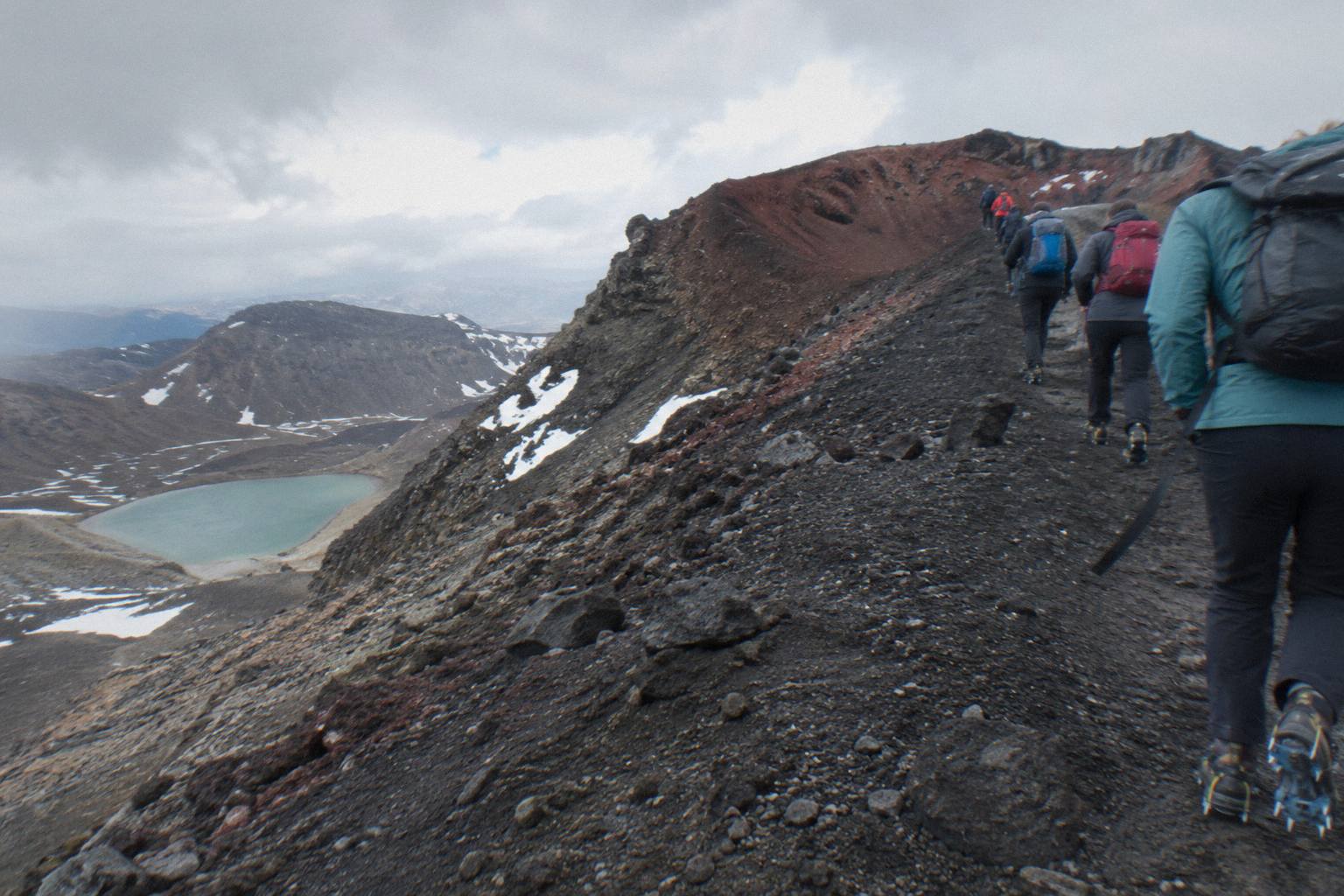
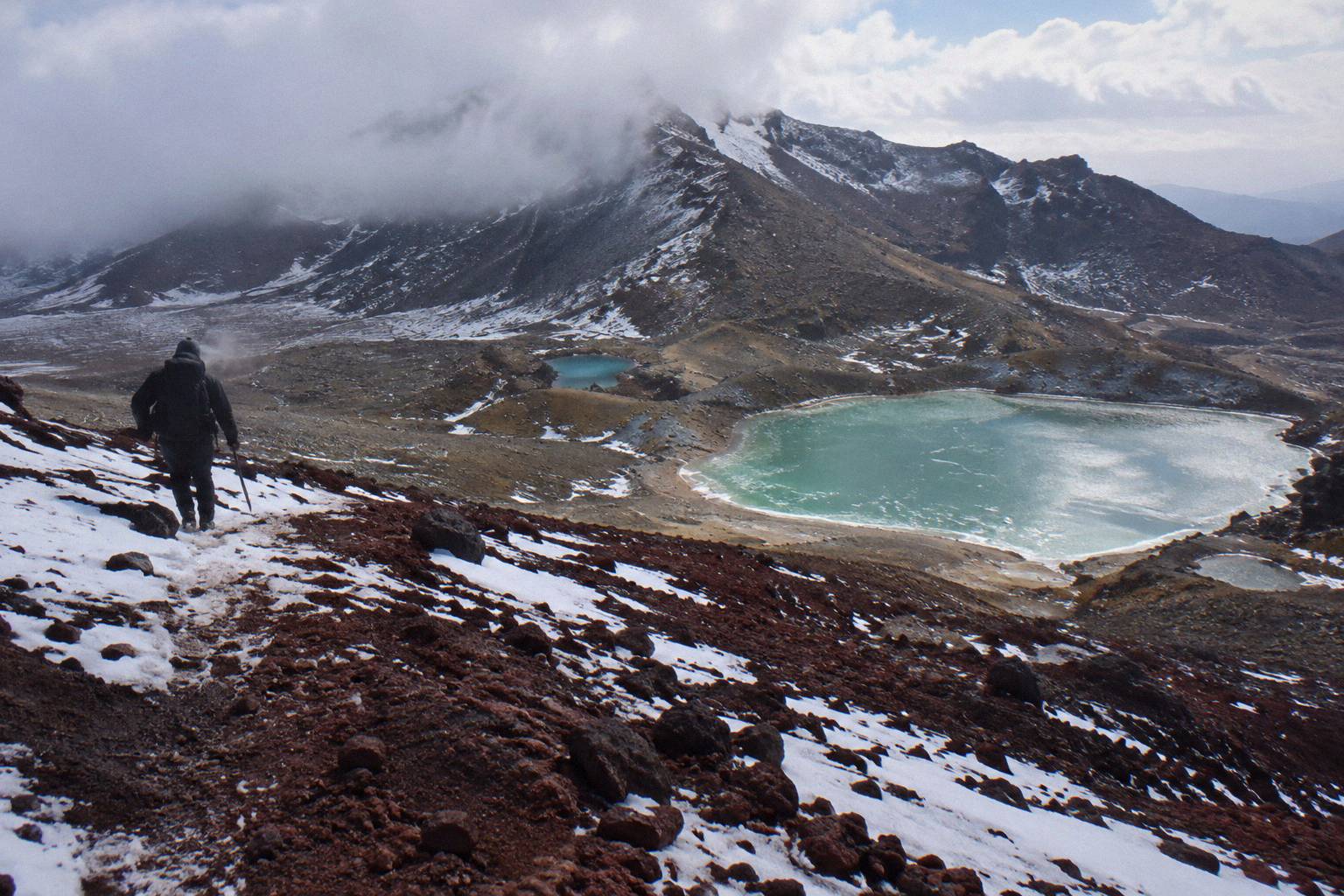
There is also a seasonal switch that changes the answer completely. Between November and April the Crossing is an intermediate tramping track, bare of snow in a normal year. Between May and October DOC reclassifies the experience entirely: snow and ice cover the upper track, avalanche risk exists, temperatures sit below freezing, and DOC's advice is that alpine skills are essential and it is best to go with a guide. Same track, same 20.2 km, radically different difficulty.
If the question behind your question is whether you should walk it alone or with a guide, there are two tours worth comparing early. The Adrift Tongariro premium guided hike runs the full Crossing as a guided group day, 8 to 9 hours door to door, from NZ$450 per person with free cancellation up to 14 days before. The cheaper route for a confident walker is the Tongariro Crossing Shuttles round-trip from National Park Village, from NZ$75 per person, rated 4.7 across 890 reviews, which moves you but leaves the mountain judgement to you.
Where Does The Difficulty Actually Sit?
Three sections carry almost all of the difficulty: the Devil's Staircase climb from Mangatepopo, the exposed ridge up and over Red Crater at 1886 m, and the steep scree descent from Red Crater down to the Emerald Lakes. Everything else is long but gentle, and the final 7 km into Ketetahi is a sustained downhill on a benched track.
The Devil's Staircase is the first test, a steep stepped climb out of the Mangatepopo valley that gains the bulk of the day's altitude in a relatively short stretch. It is honest work rather than technical: steps, rock and steady grade, with walkers spread out along it at every pace imaginable. Legs feel it, particularly at the start of the day when the altitude gain comes quickly, but there is no exposure and no route-finding. Most people simply stop often, drink water and keep moving.
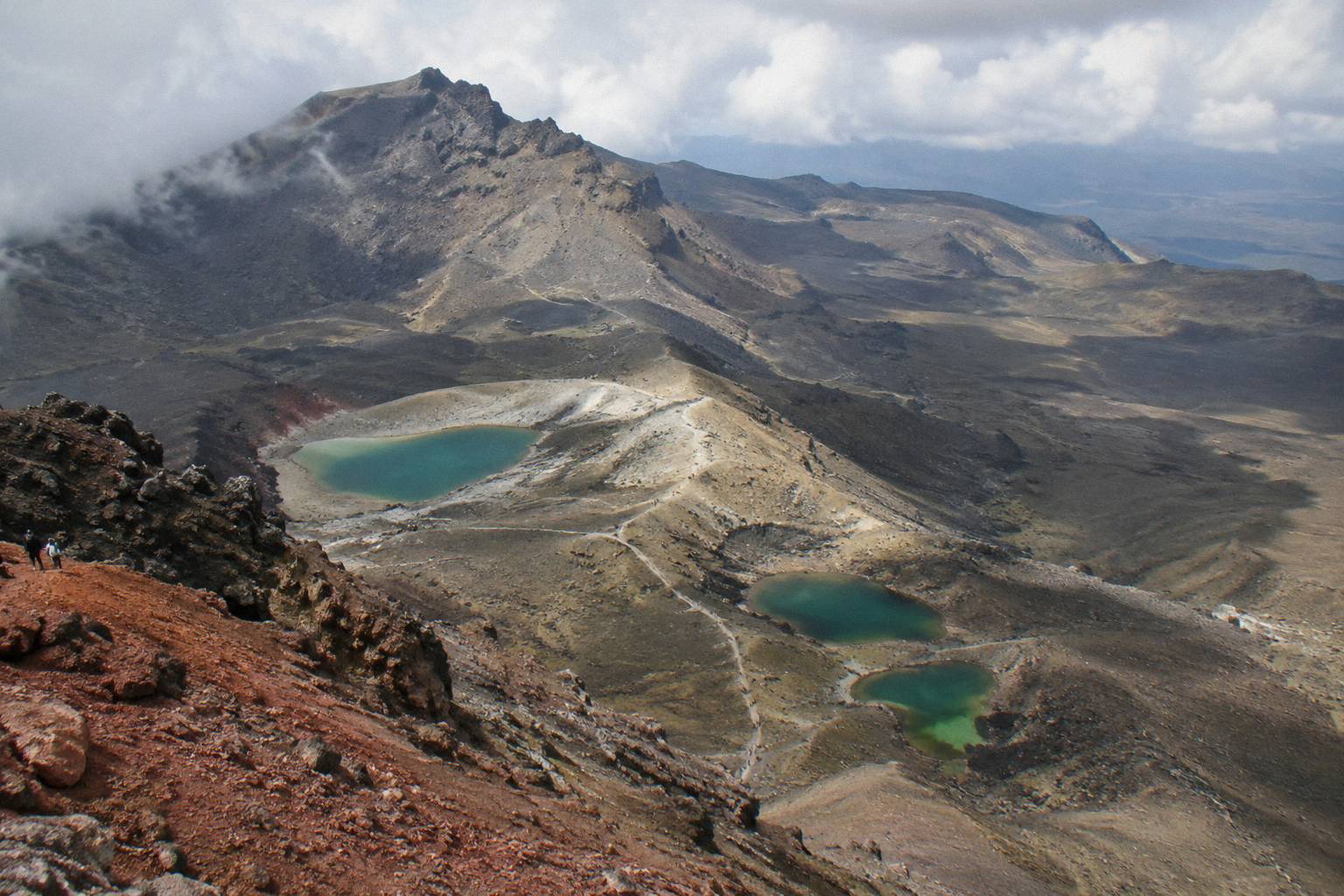
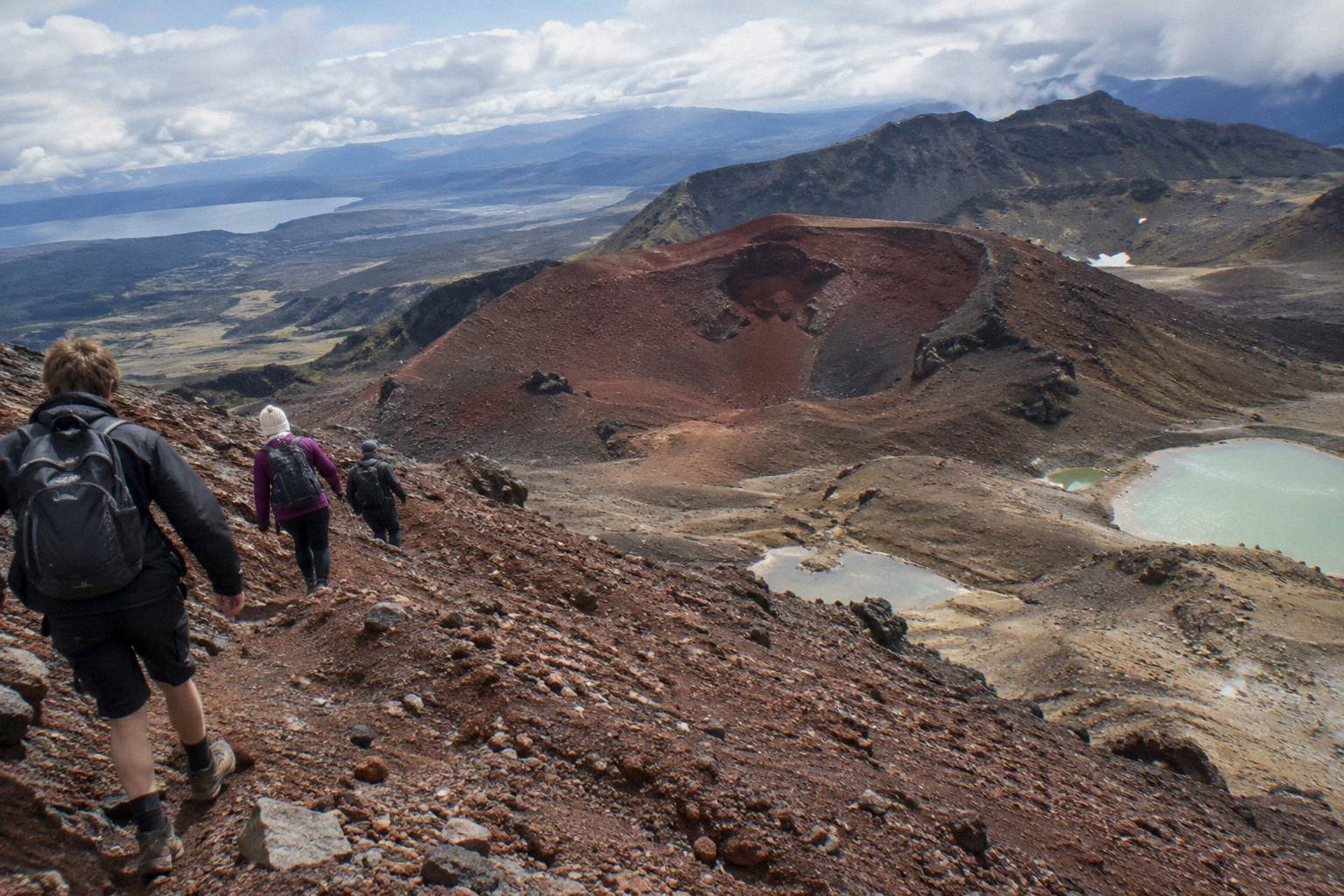
Above the staircase the track crosses South Crater, which feels flat by comparison and gives a breather before the real ridge. The climb to Red Crater is the section where the Crossing earns the word alpine. The track narrows, the ground is loose volcanic rock, and on a windy day the ridge is genuinely committing. Red Crater itself sits at 1886 m, the highest point of the day, and it is where weather decisions get made. Cloud can swallow the view in minutes, and in those conditions the ridge and the descent beyond it are the places people come unstuck.
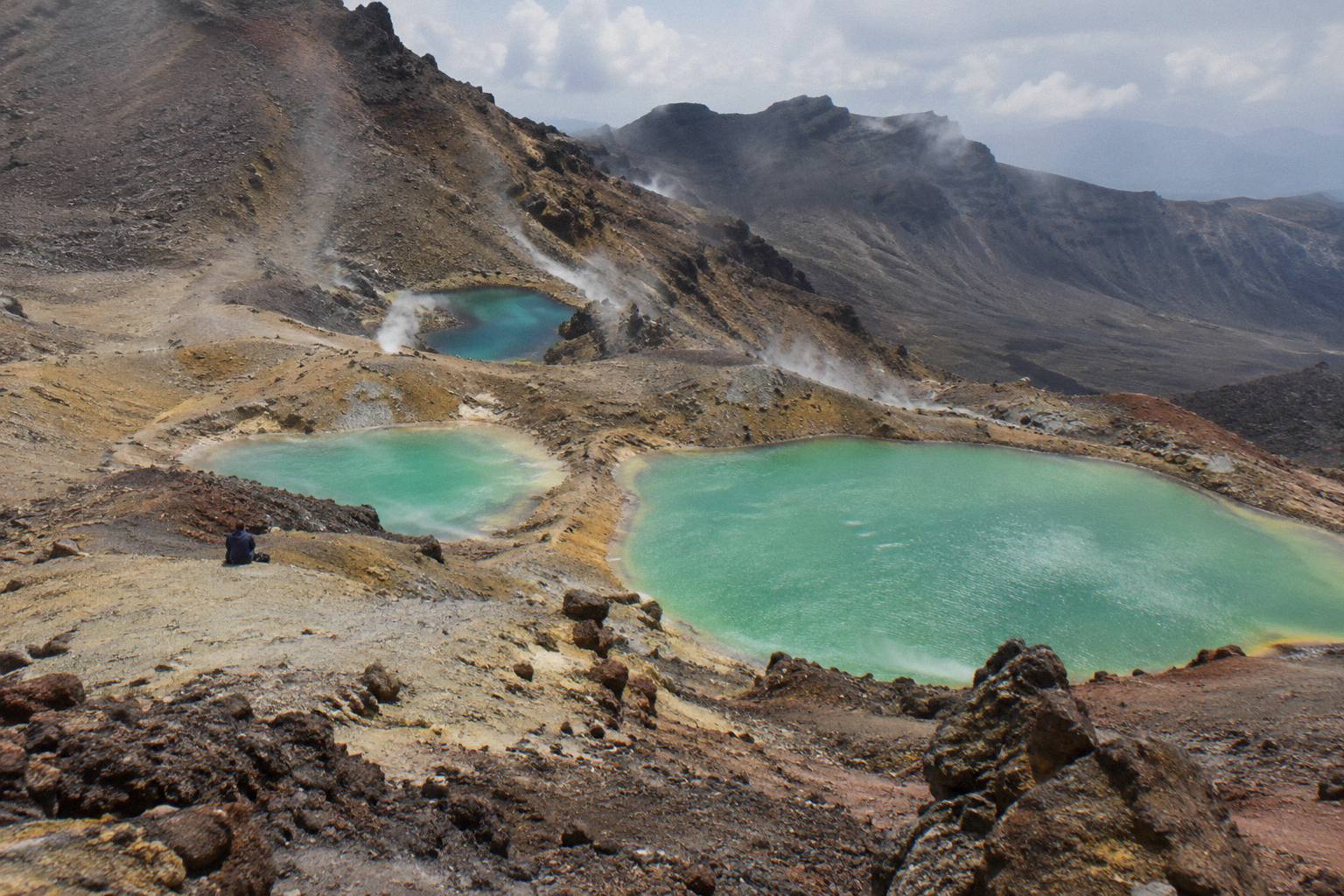
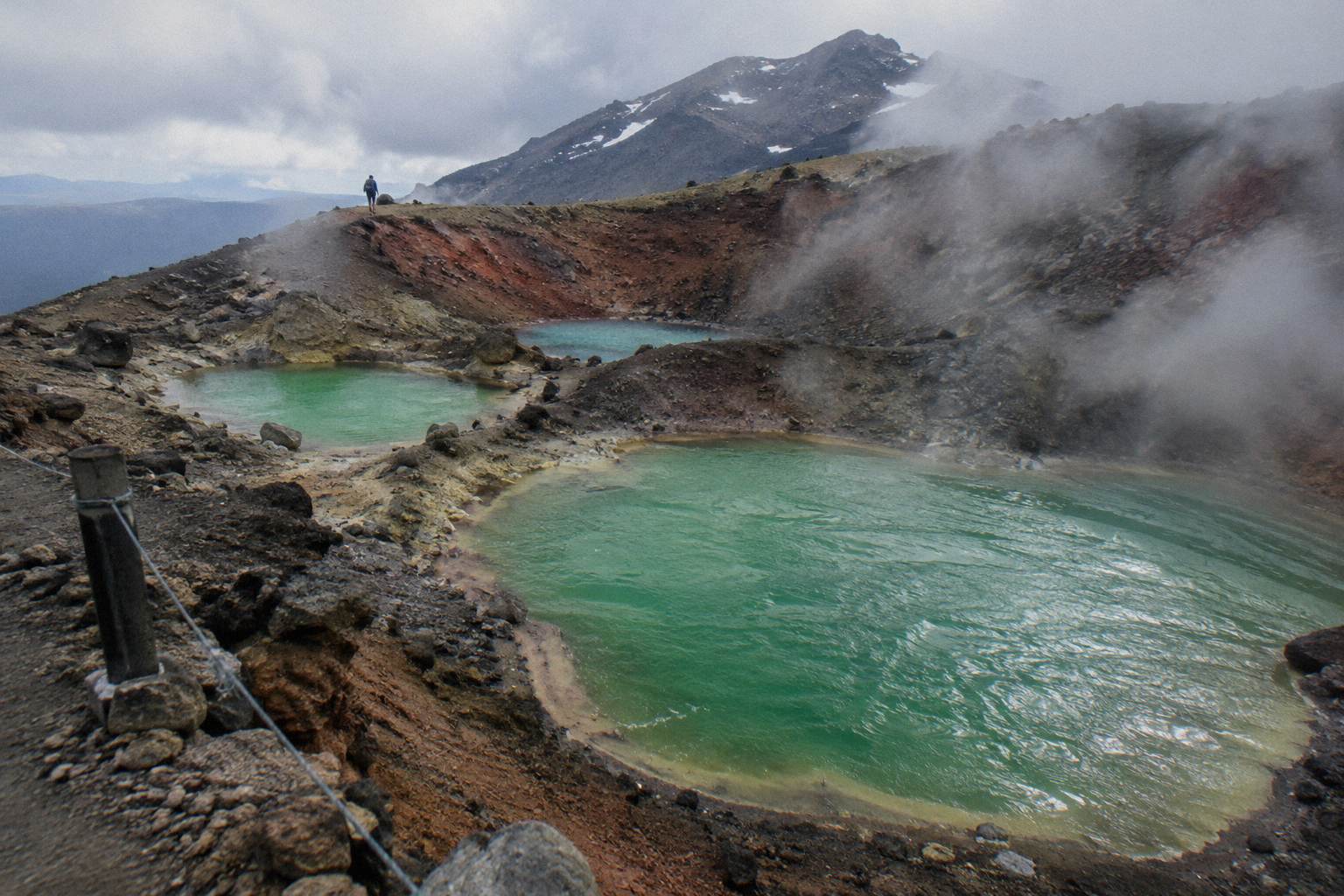
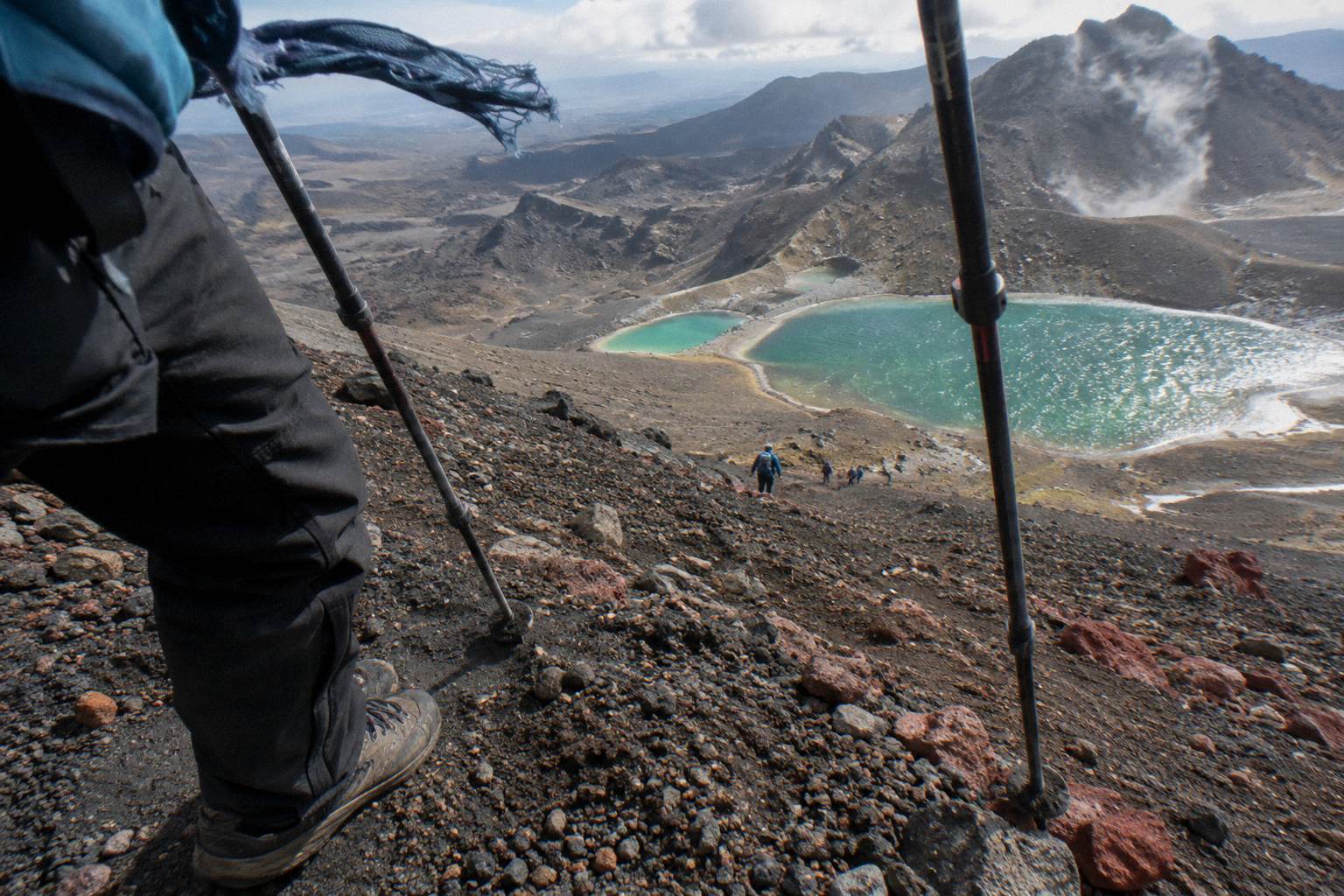
The descent from Red Crater to the Emerald Lakes is DOC's own flagged hazard: a steep scree slope, described on the DOC track page as the steep scree descent to the vivid Nga Rotopounamu, the Emerald Lakes. Loose footing, tired legs and a slope that invites running but punishes it make this the most common spot for twisted ankles. Below the lakes the track sidles around the shore, past the junction where the Mangatepopo, or Ditch, Track leaves the Crossing, and then eases into the long descent past Blue Lake and down the Ketetahi flank.
A useful framing for the day is that roughly the first two thirds contain all the climbing and all the exposure, and the last third is a reward lap with a knee-taxing downhill. The difficulty is front-loaded, which is exactly why an early start matters and why the shuttle day works the way it does.
| Section | What It Feels Like | Main Demand |
|---|---|---|
| Mangatepopo to South Crater via the Devil's Staircase | Steep stepped climb, no exposure | Legs and lungs |
| South Crater traverse | Nearly flat volcanic floor | Recovery, watch the weather |
| South Crater to Red Crater, 1886 m | Narrow ridge, loose rock, exposure | Confidence, wind judgement |
| Red Crater to the Emerald Lakes | Steep scree descent | Foot placement, tired-leg control |
| Emerald Lakes to Blue Lake and the Ketetahi Road finish | Long benched downhill | Knees, patience, hydration |
The DOC track page carries the section descriptions and the seasonal track status, and it is the source to check before any Crossing day.
How Fit Do You Need To Be?
DOC grades the fitness requirement High and expects the full 20.2 km to take 7 to 8 hours in the November to April season. That maps to a walker who can manage a solid day hike with sustained climbing, roughly the fitness to walk uphill for several hours with breaks, rather than any technical climbing ability or athletic training base.
In practice, the fitness bar is about duration and climbing tolerance. If you can walk hilly terrain for six or more hours, rest, and keep walking, you have the engine for the Crossing. What catches people is not raw cardio but the combination of altitude gain, volcanic ground underfoot and a day that starts early and finishes late. The track surface, scoria, rock steps and dusty descents, is more tiring per kilometre than a forest path, and the 9 hour winter figure reflects both slower conditions and shorter daylight.
Training advice from the mountain community is consistent: build up with day walks that include sustained hills in the months before, in the shoes you will wear on the day, and add a back-to-back long weekend if you can. The fitness question also interacts with age. DOC advises the track is not recommended for children under 10, and individual tours set their own minimums: the full-day guided Crossing sets a minimum age of 12 (check the booking page for age limits on the premium and private tours), while Dempsey Buses exclude children under 6 on their return services. There is no single site-wide rule, so check the booking page of whatever you book.
Fatigue management on the day matters as much as training. Eat early and often rather than waiting for hunger, because the staircase and the ridge burn through reserves quickly. Note that lunch is not included on the Adrift guided tours, so bring your own. Hydrate before the staircase, sip on the crater flats, and keep something in reserve for the descent, which is where tired legs cause most of the day's injuries.
For a fuller breakdown of the fitness picture, including how to gauge a training base against the 7 to 8 hour figure, the fitness preparation guide for the Emerald Lakes climb works through it section by section.
Does Winter Change The Answer?
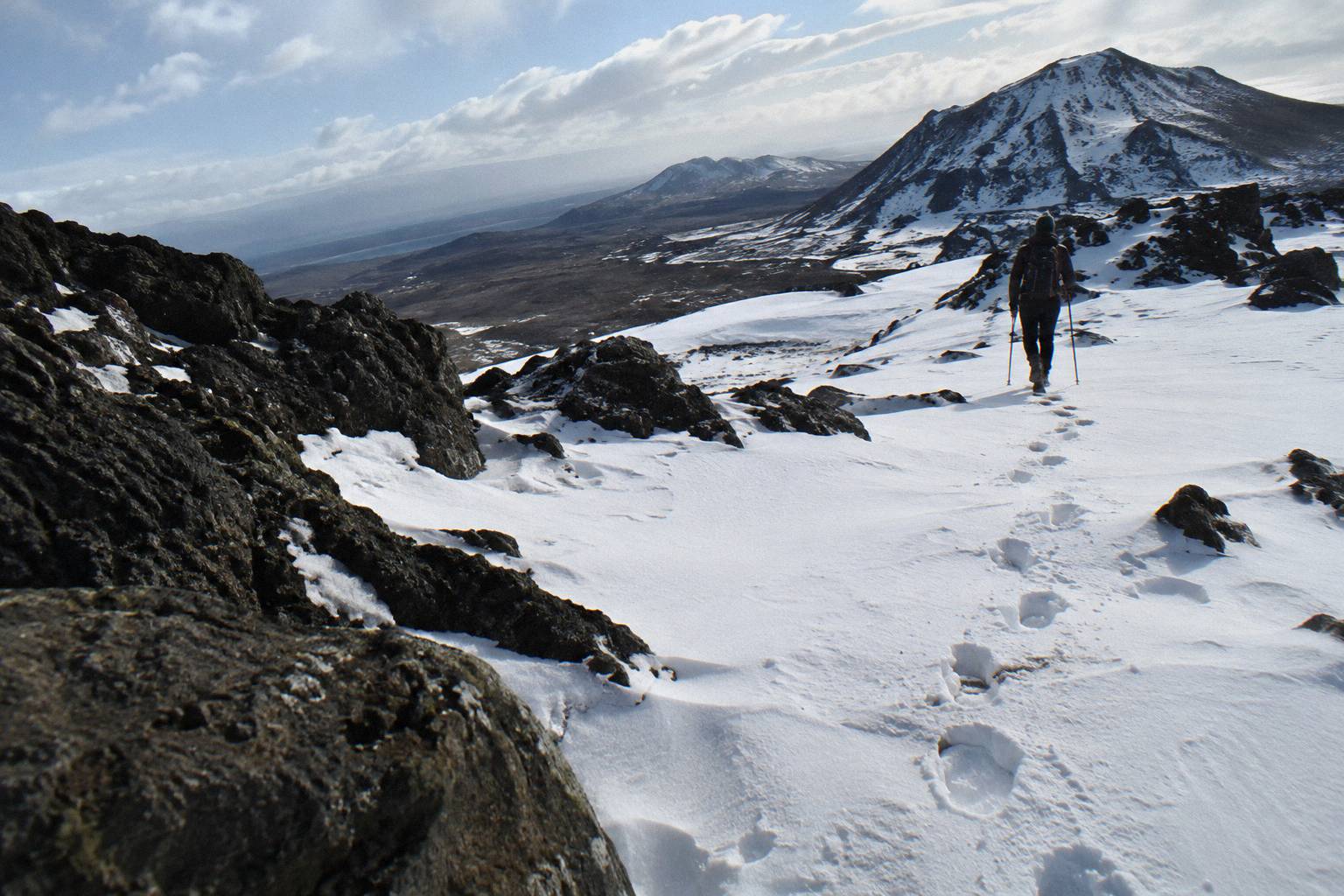
Yes, completely. DOC treats May to October as a different route: snow, ice, avalanche risk and sub-zero temperatures, with the track graded as an expert route where alpine skills are essential and a guide is the recommended way to go. Winter walking time stretches to 9 hours, and daylight shrinks to between 9 and 11 hours, which removes most of the margin in the day.
The summer to winter switch is the single biggest difficulty variable on the Crossing, and it changes the gear list as much as the grade. DOC's winter essentials for independent trips include crampons, ice axe and helmet, plus avalanche equipment and the competency to use all of it. On the three Adrift Tongariro guided tours, crampons and ice axes are supplied for winter conditions if required, along with a clothing and footwear allowance, which is one of the concrete arguments for a guide outside the summer season: the equipment and the judgement travel with you.
Winter also changes the logistics around the track. DOC notes that shuttle buses generally do not operate through winter, May to late October, while guided trips include transport. That means a winter Crossing is effectively a guided proposition for almost everyone, and the Adrift Tongariro premium guided hike, with pickups from National Park Village and surcharge pickups from Taupo, Turangi and Whakapapa on private trips, is built for exactly that. The same operator's private guided Crossing covers the same terrain as a one-group day, also from 53 Carroll Street in National Park Village.
The cultural layer of the mountain does not change with the seasons, and it applies to every walker. Kaumatua Te Ngaehe Wanikau asks visitors to respect the maunga tapu by not touching or entering any of the waterways, including the alpine lakes. That request covers the Emerald Lakes in every season: no swimming, no touching, photograph them from the track. The reasons and the wording behind that rule are covered in detail in why swimming in the Emerald Lakes is not allowed.
For weather and hazard awareness in any season, DOC's volcanic risk page for Tongariro National Park explains what the alert system means, and volcanic alert levels are checked daily rather than assumed.
Do You Need A Guide Or Just A Shuttle?
For a fit, equipped summer walker, a shuttle is enough and the walk is self-guided by design. From May to October, or whenever you want weather judgement, group pace and winter equipment included, the guided Adrift Tongariro tours are the three guided options, and DOC itself recommends a guide for the winter route.
The distinction matters because shuttles and guides are different products that solve different halves of the difficulty. A shuttle removes the logistics problem: the 4 hour parking maximum at the road ends from Labour weekend in late October to 30 April is exactly why DOC suggests booking a shuttle, and the round-trip and park-and-ride services solve it in different ways. A guide additionally removes the judgement problem: route-finding in cloud, turnaround decisions, pace-setting and, in winter, the equipment. On Tongariro Emerald Lakes Hike the comparison is treated honestly, because a confident summer walker paying for a guide is buying insurance, not ability.
Here is how the main bookable options split across that line. Adrift Tongariro runs the three guided tours: the premium guided hike, from NZ$450 per person, rated 4.6 across 242 reviews, with free cancellation up to 14 days before; the full-day guided group walk, rated 4.7 across 278 reviews and non-refundable; and the private guided Crossing, rated 4.5 across 30 reviews, also non-refundable, priced on the booking page. Every guided departure leaves from 53 Carroll Street in National Park Village, and all three reach the Emerald Lakes.
| Option | Guided Or Shuttle | Duration | Rating And Reviews | Price Per Person |
|---|---|---|---|---|
| Adrift Tongariro premium guided hike | Guided group | 8 to 9 hours | 4.6 across 242 reviews | from NZ$450 |
| Adrift Tongariro full-day guided group walk | Guided group | 9 hours | 4.7 across 278 reviews | on the booking page |
| Adrift Tongariro private guided Crossing | Guided private | 7 to 9 hours | 4.5 across 30 reviews | on the booking page |
| Tongariro Crossing Shuttles round-trip, National Park Village | Shuttle, return | about 8 hours | 4.7 across 890 reviews | from NZ$75 |
| Ruapehu Scenic Shuttles Ketetahi park-and-ride | Shuttle, one-way | 8 hours | 4.8 across 670 reviews | from NZ$68 |
| Tongariro Expeditions shuttle from Taupo or Turangi | Shuttle | 8 to 10 hours | 4.7 across 431 reviews | from NZ$75 |
The two shuttle rows deserve a plain-language note. The Ruapehu Scenic Shuttles Ketetahi park-and-ride is one-way: you park at the Ketetahi car park, ride to Mangatepopo, and walk the Crossing back to your own car, with free cancellation up to 24 hours before. The Tongariro Crossing Shuttles round-trip from National Park Village, the most reviewed tour here at 4.7 across 890 reviews, is a return service from 59 Findlay Street. Neither is guided, and no shuttle is: only the three Adrift Tongariro tours carry a guide. That distinction is the whole decision for many walkers.
What Trips People Up On The Day?
Most difficulty on the Crossing is self-inflicted and comes from five repeat mistakes: starting too late, wearing the wrong shoes, underestimating the scree descent, ignoring the morning weather assessment, and skipping the DOC booking system that shuttle and guided services depend on.
Starting late compresses everything. The day's difficulty is front-loaded into the climb to Red Crater, and the weather on the ridge often deteriorates through the afternoon, so an early start buys the best window for exactly the hardest sections. Shuttle and guided departures are built around this, which is one quiet advantage of booking either: the timetable makes the early start for you.
Footwear is the second. The volcanic ground is abrasive, loose on the descents and unforgiving in trainers. The advice on whether you need hiking boots for the Crossing and the dressing guide for the Crossing day cover the details, but the short version is boots or stiff trail shoes with grip, plus layers, because the temperature at 1886 m bears no relation to the car park.
The scree descent catches confident walkers more often than the climb does, because it looks easy and arrives when legs are tired. Small steps, planted edges and no running turn it from a hazard into a highlight, and it ends at the Emerald Lakes, which is the emotional payoff of the whole day. Respect the cultural request there and stay out of the water.
Weather judgement is the one mistake with real consequences. Guided operators and shuttles run only when DOC's advisory and the forecast allow, and the NIWA advisory for the park plus the MetService mountain forecast are the daily references. If you are walking independently, those are your tools too; assess each morning and be willing to swap to the Taranaki Falls or Tama Lakes walks, which DOC names as the alternatives when the Crossing is out of condition.
Finally, the booking layer. The DOC booking system for the Crossing is free and recommended, and shuttle and guided bookings are built around it, so sort that before the day rather than at the trailhead. The DOC booking system page explains how it works.
Who Should Not Attempt It?
Anyone without the fitness for a multi-hour hilly day, walkers unwilling to carry proper layers and footwear, and in winter anyone without alpine skills or a guide should stay off the upper track. DOC advises the track is not recommended for children under 10, and children face additional per-tour minimum ages on guided and shuttle services.
The honest exclusion list is short and practical. The Crossing is wrong for a walker who has never done a long day hike, wrong for anyone treating it as a casual morning, and wrong in any season for someone who cannot read, or will not defer to, a mountain weather forecast. In winter the bar rises sharply: without crampon and ice axe competency, and the avalanche awareness DOC lists for independent trips, the upper track is simply not a self-guided proposition.
There are good alternatives that keep the day alive. DOC itself names Taranaki Falls and Tama Lakes as the walks to do when the Crossing is out of condition, and the guide to other hikes in Tongariro National Park when the Crossing closes covers the choices, including options near the track start covered in free walks and viewpoints near the Crossing start.
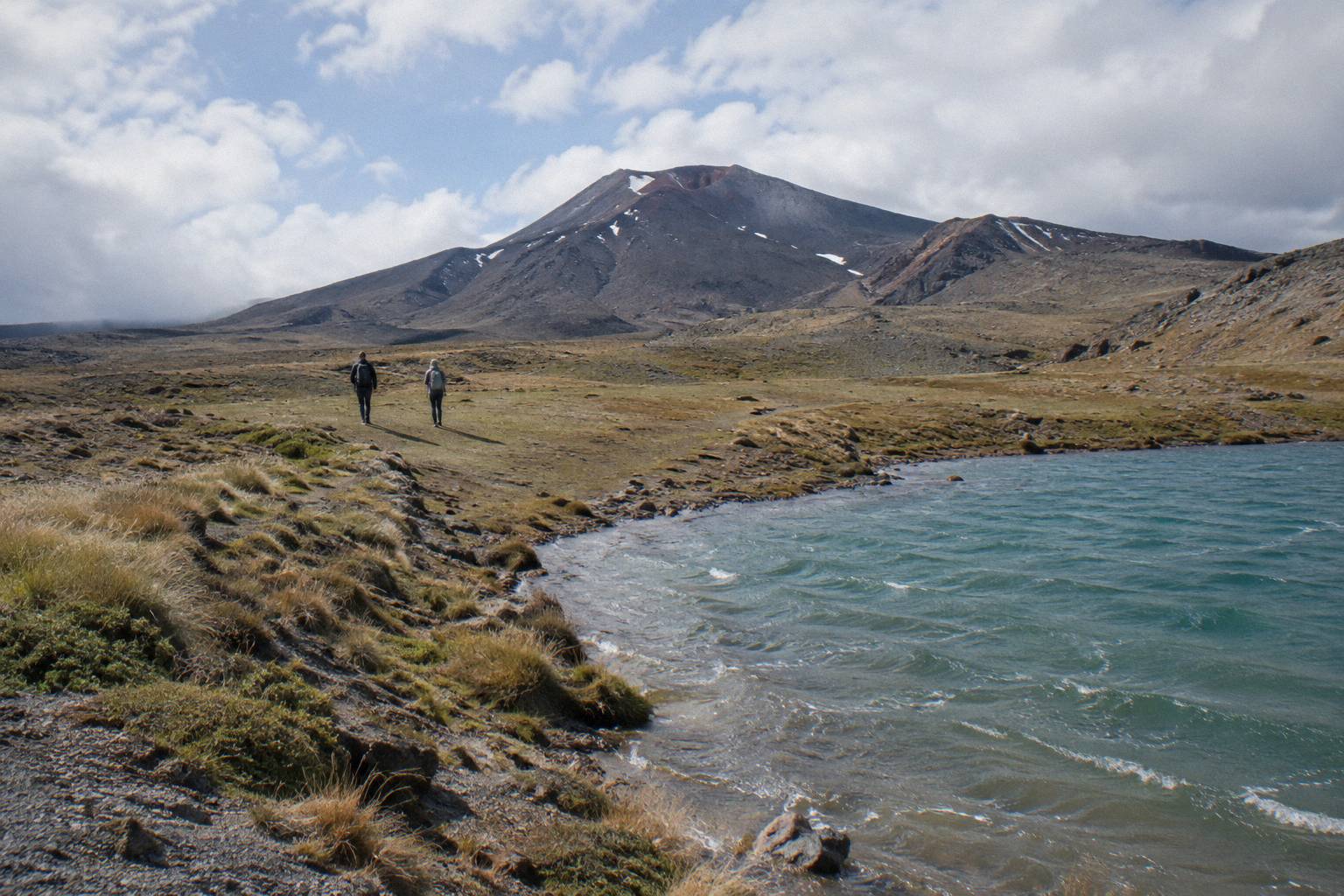
For travellers based further out, the shuttle network widens what is possible without a car move of your own. The Tongariro Expeditions Crossing shuttle from Taupo or Turangi, from NZ$75 per person and rated 4.7 across 431 reviews, covers the long Taupo and Turangi approaches, and the Dempsey Buses return bus from National Park Village, from NZ$90 per person with a 4.8 rating across 72 reviews, is the same product family from the village side. From Auckland, the distance is long, and multi-day products exist, including the ExperienceKart private three-day tour from Auckland, on which the Crossing is one self-guided leg of a Lake Taupo and Huka Falls itinerary.
So, Is It Worth The Hard?
For most walkers with a reasonable fitness base, yes. The difficulty is real but structured, the hard sections are short and well documented, and the payoff, Red Crater's rim and the Emerald Lakes below the scree, is one of the standout day walks in a dual World Heritage park that has been protected since 1894.
The judgement call is really about matching the format to your confidence. A fit summer walker with good shoes and an early shuttle ticket has every reason to walk it independently; the mountain is busy in season and the track is obvious. A walker who wants the security of weather judgement, pace and, in winter, supplied crampons and ice axes, will find the Adrift Tongariro premium guided hike, from NZ$450 per person, worth its price, with free cancellation up to 14 days before making the decision low-risk at the planning stage. Between those poles sit the shuttles, which solve logistics cleanly and cheaply, from NZ$68 for the Ruapehu Scenic Shuttles park-and-ride upward.
Treat the difficulty with respect rather than fear. Read the DOC page the night before, check the advisory in the morning, start early, carry layers and water, and be willing to turn around. Do that, and the 20.2 km, the 1196 m of climbing and the ridge at 1886 m turn from a question about hardness into a very good day out.
Common Questions About The Tongariro Alpine Crossing Difficulty
Is Tongariro Alpine Crossing Hard?
Yes. DOC grades it High fitness: 20.2 km one way, 1196 m of elevation change, a high point of 1886 m at Red Crater, and 7 to 8 hours of walking from November to April. From May to October it becomes an expert alpine route where DOC recommends a guide.
How Long Does The Crossing Take An Average Walker?
DOC's figure is 7 to 8 hours in the November to April season and 9 hours from May to October. Booked tour durations, such as 8 to 9 hours for the Adrift premium guided hike, are total day or transfer lengths, not walking time.
Is The Crossing Harder Than The Milford Track?
The two are different products and this site's figures cover only the Crossing. What can be said is that the Crossing is a single hard day with a High fitness grade, rated intermediate in summer and expert in winter, rather than a multi-day Great Walk.
Can A Beginner Do The Tongariro Alpine Crossing?
A beginner with decent general fitness, proper boots, layers and an early start can complete it in summer conditions. A beginner with no hill-walking experience, or anyone attempting it in winter without a guide, is not a good match for the track.
What Is The Hardest Part Of The Crossing?
The Red Crater section: the steep climb to the 1886 m rim, the exposed ridge, and the steep scree descent to the Emerald Lakes. The Devil's Staircase is the biggest single climb, but the ridge and scree carry the exposure and the footing risk.
Do Children Have A Minimum Age For The Crossing?
DOC advises the track is not recommended for children under 10. Individual tours set their own limits: the full-day guided Crossing sets a minimum age of 12, the premium and private tours leave age limits to the booking page, and Dempsey Buses exclude children under 6. Check the booking page of the specific tour.