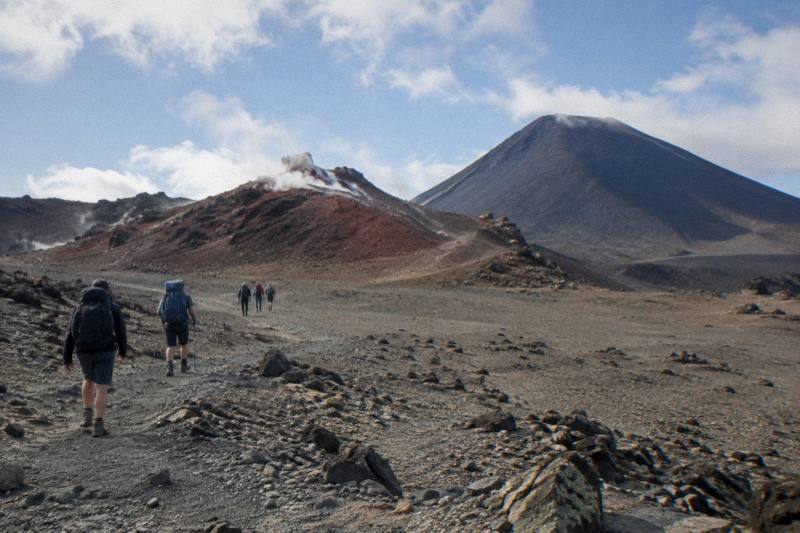
Do I Need Hiking Boots For The Tongariro Crossing?
Do you need hiking boots for the Tongariro Crossing? A plain answer on terrain, seasons, what guided tours supply and what shuttles expect, from verified DOC track facts.
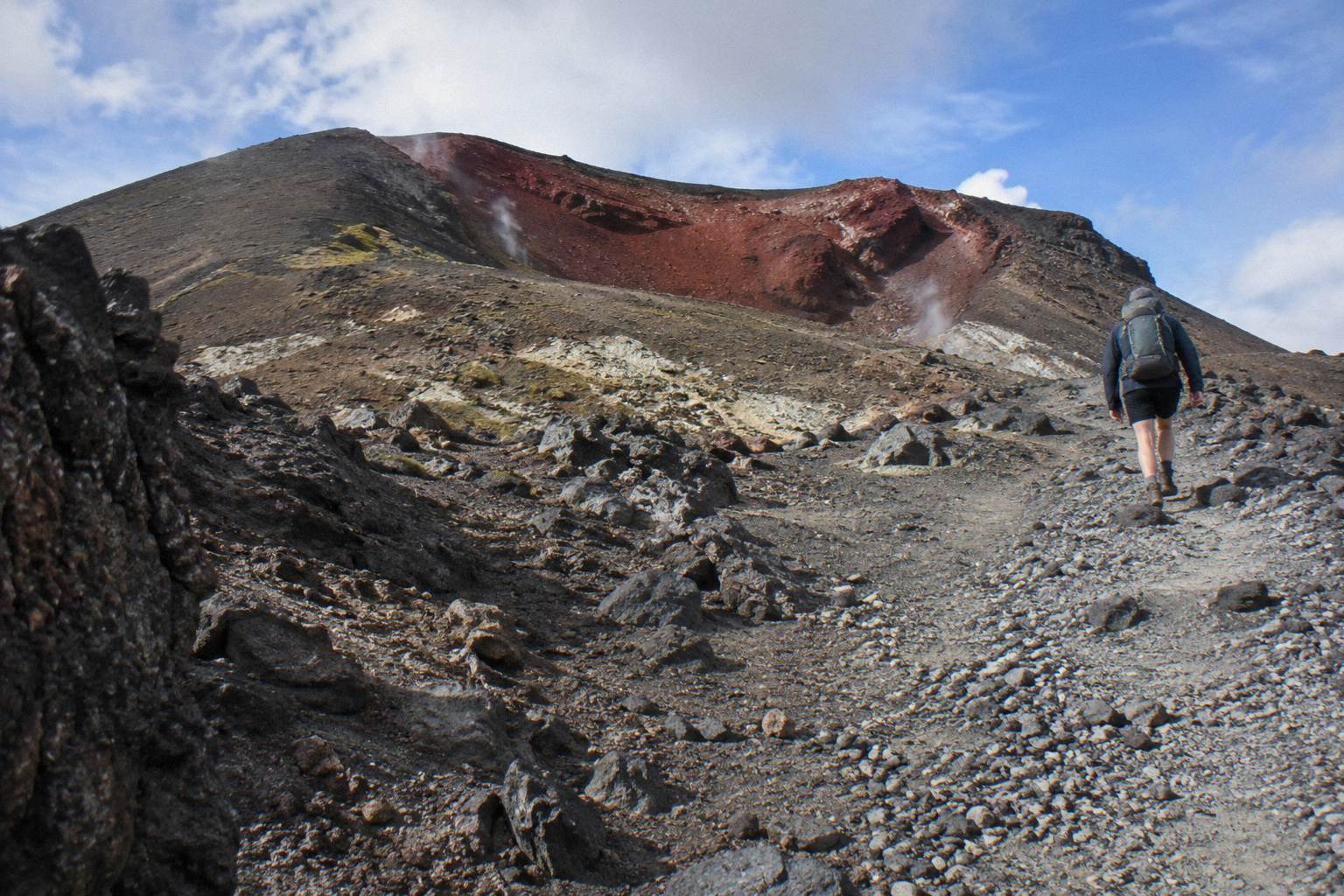
No law forces you into hiking boots on the Tongariro Crossing, but the track makes a stronger argument than any rule book. The route runs 20.2 km one way with 1196 m of elevation change, crosses lava fields, a steep scree climb up the Devil's Staircase and a loose descent off Red Crater at 1886 m, and DOC classes the fitness requirement as High. In summer a fit, careful walker in grippy trail shoes can finish it. In a bad summer forecast, or any winter month, boots stop being a preference and become part of the safety system.
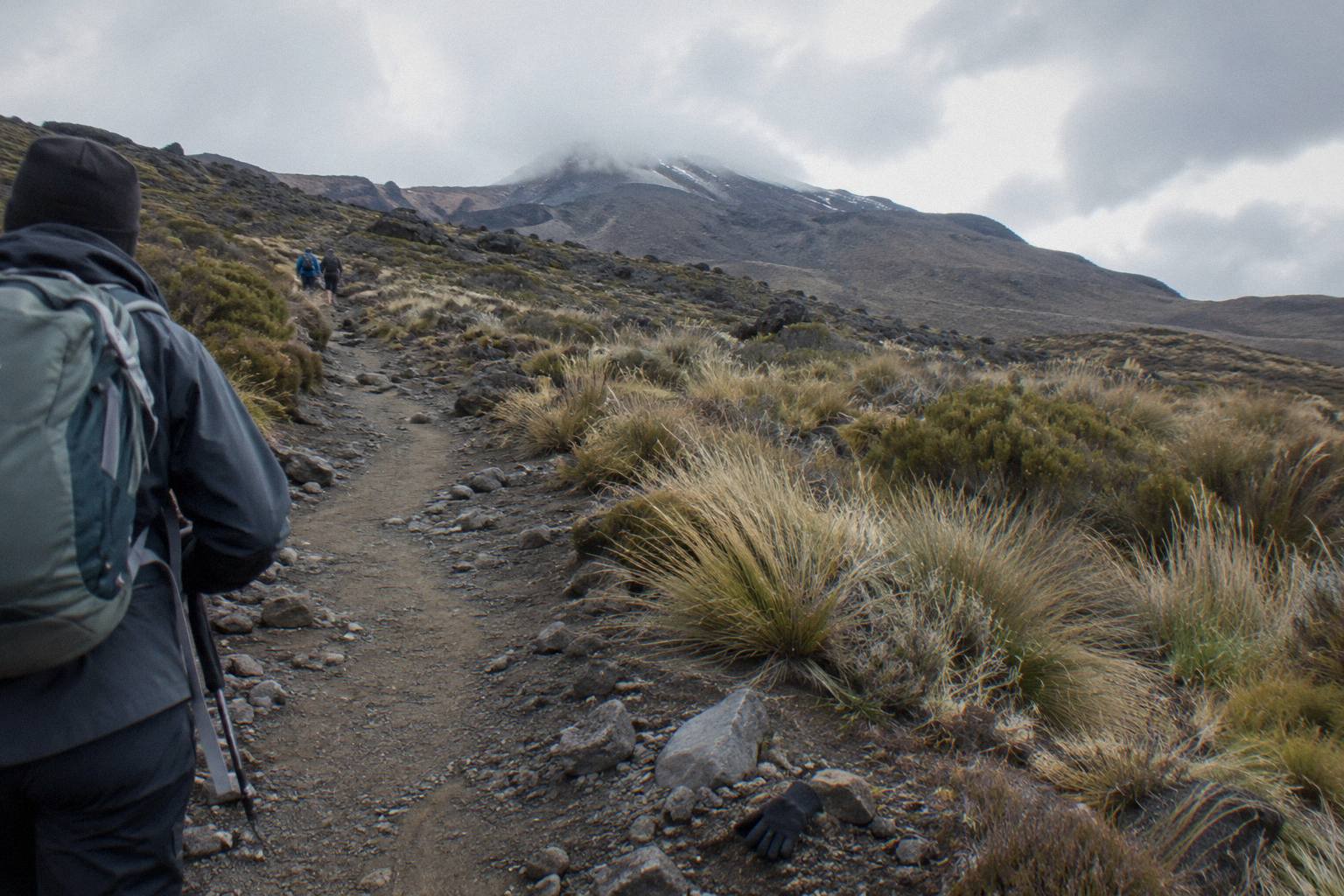
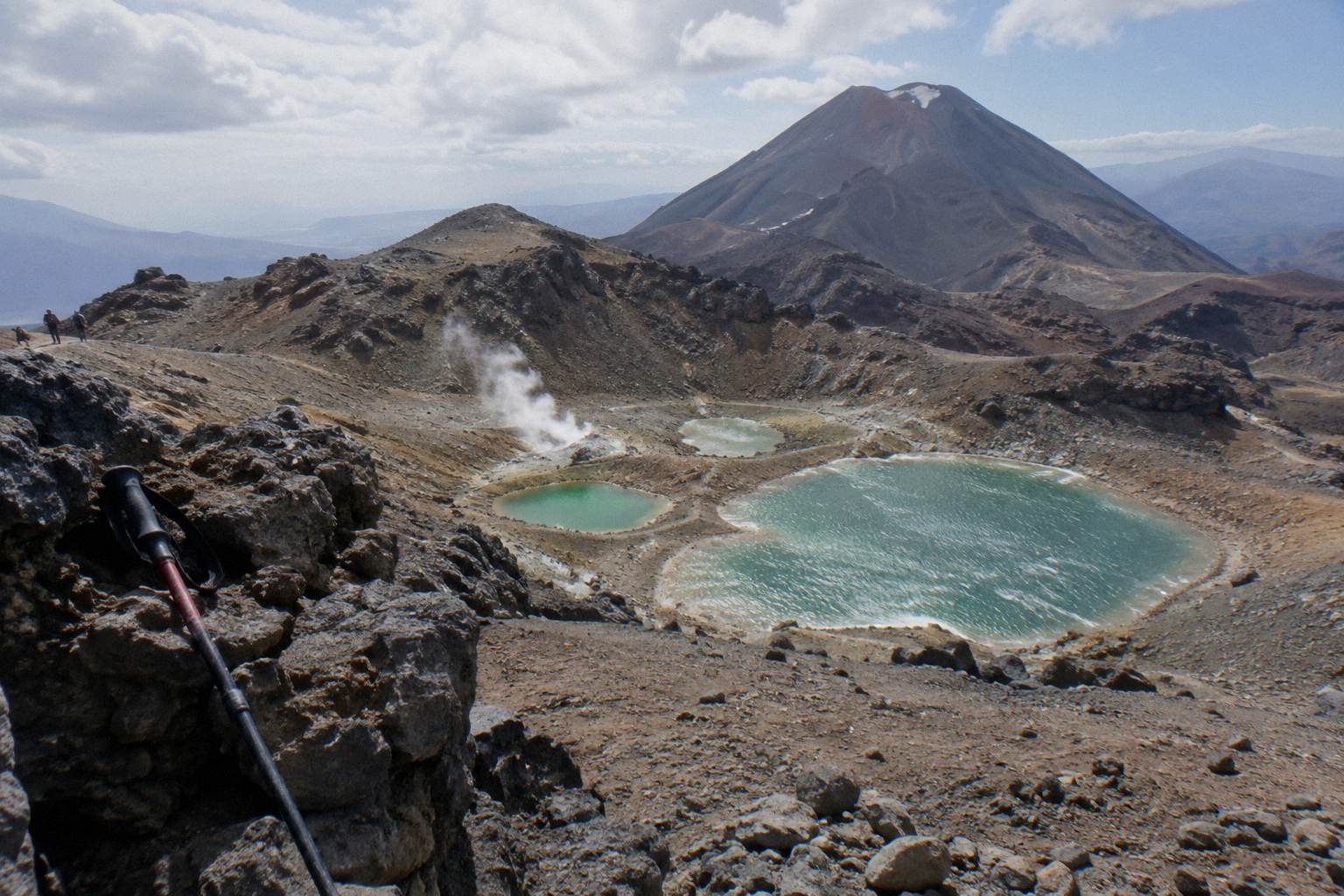
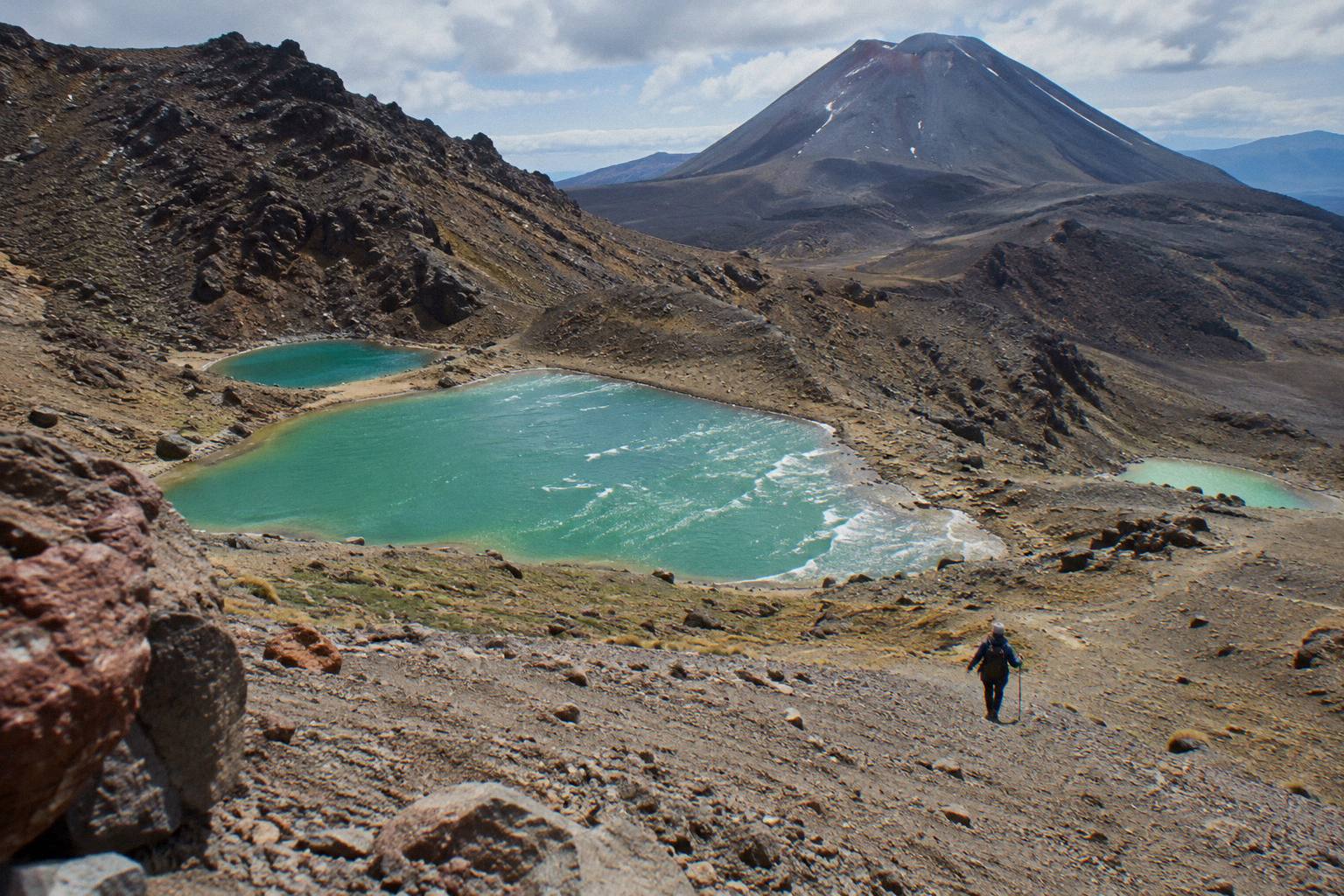
That answer surprises people who have seen photos of the Emerald Lakes and assumed a gentle day walk. The images understate the ground. Between the Mangatepopo start and the Ketetahi Road finish the track swaps surfaces constantly: boardwalk over bog, smooth lava slab, crushed gravel, then the deep loose scree above and below Red Crater that shifts underfoot with every step. Footwear that works on the first hour can feel hopeless by the sixth.
The people who know the ground best treat it as alpine. Adrift Tongariro runs the three guided tours of the Crossing, and the premium guided hike carries a clothing and footwear allowance plus crampons and ice axes for winter conditions if required. DOC's own guidance moves the same direction: the track is described as an intermediate tramping track from November to April and an Expert route from May to October, when the department's view is that alpine skills are essential and it is best to go with a guide.
For walkers planning their own day, the footwear decision sits inside a bigger plan that includes the DOC booking system, which is free and recommended and is needed if you want a shuttle or a guided trip, and the summer parking rule at the road ends. From Labour weekend in late October until 30 April, parking is limited to a 4 hour maximum and DOC suggests booking a shuttle, which is why most independent walkers end up on a shuttle such as the Tongariro Crossing Shuttles round trip from National Park Village, rated 4.7 across 890 reviews and from NZ$75 per person, before they ever think about their shoes.
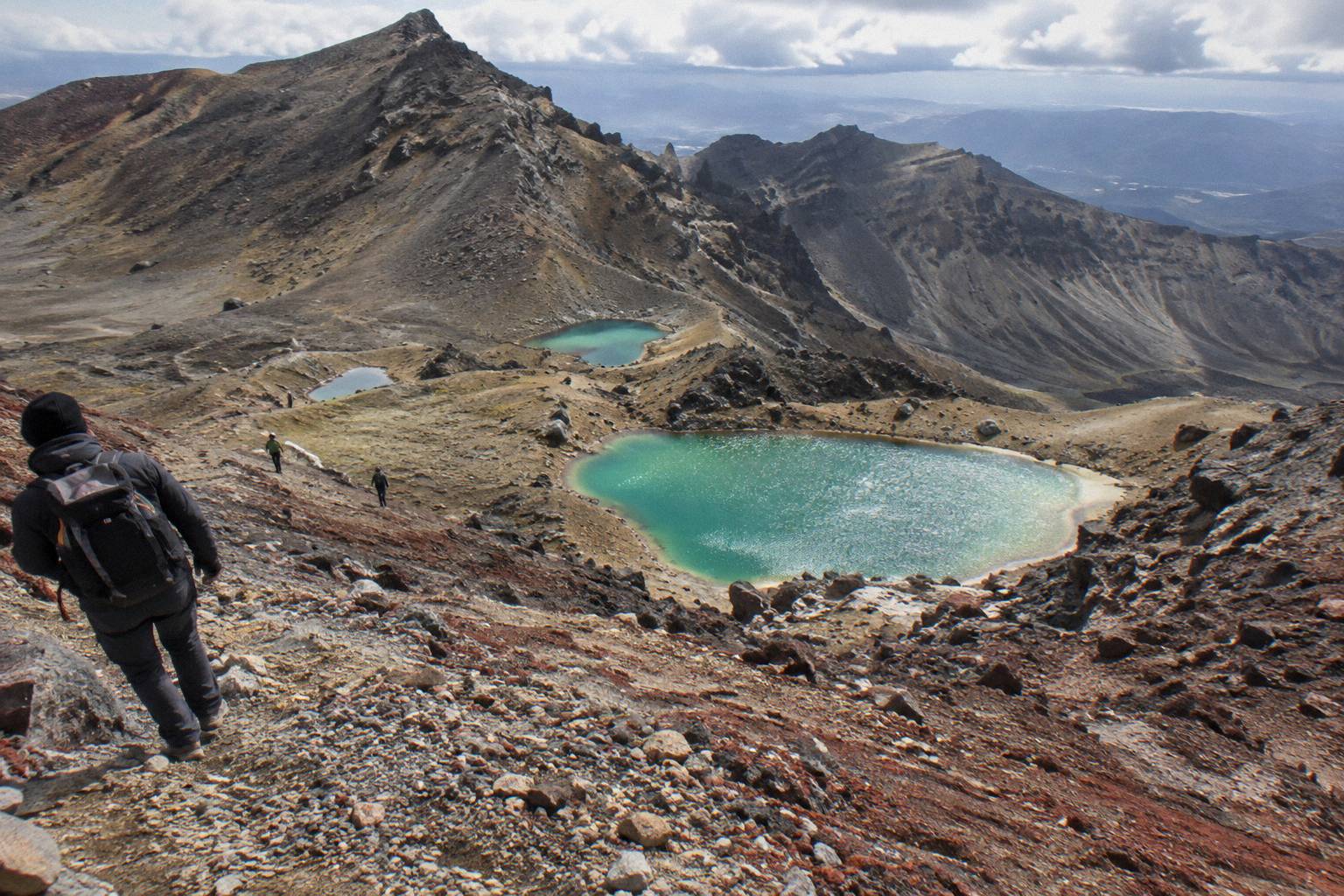
Yes, you should wear proper hiking boots on the Tongariro Crossing. They are strongly recommended in every season, and from May to October they are effectively required, because DOC grades the track as an Expert route with snow, ice and avalanche risk during that period. DOC classes the fitness requirement as High, calls it an intermediate tramping track from November to April, and describes a steep scree descent to the vivid Nga Rotopounamu, the Emerald Lakes, from Red Crater at 1886 m. Ankle support and stiff soles matter most on the Staircase, the Red Crater ridge and that scree, where soft shoes twist and slide with every step. A fit walker in grippy trail shoes can manage a calm summer day, but the margin is thin and vanishes in rain.
Break the question into what the track does to your feet. Three things happen over a 7 to 8 hour summer day, DOC's time band for November to April: the surface grinds, the slope tilts, and the weather can turn. Grinding attacks the sole. Tilting attacks the ankle. Weather attacks everything, because wet rock and cold toes turn a hard walk into a dangerous one on the high ground near Red Crater.
A boot answers all three at once. A stiff shank stops stone bruises on lava slab. A high cuff holds the ankle when the scree tips you sideways. A waterproof membrane keeps meltwater and showers out long enough to reach the Ketetahi side. None of that guarantees comfort, which is why fit and break in, covered further down, matter as much as the boot category.
Running shoes answer one of the three at best. A road shoe with a soft foam sole is the wrong tool here: it offers no protection on rock, no lateral stiffness on scree and no grip in the wet. A trail runner with a luggy outsole and a rock plate is a defensible summer choice for an experienced, fast, lightly loaded walker, and some locals do exactly that. But it is a calculated trade of ankle support for weight, and the calculation assumes good weather and good ankles.
The One Cultural Rule Shoes Cannot Excuse
Footwear has no bearing on it, but every article about this track should carry the request DOC prints: kaumatua Te Ngaehe Wanikau asks visitors to respect the maunga tapu by not touching or entering any of the waterways, including the alpine lakes. That means no swimming in the Emerald Lakes and no paddling at the edge, however hot the scree descent left you. More detail is in the swimming rules for the Emerald Lakes.
What The Track Does To Your Feet, Section By Section
Between Mangatepopo and Ketetahi Road, the Crossing puts your feet through three distinctly different ground types, and each section makes its own demands on your shoes. The middle third is the section that decides whether your footwear survives, because that stretch of the track is exactly where unsuitable shoes fail. The opening valley is gentle boardwalk and gravel, the climb through the Devil's Staircase to South Crater and Red Crater is steep and loose, and the long Ketetahi descent is unrelenting on knees and toenails. The table below matches each part of the 20.2 km route to what it demands of footwear, so you can see exactly where the boot earns its place on your packing list.
| Track section | Ground underfoot | What it demands of footwear |
|---|---|---|
| Mangatepopo start to Soda Springs | Boardwalk, bog, gravel flats | Comfort, drainage; the easy part |
| Devil's Staircase to South Crater | Steep steps, rock, loose grit | Ankle support, stiff sole, toe room |
| South Crater to Red Crater, 1886 m | Lava slab, scree, exposed ridge | Grip on rock, lateral stability |
| Red Crater descent to the Emerald Lakes | Steep, deep, shifting scree | High cuff, tight lacing, brake-tread |
| Ketetahi side to the road | Long downhill gravel and rock steps | Cushioning, toenail-friendly fit |
The scree line deserves its own paragraph. Coming off Red Crater you take a stride and the whole slope moves with you, half a step of slide for every step down, for several hundred metres. Boots laced firm let you ride that movement on purpose. Low shoes let the slope decide. This is also the moment your quads heat up and attention wanders toward the first green lake below, which is precisely when ankles roll.
Then the walk out. The Ketetahi descent is where bad footwear shows up as black toenails rather than twisted joints. Toes slide forward inside the shoe on every downhill step for well over an hour. A boot laced with a heel lock, or any shoe with enough volume at the toe box, survives this. A shoe half a size too small does not, and the damage is usually noticed at the car, not on the hill.
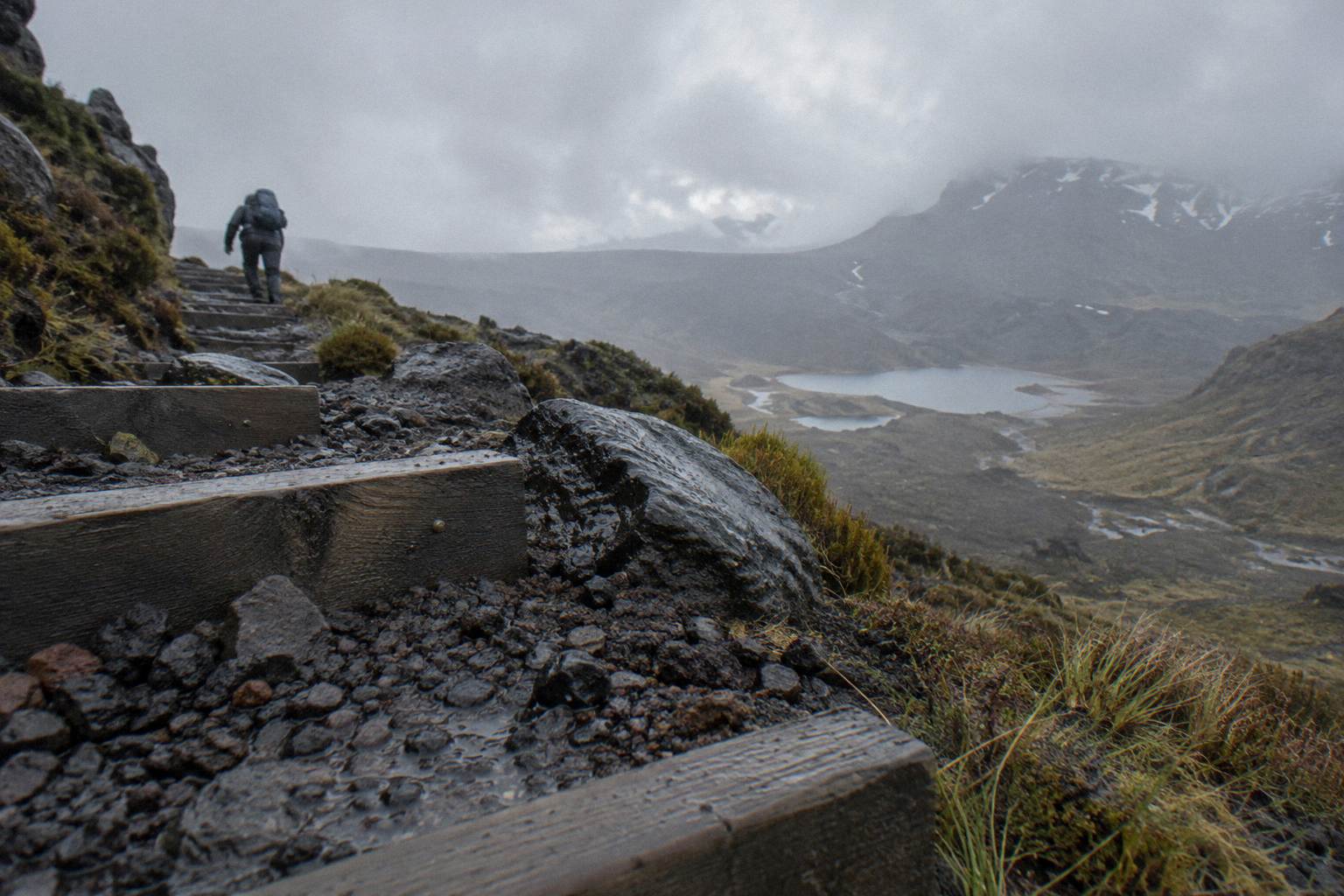
Weather multiplies all of it. DOC warns that conditions on the Crossing change fast and that wind, rain and cold can arrive at any time of year, and wet lava slab is among the slipperiest surfaces in New Zealand walking. If you want the full picture on how often the high section is written off, read the Crossing weather above the Emerald Lakes.
Winter Changes The Answer Completely
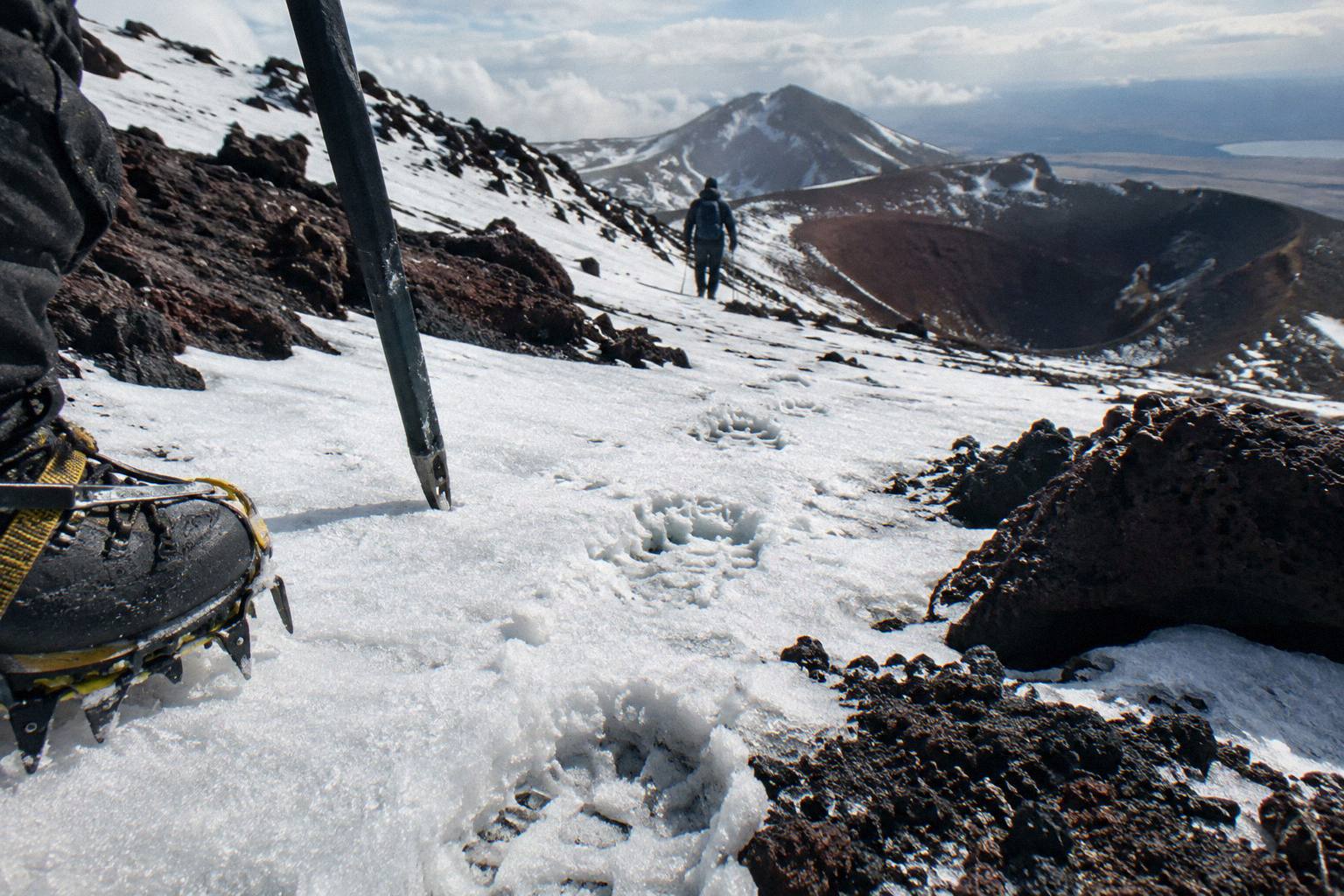
From May to October the boot question is settled: DOC calls the track an Expert route, snow, ice and sub-zero temperatures are normal, avalanche risk exists, and crampons and an ice axe become part of the kit rather than optional extras. The department is blunt that alpine skills are essential in that window and it is best to go with a guide. Winter daylight is short, 9 to 11 hours by DOC's figures, and the walking time band stretches to 9 hours, which leaves little slack for a slow party or a wrong turn.
This is where the guided operators earn their fee. The Adrift Tongariro premium guided hike, rated 4.6 across 242 reviews and from NZ$450 per person with free cancellation up to 14 days before, states that crampons and ice axes are supplied for winter conditions if required, alongside a clothing and footwear allowance. The Adrift Tongariro full-day guided Crossing, rated 4.7 across 278 reviews, carries the same winter gear arrangement. Bring your own lunch on all of them; it is not included.
Independent winter walkers are on their own with DOC's checklist, which names crampons, an ice axe, a helmet, competency in their use and avalanche equipment for unguided trips. A boot with a stiff B-rated style sole is the platform crampons actually bite into. Strapping crampons to a flexible trail runner is a known bad idea: the crampon flexes off, the binding loosens, and the walker gains false confidence while carrying a hazard on each foot.
One more winter asymmetry: shuttles mostly vanish. DOC notes that shuttle buses generally do not operate in winter, May to late October, while guided trips include transport. A winter plan built around a cheap shuttle seat often has no shuttle to catch.
Do Guides Or Shuttles Have Footwear Rules?
If you are wondering whether anyone will check your shoes, the answer for shuttles is no: no shuttle on this route inspects footwear, and none supplies gear. The guided Adrift Tongariro tours are the products that state a footwear and clothing allowance, plus winter equipment when conditions require it. The practical split is simple: shuttles sell seats, guides sell a mountain day with equipment built in. Nobody carries a spare pair of boots to lend you at the Mangatepopo start, so whatever is on your feet when the shuttle drops you off is what you will wear for the next several hours on the track.
That split matters when you book. The Ruapehu Scenic Shuttles Ketetahi park-and-ride, rated 4.8 across 670 reviews and from NZ$68 per person with free cancellation up to 24 hours before, is a one-way shuttle with parking: you leave your car at Ketetahi, ride to Mangatepopo and walk back to it. Everything on your feet for the rest of the day is everything you brought.
Coming from the south, the Tongariro Expeditions Crossing shuttle from Taupo or Turangi, rated 4.7 across 431 reviews and from NZ$75 per person, free cancellation up to 24 hours before, is also a plain shuttle, and the same logic applies: your boots are your own project. Dempsey Buses runs the return bus from National Park Village, rated 4.8 across 72 reviews and from NZ$90 per person, and the return shuttle from Ohakune, again transport only, never guided.
The guided side reads differently. The Adrift Tongariro private guided Crossing, rated 4.5 across 30 reviews, puts a guide with you for 7 to 9 hours on the mountain and carries the same stated gear approach as the group trips, crampons and ice axes for winter conditions if required. Private trips suit walkers who want pace control, and note this one is non-refundable, so the booking page's terms deserve a read before you commit.
Age floors also differ product to product, and families weighing footwear for teenagers should check each one: the full-day guided Crossing sets a minimum age of 12, the premium and private tours say to check the booking page for age limits, Dempsey Buses excludes children under 6, and DOC separately advises the track is not recommended for children under 10.
Trail Runners Versus Boots: The Honest Trade
Yes, experienced summer walkers do complete the Crossing in trail runners, and the trade is real. On the plus side you carry less weight on your feet and dry out faster when wet; on the minus side you get no ankle support, less protection from rocks, and no platform for crampons. The choice is legitimate only in the November to April window, only with a proper off-road shoe, and only with a weather forecast you would bet the day on. DOC's own grading, High fitness and an intermediate tramping track in summer, sets the ceiling of what is reasonable, and the department expects most walkers to stay well inside it.
| Footwear type | Summer verdict | Winter verdict | Best for |
|---|---|---|---|
| Stiff hiking boots | Recommended | Required with crampons | Most walkers |
| Flexible hiking shoes | Workable in calm weather | Not adequate | Light, sure-footed walkers |
| Trail runners, luggy | Acceptable trade for experts | Unsafe, no crampon platform | Fast, experienced walkers |
| Road running shoes | Not advisable | Dangerous | Nobody on this track |
| Approach shoes | Good grip, low cuff | Only with stiff soles | Rock-confident walkers |
Weight is the honest argument for shoes. Over 1196 m of climbing, a kilogram saved on the feet is felt. The honest argument back is the terrain table above: the Staircase and the Red Crater scree do not care about your training plan, and mountain rescue on this track is not triggered by fatigue, it is triggered by a rolled ankle, a slip on wet rock and, in winter, avalanche and ice. The wider set of guides lives on Tongariro Emerald Lakes Hike.
The compromise many walkers land on is a mid-height boot: cuff enough to brace the ankle, light enough not to feel like ski equipment. Whatever you choose, test it. The place to discover a hot spot is a two hour hill walk at home, not the South Crater with five hours of walking still to go. The site's clothing and footwear guide for the Emerald Lakes day works through the full layering picture.
Socks Are Half The Footwear
A great boot with a cotton sock is a blister machine. A wool or wool-blend hiking sock, worn unwashed-new nowhere, with a thin liner sock if your feet run hot, prevents most of the friction injuries that end Crossing days early. Carry one spare pair in the pack: rain, a stream crossing mistake or plain sweat makes the second pair the best-value item you carry.
Fitting And Breaking Boots In Before The Day
A new boot needs real walking before it meets Red Crater, and the fit check belongs in the afternoon rather than the morning, because feet swell on long descents the same way they swell at the end of a hiking day, so judge the fit on feet that already carry that end-of-day swell. Shop with your hiking socks on. Check a thumb's width of toe room with the heel locked back, then walk the shop's incline ramp downhill and watch whether your toes touch the front, because that movement is the Ketetahi descent in miniature, repeated for an hour or more. A fit that feels merely fine on the flat will feel very different loaded and tired on a slope.
Break in over two to three weeks of progressively longer walks, including hills and a pack loaded to what you will carry on the day. Modern boots break in faster than the old leather era, but seam and cuff stiffness still needs mileage to soften. Any sharp pressure point that survives three walks is a fit problem, not a break-in problem.
Lacing changes outcomes too. A heel-lock loop at the top keeps the foot from sliding forward on descents and saves toenails. Loosening the lower laces slightly on long climbs lets the foot flex and improves blood flow to cold toes. These are free adjustments, and on a track with this much elevation change they earn their keep.
Mistakes That Trip People Up On Footwear
The footwear mistakes that catch most people out are predictable: wearing brand new boots for the first time on the day itself, taking road shoes onto scree, choosing cotton socks in rain, carrying no spare pair, and attempting winter conditions without crampons despite DOC grading the route Expert. Each of these failures is common, avoidable, and fixable with a little preparation before you set out. Each one is avoidable with a decision made the week before, not on the track, and none of them costs much to prevent relative to the price of a lost day. A short list of the classics is worth scanning before you pack, because every one of these has ended somebody's walk to the lakes.
- Brand new boots worn straight from the box, guaranteed hot spots by the South Crater.
- Road or gym trainers chosen because the forecast looked fine, then sliding on wet lava slab.
- Cotton socks, which hold moisture and sand the skin off heels on the long descent.
- Shoes half a size small, found out only when toes hit the front for an hour downhill.
- Winter attempts in summer footwear with no crampons, against DOC's Expert route grading.
- Tight lacing all day, no heel lock, so the feet move inside the shoe anyway.
The last mistake is planning-shaped rather than gear-shaped: forgetting that the day starts with logistics. Summer parking at the road ends is capped at 4 hours from Labour weekend to 30 April, DOC recommends a shuttle, and the free DOC booking system is needed for shuttle and guided days. Owhango Adventures and Tongariro Crossing Car Park run further Ketetahi park-and-ride options, Active Outdoor Adventures and National Park Shuttles run one-way shuttles from the same end, and Kiwi Road Tours and ExperienceKart run the Auckland-based transfer and multi-day products where the Crossing leg is self-guided, so the footwear on your feet is still entirely your own.
If the whole day feels like a lot to orchestrate, shoes included, that is the case for the guided option in one sentence, and whether a guide is worth it for the Emerald Lakes section works through it in detail.
What To Do If The Forecast Turns
A poor forecast does not just change your footwear, it can cancel the day, because guided operators and shuttles run only when DOC's advisory and the forecast allow, and nobody sells you a guarantee of clear views or a dry track. Conditions are assessed each morning, and the structural advice is to check the DOC Tongariro Alpine Crossing page and alerts, the GeoNet volcanic page, whose alert levels change daily, the NIWA Red Crater forecast and the MetService mountain forecast before you set out. Rain turns lava slab and scree from hard into hazardous, which pushes every footwear decision toward the boot.
Footwear-wise, a marginal forecast argues for the boot over the shoe every time. A genuinely bad forecast argues for a different walk. DOC itself points to Taranaki Falls and Tama Lakes as alternatives inside the park when the Crossing is out of condition, and the site keeps a fuller rundown of other hikes in Tongariro National Park when the Crossing closes.
Booking terms matter here too. Most shuttles on this route offer free cancellation up to 24 hours before, while the Adrift premium guided hike window runs to 14 days and the Adrift private guided Crossing is non-refundable. The booking page shows the cancellation terms for whichever product you choose, and reading them before the weather turns is the cheap form of insurance.
Common Questions About Tongariro Crossing Footwear
Do I Need Hiking Boots For The Tongariro Crossing?
Boots are strongly recommended year round and effectively required from May to October, when DOC grades the track an Expert route with snow and ice. In summer a luggy trail shoe can work for experienced walkers, but the scree above and below Red Crater and the long Ketetahi descent reward ankle support and a stiff sole.
Can I Wear Sneakers Or Running Shoes On The Crossing?
Road running shoes are not advisable: they lack grip, rock protection and ankle support on lava slab and scree. Proper off-road trail runners are a defensible summer choice for experienced walkers in good weather, but they cannot take crampons and offer no support if the weather turns.
Do The Guided Tours Provide Boots?
The three Adrift Tongariro guided tours state a clothing and footwear allowance plus crampons and ice axes for winter conditions if required. Lunch is not included, so bring your own. Shuttles supply no gear at all; they sell transport only.
Do I Need Crampons In Winter?
Yes. DOC lists crampons, an ice axe, a helmet, competency in their use and avalanche equipment as winter essentials for independent trips, and describes the May to October route as Expert level where it is best to go with a guide. Guided Adrift trips supply crampons and ice axes when conditions require them.
How Broken In Should My Boots Be?
Two to three weeks of progressively longer walks, including hills with a loaded pack, is a sensible minimum. Shop in the afternoon with hiking socks on, leave a thumb's width of toe room, and use a heel-lock lacing for the descents to protect your toenails.
Does Anyone Check My Footwear Before I Start?
No shuttle or operator inspects shoes at the start. The footwear decision is yours alone on every shuttle product, from the Ketetahi park-and-rides to the round trips from National Park Village, Taupo, Turangi and Ohakune. Guides will, reasonably, advise against unsuitable footwear on their trips.