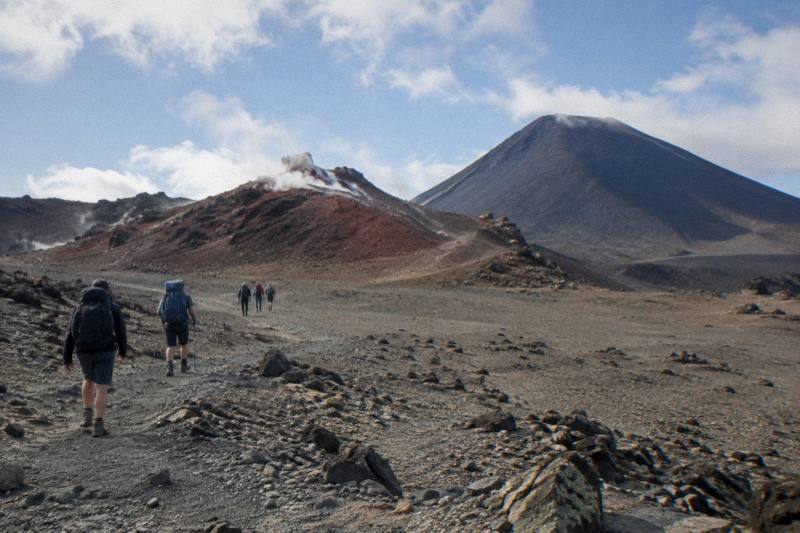
How To Dress For The Tongariro Crossing?
A practical clothing guide for the Tongariro Alpine Crossing: layers, footwear, weather, and what changes between the summer track and the winter expert route.
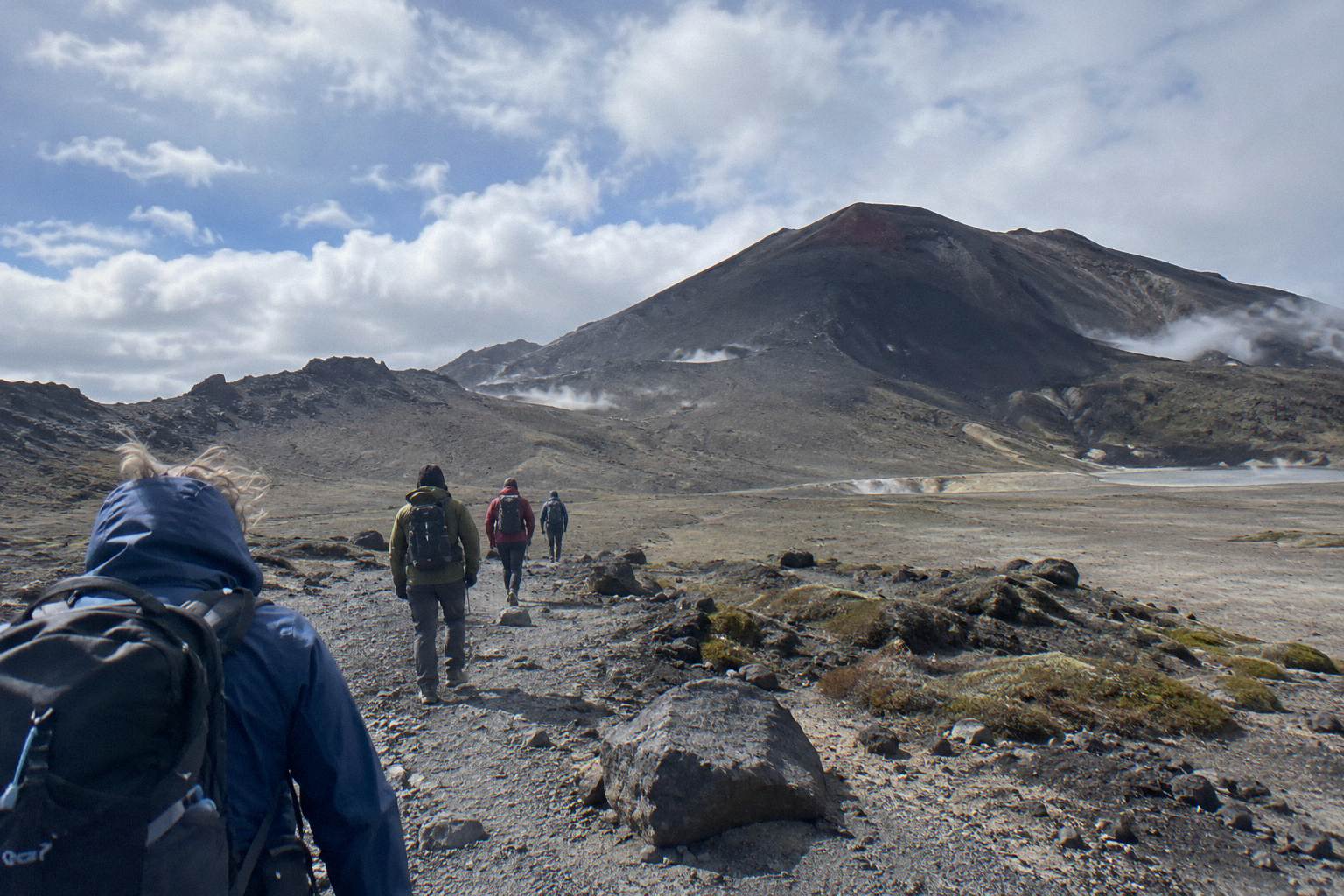
Dress for the Tongariro Alpine Crossing as you would for a small mountain, because that is what it is. The track runs 20.2 km one way with an elevation change of plus and minus 1196 m, and its high point, Red Crater, sits at 1886 m. DOC classes the fitness requirement as High even in summer. On the same day you can sweat through the Devil's Staircase in a t-shirt and shiver on a wind-scoured crater rim ten minutes later, so the clothing plan that works is the one you can take apart and put back together on the move.
This page walks through the layering system, the footwear question, the season-by-season differences, and the winter gear that only a guided trip supplies. Along the way it names the actual tours and shuttles you can book for the day, because how you get to the start shapes what you carry. The Adrift Tongariro premium guided hike, the Adrift Tongariro full-day guided Crossing, the Adrift Tongariro private guided Crossing, the Tongariro Crossing Shuttles round trip from National Park Village, the Ruapehu Scenic Shuttles Ketetahi park-and-ride and the Tongariro Expeditions Crossing shuttle from Taupo or Turangi all serve this track, and each one changes your start point, your pack weight or both.
Dress in a three-layer system: a moisture-wicking base layer against your skin, an insulating mid-layer you can add at Red Crater, and a windproof and waterproof shell you can shed on the climb. Wear broken-in boots with grip, because the track crosses lava fields, scree and boardwalk, and carry everything in a day pack, since DOC records 7 to 8 hours of walking from November to April and 9 hours from May to October.
The core principle is that you will generate serious heat on the climbs and lose it fast on the ridges. The track's shape makes this predictable. You leave Mangatepopo at about 1120 m, grind up the Devil's Staircase, cross South Crater, then climb again to Red Crater at 1886 m before the long descent past the Emerald Lakes to the Ketetahi finish at roughly 760 m. Every one of those transitions changes the wind, the temperature and how hard your body is working. A single heavy jacket handles none of them well; three light layers handle all of them.
Start with the base layer. Cotton is the failure point: it holds sweat, and sweat-soaked cotton near an alpine summit chills you the moment you stop moving. A merino or synthetic base, top and legs, moves moisture outward instead. Merino has the advantage of staying tolerable across a long day and resisting odor, which matters on a shuttle ride back with a dozen other walkers.
The mid-layer is your thermostat. A lightweight fleece or an insulated jacket lives in the pack during the climbs and comes out the moment you reach the crater rims, where DOC's own track notes describe an alpine environment rather than a valley walk. The final layer is the shell. Wind is the constant on this track, and a shower or a sleet burst can arrive from the west with very little ceremony. A hooded waterproof and windproof jacket, sized to go over everything else, is the single most useful garment on the Crossing.
Your choice of trip shapes the clothing plan in a second way: time. A guided day, such as the Adrift Tongariro premium guided hike, from NZ$450 per person, books out 8 to 9 hours door to door including the transfer, while a self-guided day on the Tongariro Crossing Shuttles round trip from National Park Village, from NZ$75 per person with free cancellation up to 24 hours before, runs to roughly 8 hours of shuttle and hiking window. Either way you are out for most of the daylight, and the longer you are out, the more weather you will meet. Pack for the day you might get, not the day you hope for.
Why Mountain Weather Decides Your Wardrobe?
The Crossing sits in an alpine zone where DOC explicitly grades the track as an expert route from May to October, with alpine skills described as essential and a guide recommended. Even in the November to April season, wind, rain and sometimes snow can strike the section above the Emerald Lakes in any month. Your clothing has to cope with all four seasons inside one walk, which is exactly why layering beats any single outfit.
DOC's track page, the authority on conditions and alerts, is blunt about the winter half of the year: snow, ice, avalanche risk and sub-zero temperatures define the route from May to October, and the department's advice is to go with a guide. That page, at the official DOC Tongariro Alpine Crossing page, also carries the day's track alerts, so it is the first stop before you finalize what goes in the pack. Operators are bound by DOC rules not to run on hazardous-weather-warning days, so a booked trip is not a guarantee the walk goes ahead; conditions allowing is the honest phrase.
The volcanic setting adds a twist most valley walks do not have. This is an active volcanic field, and DOC maintains a dedicated volcanic-risk briefing for the park at its volcanic risk in Tongariro National Park page. None of that changes your shirt choice, but it reinforces the rule that clothing here is safety equipment, not comfort equipment.
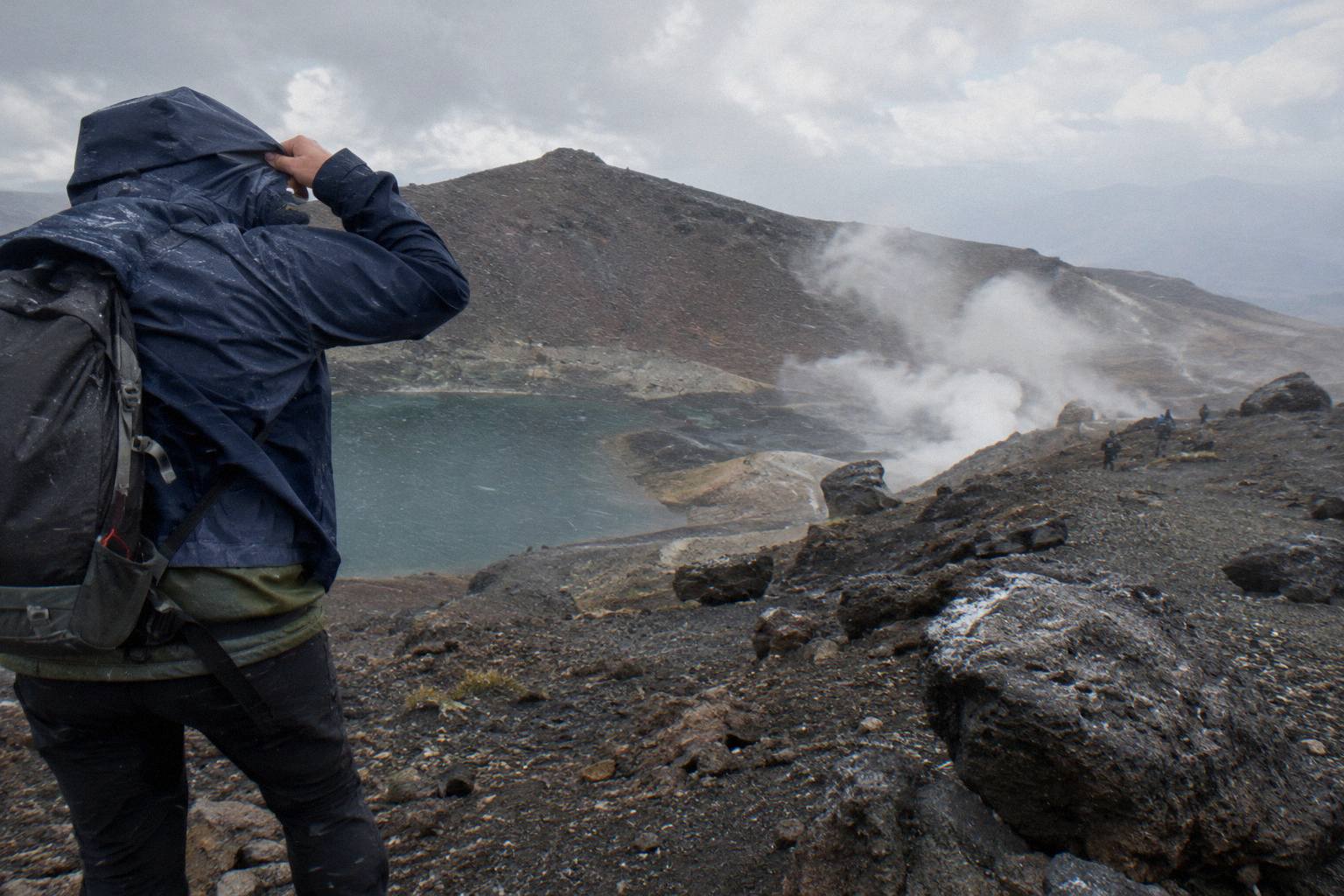
Wind is the specific villain. The section between South Crater and Red Crater funnels westerlies, and the descent to the Emerald Lakes, which DOC describes as a steep scree slope, exposes you for a long stretch. A shell with a proper hood, gloves you can actually grip with, and a warm hat cover most of the wind problem. Sun is the quieter villain: the volcanic rock reflects light upward, and UV is stronger at 1886 m than at the car park. Sunglasses, sunscreen and a brimmed hat that fits under the shell hood all belong in the pack.
Deciding between a guided day and a self-guided shuttle day is partly a clothing decision, because a guide carries judgment you cannot pack. The comparison piece on Tongariro Emerald Lakes Hike home ground, and the deeper dive in whether a guide is worth it for the Emerald Lakes section, cover the trade-offs in detail. The short version for dressing: on a guided trip someone experienced reads the sky and the track with you; on a shuttle day you make every layer call yourself.
How To Layer For The Devil's Staircase And Red Crater?
Wear the least you can comfortably climb in, and carry the rest. On the Staircase and the climb to Red Crater your body produces more heat than the air steals, so most walkers do the ascent in a base layer plus sun protection, with the fleece and shell in the pack. At the summit and on the scree descent the heat engine stops, the wind picks up, and everything comes out within minutes.
The Staircase is where clothing mistakes show up first. It is a sustained, stepped climb, and walkers who start it in a heavy jacket are in a soaked base layer by the top. The fix is discipline at the bottom: unzip, remove, and pack before you are wet. If you reach the South Crater floor damp, take the flat minutes there to cool down and dry out, because the next climb starts immediately.
Red Crater itself demands the full kit. At 1886 m it is the highest point of the day, it is almost always windy, and the track along its rim has no shelter of any kind. The minutes you spend there photographing the crater and the Emerald Lakes below are exactly the minutes your body cools fastest, so put the insulation on before you stop, not after you start shivering. Gloves matter more here than people expect; the rock is abrasive and cold, and the scree descent that follows uses your hands more than a normal track does.
Layering is also where the guided products differ from shuttles in a practical sense. Shuttles are transport, not guidance, and a shuttle ride says nothing about gear. The Adrift Tongariro full-day guided Crossing, rated 4.7 across 278 reviews, and the Adrift Tongariro private guided Crossing, rated 4.5 across 30 reviews, both depart from National Park Village at 53 Carroll Street, and both include a clothing and footwear allowance plus crampons and ice axes for winter conditions if required. Lunch is not included, so bring your own either way. If clothing decisions worry you, the question of what to wear hiking to the Emerald Lakes extends this section with a full item-by-item breakdown.
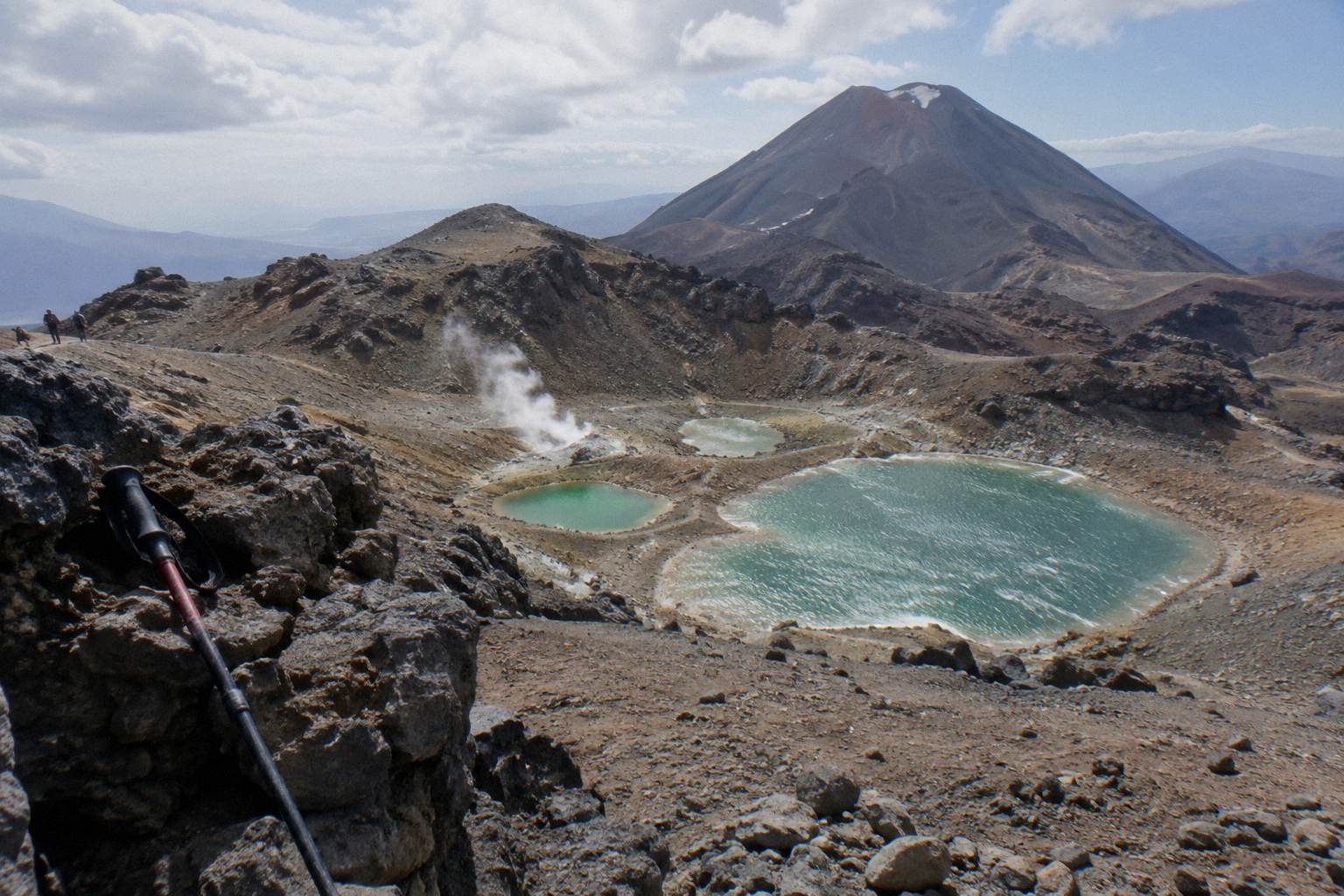
One cultural note that belongs in any clothing-and-conduct discussion: Kaumatua Te Ngaehe Wanikau asks visitors to respect the maunga tapu by not touching or entering any of the waterways, including the alpine lakes. That means no swimming and no wading at the Emerald Lakes regardless of how hot the descent gets, so do not plan on cooling off in the lakes as a substitute for dressing sensibly.
What Footwear Works On The Crossing?
Wear broken-in hiking boots with a stiff sole and aggressive tread. The track crosses lava rock, sand, scree, boardwalk and, outside the summer peak, ice, and DOC grades the walking itself as a tramping track rather than a footpath. Trail shoes survive in high summer for experienced walkers, but boots protect ankles on the scree below Red Crater and on the long Ketetahi descent, which is where most tired walkers turn an ankle.
The surface variety is the argument. The first hours are gentle boardwalk and packed track, which fools people into under-dressing their feet. Then comes the Staircase's rock steps, South Crater's sand, the Red Crater ridge and the scree drop to the Emerald Lakes, and finally the long, knee-testing descent through the Ketetahi section. Each of those punishes a different weakness: soft soles bruise on rock, shallow tread slides on scree, and low cuffs leave ankles exposed exactly when legs are tired.
Socks are half the footwear system. A merino or synthetic hiking sock, carried as a spare pair, prevents the blisters that ruin the back half of the day, and a damp pair swapped at South Crater is one of the cheapest comfort upgrades available. Gaiters help on the scree, where loose stones pour into shoe collars, though they are far from mandatory in summer.
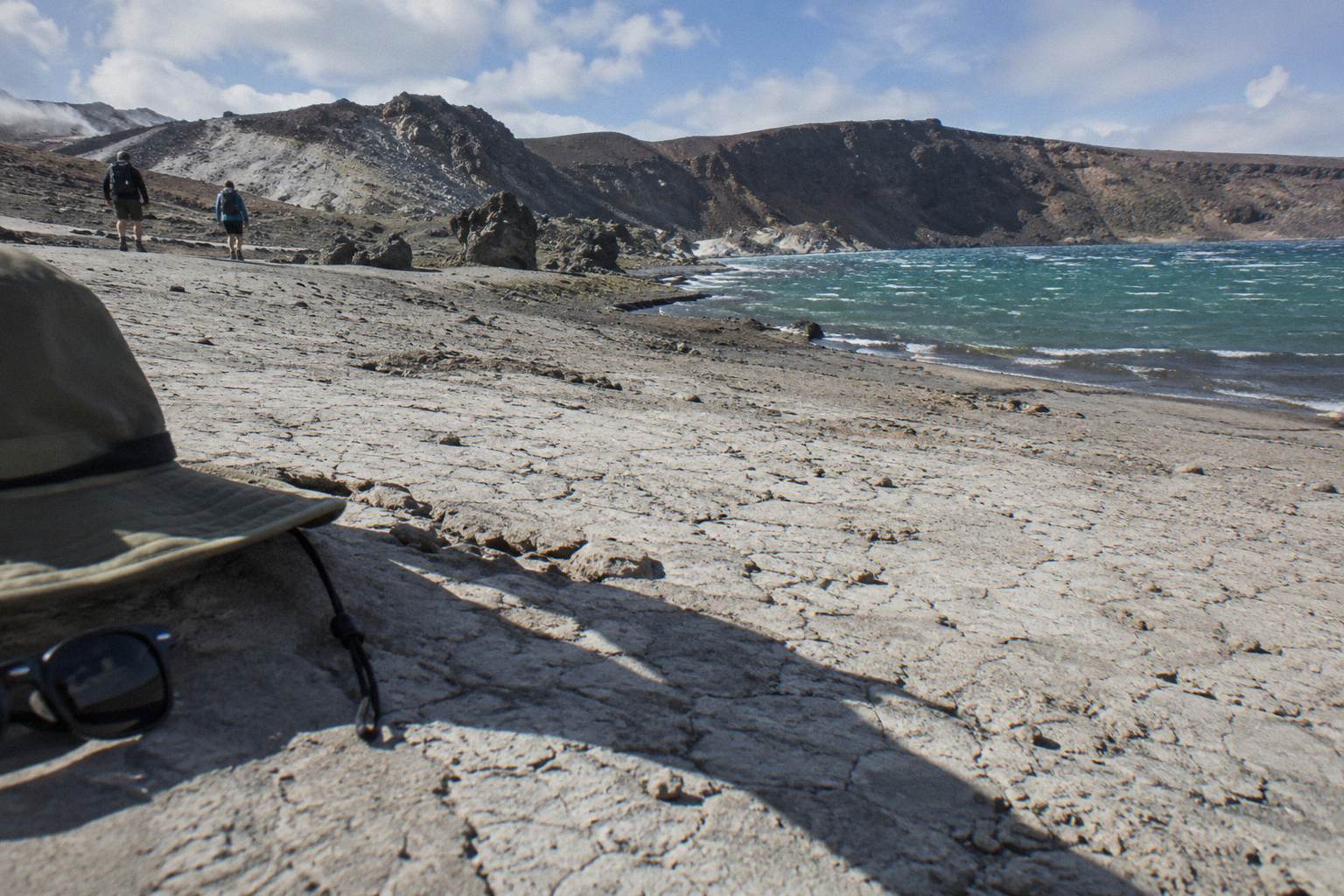
Winter changes the footwear answer completely. From May to October the track becomes an expert route, and DOC's own winter essentials for independent trips include crampons, an ice axe, a helmet and avalanche gear, plus the competency to use them. That is a genuine mountaineering kit, not a shopping afterthought. This is the strongest argument for a guided winter day: the Adrift Tongariro guided tours supply crampons and ice axes for winter conditions if required, so you are not buying a full alpine kit for one walk. The boots question comes up so often it has its own article, whether hiking boots are needed for the Tongariro Crossing, which drills into sole stiffness and ankle height.
What Should You Wear In Each Season?
Dress in layers for the November to April season: a base layer, one insulation layer, and a wind and waterproof shell, plus sun protection, gloves, and a hat even when the forecast looks kind. From May to October the track becomes an expert winter route where DOC recommends a guide, requiring full alpine insulation, waterproof shell trousers, and the crampons and ice axe that only guided trips supply here, with spring and autumn deserving the winter list on marginal days.
| Season | Typical conditions on track | Clothing approach | Extra considerations |
|---|---|---|---|
| November to April | 7 to 8 hr walking, high UV, possible wind and rain | Three-layer system, sun hat, spare socks | Any month can bring snow to the high section |
| May to October | 9 hr walking, snow, ice, sub-zero temperatures, avalanche risk | Full alpine kit: insulated layers, shell trousers, boots, crampons, ice axe | DOC grades it an expert route and recommends a guide |
| Spring and autumn margins | Rapid swings between seasons inside one day | Pack the winter extras on any doubtful forecast | Shuttle services generally do not run through winter |
Two scheduling realities sit behind that table. First, DOC's booking system for the Crossing is free and recommended, and shuttle and guided products tie into it; the details are on the DOC booking system page. Second, parking at the road ends is restricted to a 4 hour maximum from Labour weekend in late October through 30 April, which is DOC's own nudge toward booking a shuttle, since the walk itself takes at least 7 hours in season. The deeper planning question of the best month to hike to the Emerald Lakes pairs with this table if your dates are flexible.
The seasonal angle also decides which products are even running. DOC notes that shuttle buses generally do not operate through the winter months while guided trips include transport, so a winter clothing list and a winter booking list point the same direction: a guided day. In summer, the shuttle field opens up. The Ruapehu Scenic Shuttles Ketetahi park-and-ride, from NZ$68 per person, rated 4.8 across 670 reviews with free cancellation up to 24 hours before, is a one-way arrangement: you park at Ketetahi, ride to Mangatepopo, and walk the Crossing back to your own car, which means your clothing and spare kit stays in the vehicle at the finish.
Coming from the Taupo or Turangi side, the Tongariro Expeditions Crossing shuttle from Taupo or Turangi, from NZ$75 per person, rated 4.7 across 431 reviews, runs an 8 to 10 hour day door to door, and a day that long wants the full layering kit regardless of the forecast you saw at breakfast. Note that a shuttle is never a guided walk; the clothing decisions on a shuttle day are entirely yours.
What Clothing Mistakes Trip People Up On The Day?
The recurring errors are cotton base layers, one heavy jacket instead of three light layers, brand-new boots worn straight out of the box, no gloves or hat for the crater rims, and trusting a valley forecast for a summit that sits at 1886 m. Each mistake is cheap to avoid and expensive to discover at Red Crater, where there is no shelter, no retreat short of the track itself, and hours of walking still ahead.
New boots are the classic. The Crossing is a poor place to break in stiff leather, and the Ketetahi descent, long and steep, is where unbroken boots and unsuitable socks combine into blisters that turn a 7 hour walk into a 10 hour ordeal. Wear the boots in for a few weeks of ordinary walking first, and carry a spare pair of socks and blister plasters regardless.
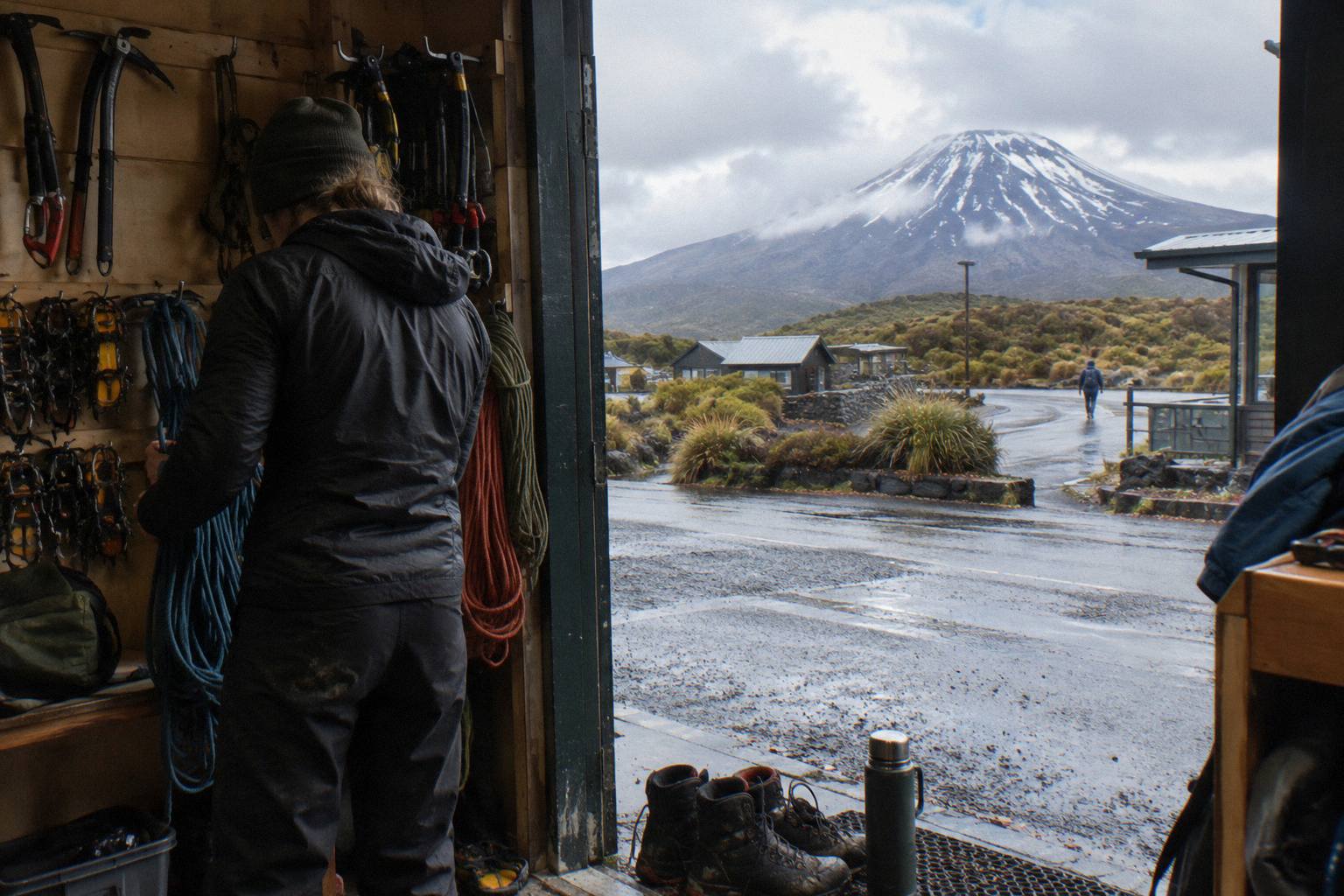
Forecast abuse is quieter but just as costly. Taupo or National Park Village can be calm and mild while the ridge above South Crater is being scoured by wind, because the high point is nearly 800 m above the Mangatepopo start. Check the mountain-specific forecasts rather than the town forecast, and treat any forecast older than the morning of the walk as background noise. Guided operators make these calls professionally, which is one reason the question of whether a guide is worth it for the Emerald Lakes section keeps coming up.
The final mistake is packing for the photos rather than the walk. Shorts and a t-shirt photograph well at the Emerald Lakes and are miserable in the wind above them. Plan the outfit around the worst two hours of the day, not the best ten minutes, and the best ten minutes tend to look after themselves.
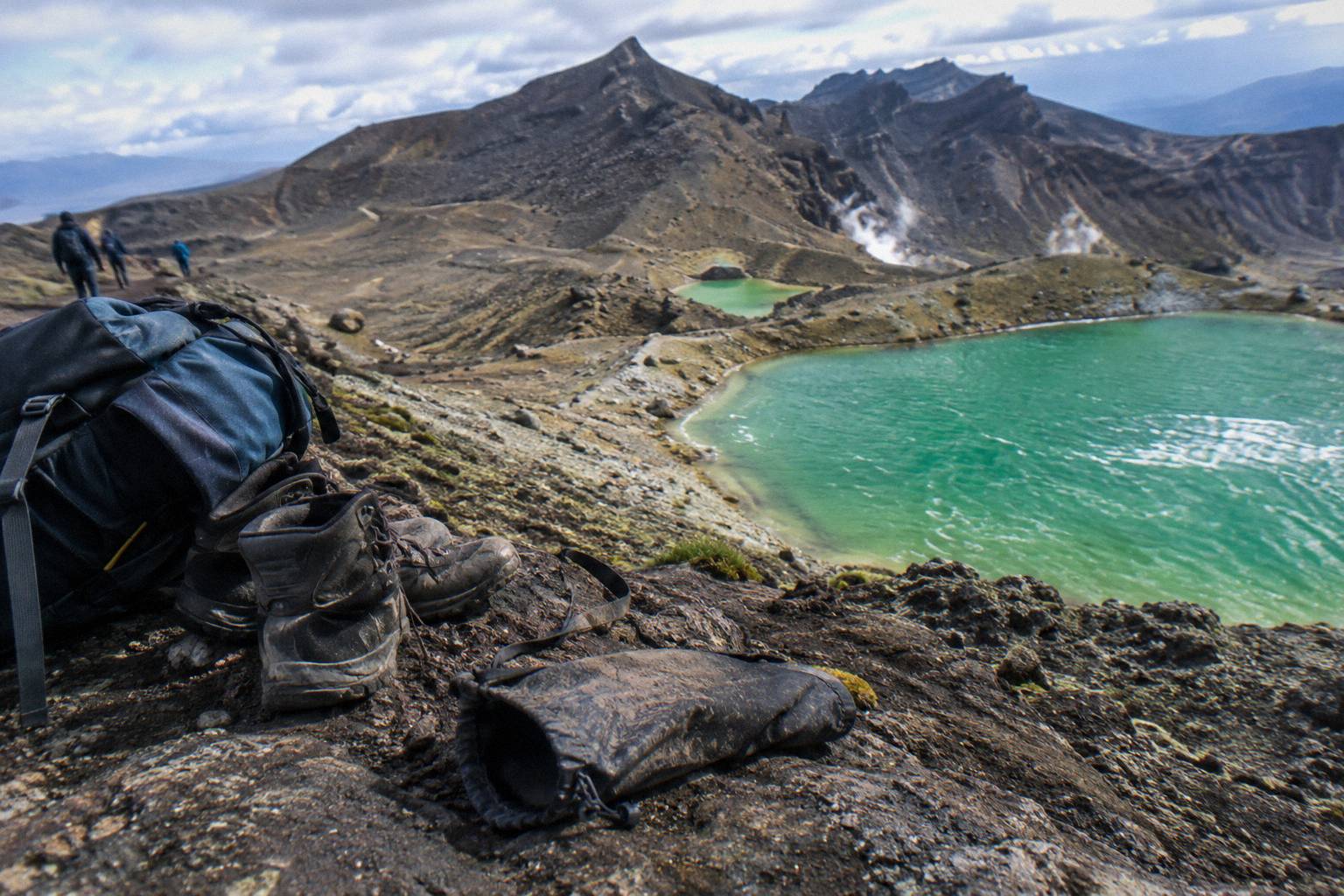
A packing checklist, in rough order of importance: base layer top and legs, fleece or insulated mid-layer, hooded waterproof and windproof shell, warm hat, gloves, sunglasses, sunscreen, broken-in boots, merino socks plus a spare, blister kit, water, food and your own lunch even on guided days, and a small dry bag for layers in rain. Add gaiters for scree comfort and, in the winter half of the year, treat everything beyond this list as alpine equipment that belongs with a guide.
For readers weighing the two main ways to book the day, the Adrift Tongariro premium guided hike, from NZ$450 per person with free cancellation up to 14 days before, rated 4.6 across 242 reviews, puts a guide's clothing and conditions judgment beside you, and check availability if that day matches your plan. The self-guided alternative via the Tongariro Crossing Shuttles round trip, from NZ$75 per person, rated 4.7 across 890 reviews as the most reviewed tour here, leaves the layering calls entirely to you, and the Dempsey Buses return bus from National Park Village, from NZ$90 per person, rated 4.8 across 72 reviews, is a third option from the same village. Whichever you choose, the wardrobe advice above does not change; only who carries the responsibility for reading the sky does.
Common Questions About Dressing For The Tongariro Crossing
How To Dress For The Tongariro Crossing?
Use a three-layer system: a merino or synthetic base layer, a packable insulation layer, and a hooded wind and waterproof shell, worn with broken-in hiking boots, gloves, a warm hat and sun protection. DOC records 7 to 8 hours of walking from November to April and 9 hours from May to October, so pack for every condition the day could produce rather than the conditions at the car park.
Do You Need Hiking Boots For The Tongariro Crossing?
Boots with a stiff sole and good tread are strongly recommended. The track crosses lava rock, sand, scree and a long steep descent, and DOC grades it as a tramping track. Experienced walkers manage in trail shoes in high summer, but boots protect ankles on the scree below Red Crater and on the Ketetahi descent where most fatigue-related injuries happen.
What Should You Wear On The Tongariro Crossing In Winter?
From May to October DOC grades the track an expert route with snow, ice, avalanche risk and sub-zero temperatures, and recommends going with a guide. Independent winter walkers need crampons, an ice axe, a helmet and avalanche gear plus full alpine insulation. The Adrift Tongariro guided tours supply crampons and ice axes for winter conditions if required, which is the practical route for most visitors.
Is The Tongariro Crossing Cold At The Top?
Yes, frequently. Red Crater sits at 1886 m, roughly 800 m above the Mangatepopo start, with no shelter on its rim and near-constant wind. Even on a warm valley day the crater rim can be cold enough to want every layer you carried, which is precisely why the layering system exists.
Can You Swim In The Emerald Lakes If You Get Hot?
No. Kaumatua Te Ngaehe Wanikau asks visitors to respect the maunga tapu by not touching or entering any of the waterways, including the alpine lakes. Dress and hydrate for the heat of the descent instead of planning a swim.
Does A Guided Tour Provide Clothing?
The Adrift Tongariro guided tours include a clothing and footwear allowance and supply crampons and ice axes for winter conditions if required, with lunch excluded, so bring your own. Shuttles provide transport only; on a shuttle day every clothing and footwear decision, and every item, is yours to carry.