How Long Does It Take To Walk The Tongariro Crossing?
The DOC walking times for the Tongariro Alpine Crossing, what changes them, and how booked tour and shuttle day lengths differ from hours on the track.
DOC gives the full Tongariro Alpine Crossing 7 to 8 hours of walking between November and April, and 9 hours from May to October, for the 20.2 km one-way track with 1196 m of elevation change. The answer is a band, not a single figure, because the track climbs to Red Crater at 1886 m, drops past the Emerald Lakes and finishes on a long downhill to Ketetahi Road. Most of the trips you can book, from the Tongariro Crossing Shuttles round trip from National Park Village to the Adrift Tongariro premium guided hike, build a full day around those walking hours, and the two numbers are easy to confuse.
The Department of Conservation publishes the official answer: 7 to 8 hours of walking from November to April, and 9 hours from May to October, covering 20.2 km one way with an elevation change of plus and minus 1196 m. That is pure walking time at what DOC rates a High fitness level, and it assumes you keep moving rather than parking yourself at the Emerald Lakes for an hour. The track's highest point is Red Crater at 1886 m. Winter runs longer because snow and ice slow every section above the saddle, and DOC classes the route as Expert terrain in those months, alpine skills essential, with a guide recommended. The track and time figures come straight from the DOC page, and every other number floating around the internet is a variation on it.
The 7 to 8 hour band surprises people who compare the Crossing to an ordinary day hike. Twenty kilometres sounds like four hours on a flat trail, and on flat ground it would be. Here the track rises from the Mangatepopo end at 1120 m to Red Crater at 1886 m, the high point, then falls all the way to about 760 m at Ketetahi Road. That elevation profile, with a long climb and a similar amount of descent, much of it on scree and stone steps, is what stretches the hours.
The band also assumes an average walker with average packs. Faster parties finish in six hours in good summer conditions. Families with children, photographers waiting for cloud to lift off the lakes, and anyone walking into a headwind above the South Crater can take nine in November. If your plan needs everyone to be off the mountain by a fixed shuttle collection, plan on the top of the band, not the bottom.
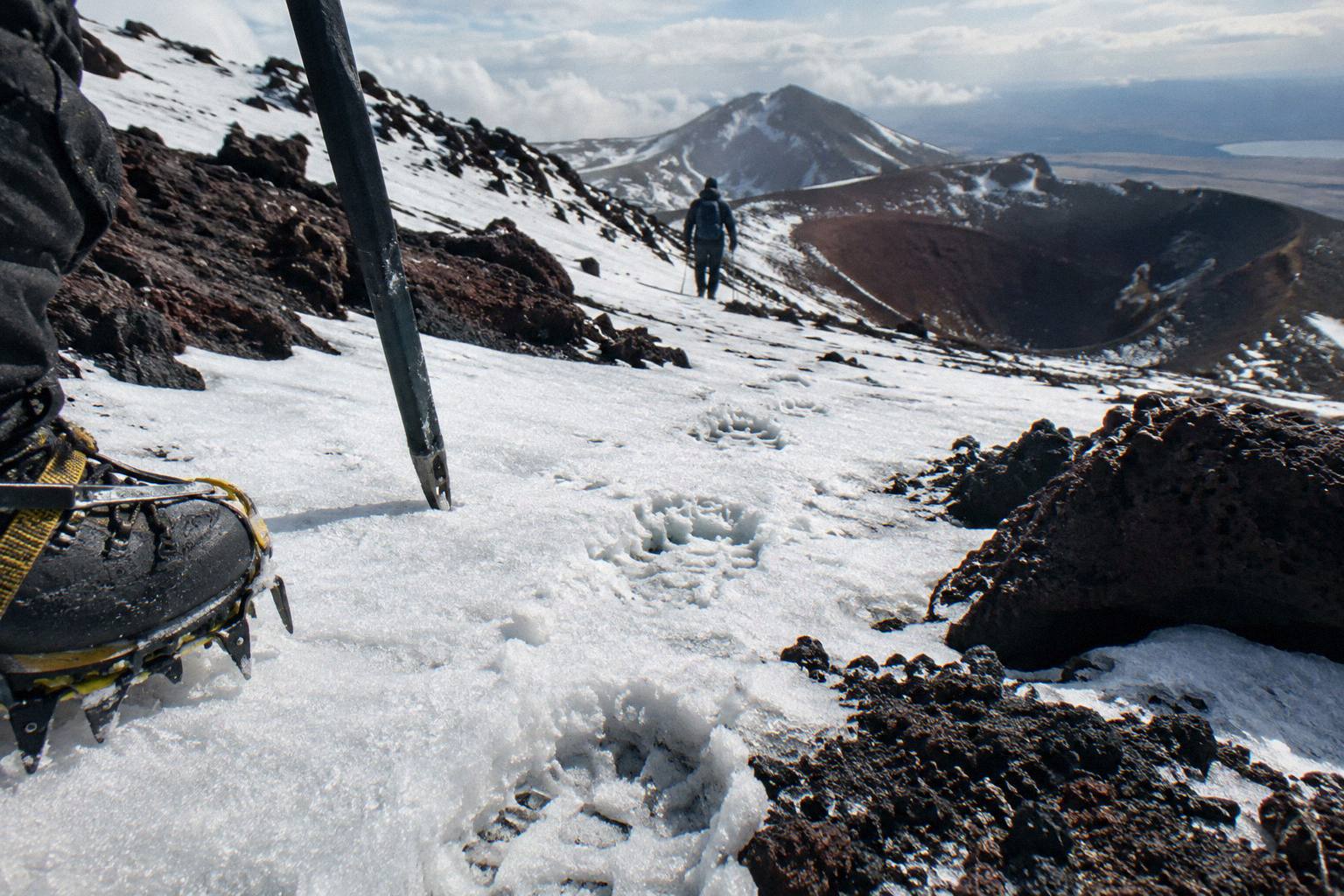
A practical note on the calendar: the seasons matter more than the date on your booking. A fine April day walks like summer, at 7 to 8 hours. A June day with fresh snow on the Devil's Staircase is the 9 hour figure plus genuine risk, which is why DOC recommends a guide for the May to October window and why the three Adrift Tongariro guided tours carry crampons and ice axes for winter conditions when they are needed.
How The Time Breaks Down Section By Section
A common way to split the day is roughly two hours to the South Crater, a further hour and a half over Red Crater and down to the Emerald Lakes, and three to four hours from the lakes down to the Ketetahi finish. Those splits follow the terrain: a steady climb, a steep and exposed high section, then a long descent through changing country. No official source publishes per-section times, so treat these as planning aids built around the DOC total rather than measured data, and keep the overall 7 to 8 hour summer band as the anchor.
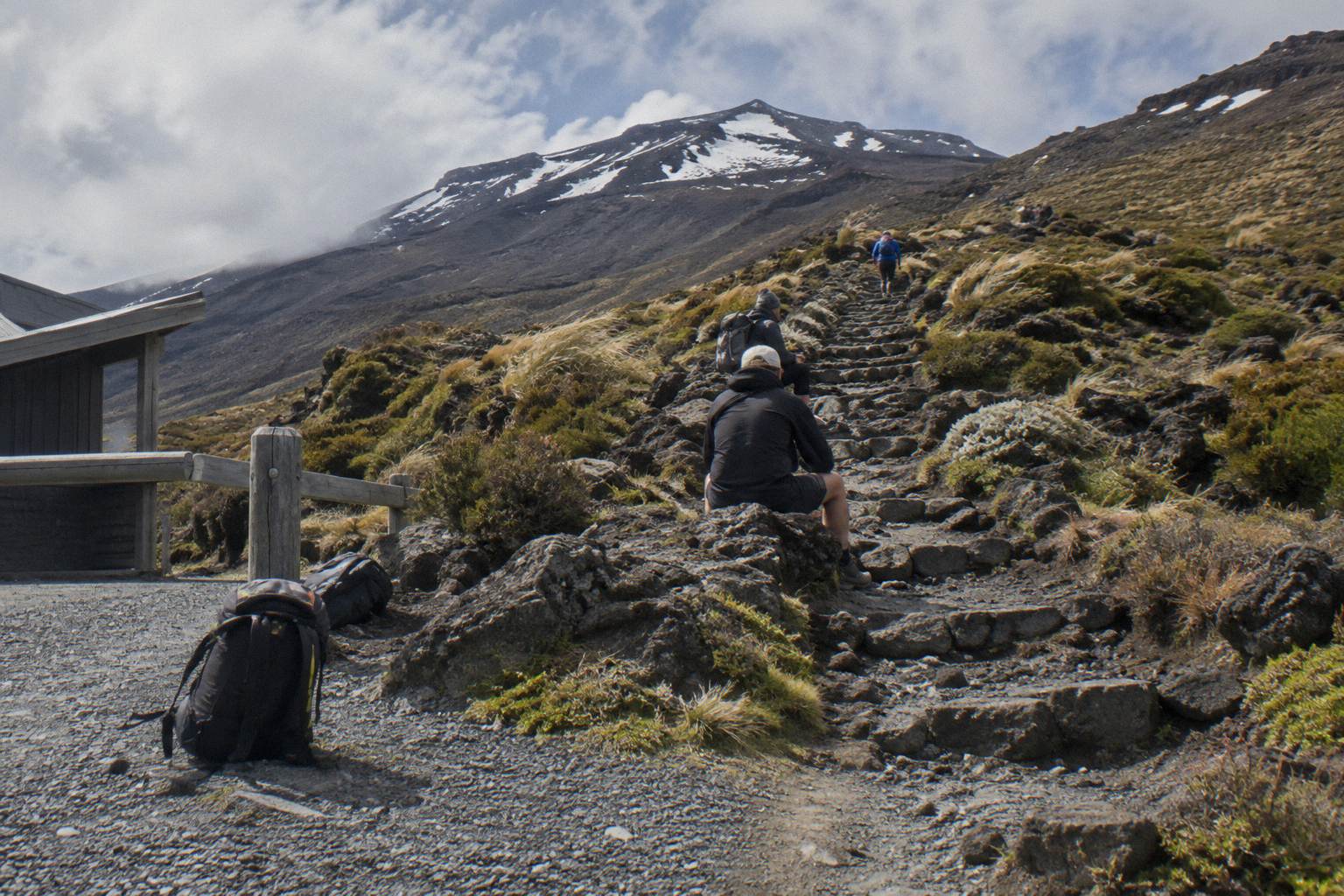
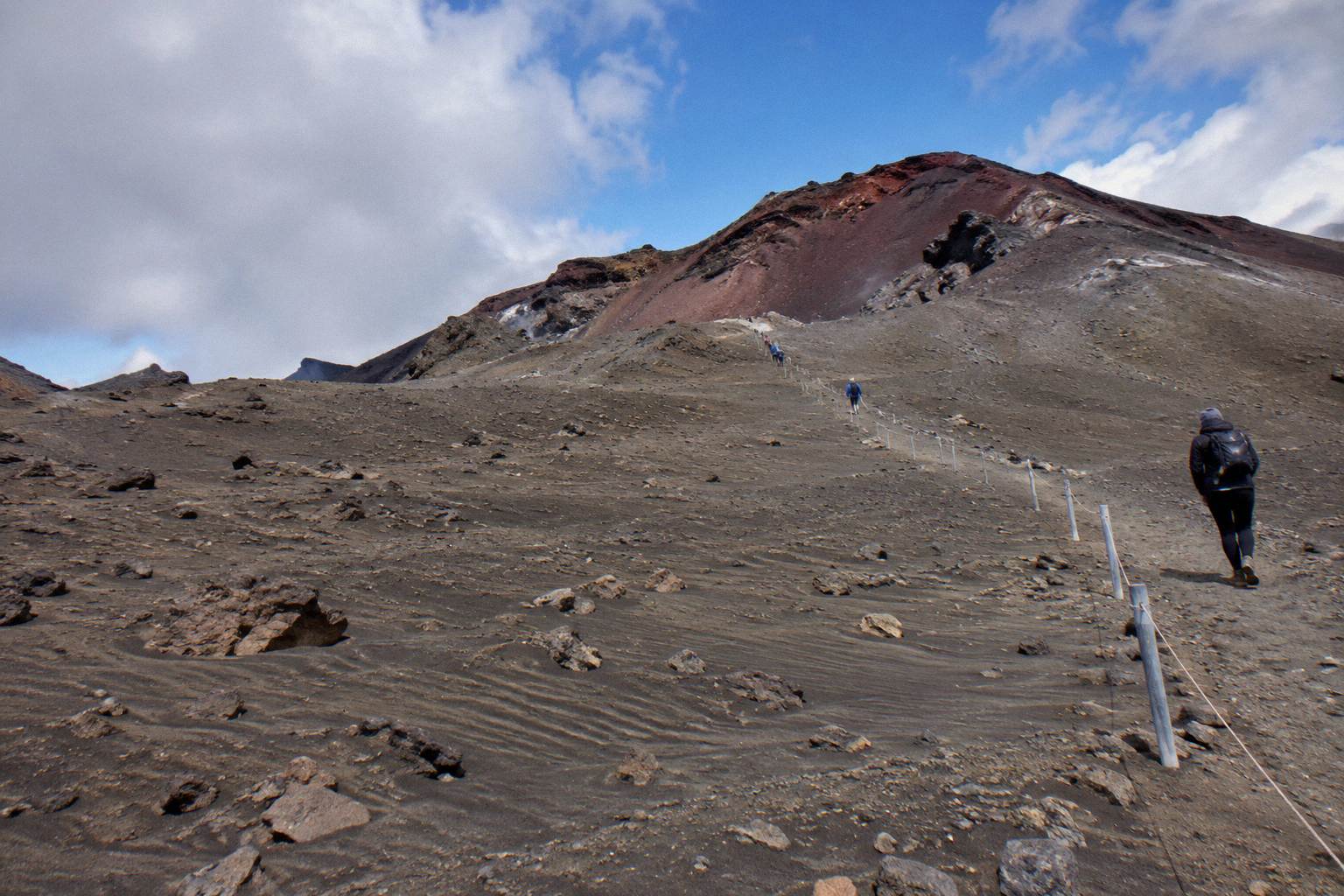
The first section, from the Mangatepopo start up the Devil's Staircase to the South Crater, is where the walk earns its High fitness rating. It is stepped, relentless and often crowded early in the day. The Devil's Staircase climb to the Emerald Lakes explains this ground in detail, but timing-wise, expect it to eat the first two hours even for strong walkers.
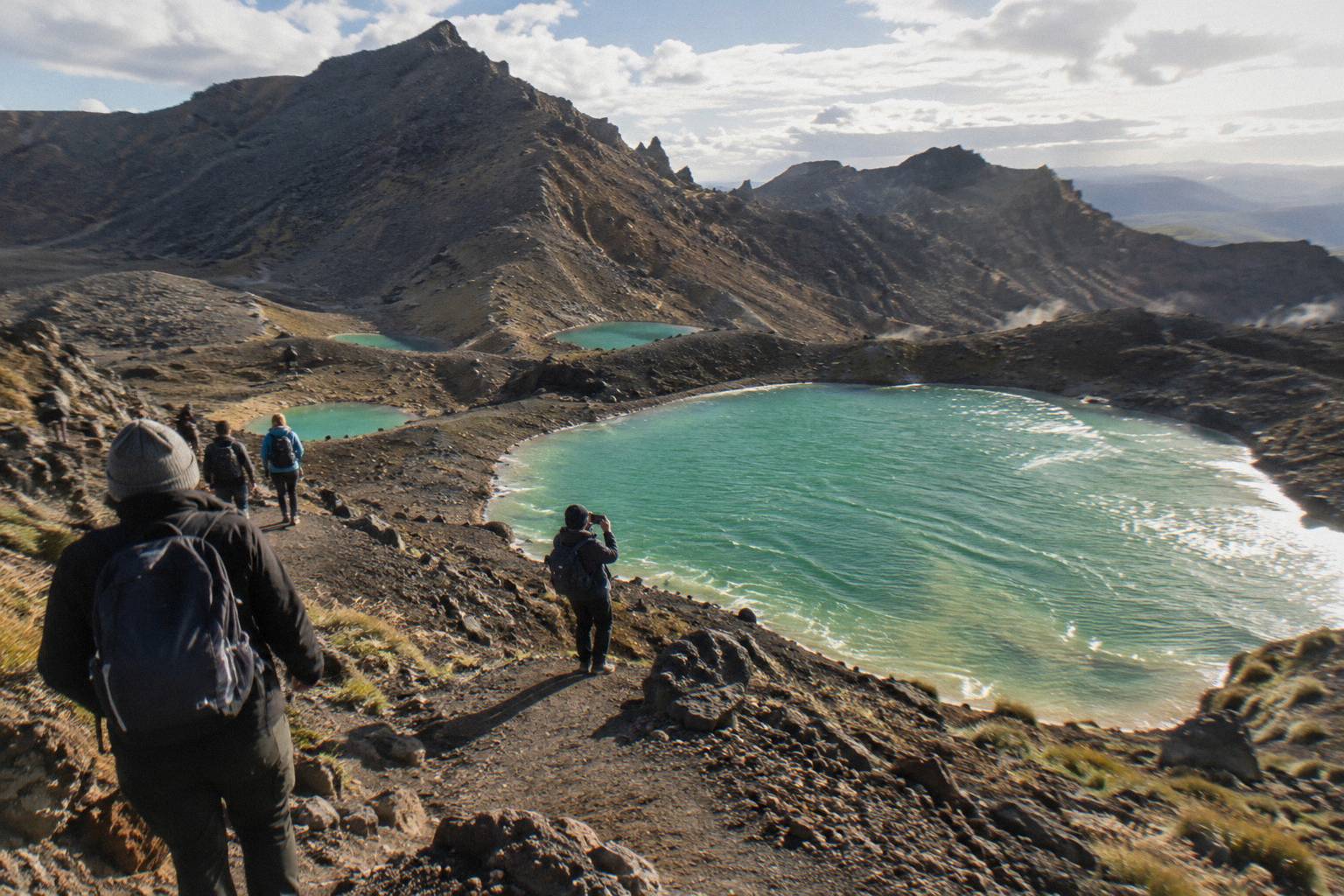
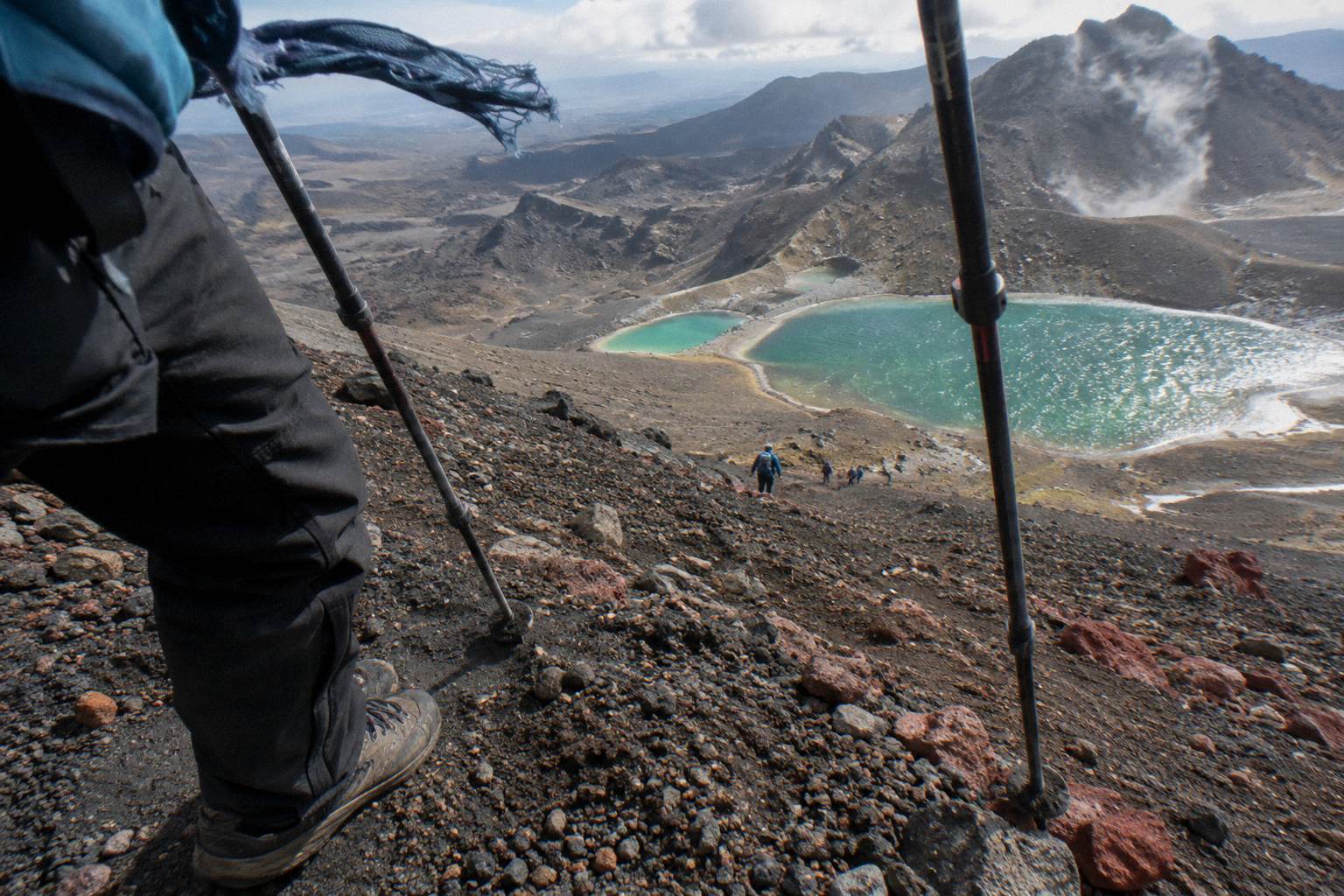
The middle section is short in distance and slow underfoot. The crossing of South Crater, the climb to Red Crater and the steep scree descent DOC describes as the route down to the vivid Nga Rotopounamu, the Emerald Lakes, covers few kilometres but demands care. One hour to ninety minutes is typical, longer when the scorie is loose or the ridge is windy. This is also where everyone stops, because the lakes are the reason most walkers came, so add your photo and lunch stop to the clock here rather than pretending you will not take one.
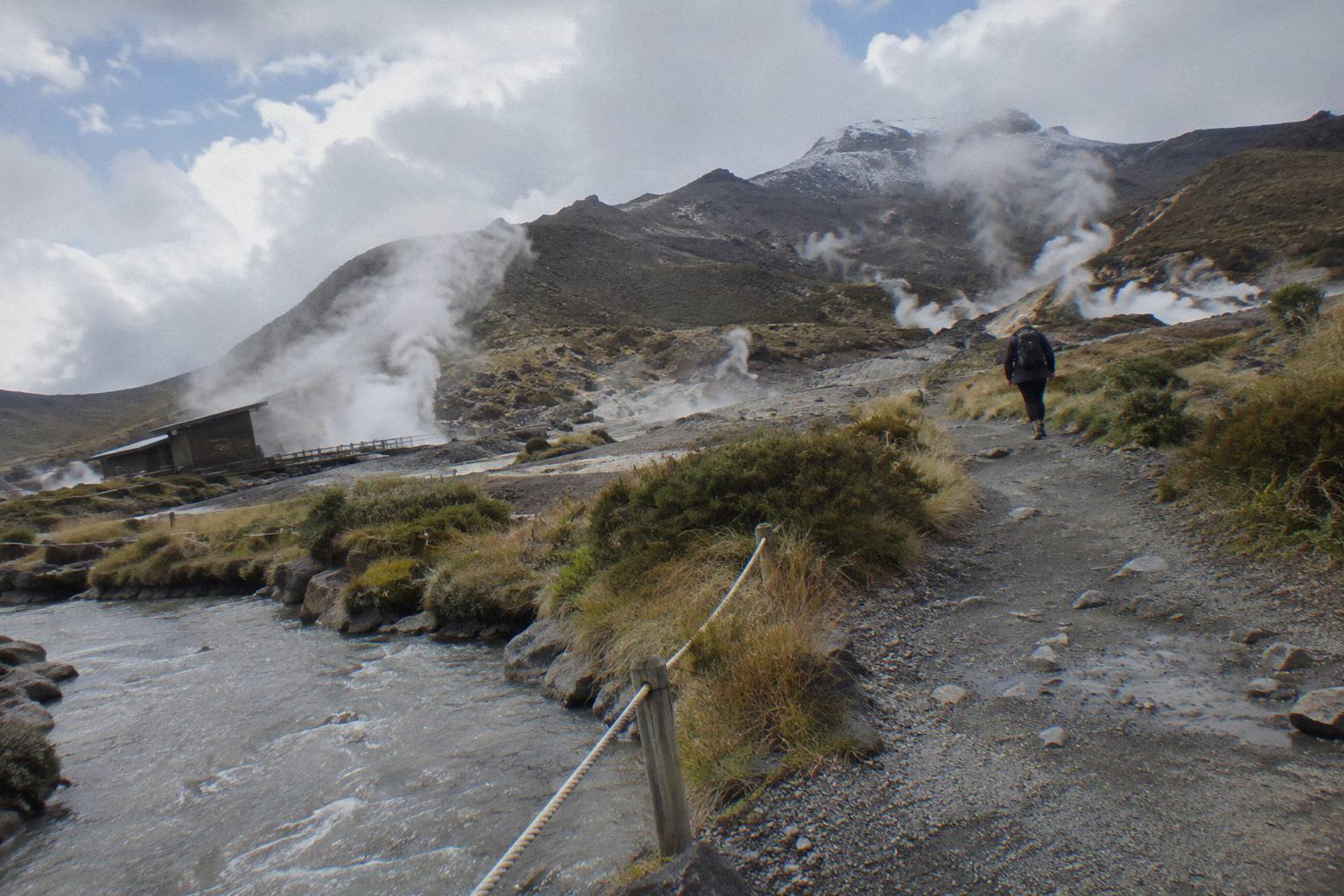
The final third, from the Emerald Lakes past Blue Lake and down the long Ketetahi descent, is where tired legs decide the schedule. The track drops hundreds of metres on switchbacks, and the hut and the forest sections feel longer than the map suggests. Three hours from the lakes to the road end is realistic, and the Ketetahi finish after the Emerald Lakes covers what that descent does to knees and time.
| Section | Terrain | Planning Time For An Average Walker |
|---|---|---|
| Mangatepopo start to the top of the Devil's Staircase | Steps, steady climb | About 2 hours |
| South Crater crossing to Red Crater | Climb on ridgeline, exposed | About 1 hour |
| Red Crater descent to the Emerald Lakes | Steep scree | 30 to 45 minutes |
| Emerald Lakes to Central Crater and Blue Lake | Rolling, scenic, slow with stops | About 1 hour |
| Blue Lake to Ketetahi Road finish | Long descent, steps and switchbacks | 2.5 to 3 hours |
Add your own stops on top. A half hour at the lakes is the minimum most walkers actually take, and in the hot months the forest sections near the finish slow people further. The table is a planning aid; the DOC total remains the official figure.
What Changes The Time: Season, Weather And Crowd Flow
Season is the biggest single factor: DOC's own band widens from 7 to 8 summer hours to 9 winter hours, and winter also changes the nature of the walk from an intermediate tramping track to an Expert route where alpine skills are essential. Weather stacks on top of season. Wind on the exposed sections above the South Crater can double the effort of a kilometre, and the crossing advisory system, assessed each morning against the forecast, determines whether operators run their days at all. Crowds matter too, mainly in the first two hours when the staircase bottlenecks.
Weather here is not a footnote, it is the planning variable. The crossing spends its whole length at alpine altitude, and conditions on Red Crater can be a different season from the car park. DOC, NIWA's Red Crater forecast and MetService's mountain forecast are the reference tools, and guided operators and shuttles run only when the advisory and forecast allow, conditions allowing on any given morning. If you want the full picture, the Crossing weather above the Emerald Lakes guide unpacks how advisories work.
Crowd flow affects the early hours more than the late ones. Most walkers start early, which concentrates the staircase and the saddle. Starting later can mean quieter track but also means reaching the long, shadeless Ketetahi descent in the warmest part of the day, which for many people is slower and harder. The sunrise start on the Crossing guide weighs that trade-off.
One cultural note that also has a timing side: Kaumatua Te Ngaehe Wanikau asks visitors to respect the maunga tapu by not touching or entering any of the waterways, including the alpine lakes. The lakes are a resting point, not a swimming stop, so the time you spend there is looking and lunch, not paddling. That request is printed by DOC on the official track page and it shapes how long a proper stop lasts.
Why The Booked Tour Day Is Longer Than The Walk
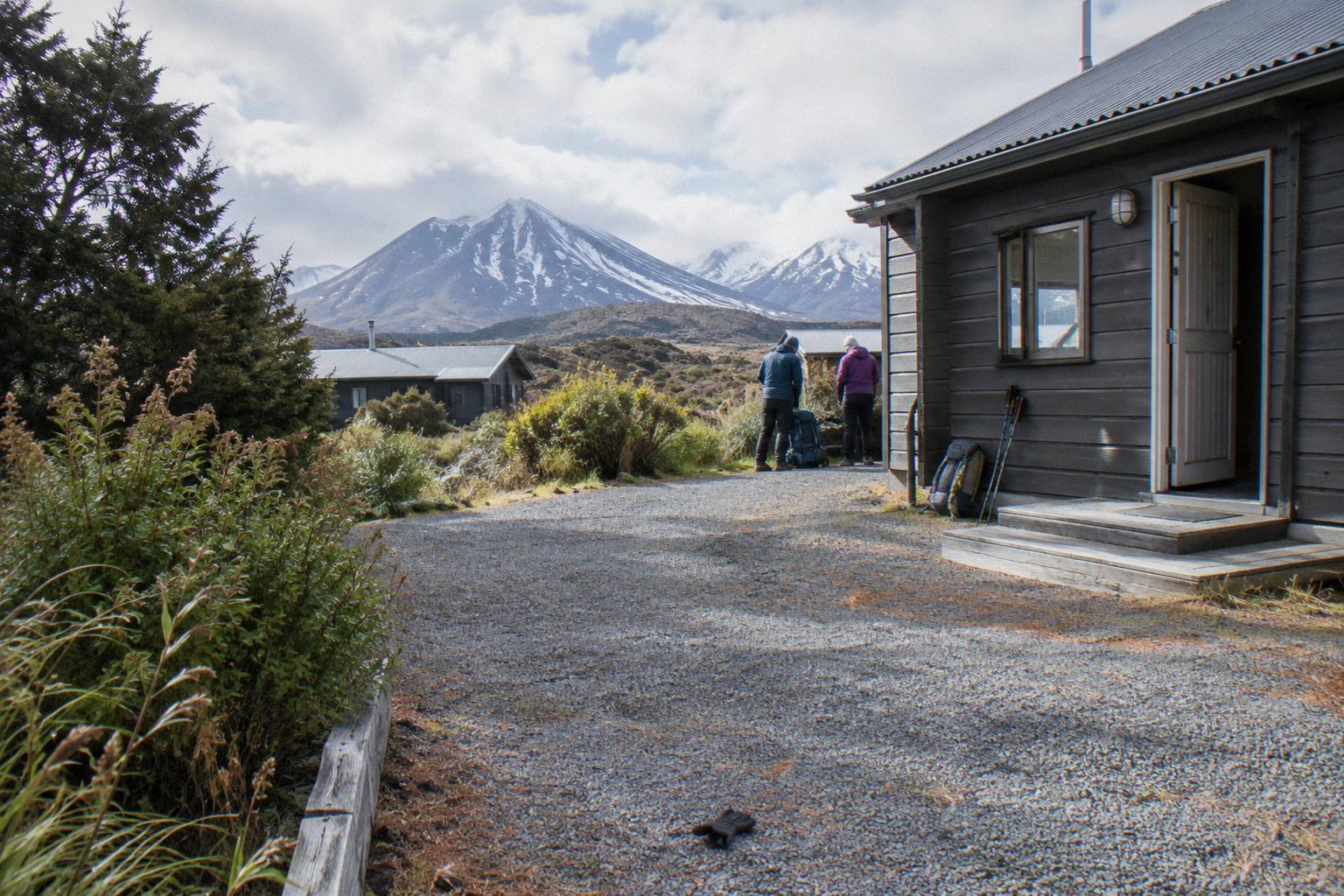
The booked tour day is longer than the walk because an operator's published duration covers far more than time on foot: it bundles transfers, briefings and the shuttle ride rather than pure walking time. That total package is why the day lengths on operator listings run from about 6 hours to a full 9 or 10. The walking inside any of those days is still DOC's own band: 7 to 8 hours in summer, 9 in winter. The Adrift Tongariro premium guided hike, for example, lists 8 to 9 hours door to door, and that includes the drive from the base at 53 Carroll Street in National Park Village and gear fitting. Confusing the two numbers is the single most common planning error on this track.
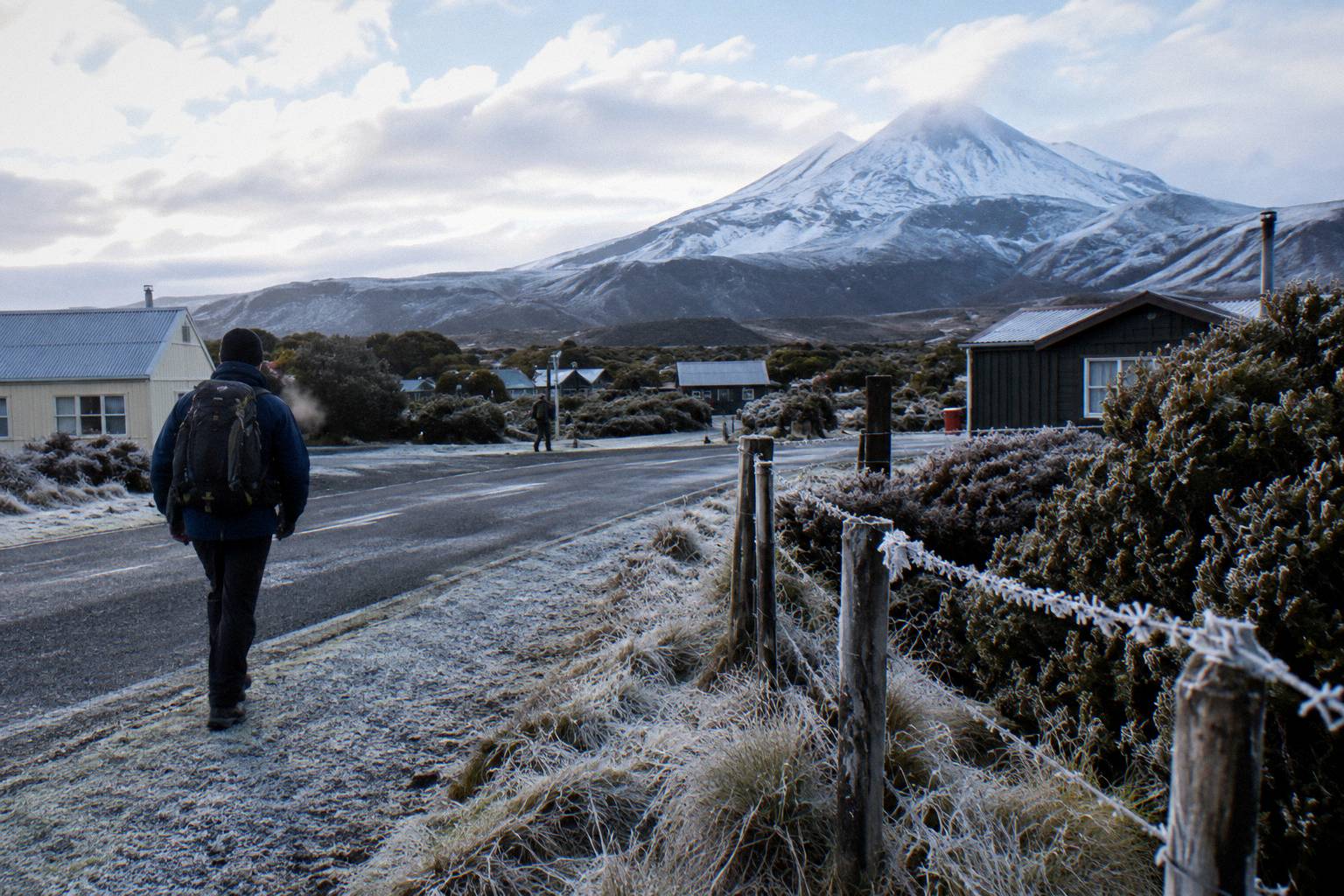
The three Adrift Tongariro guided tours all follow that pattern. The full-day guided Crossing lists 9 hours for the day, the premium guided hike lists 8 to 9, and the private guided Crossing lists 7 to 9. None of those figures means you walk for nine hours. Shuttles work the same way in reverse: the Tongariro Crossing Shuttles round trip from National Park Village lists about 8 hours for the whole outing, and the Dempsey Buses return bus from National Park Village lists a hiking window on its booking page, yet both are shuttle products, the walk between drop-off and collection is yours and it still takes DOC's hours. The wider set of guides lives on Tongariro Emerald Lakes Hike.
Winter makes the distinction sharper. A guided winter day runs longer than its summer version because the walking itself slows on snow and ice, and DOC's own guidance for the May to October window says alpine skills are essential and it is best to go with a guide. The Adrift guided tours carry crampons and ice axes for those conditions when required. If a winter booking matters to you, the winter snow on the Crossing guide covers what changes.
| Trip | What It Is | Booked Day Length | Rating And Reviews | Price |
|---|---|---|---|---|
| Adrift Tongariro premium guided hike | Guided group hike, full Crossing | 8 to 9 hours | 4.6 across 242 reviews | from NZ$450 per person |
| Adrift Tongariro full-day guided Crossing | Guided group hike, full Crossing | 9 hours | 4.7 across 278 reviews | price on the booking page |
| Adrift Tongariro private guided Crossing | Guided private Crossing | 7 to 9 hours | 4.5 across 30 reviews | price on the booking page |
| Tongariro Crossing Shuttles round trip from National Park Village | Shuttle only, return | about 8 hours | 4.7 across 890 reviews | from NZ$75 per person |
| Dempsey Buses return bus from National Park Village | Shuttle only, return | Hiking window on listing | 4.8 across 72 reviews | from NZ$90 per person |
| Ruapehu Scenic Shuttles Ketetahi park-and-ride | Shuttle only, one-way park-and-ride | 8 hours | 4.8 across 670 reviews | from NZ$68 per person |
The pattern is consistent: the day length is the container, and the walk is what fills most of it. When a listing says 10 hours, as the Tongariro Expeditions Crossing shuttle from Taupo or Turangi does across its 8 to 10 hour day, that includes the road legs from Taupo, not a slower walk.
The premium guided hike deserves the price column note. From NZ$450 per person, rated 4.6 across 242 reviews with free cancellation up to 14 days before, it is the guided option most readers comparing time and cost end up weighing against a shuttle plus self-guided walk. The comparison is fair as long as the hours are compared like for like: the shuttle day and the guided day both bracket the same 7 to 8 hours of walking.
Shuttles, Parking And The Clock: The Constraints That Shape The Day
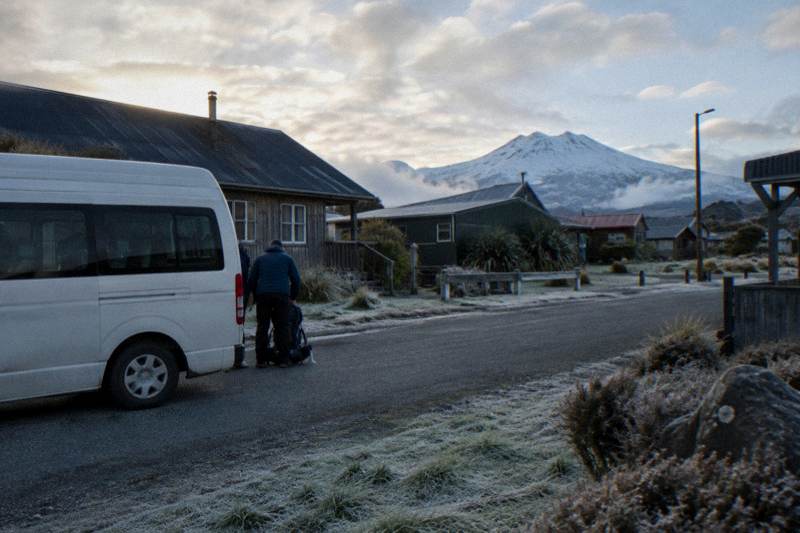
From Labour weekend in late October to 30 April, parking at the road ends is restricted to a 4 hour maximum, which rules out driving yourself to the start and walking, so almost everyone's day length is set by a shuttle timetable rather than by their own legs. DOC's wording on the track page is blunt: the restrictions are in place, and they suggest you book a shuttle. In practical terms, the 20.2 km walk plus the 4 hour cap makes self-driving impossible in the summer season, and the choice becomes which shuttle product fits where you are staying.
The shuttle options split by where you sleep. From National Park Village, the Tongariro Crossing Shuttles round trip collects from the Park n Ride at 59 Findlay Street and is the most reviewed tour here at 890 reviews rated 4.7, from NZ$75 per person, with free cancellation up to 24 hours before. The Dempsey Buses return bus covers the same village from the Park Hotel Ruapehu, the Tongariro Crossing Lodge and the Park n Ride, from NZ$90. From Taupo or Turangi, the Tongariro Expeditions shuttle runs from NZ$75, rated 4.7 across 431 reviews.
The Ketetahi park-and-ride products work differently, and the difference matters for your clock. With the Ruapehu Scenic Shuttles Ketetahi park-and-ride, from NZ$68 and rated 4.8 across 670 reviews, you park at Ketetahi, ride one way to Mangatepopo, and walk the Crossing back to your own car. There is no return leg to wait for, because your transport is parked at the finish, which removes the collection-time pressure entirely. Similar one-way products run from Owhango Adventures and Tongariro Expeditions, all free cancellation up to 24 hours before. The trade for that freedom is a fixed early shuttle to the start.
| Departure Point | Product | Type | Collection Pressure On Your Day |
|---|---|---|---|
| National Park Village | Tongariro Crossing Shuttles round trip | Return shuttle | Fixed pick-up at Ketetahi finish |
| National Park Village | Dempsey Buses return bus | Return shuttle | Fixed pick-up at Ketetahi finish |
| Taupo or Turangi | Tongariro Expeditions shuttle | Shuttle with transfers | Fixed to the operator's day |
| Ketetahi car park | Ruapehu Scenic Shuttles park-and-ride | One-way to the start | None, your car waits at the finish |
| Ketetahi car park | Owhango Adventures park-and-ride | One-way to the start | None, your car waits at the finish |
A further practical point: the DOC booking system is free and recommended, and shuttle and guided products work through it. Booking your transport early in peak summer weeks is part of protecting the start time you want, because a sold-out shuttle quietly moves your whole day later. Winter is a different picture: DOC notes shuttle buses generally do not operate from May to late October while guided trips include transport, which is one more reason winter walkers lean toward the guided products.
Common Mistakes That Stretch The Day
Most walkers who run into time trouble on the Crossing have made the same three mistakes: planning to the bottom of DOC's band, treating the booked day length as walking time, and budgeting no stop at the Emerald Lakes. These three errors, alone or combined, are what stretch the day out longer than it needs to be. Each one alone adds stress to the day, and together they are the reason parties finish in the dark or miss a collection. The band is 7 to 8 hours in summer for a reason, and the walkers who treat six hours as the real number are the ones sprinting the last descent to a waiting bus.
The second error deserves its own sentence because it is almost universal: a 9 hour listing is not a 9 hour walk. It is a day that contains a 7 to 8 hour walk plus transfers and stops, as the section above sets out. If you book a product with a short listed day and assume that is your walking time, you will plan your water, food and collection time around a fiction.
The third error is underestimating the descent. Legs that climbed Red Crater happily can turn to jelly on two hours of downhill stone steps, and the Ketetahi section is where most slow finishes happen. Trekking poles, boots with grip, and food kept back for the final third are the standard fixes, and the fitness for the climb to the Emerald Lakes guide covers the preparation side.
Two quieter mistakes round the list out. One is ignoring the 4 hour parking cap and planning to drive, which simply does not work in the summer season. The other is treating the Emerald Lakes stop as five minutes: the descent to them is the emotional centre of the walk, most groups settle in for lunch on the ridge above them, and the request not to touch or enter the water means the stop is a sit-down one, not a swim. Give it half an hour at minimum and the whole day's arithmetic starts to work.
Common Questions About The Tongariro Crossing Time
How Long Does It Take To Walk The Tongariro Crossing?
DOC gives 7 to 8 hours from November to April and 9 hours from May to October, for the 20.2 km one-way track with 1196 m of elevation change. That is walking time at a High fitness level, and stops at the Emerald Lakes add to it.
Can You Walk The Crossing Faster Than Seven Hours?
Some parties do finish in around six hours in good summer conditions, but that is a fast, experienced walk with minimal stops. Planning to the top of DOC's band is safer whenever a shuttle collection or daylight depends on your finish time.
Does The Walk Take Longer In Winter?
Yes. DOC's winter figure is 9 hours, the route is classed as Expert from May to October, and snow, ice and sub-zero temperatures slow every section. DOC recommends a guide for that window, and the Adrift guided tours carry crampons and ice axes for winter conditions when required.
How Much Time Should You Allow At The Emerald Lakes?
About 30 minutes is the realistic minimum, since most walkers take lunch on the ridge above the lakes. Visitors are asked to respect the maunga tapu by not touching or entering the waterways, including the alpine lakes, so the stop is looking and eating rather than swimming.
Why Does The Tour Say Nine Hours If The Walk Is Seven To Eight?
Because the tour figure is a booked day length that includes transfers from the departure base, briefings and stops, not walking time. The Adrift Tongariro guided tours list 7 to 9 hour days around the same 7 to 8 hour walk a shuttle product wraps.
Does The Shuttle Wait All Day At The End?
Return shuttle products such as the Tongariro Crossing Shuttles round trip from National Park Village collect at a fixed finish time at Ketetahi, which is exactly why walkers plan to the top of DOC's time band. A Ketetahi park-and-ride product removes the pressure because your own car waits at the finish.