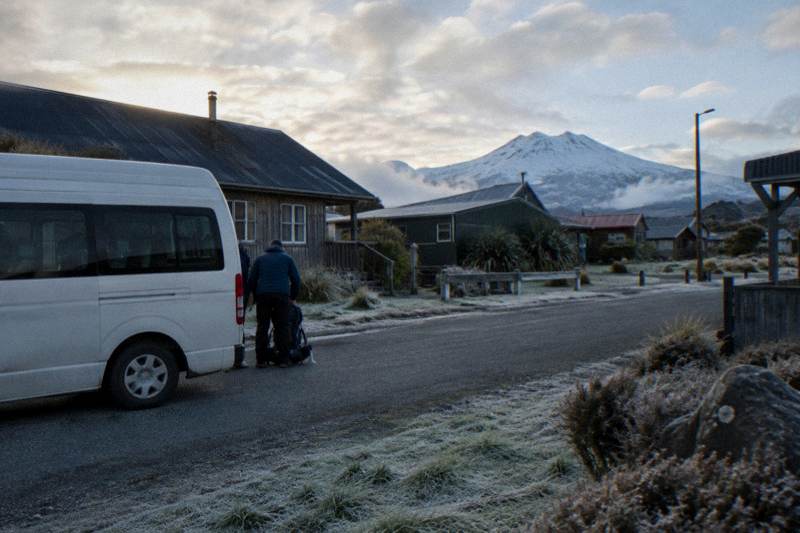
Is The Tongariro Crossing Still Closed?
How to check whether the Tongariro Alpine Crossing is open, what triggers advisories and closures, what happens to shuttles and guided hikes, and what to do instead when the track shuts.
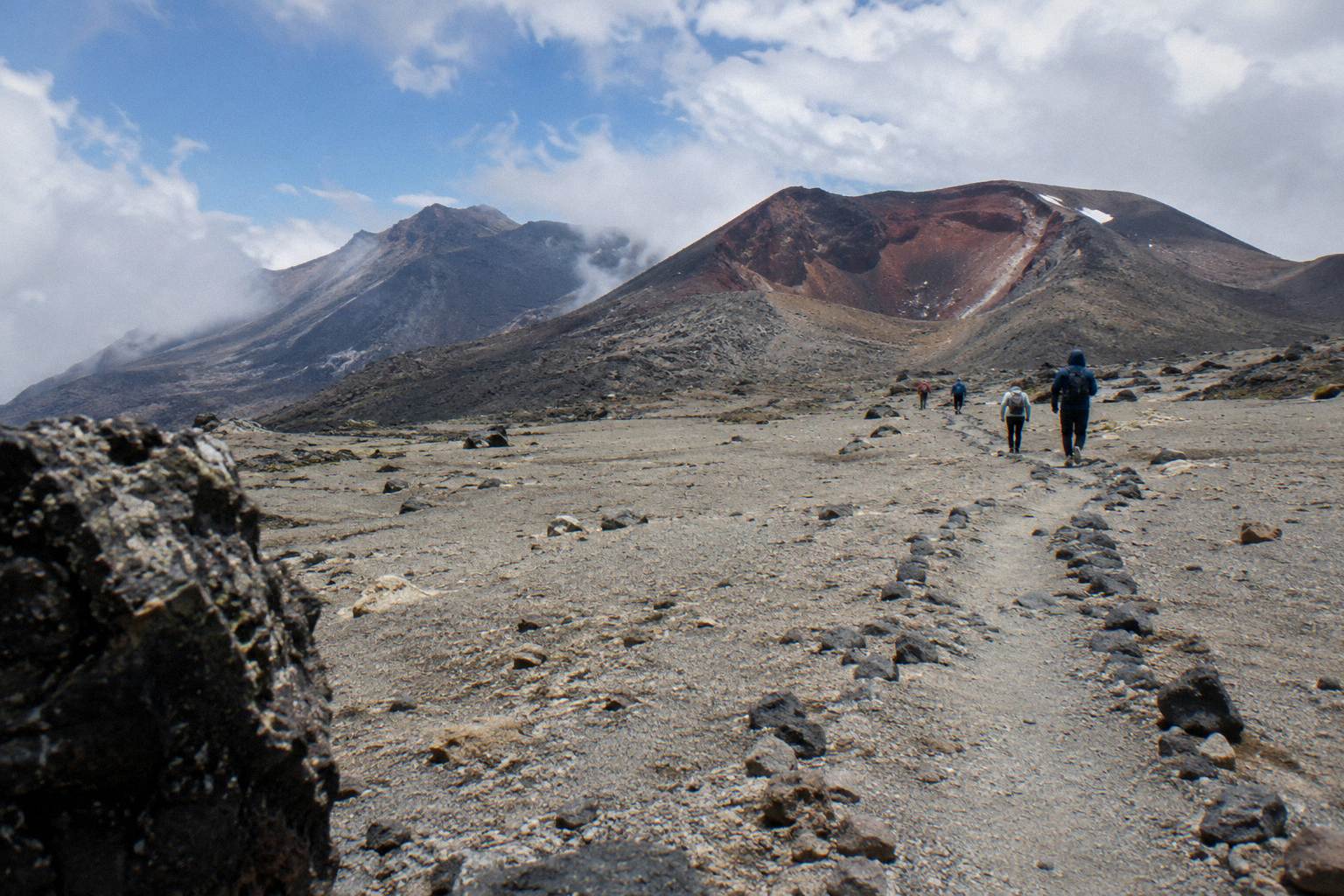
A status question deserves a status answer, so here it is plainly: this page cannot and will not print today's condition, because the Tongariro Alpine Crossing's status is decided day to day against weather, volcanic and avalanche advisories, and any figure printed here would be stale before you finished reading it. What this page can do is explain the system that opens and closes the track, name the four official sources that publish live status, and show you what happens to shuttles and guided tours on either outcome. The Department of Conservation's Tongariro Alpine Crossing page is the authoritative source, and it is the first place to look.
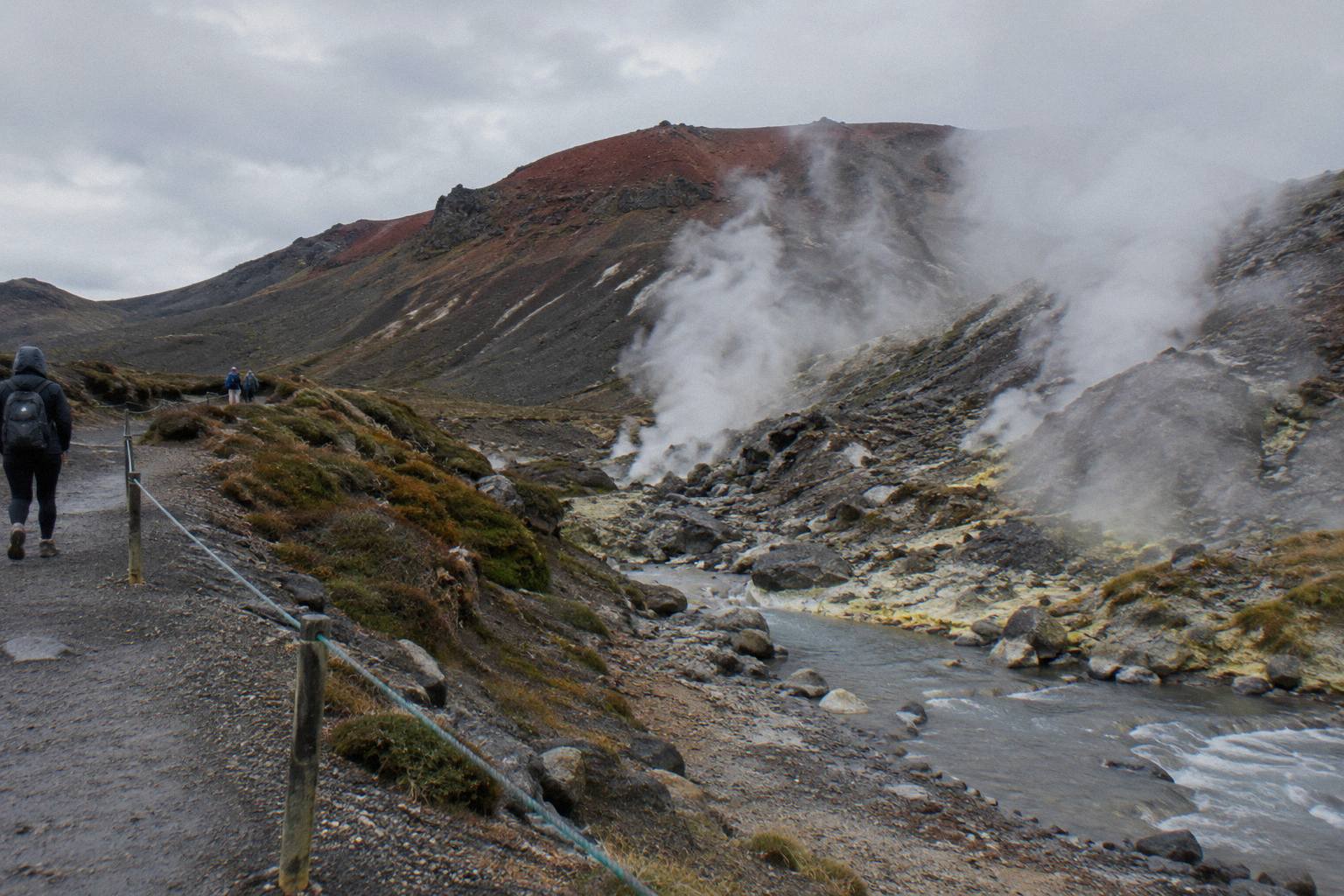
In Short
No, the Tongariro Alpine Crossing is not permanently closed, and any page printing a definite open or shut verdict is guessing. Managed as a 20.2 km one-way alpine route with 1196 m of elevation change each way, it is a summer tramping track from November to April and an expert winter route from May to October, its daily status set by a weather advisory, the volcanic alert level and, in winter, avalanche danger. Shuttles and guided trips run only when the advisories allow.
Is The Tongariro Crossing Still Closed?
No closure on the Tongariro Crossing is permanent, so the direct answer is no, the track is not shut for good. However, this question almost always has two different answers depending on what you mean by closed, because temporary closures do occur on this track even though none of them last forever, and that distinction shapes everything that follows below. If you mean "is the track officially shut long-term", the answer lives on the DOC alerts page and is usually no: the Crossing operates as a normal backcountry track for most of the year. If you mean "will it be open on my date", the honest answer is that nobody can promise that from a distance, because DOC assesses conditions each morning and operators run only when the advisory system allows. Treat any third-party site that prints a definite open or shut verdict without pointing to DOC as unreliable.
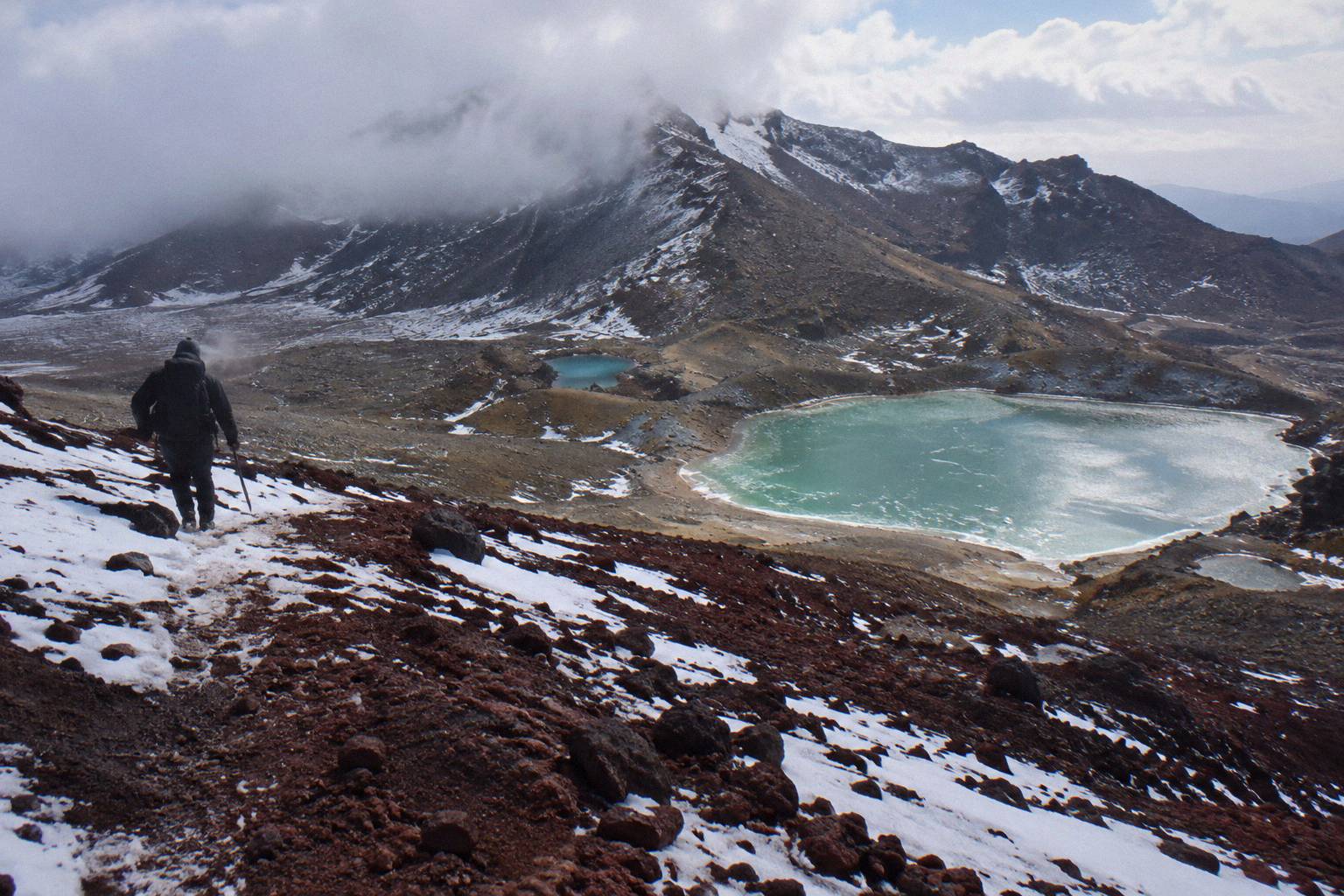
The track's baseline facts frame why status fluctuates so much. DOC lists the Tongariro Alpine Crossing at 20.2 km one way with an elevation change of plus and minus 1196 m, climbing to Red Crater at 1886 m before the steep scree descent to the vivid Nga Rotopounamu, the Emerald Lakes. Walking time is 7 to 8 hours from November to April and 9 hours from May to October. Fitness is rated High even in summer. In the winter months the track becomes an Expert route: DOC's wording is that alpine skills are essential and it is best to go with a guide, because snow, ice, avalanche risk and sub-zero temperatures all come into play. The full track detail sits on the official DOC track page.
That seasonal split explains most of the confusion behind the "still closed" question. A reader searching in June may be remembering a news story from a winter closure that only ever meant the summer track standard had lapsed, not that the mountains had shut. A reader searching in January is more likely asking about a short-term hazardous weather advisory, which can shut the track for a day or two and then lift. Two different mechanisms, one word, endless misunderstandings.
The booking side is stable regardless. DOC's booking system for the Crossing is free and recommended, and you need a booking to use a shuttle or a guided trip. That system does not close when a single day is advised against; it manages demand across the season. Details are on the DOC booking system page.
If you are planning the day around the Emerald Lakes themselves, the practical pieces, transport, timing and route, are covered in the guide to the Emerald Lakes on the Crossing, and the shuttle logistics are laid out in the shuttle timetable for the lakes day.
What Usually Triggers A Closure Or Advisory?
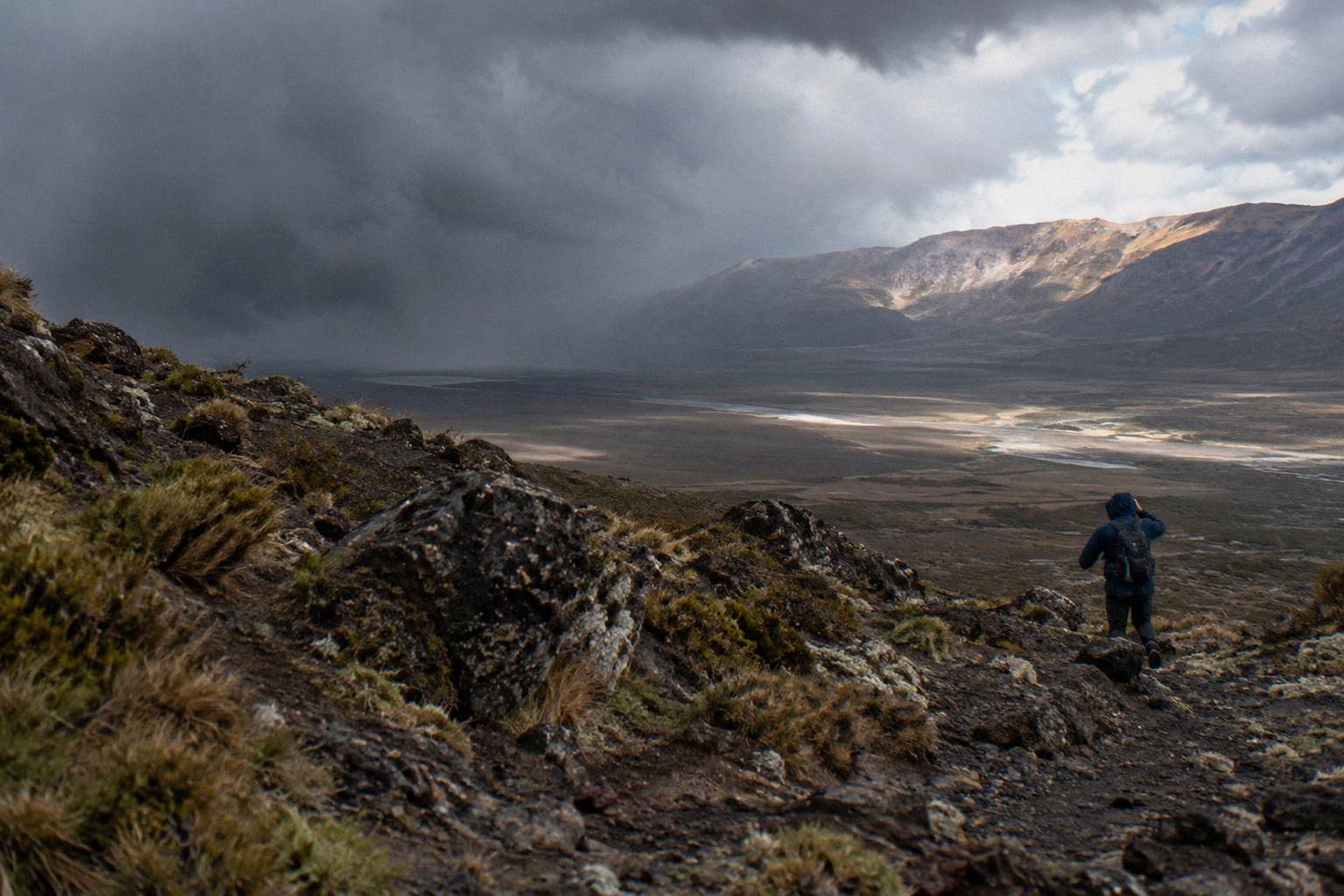
Hazardous weather is by far the most common trigger, while volcanic and avalanche advisories are the rarer causes of a closure or an alert. All three move through the same official channels, and none of them are decided by anyone you can phone. A strong wind forecast at Red Crater, an incoming rain event or a cold outbreak can each push DOC to advise against using the track on a given day. Volcanic alert levels are published by GeoNet and change daily. From May to October, avalanche danger adds a third layer, published at avalanche.net.nz. Operators are bound by DOC rules not to run on hazardous-weather-warning days, so an advisory does not just warn walkers, it stops commerce on the track too.
Wind deserves special mention because it is the least intuitive. The South Crater and Red Crater sections sit exposed at altitude, and a wind that feels brisk at the Mangatepopo road end can be dangerous two hours up the track. NIWA publishes a Red Crater-specific mountain forecast precisely because the summit conditions differ so sharply from the valley. Check the NIWA advisory at weather.niwa.co.nz for Tongariro National Park, and the MetService mountain forecast, rather than a town forecast for Taupo or National Park Village.
| Advisory type | What triggers it | Where it is published | Season it matters most |
|---|---|---|---|
| Hazardous weather | Wind, rain or cold at Red Crater beyond safe thresholds | DOC alerts and NIWA Red Crater forecast | All year |
| Volcanic activity | Changing volcanic alert level on the mountain | GeoNet Tongariro page | All year |
| Avalanche danger | Snow loading and instability on the route | avalanche.net.nz | May to October |
| Track maintenance or incidents | Work or damage on the track itself | DOC alerts for the Crossing | Occasional |
It helps to separate what is structural from what is daily. The seasonal track standard, the parking restriction, the booking system and the request from Ngati Hikairo ki Tongariro to respect the sacred mountains by not touching or entering any waterways including the alpine lakes are all standing facts you can plan around. The wind at 1886 m tomorrow is not. Planning around the first category while checking the second is the whole game.
The Tongariro Crossing Shuttles round trip from National Park Village, from NZ$75 per person, is rated 4.7 across 890 reviews, which makes it the most reviewed tour here. It offers free cancellation up to 24 hours before, which matters exactly at the moment an advisory looks possible: you can hold your seat while the forecast firms up rather than gambling on it a week out. The walk itself is self-guided; the shuttle is transport, not a guide.
How Do You Check Whether The Crossing Is Open Today?
Check DOC first, then the three specialist sources, always in that order, and do it on the day itself rather than the week before. If anything remains unclear after those checks, your operator's morning call should settle the question before you set off. The DOC Tongariro Alpine Crossing page and its alerts carry the authoritative status and any track notices. GeoNet carries the volcanic alert level for Tongariro, which changes daily. NIWA's Red Crater forecast and the MetService mountain forecast show what the weather will do at altitude. In winter, avalanche.net.nz completes the picture. That is four checks, and together they take about ten minutes.
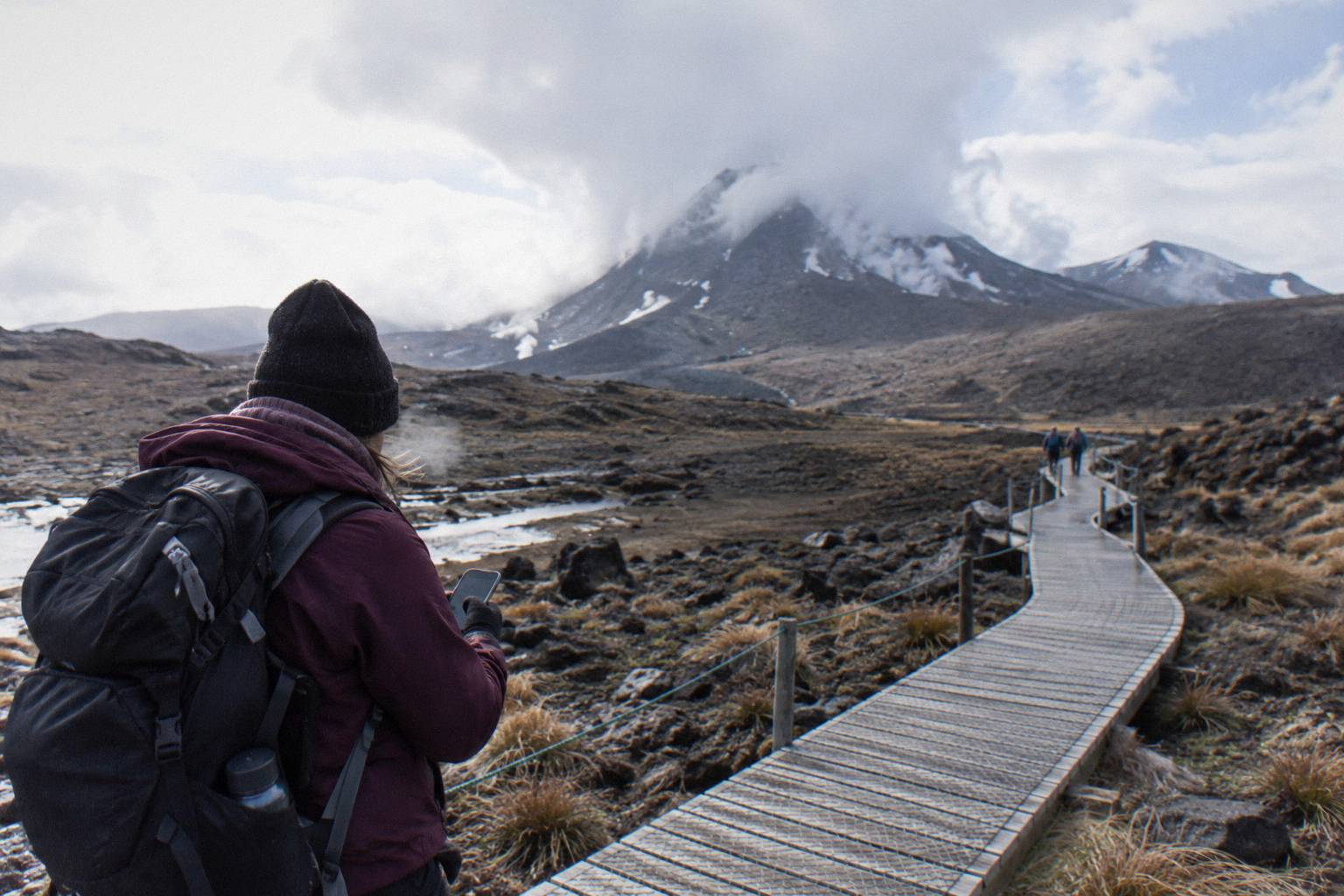
A common mistake is checking a town forecast and concluding the day is fine. Turangi or Taupo can be calm and mild while Red Crater is in gale-force wind, because the track climbs from its start into a completely different weather regime on the exposed upper slopes. The NIWA advisory exists because the summit needs its own forecast. A second mistake is trusting a social media post from last week, or an article, including any article, that prints a definite open or shut verdict. Status is assessed each morning; anything older than that morning is history.
The morning-of routine matters as much as the sources. Conditions are assessed each morning, and your operator makes a call for their own departure. If you have booked a shuttle or a guided trip, the operator's message that morning is the final word for your day, because they are the ones bound by DOC's rules on hazardous-weather-warning days. If you are walking independently, you make the call yourself from the same information, and DOC's advice is unambiguous about erring toward caution on an Expert winter route.
If you are coming from further afield, the logistics and the status question interact. The guide to getting from Taupo to the Emerald Lakes covers that day plan, and the round-up of what to do when the Crossing closes has the fallback walks.
The Tongariro Expeditions shuttle transfers from Taupo or Turangi, from NZ$75 per person and rated 4.7 across 431 reviews with free cancellation up to 24 hours before, suits readers staying on the lake rather than in the village. It is a shuttle with transfer options, not a guided trip, and departure points depend on the option you choose.
Does The Crossing Close For Winter?
Winter does not lock a gate, it raises the standard: from May to October the same track becomes an Expert route where DOC says alpine skills are essential and a guide is best, and that is the honest shape of the answer. Snow, ice, avalanche risk and sub-zero temperatures are the documented conditions. DOC's own winter essentials for independent trips include crampons, an ice axe, a helmet, competency with that gear and avalanche equipment. Put simply, the track is not closed for winter in the way a road closes; it is open to people equipped and skilled for alpine terrain, and shut or advised against for everyone else on bad days.
This distinction drives real booking decisions. A summer walker with trail shoes and a day pack has no business on the winter route, and the honest advice is to shift the trip or book a guide. The Adrift Tongariro premium guided hike, from NZ$450 per person and rated 4.6 across 242 reviews, includes transport from the base at 53 Carroll Street in National Park Village, gear for winter conditions if required, and free cancellation up to 14 days before. Its booked duration of 8 to 9 hours is the day length, not the walking time. Bring your own lunch. More of these guides are collected on Tongariro Emerald Lakes Hike.
Transport thins out in winter too. DOC notes that shuttle buses generally do not operate from May to late October, while guided trips include transport. So a winter attempt almost always routes through a guided product or a private arrangement, not the summer shuttle network. The snow-specific detail, gear and conditions is covered in winter on the Crossing.
Daylight compounds it. Winter daylight on the Tongariro area runs 9 to 11 hours by DOC's figures, against a 9 hour walking time for the track in those months. The arithmetic leaves almost no slack for a slow start, a navigation pause or a scree descent in fading light, which is a large part of why DOC frames the winter route the way it does.
What Happens To Shuttles And Guided Tours When Conditions Turn?
When conditions turn and a hazardous weather warning is issued, shuttles and guided trips simply stop running for the day. What happens to your money after that is decided by each product's own cancellation terms, so the smart move is reading those terms before the forecast turns rather than waiting until the warning has already landed. Operators are bound by DOC rules not to operate when the advisory is in force, so the decision is not theirs to bend. Most shuttles here offer free cancellation up to 24 hours before, which is why holding a refundable seat while the forecast settles is the standard play. The two Adrift guided Crossing products that are non-refundable, the full-day guided group walk and the private guided Crossing, are the exceptions to plan around.
The options split cleanly by what you need. From National Park Village, the Tongariro Crossing Shuttles round trip (from NZ$75, 4.7 across 890 reviews) and the Dempsey Buses return bus (from NZ$90, 4.8 across 72 reviews, free cancellation up to 24 hours) both carry you out and back, self-guided walking. From the Ketetahi side, the Ruapehu Scenic Shuttles park-and-ride (from NZ$68, 4.8 across 670 reviews) and the Tongariro Expeditions park-and-ride are one-way shuttles: you park at Ketetahi, ride to Mangatepopo, and walk the Crossing back to your own car. Neither is guided, and neither includes return transport, because you are the return transport.
| Product | Type | From | Rating | Cancellation |
|---|---|---|---|---|
| Tongariro Crossing Shuttles round trip, National Park Village | Return shuttle, walk self-guided | NZ$75 per person | 4.7, 890 reviews | Free, 24 hours before |
| Dempsey Buses return bus, National Park Village | Return shuttle, walk self-guided | NZ$90 per person | 4.8, 72 reviews | Free, 24 hours before |
| Ruapehu Scenic Shuttles Ketetahi park-and-ride | One-way shuttle with parking | NZ$68 per person | 4.8, 670 reviews | Free, 24 hours before |
| Adrift Tongariro premium guided hike | Guided group Crossing | NZ$450 per person | 4.6, 242 reviews | Free, 14 days before |
Guided products behave differently in another way: they carry the expertise the winter route demands. The Adrift Tongariro private guided Crossing, rated 4.5 across 30 reviews, is a private guided walk of 7 to 9 booked hours from National Park Village, non-refundable, also reaching the lakes with a guide. In poor summer conditions a guide's value is mostly judgment and timing; in winter it is the difference between a managed alpine day and an improvised one. The deeper comparison sits in whether a guide is worth it for the Emerald Lakes section.
What If The Crossing Is Closed On Your Day?
If the Crossing is closed on your day, your plans are not ruined: you have good options, and DOC names two of them outright. The Taranaki Falls walk and the Tama Lakes track both sit inside the park, and both remain walkable in conditions that shut the Crossing's high section. Both deliver volcanic scenery without the exposure at 1886 m. Beyond them, the park holds a set of lower walks and viewpoints near the Crossing start that survive weather the alpine track cannot. The fallback guide at other hikes when the Crossing closes and the list of free hikes and viewpoints near the start carry the detail.
The second fallback is time. If your shuttle or guided booking has free cancellation and the advisory looks short, moving the day by one often works: most weather-driven advisories lift within a day or two, and an operator with seats the following morning can usually move you. The 24 hour cancellation windows on the shuttles exist for exactly this. The third fallback is honest retreat: a day at Taranaki Falls with an early night beats a miserable, unsafe attempt above the snowline, and the mountains are not going anywhere.
The cultural note is worth carrying whatever you walk. Ngati Hikairo ki Tongariro ask visitors to respect the maunga tapu by not touching or entering any of the waterways, including the alpine lakes. The Emerald Lakes are there to be seen, photographed and respected, not swum in, on any day the track is open. The reasoning and the etiquette sit in the guide to swimming in the Emerald Lakes.
What Trips People Up When Checking Status
The mistakes that trip people up when checking status are recurring and predictable, and the same few appear over and over. Each one has cost somebody a day, which is exactly why they are worth naming now, before you repeat them yourself. Checking a town forecast instead of the Red Crater forecast is the most common, and it fails because the summit sits in a different weather regime from the valleys. Trusting a definite-sounding answer on a third-party page is the second, and the reason this page refuses to print one. Assuming winter means closed is the third. Treating a one-way park-and-ride as a return shuttle is the fourth: the six Ketetahi park-and-ride products include no return transport by design, you walk back to your own car. Ignoring the 4 hour parking maximum at the road ends from Labour weekend to 30 April is the fifth, and the reason DOC suggests a shuttle in that window. Skipping the DOC booking system, which is free and recommended and needed for shuttle and guided trips, rounds out the list.
Common Questions About The Tongariro Crossing Status
Is The Tongariro Crossing Still Closed?
There is no permanent closure. Status is assessed each morning against weather, volcanic and avalanche advisories. Check the DOC Tongariro Alpine Crossing page and its alerts for the authoritative answer on the day, and let your operator's morning call decide your booked departure.
Where Is The Official Open Or Closed Status Published?
On the Department of Conservation's Tongariro Alpine Crossing page and its alerts. GeoNet publishes the volcanic alert level, NIWA publishes the Red Crater forecast, and avalanche.net.nz covers winter avalanche danger. No other source overrides DOC.
Do Shuttles Still Run In Winter?
DOC notes that shuttle buses generally do not operate from May to late October, while guided trips include transport. A winter Crossing is therefore usually a guided day or a private arrangement rather than a standard shuttle booking.
What Happens To My Booking If The Weather Turns?
Operators do not run on hazardous-weather-warning days. Most shuttles here offer free cancellation up to 24 hours before, the Adrift Tongariro premium guided hike up to 14 days before, and the Adrift full-day group walk and private guided Crossing are non-refundable. The booking page shows the terms for each product.
Can I Check The Status Days In Advance?
You can read the forecast trend, but the decision is made each morning. Book a product with free cancellation, watch the NIWA Red Crater forecast as your date approaches, and confirm with your operator on the morning.
What Can I Do Instead If It Is Shut?
DOC names the Taranaki Falls walk and the Tama Lakes track as alternatives in poor conditions, and the park holds other lower walks near the start. Moving your day by one is often enough when a short weather advisory is the cause.